
What if your newborn was actually speaking a clear language, just without the words? It’s incredibly common to feel a sense of doubt when you can’t quite figure out what your bub wants, especially when sleep deprivation makes every decision feel heavy. You might find yourself second guessing whether those little fist chews mean hunger or if that restless squirming is just a bit of wind. It is a steep learning curve, and it is okay to feel overwhelmed while you are still in the thick of your own physical recovery.
The good news is that you can master the art of "baby talk" by decoding your little one’s subtle body language. This guide will show you how to recognise and respond to newborn cues with confidence, helping you settle your baby before the tears begin. We will explore the different stages of communication, from early hunger signs to sleepy signals, and discuss why prioritising your own comfort is the secret to staying calm and responsive. You will gain the practical tools needed to create a more peaceful household and start trusting your maternal instincts again.
Key Takeaways
- Learn to identify the subtle sounds and body movements your baby uses to "talk" before they reach the point of crying.
- Distinguish between signs of engagement and overstimulation so you can give your bub the rest they need before a meltdown begins.
- Master how to recognise and respond to newborn cues for hunger early on, keeping feeding sessions calm and connected for both of you.
- Implement a simple two-step response system that focuses on pausing, observing, and matching your baby’s current intensity level.
- Understand why prioritising your own physical comfort and postpartum recovery is the foundation for staying patient and intuitive with your little one.
What are Newborn Cues and Why Do They Matter?
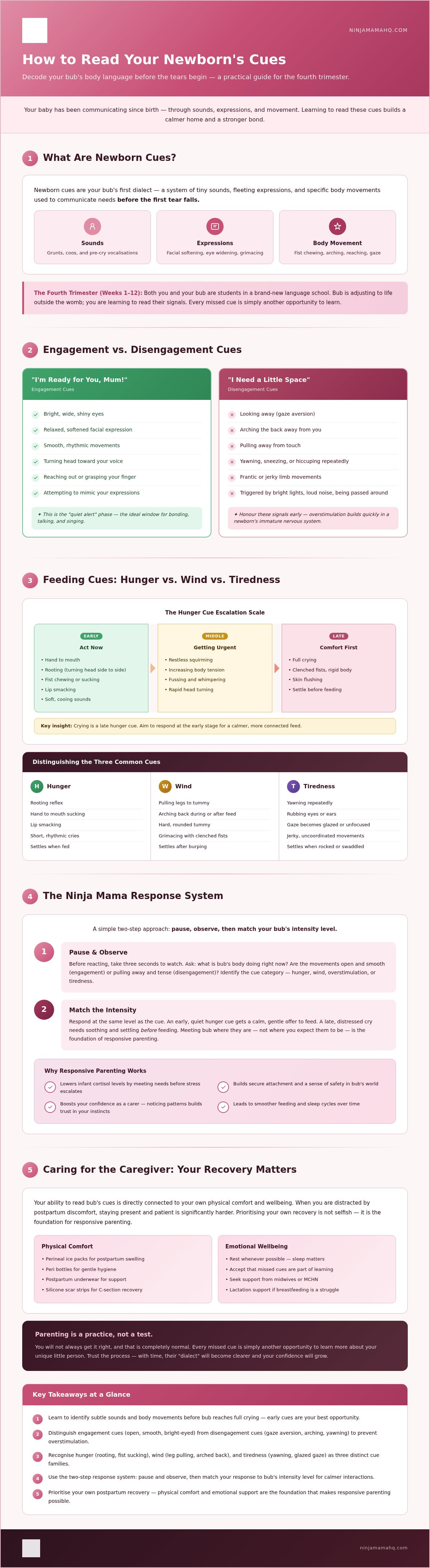
Think of newborn cues as your bub’s very first dialect. Before they have the words to tell you they are famished or simply need a change of scenery, they use a sophisticated system of "baby talk" involving tiny sounds, fleeting facial expressions, and specific body movements. These signals are their way of communicating needs long before the first tear falls. Learning how to recognise and respond to newborn cues transforms your daily routine from a stressful guessing game into a calm, connected conversation.
During the first 12 weeks, often called the "fourth trimester," you and your baby are essentially students in a brand-new language school together. It is a period of intense transition where bub is adjusting to life outside the womb and you are adjusting to your new role. While some movements are purely biological reflexes, like the involuntary startle of the Moro reflex, many others are intentional attempts to connect. By paying close attention, you’ll start to see the difference between a random stretch and a purposeful hand-to-mouth movement that signals hunger.
It is much easier to be a "cue detective" when you aren’t distracted by your own physical discomfort. Prioritising your recovery with tools like peri bottles or perineal ice packs isn't just about self-care. It’s about ensuring you have the physical capacity to stay patient and present while you decode these subtle messages.
The Benefits of Responsive Parenting
Responding to these early signals does more than just stop a meltdown before it starts. It actually helps lower infant cortisol levels by meeting their needs before they become stressed. This responsiveness builds a secure attachment, letting bub know the world is a safe place. For you, the payoff is a massive boost in confidence. There is nothing quite like the feeling of "predicting" what your baby needs before they even know it themselves, which naturally leads to a much smoother rhythm for feeding and sleep cycles.
When Cues are Hard to Read
Sometimes, the "textbook" cues just aren't there, and that is okay. If your baby was born prematurely or if you experienced a particularly difficult birth, their signals might be more subtle or harder to distinguish. Environmental factors like bright lights or loud noises can also overstimulate bub, making their cues appear frantic or confusing. Please don't feel like a failure if you don't get it right every single time. Parenting is a practice, not a test, and every missed cue is simply another opportunity to learn more about your unique little person.
Engagement vs. Disengagement: Decoding Bub’s Body Language
Newborns are surprisingly social creatures from the very beginning. While it might feel like your days are a blur of nappies and feeds, your bub is actually working hard to communicate when they are ready to connect and when they have reached their limit. The secret to a calmer day lies in the "quiet alert" phase. This is that magical window where your baby is still, wide-eyed, and truly taking in the world. Knowing how to recognise and respond to newborn cues during this state allows you to enjoy those sweet bonding moments before overstimulation kicks in.
Interaction is a two-way street, and your baby uses their entire body to say "yes" or "no thanks" to the environment around them. One of the most incredible things you will witness is mimesis. This is when your bub attempts to mimic your facial expressions. If you open your mouth wide or poke out your tongue while they are focused on you, you might just see them try to do the same. These tiny "conversations" are the building blocks of their social development and your secure attachment.
Engagement Cues: "I’m Ready for You, Mum!"
When your baby is ready to play or interact, their body language is open and inviting. You will see bright, shiny eyes and a relaxed facial expression that seems to "soften" when they see you. Their movements will be smooth and rhythmic rather than jerky. They might turn their head towards the sound of your voice, reach out with their tiny hands, or even try to grasp your finger. These are clear invitations to talk, sing, or simply enjoy some face-to-face time together.
Disengagement Cues: "I Need a Little Space"
Because a newborn’s nervous system is still so immature, they can become overstimulated very quickly. Common things like bright overhead lights, a loud television, or even too much "passing around" at a family gathering can trigger a need for a break. Disengagement cues are your baby’s way of protecting themselves from sensory overload. You might notice them looking away (gaze aversion), arching their back, or pulling away from touch. Interestingly, yawning, sneezing, or even hiccups are often signals that their system is feeling a bit frazzled and needs a rest.
Staying calm yourself is the best way to pick up on these subtle shifts in mood. Many women find that using a labour and postpartum support oil roller helps them take a mindful breath and stay present during these bonding windows. By responding to disengagement cues early, you can often settle your bub into a nap before they reach the point of a full blown meltdown.
Feeding Cues: Hunger vs. Wind vs. Tiredness
One of the most common sources of stress for new mums is the "hunger or wind" dilemma. It is easy to assume that any fussiness means bub needs a feed, but responding to every squirm with a breast or bottle can sometimes lead to an overfed, gassy baby. Learning how to recognise and respond to newborn cues specifically related to feeding helps you address the actual need, whether that is a full tummy or a good burp. When you can distinguish between these signals, the whole household starts to feel a lot more settled.
Hunger doesn't just happen all at once. It moves through a predictable sequence. By catching the early signs, you avoid the frantic "SOS" stage where your baby is too distressed to feed effectively. Crying is a late sign of hunger that triggers a stress response, making it much harder for your baby to coordinate the suck-swallow-breathe rhythm required for a successful feed. Keeping yourself nourished is just as vital during this learning phase. Support your feeding journey with a Booby Booster Organic Lactation Chocolate Drink to keep your energy up while you navigate these early weeks.
The Hunger Progression Checklist
- Early Cues (The "I'm thinking about it" stage): Bub might start stirring from sleep, moving their mouth, or turning their head from side to side (rooting) as they search for a nipple.
- Mid Cues (The "I'm getting serious" stage): You will see more physical activity. Bub might stretch, put their hands to their mouth, suck on their fingers, or smack their lips together.
- Late Cues (The "I'm hangry" stage): This involves intense crying, physical tension, and a red face. At this point, you usually need to calm bub with skin-to-skin contact before they can latch properly.
Is it Hunger or Tiredness?
Tiredness cues can often look like hunger because they both involve physical restlessness. However, a tired baby will often pull at their ears, have jerky arm movements, and lose interest in people or toys. They might also have "glazed" eyes or a heavy brow. If you miss these signals, you might fall into the "overtired trap" where bub is too exhausted to feed but too hungry to sleep. This is where the how to recognise and respond to newborn cues skill becomes your best friend.
Wind, on the other hand, usually presents as a sudden, sharp discomfort. Unlike the rhythmic searching of hunger, a baby with wind will often scrunch their face, turn red, and pull their legs up tightly towards their tummy. While a hungry baby wants to suck, a gassy baby might pull away from the breast or bottle and scream in frustration. Recognising that "scrunched" face versus the "rooting" mouth is the key to knowing whether to offer a feed or a firm pat on the back.
How to Respond: The Ninja Mama Response System
Identifying a signal is only the first half of the conversation. The second half is your reaction. Having a structured way to react prevents that frantic, "what do I do now?" feeling that often leads to tears for both of you. This is how to recognise and respond to newborn cues without losing your cool, even when you are running on three hours of broken sleep. By following a consistent system, you teach your bub that their needs will be met, which is the foundation of a secure bond.
Step 1: Pause and Observe. Many of us have a "fix it" reflex that kicks in the moment we hear a peep. Instead, take a deep breath and count to three. This tiny gap allows you to see if bub is truly awake or just shifting between sleep cycles. It gives you the space to identify if that squirm is a "feed me" rooting signal or a "burp me" scrunch before you jump into action.
Step 2: Match the Intensity. This is a total game changer. If your baby is in a "quiet alert" phase, respond with a soft voice and gentle touch. However, if they have already reached the "SOS" crying stage, they need a higher level of sensory input to regulate. This is when deep pressure, rhythmic shushing, or skin-to-skin contact becomes essential to bring them back to a calm state.
Step 3: The Comfort First Rule. Before assuming it is hunger, do a quick physical sweep. Check if the nappy is wet, if their chest feels too hot or cold, or if there is a stray hair wrapped around a tiny toe. Eliminating these physical basics first makes your subsequent response much more effective.
Step 4: Trial and Error. You don't need to be a mind reader to be a great mum. If you think it is wind and a burp doesn't help, move on to a feed. If they won't latch, try a wrap and a rock. It is a process of elimination, not a test of your maternal worth. Every "wrong" guess is actually just more data helping you understand your baby’s unique dialect.
Settling Techniques for Different Cues
Hands-on settling is a wonderful way to soothe without overstimulating a tired bub. Use rhythmic patting on their bottom or a consistent "shhh" sound that mimics the white noise they heard in the womb. Skin-to-skin contact remains the ultimate regulator for a baby’s heart rate and temperature. If the environment feels chaotic, dim the lights and turn off the television to help their sensitive nervous system settle.
When Bub Won’t Settle
In the late arvo, cues can become messy and chaotic. This is the "witching hour," a period where babies are often just processing the sensory input of the day. If bub won't settle despite your best efforts, check for physical discomforts like reflux or nappy rash. Always ensure your settling techniques align with safe sleep guidelines to keep bub protected. To make sure you have the physical comfort needed to stay patient during these long afternoons, consider one of our Ninja Mama Postpartum Bundles so your own recovery is never an afterthought.
Caring for the Caregiver: Why Your Recovery Matters
It is almost impossible to tune into someone else’s needs when your own body is shouting for attention. If you are dealing with the sharp sting of perineal tears or the deep ache of a C-section incision, your brain is naturally wired to focus on that pain. This is a biological survival mechanism, but it can make the task of learning how to recognise and respond to newborn cues feel like an uphill battle. When you are physically comfortable, your nervous system can settle, giving you the mental bandwidth to notice that subtle lip smack or the quiet gaze aversion that precedes a meltdown.
You have "cues" just like your baby does. Do you find yourself feeling unusually snappy? Are you struggling to focus on bub's facial expressions? These are often your own signals that you need a snack, a glass of water, or twenty minutes of rest. Recognising your own limits isn't a sign of weakness; it is an essential part of being a responsive parent. Building your village by asking a partner or friend to hold bub while you take a shower is a gift to your baby, as it allows you to return to them with a refilled cup.
Physical Comfort as a Parenting Tool
Practical self-care is the foundation of a calmer fourth trimester. Using a Ninja Mama Peri Bottle during those first few weeks takes the sting out of bathroom trips, making a basic necessity much less daunting. When you aren't dreading the next trip to the loo, your overall stress levels drop. This reduction in personal pain directly increases your capacity for patience when bub is crying. For a complete approach to your healing, check out our Ultimate Postpartum Self Care Kit which covers your recovery essentials from head to toe.
Emotional Wellbeing in the Fourth Trimester
Your emotional health is just as important as your physical healing. While the "baby blues" are a common experience in the first week, keep an eye on your mood and seek professional support if you feel a persistent sense of hopelessness. Staying hydrated and nourished plays a massive role in mood regulation and energy levels. Many mums find it helpful to create a "support station" near their favourite feeding spot. Stock it with a large water bottle, healthy snacks, and a warm cup of Booby Booster Lactation Tea. Having these items within reach means you can respond to your own needs while you are responding to theirs, making those long cluster-feeding sessions feel much more manageable.
Trusting Your Instincts and Embracing the Journey
Learning to communicate with your baby is one of the most rewarding parts of the fourth trimester. By understanding the progression of hunger signs and distinguishing between engagement and overstimulation, you are building a foundation of trust that will last a lifetime. Remember that mastering how to recognise and respond to newborn cues is a journey of trial and error; it is perfectly okay to learn as you go. Your bub doesn't need you to be perfect; they just need you to be present.
Your physical recovery is not a luxury; it is a vital tool for responsive parenting. When you are comfortable and supported, you have the patience and clarity to listen to what your little one is telling you. Ninja Mama was founded by an Aussie mum for Aussie mums to provide the premium, evidence-aware recovery essentials you need to feel your best during this transition. We believe that empowering you through the fourth trimester starts with making sure your own needs are met.
Explore the Ninja Mama Postpartum Recovery Collection and discover tools designed to support your comfort and confidence. You are doing an incredible job, Mama. Trust yourself, take it one cue at a time, and remember that we are here to support you every step of the way.
Frequently Asked Questions
How soon can I start recognising my newborn’s cues?
You can start observing your baby’s cues from the very first moment they are placed in your arms. Newborns possess a range of instinctive reflexes and movements that serve as their earliest form of communication. While it takes a few weeks to feel truly fluent in their specific language, paying attention to their rooting reflexes and hand movements from day one helps you build a strong bond during those first few days at home.
What is the most common mistake parents make when reading baby cues?
The most common mistake is waiting for your baby to cry before offering a response. Crying is actually a late-stage signal that often means your bub is already quite distressed or overtired. Learning how to recognise and respond to newborn cues while they are still in the "quiet alert" or "early hunger" phase makes for a much calmer feeding and settling experience for both of you.
Is crying always a sign of hunger in a newborn?
Crying is not always a sign of hunger; it is a general "SOS" that can indicate various needs. While it is often the most obvious signal, your baby might also be crying because they have wind, are feeling overstimulated by a loud environment, or are simply exhausted. Checking their nappy and temperature first allows you to rule out physical discomfort before assuming they need another feed.
What should I do if my baby’s cues are confusing or inconsistent?
If signals feel inconsistent, the best approach is to "Pause and Observe" for a few moments before acting. Sometimes babies make "active sleep" noises that can be mistaken for waking cues. By taking a few seconds to watch their body language, you can see if a squirm develops into a clear hunger signal or if they are simply transitioning between sleep cycles without needing intervention.
How do I know if my baby is overstimulated or just tired?
Tiredness usually presents as jerky movements and eye rubbing, while overstimulation often looks like your baby is trying to "switch off." An overstimulated baby will purposefully look away from you or even fall into a deep, defensive sleep to escape sensory overload. If your bub is staring into space or frowning, they likely need a quiet, dark room rather than more play.
Can my baby sense if I am stressed while trying to read their cues?
Babies are incredibly sensitive to your emotional state and can pick up on physical signs of stress like a racing heart or tense muscles. If you are feeling overwhelmed, it becomes harder to accurately interpret their signals. Taking a moment to regulate your own breathing or using a cooling pack for your own physical comfort helps you stay calm, which in turn helps your baby settle.
What are the signs that my baby is ready to stop playing and go to sleep?
Your baby will tell you they’ve had enough by avoiding eye contact and becoming less physically active. You might notice their movements becoming slower or their facial expressions becoming "flat" as they lose interest in interaction. Catching these disengagement cues early is the secret to avoiding the "overtired" stage, allowing you to transition them to sleep while they are still relatively calm.
Are there specific cues for wind or gas pain?
Signs of wind or gas pain are usually more sudden and physically tense than hunger cues. You will often see your baby pull their legs up towards their chest, turn quite red in the face, and let out a sharp, rhythmic cry. Unlike hunger, where they search for a nipple, a gassy baby might arch their back and pull away from a feed because the sucking action is actually causing them discomfort.

Article by
Louise Beever
Louise Beever is the founder of Ninja Mama, an Australian postpartum recovery brand focused on creating premium, practical recovery essentials for new mothers. Since launching Ninja Mama in 2018, Louise has worked closely with thousands of postpartum women and healthcare retailers to better understand the realities of recovery after birth. Her work focuses on postpartum preparation, recovery support, and improving awareness around the fourth trimester.
Remember Mamas
The information provided in this article is intended for general educational and informational purposes only and should not be considered medical advice. Always seek guidance from your doctor, midwife, lactation consultant, or qualified healthcare professional regarding your individual circumstances, pregnancy, birth, or postpartum recovery.