

You’re sitting there in the quiet of the night, wondering if your bub is truly satisfied or if your supply is starting to dip. It’s a heavy, anxious feeling that many of us know all too well. With so much noise surrounding "boobie biscuits" and overnight fixes, it is hard to know what is actually helpful. You’ve likely found yourself wondering, lactation teas do they work, or are they just another clever marketing tactic aimed at tired mums?
We understand that when you are physically exhausted and feeling the pressure to perform, you just want clear, honest answers. It is completely normal to feel overwhelmed by the conflicting advice and the push for quick solutions. This guide is here to cut through that noise and give you the truth about how these herbal blends can support your body during the postpartum period.
You’ll discover the science behind galactagogues and learn why your hydration and stress levels are just as important as what’s in your cup. We will also provide practical, evidence-aware steps to help you support your milk supply and find a sense of prepared calm in your breastfeeding journey.
Key Takeaways
- Understand the biological "Golden Rule" of breastfeeding and why frequent milk removal remains the most essential factor in maintaining a healthy supply.
- Discover the truth behind the question, "Lactation teas do they work?", by exploring how herbal galactagogues may help support the body's natural milk-producing hormones.
- Learn how to select a premium blend by prioritising 100% organic, caffeine-free ingredients that are gentle on both you and your bub.
- Transform your hydration into a nourishing self-care ritual that supports your emotional wellbeing during the demanding weeks of the fourth trimester.
The Low Supply Worry: Why Aussie Mums Reach for Lactation Tea
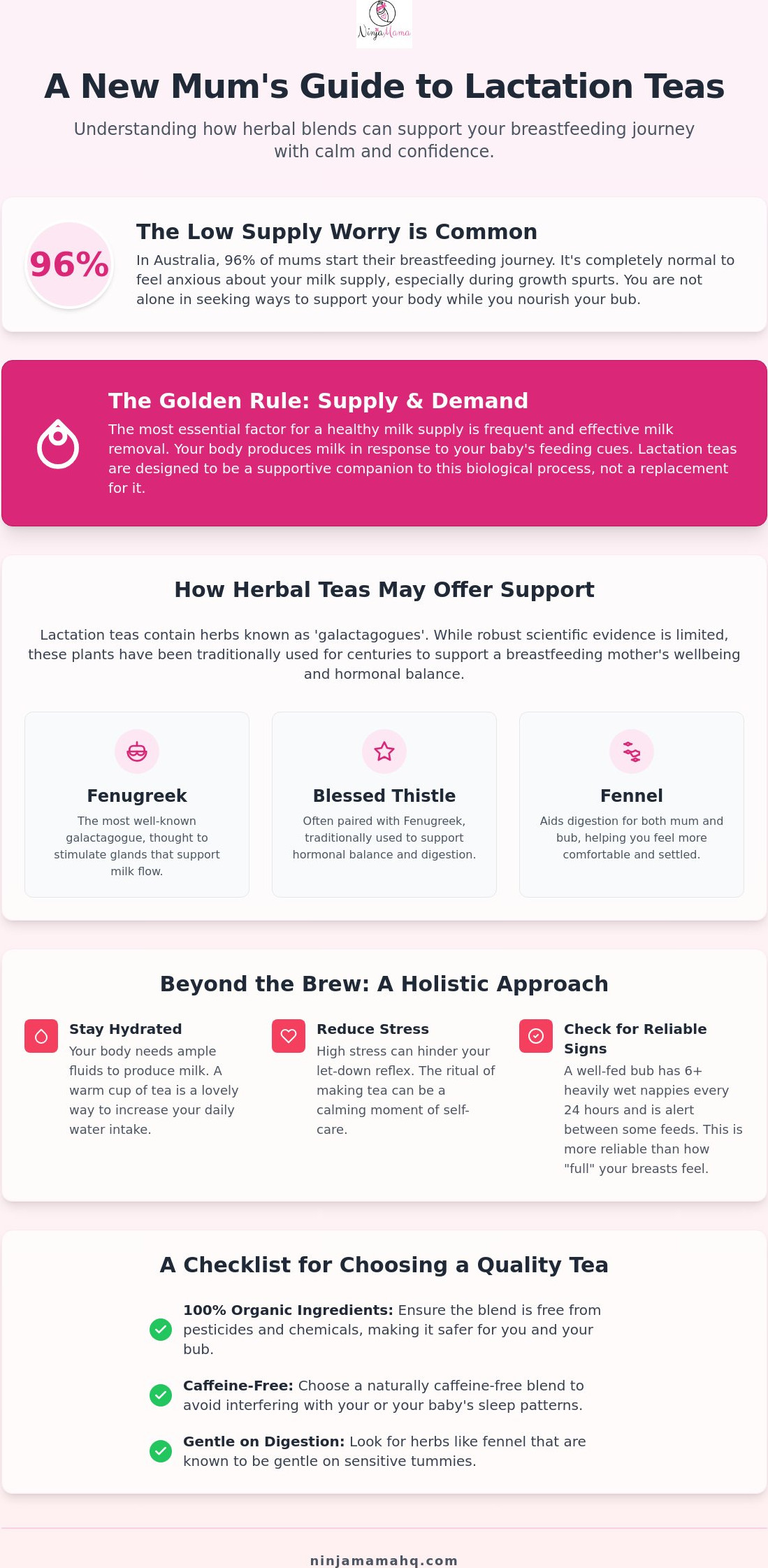
The fourth trimester is a beautiful, exhausting blur of midnight feeds and a constant, nagging question: is my baby getting enough? In Australia, 96% of mums start their breastfeeding journey with every intention of continuing, but the pressure to maintain a perfect supply can quickly lead to anxiety. It's a deeply caring, protective instinct to look for ways to nourish your body so you can nourish your bub. Many women find themselves wondering, lactation teas do they work, especially when the popular "boobie biscuit" trend feels a bit too heavy on the sugar for a daily snack. Tea offers a gentle, organic alternative that focuses on hydration and traditional herbs.
To better understand how these herbal blends might fit into your daily routine, watch this helpful video:
The Emotional Rollercoaster of Breastfeeding
Supply anxiety often hits its peak during growth spurts when your little one suddenly wants to feed every hour. It's enough to make anyone feel like their body isn't keeping up. This is where the ritual of a warm cup of tea becomes more than just a drink. The simple act of sitting down and breathing in the herbal aroma can help lower your stress levels. Since high stress can actually hinder your let-down reflex, this small moment of calm is a biological win. Feeling supported and taking ten minutes for yourself is a practical way to help your body function at its best, creating a sense of prepared calm amidst the chaos.
When Should You Be Concerned About Supply?
It is easy to mistake a fussy baby or breasts that no longer feel "full" for a drop in milk, but these are often just normal signs that your supply is regulating. This is frequently a case of "perceived low supply" rather than a clinical issue. Before the worry takes over, check for the reliable signs of a well-fed bub. Are they producing at least six heavily wet nappies every 24 hours? Are they alert and settled for at least some periods between feeds?
Understanding What are Galactagogues? can help you see how certain herbs might support your journey, but they are just one piece of the puzzle. Using organic lactation tea bags can be a lovely way to stay hydrated while exploring these traditional remedies. If you have persistent concerns about weight gain, reaching out to the Australian Breastfeeding Association or a private lactation consultant is the best way to get tailored support. When asking yourself, lactation teas do they work, remember that they are designed to be a supportive companion to frequent feeding, not a replacement for professional advice.
What are Galactagogues? The Science Behind the Herbs
Galactagogues are substances used to induce, maintain, or increase milk production in breastfeeding mothers. The central theory behind their use is that certain plant compounds can mimic or stimulate the hormones responsible for milk synthesis, particularly prolactin. While many Aussie mums swear by their daily brew, there is a persistent gap between personal success stories and clinical data. In fact, the Australian Breastfeeding Association notes there is little scientific evidence that they actually increase milk supply on their own. This leads back to the big question: lactation teas do they work? The answer usually lies in how they support your body's overall function rather than acting as a magic pill. Natural doesn’t mean inactive. These herbs contain complex compounds that have been used for centuries because they interact with our body’s systems in subtle, supportive ways.
Common Herbs Found in Australian Lactation Teas
Fenugreek is the most famous galactagogue you will encounter. It is thought to stimulate the sweat glands, and since breasts are essentially modified sweat glands, the theory suggests it helps trigger a more robust milk flow. Blessed Thistle and Fennel are frequently paired together in premium blends. Traditionally, they are used to support digestion and hormonal balance, helping you feel more comfortable and less bloated during the postpartum period. If you’re looking for a nutritional lift, herbs like Nettle and Alfalfa are wonderful additions. They act like a gentle, plant-based multivitamin, providing a mineral boost of calcium and iron to support your physical recovery after birth.
The Role of Hydration in Milk Production
Producing milk is a thirsty job. Breast milk is roughly 87% water, so your fluid intake directly impacts how you feel and function. Health experts often suggest that breastfeeding mums aim for up to 3 litres of fluid a day to stay properly hydrated. When you are running on broken sleep, drinking plain water can feel like a chore. This is where a flavourful, organic tea becomes a lifesaver. It makes hitting those high hydration targets much more enjoyable and sustainable. When you start asking, lactation teas do they work, it’s helpful to remember that their power often comes from this combination of hydration and traditional herbal support. By choosing a high-quality blend like the Booby Booster lactation tea, you are not just drinking for supply; you are creating a nourishing ritual that supports your whole body while ensuring your fluids stay topped up.
Supply and Demand vs. The Teapot: Finding the Balance
Breastfeeding is a sophisticated biological feedback loop. The more milk you remove, the more your body makes. This is the "Golden Rule" that every new mum should keep in her back pocket. While you might be asking, lactation teas do they work, it’s vital to realise that no herbal blend can override the biological necessity of frequent milk removal. If bub isn't draining the breast or you aren't pumping regularly, your body simply won't get the signal to keep production high. Milk removal is the primary driver of your supply, and everything else is a supporting act.
Think of your breastfeeding journey as a high-performance engine. Frequent feeding is the spark that keeps it running. Tea, however, is the support crew. It provides the hydration and herbal nutrients that help your body perform that hard work more efficiently. Can you drink the tea and skip a midnight pump or a cluster-feed session? The answer is a firm but loving no. Tea works alongside your baby, not instead of them. It is designed to nurture the mother so she can continue the physical work of nursing.
How to Use Tea as a Support Tool
To get the most out of your brew, timing is everything. Many mums find that sipping a warm cuppa about 30 minutes before a planned power pumping session or a long stretch of skin-to-skin time creates a wonderful synergy. It’s a common practice across the country. A recent survey among Australian women showed that many reach for galactagogues like tea to feel more proactive about their supply. Just remember to monitor your bub. While organic herbs are gentle, every baby is different. Keep an eye out for any changes in their digestion or wind after you introduce a new blend into your routine.
The Relaxation Let-Down Connection
There is a fascinating physiological link between your stress levels and your milk flow. When you are anxious or rushing, your body produces adrenaline, which can actually inhibit your let-down reflex. It's like a biological handbrake. This is where the question "lactation teas do they work" finds its most powerful answer. The ten minutes it takes to steep and drink a tea acts as a forced mindfulness break. By lowering your heart rate and focusing on the warmth, you encourage the release of oxytocin. This "love hormone" is what triggers the let-down, making the milk flow much more easily for your bub. For an extra boost of physical relaxation, pairing your tea with warm breast therapy packs can help soothe any tension and prepare your body for a successful feed.
Choosing the Best Lactation Tea: A Checklist for Mums
Finding the right blend is about more than just reading a label. It is about choosing a product that respects your body and your baby's delicate system. When you are standing in the chemist or browsing online, the question isn't just, lactation teas do they work; it is whether that specific blend is safe and premium. Many generic options are filled with fillers that don't serve your recovery. You deserve a tea that feels like a beautiful self-care ritual. It shouldn't feel like another chore on your to-do list.
Your checklist should prioritise a few non-negotiables to ensure you're getting the best support:
- 100% Organic Ingredients: This is the most critical factor. Organic farming ensures no nasty pesticide residues pass through your milk to your bub.
- Caffeine-Free: You are likely already dealing with broken sleep. Avoid blends that use black or green tea bases. You need to rest whenever bub does.
- Zero Added Sugars: Many lactation cookies lead to a nasty energy crash. A clean herbal tea provides steady support without the sugar spike.
- Enjoyable Flavour: Nursing is hard enough. Don't force yourself to drink something you hate. Look for blends balanced with refreshing peppermint or aniseed.
Safety First: What to Avoid
Be wary of "proprietary blends" that hide the exact amounts of each herb. You have a right to know exactly what you are consuming. If you have underlying health conditions like thyroid issues or diabetes, always consult your GP before starting a tea containing Fenugreek. It is a powerful herb that can affect blood sugar levels. More is not always better. Stick to the recommended 1 to 3 cups per day to keep your system balanced and healthy.
Organic vs. Conventional: Why it Matters
Newborns have incredibly sensitive systems. Choosing "clean" herbs reduces the toxic load on their developing organs. Australian-owned brands often have much stricter sourcing standards than mass-produced imports. This ensures you get the best quality available for your fourth trimester. We believe your recovery should be as pure as possible. You can learn more about our commitment to organic recovery and how we select ingredients for our range.
When you choose a blend designed for safety and flavour, you turn a functional task into a moment of genuine comfort. If you are ready to start your ritual with a trusted, organic option, our Booby Booster lactation tea bags are the perfect place to begin.
Beyond the Brew: Creating Your Postpartum Ritual
Breastfeeding is a marathon, not a sprint. While you have likely spent many late nights researching lactation teas do they work, it is equally important to remember that your worth as a mother is not measured in millilitres. At Ninja Mama, we see ourselves as your partner in this fourth trimester journey. We believe that supporting your supply works best when it is part of a wider, holistic approach to your recovery. This means prioritising your own comfort, mental health, and hydration so you have the physical capacity to care for your bub. When you look after yourself, you are better equipped to look after your little one.
Creating a postpartum ritual is about more than just a drink. It is about carving out ten minutes of prepared calm in a day that often feels chaotic. By combining traditional herbal support with intentional rest, you are giving your body the best environment to thrive. Whether you are using a tea to help with hydration or as a forced mindfulness break, the goal is to feel supported and nurtured. You are doing a massive job, and having a few curated tools in your kit can make a world of difference to your confidence.
The Ninja Mama Booby Booster Range
We have developed a range of organic solutions designed to fit seamlessly into your busy days as a new mum. For those who need a quick, soothing ritual between feeds, our Booby Booster Lactation Tea Bags offer a premium blend of traditional herbs in a convenient format. If you are craving a moment of indulgence, our Organic Lactation Chocolate Drink provides a delicious, dairy-free treat that supports your body without the sugar crash of traditional lactation cookies. These products are even more effective when they are part of a complete postpartum recovery kit, which addresses everything from perineal care to breastfeeding comfort.
Final Tips for Breastfeeding Success
Success in breastfeeding often comes down to reducing the small stresses in your day. When your physical recovery is smooth, your oxytocin levels can rise more easily. Keep your Upside Down Peri Bottle handy in the bathroom to ensure your own hygiene and comfort are never an afterthought. Stress-free bathroom breaks mean you can get back to bub feeling refreshed rather than in pain.
It sounds like a cliché, but resting when you can is vital for your milk production. Your body needs energy to create that liquid gold. When you find yourself asking, lactation teas do they work, remember that they work best when you are also being kind to yourself. Listen to your body, stay topped up with fluids, and trust the process. You are doing an incredible job, Ninja Mama. You’ve got this.
Nurturing Your Breastfeeding Journey with Confidence
Navigating the early weeks of motherhood is a huge transition, and it's completely natural to seek out ways to support your body. As we've explored, the answer to the question, lactation teas do they work, lies in their role as a supportive companion to the golden rule of frequent milk removal. By staying hydrated and embracing a calming ritual, you create the best possible environment for your supply to thrive. Remember that choosing clean, premium ingredients is an act of care for both yourself and your bub.
Our range is Australian Owned & Operated and was Designed by Mums for Mums who understand exactly what you're going through. Every blend in our collection features 100% Organic Ingredients, ensuring you receive high-quality support without any unwanted additives. Whether you prefer a soothing herbal cup or a nourishing chocolate treat, we're here to walk alongside you through every cluster feed and growth spurt.
Ready to elevate your postpartum self-care? Shop the Ninja Mama Booby Booster Range today and find your new favourite ritual. You're doing a brilliant job, and we're so proud to be part of your village.
Frequently Asked Questions
How long does it take for lactation tea to start working?
Most mums notice a subtle change within 24 to 72 hours of starting a consistent routine. It is important to remember that these herbs work in harmony with your body; give them a few days to build up in your system. If you are asking, lactation teas do they work, the timeline often depends on how frequently you are also feeding or pumping to signal milk production.
Can I drink lactation tea while I am still pregnant?
It is best to wait until after your bub arrives before starting a lactation blend. Some common ingredients like fenugreek or fennel are not typically recommended during pregnancy as they may affect hormone levels. For late pregnancy support, many women prefer a dedicated raspberry leaf tea to help prepare the uterus for labour instead of using a blend designed for milk supply.
Are there any side effects to drinking lactation tea for me or the baby?
While organic herbs are gentle, some mums and babies may experience mild side effects like wind or digestive changes. Fenugreek is known to sometimes give sweat or urine a maple syrup scent, which is harmless but helpful to know. Always keep an eye on your bub for any new skin rashes or unusual fussiness after you introduce a new herbal tea to your daily diet.
How many cups of lactation tea should I drink a day to see a difference?
Drinking 1 to 3 cups per day is the standard recommendation for most premium herbal blends. Spreading these out across the morning and afternoon helps keep you hydrated and ensures a steady intake of supportive herbal compounds. Consistently hitting this target every day is often much more effective for your routine than drinking a large amount in a single sitting.
Does lactation tea work if I am exclusively pumping?
Yes, lactation tea can be a wonderful support tool for mums who are exclusively pumping. The biological principles of milk production remain the same whether you are nursing at the breast or using a pump. When considering lactation teas do they work for pumpers, remember that the tea provides the hydration foundation while your pumping schedule drives the necessary demand for supply.
What is the difference between lactation tea and raspberry leaf tea?
These two teas serve very different purposes during your journey into motherhood. Raspberry leaf tea is a uterine tonic designed to help strengthen pelvic muscles and support the uterus as it contracts after birth. Lactation tea is specifically formulated with herbal galactagogues to support the hormones and physical processes involved in maintaining a healthy milk supply for your baby.
Can I drink lactation tea if I have a thyroid condition?
You should always consult your GP or endocrinologist first if you have a thyroid condition. Certain herbs, particularly fenugreek, can potentially interfere with thyroid hormone absorption or affect your blood sugar levels. It is much safer to get professional medical advice tailored to your specific health needs before starting any new herbal supplement or lactation support product.
What should I do if lactation tea doesn’t seem to be helping my supply?
If your supply isn't increasing, it is time to look at the foundations of milk removal and seek expert guidance. Ensure you are getting plenty of skin-to-skin time and feeding or pumping at least 8 to 12 times in a 24 hour period. Reaching out to a private lactation consultant or the Australian Breastfeeding Association can provide the tailored support you need to troubleshoot latch or supply issues.

Article by
Louise Beever
Louise Beever is the founder of Ninja Mama, an Australian postpartum recovery brand focused on creating premium, practical recovery essentials for new mothers. Since launching Ninja Mama in 2018, Louise has worked closely with thousands of postpartum women and healthcare retailers to better understand the realities of recovery after birth. Her work focuses on postpartum preparation, recovery support, and improving awareness around the fourth trimester.
Remember Mamas
The information provided in this article is intended for general educational and informational purposes only and should not be considered medical advice. Always seek guidance from your doctor, midwife, lactation consultant, or qualified healthcare professional regarding your individual circumstances, pregnancy, birth, or postpartum recovery.