
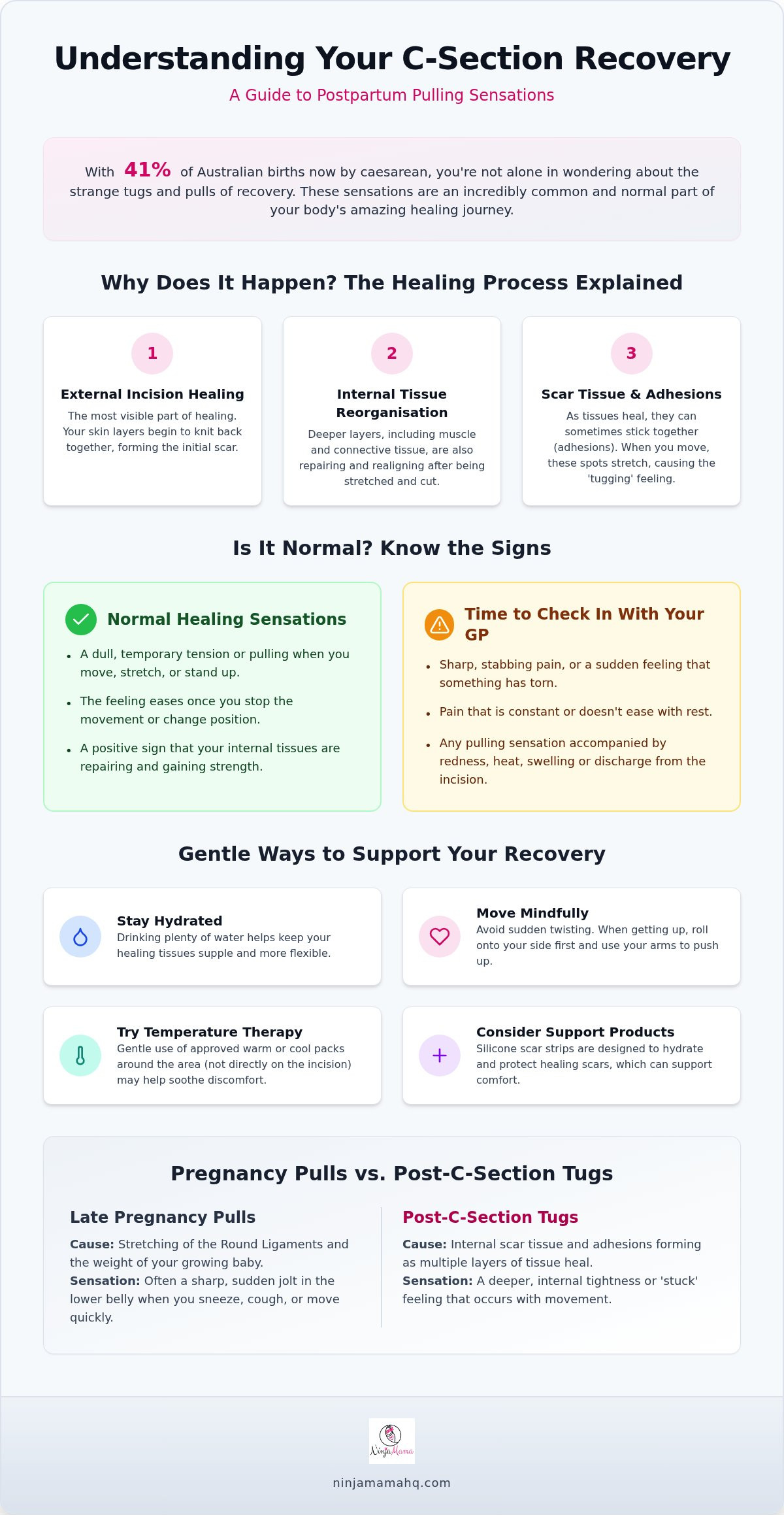
You’re finally settled at home with your little one, but every time you reach for a fresh nappy or shift position on the lounge, you feel a sharp, strange tugging deep in your abdomen. It’s a bit unsettling, isn’t it? These pulling sensations are incredibly common after a C-section, yet they often catch new mums by surprise, leading to unnecessary worry about whether your incision is healing correctly. With 41% of Australian births now being caesareans, you are certainly not the only one wondering if that internal tightness is normal or a sign you’ve overdone the recovery.
We want to help you move from a place of anxiety to one of prepared calm. You’ll discover exactly why your body creates these tugs as it heals and how to distinguish between standard recovery and something that needs a doctor’s eye. We’ve also gathered some gentle, Aussie-approved ways to manage the discomfort, so you can focus more on those precious newborn cuddles and less on the "what-ifs." By the end of this article, you’ll have a clear plan to support your scar and feel more confident in your body’s amazing ability to mend itself.
Key Takeaways
- Understand why those internal pulling sensations are a common part of your body’s natural reorganisation and healing process after birth.
- Identify the difference between third-trimester round ligament pain and the way C-section scars mature and feel tight in the weeks following delivery.
- Discover how simple strategies like temperature therapy and focused hydration may help keep your healing tissues supple and more comfortable.
- Learn to distinguish between standard postpartum tugging and the specific signs that mean it's time to check in with your midwife or GP.
- Explore a curated list of recovery essentials, including C-section scar strips, designed to support your physical comfort during the fourth trimester.
What Are Those Tugging Feelings? Understanding Pulling Sensations in the Pelvis and Abdomen
That odd sensation you're feeling isn't your imagination. Many mums describe pulling sensations as a weird, internal tension; like a rubber band being stretched just a little too far inside their belly. During pregnancy, your body undergoes a massive structural shift to accommodate your growing bub. Your skin, muscles, and ligaments stretch to their absolute limits. Once you've had a Caesarean section, your body doesn't just snap back. It begins a complex process of knitting multiple layers of tissue back together. This internal re-organisation is exactly why you feel those strange tugs as you move through your day.
The Anatomy of a 'Tug'
Think of your uterus as the centre of a very busy web. As it expanded, it pulled on every surrounding connective tissue and ligament. Post-birth, especially after surgery, your body creates scar tissue as part of the natural healing response. Sometimes, these layers of tissue can stick together, creating what we call adhesions. When you stand up quickly, twist to grab a fresh nappy, or even take a deep breath, you're essentially stretching those sticky spots. These movements trigger that familiar tugging feeling because the tissues aren't yet as flexible as they used to be.
Normal vs. Not-So-Normal Sensations
A healthy tug usually feels like a dull, temporary tension that eases once you stop the movement. It’s often a sign that your tissues are repairing and gaining strength. However, it's vital to distinguish this from a sharp, stabbing pain or a feeling that something has actually torn. While 78% of Australian mums in a 2026 report noted that physical recovery impacted their mental wellbeing, knowing the difference between healing and a strain can significantly lower that stress.
If the pulling is accompanied by redness, heat, or discharge around your incision, it’s time to call your midwife. Most of the time, that "stuck" feeling is just your body working hard to find its new rhythm. Healing isn't a race; it's a gradual re-alignment of your entire core. Give yourself the grace to move slowly while those internal layers find their place again.
The Final Stretch: Why You Feel Pulling Sensations in Late Pregnancy
As you reach the final weeks of your pregnancy journey, your body is performing a monumental feat of endurance. It is a time of immense physical transition that requires both strength and patience. It's no wonder that everyday tasks like rolling over in bed or simply standing up from the lounge feel like a full-blown Olympic event. During this stage, many women experience distinct pulling sensations in their lower abdomen and pelvis. This isn't just your skin stretching; it's the result of your muscles and connective tissues reaching their maximum capacity as they support your growing bub.
The sheer weight of your baby at 36 weeks and beyond puts incredible pressure on the lower abdominal wall. When your baby finally 'drops' or engages into the pelvis, a process often called lightening, the shift in centre of gravity can create a new feeling of internal tugging. This pressure can make your pelvic floor feel heavy and your abdominal muscles feel like they are being pulled from the inside out. While this is a positive sign that birth is approaching, it certainly makes navigating the house a bit of a challenge.
Round Ligament Pain: The Classic Pregnancy Pull
If you’ve ever felt a sharp, sudden jolt in your lower belly when you sneeze or cough, you’ve likely met your round ligaments. These thick bands of tissue support your uterus, and as they stretch thin like a taut rubber band, any sudden movement can cause a quick, painful tug. These sensations are usually short-lived but can be quite startling. To manage this, try to move with intention. When getting out of bed, roll onto your side first and use your arms to push yourself up, rather than using your core muscles. Keeping a supportive oil roller nearby can be a lovely way to encourage a moment of calm and mindfulness during these physically demanding weeks.
Pelvic Girdle Pain and Internal Tension
Another common culprit for that heavy, pulling feeling is Pelvic Girdle Pain (PGP). Your body is currently flooded with relaxin, a hormone designed to soften your ligaments for birth. While helpful for delivery, it can make your pelvic joints feel a bit unstable and loose. This often manifests as a pulling sensations in the pubic area, especially when climbing stairs, getting out of the car, or walking. It is one of the common symptoms after c-section or late pregnancy that many Australian mums report to their midwives. Using a pregnancy support belt or sleeping with a pillow between your knees can help keep your pelvis aligned and reduce that internal strain. Remember, your body is doing incredible work, and it's perfectly okay to slow down and take the pressure off.
Post-Birth Recovery: Pulling Sensations After Vaginal and Caesarean Deliveries
While the previous sections explored the "why" during pregnancy, the postpartum period brings a whole new set of physical adjustments. Your uterus, which spent nine months expanding, is now working overtime to return to its pre-pregnancy size. This process, known as involution, involves powerful contractions that can cause a distinct tugging or cramping feeling deep in your pelvis. It’s your body’s way of tidying up after the big event, but it can certainly feel strange as everything shifts back into place. For many mums, these pulling sensations are simply the physical language of a body that is reorganising itself after the incredible feat of birth.
Beyond the internal shifts, your external recovery requires just as much patience and care. Whether you’ve had a vaginal delivery or a surgical birth, the tissues involved have been through a lot. Keeping these areas clean, dry, and well-supported is the best way to encourage healthy healing and reduce that "tight" feeling that often leads to discomfort during your daily movements.
The C-Section Scar: Managing the 'Stuck' Feeling
After a caesarean, your body is healing through multiple layers of tissue. It’s a significant recovery process for any mum. Because skin, muscle, and fascia all mend at different rates, you might feel like your scar is "stuck" to the tissues underneath. This often leads to pulling sensations when you try to stand up straight or reach for something on a high shelf. Many women find that keeping the area hydrated and protected helps manage this tightness as the scar matures. Using silicone scar patches can provide a gentle, protective barrier that supports the skin’s natural moisture, helping the area feel more supple and less like it’s constantly tugging at you during recovery.
Perineal Healing and Stitches
If you’ve had a vaginal birth with stitches, the recovery feels a little different but no less intense. In those first few days, significant swelling in the perineal area can make your stitches feel incredibly tight, almost as if they are pulling too hard. This is particularly noticeable during your first few trips to the bathroom post-birth. The goal here is to keep the area clean and calm without adding any extra friction or irritation. A peri bottle is an absolute essential for this; it allows you to cleanse with a gentle stream of warm water while you pee, which helps dilute the sting and avoids the need for uncomfortable wiping. By keeping the area clean and reducing irritation, you can help those tender tissues heal more comfortably.
How to Manage Postpartum Discomfort and Support Your Body’s Healing
Recovery is rarely a straight line. It’s a series of small, intentional steps that help your body find its new normal. While those internal tugs are a sign of your tissues knitting back together, you don't have to just "grin and bear it." Managing your comfort is a vital part of your self-care routine. In fact, a 2026 report found that 78% of Australian mothers felt their physical recovery negatively impacted their mental wellbeing. By taking proactive steps to soothe your body, you’re also supporting your emotional health during the fourth trimester.
One of the simplest ways to keep your healing tissues flexible is to focus on hydration and nutrition. Think of your connective tissues like a sponge; when they are well-hydrated, they remain supple and move easily. When you’re dehydrated, those pulling sensations can feel more pronounced because the tissues are less "stretchy." Pair your water intake with nutrient-dense foods that support collagen production to give your body the building blocks it needs for healthy repair. Creating a small daily recovery ritual, even if it’s just ten minutes of quiet rest while using a therapy pack, can provide a significant psychological boost and a sense of control over your healing journey.
Soothe the Pull with Cooling and Warmth
Temperature therapy is a total game-changer for managing tissue tension. In the first few days, swelling is often the primary cause of that tight, "over-stretched" feeling. Using perineal ice packs can help reduce inflammation and numb the area, which may provide immediate relief from tugging. Once the initial swelling has subsided, many women find that warmth becomes their best friend. A gentle, warm sitz bath soak may help relax the pelvic floor muscles and ease the internal pulling felt during movement. If you're feeling referred tension in your lower back from overcompensating for abdominal discomfort, a safe heat pack on your lumbar spine can help your whole core relax.
Hygiene and Support for Stitched Tissues
When you’re dealing with stitches, the way you handle the area matters. Avoid the temptation to wipe or rub, as this can catch on the thread and increase that sharp pulling feeling. Instead, always pat the area dry with a soft towel or use a peri bottle to cleanse. Support is also key. Standard undies often have elastic that sits right on a C-section scar or presses against perineal swelling. Switching to disposable postpartum underwear provides a soft, seamless fit that supports your body without irritating your stitches. As you feel stronger, you can begin very gentle pelvic floor "knits"—subtle, light activations—to encourage blood flow and circulation to the healing tissues. Ready to build your ultimate recovery station? Explore our postpartum recovery bundles to find everything you need for a smoother, more comfortable transition.
Your Recovery Toolkit: Essential Ninja Mama Goodies for Postpartum Comfort
Ninja Mama wasn't created in a boardroom; it was born in the bathroom and bedroom of a mum who knew exactly how overwhelming those first few weeks could be. We understand that the "fourth trimester" is a time of immense physical change, and we believe your recovery products should be as premium and supportive as a best friend. For the 65% of Australian mothers who report feeling unprepared for their physical recovery, having a curated toolkit can transform an anxious transition into a period of comfort and confidence. Our range is designed for humans first, ensuring you feel seen and supported throughout your healing journey.
When you’re navigating those strange pulling sensations, the right support makes all the difference. Our range is designed specifically for the unique needs of Australian mums, whether you’re recovering from a vaginal birth or a caesarean. We focus on the intersection of functionality and ease, ensuring that every item in your toolkit serves a practical purpose while feeling like a small act of self-care. These essentials are commonly used by postpartum mothers to manage the physical challenges of recovery with a sense of prepared calm.
The 'Big Three' for Pulling Relief
If you're looking to soothe that tight, tugging feeling, these three essentials are a brilliant starting point for your recovery:
- The Upside Down Peri Bottle: Hygiene is vital, but wiping can be painful when you have stitches. This bottle allows for gentle, targeted cleansing that doesn't tug or irritate tender tissues.
- C-Section Silicone Scar Patches: These are designed to provide a protective, breathable barrier. By supporting the skin’s moisture, they help manage the "stuck" feeling of a maturing scar and may help reduce the intensity of pulling sensations during movement.
- Organic Sitz Bath Soak: A warm soak is a wonderful way to relax tight pelvic muscles and encourage circulation. Our organic blend is crafted to be gentle on your most sensitive areas while providing a moment of much-needed relaxation.
Ready to Pack Your Bag?
Preparing for your recovery shouldn't be another source of stress. Our postpartum recovery kits are designed to take the guesswork out of hospital bag prep, providing a structured system of essentials that many women find helpful. These kits are often chosen as the ultimate gift for a new mum, offering both practical value and a touch of premium comfort. If you’d like to learn more about our journey and why we’re so passionate about maternal wellbeing, feel free to visit our About Us page.
Most importantly, remember to listen to your body. Recovery is a process, not a race, and those internal tugs are simply reminders of the incredible feat you’ve just accomplished. You’re doing a brilliant job, Mama. Give yourself the grace and time you deserve to heal, knowing that your body is doing exactly what it was designed to do.
Stepping Into a More Comfortable Fourth Trimester
Understanding that those internal tugs are a sign of your body’s incredible resilience is the first step toward a calmer recovery. Whether you’re managing round ligament pain or the maturing of a surgical scar, remember that these pulling sensations are a common part of the healing process. You don't have to manage this transition alone or in discomfort. By choosing tools that support your physical needs, you can shift your focus back to what truly matters; bonding with your new bub.
Ninja Mama was founded by an Aussie mum who has been exactly where you are. We’ve supported over 10,000 happy Australian customers with our range of premium, organic, and evidence-aware essentials. From soothing sitz soaks to protective scar strips, our products are designed to be your best friends during the bathroom and bedroom moments of recovery. Shop the Ninja Mama Postpartum Range for Gentle Recovery Support and give your body the grace it deserves to mend at its own pace. You’re doing a brilliant job, Mama.
Frequently Asked Questions
Is it normal to feel a pulling sensation at my C-section scar months later?
It is quite common to feel these tugs months or even a year after your surgery. Scar tissue continues to mature and change for up to two years post-birth. As these internal layers of tissue become more established, they can sometimes stick to surrounding structures, creating those familiar pulling sensations during deep stretches or sudden movements. While usually normal, regular gentle scar massage may help improve tissue flexibility and comfort once the wound is fully closed.
Can pulling sensations in the lower abdomen be a sign of early labour?
Pulling feelings in the lower abdomen are typically related to the stretching of your ligaments rather than the start of labour. Round ligament pain is a classic third trimester experience caused by your uterus expanding. In contrast, early labour usually involves rhythmic, intensifying contractions that wrap around your back and belly. If your tugging is accompanied by a regular pattern of tightening, a "show," or your waters breaking, contact your maternity unit immediately.
How can I tell the difference between normal healing and an infection?
Distinguishing between healthy repair and a complication is vital for your peace of mind. Normal healing often involves a dull tugging, mild itching, or slight pinkness around the edges of the incision. However, if the area becomes bright red, feels hot to the touch, or begins to ooze fluid, these are clear warning signs. Fever, chills, or a sudden increase in sharp pain also suggest an infection that requires prompt medical attention from your healthcare provider.
Why does it feel like my internal organs are shifting or pulling after birth?
That shifting feeling is your body's way of finding its pre-pregnancy alignment. During those nine months, your internal organs were pushed aside to make room for your growing bub. Once birth occurs, they begin to move back into their original positions. Because your supporting ligaments are still quite soft and loose due to pregnancy hormones, this re-arrangement can feel like a strange, internal tugging or a lack of stability in your core as everything settles.
Will doing pelvic floor exercises help with pulling sensations?
Gentle pelvic floor activations can be incredibly helpful for managing pulling sensations after birth. By performing light "knits" or Kegels, you increase essential blood flow to the pelvic region, which supports the healing of both internal and external tissues. Improved pelvic floor strength also provides better internal support for your organs, potentially reducing the feeling of heaviness or tugging. Always wait for your healthcare professional's all-clear before starting a dedicated exercise programme after delivery.
Should I wear a support belt if I feel tugging in my third trimester?
Wearing a supportive pregnancy belt can be a lifesaver if you're struggling with heavy tugging in your final weeks. These belts help distribute the weight of your bump more evenly across your hips and lower back, taking the direct pressure off your overstretched abdominal muscles and ligaments. Many Australian mums find this extra support reduces the frequency of sharp round ligament jolts during daily activities like walking the dog or doing the grocery shopping.
When should I see a GP or midwife about these pulling feelings?
You should contact your GP or midwife if the pulling becomes a constant, sharp pain that prevents you from moving comfortably. While mild tugging is expected, any signs of wound separation, heavy bleeding, or a high temperature should be investigated straight away. Trust your maternal instinct; if a sensation feels wrong or is causing you significant anxiety, seeking professional reassurance is always the right choice for your physical and emotional wellbeing during recovery.
How long does the 'tugging' feeling usually last after having stitches?
The most intense tugging from perineal stitches usually begins to fade after the first week or two. As the initial postpartum swelling goes down, the tension on the thread lessens significantly. Most modern stitches are dissolvable and will naturally break down within ten to fourteen days, though the underlying tissue continues to strengthen for several weeks. Keeping the area clean and avoiding heavy lifting during this window helps ensure a smoother and more comfortable recovery.

Article by
Louise Beever
Louise Beever is the founder of Ninja Mama, an Australian postpartum recovery brand focused on creating premium, practical recovery essentials for new mothers. Since launching Ninja Mama in 2018, Louise has worked closely with thousands of postpartum women and healthcare retailers to better understand the realities of recovery after birth. Her work focuses on postpartum preparation, recovery support, and improving awareness around the fourth trimester.
Remember Mamas
The information provided in this article is intended for general educational and informational purposes only and should not be considered medical advice. Always seek guidance from your doctor, midwife, lactation consultant, or qualified healthcare professional regarding your individual circumstances, pregnancy, birth, or postpartum recovery.