
What should I pack in my hospital bag without trying to cover every possible birth scenario? Checklists can disagree, and it’s easy to worry about forgetting something important. A practical starting point is to plan for labour, your stay, your baby and the trip home, then add a few personal comfort items you know you’ll use.
What hospitals provide can vary, too, so it’s understandable to wonder what to bring yourself. A little preparation can help you feel more settled while leaving room for your birth plans, comfort needs and feeding preferences.
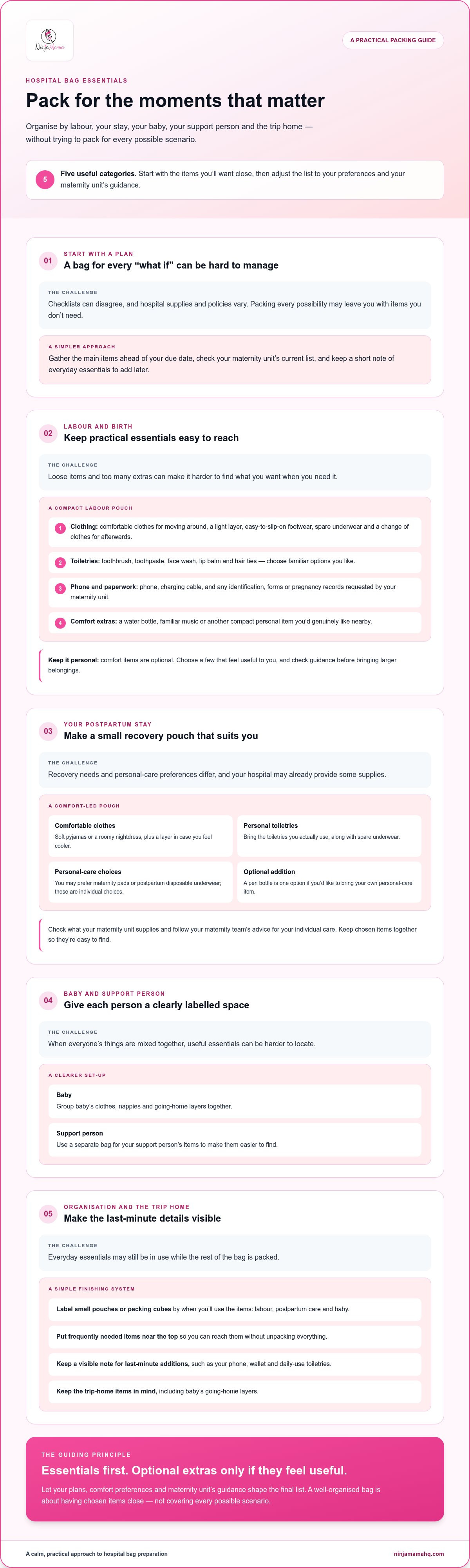
This Australian checklist groups items by person and moment: labour, postpartum care, baby, your support person and the journey home. You’ll also find ways to organise your bag, choose optional recovery items and use your maternity unit’s guidance. The aim isn’t to pack for every “what if”, but to have the essentials close when you need them.
Key Takeaways
- For what should i pack in my hospital bag, organise essentials by person and moment: labour, your stay, baby, support person and the trip home.
- Choose comfortable clothes, practical toiletries and a few personal comfort items for labour, rather than packing for every possibility.
- Prepare a small postpartum pouch with the personal-care items you prefer, and check your maternity unit’s guidance on what it supplies.
- Use the baby and support-person lists to plan useful essentials, including baby’s clothes, nappies and going-home layers.
- Before you’re ready to leave, review hospital guidance, label bags and note anything that needs to be added at the last minute.
What should you pack in your hospital bag, and when should you prepare it?
A useful hospital bag doesn’t need to be huge or packed for every possible scenario. Start with five categories: labour, your postpartum stay, your baby, your support person and the trip home. If you’re asking, “What should I pack in my hospital bag?”, use those moments to build a list, then adjust it to suit your plans and preferences.
There’s no single preparation deadline that works for everyone. Gather the main items ahead of your due date and keep a short list of everyday essentials to add later. Your maternity unit’s current packing list is the best guide to its supplies and policies, which can vary between hospitals. Use it to avoid packing items you don’t need and to identify anything you’ll need to bring.
How to organise a hospital bag without overpacking
Use small, labelled pouches or packing cubes instead of putting everything loose in one bag. Group items by when you’ll use them, such as labour, postpartum care and baby. A separate bag for your support person can make things easier to find. Put frequently needed items near the top, and keep a visible note of last-minute additions such as your phone, wallet and daily-use toiletries.
What may change your personal checklist?
Your planned length of stay, feeding preferences and comfort priorities can all shape what you bring. Familiar clothes and toiletries can make an unfamiliar room feel more manageable. Pack for the birth you’re planning while allowing for flexibility: choose clothes that feel comfortable after either a vaginal birth or caesarean birth, without assuming which you’ll need.
Postpartum personal-care supplies are another area where preferences differ. Some people choose to bring a peri bottle or postpartum underwear; others prefer to use what’s available at the hospital. These are optional additions, not a reason to fill every spare pocket. Check your maternity unit’s guidance before packing bulky or restricted items, and use its list to decide what to leave at home. A small recovery pouch keeps your chosen personal-care items together.
What to pack for labour and birth: a practical checklist
For labour, prioritise comfort and easy access over a long list of “just in case” extras. Keep these items together in a labelled pouch or near the top of your bag, so you or your support person can find them without unpacking everything.
- Clothing: Pack comfortable clothes you can move around in, a light layer for changing temperatures and easy-to-slip-on footwear. Add spare underwear and a change of clothes for afterwards.
- Toiletries: Bring the basics you like to have on hand, such as a toothbrush, toothpaste, face wash, lip balm and hair ties. Choose familiar, simple options that suit your preferences.
- Phone and paperwork: Pack your phone and charging cable, along with any identification, forms or pregnancy records requested by your maternity unit.
- Comfort extras: Consider a water bottle, familiar music or another compact personal item that feels reassuring to you.
Labour comfort items worth considering
Comfort is personal. Music may be welcome company for one person and a distraction for another. A water bottle or familiar pillowcase might feel useful to you, but neither is a requirement. Choose only a few items you’d genuinely like nearby. Keep small essentials and electronics together, and check your maternity unit’s guidance before bringing larger belongings.
Paperwork, clothing and practical essentials
Before packing documents, review your maternity unit’s instructions so you know which records or forms to bring. Choose loose clothing that’s easy to change and comfortable for moving around, plus a light layer you can take on or off. Let your own preferences guide your toiletries and spare underwear rather than trying to follow a one-size-fits-all list.
After birth, your comfort needs may shift. If you’d like to bring your own postpartum personal-care items, keep them separate from your labour essentials so they’re easy to locate later. For example, a postpartum peri bottle can go in a recovery pouch with other items you’ve chosen. Follow your maternity unit’s guidance on what it supplies and what you may bring.
When deciding what should i pack in my hospital bag for labour, separate essentials from optional extras. Essentials are the practical items you’ll want readily available; extras are worth packing only if they’re compact, familiar and genuinely useful to you. That keeps your labour section easy to navigate when you’re focused on the moment.
What should you pack for postpartum recovery in hospital?
Give recovery items their own small section of your bag. You may want comfortable clothes, familiar toiletries and personal-care supplies close by after birth, but your preferences and needs can change. Postpartum bleeding and recovery experiences vary, so follow your maternity team’s advice for your individual care and check what your hospital provides before packing supplies.
Choose loose clothing that’s easy to put on and remove, such as soft pyjamas or a roomy nightdress, and pack a layer in case you feel cooler. Add the toiletries you actually use, plus spare underwear. Some people prefer maternity pads; others may want to bring postpartum disposable underwear. These are personal packing choices, not essentials for everyone.
Postpartum personal-care items to keep within reach
Review your maternity unit’s packing guidance, then decide whether you’d like to bring your preferred maternity pads or other personal-care items. Keep them together in a labelled pouch with toiletries and comfortable clothing, so you’re not searching through the whole bag. A peri bottle is another optional item some people choose to pack. Ninja Mama’s peri bottle is one example; follow your maternity team’s guidance on personal care after birth.
Postpartum disposable underwear and perineal cooling products may also suit your preferences. They’re comfort-focused additions, not medical necessities. Keep packing manageable by choosing only the items you’d genuinely like to have, and use your maternity team’s guidance for your individual circumstances.
Planning for different birth and recovery experiences
You don’t need to predict exactly how birth or recovery will unfold. After a vaginal birth, you may want your preferred pads, loose clothing and personal-care items easy to reach. For a caesarean birth, consider clothes that feel comfortable around your middle and are simple to change in and out of. These are options to think about, not assumptions about what you’ll need.
Follow your maternity team’s individual advice, especially for care after a caesarean or if your circumstances change. For what should i pack in my hospital bag, a useful rule is to separate what you know you’ll use from optional extras. Pack a few considered recovery items, then adapt your choices to the guidance you receive.
What does your baby and support person need for the hospital stay?
Keep your baby’s items and your support person’s things in separate bags or labelled sections. That makes it easier to find what you need without mixing up a going-home outfit with a phone charger. Every maternity unit has its own guidance, so use the table as a starting point and check which baby-care items it recommends bringing.
| Baby | Support person |
|---|---|
| A small selection of practical outfits, including a separate going-home outfit | Phone, charging cable and any essential contact details |
| Nappies and wipes, if your maternity unit recommends bringing them | Snacks and a drink, in line with hospital guidance |
| Weather-appropriate layers and a suitable, correctly installed car restraint for the trip home by car | A change of clothes and any personal items needed for the stay |
| Any other baby-care items requested by your maternity unit | A short list of key contacts and practical arrangements for home |
Baby items for the hospital and trip home
Choose outfits that are easy to change and pack a going-home set separately, with an extra layer suited to the weather. There’s no need to bring every size or outfit you own. Check whether your maternity unit recommends packing nappies, wipes or other baby-care supplies rather than assuming what it provides. If you’re travelling home by car, plan for a suitable restraint that’s correctly installed before the trip. Keeping the going-home clothes together makes them easier to find when it’s time to leave.
Support-person essentials that make the stay easier
A support person may appreciate their own small bag, especially if they’ll be staying for an extended period. Pack a phone charger, snacks, a drink and a change of clothes where permitted. Add key contact details and a simple note of practical arrangements at home, such as who to update or who is managing responsibilities there.
Visitor and overnight-support arrangements can vary, so review your maternity unit’s current guidance before planning who will stay and what they can bring. That helps your support person pack for the actual visit instead of guessing. Focus on what makes communication, comfort and the journey home easier, then leave the rest behind.
Finish your hospital bag checklist and feel ready to go
A final check doesn’t need to become another big task. Use this short list as a prompt, then tailor it to your maternity unit’s guidance and what feels useful to you.
-
Parent
- [ ] Identification, pregnancy records and any forms your maternity unit requests
- [ ] Phone, charging cable and essential personal items
- [ ] Comfortable clothes, toiletries and preferred postpartum care supplies
- [ ] A note of last-minute items to add, such as daily-use toiletries
-
Baby
- [ ] Practical clothes and a separate going-home outfit with weather-appropriate layers
- [ ] Nappies and wipes if your maternity unit recommends bringing them
- [ ] Suitable transport arrangements, including a correctly installed car restraint for the trip home by car
-
Support person
- [ ] Phone, charger, snacks and a change of clothes, where permitted
- [ ] Key contact details and a note of practical arrangements at home
A simple final bag check before leaving home
First, review your maternity unit’s current list, including its guidance about supplies and support people. Pack the essentials in labelled bags or pouches. Confirm the paperwork, phone, charger and personal items are accounted for, then check the baby’s going-home outfit and transport plan. Leave a short note beside the bag with anything you’ll need to add at the last minute.
What to do if your plans or stay change
Your checklist is a flexible prompt, not a prediction of how birth will unfold or how long you’ll stay. If your plans or preferences change, update the bag using your maternity unit’s guidance and the items that feel right for you. A postpartum recovery kit is one optional way to keep selected personal-care items together; it can sit alongside your own list. For more ideas as you plan, explore postpartum recovery kits.
So, what should i pack in my hospital bag? Start with the essentials, make them easy to find and leave room to adjust. Your list can be personal and practical without covering every possible scenario. Your needs and care team’s guidance can shape the details.
Pack what feels useful, then trust your plan
The answer to what should i pack in my hospital bag doesn’t need to be a one-size-fits-all list. Organise items by person and moment, keep the essentials easy to reach, and follow your maternity unit’s current guidance on supplies and policies. A few well-chosen items can be more useful than packing for every possibility.
Include your own postpartum comfort in the plan, alongside labour, baby and support-person essentials. A peri bottle, postpartum disposable underwear or a recovery kit may be optional additions, depending on your preferences. Ninja Mama is an Australian-owned and operated small business offering postpartum recovery essentials, including products for a personal-care pouch.
Explore Ninja Mama’s postpartum recovery essentials and choose the items you’d like to include in your hospital bag.
Frequently Asked Questions
What should I pack in my hospital bag for labour?
Start with comfortable clothes, toiletries, your phone and charger, and any paperwork your maternity unit asks you to bring. A water bottle, lip balm, hair ties or familiar music may also suit your preferences, but these are optional. Keep labour essentials together in an easy-to-reach pouch. Follow your maternity unit’s list for items affected by its policies or the supplies it provides.
When should I pack my hospital bag in Australia?
There’s no single deadline that suits every pregnancy or family. Preparing the main bag ahead of your expected birth window may help you feel organised, while a short list of last-minute items can stay nearby. Check whether your maternity unit offers timing advice, and adjust your plan to suit your circumstances and care team’s guidance. Keep everyday items you still need on the last-minute list.
What should I pack for my baby in my hospital bag?
Consider packing a small selection of practical baby clothes, plus a weather-appropriate outfit for the trip home. Add nappies and wipes if your maternity unit recommends bringing them. Keep the going-home clothes separate so they’re easy to find when you’re ready to leave. Supplies and expectations vary between units, so use its current information rather than assuming every hospital provides or requires the same baby-care items.
Do I need to pack my own postpartum pads and underwear?
Review your maternity unit’s packing guidance, as supplies and policies can vary. You may prefer to bring your own maternity pads or comfortable postpartum underwear, even if some items are provided. A small personal-care pouch keeps your chosen supplies easy to reach. Bringing your own is a practical preference, not a medical requirement, and postpartum bleeding and recovery needs differ from person to person.
What should I pack for a caesarean birth?
Use the same basic list for yourself, your baby and your support person, then consider loose clothing that’s easy to put on and remove. Keep the personal-care items you’ve chosen close at hand. Follow your maternity team’s instructions for your planned care, and avoid assuming what recovery will require. Your team can offer guidance suited to your circumstances, including any individual packing considerations.
What should my support person bring to hospital?
A small separate bag can keep your support person’s things organised. They may want a phone charger, a change of clothes, and snacks or a drink if these are permitted. A short list of key contacts and practical arrangements for home can also be useful. Review the maternity unit’s current visitor and overnight-support guidance, as arrangements vary between hospitals.
Can I bring my own food and comfort items to the maternity unit?
Review your maternity unit’s current policies before packing food, scented items or anything bulky. What’s suitable may depend on the unit’s guidance and your care circumstances. Familiar, compact comfort items, such as music or a personal pillowcase, are optional choices that may help you feel more settled. Follow your care team’s advice and focus on what feels useful and manageable for you.

Article by
Louise Beever
Louise Beever is the founder of Ninja Mama, an Australian postpartum recovery brand focused on creating premium, practical recovery essentials for new mothers. Since launching Ninja Mama in 2018, Louise has worked closely with thousands of postpartum women and healthcare retailers to better understand the realities of recovery after birth. Her work focuses on postpartum preparation, recovery support, and improving awareness around the fourth trimester.
Remember Mamas
The information provided in this article is intended for general educational and informational purposes only and should not be considered medical advice. Always seek guidance from your doctor, midwife, lactation consultant, or qualified healthcare professional regarding your individual circumstances, pregnancy, birth, or postpartum recovery.