

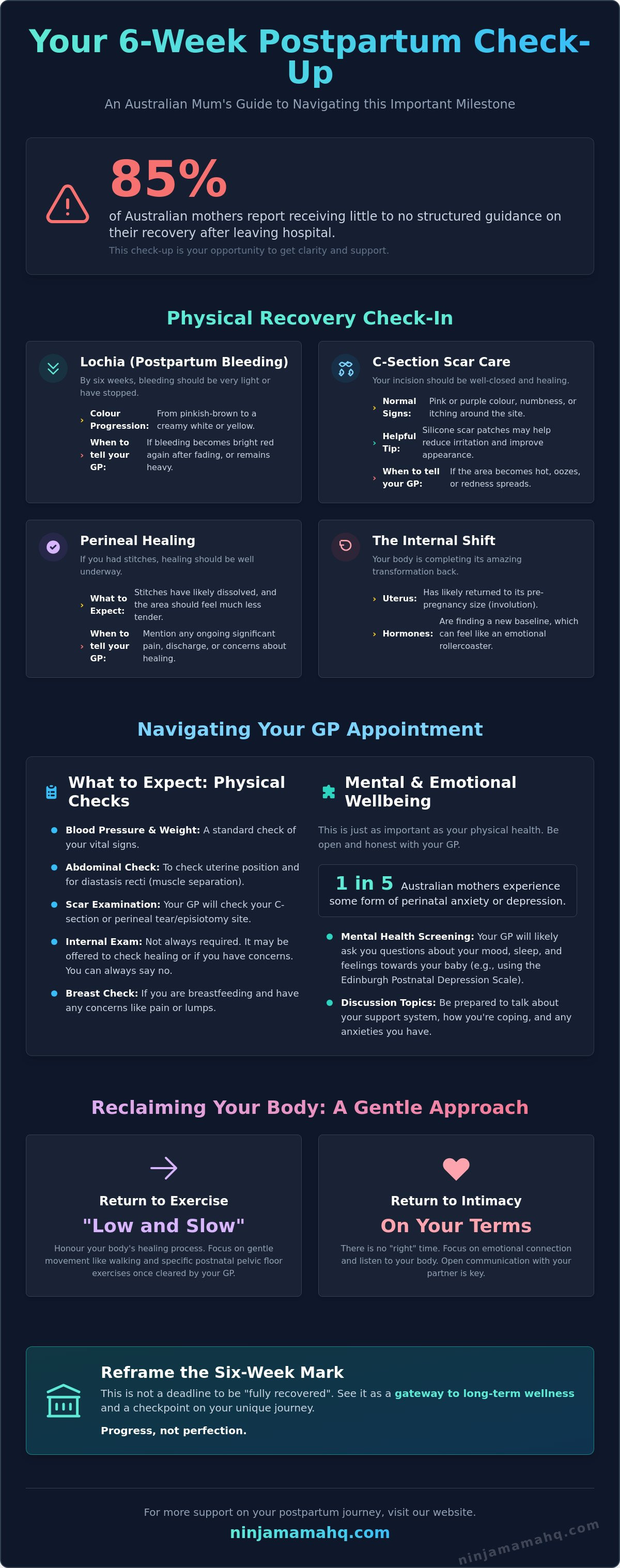
Did you know that 85% of Australian mothers report receiving little to no structured guidance on their recovery after leaving the hospital? It is a staggering statistic that explains why so many of us feel a sense of confusion as we approach the first major milestone. You might feel an internal pressure to be "back to normal" by now, yet the reality of lingering scar pain or that heavy "100 days" fog tells a different story. It is completely valid to feel a mix of exhaustion and anxiety about your upcoming GP appointment, especially if you are feeling unsure about internal exams or ongoing bleeding.
Understanding exactly what to expect 6 weeks postpartum can transform this transition from an overwhelming hurdle into a moment of empowered healing. We want to help you discover what really happens to your body and mind as you reach this milestone, ensuring you can navigate your postnatal check with total confidence. This guide covers your physical healing timeline, prepares you for the clinical aspects of your checkup, and reminds you that recovery is a personal journey rather than a race to the finish line.
Key Takeaways
- Reframe the six-week mark as a gateway to long-term wellness rather than a strict deadline for feeling fully recovered.
- Feel prepared for your postnatal check by learning what to expect 6 weeks postpartum, including the specific clinical and mental health assessments your GP will perform.
- Gain clarity on the healing process for perineal stitches and C-section scars, along with what to look for as your lochia begins to taper off.
- Discover a gentle, "low and slow" framework for returning to exercise and intimacy that honours your physical and emotional boundaries.
- Understand why ongoing self-care and nutritional support are essential for maintaining your energy as you transition out of the newborn fog.
The 6-Week Milestone: Why the Fourth Trimester Doesn’t End on a Tuesday
Reaching the six-week mark often feels like you should have everything sorted. You have survived the initial blur of nappies and late-night feeds, and there is a sense of expectation that you should be feeling like your "old self" again. However, for many Australian mums, this date on the calendar feels a bit arbitrary. While the medical world often views this as the conclusion of the postpartum period, your body and mind are usually still in the thick of a major transition. It is the moment you move from acute survival into a more functional phase of recovery.
To better understand this concept, watch this helpful video:
The Magic of the Six-Week Mark
By now, your uterus has likely returned to its pre-pregnancy size, which is a feat of biological engineering that deserves a celebration. Your hormone levels are also attempting to find a new baseline, though this shift can often feel like an emotional rollercoaster. In Australia, your care usually shifts fully to a GP-led model at this point. This check-up is designed to ensure your physical healing is on track while checking in on your mental wellbeing. Knowing what to expect 6 weeks postpartum means recognising that while your "acute" healing is finishing, your journey as a mother is just beginning. It is the time when you start to find a new rhythm with your bub, moving beyond the initial fog and into a more sustainable routine.
Managing Your Own Expectations
Forget the "bounce back" culture you see on your social feeds. The idea that you will be 100% recovered by day 42 is a myth that needs to be retired. A recent survey of Australian mothers found that only 35% felt prepared for their recovery, so if you feel tentative or uncertain, you are in the majority. Some days you might feel like a superhero; other days, you might still feel stuck in the "100 days" fog. Both are completely normal. This milestone is about progress, not perfection. If you are still dealing with lingering discomfort or feeling a bit "off" emotionally, that is okay. Since 1 in 5 Australian mothers experience some form of perinatal anxiety or depression, being honest with yourself and your GP is the best way to move forward. Recovery is a journey, not a race to a specific Tuesday on the calendar.
Physical Recovery Check-In: From Perineal Healing to C-Section Scars
By the time you hit the six-week mark, your body has performed some pretty incredible feats. One of the most noticeable changes is the tapering of lochia. This postpartum bleeding, which was so heavy in those first few days, should now be very light or have stopped altogether. It usually transitions from a pinkish brown to a creamy white or yellow. If you find yourself still reaching for heavy-duty pads or seeing bright red blood after it had already faded, it is a good idea to discuss this during your 6-week postpartum checkup. It is all part of understanding what to expect 6 weeks postpartum as your body finds its new baseline.
C-Section Scar Care at Six Weeks
If you welcomed your bub via C-section, your incision is no longer a "fresh" wound. By now, the skin should be well-closed and the scar will likely be a pinkish or purple colour. It is very common to feel a bit of numbness or a pesky itch around the site as the nerves continue to heal. Many mums find that applying silicone scar patches can be a game-changer for reducing irritation and helping the scar flatten and fade over time. While the scar is maturing, keep an eye out for any late-stage complications. If the area becomes hot to the touch, starts oozing, or the redness begins to spread, make sure to mention it to your doctor.
The Internal Shift: Uterus and Pelvic Floor
Inside, your uterus is completing its process of involution. This is the biological term for your uterus shrinking back to its pre-pregnancy size. You might still feel the occasional twinge or a sensation of heaviness in your lower abdomen. This heaviness is often linked to your pelvic floor. Even if you didn't have a vaginal birth, your pelvic floor muscles have carried significant weight for months and deserve some attention. If you had perineal tears or stitches, they should be mostly dissolved by now, though the area might still feel a little "different" or sensitive. For those still feeling a bit of "down there" discomfort, a gentle sitz bath soak can be incredibly soothing for the delicate tissues.
Your breasts are also likely reaching a new phase of regulation. The days of constant engorgement usually settle as your milk supply aligns with your baby’s needs. This supply-and-demand rhythm means your breasts might feel softer, but don't worry, it doesn't mean your milk has disappeared; it just means your body is becoming an expert at its job. If you are still navigating the occasional leak, a set of soft bamboo nursing pads can help you stay dry and comfortable throughout the day.
Navigating the 6-Week Postnatal Check in Australia
Reaching the six-week mark often feels like you are finally coming up for air. While your baby’s growth is usually the star of the show, this specific appointment is a vital moment designed to focus entirely on you. It is a dedicated time to assess how you are faring physically and emotionally after the monumental shift of birth. In Australia, this consultation with your GP or obstetrician is typically required to be at least 20 minutes long to ensure a thorough assessment. Knowing what to expect 6 weeks postpartum helps you take ownership of this milestone and ensures your needs don't get lost in the shuffle.
During the check, your GP will typically monitor your blood pressure and weight to see how your body is settling. They will likely palpate your abdomen to ensure your uterus has returned to its pre-pregnancy position and may offer a breast exam to check for any lumps or signs of mastitis. If you have been using a peri bottle to manage sensitivity or are still feeling some "down there" discomfort, this is the perfect time to bring it up. Your doctor will also record these findings in your "Blue Book" or My Health Record, creating a vital permanent record of your postnatal journey.
The mental health component is just as critical as the physical exam. Your GP will likely use the Edinburgh Postnatal Depression Scale (EPDS), which is a simple questionnaire designed to see how you have been feeling lately. Since approximately 1 in 5 mothers in Australia experience some form of perinatal depression or anxiety, being completely honest with your answers is the kindest thing you can do for yourself. It is not about being a "perfect" mum; it is about getting the support and validation you deserve.
Preparing for Your Appointment
When you call the clinic to book, remember to ask for a "long appointment." Standard time slots often feel rushed, and you deserve the space to speak freely without one eye on the clock. It is also a brilliant idea to write down any questions about physical symptoms or emotional shifts in the days before you arrive. Newborn brain is a very real phenomenon, and having a list ensures nothing gets missed. If possible, bring your partner or a friend along. Having someone to hold bub while you are on the examination table allows you to focus entirely on your own health and wellbeing.
The Conversation Around Contraception
It might feel slightly surreal to discuss contraception when you are still feeling exhausted, but your GP will raise it. This is purely about ensuring you have all the information you need for when you eventually feel ready. For breastfeeding mums, there are plenty of options that won't impact your supply, such as the "mini-pill" or long-acting reversible options like IUDs. There is no rush to make a decision on the spot. Take the information home, talk it over with your partner, and choose the path that feels right for your body and your family's future.
Reclaiming Your Body: Movement, Intimacy, and Mental Wellbeing
You have had the check-up. You have been given the "all clear" by your GP. But do you actually feel ready to jump back into your old life? For many Australian mums, the six-week mark is a bit of a psychological hurdle. While your medical records might say you are recovered, your lived experience might involve a fair bit of hesitation. Understanding what to expect 6 weeks postpartum means acknowledging that your "lifestyle" recovery is just as important as your physical healing. This is the stage where you move from survival mode into a phase of intentional self-care or "mum-maintenance."
By now, the "baby blues" should have mostly settled. Those teary, overwhelming days in the first week are a normal hormonal response, but if that cloud hasn't lifted, it is time to look closer. Statistics show that around 1 in 7 women in Australia are affected by postpartum depression after giving birth. If you are still feeling a persistent sense of dread, anger, or deep sadness, please know that this is not a reflection of your mothering. It is a health matter that deserves professional support. Taking five minutes for a ritual like using a postpartum support oil roller can be a small but beautiful way to ground yourself during these big emotional shifts.
Returning to Intimacy: Practical Tips
Let's be honest about the elephant in the room. The thought of sex can feel quite daunting at this stage. Your libido might be non-existent due to exhaustion, breastfeeding hormones, or simply the fear of "the first time" after birth. This is completely normal. A medical "clearance" from your doctor does not mean you have to feel ready immediately. When you do feel comfortable exploring intimacy again, take things very slowly. Hormonal changes can lead to vaginal dryness, so using a quality water-based lubricant is often essential. Communication with your partner is your best tool here; intimacy is about connection, not just a physical act.
Safe Movement and Postnatal Exercise
When it comes to exercise, the "walking before running" rule is your best friend. Your core and pelvic floor have been through a major event, and they need a gentle reintroduction to movement. Start with short, easy walks around the block with the pram rather than jumping straight back into a high-impact gym class. Listen to your body's signals carefully. If you notice a sudden increase in bleeding, new pelvic pain, or a feeling of heaviness "down there," it is a sign that you are overdoing it. Many Australian women find it incredibly helpful to see a specialised women’s health physiotherapist at this stage. They can provide a tailored assessment of your abdominal separation and pelvic floor strength, giving you the confidence to move your body safely as you navigate what to expect 6 weeks postpartum and beyond.
Beyond the Checkup: Ongoing Support for the Modern Mum
The six-week checkup is a significant milestone, but it is certainly not the finish line. In many ways, it is the beginning of a new chapter where you move from the "acute" phase of healing into a long-term rhythm with your bub. While the medical world might sign you off, your body and mind still require consistent, gentle care. When looking at what to expect 6 weeks postpartum, the biggest shift is often from survival to sustainability. You are transitioning out of the "100 days" fog and into a phase where you can start to prioritise your own wellness alongside your baby's needs.
Nurturing the Nurturer
Your body is still doing heavy lifting, especially if you are breastfeeding. This phase requires significant energy, so focusing on high-quality nutrition is essential. Many mums find that incorporating lactation chocolate drinks into their daily routine provides a double benefit. It offers a much-needed moment of indulgence while containing ingredients that many women find helpful for supporting their milk supply. It is about making self-care feel like a treat rather than another chore on your to-do list.
As your lochia settles and your milk supply regulates, you can also begin to transition your wardrobe. You might be ready to move away from disposable recovery gear and into more sustainable, long-term options. Switching to washable breast pads is a beautiful way to maintain comfort. These are often much softer on sensitive skin than disposable versions and provide a premium feel that aligns with your new daily rhythm. Remember to stay hydrated and take every opportunity to rest; your body is still performing incredible internal work even if you "look" recovered on the outside.
Building Your Village
Isolation can be one of the toughest parts of the second half of the fourth trimester. Now that you are likely feeling more mobile, it is a wonderful time to seek out local mum groups or postnatal Pilates classes. Connecting with others who are at the same stage can provide immense validation. It is also the perfect time to revisit the conversation with your partner about shared domestic duties. As you move beyond the initial "crisis" phase of the newborn weeks, establishing a fair and sustainable system for household tasks will help protect your mental wellbeing.
You have shown incredible strength to get to this point. Whether you are navigating the maturation of a C-section scar or rebuilding your pelvic floor strength, remember that Ninja Mama is here for your entire recovery journey. This milestone is just one part of a much larger story. Be patient with yourself, celebrate your progress, and know that you are doing a brilliant job. You aren't just "bouncing back"; you are moving forward into a powerful new version of yourself.
Your Journey Continues with Confidence
You have navigated the most intense weeks of the fourth trimester and reached a pivotal milestone. By understanding what to expect 6 weeks postpartum, you are now better equipped to handle your GP check-up and the lifestyle shifts that follow. Remember that your healing follows a personal timeline. It is not a race against a calendar. Whether you are managing scar care or gently returning to movement, your physical and emotional wellbeing remains the top priority.
As you move into this next chapter, having the right support makes all the difference. Ninja Mama is an Australian owned and operated brand. We were founded by a mum who has been exactly where you are now. We provide premium, evidence-aware essentials designed to bring comfort and confidence to your daily routine. From soothing soaks to nutritional support, we are here to help you nurture yourself while you nurture your bub.
Shop the Ninja Mama Recovery Range for your next phase of healing
You are doing an incredible job. Take it one day at a time. Stay kind to yourself and celebrate every small win along the way.
Frequently Asked Questions
Is it normal to still be bleeding at 6 weeks postpartum?
It is common for lochia to linger until about six weeks, but it should be very light, yellowish, or white by now. If you notice a sudden return to bright red bleeding or pass large clots, it is essential to mention this to your GP. While every body recovers at its own pace, persistent heavy bleeding at this stage requires a professional check to ensure your uterus is settling correctly.
Can I start running or high-impact exercise after my 6-week check?
Even if you get the "all clear" from your doctor, jumping straight into high-impact running isn't usually recommended. Your pelvic floor and core have been through a massive event and need a "low and slow" approach to rebuild strength safely. Many Australian mums find that a consultation with a women's health physiotherapist is the best way to determine what to expect 6 weeks postpartum regarding a safe return to the gym.
What happens if I don’t feel ready for sex at 6 weeks?
You absolutely do not have to have sex just because you have reached the six-week milestone. Many women don't feel physically or emotionally ready for months, and that is perfectly okay. Between hormonal shifts, exhaustion, and the physical healing process, your libido might be taking a back seat. Take your time, communicate openly with your partner, and only proceed when you feel truly comfortable and ready.
Do I have to have an internal pelvic exam at my checkup?
An internal pelvic exam is a standard part of the postnatal checkup, but you always have the right to decline or ask for more information. The GP uses this to check your internal healing and pelvic floor tone. If you feel anxious, let your doctor know so they can explain the process or offer alternatives. Your comfort and informed consent are the most important factors during any medical appointment.
Why am I still losing hair or feeling extra sweaty at 6 weeks?
Hair loss and night sweats are very common at this stage due to the dramatic drop in oestrogen levels after birth. During pregnancy, your hair stays in the "growth" phase, and now it is simply catching up on the shedding it missed. Similarly, your body is working hard to regulate your temperature and shed excess fluid. These symptoms are usually temporary and should settle as your hormones find a new baseline.
What are the signs that my C-section scar isn’t healing correctly?
Signs of a C-section complication include spreading redness, heat around the incision, or any unusual discharge or foul odour. While some itching and numbness are normal parts of the maturation process, the wound should be well-closed by now. If you notice the edges pulling apart or feel a sudden increase in pain, seek medical advice promptly to rule out a late-stage infection or other healing issues.
Is it too late to use a peri bottle or sitz soak at 6 weeks?
It is never too late to use a peri bottle or a sitz soak for comfort and hygiene. While the most acute phase of healing is often over, many women still experience sensitivity or a desire for extra freshness. Continuing these rituals can be a lovely way to maintain your self-care routine. They provide a gentle, soothing experience as you navigate the transition of what to expect 6 weeks postpartum.
How do I know if I have postnatal depression or just normal tiredness?
Tiredness is a physical response to lack of sleep, but postnatal depression involves persistent feelings of sadness, anxiety, or a lack of connection. If you find that you cannot enjoy things you used to or feel a constant sense of dread, it is more than just "new mum fatigue." Since 1 in 5 Australian mothers experience perinatal mental health challenges, your GP is well-equipped to provide the support and validation you deserve.

Article by
Louise Beever
Louise Beever is the founder of Ninja Mama, an Australian postpartum recovery brand focused on creating premium, practical recovery essentials for new mothers. Since launching Ninja Mama in 2018, Louise has worked closely with thousands of postpartum women and healthcare retailers to better understand the realities of recovery after birth. Her work focuses on postpartum preparation, recovery support, and improving awareness around the fourth trimester.
Remember Mamas
The information provided in this article is intended for general educational and informational purposes only and should not be considered medical advice. Always seek guidance from your doctor, midwife, lactation consultant, or qualified healthcare professional regarding your individual circumstances, pregnancy, birth, or postpartum recovery.