
What if that tight, pulling sensation near your incision wasn't just a permanent part of your new normal? It is incredibly common to feel a bit disconnected from your lower tummy after a caesarean. You might notice a strange tugging when you reach for the nappies or a patch of numbness that makes the skin feel like it doesn't quite belong to you anymore. Many mums feel a flicker of anxiety about how things are healing deep inside, especially when the skin feels stiff or sensitive. Learning specific c-section scar massage techniques is often the gentle, empowering missing piece in your postpartum recovery journey.
We understand that touching your scar for the first time can feel a little daunting, but you don't have to navigate this alone. This guide will show you exactly how to safely work with your body to soften adhesions, improve mobility, and help your scar feel like a natural part of you again. We'll walk through the ideal timing to start, the simple movements that encourage better internal healing, and how to use supportive tools like silicone scar strips to help your skin feel its best. It's time to move with confidence and reclaim the comfort you deserve.
Key Takeaways
- Understand how scar mobilisation helps prevent internal tissue layers from sticking together, reducing that uncomfortable pulling sensation.
- Learn gentle c-section scar massage techniques including skin shifting and plumping to help restore mobility and softness to your lower tummy.
- Discover the "texture ladder" strategy to help desensitise your scar and reconnect with areas that may feel numb or overly sensitive.
- Identify the best natural lubricants and environmental cues to turn your recovery practice into a soothing, effective self-care ritual.
- Explore how incorporating silicone scar strips into your routine can support the long-term healing and appearance of your incision.
Understanding Your C-Section Scar: Why Massage is a Game-Changer
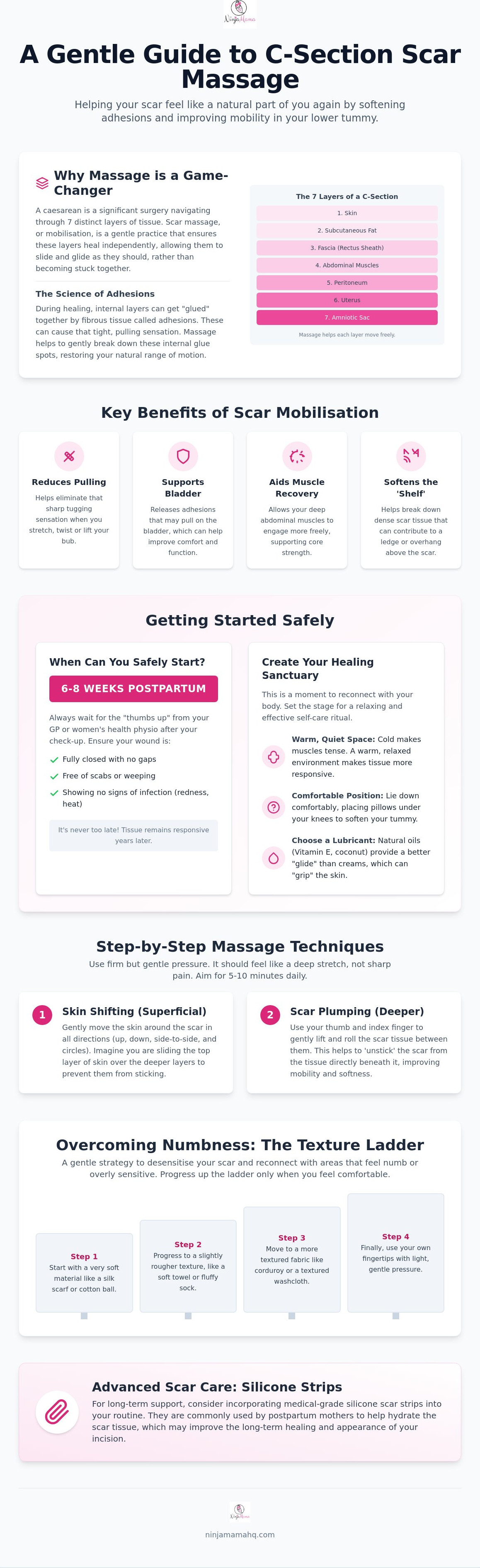
A C-section is a significant abdominal surgery that involves much more than just a surface level incision. When we look at Understanding a C-Section, we see that surgeons carefully navigate through seven different layers of tissue to reach your bub. Scar massage, often called scar mobilisation, is the practice of gently working these tissues to ensure they remain supple and independent. It is about encouraging your body to heal in a way that allows each layer to slide and glide exactly as it should, rather than becoming a single, rigid block of tissue.
Imagine your internal tissues are like layers of high quality cling film. In a perfect world, they should slide over one another without any friction. However, during the healing process, these layers can become stuck or bound together by fibrous tissue known as adhesions. These adhesions act like tiny, unwanted spots of glue that can make your lower tummy feel stiff, tight, or even "frozen" in place. By using specific techniques, you can help "unstick" these layers and restore your natural range of motion.
To better understand this concept, watch this helpful video:
Beyond just helping you feel more comfortable in your own skin, regular scar mobilisation offers several practical benefits for your postpartum recovery:
- Reduced pulling: It helps eliminate that sharp tugging sensation when you stretch or twist.
- Bladder support: By releasing adhesions that may be pulling on the bladder, it can help improve comfort and function.
- Muscle recovery: It allows your deep abdominal muscles to engage and move more freely, supporting your core strength.
- Softening the "shelf": Massage helps break down the dense tissue that often contributes to the appearance of a "ledge" or "overhang" above the scar.
The Science of Adhesions and Tugging
Internal scar tissue is quite clever, but it can be a bit over-enthusiastic. It doesn't just stay on the skin's surface; it can reach deeper and bind to your bladder or bowel. This is often why you might feel a sudden, sharp tugging sensation when you reach for a nappy on the change table or lift your bub out of the cot. Because healing happens in multiple layers simultaneously, massage helps break up these internal glue spots, allowing your organs and muscles to move without restriction. It's a way of telling your body that it's safe to let go of that protective tightness.
When Can You Safely Start?
While it's tempting to jump straight into recovery, your body needs time to do its initial work. The general rule of thumb is to wait until your six to eight week postpartum check-up. You need to ensure the wound is fully closed, with no remaining scabs, weeping, or signs of infection. Always wait for a "thumbs up" from your GP or women's health physiotherapist before you begin c-section scar massage techniques. If you're months or even years past your birth, please know it's never too late. The tissue remains responsive, and many women find significant relief from tugging and discomfort long after their surgery.
Preparation: Creating Your Scar Healing Sanctuary
Before you start practicing c-section scar massage techniques, it is vital to set the stage. This isn't just another task on your never-ending list; it is a moment to reconnect with your body. Find a quiet space where you won't be interrupted. A warm room is essential because cold makes your muscles tense up, which increases what we call the "pain volume." When you are warm and relaxed, your nervous system feels safer, making the tissue more responsive to your touch. It is about creating a small pocket of peace in your day.
Choosing the right lubricant is your next step. While some might reach for a standard lotion, natural, fragrance-free oils like Vitamin E or coconut oil are usually much better. Oil provides a superior "glide" compared to the "grip" of a thick cream, allowing your fingers to move deeply into the tissue without dragging on the skin. This approach aligns with the NHS guide to C-section scar massage, which suggests using a simple oil to help your hands move smoothly. Your posture matters too. Lie flat on your back on your bed or a yoga mat. Slide a pillow under your knees to keep them slightly bent. This tiny adjustment slackens the skin on your tummy, making it much easier to work with the deeper layers. Ensure your hands are freshly washed and your mind is as calm as possible.
Essential Tools for the Job
Think of this as a key part of your postpartum self-care kit. Beyond the oil, your most powerful tool is your breath. Deep, diaphragmatic breathing helps relax the pelvic floor and the abdominal wall. As you inhale, imagine your tummy expanding softly. This physical release makes the tissue more pliable. If you find your scar feels particularly sensitive, many women find that using silicone scar strips between massage sessions helps keep the area protected and hydrated.
Managing the 'Ick' Factor
It is perfectly normal to feel a bit squeamish about touching your scar. Many mums describe an "ick" factor or a sense of fear that they might "break" something. We promise you won't. At Ninja Mama's about us page, we talk about supporting the real, sometimes messy side of motherhood, and this includes the emotional hurdle of scar healing. Start slowly by touching the skin a few centimetres away from the incision. Spend a few days just getting used to that sensation before moving directly onto the scar itself. This gradual exposure helps your brain realise that this area is safe to be touched again. Mastering these c-section scar massage techniques is a journey, and it is okay to take it one small step at a time.
Step-by-Step C-Section Scar Massage Techniques
Now that you've prepared your space and relaxed your body, it is time to begin the actual c-section scar massage techniques. Start with a light touch. You are simply reintroducing your hands to this part of your body. The first method is 'Skin Shifting'. Place your finger pads about two centimetres above the scar. Gently move the skin up and down, then side to side. Repeat this below the scar. You are looking to see if the skin moves easily in all directions. If one direction feels tighter, that is where your body needs a little extra love.
Next, try 'The Plumping Technique'. This involves gently picking up the skin of the scar between your thumb and forefinger. Roll it slightly, as if you're trying to feel the thickness of the tissue. If it feels stuck, don't force it. Just hold a gentle tension for a few seconds. For 'Cross-Friction', move your fingers back and forth perpendicular to the scar line. This specifically helps break up vertical collagen fibres that can cause stiffness. Finally, use the 'J-Stroke'. Imagine drawing a small, firm letter 'J' with your finger along the length of the incision. This multi-directional movement is excellent for overall flexibility. It helps ensure the tissue heals in an organised way rather than a tangled web.
Level 1: Surface Mobilisation (Weeks 6-8)
In these early weeks, your focus is on the layers just beneath the skin. Start with gentle circles around the perimeter of the scar. This helps increase blood flow to the area without putting direct stress on the healing line. This phase is about testing for 'restriction'. Which way does the skin not want to go? If it moves easily to the left but feels tight when moved to the right, spend a little more time gently encouraging movement to the right. Aim for about two or three minutes of light touch daily to build up your tolerance. This aligns with standard NHS scar massage guidance which emphasises starting slowly and gradually increasing intensity as your comfort grows.
Level 2: Deep Tissue Release (Weeks 10+)
Once you've reached ten weeks postpartum and feel comfortable with surface touch, you can apply firmer pressure. You want to reach the muscular layers where deeper adhesions often hide. Try the 'Pull Apart' method. Place your fingers directly on the scar and gently stretch the tissue outwards in opposite directions. Hold this for thirty seconds. You might identify a 'trigger point', which feels like a small, hard knot within the scar tissue. These knots can sometimes cause referred pain elsewhere in your pelvis. If you find one, apply steady, gentle pressure directly to the knot until you feel it start to soften or 'melt' under your fingers. Consistent practice of these c-section scar massage techniques will help your tummy feel more mobile and comfortable in your daily movements.
Overcoming Numbness: Scar Desensitisation Strategies
Numbness is often one of the most unsettling parts of the healing process. It feels strange to touch your own skin and feel nothing at all. Or perhaps you feel a weird, tingling sensation that makes your skin crawl. This happens because the tiny nerve endings in your abdominal wall were divided during surgery. As these nerves begin the long process of regrowing, they can get a bit confused. They might send "threat" signals to the brain, resulting in hypersensitivity, or they might send no signal at all, leading to that marble-like numbness. Desensitisation is a gentle way to retrain your nervous system. It works beautifully alongside your physical c-section scar massage techniques to help you feel like yourself again.
One of the most effective ways to wake up these sleepy nerves is the 'Tapping' method. Use your fingertips to very lightly drum across the scar and the surrounding skin. It should feel like light raindrops. While you do this, make sure you're actually looking at your scar. This visual connection is crucial. When your eyes see your fingers touching the skin, it helps your brain "re-map" the area. It creates a bridge between the physical touch and your mental awareness, slowly reducing that "disconnected" feeling and helping your brain realise the area is no longer under threat.
The Texture Hierarchy for Aussie Mums
Think of this as a ladder for your senses. Start at the bottom and only move up when the current level feels comfortable and "normal" to you. You don't need to rush this process. Spend a few days on each level before testing the next one.
- Level 1: Start with something ultra-gentle, like a soft cotton ball or the sleeve of a silk pyjama top.
- Level 2: Move on to a clean, slightly more textured surface like a bamboo nursing pad or a soft muslin face washer.
- Level 3: Progress to a standard cotton bath towel or the slightly firmer, textured waistband of your leggings.
When Numbness Feels 'Creepy'
Many mums describe a "phantom" sensation, where the skin feels itchy but you can't satisfy the itch because the area is numb. It can feel quite "creepy" or unsettling. This is your brain's way of trying to make sense of the missing data from those healing nerves. By practicing these desensitisation steps, you're providing the brain with the data it needs to turn off the alarm bells. Aim for consistency rather than intensity. Spending just two minutes a day on these textures is much better for your nervous system than a long, overwhelming session once a week. If the area feels particularly vulnerable or sensitive during the day, many women find that wearing C-section silicone scar patches provides a soothing, protective layer that reduces uncomfortable friction against your clothing.
Advanced Scar Care: Silicone Patches and Professional Help
While practicing your c-section scar massage techniques helps with the internal layers of tissue, silicone therapy is the secret to supporting the skin's surface. Medical-grade silicone is widely considered the gold standard for flattening and fading scars. It works by creating a breathable yet protective seal over the incision. This seal locks in essential moisture, which tells your body to produce just the right amount of collagen rather than overdoing it. It is a simple, effective way to help your scar feel softer and look more like the rest of your skin over time.
Why Silicone Patches Work Wonders
Hydration is the most important factor in how a scar matures. When the skin is kept hydrated, it remains pliable and less likely to become raised or itchy. Integrating Ninja Mama C-section silicone scar patches into your routine is easy. Many women find a "Massage + Patch" rhythm works best. You might spend five minutes on your massage in the morning to keep everything moving, then wear the patch overnight to provide constant, gentle hydration while you sleep. To keep your patches in top shape, wash them gently with a tiny bit of plain soap and let them air dry. This keeps them reusable and ensures you get the best possible value from every pack.
Finding an Aussie Women's Health Physio
If you feel like your progress has stalled, or if the pulling sensations feel very deep, it might be time to call in a pro. An Australian Women's Health Physiotherapist is a total game-changer for postpartum recovery. They can assess your pelvic health and help release deep internal adhesions that are hard to reach yourself. As mentioned in The State of Postpartum 2026, more mums than ever are seeking this kind of specialised care to reclaim their physical confidence. A physio can tailor a plan specifically for your body, ensuring you're moving safely and effectively. They can also check your abdominal separation and pelvic floor function, giving you a complete picture of your recovery.
Your safety is the most important part of this journey. Always keep an eye out for red flags that mean you should stop your c-section scar massage techniques and see a doctor immediately. These include any new or spreading redness, heat around the scar, fever, or foul-smelling weeping. Also, look out for any unusual lumps or sharp pains near the incision, which could indicate a hernia. Trust your instincts. If something doesn't feel right, getting a quick check-up will give you the peace of mind you need to keep moving forward with your healing. You've done an incredible thing bringing your bub into the world; now it's time to be gentle with yourself as you heal.
Embrace Your Recovery with Confidence
Healing after a caesarean is a journey that requires patience and a gentle touch. By regularly practicing c-section scar massage techniques, you're doing more than just helping your skin; you're encouraging your internal tissues to remain flexible and independent. Whether you're working through the texture ladder to calm those "creepy" sensations or using deep tissue release to soften the "shelf," every small effort helps you reconnect with your body. Remember, it's about consistency over intensity. Two minutes of mindful care each day can make a world of difference in how you move and feel as you navigate mum-life.
To support your hard work, medical-grade silicone is your best ally for a smoother, flatter finish. Shop Ninja Mama’s C-Section Silicone Scar Patches for a smoother recovery and experience professional-level results at home. Designed by an Aussie mum who's been there, these patches are a vital part of a complete, empathetic recovery system. You've got this, mama. Be kind to yourself, trust the process, and celebrate every step of your healing journey.
Common Questions About C-Section Scar Healing
Is it normal for my C-section scar to feel numb even months later?
Yes, it is completely normal to experience numbness or a "pins and needles" sensation for several months or even a year after your caesarean. During the surgery, the small nerves in your abdominal wall are cut, and they take a significant amount of time to regrow and reconnect. While this can feel a bit strange, using the desensitisation strategies we mentioned earlier can help your brain process these signals more effectively as you heal.
Can I start scar massage if I still have a tiny scab on the incision?
No, you must wait until the incision is completely closed and all scabs have naturally fallen away before you begin. Massaging an area that hasn't fully epithelialised can reopen the wound or introduce bacteria, leading to a potential infection. Once your skin is smooth and dry, and your GP or midwife has given you the "all clear" at your six-week check-up, you can safely start your recovery routine.
How long do I need to do C-section scar massage for it to work?
You should ideally practice your c-section scar massage techniques for about five minutes a day for at least three to six months to see a significant difference. Consistency is far more important than intensity. While you might feel some immediate relief from tightness, the deeper remodelling of scar tissue takes time. Many mums find it helpful to keep up a gentle maintenance routine for the first year postpartum.
Will massaging my scar help with the 'shelf' or 'pouch' over the incision?
Massaging your scar can definitely help soften the appearance of the "shelf" by breaking down the dense, tethered tissue that creates that ledge-like look. While massage cannot remove fat cells, it releases the internal adhesions that pull the skin inward and cause the tissue above to hang over. This process helps the entire area lie flatter and feel much more integrated with the rest of your tummy.
What should I do if my scar starts to hurt or turn red after massaging?
Stop the massage immediately and monitor the area for any signs of a brewing infection. It is normal for the skin to look slightly pink from increased blood flow, but it should never feel hot, throbbing, or excessively painful. If you notice spreading redness, foul-smelling weeping, or if you develop a fever, please contact your GP or maternity hospital straight away to ensure everything is alright.
Can I use a vibrator or massage tool on my C-section scar?
Yes, once your scar is fully healed and you've built up some tolerance to manual touch, a gentle vibration tool can be a wonderful addition. Vibration is excellent for desensitising "angry" nerve endings and can help reach deeper tissue layers without requiring heavy finger pressure. Start on the lowest setting and move the tool around the perimeter of the scar first to see how your body responds to the sensation.
Does scar massage help with the 'pulling' feeling when I pee?
Many women find that regular c-section scar massage techniques help reduce that uncomfortable tugging sensation during bladder filling or emptying. This feeling is often caused by internal adhesions binding the back of your scar to your bladder wall. By gently mobilising the tissue layers, you can encourage them to slide more freely, which often relieves the pressure and pulling you feel when you need to use the bathroom.
Is it ever too late to start massaging my C-section scar?
It is absolutely never too late to start, even if your "bub" is now a teenager. While the most rapid changes happen in the first year, scar tissue remains responsive to manual therapy for many years after surgery. If you're still experiencing tugging, discomfort, or a lack of mobility in your lower tummy, starting a gentle massage practice now can still provide significant relief and help you feel more comfortable in your body.

Article by
Louise Beever
Louise Beever is the founder of Ninja Mama, an Australian postpartum recovery brand focused on creating premium, practical recovery essentials for new mothers. Since launching Ninja Mama in 2018, Louise has worked closely with thousands of postpartum women and healthcare retailers to better understand the realities of recovery after birth. Her work focuses on postpartum preparation, recovery support, and improving awareness around the fourth trimester.
Remember Mamas
The information provided in this article is intended for general educational and informational purposes only and should not be considered medical advice. Always seek guidance from your doctor, midwife, lactation consultant, or qualified healthcare professional regarding your individual circumstances, pregnancy, birth, or postpartum recovery.