

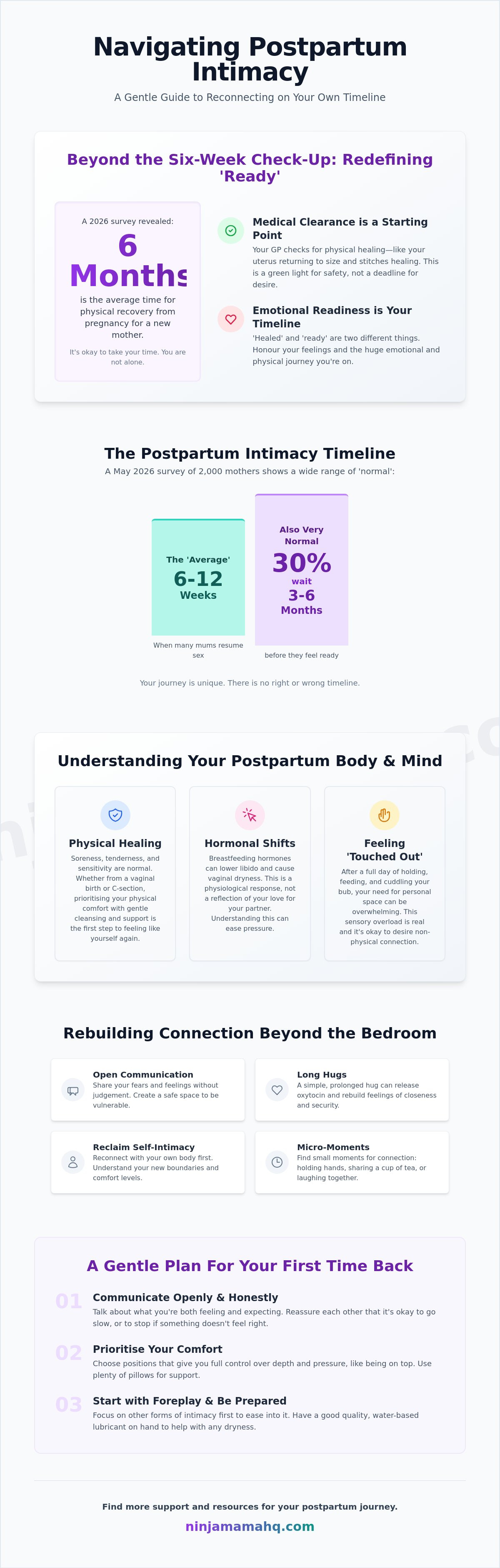
The six-week postpartum check-up is often framed as a finish line, but for many of us, it feels more like the start of a completely different race. If the thought of intimacy after birth currently feels more overwhelming than exciting, please know you aren't alone. In fact, a 2026 survey revealed that the average woman takes six months to recover physically from pregnancy, and many find their libido takes a backseat while navigating the exhausting blur of new motherhood. Between hormonal shifts causing vaginal dryness and the very real phenomenon of feeling touched out after a day of cuddles with your bub, your body is simply asking for a little extra grace.
It's completely normal to feel a disconnect between the person you were and the mother you've become. We're here to help you bridge that gap by reclaiming your physical comfort and emotional closeness on your own timeline. You'll discover practical ways to manage physical soreness, understand why those breastfeeding hormones are affecting your drive, and learn strategies for non-sexual intimacy that keep your partnership strong. From gentle recovery tips to shifting your mindset, this guide is your companion in finding a new normal that feels supportive, intentional, and authentically you.
Key Takeaways
- Recognise that your six-week GP check-up is a medical clearance rather than an emotional mandate, allowing you to move at your own pace.
- Discover how to prioritise daily physical comfort and manage perineal healing to ease the transition back to intimacy after birth.
- Understand the hormonal shifts caused by breastfeeding that can lead to vaginal dryness and learn practical ways to feel physically comfortable again.
- Foster your emotional connection through non-sexual micro-moments like long hugs and hand-holding to keep your partnership strong during the fourth trimester.
- Prepare for your first time back with a gentle plan that includes open communication and positions that offer you full control over depth and pressure.
Table of Contents
Redefining Intimacy: Why It’s Not a ‘Six-Week Switch’
Many Aussie mums feel a sense of mounting pressure as that six-week postpartum mark approaches. It is often treated like a magical finish line where you're expected to suddenly feel like your pre-baby self again. But let's be real; your body and heart don't follow a calendar. The postpartum period is a profound season of transition that involves massive physical and psychological shifts. It isn't a race to the finish line, and getting the "all-clear" from your GP doesn't mean you have to flip a switch on your libido.
The Pressure of the Six-Week Check
Your six-week check-up is a vital medical milestone, but it's important to understand what your GP is actually looking for. They're checking for uterine involution (your uterus returning to its pre-pregnancy size), the healing of any stitches, and your general physical recovery. This is a medical clearance, not an emotional mandate. According to a May 2026 survey of 2,000 mothers, while the average person reports resuming sex between six and 12 weeks, 30% don't feel ready until three to six months after birth. If you don't feel "in the mood" yet, you're in the majority. It's perfectly okay to tell your partner that while you're medically healed, you aren't quite ready for physical intimacy after birth. Starting this conversation early helps manage expectations and reduces the anxiety that can build up around this milestone.
Shifting the Focus to Self-Intimacy First
Before you can focus on connecting with your partner, you need to reconnect with your own body. You've just performed the ultimate feat of strength, and your body might feel like a bit of a stranger right now. Checking in with your own physical comfort levels is the first step toward reclaiming your confidence. Are you feeling sore? Are you feeling "touched out" after holding your bub all day? Taking the time to understand your new physical boundaries is essential. Postpartum intimacy is a spectrum of connection rather than just a physical act. It begins with self-compassion and acknowledging that being "healed" and being "ready" are two very different things. By prioritising your own comfort first, you create a foundation of safety that makes future connection much more enjoyable. For more insights into how modern mums are navigating this journey, you can explore The State of Postpartum 2026 report, which highlights the wide range of normal experiences for Aussie families.
Healing Your ‘Bits’: Managing Physical Comfort and Recovery
The hesitation many of us feel regarding intimacy after birth often stems from a very logical place: physical discomfort. If it still stings to use the loo or feels tender to sit on the sofa, your brain is naturally going to send out "do not disturb" signals. Reclaiming your sex life isn't just about the act itself; it's about the "pre-work" of making your body feel like a comfortable place to live again. When you prioritise your daily physical recovery, you slowly dismantle the fear of pain that often lingers after delivery. Whether you experienced a tear, an episiotomy, or a C-section, your sensory experience has changed. Healing is a process, and feeling clean, supported, and less inflamed is the secret to boosting your confidence during this vulnerable time.
Soothing the Perineum for Better Comfort
For those who had a vaginal birth, the perineum often bears the brunt of the intensity. Lingering inflammation can make the area feel "heavy" or overly sensitive to any touch. Keeping the area pristine without harsh scrubbing is essential for peace of mind. Many mums find that using a Ninja Mama peri bottle provides a gentle, effective way to stay clean and soothe irritation after every bathroom trip. This simple habit reduces the risk of minor infections that can stall your progress. To further encourage tissue healing, organic sitz bath soaks offer a moment of much-needed relaxation while calming tender skin. If you're still dealing with that annoying throbbing sensation, perineal ice packs are a total game-changer for reducing swelling. When you aren't constantly distracted by physical stinging, the idea of closeness starts to feel much more approachable.
C-Section Recovery and Intimacy
If you've had a caesarean, your recovery journey involves healing multiple layers of tissue. It's common to feel protective of your midsection or fear that certain movements might "open up" the incision. This guardedness can make physical connection feel risky. Using silicone scar patches can help support the healing process by protecting the delicate scar from friction against clothing, which often reduces that "tugging" sensation. While medical experts provide general guidance on sex after pregnancy, your personal comfort is the ultimate guide. When you do feel ready to explore physical touch again, focus on positions that keep weight off your abdomen. Side-lying or being on top can give you more control over depth and pressure, ensuring your scar stays protected. Taking these small, intentional steps helps you move from a state of protection to a state of connection. Many women find that having a dedicated postpartum recovery kit on hand makes managing these daily physical needs much simpler and more beautiful.
Hormones, Breastfeeding, and the ‘Touched Out’ Feeling
Your body is currently a biological marvel, but that comes with a specific hormonal blueprint that doesn't always prioritise your sex drive. If you feel like your libido has gone on a permanent holiday, it isn't a lack of love for your partner. It's science. During the fourth trimester, your system is flooded with prolactin, the hormone responsible for milk production. While prolactin is the hero of your breastfeeding journey, it also acts as a natural dampener on oestrogen levels. This "menopause-lite" state often leads to significant vaginal dryness and a lower interest in intimacy after birth. Understanding that these shifts are chemical rather than emotional can take a huge weight off your shoulders.
The Breastfeeding Libido Dip
Breastfeeding is a beautiful way to bond with your bub, but it can also make you feel like your body is no longer your own. Beyond the drop in oestrogen, the oxytocin released during let-down can sometimes lead to unexpected leaking during moments of arousal. This is perfectly natural and simply a sign that your body is responding to touch. While you're navigating these shifts, medical authorities offer helpful insights into sex after pregnancy, reminding us that these physical changes are temporary. To feel more comfortable and "dry" before getting close, many mums favour using washable breast pads. They provide a soft, absorbent barrier that helps you feel more like yourself and less like a milk factory. Don't forget that water-based lubricants are your absolute best friend during this season to manage any dryness-related discomfort.
Reclaiming Your Body from Sensory Overload
Have you ever reached the end of the day and felt like you couldn't bear one more person touching you? That is the "touched out" phenomenon, and it's a very real barrier to connection. When you've spent ten hours straight with a bub on your hip or at your breast, your nervous system can become over-stimulated. By the time the house is quiet, you might crave physical space more than physical closeness. To transition from "caregiver" back to "partner," you need a sensory reset. This might be a warm shower where no one can reach you, a ten-minute quiet ritual, or even a quick change of clothes. Establishing these "non-mummy" micro-moments allows your brain to switch gears. It's much easier to consider intimacy after birth when you've had a moment to remember that your body belongs to you first. Communication is key here; tell your partner when you're feeling over-stimulated so you can find ways to connect that don't feel like another demand on your energy.
Rebuilding the Connection: Beyond the Bedroom
When we talk about intimacy after birth, it's easy to jump straight to the physical act. But real closeness starts long before you ever reach the bedroom. It’s built in the kitchen while making a cuppa, or in the shared look you give each other when the bub finally drifts off to sleep. For many Aussie couples, the biggest hurdle isn't a lack of desire; it's a lack of energy. By focusing on micro-moments of affection, you can maintain your bond without the immediate pressure of physical performance. Connection is a choice you make in small increments throughout the day.
A 2024 study published in the Journal of Social and Personal Relationships noted that affectionate behaviours like touching and kissing tend to decrease from mid-pregnancy to one year postpartum. This decline often happens because we're so focused on the baby that we forget to be partners. You don't need a grand romantic gesture or a weekend away to feel close. Sometimes, a long hug that lasts more than twenty seconds, holding hands on the couch, or a quick back rub can do more for your emotional wellness than a planned "date night" ever could. These acts of non-sexual touch remind your nervous system that your partner is a safe, comforting presence.
The 10-Minute Reconnect
Staying in sync when you’re both zombie-tired is a challenge. The "nappy haze" is real, and it can make you feel like passing ships in the night. Try to carve out just ten minutes of intentional "us" time each day. This isn't for discussing the household budget or the baby’s sleep schedule. It’s for eye contact and active listening. One of the most effective ways to shift the mood is to create a calming sensory environment. Many couples find that using a labour and postpartum support oil roller during a quick neck rub helps signal to the brain that it’s time to relax and reconnect. It’s a small ritual that says, "I see you, and I’m here with you."
Communicating the "Why" Not Just the "No"
It’s easy to feel defensive when you’re exhausted, but how you frame your needs makes all the difference. If your partner initiates closeness and you aren't ready, try to explain the "why" rather than just giving a "no." Instead of saying "I’m too tired," try reframing it as "I really want to feel close to you, but my body feels a bit overwhelmed right now. Can we just cuddle instead?" This shifts the focus from rejection to a request for a different type of intimacy after birth. It lets your partner know that you still want them, but you need to move at a pace that feels safe for your recovery. Setting clear expectations for your first few attempts at physical closeness helps lower the stakes for everyone involved.
Instead of scheduling "sex nights" which can feel like a chore on your to-do list, try scheduling "check-ins." Use this time to talk about how you’re both feeling emotionally and physically. It removes the performance anxiety and keeps the lines of communication wide open. If you’re looking for more ways to support your journey, explore our curated postpartum recovery kits designed to help you feel like yourself again.
Navigating Your First Time Back: A Gentle Guide
When you finally feel ready to explore physical intimacy after birth, the most important tool in your kit isn't a product; it’s a conversation. Establishing a "stop at any time" agreement with your partner is essential for your emotional safety. Knowing that you can hit the pause button the second things feel uncomfortable allows your nervous system to relax. This isn't about reaching a specific goal or "finishing" the act. It’s about testing the waters and seeing how your body responds to a new kind of touch. If you decide two minutes in that you’d rather just have a cuddle and a sleep, that is a total win for communication and boundaries.
Practical Tips for the Big Moment
Preparation can take a lot of the guesswork out of the experience. Because of the hormonal shifts discussed earlier, your natural lubrication might be lower than usual, especially if you are breastfeeding. A water-based, fragrance-free lubricant is absolutely essential to prevent friction and stinging on delicate postpartum skin. Opting for positions like side-lying or being on top allows you to dictate the pace and depth, which is vital for building confidence. It’s also a great idea to empty your bladder beforehand to reduce any feeling of pelvic pressure. Afterwards, using your Ninja Mama peri bottle with some lukewarm water is a gentle way to maintain hygiene and soothe the area, ensuring you stay comfortable long after the moment has passed.
When to See a Professional
It is normal to feel some "new" or slightly strange sensations the first few times you are intimate, but sharp or persistent pain is your body’s way of saying it needs more help. In Australia, we are lucky to have access to specialised Women’s Health Physiotherapists who focus on pelvic floor recovery. If you find that discomfort is lingering or you feel a sense of heaviness that doesn't go away, a pelvic floor assessment can be incredibly empowering. They can provide tailored exercises and strategies to help your muscles relearn how to relax and support you.
It's also vital to keep an eye on your emotional wellbeing. Postpartum mood and anxiety disorders affect approximately 1 in 5 women, and these can have a significant impact on your libido and how you feel about your body. If you feel a persistent sense of dread or anxiety regarding intimacy after birth, please reach out to your GP or a maternal health professional. Reclaiming your sex life is a journey, not a destination. Whether your first attempt involves full intercourse or just a few minutes of close connection, celebrate the fact that you are prioritising your needs and your partnership.
Your Journey to a New Normal
Navigating intimacy after birth is a deeply personal experience that requires patience, self-compassion, and the right support. You've learned that your six-week check-up is just a medical milestone, not a deadline for your desire. By prioritising your physical recovery and embracing micro-moments of connection, you're laying the foundation for a partnership that is stronger and more resilient than ever. Your body has performed a miracle; it deserves time to heal and feel safe again. Whether you're focusing on emotional closeness or ready to explore physical touch, moving at your own pace is the most empowering choice you can make.
We're here to support you with premium, evidence-aware recovery essentials designed by an Aussie mum who has been exactly where you are right now. We're proud to have supported over 50,000 Aussie mums through their fourth trimester and beyond with practical, beautiful solutions. Explore our Postpartum Recovery Bundles to help you feel comfortable and confident in your own skin again. You've got this, mama. Take it one gentle day at a time.
Frequently Asked Questions
Is it normal for sex to hurt the first time after birth?
It is very common to experience some discomfort or "new" sensations during your first few attempts at intimacy after birth. Your body has undergone significant changes, and tissues may still be sensitive or less elastic than before. Hormonal shifts, especially while breastfeeding, can also cause significant vaginal dryness. Using a high-quality, water-based lubricant and choosing positions that give you more control can help manage this transition as you heal.
How long should we wait after a C-section before being intimate?
Most medical professionals recommend waiting until your six-week check-up to ensure your incision and uterus are healing well. However, this is just a medical baseline for safety. You might feel physically healed but still feel emotionally guarded about your scar or midsection. It's important to wait until you feel truly ready. Focus on gentle, non-abdominal contact first and listen to your body’s signals rather than following a strict calendar.
Why do I have no sex drive while breastfeeding?
Your breastfeeding journey is driven by prolactin, a hormone that naturally suppresses oestrogen and your libido. This biological "safety switch" is designed to help you focus on your bub, but it can leave you feeling less than interested in the bedroom. Many women find that their drive returns gradually as sessions decrease. It isn't a reflection of your relationship; it's simply your hormones doing their job during this unique season of life.
Can I get pregnant before my first period after having a baby?
Yes, you can definitely fall pregnant before your first postpartum period because ovulation occurs about two weeks before your period starts. Even if you are exclusively breastfeeding, which can sometimes delay the return of your cycle, it isn't a guaranteed form of contraception. If you aren't ready for another bub just yet, it’s a good idea to discuss reliable birth control options with your GP or midwife before you resume sexual activity.
What if I feel "too loose" or "too tight" down there?
Changes in sensation are very common after vaginal birth and are usually related to pelvic floor muscle tone. Feeling "too loose" often indicates a need for gentle strengthening, while feeling "too tight" or experiencing stinging can be a sign of overactive muscles or scar tissue tension. A Women's Health Physiotherapist in Australia can provide a tailored assessment and exercises to help your pelvic floor feel supportive, comfortable, and functional again.
How do I tell my partner I’m not ready yet without hurting their feelings?
Honesty is the best approach when discussing your timeline for intimacy after birth. Try using "I" statements to explain that while you still love and want them, your body and mind need more time to recover. You might say, "I really value our closeness, but I'm still feeling quite tender and exhausted. Can we focus on cuddles for now?" Offering alternative ways to connect helps your partner feel included rather than rejected.
Will my body ever feel "normal" again during sex?
Most women find that their physical sensations return to a comfortable baseline within the first year postpartum. While it might feel different at first, your body is incredibly resilient. As your hormones stabilise and your tissues continue to heal, sex will start to feel more familiar and enjoyable. Remember that your "new normal" can be just as fulfilling as before, especially when you prioritise comfort and open communication with your partner.
What can I do if I feel "touched out" but still want to connect with my partner?
Feeling "touched out" is a common response to the constant physical demands of a new bub. To connect without more physical pressure, try activities that don't involve intense skin-to-skin contact, like a shared walk, a deep conversation, or watching a film together. You can also try a "sensory reset" like a solo warm shower before spending time together. This helps your brain transition from "caregiver" to "partner" without feeling overwhelmed by more touch.

Article by
Louise Beever
Louise Beever is the founder of Ninja Mama, an Australian postpartum recovery brand focused on creating premium, practical recovery essentials for new mothers. Since launching Ninja Mama in 2018, Louise has worked closely with thousands of postpartum women and healthcare retailers to better understand the realities of recovery after birth. Her work focuses on postpartum preparation, recovery support, and improving awareness around the fourth trimester.
Remember Mamas
The information provided in this article is intended for general educational and informational purposes only and should not be considered medical advice. Always seek guidance from your doctor, midwife, lactation consultant, or qualified healthcare professional regarding your individual circumstances, pregnancy, birth, or postpartum recovery.