
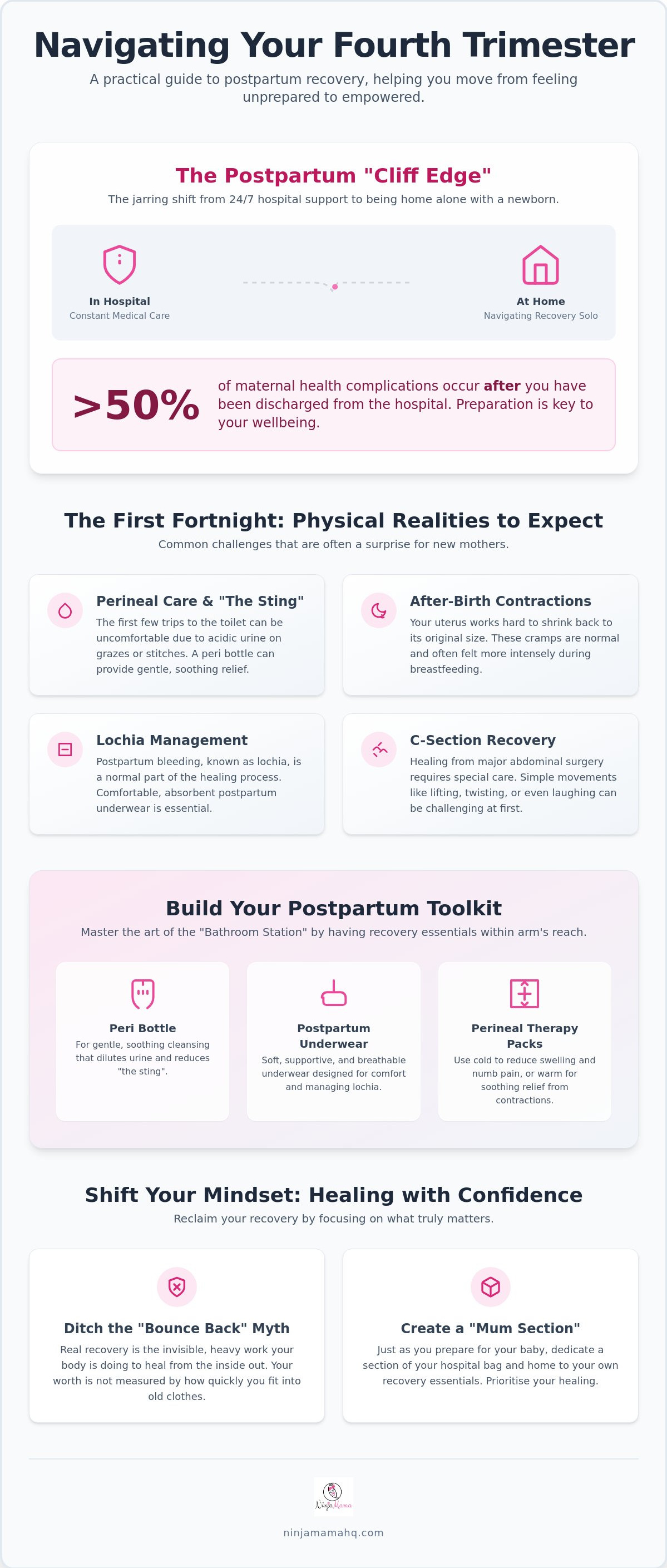
Did you know that over half of maternal health complications occur after you have already been discharged from the hospital? It is a startling reality that explains exactly why postpartum recovery leaves so many women feeling unprepared. You might find yourself staring at a tiny, perfect newborn while dealing with physical discomfort "down there" that nobody quite explained, feeling like the hospital doors closed behind you without a single page of instructions for your own healing body.
If you feel overwhelmed by the mental load of a newborn while your own body is still physically hurting, please know that your feelings are completely normal. You aren't failing; you have simply been navigating a system that is only just starting to realise that care shouldn't end at delivery. We promise to help you discover why the "fourth trimester" often feels like such a shock and show you how to reclaim your recovery with practical, Australian-led preparation. This guide provides a clear list of physical recovery expectations and a practical toolkit to help you manage those first few weeks at home with a sense of prepared calm.
Key Takeaways
- Understand why postpartum recovery leaves so many women feeling unprepared by identifying the "cliff edge" transition from hospital care to being home alone.
- Learn how to manage the physical realities of the first 14 days, including the "sting" of the first toilet trips and managing lochia effectively.
- Discover why the standard six-week check-up is often too late to address common healing hurdles and how to be proactive in your own recovery.
- Master the art of the "Bathroom Station" by organising your recovery essentials so everything you need is within arm's reach.
- Shift your mindset from surviving to thriving by creating a dedicated "Mum Section" in your hospital bag and home setup.
The Postpartum Cliff Edge: Why the "Shock" is Real
For nine months, the focus is almost entirely on the baby. You choose the perfect cot; you attend every scan; you spend hours agonising over a birth plan. But then, the birth happens, and suddenly the 24/7 hospital support vanishes. This transition is what we call the "Postpartum Cliff Edge." It is the jarring shift from professional medical care to being home alone with a newborn and a fresh physical wound. This sudden drop in support is a primary reason why postpartum recovery leaves so many women feeling unprepared for the weeks ahead.
The postpartum period is a time of immense physiological change, yet our culture remains obsessed with the birth itself while maintaining a strange silence about the recovery that follows. If you feel broken, exhausted, or completely overwhelmed, please know this is a systemic issue rather than a personal failure. We have been taught to prepare for a day of labour, but not the months of healing that follow. To better understand this concept, watch this helpful video:
The Prenatal Education Gap
Most prenatal classes are fantastic for helping you understand the stages of labour, but they often stop the moment you deliver the placenta. There is a glaring lack of practical "down there" care instructions for expectant mums. You are taught how to breathe through a contraction, but rarely how to manage your first trip to the toilet or how to care for stitches. This lack of information explains why postpartum recovery leaves so many women feeling unprepared for the physical reality of healing. The Fourth Trimester is a critical 12-week developmental and healing phase where your body requires just as much attention as your baby.
The "Bounce Back" Myth vs. Reality
Social media hasn't done us any favours here. The "bounce back" culture suggests you should be in your favourite jeans within a fortnight, ignoring the fact that your organs are still shifting back into place. Your hormones are plummeting and your tissues are actively trying to knit back together. This disconnect between expectation and reality is a major finding in The State of Postpartum 2026, which highlights how modern mums are struggling under the weight of these unrealistic standards. Real recovery isn't about how you look; it's about the invisible, heavy work your body is doing to heal from the inside out.
The Physical Realities Nobody Mentions in the Baby Shower
While your baby shower was likely filled with tiny socks and adorable plush toys, it is rare for someone to gift you the items you actually need for your own body. This lack of honest conversation is a significant reason why postpartum recovery leaves so many women feeling unprepared when they finally get home. You might expect to be sore, but the specific, day-to-day physical challenges can still come as a shock. From the way your body moves to the way it heals, the first fortnight is a period of intense physical transition.
One of those surprises is the "after-birth" contractions. Your uterus spent nine months expanding, and now it must work hard to shrink back to its original size. These cramps, often felt most intensely during breastfeeding, are your body's way of preventing excessive bleeding. It is a necessary part of the process, but it can be quite uncomfortable if you aren't expecting it. Your body is essentially performing a massive internal renovation while you are trying to navigate the demands of a newborn.
For those recovering from a C-section, the challenge is doubled. You are navigating the requirements of major abdominal surgery while simultaneously learning to care for a newborn. Lifting, twisting, and even laughing can feel daunting. It is not just about "taking it easy"; it is about managing a surgical wound while your body undergoes massive hormonal shifts. This is a time when your physical needs must be prioritised to ensure a safe and steady recovery.
Perineal Care and "The Sting"
If you had a vaginal birth, the first trip to the bathroom can feel like a major hurdle. Urine is naturally acidic, and when it comes into contact with grazes or stitches, the resulting "sting" is something most mums never forget. A peri bottle is a total game-changer here. By spraying warm water while you go, you dilute the urine and prevent that sharp discomfort. Many women find that pairing this with perineal cooling packs helps manage swelling and provides much-needed relief during those first 48 hours.
Managing the "Fourth Trimester" Bleeding
Postpartum bleeding, or lochia, is much more than just a heavy period. It is your body shedding the lining of the uterus and can last anywhere from four to six weeks. Standard sanitary pads often fail to provide the coverage or security you need, especially when you are constantly moving to settle a baby. This is where disposable postpartum underwear becomes an absolute essential. Unlike the flimsy mesh undies provided in some hospitals, these stay in place and offer superior absorption, allowing you to focus on your baby instead of worrying about leaks. To make things even easier, many mums find that having a pre-packed recovery bundle ready to go takes the stress out of those first few days.
Why the 6-Week Check-Up is Too Late for Many Mums
In the Australian healthcare system, there is a significant silence that occurs between the moment you leave the hospital and your official six-week GP visit. This five-week gap is a "no-mans-land" where you are often left to navigate complex physical and emotional changes entirely on your own. It is a structural flaw that explains why postpartum recovery leaves so many women feeling unprepared for the reality of healing. While your baby has multiple check-ups in those early weeks, your own body is frequently sidelined until that final appointment.
The reality is that most physical recovery issues, such as infections or healing delays, peak within the first 14 days. Waiting six weeks to seek help is often far too late. Self-advocacy is your most powerful tool during this time. You need to know that "normal" pain shouldn't be debilitating. If something feels wrong, it probably is. Don't wait for permission to call your midwife or GP. This proactive approach is essential because why postpartum recovery leaves so many women feeling unprepared is often due to this lack of early, structured follow-up.
The "No-Mans-Land" of Early Recovery
The second week postpartum is often the most challenging. This is when issues like mastitis or wound dehiscence are most likely to appear. If you are recovering from a C-section or have perineal stitches, monitoring for redness or increased pain in week two is vital. Similarly, waiting six weeks to discuss pelvic floor health can lead to months of unnecessary discomfort. Early intervention from a women's health physio can make a world of difference to your long-term wellbeing.
Building Your Own Recovery Roadmap
You shouldn't have to figure this out while sleep-deprived. Before the baby arrives, organise your "support village." Identify your first-call contacts: a trusted GP, a lactation consultant (IBCLC), and a specialist physio. Having these numbers ready reduces the mental load when you're in the thick of it. Incorporating small self-care rituals, like using a postpartum support oil roller, can help you feel more grounded. For a complete guide on what to include in your healing toolkit, check out The Ultimate Postpartum Self Care Kit. Setting up these systems early ensures you move from surviving to thriving with confidence.
Practical Preparedness: Building Your Postpartum Toolkit
Most birth preparation is purely theoretical. You might read the books and watch the videos, but having the right tools in your hands is what actually changes the experience of the first fortnight. Why postpartum recovery leaves so many women feeling unprepared is often down to a lack of physical gear. We spend so much time preparing the nursery that we forget to prepare the bathroom. To reclaim your recovery, you need to shift your focus from abstract plans to practical, accessible stations.
Your hospital bag shouldn't just be a collection of baby clothes. It needs a dedicated "Mum Section" that is entirely separate from the baby’s essentials. When you are tired and sore, you don't want to be digging through piles of nappies to find your own hygiene products. Organisation is the greatest gift you can give your postpartum self. By setting up "stations" around your home, you ensure that everything you need is within arm’s reach, reducing the physical and mental load of those early days.
The Perineal Healing Station
The "Bathroom Station" is your most important setup. This should be a small basket kept right next to the toilet. It should include your Upside Down Peri Bottle, which allows you to cleanse and soothe without any awkward reaching. Adding organic sitz bath soaks to your routine can help support the natural healing of delicate tissues. Many mums also find that having witch hazel wipes or cooling liners ready provides an immediate layer of comfort that standard toilet paper simply cannot offer.
The Breastfeeding and Hydration Kit
Once you sit down to feed, you might be there for a while. Your "Nursing Station" should be a sanctuary of hydration and nutrition. Hydration is the engine of both your recovery and your milk supply, so keep a large water bottle close by. Packing lactation chocolate drinks or herbal teas provides a gentle boost when you need a bit of extra energy. To manage leaking and keep your skin comfortable, include a stack of soft, washable breast pads. These small organisational steps transform your home from a place where you are just surviving into a space where you are actively supported. Ready to build your ultimate recovery station? Explore our curated Postpartum Recovery Bundles to get everything you need in one place.
The Ninja Mama Approach: Healing with Confidence
At Ninja Mama, we don't believe recovery should be a hurdle you have to clear while blindfolded. We believe every mum deserves what we call a "Ninja" recovery. This means being prepared, proactive, and deeply supported from the moment you get home. It's about moving away from the "surviving" mindset and into a space where you can actually thrive. By acknowledging the intense physical work of motherhood, we can transform the fourth trimester into a period of comfort and confidence.
The systemic reason why postpartum recovery leaves so many women feeling unprepared is that our culture often views a mother's healing as an afterthought. We are here to change that narrative. Our range was founded by an Australian mum who has been exactly where you are; that's why every item we offer is high-quality, practical, and designed for your specific needs. We aren't just selling products. We are providing the preparedness tools that bridge the gap between hospital care and home life.
Curated Recovery for Every Birth
No two births are the same, and your recovery kit should reflect your unique journey. If you are preparing for a C-section, your needs will include specialised care for your incision, such as scar patches designed for comfort and recovery. To take the guesswork out of your shopping, many mums find that bundled recovery kits are a lifesaver, ensuring you have the right underwear and soothing tools ready the moment you need them.
Your Next Steps to Preparedness
The best time to prepare for your recovery is before the "nesting" phase reaches its peak. We recommend having your hospital bag packed and your home recovery stations ready by the 38-week mark. This gives you peace of mind as you approach your due date. Why postpartum recovery leaves so many women feeling unprepared is often just a matter of timing, so getting these systems in place early is key to a smoother transition.
You are doing an incredible job already. Bringing a human into the world is a monumental feat, and it’s okay to ask for help and better gear to help you heal. You don't have to navigate this journey alone. Explore our range of Australian-designed recovery essentials and give yourself the gift of a confident, prepared recovery.
Reclaiming Your Fourth Trimester
Transitioning from hospital to home doesn't have to feel like falling off a cliff. By understanding why postpartum recovery leaves so many women feeling unprepared, you have already taken the most important step towards a smoother transition. You now know that the gap in early care is a systemic issue, not a personal failure, and that your physical healing deserves its own dedicated toolkit and support system.
You are capable of moving from simply surviving to truly thriving during these first few weeks. As an Australian-owned and mother-founded brand, we provide evidence-aware products designed for the real "down there" challenges of birth. Whether you are recovering from a vaginal delivery or a C-section, having the right gear on hand transforms your recovery into a period of comfort and confidence. Shop the Ninja Mama Postpartum Recovery Bundles to ensure your "Mum Section" is ready before your baby arrives. You are doing an incredible job, and you deserve to feel as cared for as your new arrival.
Frequently Asked Questions
Why do I feel so unprepared for postpartum recovery?
You feel this way because our culture and healthcare systems typically prioritise the birth event over the mother's subsequent healing journey. This systemic gap is precisely why postpartum recovery leaves so many women feeling unprepared for the physical and emotional realities of the weeks that follow. Most prenatal education stops at delivery, leaving you without a practical roadmap for managing wounds or hormonal shifts once you get home.
What are the most common physical problems after giving birth?
Common issues include perineal pain, heavy lochia (postpartum bleeding), and "after-birth" contractions as your uterus shrinks back to its original size. You might also experience breast engorgement, night sweats, and significant swelling in your legs and feet. Many mums also deal with the unique challenges of C-section incision care, such as numbness, itching, or pulling sensations around the surgical site.
How long does it take for the perineum to heal after birth?
Initial healing of the perineum typically takes between two and three weeks, though it can take longer if you had significant tearing or stitches. While the surface skin heals relatively quickly, the underlying tissues may take up to twelve weeks to regain their full strength. Using sitz bath soaks and cooling packs during those first few weeks may help support your comfort and natural recovery process.
What should I actually pack in my hospital bag for my own recovery?
Your bag needs a dedicated "Mum Section" containing high-quality recovery essentials that prioritise your own hygiene and comfort. Pack an upside down peri bottle, several pairs of absorbent disposable postpartum underwear, and instant perineal ice packs for immediate relief. Don't forget breastfeeding support items, such as organic teas or breast therapy packs, and loose, dark-coloured clothing that won't irritate a C-section wound or stitches.
Is it normal to still feel sore 4 weeks after birth?
It is quite normal to feel some degree of soreness at four weeks, particularly if you are recovering from major abdominal surgery or a complex tear. However, this discomfort should be gradually improving rather than staying the same or getting worse. If you notice a sudden increase in pain, unusual discharge, or a fever, it's vital to contact your GP or midwife to rule out a potential infection.
How can I make the first week of postpartum recovery easier?
The best way to make the first week easier is to set up "recovery stations" in your bathroom and nursery before you head to the hospital. Having your peri bottle, cooling pads, and snacks within arm's reach reduces the need to move constantly while you are physically hurting. Prioritising rest and accepting help with household chores allows your body to focus entirely on the heavy work of healing.
Why does it sting when I pee after giving birth and how can I stop it?
Stinging occurs because the acidic nature of your urine irritates small grazes or stitches in the perineal area. You can stop this discomfort by using a peri bottle to spray warm water over the area while you are passing urine. This dilutes the acidity and provides a soothing barrier, making those first few trips to the toilet much less daunting and significantly more comfortable.
What is the "Fourth Trimester" and why is it important?
The Fourth Trimester is the critical 12-week period following childbirth where both you and your baby undergo a massive developmental and physiological transition. It is important because it acknowledges that birth is not the end of the journey, but the start of an active healing phase. Recognising this period helps explain why postpartum recovery leaves so many women feeling unprepared when they expect to "bounce back" immediately without proper support.

Article by
Louise Beever
Louise Beever is the founder of Ninja Mama, an Australian postpartum recovery brand focused on creating premium, practical recovery essentials for new mothers. Since launching Ninja Mama in 2018, Louise has worked closely with thousands of postpartum women and healthcare retailers to better understand the realities of recovery after birth. Her work focuses on postpartum preparation, recovery support, and improving awareness around the fourth trimester.
Remember Mums
The information provided in this article is intended for general educational and informational purposes only and should not be considered medical advice. Always seek guidance from your doctor, midwife, lactation consultant, or qualified healthcare professional regarding your individual circumstances, pregnancy, birth, or postpartum recovery.