

Raspberry leaf tea isn't actually a way to jumpstart your labour, but it might just be the most effective personal trainer your uterus will ever have. While many people mistake it for an induction tool, its real power lies in its ability to tone and strengthen the uterine muscles over time. If you're wondering what is raspberry leaf tea for labour prep and postpartum, you're certainly not alone. It's one of the most common questions we hear from mums who are anxious about long labours or the intensity of postpartum afterpains.
We understand that the final weeks of pregnancy can feel like a mix of excitement and nerves, especially when online advice feels so contradictory. You deserve a clear, evidence-based guide to help you feel confident and prepared. This article will show you how this traditional herbal remedy can support a more efficient second stage of labour and help your body recover faster during the fourth trimester. We'll also cover the safety basics and the best time to start your first cup so you can enjoy your daily ritual with total peace of mind.
Key Takeaways
- Understand why this traditional remedy is classed as a uterine tonic rather than a stimulant, acting as a gentle trainer for your muscles.
- Learn how a toned uterus may help support a more efficient second stage of labour and potentially reduce the need for medical interventions.
- Discover the fourth trimester benefits, including how the tea may assist with uterine involution to help your body recover faster after birth.
- Get clarity on what is raspberry leaf tea for labour prep and postpartum, including the recommended dosage schedule to follow from 32 weeks onwards.
- Explore how to integrate this herbal ritual into your broader hospital bag preparation for a more organised and confident transition into motherhood.
Table of Contents
-
What is Raspberry Leaf Tea? Understanding the "Uterine Tonic"
-
Preparing for Birth: The Role of Raspberry Leaf in Labour Prep
-
The Fourth Trimester: Using Raspberry Leaf Tea for Postpartum Healing
What is Raspberry Leaf Tea? Understanding the "Uterine Tonic"
Red raspberry leaf (Rubus idaeus) is far more than just a pleasant herbal brew. For centuries, it's been the go-to herbal remedy for women navigating the transformative stages of pregnancy and birth. Unlike some herbs that act as stimulants, this plant is classified as a "uterine tonic." This means its primary job isn't to force your body into doing something it isn't ready for, but rather to nourish and condition the muscles of the uterus. It's about preparation and strength, not a sudden push to the finish line.
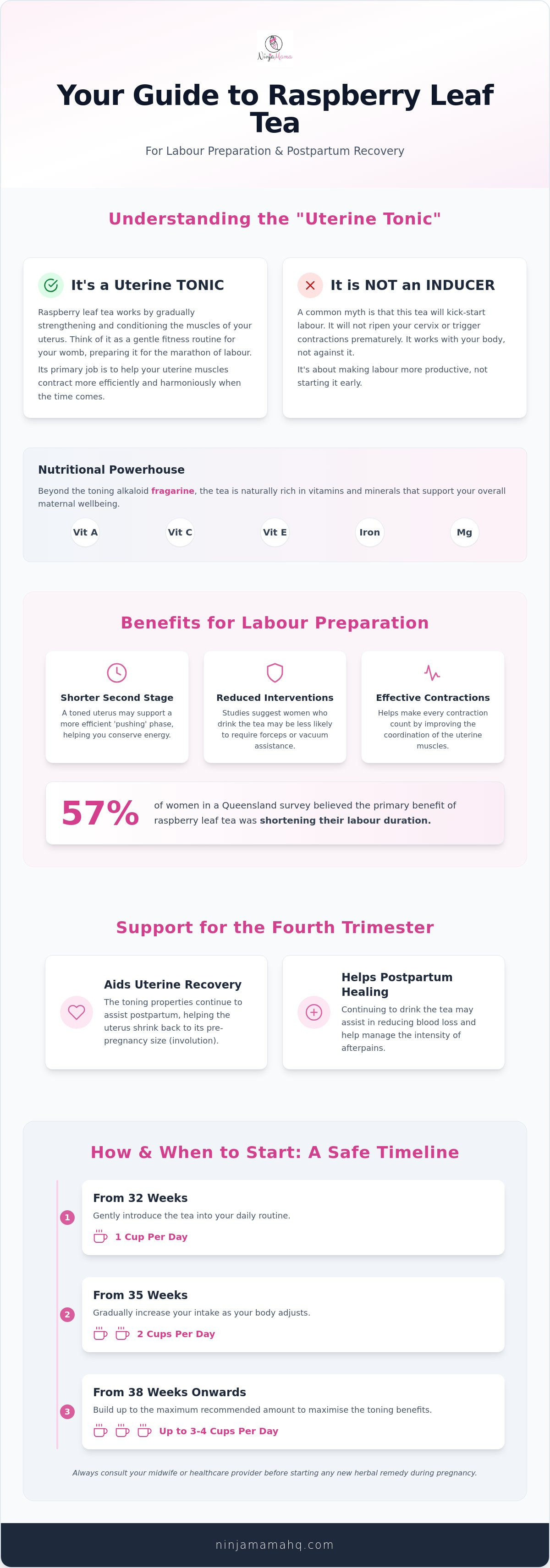
The secret behind its effectiveness is a specific alkaloid called fragarine. This compound helps to tone the pelvic and uterine muscles, allowing them to work more harmoniously during contractions. Beyond this specific benefit, the tea is a nutritional powerhouse. It's naturally rich in vitamins A, C, and E, along with essential minerals like magnesium and iron that support overall maternal wellbeing. When you're looking into what is raspberry leaf tea for labour prep and postpartum, you'll find it's often viewed as a way to build a strong physical foundation for the work ahead.
To better understand how this works, watch this helpful video:
Toning vs. Inducing: Clearing Up the Confusion
There's a common myth that drinking this tea will suddenly bring on labour prematurely. It's important to understand that raspberry leaf tea will not induce labour. Instead of ripening the cervix or triggering contractions, it focuses on uterine muscle strengthening. Think of it as a fitness regime for your womb. When mums ask what is raspberry leaf tea for labour prep and postpartum, they are often surprised to learn that toning leads to more productive Braxton Hicks and eventually, more effective contractions when the big day actually arrives. It's about efficiency, not speed.
A Brief History of Raspberry Leaf in Midwifery
The use of Red raspberry leaf isn't a new trend. It has been a cornerstone of traditional midwifery for centuries, used by Indigenous cultures and European herbalists alike. While it started as folklore, modern interest has grown as more women share their positive experiences. Today, many Australian midwives recommend incorporating a high-quality blend, such as raspberry leaf tea, into a holistic birth plan starting in the third trimester. It’s a natural way to feel more in control of your physical preparation while honouring a long tradition of maternal care.
Preparing for Birth: The Role of Raspberry Leaf in Labour Prep
Think of your uterus as the powerhouse of your birth experience. For it to perform at its best, it needs to be conditioned, just like any other muscle in your body. A toned uterus facilitates a shorter second stage of labour, which is the intense pushing phase where you finally meet your little one. When your uterine muscles are strong and coordinated, they can work more efficiently to move your baby down the birth canal. This isn't just about speed; it's about making every contraction count so you can conserve your energy for the finish line.
Research into herbal tonics often highlights their potential to reduce the need for medical interventions. Some studies suggest that women who regularly consume raspberry leaf tea are less likely to require forceps or vacuum assistance during birth. By helping the uterine fibres contract more effectively during the first stage of labour, the tea supports your body's natural rhythm. As noted by Lamaze International on raspberry leaf tea, while more large scale clinical trials are always welcomed, the historical and anecdotal evidence from midwives and mums remains incredibly strong. In fact, a survey of women in Queensland found that 57% believed the primary benefit was shortening their labour duration.
When you're trying to figure out what is raspberry leaf tea for labour prep and postpartum, the answer usually starts with its ability to make those contractions more productive. It’s about giving your body the best possible chance for a straightforward birth experience.
The "Marathon Training" Analogy for Your Uterus
You wouldn't run a marathon without training your legs first, and labour is arguably the biggest physical event of your life. Consistent consumption of the tea helps build muscle memory for your uterine fibres. This conditioning doesn't happen overnight. It requires a steady intake to allow the alkaloids to support the muscle tissue. Starting too late in your pregnancy might limit these benefits, which is why a consistent daily ritual is so important for those wanting to feel physically prepared.
When to Start: The 32-Week Milestone
The third trimester is generally considered the "sweet spot" for beginning your tea ritual. Most experts suggest starting around the 32-week mark. It’s best to begin with just one cup a day to see how your body responds, then gradually build up to two or three cups by 38 weeks. Understanding what is raspberry leaf tea for labour prep and postpartum helps you see it as a long term strategy rather than a quick fix. Always have a quick chat with your midwife or healthcare provider before starting any new herbal programme, especially if you have a high risk pregnancy. Adding a high quality raspberry leaf tea to your daily routine can be a beautiful act of self care as you count down the weeks.
The Fourth Trimester: Using Raspberry Leaf Tea for Postpartum Healing
Once the marathon of birth is over, your body enters a new phase of intense work. This is where many mums truly appreciate what is raspberry leaf tea for labour prep and postpartum, as its benefits extend far beyond the delivery suite. The most immediate task for your body is uterine involution, the process of your womb returning to its pre-pregnancy size. Because the tea helps your uterus contract efficiently, it may support this process while naturally helping to reduce postpartum bleeding, known as lochia.
If you’re a second or third-time mum, you might find those "afterpains" are more noticeable as your uterus works to shrink back down. These cramps are often more intense during breastfeeding when oxytocin is released. Drinking the tea during the first few days postpartum can help regulate the intensity of these cramps, making the transition much more comfortable. Many women find that understanding what is raspberry leaf tea for labour prep and postpartum allows them to see the tea as a consistent companion through the entire transition to motherhood.
The fog of the first few weeks can be overwhelming. The nutrient density of the tea provides a gentle boost when you're feeling depleted. It’s a simple, warm ritual that offers a moment of calm amidst the beautiful chaos of a newborn. It’s about more than just physical recovery; it’s about nourishing yourself from the inside out.
Breastfeeding and Milk Supply: Fact vs. Fiction
There is a bit of a myth that raspberry leaf is a direct galactagogue, or a substance that increases milk supply. While it doesn't directly stimulate production in the same way as herbs like fenugreek, it's a fantastic source of hydration and minerals during those early, exhausting days of nursing. Staying hydrated is essential for a healthy supply, and the mineral replacement helps your body cope with the demands of making milk. If you are specifically looking for supply support, you might eventually transition to dedicated lactation tea bags, but raspberry leaf remains a safe and supportive option for most breastfeeding bubs.
A Holistic Approach to Pelvic Floor Recovery
Recovery is a multi-layered process that works best when you combine internal support with external care. While the tea works to tone your muscles from the inside, using tools like a peri bottle for hygiene and comfort can make a world of difference to your physical wellbeing. The iron and magnesium found in the tea are also vital for tissue repair after a vaginal birth. A healthy, well-toned uterus provides essential support for the surrounding pelvic organs, helping to maintain overall pelvic floor stability as your body heals. For total peace of mind, you can also keep perineal recovery wipes in your kit to ensure your external recovery is just as supported as your internal healing.
How to Brew and Dosage: Safety First for Aussie Mums
Setting up your daily tea ritual is a beautiful way to pause and connect with your body during the final stretch of pregnancy. When deciding between loose-leaf and tea bags, it often comes down to your personal preference and lifestyle. Loose-leaf blends allow for a more mindful, slow process, while tea bags are a lifesaver for hospital bags or busy mornings. Regardless of the format, always prioritise organic sources. This ensures your brew is free from pesticides, which is vital when you are nourishing both yourself and your baby.
Consistency is key when considering what is raspberry leaf tea for labour prep and postpartum. Most Australian experts recommend a gradual build-up starting from the 32-week mark. You might start with just one cup daily in your 32nd week to see how your body responds. If you feel comfortable, you can increase this to two cups around week 35, reaching a maximum of three cups by week 38. This slow introduction gives your uterine muscles plenty of time to adjust to the toning effects of the herb.
For those navigating the intense heat of an Australian summer, a hot brew might feel like a bit of a chore. You can easily make a pregnancy-safe iced tea by brewing a batch, letting it cool, and storing it in a glass jar in the fridge for up to 24 hours. It is refreshing and keeps you hydrated while still delivering those essential uterine-toning benefits. If you are ready to begin your third-trimester ritual, you can find our premium, organic raspberry leaf tea here to help you get started.
The Perfect Brew: Maximising the Benefits
To get the most out of your leaves, do not rush the steeping process. Use freshly boiled water and let the tea sit for at least 10 to 15 minutes. This is the magic number that ensures the fragrant and essential minerals are fully extracted into the water. The flavour profile is surprisingly earthy and herbal, tasting more like a mild black tea than the fruity flavour the name might suggest. If you prefer a bit of sweetness add some of your favourite sweetener (or fruit juice if drinking cold) it's a delicious way to make your daily cup feel like a treat.
Contraindications: When to Put the Teacup Down
While this is a wonderful natural tool, it isn't suitable for everyone at every stage. We always advise avoiding the tea until your third trimester. If you have a history of very fast labours, high blood pressure, or a scheduled C-section, it is best to skip the tea or have a detailed chat with your midwife first. Understanding what is raspberry leaf tea for labour prep and postpartum also means knowing when to stop. If you notice your Braxton Hicks contractions become uncomfortably frequent or intense after a cup, listen to your body and reduce your intake immediately.
Creating Your Ultimate Labour and Recovery Toolkit
Preparing for your baby's arrival is about more than just a birth plan. It is about building a complete support system for your body. While we have explored what is raspberry leaf tea for labour prep and postpartum, remember that this tonic is just one piece of your recovery puzzle. Real confidence comes from knowing you have every tool you need, from uterine tonics to perineal care essentials, ready and waiting in your hospital bag. When you combine internal conditioning with the right physical recovery tools, you are giving yourself the best start possible.
Knowledge is your greatest asset during this transition. Understanding how your body works helps reduce the fear of the unknown. By choosing evidence-aware remedies and high-quality essentials, you are taking an active role in your own wellbeing. This holistic approach ensures that once you are in the thick of the fourth trimester, you can focus on bonding with your new bub rather than worrying about your recovery. It’s about being proactive, organised, and unapologetically kind to yourself.
The Ninja Mama Essentials for the Fourth Trimester
Pairing your daily ritual of Prepare to Push Raspberry Leaf Tea with physical recovery tools creates a powerful synergy. While the tea works internally to tone your uterus, external care is just as vital for your comfort. Every hospital bag needs a Ninja Mama Peri Bottle for that first bathroom trip after birth. It provides a gentle, soothing stream of water to keep you clean without the need for harsh wiping. You can also incorporate a Sitz Bath Soak alongside your tea ritual once you are home. This combination offers total nether-region relief, supporting your body as it heals from the inside out.
Final Checklist for the Prepared Mum
Before you head to the hospital, set up a dedicated "recovery station" at home. This is your little sanctuary where everything you need is within arm's reach. Fill it with your tea, postpartum underwear, and perineal cooling pads. It is also a fantastic way to involve your partner in your labour prep and postpartum care. Show them where your supplies are kept so they can bring you a fresh brew or a clean peri bottle without you needing to move. For a comprehensive resource on building your recovery nest, take a look at our Ultimate Postpartum Self Care Kit. When you have a clear system in place, you can navigate those first few weeks with a sense of prepared calm. You've got this, mama.
Step into Motherhood Feeling Prepared
Taking control of your birth preparation doesn't have to be overwhelming. By understanding what is raspberry leaf tea for labour prep and postpartum, you've gained a valuable tool for your toolkit. Remember that this traditional tonic is about building strength and efficiency; helping your uterus perform at its peak during the second stage of labour and supporting a smoother recovery once your bub arrives. It’s a simple, daily ritual that honours your body’s incredible capabilities and provides a moment of calm in those final weeks.
You deserve support that is as natural as it is effective. Our blend is 100% organic, caffeine-free, and was specifically designed by a mum who has "been there" and understands exactly what you need. Trusted by thousands of Aussie mums, it's the perfect companion for your third trimester and beyond. Shop our Organic Prepare to Push Raspberry Leaf Tea and get birth-ready today!
You've done the research and gathered your tools. Now, take a deep breath and trust in your strength. We are cheering for you every step of the way!
Common Questions from Our Community
How many cups of raspberry leaf tea should I drink a day in the third trimester?
You should aim to build up to three cups a day by the end of your third trimester. Most Aussie midwives suggest a gradual approach starting at 32 weeks. Begin with one cup daily to see how your body responds. By 35 weeks, you can increase this to two cups, and many women find that three cups daily by 38 weeks is the ideal amount for maximum benefit.
Does raspberry leaf tea help with postpartum weight loss?
There is no evidence to suggest that the tea directly causes weight loss. Its primary benefits are related to uterine involution and mineral replacement. While it's a healthy, calorie-free way to stay hydrated, its real magic lies in helping your womb return to its pre-pregnancy size rather than shedding kilos. It is a supportive tool for overall recovery rather than a fitness supplement.
Is it safe to drink raspberry leaf tea if I am having a planned C-section?
Yes, many mums find it helpful for recovery after a caesarean birth. While it won't be needed for labour prep, the tea supports your uterus as it shrinks back down in the fourth trimester. This can help manage afterpains and lochia regardless of how you delivered. Always have a chat with your obstetrician first, as some may suggest pausing intake a few days before your surgery.
What does raspberry leaf tea actually taste like?
Despite the name, it doesn't taste like raspberries or fruit at all. It has a mild, earthy flavour that is very similar to a light black tea. It's quite pleasant on its own, but you can always add a little honey or a slice of lemon if you prefer to customise your daily brew. Many women find the herbal taste quite soothing as part of their evening routine.
Can I start drinking raspberry leaf tea in my first or second trimester?
It is generally recommended to wait until the third trimester, specifically around 32 weeks, before starting the tea.
Does raspberry leaf tea interact with any common pregnancy medications?
The tea contains tannins which can sometimes interfere with the absorption of iron supplements if taken at the same time. It may also have a mild effect on blood sugar levels, which is important to know if you are managing gestational diabetes or taking insulin. Always consult your healthcare provider if you are taking any regular medications or supplements to ensure it is safe for your specific situation.
Can I continue drinking the tea if I have a history of fast labours?
If you've previously had very rapid births, you should proceed with caution. Because the tea helps your uterus contract more effectively, it could potentially make an already fast labour feel even more intense. It is best to discuss your history with your midwife to decide if uterine toning is the right choice for your circumstances or if you should stick to a lower dosage.

Article by
Louise Beever
Louise Beever is the founder of Ninja Mama, an Australian postpartum recovery brand focused on creating premium, practical recovery essentials for new mothers. Since launching Ninja Mama in 2018, Louise has worked closely with thousands of postpartum women and healthcare retailers to better understand the realities of recovery after birth. Her work focuses on postpartum preparation, recovery support, and improving awareness around the fourth trimester.
Remember Mums
The information provided in this article is intended for general educational and informational purposes only and should not be considered medical advice. Always seek guidance from your doctor, midwife, lactation consultant, or qualified healthcare professional regarding your individual circumstances, pregnancy, birth, or postpartum recovery.