
What if the most important item in your hospital bag isn't a tiny onesie, but the specific things you choose to wear for your own recovery? Most new mums spend months nesting for the baby, only to find themselves home a few days later feeling sore, leaky, and completely unprepared for the physical reality of the fourth trimester. It's a vulnerable time where standard knickers feel like sandpaper and the constant worry about leaking through maternity pads adds unnecessary stress to an already exhausting period.
We understand that your body has just done something incredible, and now it needs a little extra kindness. You deserve to feel comfortable and supported while you heal, whether you're navigating the stinging sensations of a vaginal birth or the sensitive incision site of a C-section. In this guide, we will show you exactly what to choose to stay dry, manage lochia with ease, and protect your delicate skin. We have curated a list of essentials that help you reclaim your dignity and focus on your new arrival instead of your laundry pile.
Key Takeaways
- Understand why standard maternity clothes often fall short and how to transition into functional gear designed specifically for your healing body.
- Learn to identify the three stages of lochia to ensure you have the correct level of protection and comfort for every phase of recovery.
- Discover how choosing the right postpartum wear can help you move away from bulky pads to integrated, high-absorbency solutions that prevent leaks.
- Identify why high-waisted designs are a non-negotiable for C-section recovery to protect your incision site from irritation and pressure.
- Gain practical tips on managing your recovery with a staged approach that prioritises your comfort and dignity while your body heals.
Table of Contents
-
Beyond the Bump: Redefining What You 'Wear' in the Fourth Trimester
-
The Science of Lochia: Why Your Choice of Wear Matters for Healing
-
Disposable Postpartum Underwear vs. Traditional Maternity Pads
-
Dressing for Your Delivery: Specific Wear for C-Section and Vaginal Births
-
Ninja Mama Recovery Wear: Practical Solutions for Your Fourth Trimester
Beyond the Bump: Redefining What You 'Wear' in the Fourth Trimester
For nine months, your wardrobe has been all about accommodating a growing bump. But the moment your baby arrives, the definition of what you need to wear shifts dramatically. Postpartum wear isn't about fashion or trying to fit back into your pre-pregnancy jeans. It is about functional recovery gear. It is the protective layer between your healing body and the world. Many new mums are surprised to find that their maternity clothes, while stretchy, don't provide the specific support or absorbency required for those first few weeks at home.
The Postpartum period, often called the fourth trimester, is a time of intense physical transition. Your body is busy shrinking a uterus, healing birth sites, and establishing a milk supply. It is completely okay to prioritise your healing over the societal pressure to "bounce back." Choosing the right garments can transform this potentially overwhelming time into a period of prepared calm. Instead of worrying about leaks or irritation, you can focus on bonding with your new arrival.
The Hospital Bag: Packing What You'll Actually Wear
When you're packing for the big day, it's easy to get distracted by cute outfits for the baby. However, your own comfort is just as vital. You'll need items that are easy to get on and off, especially if your mobility is limited in the first 24 hours. Consider these essentials for your recovery kit:
-
Loose-fitting tops: Think button-down shirts or oversized tees that allow for skin-to-skin contact.
-
Specialised underwear: Standard knickers won't hold the heavy-duty protection you'll need.
-
Nursing bras: Choose soft, wire-free options that won't constrict your changing breast tissue.
-
Dark colours: Black, navy, or charcoal fabrics are a new mum's best friend. They offer peace of mind by hiding any accidental leaks or stains during the early days of lochia.
For a deeper look at the current trends and needs of new parents, you can explore our report on The State of Postpartum 2026.
Comfort vs. Function: Why You Need Both
You shouldn't have to choose between feeling comfortable and being protected. Breathable fabrics like bamboo or soft, medical-grade mesh are essential for maintaining hygiene and preventing irritation. These materials allow air to circulate, which is crucial for healing sensitive birth sites. The right wear reduces the mental load of recovery by managing the "messy" parts of postpartum life automatically. Postpartum recovery wear is a vital tool for physical and mental wellbeing that allows you to move with confidence and dignity.
The Science of Lochia: Why Your Choice of Wear Matters for Healing
Lochia is a normal and necessary part of the Physical recovery after birth. It isn't just a heavy period; it's your body's way of clearing out the uterine lining and healing the area where the placenta was attached. Because this process involves a healing site inside your uterus, what you put against your body matters for more than just comfort. It's a matter of hygiene and safety. Using tampons or menstrual cups during this time is strictly off-limits because they can introduce bacteria into your system, potentially leading to infections. You need external protection that allows your body to breathe while it does this important work.
Airflow is your best friend when you're healing. Whether you've had a vaginal birth or a C-section, trapping moisture against sensitive skin is a recipe for irritation or slow wound healing. Standard synthetic knickers often act like a plastic wrap, which is why choosing breathable, moisture-wicking materials is so important. When you prioritise airflow, you create an environment that supports the natural repair of your skin and tissues.
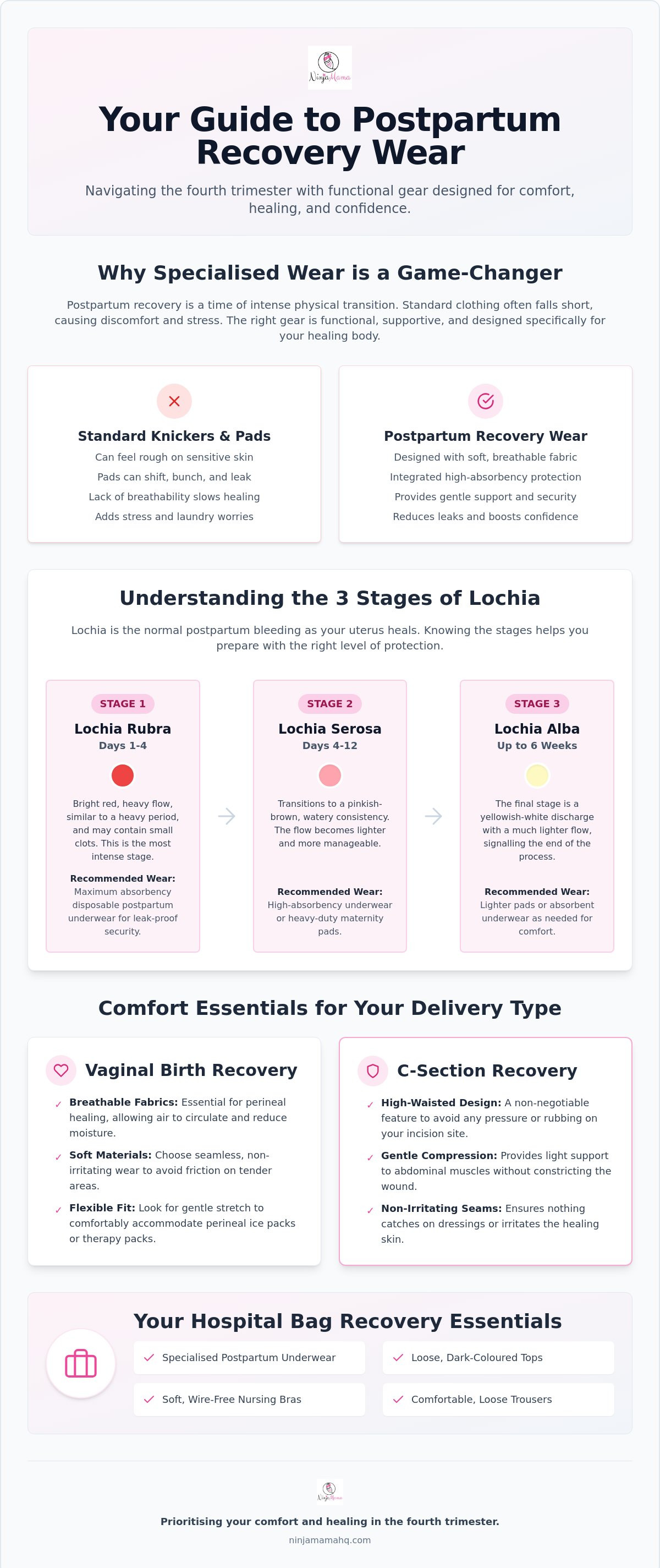
Managing the Rubra Stage (Days 1-4)
The first few days are the most intense. Lochia Rubra is bright red and heavy, often containing small clots. This is the stage where traditional maternity pads often fail. They shift, they bunch, and they frequently lead to middle-of-the-night bedsheet changes. It's exhausting for any new mum. Many women find that switching to integrated wear, like Ninja Mama Postpartum Disposable Underwear, provides the full-coverage security they need. These disposables act like a combined pad and panty, staying in place no matter how many times you get up for a midnight feed.
Transitioning to Serosa and Alba Care
As you move into the second week, you'll notice the colour change to a pinkish-brown (Serosa) and eventually a yellowish-white (Alba). Your flow is slowing down, but your need for comfort isn't. This is the perfect time to transition to lighter, more breathable options. Soft mesh underwear is fantastic during these stages because it holds liners securely without putting any unnecessary pressure on your abdomen or perineum. Listen to your body as it heals. If you feel you need more support one day and less the next, that's completely normal. Choosing the right recovery wear is about more than just staying dry; it is about reclaiming your confidence during a vulnerable time. You might want to explore our recovery bundles to ensure you're prepared for every stage of this transition.
Disposable Postpartum Underwear vs. Traditional Maternity Pads
The traditional approach to postpartum management usually involves the classic "pad-and-panty" combination. You find the thickest maternity pads available and stick them into your least favourite pair of old knickers, hoping for the best. It's a system that often leads to frustration. Pads shift, adhesives fail, and you frequently end up with ruined clothing and stained bedsheets. Modern all-in-one disposable underwear has changed the game by combining high-level absorbency with the fit and feel of a real garment. When you choose this type of wear, you're opting for a seamless experience that moves with your body rather than against it.
Let's address the "nappy" stigma head-on. Many women worry that disposable options will feel bulky or crinkly. Modern designs are incredibly discreet and feel remarkably like real fabric against your skin. Our Ninja Mama range is specifically engineered to be super soft and stretchy, featuring a high-waisted fit that provides a gentle, supportive hug for your postpartum belly. This design ensures there are no sharp elastic edges digging into your skin or putting pressure on sensitive areas.
Hygiene is another significant factor in the first week. Dealing with heavy lochia is messy. In the past, mums spent a lot of time soaking blood-stained underwear in laundry tubs. With disposables, you eliminate that chore entirely. It's a cleaner, more streamlined way to manage your recovery, ensuring that you always have a fresh, dry layer against your skin without the stress of constant washing.
The Convenience Factor for Aussie Mums
Reducing your laundry load is a legitimate recovery strategy in the first fortnight. You're already navigating sleep deprivation and learning the rhythms of a new baby. You don't need the added burden of heavy-duty stain removal. The ease of a "toss and go" system during those blurry midnight changes is a gift to your future self. Many women find that including these in their Recovery Bundles makes the transition from hospital to home much smoother.
Cost and Environment: Making an Informed Choice
While maternity pads might seem cheaper at the supermarket checkout, they often require you to use more units and risk damaging your permanent wardrobe. The value of leak-proof disposable undies lies in the peace of mind they provide and the clothes they protect. You can balance your environmental footprint by pairing short-term disposables with reusable items for other needs. For example, using Bamboo Nursing Pads for breastfeeding allows you to maintain a sustainable routine while still prioritising the high-performance protection you need "down there" during the initial healing phase. Choosing the right postpartum wear is an investment in your comfort and your sanity during those first intense weeks.
Dressing for Your Delivery: Specific Wear for C-Section and Vaginal Births
Whether you're planning a physiological birth or a scheduled caesarean, the reality is that your body's recovery needs will be dictated by how your baby actually enters the world. It is a smart move for any expectant mum to pack her hospital bag with both scenarios in mind. The specific items you choose to wear can either be a source of constant irritation or a gentle aid in your healing process. Preparing for a 'Plan B' doesn't mean you're doubting your body; it means you're being a proactive advocate for your own comfort.
If you've had a vaginal birth, your focus shifts to perineal relief. The swelling and stinging can be intense, and standard pads don't offer much in the way of comfort. This is where your choice of undergarments becomes a functional tool. You need something stretchy enough to hold Perineal Ice Packs securely against the area without them slipping around. These tools work best when they are held in place with just enough tension to provide relief without being restrictive.
The 'C-Section Shelf' and Incision Care
For those recovering from a C-section, the primary concern is the incision site. This usually sits right at the bikini line, which is exactly where most standard knickers have their waistband. High-waisted options are essential because they sit well above the surgical site, providing a soft layer of protection without any direct pressure or rubbing. Keeping this area dry and clean is vital for avoiding infection, and breathable fabrics help facilitate essential airflow.
Long-term healing is also part of the journey. Once your incision has closed and your doctor gives the all-clear, many women choose to wear C-Section Silicone Scar Patches. These are designed to support the skin's natural repair process and may help support the softening of the scar's appearance over time. They act as a protective barrier against clothing, reducing the friction that can lead to discomfort.
Perineal Relief: Wearing Your Ice Packs
Many mums swear by the 'sandwich' method for managing perineal pain. Start with your stretchy recovery underwear, add a chilled ice pack, and top it with a soothing wipe or pad liner. This system keeps the relief exactly where you need it while you rest or move about the house. For a complete guide on putting these pieces together, check out our post on The Ultimate Postpartum Self Care Kit.
Ready to simplify your recovery? Explore our full range of postpartum recovery kits to find the perfect fit for your delivery type.
Ninja Mama Recovery Wear: Practical Solutions for Your Fourth Trimester
Ninja Mama is the go-to choice for Australian mums because our products are designed by a mum who has "been there" and understands the physical reality of birth. We know that your body needs more than just a standard pair of knickers once you're home. Our recovery wear is engineered to handle the physical demands of the fourth trimester while providing the softness your skin craves. With specialised stages for lochia management, you can transition from the heavy early days to the lighter healing phase without ever compromising on comfort.
Our range includes the Rubra Stage Absorbent Postpartum Disposable Underwear for that initial heavy flow and the Serosa Stage Disposable Mesh Underwear for when things begin to settle. Both feature our signature "no-pinch" waistbands and super-stretchy fabric that comfortably fits Australian sizes 8 through to 20. You have done the incredible, hard work of bringing a new life into the world; now, it is time to let your clothes do the work of supporting your recovery.
Why Australian Mums Trust Ninja Mama
We pride ourselves on being that knowledgeable best friend who knows exactly what you need before you even have to ask. Being Australian-owned and operated means we understand the local landscape, and we offer fast national shipping for those last-minute hospital bag panics. There is a profound peace of mind that comes from being prepared with the right gear. It allows you to step into motherhood with a sense of prepared calm rather than anxiety about the messy parts of healing.
Next Steps: Completing Your Recovery Kit
While choosing the right things to wear is a massive first step, a complete recovery system involves a few other clever tools. You can easily pair your absorbent underwear with our Upside Down Peri Bottle for gentle cleansing without the need for abrasive toilet paper. Don't forget about your changing bust, either. Our Bra Extenders are a simple way to adapt your existing bras to your postpartum shape without the expense of a whole new wardrobe.
Ready to tick the final items off your list? Shop the full Ninja Mama range for your hospital bag and give yourself the gift of a supported, comfortable recovery.
Embrace Your Fourth Trimester with Confidence
You have just completed the incredible marathon of birth, and now your body deserves a soft place to land. Recovery is a journey that happens in stages, from managing the heavy initial flow of lochia rubra to protecting a sensitive C-section incision. By choosing the right recovery gear, you're not just buying clothes; you're investing in your own healing and mental wellbeing. Remember that the right things to wear should offer both high-level absorbency and a gentle, stretchy hug that supports your changing shape without the fuss of shifting pads.
Our range is designed by an Aussie mum for Aussie mums, ensuring every detail meets the practical needs of the fourth trimester. We provide absorbent options for every stage of lochia and prioritise stretchy, high-waisted comfort that supports both C-section and vaginal recovery. You don't have to navigate this transition in discomfort or spend your precious first weeks doing endless laundry.
Grab your Ninja Mama Postpartum Underwear here!
You have already done the hard work of bringing your baby into the world. Now, let us help you take care of the rest so you can focus on those beautiful newborn snuggles with the dignity and comfort you deserve.
Frequently Asked Questions
What should I wear home from the hospital after giving birth?
You should opt for loose, dark-coloured clothing like soft joggers or a flowy maxi dress. Your body will still look and feel several months pregnant, so comfort is the priority. Darker shades help hide any accidental leaks from lochia during the car ride home. Ensure your waistband is soft and stretchy, especially if you have an incision. Many mums find a button-down top easiest if they are breastfeeding.
Can I wear normal underwear with maternity pads?
While you can use your regular knickers, many women find they don't provide enough support for bulky maternity pads. Standard underwear often lacks the necessary stretch and surface area to keep a heavy-duty pad in place, leading to leaks and shifting. Specialised postpartum wear is designed to be wider in the gusset and higher in the waist to provide the security you need during the heavy Rubra stage.
How many pairs of postpartum underwear do I need to pack?
Plan to pack at least 4 to 6 pairs of disposable underwear for a standard two to three-day hospital stay. You will likely change them more frequently in the first 24 hours when the flow is heaviest. Having a few extras in your bag provides peace of mind in case you stay longer. It's much better to have too many than to run out during those first blurry days.
What is the best thing to wear after a C-section?
The best choice is high-waisted underwear that sits well above your bikini line. This prevents any elastic or seams from rubbing against your incision. Pair these with loose-fitting trousers or a nightie to ensure there is no pressure on your abdomen. Keeping the area dry and allowing for airflow is essential for your surgical recovery. Many mums find that soft, stretchy fabrics feel most supportive during those first weeks.
How long do I need to wear specialised postpartum undies?
Most mums find they need specialised protection for the first 2 to 4 weeks while lochia is most active. You might start with high-absorbency disposables for the Rubra stage and transition to lighter mesh options as your flow decreases. Every recovery is unique; some women prefer the support of recovery underwear for the full six-week period until their postpartum check-up. Listen to your body and adjust as your healing progresses.
Is it better to wear disposable or reusable postpartum underwear?
Disposables are often better for the first week because they eliminate the need for heavy-duty laundry during a messy recovery phase. They provide integrated protection that regular knickers can't match. Once your flow lightens and you feel more mobile, you might choose to transition back to reusables. Many Australian mums find that a "toss and go" approach in the early days is a lifesaver for their mental wellbeing.
Can I wear tampons during the first few weeks postpartum?
No, you should avoid tampons and menstrual cups entirely for at least six weeks after birth. Using internal protection can introduce bacteria into your uterus while it is still healing, which significantly increases your risk of infection. Stick to external options like maternity pads or absorbent disposable underwear. Your midwife or obstetrician will usually give you the all-clear at your six-week check-up before you return to internal products.
What should I wear to keep my perineum from stinging?
To manage stinging, you should wear breathable fabrics like cotton or soft mesh that allow for maximum airflow. Pair these with chilled perineal ice packs held securely in place by stretchy recovery underwear. Using an upside-down peri bottle for cleansing and applying witch hazel liners can also provide significant relief. Keeping the area clean and avoiding tight, restrictive clothing will help support the natural healing of your skin and tissues.

Article by
Louise Beever
Louise Beever is the founder of Ninja Mama, an Australian postpartum recovery brand focused on creating premium, practical recovery essentials for new mothers. Since launching Ninja Mama in 2018, Louise has worked closely with thousands of postpartum women and healthcare retailers to better understand the realities of recovery after birth. Her work focuses on postpartum preparation, recovery support, and improving awareness around the fourth trimester.
Remember Mamas
The information provided in this article is intended for general educational and informational purposes only and should not be considered medical advice. Always seek guidance from your doctor, midwife, lactation consultant, or qualified healthcare professional regarding your individual circumstances, pregnancy, birth, or postpartum recovery.