
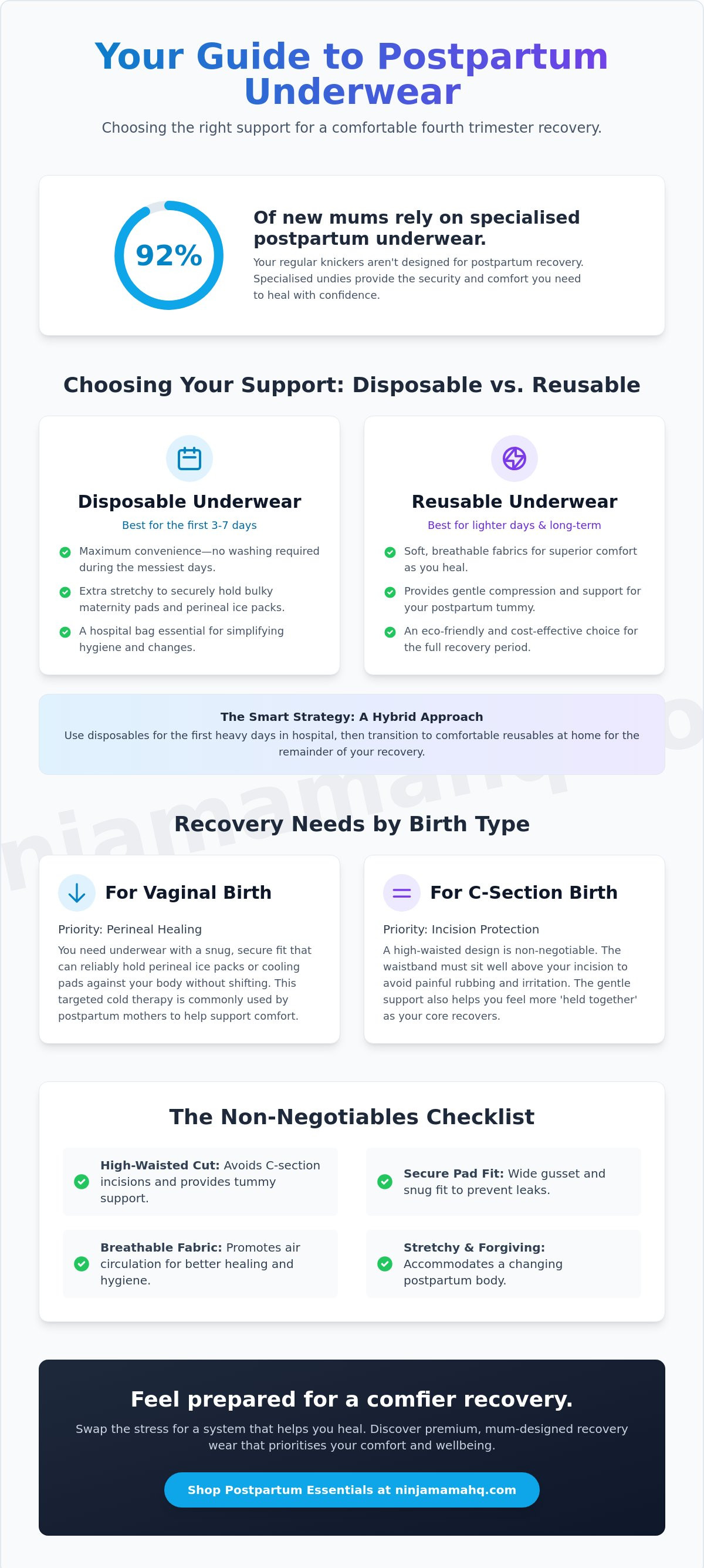
Did you know that 92% of new mums rely on specialised postpartum underwear during their recovery? It's a statistic that makes perfect sense once you're in the thick of the fourth trimester. Between managing lochia for up to six weeks and protecting a tender C-section incision, your regular lace knickers simply aren't up to the task. If you're currently searching for the best after birth panties, you probably just want to feel secure and comfortable again. You're likely tired of bulky pads shifting around or the constant worry of leaking onto your fresh sheets.
We understand that you need practical solutions that actually work. Discover how to choose the right after birth panties to manage lochia, support your recovery, and stay comfortable while you bond with your baby. We'll explore the best options for both vaginal and C-section births, from disposable hospital bag essentials to supportive reusables. It's time to swap the stress for a system that helps you feel like yourself again. Let's get you prepared for a recovery that prioritises your comfort and wellbeing.
Key Takeaways
- Understand why standard knickers aren't equipped to manage postpartum bleeding and how specialised designs provide the security you need.
- Learn how to balance the convenience of disposables for the first heavy days with the long-term comfort of breathable, reusable fabrics.
- Identify the non-negotiable features of quality after birth panties, such as high-waisted cuts that avoid irritating tender C-section incisions.
- Master the hospital bag "layering system" to ensure you have the right quantity and type of support for your specific recovery journey.
- Discover how choosing premium, mum-designed recovery wear can simplify your hygiene routine and help you feel more like yourself again.
Table of Contents
-
Choosing Your Support: Disposable vs. Reusable After Birth Panties
-
The Non-Negotiables: What to Look for in Postpartum Underwear
-
Healing with Ninja Mama: Why Our Postpartum Undies are a Mum’s Best Friend
Why Your Pre-Baby Knickers Won’t Cut It After Delivery
You’ve spent months carefully choosing the perfect nursery colours and the softest baby grows, but have you thought about your own comfort? Your pre-pregnancy knickers were never designed to handle the intense physiological shifts that happen immediately after delivery. These after birth panties are purpose-built undergarments designed to support your body through the first six weeks of recovery, providing the space and security your regular underwear simply lacks. During the Postpartum period, your body undergoes a massive transformation as it returns to its non-pregnant state. Standard elastic can dig into sensitive skin, and flimsy fabrics won't hold the heavy-duty pads required to keep you dry and comfortable.
To better understand the physical reality of the first few days and how to manage your hygiene, watch this helpful video from a labour and delivery nurse:
The Lochia Factor: More Than Just a Heavy Period
Lochia is the body’s natural way of shedding the uterine lining after birth. It isn't just a heavy period; it's a process that typically lasts between four and six weeks, requiring high-capacity management. In those first few days, the flow is significant. Relying on old "granny flats" or your usual cotton briefs often results in embarrassing leaks and a mountain of ruined laundry. Using specialised postpartum disposable underwear ensures that bulky maternity pads stay exactly where they should, giving you leak-free confidence when you're moving around the hospital ward or resting at home.
C-Section vs. Vaginal Birth Needs
Your recovery path depends largely on your birth experience, but both scenarios demand better support than standard undies provide. If you've had a vaginal birth, your priority is perineal healing. You need after birth panties that can securely hold perineal ice packs or cooling pads in place without shifting. This targeted support may help support your comfort during those early walks to the bathroom.
For C-section mums, the requirements shift upward. The critical need here is for high-waisted designs that sit far above the incision line. Low-rise maternity undies are a no-go for surgical recovery because the waistband sits directly on the tender incision, causing friction and pain. Beyond incision care, many women find that the gentle abdominal support provided by high-waisted recovery underwear helps them feel more held together while their core muscles begin to knit back together. Standard knickers simply lack this structural integrity, often rolling down and putting pressure exactly where you don't want it.
Choosing Your Support: Disposable vs. Reusable After Birth Panties
Selecting the right recovery wear is a choice that impacts your daily comfort more than you might realise. Many Aussie mums feel torn between the sheer convenience of disposables and the eco-friendly appeal of reusables. While some promote a "one or the other" philosophy, the most practical path is often a hybrid approach. This strategy uses high-utility disposables for the initial heavy days and transitions into soft, supportive reusables as you heal. It's about protecting your sanity while prioritising hygiene. When researching postpartum underwear, you'll find that the best choice depends on your current stage of recovery.
Think about the difference between built-in absorbency and flexibility. Many reusable options feature impressive leak-proof technology, but they don't always play well with external treatments. If you're using cooling pads or medicated liners, the extra stretch of disposable after birth panties often provides a better fit without the risk of ruining your permanent wardrobe.
When to Use Disposable Postpartum Underwear
The first 72 hours in the hospital ward are notoriously messy. This is the gold standard time for disposables. You're exhausted, focused on your new arrival, and the last thing you need is a laundry crisis. Premium postpartum disposable underwear offers 360-degree stretch that accommodates immediate swelling. It provides a secure, "toss-away" hygiene system that handles heavy lochia without the stress of stains. You can focus on skin-to-skin time rather than soaking bloodstains out of cotton briefs in a hospital sink.
Transitioning to Reusable Postpartum Briefs
As you move into weeks two through six, your needs naturally shift. The flow of lochia usually lightens, and you might start craving the familiar feel of natural fabrics. This is the ideal window to transition into reusable briefs. Look for bamboo or cotton blends. These materials offer superior breathability, which is essential when hormone fluctuations trigger those intense postpartum sweats. These briefs often provide a gentle level of compression that helps with that "jelly belly" sensation, making you feel a bit more "held in" as you move around the house. If you want to know more about how we maintain our product standards, you can read about our commitment to quality recovery gear.
The Non-Negotiables: What to Look for in Postpartum Underwear
When you're packing your hospital bag, it's easy to overlook the technical details of your undergarments. Not all after birth panties are created equal. You need a design that prioritises your physical recovery while offering a sense of security. A high-waisted cut is absolutely essential. It should reach your belly button to provide gentle core support and, crucially, stay well away from a C-section incision. If you've had surgery, the last thing you want is a waistband rubbing against your staples or stitches. This extra height also helps you feel "held in" while your abdominal muscles begin their slow journey back together.
Beyond the waist, look closely at the gusset. It needs to be significantly wider than your average knickers to accommodate bulky maternity pads or perineal cooling pads. You're looking for that "Goldilocks" zone of elasticity. The fabric should be tight enough to keep everything in place so you don't leak, yet loose enough that you can breathe and move without restriction. Standard underwear often lacks this specific balance, leading to shifting pads and unnecessary discomfort during those first few walks around the ward.
Fabric Choice: Why Bamboo and Cotton Reign Supreme
Natural fibres are your best friend during the fourth trimester. Bamboo and cotton help regulate your body temperature as those wild hormonal shifts kick in. Synthetic fabrics trap heat and moisture, which can unfortunately lead to thrush or delayed wound healing. High-quality postpartum disposable underwear often uses premium, breathable non-woven fibres that feel like soft cotton. This is a massive upgrade from the scratchy "hospital mesh" versions that can snag on stitches and feel incredibly itchy against sensitive skin. Keeping the area dry and clean is a top priority for effective recovery.
The Importance of a Seamless Finish
Why do seams matter so much? If you're a side-sleeper, side-seams can become a literal pain during recovery as they press into your hips. Seamless tech allows the fabric to "grow and shrink" with your changing shape as your uterus contracts and swelling subsides. It provides a smooth silhouette that doesn't pinch or bind. Seamless underwear reduces the risk of friction-induced skin irritation, which is vital when your skin is extra sensitive. Choosing after birth panties with a smooth finish means one less thing to worry about while you focus on your new baby. You deserve gear that works with your body, not against it.
The Hospital Bag Strategy: Organising Your Recovery Layers
Packing your hospital bag often feels like preparing for a journey where you don't quite know the destination. While you might be tempted to pack your favourite pre-pregnancy knickers, it's best to leave the fancy lingerie in the drawer for at least six weeks. Postpartum recovery is all about the "layering system". This is a strategic way of combining your undergarments, absorbent pads, and healing treatments to ensure you stay dry and comfortable. By choosing the right after birth panties, you create a stable foundation for this system, preventing pads from shifting and causing leaks during those first few walks down the hospital corridor.
Organisation is your best friend when space is limited. Hospital lockers are notoriously tiny, so keep your "clean" and "used" items strictly separate. For a standard two-night stay after a vaginal birth, we recommend packing at least 5-8 pairs of disposables. If you're expecting a four-night stay following a C-section, increase that to 10-12 pairs. You'll be changing more frequently than usual in those first 48 hours as your body begins its recovery. Pack your recovery undies right at the top of your bag so they're the first thing you or your partner can grab after delivery.
The Ninja Mama "Padsicle" Hack
Many mums find that creating a "padsicle" provides incredible relief in the early days. To do this effectively, start by using your Upside Down Peri Bottle to keep the area clean without the need for harsh rubbing. Once you're fresh, step into your postpartum disposable underwear and layer in an instant perineal cooling pad. The wide gusset of our after birth panties ensures the cooling pad stays exactly where you need it. For an extra layer of comfort, many women find that applying witch haze pad liners to a liner or using it as a "top coat" on the pad helps support their recovery during the first week.
The "Fresh Start" Checklist
To keep your recovery organised, follow this simple checklist for your hospital bag:
-
10 pairs (1 pack) of Ninja Mama Rubra disposables: For maximum convenience during the heaviest lochia days.
-
5-10 pairs (1 -2 Packs ) of Ninja Mama Serosa: To transition into once you're heading home.
-
A dedicated "wet bag": Essential for keeping soiled reusables separate from your clean clothes.
-
Witch hazel wipes: To layer between your pad and your skin for soothing relief.
Having a clear system in place reduces anxiety and lets you focus on your new arrival. If you're curious about how we ensure our recovery gear meets the highest standards for Aussie mums, you can learn more about our commitment to quality recovery gear.
Healing with Ninja Mama: Why Our Postpartum Undies are a Mum’s Best Friend
Ninja Mama wasn't born in a boardroom; it was created by an Aussie mum who has been exactly where you are. She navigated the hospital bag struggle and realised that the options for recovery were often clinical, scratchy, and frankly, a bit depressing. We believe that your fourth-trimester essentials should be as premium as they are practical. Our after birth panties are designed to provide a "cloud-like" embrace during a time when your body feels its most vulnerable. They offer a level of softness that hospital-issued mesh simply cannot match, ensuring that your recovery is defined by comfort rather than irritation.
We've focused on creating a complete recovery system that works in harmony. Our undies provide the stable foundation needed to hold our instant perineal cooling pads securely in place. When paired with the Upside Down Peri Bottle for gentle cleansing, these garments help you manage your hygiene with ease and confidence. It's about taking the guesswork out of those first few weeks so you can focus on the beautiful new person in your arms.
The Ninja Mama Difference
We know that feeling like yourself again is a priority. That's why our undies are designed to be actually cute while remaining 100% functional. Aussie mums constantly rave about our signature high-waist design, which provides the gentle core support you crave without putting pressure on a C-section incision. We use premium, breathable materials that balance the need for convenience with an eco-conscious mindset. You can experience this difference yourself by adding Ninja Mama Postpartum Underwear to your hospital bag prep today. It's the upgrade your body deserves after the marathon of birth.
Join the Community of Prepared Mums
You aren't alone in this journey. We've heard countless stories from Aussie mums who ditched the hospital mesh and felt an immediate sense of relief once they switched to Ninja Mama. Our postpartum recovery kits are designed to take the stress out of your third-trimester preparations, providing a curated system of essentials that have been tried and tested by women who have "been there". By choosing gear designed with empathy and expertise, you're setting yourself up for a smoother, more supported transition into motherhood. Be the Ninja Mum you were born to be, and embrace your recovery with the care and comfort you truly deserve.
Step Into Your Postpartum Journey with Confidence
You've done the incredible work of bringing new life into the world; now it's time to focus on your own healing. Choosing the right after birth panties isn't just a practical necessity for managing lochia. It's a vital part of your self-care that helps you feel secure and supported during those first few weeks. By prioritising high-waisted designs and breathable fabrics, you're giving your body the space it needs to recover without the irritation of standard underwear.
We've already supported over 10,000 Aussie mums through this transition. Our range is designed by a mum for mums, ensuring every detail handles the reality of the fourth trimester. Ready to pack your hospital bag with gear that actually works? Shop the Ninja Mama Postpartum Underwear Range today and enjoy free shipping on all orders over $100. You've got this, Mama. We're right here with you, cheering you on every step of the way.
Frequently Asked Questions
Can I just use normal period undies after birth?
You can use them later in your recovery, but they aren't usually suitable for the first few days. Postpartum bleeding, or lochia, is significantly heavier than a standard period and requires high-capacity management. Most period undies aren't designed to hold the large maternity pads or perineal cooling packs needed immediately after delivery. Once your flow lightens around week three or four, transitioning to high-quality period briefs can be a comfortable and eco-friendly option.
How many pairs of postpartum underwear do I need for my hospital bag?
We recommend packing between 5 to 8 pairs of disposable after birth panties for a standard two-night hospital stay. If you're expecting a C-section and a longer stay of four nights, aim for 10 to 12 pairs. You'll likely change your underwear more frequently in the first 48 hours to stay fresh and dry. Having a few extra pairs ensures you won't run out if your stay is unexpectedly extended.
Are disposable after birth panties better than reusable ones?
Neither is strictly better; they simply serve different purposes during your six-week recovery. Disposables are the gold standard for the first few days because they offer maximum convenience and zero laundry during heavy bleeding. Reusable briefs are fantastic for the later stages of recovery, offering softer fabrics like bamboo and gentle compression. Many mums find a hybrid approach, starting with disposables and moving to reusables after the first week, works best for their sanity.
What is the best underwear for C-section recovery?
The best underwear for C-section recovery is a high-waisted style that sits well above your bikini line. You must avoid any waistbands or seams that sit directly on your incision, as this causes painful friction and irritation. Look for ultra-stretchy, soft fabrics that provide gentle abdominal support. This helps you feel "held in" while your core muscles recover, without putting any unnecessary pressure on your surgical site or staples.
How long do I need to wear postpartum underwear for?
Most women find they need specialised postpartum underwear for the full duration of lochia, which typically lasts between four to six weeks. While you'll likely use heavy-duty disposables for the first few days, you can transition to more supportive reusable briefs as your flow lightens. Even after the bleeding stops, many mums continue wearing high-waisted recovery undies for the extra comfort and core support they provide during the fourth trimester.
Can I wash and reuse "disposable" postpartum underwear?
No, you should not attempt to wash and reuse disposable postpartum underwear. These garments are designed for single use to ensure maximum hygiene and convenience during the heaviest days of your recovery. The materials are specifically chosen to be breathable and stretchy but will lose their structural integrity and "cloud-like" softness if put through a washing machine. For a reusable option, it's better to invest in dedicated bamboo or cotton postpartum briefs.
What size should I buy? Should I size up for postpartum?
You should generally buy the size that matches your late-pregnancy measurements. Most after birth panties are designed with incredible 360-degree stretch to accommodate your changing shape and any post-birth swelling. If you're between sizes or prefer a less compressed feel, sizing up can provide extra comfort. Remember that you'll also need enough room to fit bulky maternity pads or cooling packs comfortably inside the gusset without feeling restricted.
Will maternity pads fit in regular underwear?
While maternity pads can technically fit in regular underwear, they often shift around or feel unstable because standard knickers have a narrow gusset. This frequently leads to side-leaking and discomfort. Postpartum underwear is designed with a much wider gusset specifically to hold large maternity pads and perineal ice packs securely in place. This extra space and stability are what give you that much-needed leak-free confidence during those first few walks around the house.

Article by
Louise Beever
Louise Beever is the founder of Ninja Mama, an Australian postpartum recovery brand focused on creating premium, practical recovery essentials for new mothers. Since launching Ninja Mama in 2018, Louise has worked closely with thousands of postpartum women and healthcare retailers to better understand the realities of recovery after birth. Her work focuses on postpartum preparation, recovery support, and improving awareness around the fourth trimester.
Remember, Mama
The information provided in this article is intended for general educational and informational purposes only and should not be considered medical advice. Always seek guidance from your doctor, midwife, lactation consultant, or qualified healthcare professional regarding your individual circumstances, pregnancy, birth, or postpartum recovery.