

What if the amount of lochia matters less than how it changes over time? In the first weeks after birth, bleeding can shift in colour and flow, so it’s understandable to wonder whether what you’re seeing is expected. There isn’t one fixed pattern that looks the same for everyone.
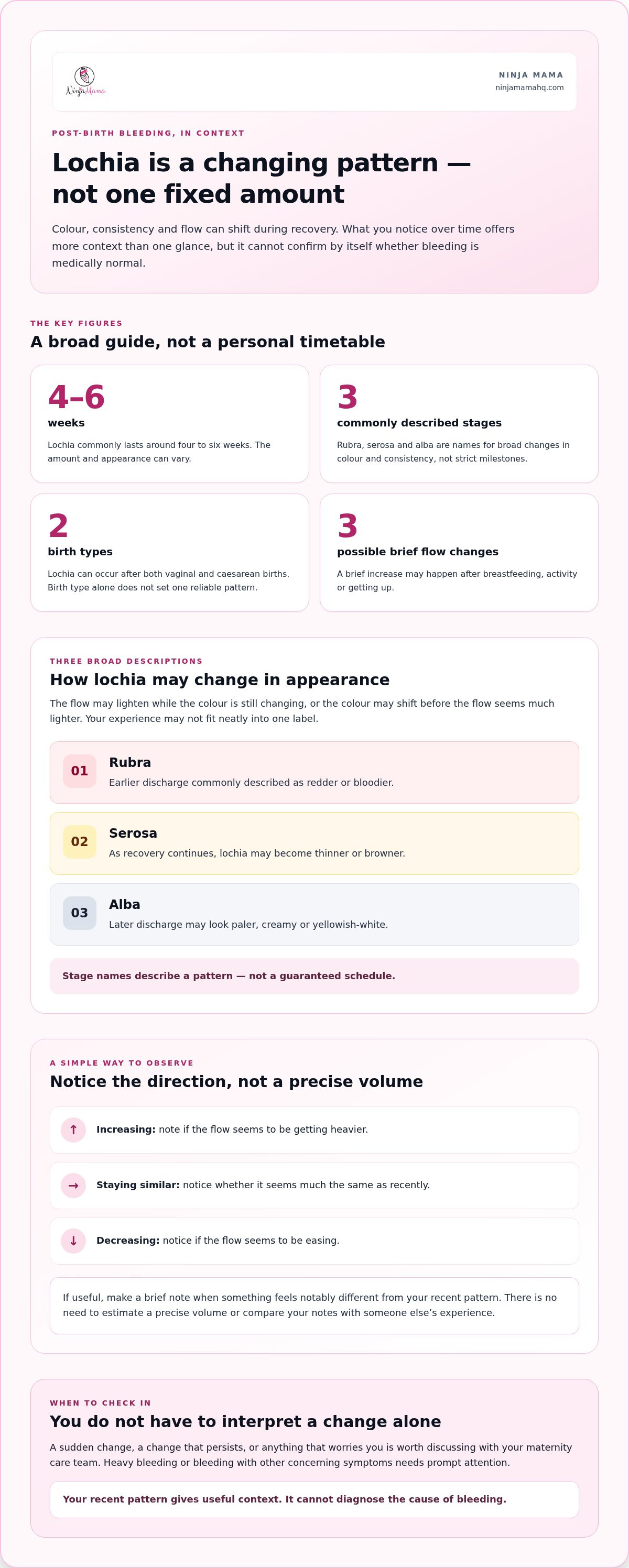
It’s worth paying attention, especially when online timelines seem to offer different rules. Lochia commonly lasts around four to six weeks, but its amount and appearance can vary. A brief increase after breastfeeding, activity or getting up may happen; bleeding that becomes heavy or comes with other concerning symptoms needs prompt attention.
This guide explains how lochia typically changes after a vaginal birth or caesarean, what patterns are useful to monitor, and which signs mean you should contact your maternity care team or seek urgent help. You’ll also find practical ways to manage bleeding and feel more prepared during recovery, without relying on a single universal measurement.
Key Takeaways
- The amount of lochia is best understood as a changing pattern, not a single fixed measurement.
- Lochia rubra, serosa and alba describe common changes in colour and consistency.
- Notice whether changes are gradual or sudden, and share persistent or worrying changes with your maternity care team.
- A simple routine for observing and noting concerns can help you discuss your recovery.
- Know which warning signs call for prompt clinical advice, and raise hygiene questions with your care team.
What amount of lochia is normal after birth?
Noticing bleeding after birth can feel unsettling, particularly when you’re tired, sore and adjusting to life with a newborn. You might wonder whether the amount looks right or why it seems different from one day to the next. Those are fair questions. You don’t need to compare your recovery with someone else’s to ask for guidance.
Lochia is the vaginal discharge that occurs after birth. Its amount, colour and consistency can change as your body recovers, and there isn’t one fixed volume that describes everyone’s experience. What you notice over time offers more context than a single glance, but it can’t confirm by itself whether bleeding is medically normal.
This section offers general information, not an assessment of your individual bleeding. If you’re concerned about what you’re seeing, your maternity care team can consider your circumstances and advise you.
What does lochia contain?
Lochia can include blood, mucus and uterine tissue. It occurs after birth and isn’t automatically a sign that something is wrong. Its appearance may change during recovery, so the colour or consistency you notice at one point may differ from what you see later.
Is there one normal amount for everyone?
No single universal volume can capture every person’s recovery. Your experience may differ from another new parent’s, and a description such as “like a period” may not match what you see. Rather than treating someone else’s timeline or amount as a benchmark, notice what’s typical for you and whether that pattern is changing.
Lochia is changing postpartum discharge, not a fixed amount.
To keep track, notice the overall direction: whether the flow seems to be easing, staying similar or changing. You don’t need to measure every trace or keep a detailed log unless your care team asks you to. If something feels notably different from your recent pattern, make a brief note of what changed and when. That can help you describe the concern clearly when seeking advice.
You don’t need to wait until you can explain a change perfectly. Your maternity care team can help you work out what information matters and what to do next. A concern is worth raising, even if you’re unsure how to interpret it.
How lochia amount and appearance can change after birth
Lochia is often described in three stages: rubra, serosa and alba. These names can help explain broad changes in colour and consistency, but they aren’t a timetable you need to match. The flow may lighten while the colour is still changing, or your experience may not fit neatly into one label.
Stage names describe a pattern, not a guaranteed schedule. The amount of lochia and its appearance can change at different rates, so one feature alone doesn’t tell the whole story. Your recent pattern and how it’s changing are more useful than comparing your recovery with a chart or another person’s experience.
What are lochia rubra, serosa and alba?
Rubra is the name commonly used for the earlier, redder or bloodier discharge. As recovery continues, lochia may become thinner or browner; this phase is often called serosa. Later, discharge may look paler, creamy or yellowish-white, and is commonly called alba. These descriptions are broad, not strict milestones.
Mayo Clinic’s postpartum guidance also describes lochia changing colour over time. Treat the stages as a general guide, not a promise about when a particular colour should appear or disappear.
For example, discharge may look less red without becoming especially light yet. Or the flow may seem lighter before its colour changes much. Considering the overall pattern can be more useful than expecting each change to happen in a particular order or by a particular day.
Small differences from a commonly described sequence don’t automatically mean something is wrong. The labels simply give you shared language for describing what you see. If a change feels sudden, persists or concerns you, your maternity care team can help interpret it in the context of your recovery.
Can lochia look different after a caesarean birth?
Yes. Lochia can occur after both vaginal and caesarean births, and its colour and flow may change over time after either. Birth type alone doesn’t determine one reliable pattern, so don’t use someone else’s experience to decide whether your bleeding is expected.
After a caesarean, you’re also recovering from surgery. If you’re unsure about bleeding alongside your recovery, or notice a change that worries you, contact your maternity care team for advice. For practical perineal cleansing while managing postpartum discharge, an angled peri bottle may be useful to have at home. Always read the label and follow directions for use.
Why lochia amount can fluctuate: how to read the pattern
A single look at your pad can’t tell the whole story. The amount of lochia may seem different at different times, and noticing how the flow and appearance change over time is more useful than relying on one observation. Think of it as gathering context, not trying to diagnose yourself.
A gradual shift may look different from a sudden change that continues or feels worrying. You don’t need to decide what a change means on your own. Note what you’ve noticed and share it with your maternity care team, especially if you’re unsure whether it needs attention.
What should I notice about lochia day to day?
Keep it simple. If it’s useful, make a brief note about whether the flow seems to be increasing, decreasing or staying similar, and whether the colour or consistency has changed. There’s no need to estimate a precise volume or compare your notes with someone else’s experience.
A few words on your phone or a notepad may be enough. Record when you first noticed a change and whether it was still happening later. The aim isn’t to monitor every detail; it’s to have a clear description ready if you want advice.
| What I notice | What to record or ask |
|---|---|
| The flow seems gradually different | Note what changed and how it compares with your recent pattern. |
| A change appeared suddenly | Record when it began and whether it has continued or changed again. |
| I’m concerned about another symptom too | Note what else you’re experiencing and mention it when seeking advice. |
| I’m unsure whether this is expected | Tell your care team what you’ve observed and ask what they recommend. |
How can I describe a change to my midwife or doctor?
Start with the basics: when the change began, what looks or feels different, and whether it’s continuing. Mention any other symptoms, along with relevant details about your birth and recovery, such as whether you had a caesarean birth. You don’t need medical terminology; plain, specific descriptions are helpful.
The pattern and any accompanying symptoms give your maternity care team more context than a single observation. If you’re worried, say so directly. Your care team can ask follow-up questions and advise you on what to do next.
Use notes as a prompt, not a reason to delay asking for help. If the change feels urgent or you feel unwell, seek clinical advice promptly rather than waiting to see what your next entry says.
When is lochia too heavy, and when should you seek help?
There isn’t one amount that can tell you everything about your recovery. A sudden increase, bleeding that feels heavy or a change that worries you deserves prompt attention, especially if you also feel unwell. You don’t need to work out the cause before asking for help.
Australian health guidance identifies several warning signs that need prompt medical attention. These can include bleeding that suddenly becomes heavy or bright red again, feeling dizzy or faint, trouble breathing, a racing heart, or discharge with an unpleasant smell alongside fever or pelvic pain. This list can’t assess your individual situation, and symptoms may not look exactly the same for everyone.
Which changes should prompt a call to your maternity care team?
Contact your midwife, doctor or maternity unit promptly if bleeding becomes unexpectedly heavy, worsens or changes in a way that concerns you. Also seek advice if you notice an unpleasant smell, fever or pelvic pain. These signs can have different causes, so avoid trying to diagnose yourself from a list or online description.
Tell the care team what changed, when it began and whether it’s continuing. If you’re unsure whether your concern is urgent, say that clearly when you call. It’s reasonable to ask for guidance rather than waiting for certainty.
What should I do if bleeding feels urgent?
Use this action sequence, and don’t wait for a routine appointment if symptoms seem severe or are getting worse:
- Contact your maternity care team promptly about a worrying change if you’re otherwise stable, and explain what you’ve noticed.
- Seek urgent assessment if your care team advises it, or if symptoms are worsening and you can’t get timely guidance from them.
- Call triple zero (000) for an ambulance if you’re in immediate danger, such as severe bleeding with faintness, difficulty breathing or feeling as though you may collapse. You can also go to an emergency department for urgent assessment.
If you feel faint or very unwell, ask someone nearby to stay with you and help arrange care. Don’t drive yourself if you don’t feel safe to do so. If you call for help, share when the bleeding changed and any other symptoms you’re experiencing.
It can be hard to decide whether a change is serious, especially while you’re recovering and caring for a newborn. Your concern is enough reason to seek advice. The amount of lochia is only one part of the picture; how quickly it changes and how you feel can also help your care team decide what support you need.
How to monitor lochia and feel more prepared at home
Postpartum recovery is already full of new routines. Tracking lochia doesn’t need to become another demanding task. A simple check-in can help you notice changes and explain your concerns if you speak with your maternity care team.
When you change your maternity pad, notice whether the flow seems lighter, heavier or much the same, and whether its colour or consistency has changed. If something stands out, jot down a few words and when you noticed it. You don’t need to measure every detail or keep a perfect record.
What can make postpartum monitoring simpler?
Keep a short note on your phone or beside your usual postpartum supplies. You might record a change in flow, a new concern or a question for your midwife or doctor. If you notice a worrying change or feel unwell, don’t wait to write it down before seeking advice.
For general hygiene, follow the advice you received from your maternity care team. If you’re unsure how to clean the perineal area or care for yourself after a caesarean birth, ask them for guidance specific to your recovery. A peri bottle for perineal cleansing can be a practical supply to keep nearby. Always read the label and follow directions for use. Absorbent postpartum underwear is another option for managing discharge and day-to-day comfort. These supplies are for practical care, not treatment for lochia or a way to assess whether bleeding is medically normal.
To make a care conversation easier, have your note handy and mention when the change began, whether it’s continuing and any other symptoms you’ve noticed. Your care team can answer clinical questions and help you decide what to do next.
Where can you find supportive postpartum care essentials?
Planning a small set of useful items before birth can make the first days at home feel more organised. Think about the practical supplies you may want close at hand for changing, cleansing and resting, then arrange them where they’ll be easy to reach. A prepared space can save you searching while you’re tired.
Ninja Mama offers postpartum recovery essentials for new mothers, including peri bottles and postpartum underwear. These practical supplies can support your preparation, but they don’t diagnose bleeding or replace advice from an Australian maternity professional. For questions about bleeding, symptoms or hygiene after birth, your maternity care team is the right place to turn.
As you prepare for recovery, choose the practical items you’d like to have on hand and keep your care team’s advice close. Feeling prepared can be as simple as having supplies within reach and knowing who to contact when a question comes up.
Make space for your recovery needs
As you prepare for the days ahead, think about who you can lean on for practical support. A partner, friend or family member might help with meals, rest or contacting your maternity care team when your attention is on your newborn.
If questions about the amount of lochia come up, you don’t have to manage the uncertainty alone. Let someone you trust know what support would feel useful, whether that’s helping you make a call or simply being nearby while you rest.
Ninja Mama supports postpartum preparation with recovery essentials, while your maternity care team remains the right source for individual clinical advice. Explore Ninja Mama’s postpartum recovery essentials and choose what you’d like to have on hand.
Your needs may change as you settle in at home. Keep asking for the support that helps you feel prepared, heard and cared for.
Frequently Asked Questions
How long does lochia usually last?
Lochia can continue for several weeks after birth. Cleveland Clinic describes it as typically lasting up to six weeks, but that isn’t a deadline you need to meet. If you’re still noticing discharge around that time, mention it at a postnatal appointment or contact your maternity care team sooner if it concerns you. A short note about when it began and how it has changed can help you explain your question.
Is lochia supposed to get lighter over time?
It commonly becomes lighter as recovery progresses, but you don’t need to match a particular colour chart or date. Colour and flow may not change in sync, and individual recovery varies. If you’re unsure whether the overall direction seems expected, ask your midwife or doctor what to look out for in your circumstances. Describe what you’re noticing in your own words rather than trying to name a stage.
Can lochia stop and start again?
A pause followed by renewed discharge can be unsettling, but that detail alone can’t explain the cause. If it happens, note whether the discharge had fully stopped, when it returned and whether it seems different from before. This context can help your midwife or doctor understand your concern. Seek advice if the return is sudden, continues or leaves you worried, rather than relying on another person’s timeline.
Does lochia happen after a caesarean birth?
Yes, lochia can occur after a caesarean birth. If you notice blood or fluid and aren’t sure whether it’s vaginal discharge or related to your surgical incision, explain where you’re seeing it when you contact your maternity care team. Don’t assume every mark is lochia. Your team can consider your birth and recovery details and advise you.
What does lochia smell like, and when should I be concerned?
Odour can vary, so there isn’t a smell you need to identify against an online description. If the odour is strong, unpleasant or newly concerning, contact your maternity care team, especially if you feel unwell or have other symptoms. Describe when you first noticed it and whether it has persisted. A clinician can assess the full picture; smell alone can’t confirm a cause.
Can I use a peri bottle while I have lochia?
A peri bottle can be used for perineal cleansing while you’re managing postpartum discharge. It’s for rinsing the external perineal area, not for checking how much lochia you have or assessing a change in bleeding. Always read the label and follow directions for use. Seek clinical advice if bleeding concerns you.

Article by
Louise Beever
Louise Beever is the founder of Ninja Mama, an Australian postpartum recovery brand focused on creating premium, practical recovery essentials for new mothers. Since launching Ninja Mama in 2018, Louise has worked closely with thousands of postpartum women and healthcare retailers to better understand the realities of recovery after birth. Her work focuses on postpartum preparation, recovery support, and improving awareness around the fourth trimester.
Remember Mamas
The information provided in this article is intended for general educational and informational purposes only and should not be considered medical advice. Always seek guidance from your doctor, midwife, lactation consultant, or qualified healthcare professional regarding your individual circumstances, pregnancy, birth, or postpartum recovery.