
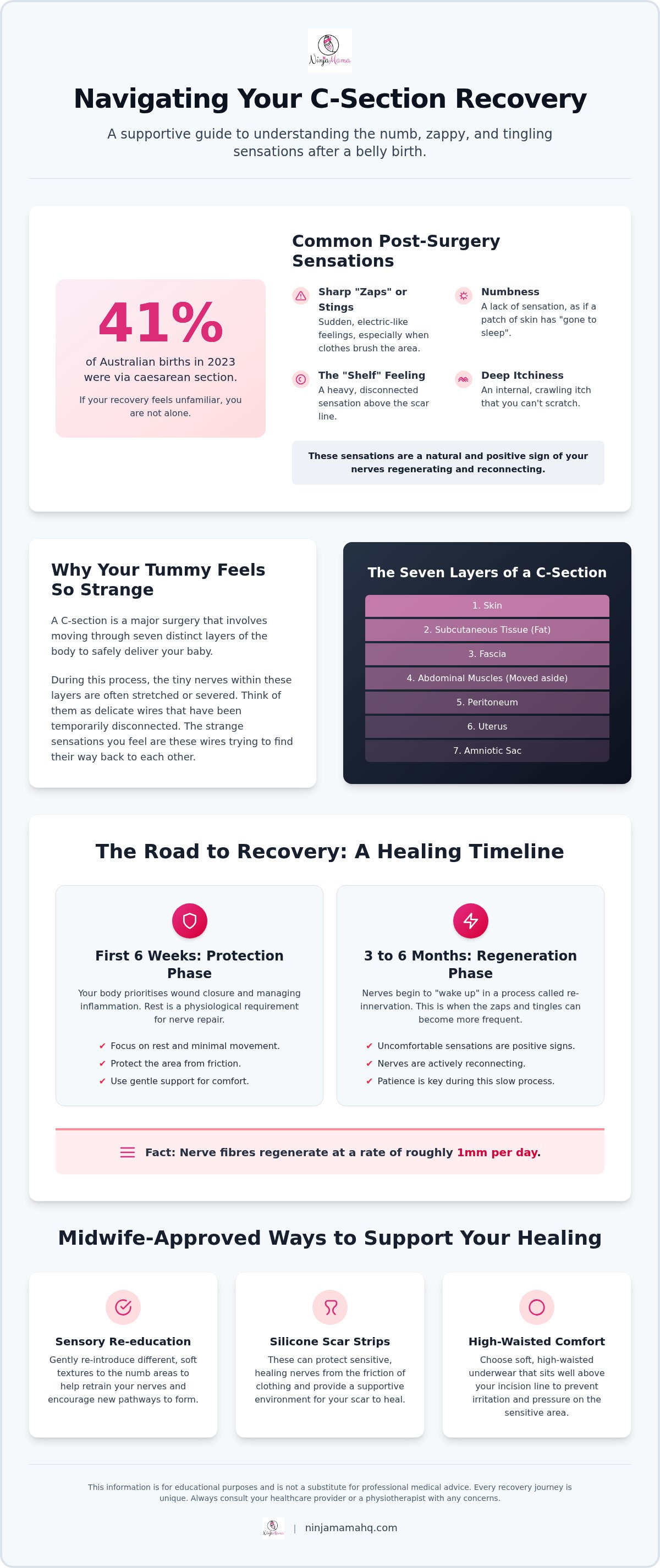
In 2023, the caesarean rate in Australia reached 41 per cent, yet so many of us are left wondering why our bodies feel so foreign once we’re back home with our bubs. If you’re currently navigating C-Section Nerve Pain: Managing numbness or that frustrating "shelf" feeling where your lower tummy feels heavy and disconnected, you aren't alone. It’s incredibly common to experience a sharp, zapping sting when your clothes brush against your scar, or to feel like a patch of your skin has simply gone on permanent holiday. These sensations can be unsettling, but they aren't a sign that you’ve failed at healing or that something is wrong.
The good news is that these weird feelings are actually a natural part of your nerves working to regenerate and find their way back to each other. You don't have to just wait and hope for the best. We’ve gathered practical, midwife-approved tips to help you take an active role in your recovery. We’ll look at simple ways to desensitise the area at home, how to choose high-waisted support that won't irritate your nerves, and the best ways to protect your scar while your body finds its new rhythm.
Key Takeaways
- Understand why your tummy feels numb or "zappy" after surgery and why these sensations are a normal sign of your nerves repairing themselves.
- Learn about the slow but steady timeline of nerve regeneration, which typically progresses at a rate of about 1mm per day.
- Discover practical, midwife-approved techniques for C-Section Nerve Pain: Managing numbness through gentle sensory re-education at home.
- Find out how silicone scar strips and high-waisted underwear can protect sensitive nerves from friction and irritation while you heal.
Understanding C-Section Nerve Pain: Why Your Tummy Feels Weird
You've brought a whole human into the world, but now you’re left with a tummy that feels like it belongs to someone else. It's a strange mix of sensations. One minute it's completely numb, and the next, it feels like a tiny lightning bolt has struck your scar. Many mums describe a heavy, disconnected feeling often called "the shelf." This overhang isn't just about skin or muscle; it’s deeply tied to how your nerves are communicating. When you’re dealing with C-Section Nerve Pain: Managing numbness becomes much easier once you understand that your body is literally trying to rewire itself. Learning the "why" behind these feelings is the first step toward feeling like yourself again.
The Seven Layers and Your Nerves
A Caesarean section is a major abdominal surgery that involves moving through seven distinct layers of your body. These include your skin, subcutaneous tissue (fat), fascia, and the peritoneum, before finally reaching the uterus and amniotic sac. While the muscles are usually moved aside rather than cut, the tiny nerves living within these layers are often stretched or severed during the process.
Think of these nerves like delicate electrical wires that have been temporarily disconnected. Neuropathy in the context of a belly birth is essentially nerve damage or dysfunction that causes those strange, prickly, or absent sensations around your incision. This often leads to the "numb but itchy" paradox. Your skin feels dead to the touch, yet deep underneath, it feels like a thousand ants are crawling around. It’s frustrating, but it’s actually a sign of life returning to the area as those "wires" try to find their way back to each other.
What is Nerve Entrapment?
Sometimes, the healing process gets a little too enthusiastic. As your body builds scar tissue to knit everything back together, that tissue can occasionally "pinch" or trap a nerve. This is known as nerve entrapment. While surface numbness is common, entrapment often feels like a deeper, more persistent ache or a sharp tugging sensation that doesn't quite go away with rest.
Many women find this becomes more noticeable around the six-week mark. This is usually when you start moving more, lifting the pram, or returning to light exercise. That extra movement pulls on the internal scar tissue, making any trapped nerves "shout" a little louder. Using something like Ninja Mama C-section silicone scar patches can help support the scar's external environment, but understanding the internal "pinch" is key to managing your expectations during these middle weeks of recovery.
The Timeline of Healing: What to Expect in the First Six Months
Recovery from a belly birth is a marathon, not a sprint, especially when it comes to your nervous system. While your skin might look healed on the outside within a few weeks, the delicate network of nerves underneath takes much longer to reconnect. Nerve fibres typically regenerate at a rate of roughly 1mm per day. Because of this slow pace, C-Section Nerve Pain: Managing numbness often feels like a game of patience. You might find that the first few months are a strange cycle of feeling nothing at all, followed by intense, prickly sensations as the area begins to "wake up."
The First Six Weeks: Protection Mode
During these early days, your body is prioritising wound closure and managing significant inflammation. This is the "protection mode" phase. Rest isn't just a suggestion; it's a physiological requirement for nerve repair. Excessive movement or friction too early can increase swelling, which puts more pressure on those sensitive, newly healing pathways. Many mothers find that a Ninja Mama Postpartum Recovery Kit provides the gentle, curated support needed to keep the area calm and protected during this vulnerable time.
Your six-week check-up with your GP or Midwife is a vital milestone. This is the perfect time to discuss any persistent stinging or if the area feels particularly "angry" when touched. In the Australian healthcare system, your Child Health Nurse can also be a wonderful resource for monitoring your physical recovery alongside your bub's milestones. For more general C-section recovery tips, it’s helpful to understand how early movement should be balanced with structural support.
Three to Six Months: The Regeneration Phase
As you move into the second trimester of your postpartum journey, you might notice the "zaps" and "tingles" becoming more frequent. This is called re-innervation. It’s a bit of a paradox, but feeling these sharp, sometimes uncomfortable sensations is actually a positive sign that the nerves are successfully reaching the skin's surface. It can be more unsettling than the initial numbness, but it means your body is doing exactly what it's supposed to do.
By the six-month mark, many women feel a significant return of sensation, though some patches of numbness may still persist. If you find the pain is stopping you from wearing certain clothes or if the "zapping" feels unbearable, consider asking your GP for a referral to a women’s health physiotherapist. They specialise in scar tissue release and can help desensitise the area. Remember, your body has been through a massive transformation. Giving yourself grace during this six-month window is just as important as any physical treatment.
If you're looking to support your body's natural healing rhythm, consider incorporating silicone scar patches into your daily routine to provide a protective barrier for those sensitive nerves.
Sensory Re-education: Retraining Your Nerves at Home
Once you’ve moved past the initial healing phase, your brain and nerves need a little help finding their way back to each other. When dealing with C-Section Nerve Pain: Managing numbness isn't just about waiting for time to pass; it’s about active sensory re-education. This is the process of "waking up" the neural pathways that were interrupted during surgery. By providing gentle, consistent input, you’re teaching your brain that touch in this area is safe, which can help reduce that strange, disconnected feeling.
The key is a concept called "graded exposure." This means starting with very light sensations and slowly working up to more complex ones as your comfort increases. This should always be a gentle, pain-free process. You don't need a lot of time to make progress. Just two to five minutes a day during your quiet time, perhaps while the bub is napping or while you’re resting on the lounge, can make a significant difference in how your tummy feels over time.
The Texture Toolkit
Creating a simple "texture toolkit" at home is an easy way to start your nerve retraining. You can use everyday items to provide different types of sensory input to the skin around your scar. Follow these steps to gradually build your tolerance:
- Step 1: Start with the softest textures possible. Use a cotton ball or a silk scarf to gently stroke the skin. Move from the area where you have full sensation toward the numb or sensitive patches.
- Step 2: Once the softest textures feel comfortable, progress to slightly coarser materials. A clean face towel or a soft-bristled baby brush can provide a bit more feedback to the nerves.
- Step 3: Introduce different types of movement. Instead of just stroking, try gentle tapping or drawing small circles with your fingertips around the area to vary the signals being sent to your brain.
Desensitisation Techniques
Many mums find the most frustrating part of nerve recovery is the "stinging" or "zapping" sensation that happens when clothing brushes against the scar. This hypersensitivity occurs because the nerves are sending "danger" signals for even the lightest touch. Graded exposure helps dampen these signals. Temperature can also play a vital role in providing nerve feedback. Alternating between gentle warmth and cool sensations can help soothe the area and provide a broader range of sensory data.
If you’re experiencing significant stinging or inflammation, cold therapy can be incredibly soothing. Using Ninja Mama Perineal Ice Packs as a cold pack over your clothing can help calm the nerves and reduce the heat associated with nerve irritation. It’s a simple way to manage the discomfort while your body continues the slow work of regeneration.
Scar Care and Management: Beyond the Surface Level
The way your scar heals on the surface has a direct impact on the environment of the nerves underneath. A scar that becomes tight, thick, or adhered to deeper tissue can physically pull on those delicate nerve endings, leading to persistent discomfort. When dealing with C-Section Nerve Pain: Managing numbness is often about ensuring the scar tissue remains as soft and pliable as possible. By focusing on scar health, you’re creating the best possible conditions for those "electrical wires" we discussed earlier to find their way home without being pinched or restricted.
Keeping the area clean and dry is the foundation of good scar management. Moisture trapped in the skin fold can lead to irritation or infection, which increases inflammation and complicates nerve recovery. Most Australian midwives recommend patting the area dry with a clean towel after showering or even using a hairdryer on a cool setting. Once the wound is fully closed and your medical team has given the green light, you can move from basic hygiene to active management.
The Magic of Silicone Scar Patches
Silicone has long been the gold standard for managing surgical scars. It works by creating a "healing micro-climate" that mimics the skin's natural barrier, keeping the scar hydrated and protected. This hydration helps prevent the overproduction of collagen that leads to raised or keloid scars. Beyond the biological benefits, these patches provide a vital physical shield. If you find that even the lightest touch from your clothes causes a sharp "zap," a patch acts as a second skin, dampening that friction. Many women find Ninja Mama C-Section Silicone Scar Patches helpful for long-term care because they are specifically designed to be gentle on sensitive postpartum skin.
Introduction to Scar Massage
Once you’ve reached your six-week check and your GP or midwife confirms the wound is fully closed, you might be ready to start scar massage. This isn't about deep tissue work; it’s about preventing adhesions where the scar tissue "sticks" to the layers underneath. A common technique is "skin rolling," where you gently pick up the skin around the scar and roll it between your fingers. This helps free up any trapped nerves and improves blood flow to the area. You should never force the movement. If it hurts, stop and try again in a few days. Gentle consistency is always better than aggressive effort.
To give your scar the best environment for healing and nerve protection, you can order your silicone scar patches here to start your journey toward a more comfortable recovery.
Comfort and Protection: Essential Gear for C-Section Recovery
Finding the right clothes after a belly birth is about more than just fashion; it’s a critical part of your physical comfort. Traditional knickers are often designed to sit right where your incision is, which can be a nightmare when you're dealing with C-Section Nerve Pain: Managing numbness. The elastic band on standard underwear tends to "cut in" exactly where your nerves are most sensitive, triggering those sharp zaps or making the area feel even more bruised. Organising your wardrobe with a focus on soft, high-waisted pieces for the first three months can significantly lower your daily discomfort levels.
Many mums struggle with the "shelf" or overhang feeling. It can feel heavy and disconnected, almost like that part of your body doesn't belong to you. While you might be tempted to use tight compression to "hold everything in," this can sometimes backfire by putting too much pressure on recovering nerves. Instead, look for gentle support that provides a steady, calming sensation without being restrictive. This helps the brain process sensory information more effectively while protecting the area from accidental bumps from a wriggly bub or a seatbelt during the drive to your maternal health appointments.
Why High-Waisted is Essential
High-waisted options are a total game-changer for C-section recovery. They provide a gentle "hug" that can actually soothe nerve pain by providing consistent, non-irritating sensory input to the skin. During those early, tender weeks, Ninja Mama Postpartum Disposable Underwear is an ideal choice. The waistband sits well above the incision line, ensuring nothing rubs against your scar or aggravates those sensitive nerve endings. As you transition further into your recovery, continue choosing high-waisted support wear that avoids seams or lace right at the level of your scar to keep the "zapping" at bay.
Managing the Emotional Side of Numbness
It’s very common to feel a sense of "disconnect" from your belly after a C-section. Dealing with a patch of skin that feels like cardboard or that zaps when touched can make you feel alienated from your own body. At Ninja Mama, we believe that emotional self-care is just as important as physical healing. You can read more about us and our mission to support mums through these often-overlooked parts of the journey. Remind yourself daily that your body has done something truly incredible. This numbness isn't a permanent flaw; it's a sign that your body is busy doing the quiet, hard work of repair. Healing takes time, and you deserve every bit of grace as you navigate this new version of yourself.
Your Path to Feeling Like Yourself Again
Healing after a belly birth is a journey that requires both patience and the right support. Remember that your nerves are regenerating at a steady rate of about 1mm per day, so those strange tingles are actually a sign of your body's incredible repair work. By using gentle sensory re-education and prioritising scar protection with high-waisted support, you can take an active role in your recovery. Addressing C-Section Nerve Pain: Managing numbness isn't just about physical healing; it's about reconnecting with your body and giving yourself the grace you deserve.
As an Australian owned and operated brand, Ninja Mama provides midwife-recommended solutions designed by mums for mums who truly understand the "shelf" struggle. You don't have to navigate this transition alone. Shop the Ninja Mama C-Section Recovery Range today to find the comfort and protection you need. Your body has done something remarkable, and with time and the right care, you’ll find your way back to a place of confidence and comfort.
Frequently Asked Questions
Is it normal for my C-section scar to still be numb after a year?
It is actually quite common for some degree of numbness to persist a year after your surgery. While many nerves repair themselves at a rate of roughly 1mm per day, some deeper fibres may take longer to reconnect or might remain disconnected. If you've reached the 12-month mark and sensation hasn't fully returned, it may be your body's new normal. However, many women find that gentle sensory work can still encourage progress even this far along.
Can I use a peri bottle after a C-section?
Absolutely, and many C-section mums find it a lifesaver during the early weeks. Bending down to clean yourself can be quite painful and puts unnecessary strain on your abdominal muscles and incision site. Using an upside-down peri bottle allows you to stay fresh and clean while standing or sitting comfortably. It’s a gentle, hands-off way to maintain hygiene when your mobility is limited and your tummy feels particularly tender and sensitive.
What does it mean when my scar feels like it is "burning"?
A burning sensation often indicates that your nerves are "waking up" or are slightly irritated by surrounding scar tissue. This is a common part of C-Section Nerve Pain: Managing numbness and hypersensitivity as you heal. As the nerve endings try to reconnect, they can send intense signals to the brain that feel like heat or stinging. While uncomfortable, it’s usually a sign of activity. Using a cool pack over your clothes can often help soothe this specific type of heat.
How can I tell the difference between normal nerve pain and an infection?
Nerve pain typically feels like zapping, tingling, or numbness, whereas an infection usually presents with visible physical changes and systemic symptoms. You should look out for increasing redness around the incision, swelling that feels hot to the touch, or any unusual discharge. If you also have a fever or feel generally unwell, these are strong signs of an infection rather than standard nerve recovery. Always contact your GP or Midwife if you notice these "red flag" symptoms developing.
Will the "shelf" above my C-section scar ever go away?
The "shelf" is often a combination of post-surgical swelling, scar tissue adhesions, and the way the skin was sutured during the procedure. While it may not disappear entirely for everyone, it often softens significantly over the first year as inflammation subsides. Regular scar massage and gentle core rehabilitation can help improve the appearance and feel of the overhang. Supporting the area with high-waisted underwear also helps manage the heavy sensation while your tissues gradually find their new position.
When should I see a doctor about my C-section nerve pain?
You should consult your doctor if the pain is becoming progressively worse instead of better or if the "zapping" sensations are so intense they prevent you from sleeping. If the pain interferes with your ability to care for your bub, it's time to seek professional advice. A referral to a women’s health physiotherapist can be life-changing for managing persistent discomfort. They can provide specialised techniques to help desensitise the area and ensure your recovery is on the right track.
Does scar massage really help with numbness?
Yes, scar massage is a brilliant tool for improving sensation and reducing that disconnected feeling. By gently moving the skin and underlying tissue, you help break up internal adhesions that might be pinching or trapping small nerves. This process also increases blood flow to the area, which supports the natural regeneration of nerve fibres. Many women find that consistent, gentle massage helps the brain "re-map" the area, slowly turning those numb patches back into skin that feels like their own.
Can I use silicone patches if my scar is already several months old?
You certainly can. While silicone patches are most effective when started early in the healing process, they can still provide benefits for scars that are several months or even years old. Silicone helps to hydrate the tissue and can soften a raised or firm scar, which in turn reduces the tension on nearby nerves. If your older scar still feels sensitive or "zappy" when clothes rub against it, the physical barrier of a patch can offer immediate relief.

Article by
Louise Beever
Louise Beever is the founder of Ninja Mama, an Australian postpartum recovery brand focused on creating premium, practical recovery essentials for new mothers. Since launching Ninja Mama in 2018, Louise has worked closely with thousands of postpartum women and healthcare retailers to better understand the realities of recovery after birth. Her work focuses on postpartum preparation, recovery support, and improving awareness around the fourth trimester.
Remember Mamas
The information provided in this article is intended for general educational and informational purposes only and should not be considered medical advice. Always seek guidance from your doctor, midwife, lactation consultant, or qualified healthcare professional regarding your individual circumstances, pregnancy, birth, or postpartum recovery.