
You have finally settled at home with your beautiful new bub, but every trip to the bathroom or attempt to get comfortable in the nursing chair is met with a sharp sting or a heavy, aching pressure. It is a moment many new mums face, where the joy of meeting your baby meets the reality of physical recovery. You might feel like your only options are to grit your teeth or stick to a strict schedule of tablets, but there is another way to find relief.
It is completely understandable if you are looking for a more holistic path to healing that doesn't rely entirely on a pharmacy cabinet. Managing postpartum pain without medication is a priority for many women who want to feel present, grounded, and in control of their own bodies during those first precious weeks. We believe that recovery should feel like a nurturing ritual rather than a clinical process.
This guide provides practical, evidence-aware strategies and soothing rituals designed to help you manage your postpartum journey naturally and comfortably. We will walk you through gentle techniques to reduce perineal swelling, tips for easing C-section tenderness, and clever positioning shifts to make breastfeeding a time of connection rather than discomfort. It is time to transform your recovery into a period of prepared calm and genuine self-care.
Key Takeaways
- Understand the science of the "fourth trimester" and how targeting inflammation can lead to a more comfortable, natural recovery.
- Discover why managing postpartum pain without medication often starts with cooling therapies and cleansing rituals to soothe stinging and swelling.
- Learn the step-by-step process for preparing a restorative sitz bath that may help support tissue recovery using premium organic botanicals.
- Explore gentle movement techniques and heat-based strategies to ease abdominal discomfort and protect your core after a C-section or vaginal birth.
- Build your own bespoke recovery system using the "5-5-5" rule to ensure your physical wellbeing and emotional comfort are prioritised during the first 15 days.
Table of Contents
-
Understanding Your Post-Birth Body and the Power of Non-Medicated Relief
-
Mastering Perineal Care: Cooling and Cleansing for Immediate Comfort
-
Navigating Abdominal Discomfort and C-Section Recovery Naturally
Understanding Your Post-Birth Body and the Power of Non-Medicated Relief
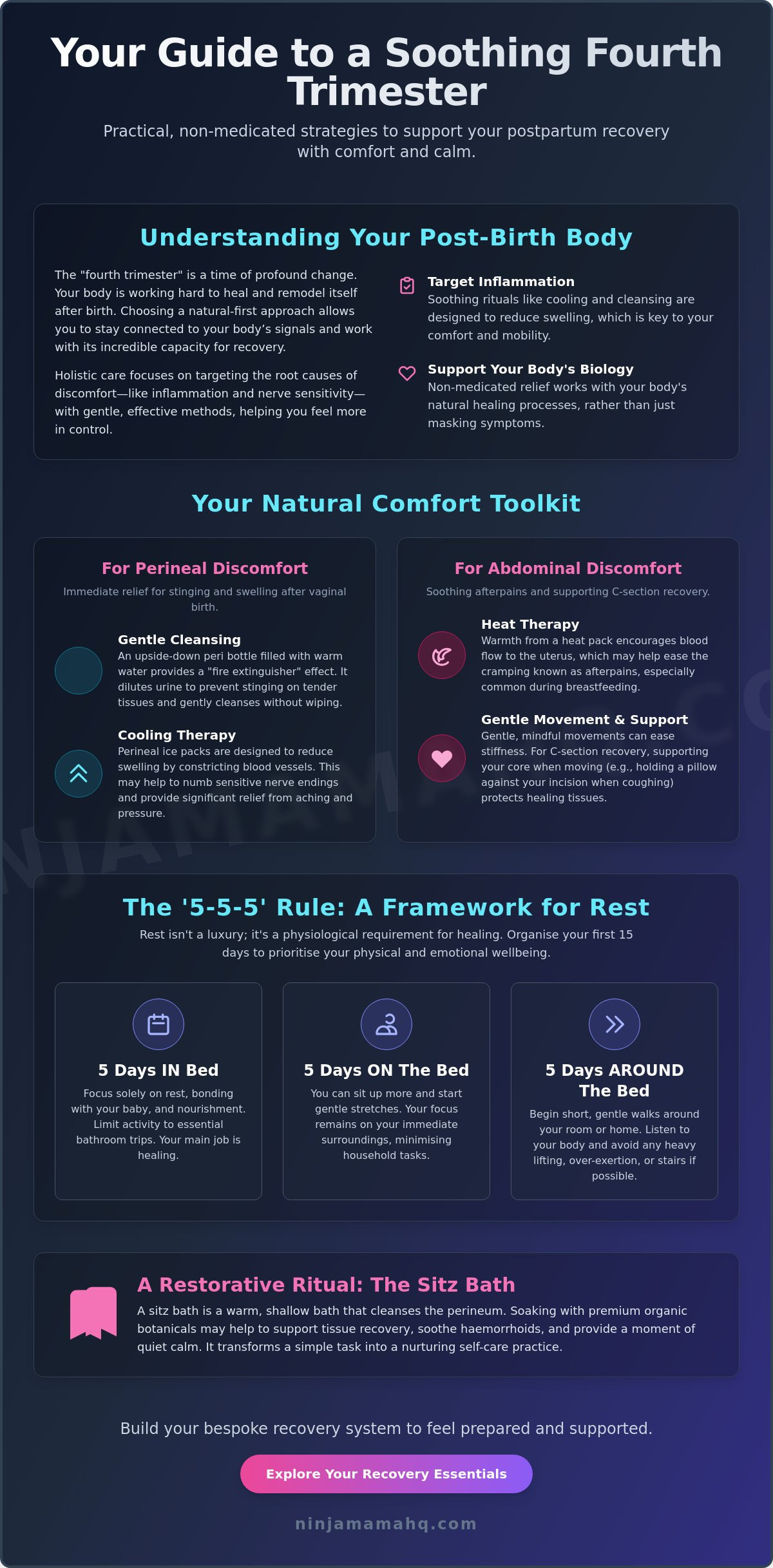
Welcoming your baby is a monumental feat, but the transition into the fourth trimester often brings unexpected physical intensity. Your body isn't just healing; it is actively remodelling itself after nine months of growth and a life-changing birth event. Holistic Postpartum care focuses on supporting these biological shifts with kindness and patience. It is about acknowledging that while the pain is real, your body is incredibly capable of recovery when given the right environment.
Many women find that managing postpartum pain without medication allows them to stay more connected to their body's signals and their new baby. By targeting the root causes of discomfort, such as inflammation and nerve sensitivity, you can find significant relief without relying solely on pharmaceutical options. This approach focuses on comfort measures that work with your biology rather than just masking the symptoms.
To help you feel more prepared for this journey, watch this helpful video on coping with intensity naturally:
Non-medicated relief often comes down to clever physics and biology. For example, using an upside down peri bottle to dilute urine provides immediate mechanical relief from the stinging sensation on tender tissues. Similarly, temperature therapy plays a vital role. Cold therapy, like perineal ice packs, works by constricting blood vessels to reduce swelling and numbing sensitive nerve endings. Heat, on the other hand, encourages blood flow to the uterus, which helps ease the cramping known as afterpains. Balancing these methods allows you to address different types of discomfort as they arise.
The Biological Reality of the Fourth Trimester
Your uterus is currently undergoing involution, a process where it shrinks back to its original size. This often causes afterpains that feel like strong period cramps, especially during breastfeeding. At the same time, your perineum or incision site is managing local inflammation. Reducing this swelling is the key to regaining your mobility. Rest isn't a luxury here; it is a physiological requirement that allows your immune system to focus entirely on tissue repair. When you prioritise stillness, you are giving your body the resources it needs to knit itself back together.
Why Many Mums Choose a Natural-First Approach
Choosing a natural approach helps you avoid that heavy medication fog that some mums find distracting during early bonding. It allows you to work with your body’s natural inflammatory response rather than just suppressing it. By using soothing rituals early on, you can often manage minor discomforts before they escalate into something more overwhelming. This proactive care gives you a sense of control and confidence during a time when everything else feels brand new. It is about creating a recovery experience that feels premium, gentle, and deeply supportive of your long-term wellbeing.
Mastering Perineal Care: Cooling and Cleansing for Immediate Comfort
One of the most daunting moments after birth is that first trip to the toilet. The stinging sensation can feel overwhelming, but managing postpartum pain without medication is remarkably effective when you focus on clever cleansing and temperature control. Think of your bathroom as a mini-recovery suite. By organising a dedicated station with your essentials in a basket right next to the toilet, you ensure every trip is as soothing as possible, reducing stress when you are feeling most vulnerable.
The Peri Bottle: Your Best Friend for Sting-Free Bathroom Trips
The "Fire Extinguisher" effect is a total game-changer for new mums. When you use a Ninja Mama Peri Bottle, you can stream water over your perineum while you urinate. This simple mechanical action dilutes the acidity of your urine, stopping the sting before it even begins. Why is this so effective? It prevents the urine from coming into direct contact with sensitive tissues or stitches. Most mums find that lukewarm water is the "just right" temperature for cleansing, providing a gentle wash that feels much kinder than traditional toilet paper.
Using the bottle effectively is all about the angle. The ergonomic, upside-down design allows you to reach exactly where you need to without awkward manoeuvring. It is a hands-free cleansing experience that keeps the area hygienic without the need for pressure. If you are feeling particularly tender, adding a few drops of organic witch hazel to the water can provide an extra layer of cooling relief for bruised tissues, as this natural astringent is designed for comfort and recovery.
Cooling Therapy: Using Ice Packs and Padsicles
Cryotherapy, or cooling therapy, is one of the most reliable Non-drug pain management techniques for reducing local inflammation. When you manage swelling effectively, your overall mobility improves, making it easier to get in and out of bed or find a comfortable position for breastfeeding. For the best results, follow the 20-minutes-on, 20-minutes-off rule. This prevents the tissue from becoming too cold while still providing deep, numbing relief to the nether regions.
While some suggest DIY "padsicles," many find that Ninja Mama Perineal Ice Packs are significantly more comfortable. They are slim, anatomically shaped, and stay flexible even when frozen, so they contour to your body rather than feeling like a stiff block. This targeted cooling helps calm nerve sensitivity and reduces the heavy, pulsing feeling that often accompanies perineal bruising in that first week.
Finally, remember the "Pat, Don’t Wipe" rule. Your skin is incredibly sensitive right now, especially if you have stitches. Use postpartum perineal recovery wipes to gently pat the area dry. It is a simple rule, but it is a life-saver for preserving the integrity of your skin and preventing any pulling on stitches. For a complete system that covers all these needs, many mums find our recovery bundles to be an essential part of managing postpartum pain without medication.
The Healing Ritual of Sitz Baths and Soaks
In Australia, we have a beautiful culture of looking after new mums, and the sitz bath is a cornerstone of that traditional care. While previous sections focused on immediate relief during bathroom trips, a sitz bath is about deep, restorative healing. It is one of the most effective ways of managing postpartum pain without medication because it addresses the heavy, throbbing sensation in the pelvic floor. The hydrostatic pressure of the water gently supports your tissues, helping to move fluid away from swollen areas and providing a sense of lightness you likely haven't felt since before bub arrived.
Timing is everything. Most women find they can start these gentle soaks about 24 hours after birth, but it is always wise to check with your midwife first. Aim for a 15 minute indulge once or twice a day. This isn't just a hygiene task; it is a ritual that signals to your body that it is time to downshift and repair. By dedicating this small window to yourself, you are prioritising your recovery in a way that feels both luxurious and practical.
How to Prepare a Soothing Sitz Bath
You don't need a fancy setup to reap the benefits. You can use a dedicated basin that fits over your toilet seat or simply run a few centimetres of warm water in your bathtub. The goal is to submerge just your hips and bottom. To elevate the experience, infuse your water with Ninja Mama Sitz Soak. This blend provides essential mineral support through Epsom salts, which many women find helpful for relaxing tired muscles and reducing local inflammation. Try to treat this as a "mama-only" sanctuary. Ask your partner to take the baby for 20 minutes so you can focus entirely on your own comfort without distractions.
The Power of Witch Hazel and Botanicals
For soothing bruised or sensitive skin, witch hazel is the undisputed gold standard. Adding Organic Witch Hazel to your soak or applying it via a pad liner may help support the natural healing process of the perineum. This natural astringent is designed for comfort and recovery, gently calming irritation and providing a cooling sensation that lasts long after you leave the water.
Beyond the physical benefits, the aromatherapeutic properties of botanicals like clary sage and lavender can transform your mood. These scents are commonly used by postpartum mothers to reduce anxiety and promote a sense of prepared calm. Managing postpartum pain without medication is as much about your emotional wellbeing as it is about physical relief. By creating a sensory experience that smells like a spa and feels like a warm hug, you are taking an active, empowering role in your healing journey.
Navigating Abdominal Discomfort and C-Section Recovery Naturally
Whether you have had a vaginal birth or a C-section, your midsection is currently the site of some pretty big changes. Managing postpartum pain without medication in this area is all about supporting your body as your uterus works hard to return to its pre-pregnancy size. These afterpains often feel like intense period cramps, particularly during those first few days when breastfeeding triggers the release of oxytocin. It is a sign your body is doing exactly what it should, but that doesn't make the sensation any less intense.
One of the simplest ways to protect your healing core is through the log roll technique. Instead of sitting straight up from bed, which puts immense pressure on your abdominal muscles and any incisions, roll onto your side first and use your arms to push yourself up. This gentle movement preserves your core integrity and prevents that sharp, pulling sensation that can be so discouraging. Pairing this with deep, diaphragmatic breathwork can help you ride out the intensity of uterine contractions, much like you did during labour. Slow, steady breaths signal to your nervous system that you are safe, allowing your muscles to relax rather than tighten against the discomfort.
C-Section Scar Care and Comfort
For our C-section mums, the incision site requires a specific kind of tenderness. Reducing friction is the first step toward comfort. Choosing Postpartum Disposable Underwear that features a high waistband is essential. These are designed so the elastic sits well above your incision, avoiding any irritating rubbing or pressure on the sensitive area. Once your midwife or doctor has given the all-clear, many women find that Silicone Scar Patches may help support long-term healing. These patches provide a protective barrier that keeps the area hydrated and may help reduce the sensitivity of the scar as it matures.
Heat Therapy for Abdominal Cramping
Heat is your absolute best friend for managing those sharp afterpains. A warm heat pack placed gently on the lower abdomen can help relax the uterine muscles and ease the cramping sensation. It is a comforting ritual that many postpartum mothers find helpful, especially when settling in for a breastfeed. Don't forget that hydration is just as important as external heat. Staying well-hydrated helps your body process the surge of postpartum hormones more efficiently, which can take the edge off the physical intensity of recovery. Keeping a large bottle of water nearby is a simple but vital part of your natural healing toolkit.
Ready to build your ultimate recovery station? Explore our Postpartum Recovery Kits for a curated selection of essentials designed for your comfort and ease.
Building Your Holistic Postpartum Recovery System
Successful recovery is rarely about a single "magic" fix. Instead, managing postpartum pain without medication is most effective when you create a structured system that supports your body from every angle. By shifting your focus from reacting to pain to proactively organising your environment, you can significantly reduce the physical and mental load of the fourth trimester. This holistic approach ensures that your healing isn't just a series of tasks, but a nurturing environment where your body has the space it needs to repair.
One of the most respected frameworks for this period is the "5-5-5" rule. This system encourages you to spend five days in the bed, five days on the bed, and five days around the bed. It is a simple but powerful way to prioritise rest and prevent the overexertion that often leads to increased swelling or pelvic heaviness. When you commit to this level of stillness, you are allowing your pelvic floor and abdominal muscles to knit back together without the constant pressure of gravity and movement.
The Recovery Kit: Having Everything Within Reach
The key to a stress-free recovery is preparation. We recommend organising your essentials into portable stations so you never have to scramble for relief. A curated Postpartum Recovery Bundle can be split between your bedside and your bathroom, ensuring that your peri bottle, cooling pads, and soothing wipes are always within arm's reach. This organisation is especially vital during those middle-of-the-night bathroom trips or breastfeeding sessions when your mobility might feel limited. Having a "recovery caddy" means you can focus entirely on your baby and your own comfort rather than navigating the house for supplies.
Breastfeeding Comfort Measures
For many new mums, the most intense discomfort in the first fortnight comes from engorgement and nipple sensitivity. Using Breast Therapy Packs provides targeted temperature therapy that can be a lifesaver. Applying them cold between feeds helps manage the pulsing heat of engorgement, while using them warm just before a feed can help support a comfortable let-down. It is also helpful to sip on Lactation Tea, which provides a moment of hydration and mineral support in a soothing, warm ritual.
As you move past the acute phase of healing, usually around the six-week mark, your focus will naturally transition from immediate pain management to long-term pelvic floor health. However, the foundations you lay in these first 15 days are what make that transition possible. By honouring your body with rest, cooling therapies, and mineral-rich support, you are not just managing pain; you are building a stronger, more resilient version of yourself for the beautiful journey of motherhood ahead.
Your Path to a Softer, More Confident Recovery
Transitioning into motherhood is a huge physical and emotional shift, but your recovery journey doesn't have to be a source of anxiety. By mastering simple techniques like the "fire extinguisher" effect with your peri bottle and embracing the restorative power of sitz baths, you are giving your body the premium care it deserves. Remember, the "5-5-5" rule isn't just a suggestion; it is a biological gift that allows your tissues to heal without the pressure of daily life. Managing postpartum pain without medication is entirely possible when you prioritise rest, hydration, and targeted temperature therapy.
As an Australian-owned brand, we are here to support you with evidence-aware, premium recovery essentials. Our products are designed by mums who have been exactly where you are and want to help you navigate your healing with ease and confidence. You don't have to do this alone. We are here to help you feel comfortable, grounded, and in control of your fourth trimester. Every small act of self-care you choose today builds a stronger foundation for your life with your new bub.
Explore the Ninja Mama Recovery Range for a Softer Postpartum Journey
You are doing an incredible job, Mama. Take it one gentle soak at a time.
Frequently Asked Questions
Is it really possible to manage postpartum pain without medication?
Yes, many women successfully navigate their recovery by using a combination of temperature therapy, mechanical relief, and intentional rest. While every birth experience is unique, managing postpartum pain without medication is a common goal for those who want to stay grounded and avoid the side effects of certain pharmaceuticals. By targeting inflammation with cooling packs and using mineral-rich soaks, you can effectively support your body's natural healing process during the fourth trimester.
How long does the "stinging" last after a vaginal birth?
The most intense stinging sensation during urination typically subsides within the first seven to ten days as the delicate tissues begin to knit back together. For many mums, the peak of this discomfort occurs between days two and four. Using a peri bottle to dilute your urine during this window is a total life-saver. It provides immediate relief and prevents the acidity of urine from irritating sensitive skin or stitches.
Can I use a sitz bath if I have stitches?
Yes, most midwives and obstetricians encourage gentle sitz baths for mums with stitches once the initial 24 hour period after birth has passed. The warm water helps keep the area clean and may help support the healing of the sutures by increasing blood flow to the region. Adding a mineral-based soak can provide extra comfort, but always ensure you gently pat the area dry afterwards to preserve the integrity of your skin.
What is a "padsicle" and how does it help with pain?
A padsicle is a chilled maternity pad, often infused with soothing agents like witch hazel, designed to provide immediate cryotherapy to the perineum. These are designed for comfort and recovery, helping to numb sensitive nerve endings and reduce the heavy, pulsing sensation of swelling. Many women find that using a dedicated perineal cooling pad is more effective and less messy than DIY versions, especially in the first few days when mobility is limited.
Are there any natural ways to help with C-section pain?
Supporting your incision with high-waisted recovery underwear and using heat therapy for uterine afterpains are two of the most effective natural strategies for C-section recovery. Protecting the surgical site from friction reduces sharp, pulling pains and allows you to move more confidently. Additionally, practicing the log-roll technique when getting out of bed prevents unnecessary strain on your abdominal wall, which is a major factor in managing discomfort naturally.
How often should I use a peri bottle for pain relief?
You should use your peri bottle every single time you use the bathroom during the first week of your recovery journey. Consistent use is the key to preventing the stinging sensation before it even starts. Many mums continue to use their bottle for two to three weeks post-birth simply because the gentle warm water wash feels much more hygienic and comfortable than using traditional toilet paper on sensitive tissues.
When should I see a doctor about postpartum pain?
You should seek medical advice from your GP or midwife if your pain is worsening rather than improving after the first week, or if you notice signs of infection. These signs include a fever, redness or foul-smelling discharge from an incision, or pain that is so severe it prevents you from walking or caring for your bub. Managing postpartum pain without medication is about comfort, but it should never replace a clinical assessment if something feels "off."
Can aromatherapy or essential oils help with postpartum recovery?
Yes, certain botanicals like clary sage and lavender are commonly used by postpartum mothers to support emotional wellbeing and create a sense of prepared calm. While these don't heal physical wounds directly, the aromatherapeutic benefits can help reduce the anxiety and tension that often make physical pain feel more intense. Using a support oil roller or a diffuser during your recovery rituals can transform a clinical task into a moment of genuine self-care.

Article by
Louise Beever
Louise Beever is the founder of Ninja Mama, an Australian postpartum recovery brand focused on creating premium, practical recovery essentials for new mothers. Since launching Ninja Mama in 2018, Louise has worked closely with thousands of postpartum women and healthcare retailers to better understand the realities of recovery after birth. Her work focuses on postpartum preparation, recovery support, and improving awareness around the fourth trimester.
Remember Mamas
The information provided in this article is intended for general educational and informational purposes only and should not be considered medical advice. Always seek guidance from your doctor, midwife, lactation consultant, or qualified healthcare professional regarding your individual circumstances, pregnancy, birth, or postpartum recovery.