
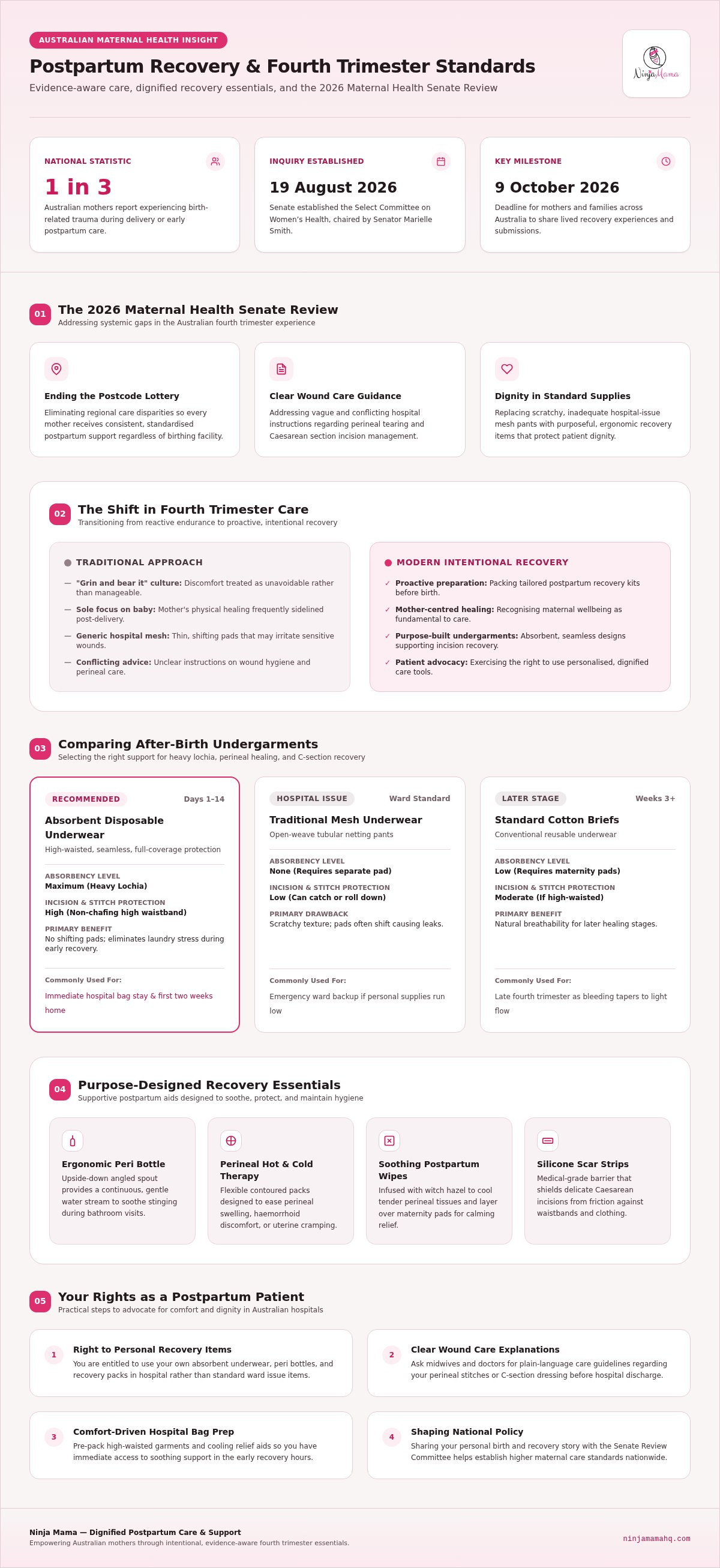
Did you know that 1 in 3 Australian mothers report experiencing birth-related trauma? It is a staggering reality that confirms what many women already feel; the current system often leaves new mums feeling unsupported once they leave the delivery suite. The recently established Maternal Health Senate Review aims to address these exact gaps, focusing on everything from pelvic health costs to the physical and emotional impact of the fourth trimester. You might be feeling overwhelmed by conflicting recovery advice or struggling with the stinging discomfort that often follows a vaginal or Caesarean birth.
It is completely valid to expect a recovery that feels dignified and comfortable rather than just something to be endured. We will help you understand how these new Australian maternal health standards impact your personal journey and how you can share your story before the 9 October 2026 deadline. You will also discover how to choose the right after-birth undergarments to support your healing without irritation. From navigating the formal inquiry process to finding practical relief for C-section wounds, this guide provides the clarity and support you need to prioritise your wellbeing.
Key Takeaways
- Learn about the Maternal Health Senate Review 2026 and how you can share your experience to help shape better postpartum care standards across Australia.
- Understand the shift toward intentional recovery gear and why choosing the right undergarments may help support your physical healing after birth.
- Compare the benefits of disposable, mesh, and cotton options to determine which styles offer the best absorbency and comfort for your unique recovery.
- Gain practical advice on sizing and preparation to ensure your hospital bag is packed with items that protect sensitive C-section incisions or perineal stitches.
- Discover how to advocate for your own health and dignity by selecting recovery tools designed by mums who understand the gaps in traditional hospital care.
What is the Maternal Health Senate Review 2026 and Why Does it Matter?
On 19 August 2026, the Australian Senate established the Select Committee on Women’s Health to look deeply into the gaps within our healthcare system. This Maternal Health Senate Review is a significant step toward acknowledging that the "postcode lottery" of care needs to end. It shouldn't matter whether you give birth in a major metropolitan hospital or a small regional clinic; every mother deserves consistent, high-quality support. The inquiry, chaired by Senator Marielle Smith, focuses on the physical, emotional, and economic impacts of birth, aiming to standardise the care received across the country.
To better understand this concept, watch this helpful video:
This review matters because it finally shines a light on the fourth trimester. For too long, the focus has been solely on the baby, leaving mums to navigate the complex stages of the postpartum period without adequate guidance. By prioritising patient-centred recovery, the system can move toward a model where your personal dignity and physical comfort are treated as essential, not optional. You can read more about how these standards are evolving in our report on the state of postpartum 2026.
Key Findings Impacting Postpartum Recovery
One of the biggest realisations from early committee discussions is the lack of education regarding wound care. Whether you are managing perineal tearing or a Caesarean incision, the advice given in hospitals can be conflicting and vague. The review is also scrutinising "standard issue" hospital supplies. Many women find that the scratchy, thin mesh pants provided by hospitals don't offer the security or comfort needed for heavy lochia. Using high-quality self-care products, such as an upside down peri bottle or soothing witch hazel wipes, can significantly impact your mental health by reducing physical distress and stinging during those first few days at home.
Your Rights as a Postpartum Patient in 2026
You have the right to feel comfortable and supported during your hospital stay. This includes the right to choose your own recovery aids and undergarments rather than relying on whatever the ward has in stock. If the provided pads are shifting or the mesh underwear feels undignified, you can use your own absorbent disposable underwear or supportive recovery kits. Don't be afraid to advocate for your comfort; your recovery matters just as much as your baby’s health. This review acts as a vital catalyst for better maternal outcomes by ensuring that the lived experiences of Australian mothers drive future policy changes.
Why Standards for After Birth Undergarments are Changing
The culture around postpartum care is finally shifting from a "grin and bear it" attitude to one of intentional, proactive recovery. For decades, Australian mums were expected to make do with whatever basic supplies were handed to them in the hospital ward. However, the Senate Select Committee on Women's Health inquiry is now examining how these standards impact maternal wellbeing. This shift acknowledges that the right after-birth undergarments are designed for comfort and recovery, which many women find helpful during physical healing. Choosing the right gear is no longer seen as a luxury but as a practical part of a healthy recovery plan.
High-quality materials play a crucial role in supporting hygiene and comfort. During the first few weeks, moisture-wicking fabrics and breathable designs are commonly used by postpartum mothers to help keep sensitive areas dry. The Maternal Health Senate Review highlights that when women are encouraged to prepare their own "recovery kit" with purpose-built items, they often experience a smoother transition into the fourth trimester. This proactive preparation helps reduce the anxiety often associated with post-birth physical changes.
The Problem with Traditional Hospital Mesh Undies
Most mums are familiar with the standard-issue "fishnet" mesh pants found in hospital bathrooms. While they are a staple in many wards, they are frequently the source of immense frustration. Common complaints include a total lack of support, irritating seams that can rub against stitches, and a complete inability to keep large maternity pads secure. This lack of security can increase stress during those first 48 hours when you are already dealing with physical exhaustion and heavy lochia. Many women are now opting for specialised materials found in Ninja Mama disposable underwear, which provide a seamless, high-waisted fit that stays in place without putting pressure on sensitive areas.
The Importance of Dignity in the Ward
There is a profound psychological difference between feeling like a patient and feeling like a person. When you use premium, purpose-built recovery products, you regain a sense of control over your body. Feeling "dressed" in supportive, comfortable undergarments rather than "hospitalised" in flimsy mesh can positively affect those early bonding moments with your newborn. The fourth trimester is a critical health phase that deserves as much preparation as the birth itself. By choosing gear that prioritises your comfort, you are validating that your health matters. If you are starting to plan your hospital bag, consider looking at our curated recovery bundles to ensure you have everything you need for those first few days. This approach to self-care is exactly what modern maternal health standards, influenced by the Maternal Health Senate Review, are beginning to champion.
Comparing After Birth Undergarments: Disposables vs. Mesh vs. Cotton
Choosing what to wear after birth might seem like a small detail, but it's central to your comfort and dignity. The Maternal Health Senate Review is currently highlighting that the supplies provided in hospitals often fall short of what mums actually need for a smooth recovery. In 2026, Australian mums generally choose between three main options: all-in-one disposables, traditional mesh with pads, or their own cotton underwear. When we evaluate these, we look at three critical factors: absorbency, wound protection, and overall comfort.
Many women find that their regular cotton undies simply aren't up to the task during the first week. Postpartum bleeding, or lochia, is heaviest in those first few days and can last up to six weeks. Standard underwear lacks the gusset width to hold bulky maternity pads securely, which often leads to leaks and ruined clothing. Even worse, low-rise styles often sit right on a C-section incision, causing unnecessary pain and friction. It's a frustrating experience that adds stress to an already intense time.
Disposable Postpartum Underwear: The Modern Standard
The rise of all-in-one disposable solutions has changed the game for early recovery. These garments use advanced wick-away technology that may help support skin integrity by keeping moisture away from sensitive areas. A seamless, high-waisted design is particularly helpful for both C-section and vaginal birth recovery as it provides gentle support without irritating stitches. When you're dealing with the sheer exhaustion of those first 72 hours, the "toss and go" aspect is essential. You don't want to be worrying about laundry when you're trying to bond with your new baby. It's about making those first days as simple as possible.
Traditional Mesh and Maternity Pads
Hospital-issued mesh pants are often the default, but they aren't always "enough." While they are breathable, they frequently fail to keep pads in place. Shifting pads lead to stinging, discomfort, and potential leaks, which is the last thing you need while navigating the findings in the State of Postpartum 2026 report regarding maternal stress. The WHO recommendations on maternal postnatal care emphasise the importance of respectful, person-centred care, and having secure, reliable undergarments is a big part of that. If you choose the mesh route, ensure you have high-quality, long maternity pads that won't bunch up. However, many mums find that the Maternal Health Senate Review's focus on better standards validates their preference for the security of a modern disposable option instead.
Buying Guide: Choosing the Right Support for Your Delivery
Your recovery needs will depend heavily on your birth experience. The Maternal Health Senate Review emphasises that maternal care should be tailored to the individual, and this extends to the recovery gear you pack in your hospital bag. Whether you are planning a physiological birth or a scheduled Caesarean, your undergarments need to be functional, breathable, and supportive. It is about moving away from the "one size fits all" hospital approach and choosing tools that respect your body's specific healing process.
When it comes to sizing, the golden rule is to size up. Postpartum swelling is completely normal, and you will also need extra room to accommodate maternity pads or cooling inserts. Many women find that wearing their pre-pregnancy size feels restrictive and uncomfortable during the first week. For the first fortnight, you should aim to have at least two to three changes per day. While it might be tempting to save money by using old undies, investing in quality recovery garments can significantly improve your comfort levels and reduce the stress of leaks or irritation. You are worth the investment in a dignified recovery.
Undergarments for Vaginal Birth Recovery
If you have a vaginal delivery, your main priority will be perineal support and pad security. You need a gusset that is wide enough to keep everything in place without shifting, which helps prevent stinging and discomfort. Many mums find that pairing their supportive undergarments with perineal ice packs provides maximum relief for swelling and tears. High-waisted designs are also a favourite because they provide a gentle "held together" feeling for your abdominal muscles, which can feel quite weak immediately after birth. This extra support may help you feel more confident as you start moving around again.
Undergarments for C-Section Recovery
For Caesarean recovery, the waistband is the most important feature. You must ensure the elastic sits well above your incision line to avoid any painful rubbing or pressure on your stitches. Breathability is also a non-negotiable requirement for surgical wound healing; you want fabrics that allow air to circulate and keep the area dry. As you move further into your recovery, you can use these same high-waisted undergarments to securely hold silicone scar patches in place. These patches are commonly used to support the appearance and texture of the scar once the wound has fully closed. Choosing the right support now sets the stage for a smoother healing journey later.
Ready to feel prepared for your fourth trimester? Shop our postpartum recovery bundles to find the perfect support for your birth plan.
The Ninja Mama Approach: Dignity and Comfort Postpartum
Ninja Mama was created to bridge the gap between hospital discharge and long-term recovery. This aligns perfectly with the goals of the Maternal Health Senate Review, which focuses on improving the physical and emotional support available to Australian mothers. We don't believe you should have to "make do" with inferior products during such a vulnerable and important time. Our design philosophy centres on the belief that practical tools can also be premium and intentional, transforming a daunting transition into one of confidence. Standard hospital supplies often feel clinical and detached, which can make a new mum feel like just another patient on a ward. Our range is designed to fill the gaps in traditional care, ensuring you feel like a person, not just a medical case.
We prioritise premium materials that are designed for comfort and recovery because we know that the right fabric can make a world of difference when you're healing. It isn't just about one product; it is about a complete system that supports your body's natural healing process. By combining our absorbent, high-waisted undergarments with tools like our peri bottles and soothing sitz soaks, you create a recovery routine that feels like genuine self-care. These products are commonly used by postpartum mothers to manage the stinging and discomfort that often follow birth, providing a sense of prepared calm when you need it most.
Designed by Mums, for Mums
Ninja Mama is an Australian-owned and operated small business that started in 2018 because we saw mothers being sent home without the essentials they needed. We've been there, and we've listened to thousands of Australian mums who felt unsupported by the current system. This community feedback drives every product update we make, ensuring our gear meets the real-world needs of parents. You can learn more about our journey and our commitment to maternal wellbeing on our About Ninja Mama page. We are proud to be a proactive advocate for your health, offering practical wisdom with a mix of genuine care.
Your Postpartum Recovery Checklist
To meet the higher standards of care being discussed in the Maternal Health Senate Review, your hospital bag should include more than just the basics. A well-prepared recovery kit helps reduce anxiety and ensures you have everything on hand for immediate relief. Many women find it helpful to have a structured plan in place before their due date. Consider including these essentials:
- Absorbent disposable underwear to manage heavy lochia with dignity.
- An upside down peri bottle for gentle cleansing without the need for toilet paper.
- Perineal hot and cold therapy packs to help support the reduction of swelling.
- Soothing witch hazel wipes or pad liners for immediate cooling relief.
- C-section silicone scar strips to support the healing of surgical incisions once the wound is closed.
You can easily bundle and save with Ninja Mama recovery kits, which are designed to take the guesswork out of your preparation. Ready to prioritise your healing and feel supported during your fourth trimester? Shop our full postpartum range here and give yourself the comfort you deserve.
Prioritise Your Postpartum Wellbeing Today
The establishment of the Maternal Health Senate Review marks a pivotal moment for Australian mothers. It validates what we've always known; your physical comfort and emotional health during the fourth trimester are absolutely essential. By moving away from "standard issue" hospital supplies and choosing intentional recovery gear, you're taking an active role in your own healing journey. You deserve a recovery that feels dignified, supported, and free from unnecessary irritation.
Ninja Mama was designed by an Australian mum who understood the exact gaps in care now being scrutinised by the Senate. Our seamless, high-waist design provides ultimate comfort whether you're recovering from a vaginal birth or a Caesarean. Trusted by thousands of Aussie mums since 2018, we're here to ensure you never feel like you're navigating this transition alone. It's time to put your needs at the centre of your recovery plan. Explore our range of premium postpartum undergarments here and step into your fourth trimester with the support you deserve. You've got this, mama.
Frequently Asked Questions
What is the Maternal Health Senate Review 2026 specifically investigating?
The Maternal Health Senate Review 2026 is investigating the physical, emotional, and economic impacts of childbirth on Australian mothers. It looks closely at service gaps in postpartum healthcare, including access to pelvic health physiotherapy and trauma-informed care. By examining the current "postcode lottery" of services, the inquiry aims to standardise care models across the country. This includes reviewing how medical devices and recovery aids are regulated to ensure better outcomes for every woman.
Can I bring my own postpartum underwear to an Australian public hospital?
You can absolutely bring your own postpartum undergarments to any Australian public or private hospital. While most wards provide basic mesh pants, many women find these lack the security and comfort needed for early recovery. Packing your own high-waisted, absorbent options ensures you feel dignified and secure from the moment you leave the delivery suite. It's a practical way to advocate for your own comfort during your stay while ensuring your maternity pads stay exactly where they should.
Why are disposable after birth undergarments better than regular undies?
Disposable after-birth undergarments are designed for comfort and recovery, offering a level of absorbency that regular cotton undies can't match. During the first week, lochia is often heavy, and regular underwear lacks the wide gusset needed to hold bulky maternity pads securely. Disposables feature seamless, high-waisted designs that won't rub against stitches or sensitive areas. Plus, the "toss and go" nature means you won't have to worry about laundry during those first exhausting days at home.
How many pairs of postpartum underwear should I pack in my hospital bag?
We recommend packing at least two to three pairs of postpartum underwear for every day you expect to be in hospital. For most women, this means including about six to ten pairs in your initial hospital bag. Since bleeding is heaviest in the first 72 hours, you might find yourself changing more frequently for hygiene and comfort. Having a few extras on hand ensures you're never caught short, giving you one less thing to worry about.
Is there a difference between maternity pads and the pads in disposable undies?
Yes, the primary difference lies in the integrated design. While traditional maternity pads are separate items that can shift or bunch up, disposable underwear features a built-in absorbent core. This all-in-one design provides 360-degree protection, which many women find helpful for preventing leaks while sleeping or moving around. Because the pad is part of the garment, there are no sticky wings or adhesive strips that might irritate your skin or pull at sensitive stitches.
Are Ninja Mama postpartum undergarments suitable for C-section recovery?
Ninja Mama recovery garments are specifically designed for comfort and recovery after both vaginal and Caesarean births. Our high-waisted design ensures the waistband sits well above a C-section incision line, avoiding any painful pressure or friction on your surgical site. The breathable, seamless fabric allows for air circulation, which is commonly used by postpartum mothers to support healthy wound healing. You can also use them to hold silicone scar patches securely in place once your wound has fully closed.
How do after birth undergarments help with perineal healing?
The right after-birth undergarments may help support perineal healing by keeping your recovery aids securely in place. When maternity pads or cooling packs shift, they can cause friction or stinging against tears and stitches. A supportive, well-fitted garment ensures that soothing treatments remain in direct contact with the affected area. This stability reduces irritation and allows you to move more comfortably, which many women find essential for their physical and emotional wellbeing during the first week.
Does the Senate Review recommend specific brands for postpartum care?
The Maternal Health Senate Review focuses on setting national standards and policy rather than recommending specific commercial brands. Its role is to identify what high-quality care should look like and ensure Australian hospitals meet those benchmarks. The inquiry highlights the importance of using recovery gear that prioritises patient dignity and physical comfort. This shift in standards encourages mums to choose premium, purpose-built products that fill the gaps often found in traditional hospital-issued supplies.

Article by
Louise Beever
Louise Beever is the founder of Ninja Mama, an Australian postpartum recovery brand focused on creating premium, practical recovery essentials for new mothers. Since launching Ninja Mama in 2018, Louise has worked closely with thousands of postpartum women and healthcare retailers to better understand the realities of recovery after birth. Her work focuses on postpartum preparation, recovery support, and improving awareness around the fourth trimester.
Remember Mamas
The information provided in this article is intended for general educational and informational purposes only and should not be considered medical advice. Always seek guidance from your doctor, midwife, lactation consultant, or qualified healthcare professional regarding your individual circumstances, pregnancy, birth, or postpartum recovery.