

What if the standard six-week postnatal check wasn't actually a magic green light for your sex life, but simply the start of a much deeper conversation with your body? It's a common misconception that once the doctor gives you the all-clear, everything should instantly return to "normal." However, true Pelvic Floor Readiness for Intimacy is about much more than a clinical tick of approval. It’s about feeling physically healed, emotionally connected, and entirely comfortable in your own skin again after the incredible marathon of birth.
If you’re feeling a little nervous or even disconnected from your body right now, please know you aren’t alone. Most new mums feel a mix of pressure and anxiety about getting back between the sheets, especially when your body feels like it belongs to someone else. We want to help you move from a place of uncertainty to one of quiet confidence. In this guide, you’ll discover how to listen to your body’s unique signals, practical ways to soothe lingering soreness, and why your timeline for intimacy is the only one that actually matters.
Key Takeaways
- Understand why the six-week medical check is just a milestone rather than a guarantee, allowing you to define a recovery timeline that respects your own physical and emotional pace.
- Identify the three essential physical pillars—muscle tone, tissue integrity, and lubrication—that determine your Pelvic Floor Readiness for Intimacy.
- Learn a practical self-assessment framework to check your comfort levels at home, including simple "tests" to gauge how your body is feeling.
- Discover how to use gentle recovery tools, such as perineal ice packs, to soothe lingering soreness and manage swelling after physical activity.
- Explore supportive ways to communicate with your partner so that returning to intimacy feels like a shared journey rather than a chore to be completed.
Beyond the Six-Week Check: Understanding Your Body’s Timeline
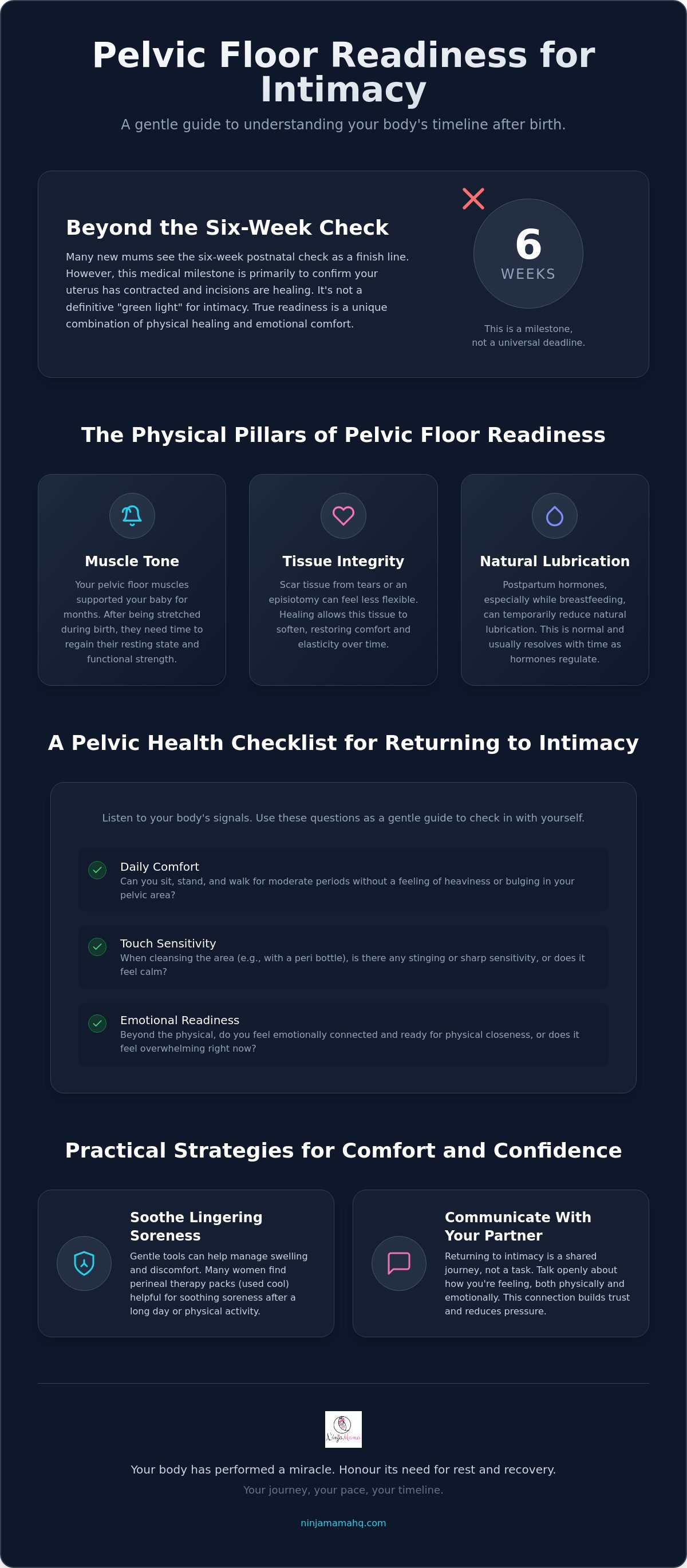
Many Australian mums circle that six-week postnatal appointment on their calendars with a mix of anticipation and dread. It's often framed as the finish line for recovery, the moment your GP or obstetrician gives you the "all clear" to resume exercise and intimacy. But it's vital to remember that this check-up is primarily a medical milestone to ensure your uterus has contracted and any major incisions are closed. It isn't a comprehensive assessment of your Pelvic Floor Readiness for Intimacy.
True readiness is a deeply personal intersection of physical tissue healing and emotional comfort. Whether you had a vaginal birth or a C-section, your body has undergone an incredible transformation. Your recovery pace is unique to you, and it can fluctuate daily based on how much sleep you managed to get, your bub’s feeding schedule, and those powerful postpartum hormones.
To better understand how your pelvic floor health impacts your comfort during this time, watch this helpful video:
Why the "All Clear" Isn’t Always Enough
While the placental site might be healed by six weeks, your pelvic floor muscles often need more time to regain their functional tone. These muscles have supported the weight of your baby for nine months and were stretched significantly during delivery. Even if you had a C-section, the pressure of pregnancy alone can impact your pelvic health. Many women benefit from Pelvic floor physical therapy to help reorganise both the physical and mental connection to this area. This period, often called the Fourth Trimester, is a time for gentle transition rather than a rushed return to previous routines. If you don't feel ready, that's a valid physical signal from your body, not a failure on your part.
Signs Your Body is Still in "Healing Mode"
Learning to listen to your body’s signals is the best way to gauge your progress. Identifying these signals early can prevent discomfort later on. You might notice:
- A sensation of heaviness or "bulging" in the pelvic region, especially after a long walk or carrying your bub.
- Stinging or sharp sensitivity when the area is touched, indicating the delicate skin is still mending.
- A general sense of exhaustion that makes the idea of physical closeness feel overwhelming.
Maintaining a gentle hygiene routine can actually help you stay in tune with these sensations. Using a peri bottle with warm water during bathroom trips allows you to cleanse sensitive areas without friction. It provides a daily moment to check in and see how your healing is progressing. If things still feel tender to the touch, it's a clear sign that your Pelvic Floor Readiness for Intimacy is still a work in progress, and that is perfectly okay.
The Physical Pillars of Pelvic Floor Readiness
Achieving Pelvic Floor Readiness for Intimacy requires a look at three specific physical pillars: your muscle tone, your tissue integrity, and your natural lubrication levels. Think of your pelvic floor as a hardworking hammock. For nine months, it supported the weight of your growing bub and your internal organs. During birth, those muscles stretched significantly. It's completely normal for them to feel a bit "heavy" or disconnected right now. This perceived weakness is often just your muscles needing time to find their way back to their resting state after an incredible feat of endurance.
Tissue integrity is another vital piece of the puzzle. If you experienced a tear or had an episiotomy, the resulting scar tissue can feel slightly less flexible than the surrounding skin. This lack of "give" might cause a bit of hesitation or sharp discomfort during initial attempts at intimacy. Understanding that your body has literally reorganised its structure helps you approach recovery with the patience you deserve. Flexibility usually returns with time, gentle movement, and sometimes a little extra support to help the tissues soften.
Waking Up Your Pelvic Floor Muscles
Reconnecting with your pelvic floor doesn't mean jumping straight into intense exercise programmes. In fact, learning how to fully relax these muscles is just as important as learning how to contract them. Many women hold tension in their pelvic floor without even realising it, which can actually make intimacy more uncomfortable. Try taking deep, belly-focused breaths and visualising the muscles softening and dropping. If you’re unsure where to start, seeing a pelvic health physiotherapist is a brilliant move. They can provide a personalised assessment and ensure you’re engaging the right muscles without overstraining yourself.
The Hormonal Factor: Why Dryness is Normal
If things feel a bit different "down there" lately, it’s likely due to your hormones. When you’re breastfeeding, your body produces higher levels of prolactin. While this is amazing for your milk supply, it naturally lowers your oestrogen levels. Lower oestrogen often leads to vaginal dryness and thinner tissues, which can make friction feel quite irritating. This isn't a permanent change, but it is a very real barrier to comfort during the early months of the postpartum period.
Normalising the use of a high-quality, water-based lubricant can take a lot of the pressure off. It reduces friction and helps lower the anxiety that often comes with the fear of pain. Staying well-hydrated is also a simple but effective way to support your mucosal tissues. Many mums find that incorporating a nutrient-dense organic lactation support drink helps them feel more energised and balanced while navigating these hormonal shifts. Taking care of your overall wellbeing makes it much easier for your body to focus on the intricate work of healing. If you're looking for more ways to support your recovery, our postpartum bundles are designed to provide the comfort you need during this transition.
A Pelvic Health Checklist for Returning to Intimacy
While the physical pillars we discussed earlier provide the foundation, knowing exactly when you're personally ready requires a bit of detective work. You don't need to wait for a specific date on the calendar to start exploring your Pelvic Floor Readiness for Intimacy. Instead, you can use a simple self-assessment framework to gauge how your body is feeling in a low-pressure environment. It’s about building a bridge between clinical healing and personal comfort.
Consider these gentle physical "tests" as your starting point:
- The Tampon Test: If your period has returned or you feel comfortable trying, can you insert and wear a tampon without stinging or a sense of "fullness"?
- The Internal Check: Using a bit of water-based lubricant, can you gently insert a finger yourself? This allows you to control the depth and pressure, helping you identify any specific spots that feel tender.
- The Comfort First Rule: This is our golden rule. If anything feels sharp, pinchy, or just "wrong," stop immediately. There is no prize for pushing through pain; in fact, doing so can create a cycle of tension that makes future attempts harder.
Open communication with your partner is the final piece of this checklist. Being honest about specific "no-go" zones or lingering fears around tearing isn't being difficult; it's being proactive about your recovery. Your partner wants you to feel safe and comfortable, so don't be afraid to speak up about what you need right now.
The "Test and Trace" Approach
Before jumping straight back into penetrative intimacy, try a gradual "test and trace" method. Use gentle external touch or a soft massage to desensitise any scar tissue from tears or episiotomies. This helps improve blood flow to the area and reminds your brain that touch can be soothing rather than scary. Non-penetrative intimacy is a wonderful way to rebuild trust and connection without the physical pressure of performance. True readiness is a state where the mind and body both say "yes" without hesitation.
Emotional and Psychological Readiness
Sometimes, the biggest barrier isn't your pelvic floor at all; it's "Touch Overload." After holding a bub, breastfeeding, and rocking a little one all day, the last thing you might want is more physical contact. It's completely normal to feel "touched out" by the time evening rolls around. Taking a few moments for yourself, like a quick shower or changing into something that makes you feel like "you" again, can help shift your mindset from "nurse" to "partner." Gaining confidence in your body’s ability to heal is a journey, and every small step toward Pelvic Floor Readiness for Intimacy counts as a win.
Practical Home Care Strategies for Comfort and Confidence
Most advice for returning to intimacy stops at "do your Kegels," but physical readiness involves much more than just muscle strength. If your tissues feel tight, inflamed, or sensitive, your brain will naturally send signals of hesitation. This is where "pre-intimacy prep" becomes a game-changer. By focusing on soothing the physical area beforehand, you can calm your nervous system and create a more comfortable environment for exploration. A warm sitz bath soak is a beautiful way to encourage blood flow and gently soften lingering scar tissue. It is a quiet ritual that helps transition your mind from the constant demands of motherhood to a moment of intentional self-care.
After physical activity, or even just a long day of being on your feet, you might notice a "throbbing" or heavy sensation in your pelvic floor. This is often caused by minor swelling in the delicate tissues. Using perineal ice packs for 10 to 15 minutes can significantly reduce this inflammation and provide immediate relief. These strategies are essential for supporting your Pelvic Floor Readiness for Intimacy because they ensure the area remains calm and resilient rather than reactive or tender.
Soothing the Perineum
For those who had a vaginal birth, nerve sensitivity can persist well beyond the initial healing phase. Cooling therapy is one of the most effective ways to "quiet" those nerves and manage sensitivity. When you are on the go, keeping the area balanced is just as important. Many Australian mums find that witch hazel wipes help maintain a calm environment and reduce irritation throughout the day. C-section mums aren't exempt from discomfort either; you might experience "tugging" sensations near your incision during certain movements. Supporting the scar area with gentle pressure or silicone strips can help reduce this sensation and improve your overall confidence in your body's stability.
The Hygiene-Confidence Connection
It is incredibly common to worry about "smelling different" after having a baby. Between hormonal shifts, lochia, and the general sweat of the "fourth trimester," your natural scent can change. This often leads to a specific type of anxiety that can make you want to avoid physical closeness altogether. Feeling fresh is a powerful confidence builder that shouldn't be underestimated. Using an upside-down peri bottle allows for a quick, sting-free refresh whenever you need it. It is much gentler than using harsh soaps or excessive wiping, which can further irritate sensitive skin. By incorporating these small hygiene rituals, you can start to feel like yourself again, shifting the focus from being "just a mum" back to being a woman who feels comfortable in her own skin.
If you want to feel fully prepared for every stage of your recovery, our Postpartum Recovery Kits include all the essentials to support your comfort and confidence from day one.
Reconnecting with Your Partner: The Ninja Mama Approach
Returning to intimacy after having a bub shouldn't feel like a solo mission or a chore you need to "complete" to keep everyone happy. At Ninja Mama, we believe this transition is a team effort. It is a shared journey of rediscovery where your comfort and Pelvic Floor Readiness for Intimacy are the top priorities. When you frame it as a partnership, the pressure starts to lift. You aren't just a mum recovering; you are half of a couple finding your way back to each other in a new and beautiful way.
Practical adjustments can make a world of difference for your physical comfort. If you are worried about pressure on your pelvic floor or a sensitive C-section scar, don't be afraid to get creative with your environment. Using extra pillows to prop yourself up or finding positions that allow you to control the depth and pace can help you feel more secure. If things don't feel quite right, there is absolutely no harm in taking a break for a few days or even a few weeks. Your body is doing an incredible job of healing, and sometimes it just needs a little more breathing space.
Communication Starters for You and Your Partner
Explaining "pelvic floor fatigue" to someone who hasn't experienced it can be tricky. You might describe it as a muscle that has run a marathon and is still in the cool-down phase. Using a bit of Aussie "no worries" attitude can help keep the conversation light but honest. Try saying something like, "I'd love to connect, but I'm feeling a bit tender down there tonight. No worries, let's just stick to some cuddles for now."
Setting expectations before you even get to the bedroom is a brilliant way to reduce anxiety. You might decide that tonight is just about "seeing how it feels" without any pressure for it to go further. Encouraging your partner to read up on postpartum recovery is also a fantastic move. When they understand the physical reality of what your body has been through, they can become your biggest advocate and support system.
Small Steps to Big Confidence
Gaining confidence in your Pelvic Floor Readiness for Intimacy often happens in small, manageable stages. You don't have to go from zero to a hundred in one night. Starting with "outer-course"—focusing on touch and intimacy without penetration—is a wonderful way to build trust and see how your body responds. It allows your pelvic floor muscles to stay relaxed and helps you gauge your sensitivity levels without any fear.
Remember to celebrate the small wins along the way. Maybe it’s a night where you felt more like "you" again, or a moment where you felt completely relaxed in your partner's arms. These milestones are just as important as the physical ones. You are doing a brilliant job, mama. Be as kind and patient with yourself as you are with your new bub. Your journey is unique, and you have all the time in the world to get it right.
Embracing Your Personal Path to Recovery
Navigating life after birth is a massive transition, and finding your way back to physical closeness is a significant part of that journey. Remember that your Pelvic Floor Readiness for Intimacy isn't determined by a date on a calendar or a standard medical check, but by how you feel in your own skin. By prioritising gentle recovery, using supportive home care strategies, and keeping the lines of communication open with your partner, you can regain your confidence without any unnecessary pressure. You’ve already done the hard work of bringing a new life into the world, so now it’s time to be as gentle with yourself as you are with your bub.
You deserve to feel supported every step of the way. Ninja Mama was designed by an Aussie mum specifically to provide the comfort and care you need during the fourth trimester. We have already helped over 10,000 happy mums across the country, and our range is trusted by midwives throughout Australia. Ready to feel like yourself again? Shop our Ninja Mama Postpartum Recovery Kits to find the essential support you need for your unique recovery journey.
Be patient with yourself, mama. You’ve done something incredible, and your body knows exactly how to heal when given the right time, the right tools, and plenty of grace.
Frequently Asked Questions
Is it normal for sex to feel different after a vaginal birth?
It is absolutely normal for things to feel different after a vaginal birth. Your tissues have undergone significant stretching, and any tearing or episiotomies may have left sensitive scar tissue. These changes can alter your sensory experience during intimacy. Most women find that as their body continues to heal and hormones stabilise, comfort returns. Don't rush the process; your body has done something incredible and deserves time to adjust to its new normal.
How long should I wait after a C-section before being intimate?
Most healthcare providers recommend waiting at least six weeks after a C-section to ensure your incision and uterus have healed sufficiently. However, Pelvic Floor Readiness for Intimacy is about more than just a surgical timeline. Even without a vaginal delivery, pregnancy hormones and the weight of your bub have impacted your pelvic floor. Listen to your body and wait until you feel physically comfortable and emotionally ready before trying again.
What can I do if I have a "heavy" feeling in my pelvic floor after sex?
A heavy or "dragging" sensation often suggests your pelvic floor muscles are fatigued or slightly inflamed after activity. This is quite common in the early months postpartum. You can manage this by resting with your hips slightly elevated and using a perineal ice pack to soothe the area. If the feeling persists or is accompanied by sharp pain, it is a good idea to chat with a pelvic health physiotherapist for a professional assessment.
Can breastfeeding cause pain during intimacy?
Breastfeeding can definitely impact your comfort during intimacy because it keeps your oestrogen levels low. This hormonal shift often leads to vaginal dryness and thinner, more sensitive tissues, which can make friction uncomfortable. Using a generous amount of water-based lubricant is a simple and effective way to manage this. Remember, this is a temporary phase while you are nursing and not a permanent change to your body.
Will my pelvic floor ever feel "tight" again?
Your pelvic floor can certainly regain its strength and supportive tone, though it may feel different than it did before having a baby. The goal is to move toward a functional, resilient pelvic floor that can relax and contract effectively. Through gentle rehabilitation and consistency, most women find they regain the support they need. It is less about being "tight" and more about having a pelvic floor that feels strong and reliable again.
How do I know if I have a pelvic organ prolapse?
Common signs of pelvic organ prolapse include a persistent feeling of heaviness, a noticeable bulge at the vaginal opening, or a sensation that something is falling out. You might also notice changes in how you pass urine or a feeling that you can't fully empty your bladder. Because these symptoms can overlap with general postpartum recovery, it is essential to get a professional assessment from a doctor or specialised physiotherapist for an accurate diagnosis.
What positions are best for pelvic floor comfort post-birth?
Side-lying positions or those where you are on top are often the most comfortable post-birth. These positions allow you to control the depth, angle, and pace of intimacy, which can reduce pressure on sensitive areas or C-section scars. Using pillows for extra support can also help you relax your muscles more effectively. Experimenting with what feels best for your body right now is a vital part of reclaiming your confidence and physical comfort.
Should I see a pelvic health physio even if I don’t have pain?
Yes, seeing a pelvic health physio is a brilliant idea even if you aren't in pain. A professional assessment can help you understand your Pelvic Floor Readiness for Intimacy by checking your muscle coordination and strength. They can provide a tailored plan to support your long-term recovery and prevent issues like incontinence later on. Think of it as a proactive check-up for your body to ensure everything is functioning as it should.

Article by
Louise Beever
Louise Beever is the founder of Ninja Mama, an Australian postpartum recovery brand focused on creating premium, practical recovery essentials for new mothers. Since launching Ninja Mama in 2018, Louise has worked closely with thousands of postpartum women and healthcare retailers to better understand the realities of recovery after birth. Her work focuses on postpartum preparation, recovery support, and improving awareness around the fourth trimester.
Remember Mamas
The information provided in this article is intended for general educational and informational purposes only and should not be considered medical advice. Always seek guidance from your doctor, midwife, lactation consultant, or qualified healthcare professional regarding your individual circumstances, pregnancy, birth, or postpartum recovery.