
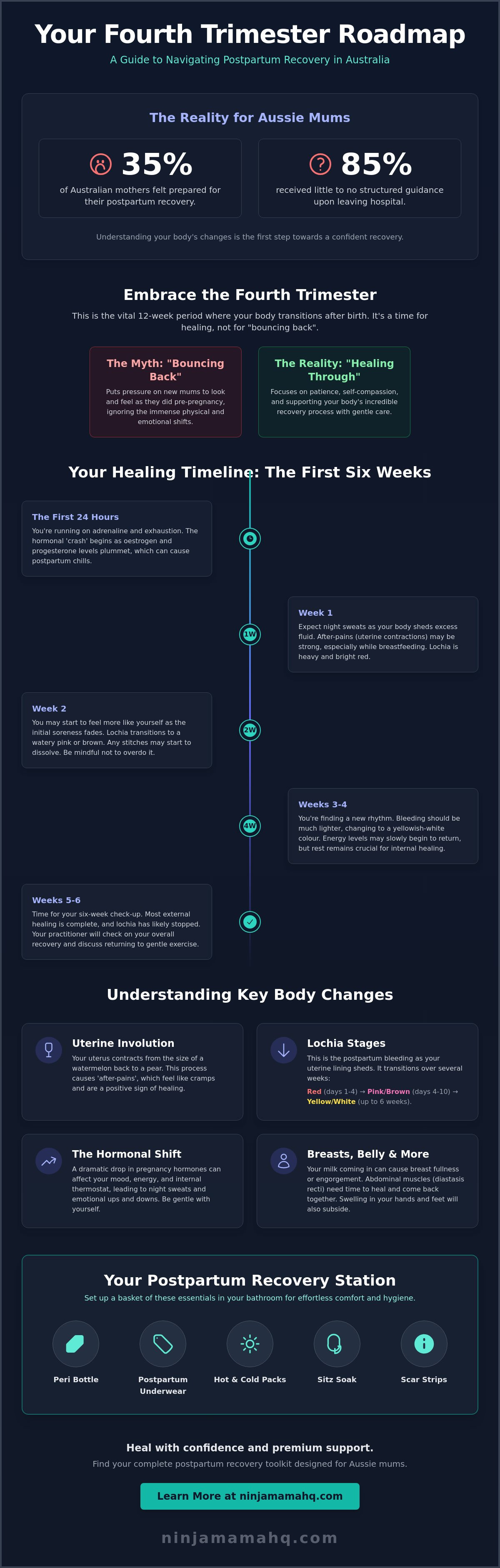
According to our 2026 report, only 35% of Australian mothers felt prepared for their recovery after birth. It is a startling figure, especially when 85% of us receive almost no structured guidance before being discharged from the hospital. If you are currently feeling surprised by after-pains or wondering why a simple trip to the bathroom feels so daunting, you aren't alone. Understanding postpartum body changes is the first step toward reclaiming your comfort and confidence during this wild, beautiful transition.
We know those first few weeks can feel like a blur of night sweats and unexpected soreness. It is completely normal to feel a bit rattled by how much your body is shifting. You deserve to feel supported and prepared rather than just getting through it. We are here to help you navigate the fourth trimester with expert advice and a practical toolkit designed for real Aussie mums. In this guide, we will break down everything from managing lochia and uterine changes to keeping your breast health on track, ensuring you have a clear roadmap for your first six weeks at home.
Key Takeaways
- Understand that the fourth trimester is a vital 12-week transition period for your recovery. Navigating postpartum body changes involves a shift in mindset from "bouncing back" to "healing through" with confidence.
- Learn how to track the stages of lochia and manage the after-pains that occur as your uterus returns to its pre-pregnancy size.
- Gain clarity on full-body shifts, including breast fullness and abdominal separation, and how to support these changes with gentle care.
- Discover how to organise a curated recovery station before your baby arrives to make daily hygiene and comfort effortless.
- Embrace a recovery philosophy that values both beautiful, premium solutions and the power of a supportive mothering community.
Table of Contents
-
What to Expect: The Reality of Postpartum Body Changes in Australia
-
Navigating "Down There" Dynamics: Healing, Hygiene, and Comfort
-
Your Postpartum Recovery System: Practical Steps for Comfort
What to Expect: The Reality of Postpartum Body Changes in Australia
Welcome to the fourth trimester. This is the 12-week period where your body transitions from pregnancy back to its non-pregnant state. It is a massive, complex shift that deserves just as much attention as your pregnancy did. Many women focus entirely on the new baby, but your own recovery is a vital part of the story. Understanding postpartum body changes australia mums experience helps you move away from the toxic pressure of "bouncing back." We don't believe in bouncing. Instead, we focus on "healing through" this phase with grace, patience, and the right support.
Your body is currently undergoing significant postpartum physiological changes that affect your hormones, your skeletal structure, and your internal organs. It is a total system reset. Every Aussie mum deserves a prepared recovery environment because the first few weeks are physically demanding. When you have the right tools and knowledge, you can move from feeling overwhelmed to feeling in control of your healing journey. You aren't just "getting over" a birth; you are nurturing a body that has performed a miracle.
The Hormonal "Crash" and Your Internal Thermostat
The moment your placenta is delivered, your body experiences a dramatic drop in oestrogen and progesterone. It is often described as a hormonal crash. This sudden shift can make you feel like your internal thermostat has gone haywire. Don't be surprised if you experience intense postpartum chills in the hours after birth or wake up in a puddle of night sweats during your first week home. This is simply your body's way of shedding the excess fluid you carried during pregnancy. These shifts also heavily influence your mood and energy levels. Be gentle with yourself; your brain is recalibrating just as much as your body is.
The Timeline of Healing: The First Six Weeks
Healing isn't a race, and it certainly isn't linear. In the first 24 hours, you are likely running on a mix of adrenaline and pure exhaustion. By the time you hit the 14-day mark, you might look "normal" to the outside world, but your internal tissues are still very much in the repair phase. It is a common trap to overdo it once the initial soreness fades. While every bub is different, the biological stages of maternal recovery follow a predictable path. According to our The State of Postpartum 2026 report, 85% of mothers received little to no structured guidance upon leaving the hospital. This lack of information makes the first six weeks feel harder than they need to be. Remember, the goal is functional recovery, not just aesthetic change.
Navigating "Down There" Dynamics: Healing, Hygiene, and Comfort
Let's talk about the reality of what happens "down there" after birth. It is often the part of recovery that feels most overwhelming, yet it is where your body does some of its most impressive work. From managing lochia to dealing with the physical aftermath of a vaginal birth, your system is working overtime to heal. Lochia is the postpartum bleeding that occurs as your body sheds the lining of the uterus. It starts as a bright red flow, much like a heavy period, before transitioning to a watery pink and eventually a yellowish white over several weeks. At the same time, you might feel sharp, cramp-like sensations known as after-pains. This is uterine involution. Your uterus is shrinking from the size of a watermelon back to the size of a pear, and while it can be uncomfortable, it is a sign that your body is recalibrating beautifully.
While these are standard **postpartum body changes ** mums face, they can be quite daunting in the moment. Many women find that bathroom trips become a source of anxiety, especially if there are grazes, stitches, or general swelling involved. Understanding your body after birth means preparing for the "stinging factor" that occurs when urine hits sensitive, healing tissues. It is a common experience that clinical guides often gloss over, but it doesn't have to be a source of dread if you have the right tools on hand.
The "Fire Extinguisher" for Postpartum Hygiene
The secret to pain-free bathroom trips is simple: dilution. Navigating these postpartum body changes aussie style means being proactive about your comfort from day one. Using an essential postpartum peri bottle allows you to spray warm water over the area while you urinate. This immediately dilutes the acidity of your urine and stops the stinging sensation before it starts. We recommend an upside-down design because it lets you reach the perineum easily without any awkward gymnastics or physical strain. For added relief, many mums find that adding organic witch hazel to their peri bottle provides a cooling, soothing sensation that calms inflammation and supports the healing process.
Managing Swelling and Soreness
Inflammation is a natural part of the repair phase, but you don't have to just "tough it out." Using perineal ice packs in those first few days is a game changer for reducing swelling and numbing persistent soreness. Once the initial inflammation subsides, a gentle sitz bath soak can help soothe sensitive tissues and keep the area clean without harsh scrubbing. To make daily life even easier, swap out bulky, shifting hospital pads for disposable postpartum underwear. They are designed for maximum comfort and hygiene, letting you focus on your new bub rather than worrying about leaks or laundry. If you want to feel truly prepared, consider setting up your bathroom with a complete recovery kit before your due date.
From Breasts to Belly: Understanding the Full-Body Shift
Your recovery isn't limited to just one area of the body. It is a total transformation from top to bottom. While you might be focused on healing your perineum or surgical site, your breasts and belly are undergoing their own dramatic shifts. These postpartum body changes australia mums encounter are often the most visible, yet they are driven by the same internal hormonal dance we have explored. From the moment your milk transitions to the way your abdominal muscles begin to knit back together, every change is a sign of your body's incredible resilience. It is a time to favour function over aesthetics and to treat your skin and muscles with the same tenderness you show your new bub.
Around day three or four, you will likely notice your breasts feeling heavy, warm, and incredibly full. This is the transition from colostrum to mature milk. It can be quite a shock to the system. This phase often coincides with a peak in hormonal sweats and those lingering postpartum chills. Many mums find they wake up needing to change their pyjamas because their internal thermostat is recalibrating so intensely. You might also notice your hair feels different or starts to shed more than usual a few weeks down the track. This is telogen effluvium, a temporary reaction to the sudden drop in hormones that is perfectly normal, even if it feels a bit startling.
Breast Comfort and Lactation Support
Engorgement can feel quite intense as your milk supply establishes itself. To find relief, you can use hot or cold breast therapy packs to soothe the "fullness" sensation or help with let-down. Keeping your energy up is just as important. A gentle boost from lactation chocolate can provide a much-needed treat during those late-night feeds. To keep your skin dry and prevent irritation from leaks, many women find that using soft bamboo nursing pads is a simple way to maintain daily comfort.
Then there is the "mummy tummy." It is vital to remember that abdominal separation, or Diastasis Recti, is a functional shift. Your muscles moved to make room for your baby, and they need time to find their way back. This isn't something to rush. With the Australian Caesarean section rate reaching 41% in 2023, many mums are also navigating the complexities of surgical recovery. Caring for a C-section site requires patience, as the scar can feel numb, tingly, or sensitive for several months as the nerves begin to heal.
Abdominal and Scar Care
Protecting your core is essential during these early weeks. One of the best things you can do is practice "log rolling" out of bed. Instead of sitting straight up, roll onto your side and use your arms to push yourself up to protect your abdominal wall. For those healing from a C-section, using C-section silicone scar patches can help support the tissue (once the scar is fully healed - around 8 weeks) , encouraging the scar to heal flat and fade over time. These small, practical steps make a world of difference in how you feel as you move through your daily routine.
Your Postpartum Recovery System: Practical Steps for Comfort
Managing the various postpartum body changes australia mums experience is much easier when you have a system in place. Instead of reacting to discomfort as it happens, we want you to have a proactive "Recovery Station" ready to go. This isn't just about physical healing; it is about protecting your mental space during the foggy first weeks. By organising your home environment before your bub arrives, you create a sanctuary where you can focus entirely on bonding and rest. Your body has just completed a marathon, and it deserves a structured plan that prioritises your comfort and tissue repair.
A pelvic floor-friendly lifestyle is essential in these early days. This means avoiding heavy lifting and being mindful of how you move. It is also a time when the "baby blues" often kick in, typically around day three to five, as your hormones recalibrate. Having a physical system for your care allows you to navigate these emotional waves with one less thing to worry about. When your physical needs are met with ease, you have more capacity to handle the emotional shifts of the fourth trimester.
Step 1: Prep Your Bathroom and Bedside
Your bathroom is the front line of your recovery. Stock it with your peri bottle and a pack of soothing recovery wipes so they are always within arm's reach. High-waisted, stretchy undies should be easily accessible to avoid any pressure on a C-section incision or sensitive belly. Move to the bedside and set up a "feeding basket." Fill it with high-protein snacks, a large water bottle, and a thermos of lactation tea. This ensures that once you are settled with your bub, you don't have to keep getting up, which gives your pelvic floor a much-needed break from gravity.
Step 2: Master the Art of Rest
We love the "5-5-5 rule" for early postpartum: five days in the bed, five days on the bed, and five days around the bed. This framework helps you set boundaries with visitors and reminds you that your primary job is to heal. Use a labour and postpartum support oil roller as a sensory cue to signal rest time; the calming scent can help lower your cortisol levels. Don't be afraid to accept help for laundry, meals, and nappy changes. Every hour you spend resting is an investment in your long-term health and vitality. To make sure you have everything you need for this system, you can find all the essentials in a complete postpartum recovery kit designed for Aussie mums.
Healing with Confidence: The Ninja Mama Philosophy
Recovery is about more than just physical healing. It is about reclaiming your sense of self during one of life's most intense transitions. At Ninja Mama, we believe that the tools you use to manage postpartum body changes australian mums face should be as beautiful as they are functional. Why should postpartum care feel clinical and cold? You have just performed the most incredible feat of human endurance. You deserve a recovery experience that feels premium, supportive, and intentionally designed. By choosing high-quality essentials, you are sending a powerful message to yourself: your well-being matters just as much as your new bub's.
One of the hardest parts of the fourth trimester is the feeling of isolation. You might be awake at 3:00 am wondering if your symptoms are normal or if you are the only one struggling with the "stinging factor" we mentioned earlier. We want you to know that you are never alone. There is a massive community of Aussie mums navigating these same shifts right alongside you. Moving from survival mode into a period of prepared calm starts with having the right information and the right tools. Our curated postpartum recovery kits are designed to take the guesswork out of your healing. Instead of searching through chemist aisles while exhausted, you can have everything you need ready and waiting before you even head to the hospital.
Designed by Mums, for Mums
Ninja Mama was founded because we saw the gaps in Australian postpartum care firsthand. For too long, mothers were sent home with a "good luck" and very little practical support for their own bodies. Our mission is to fill those gaps with empathy and expertise. We aren't just a brand; we are a sisterly companion reaching back to help the next person in line. According to our The State of Postpartum 2026 report, 85% of mothers received little to no structured guidance on recovery when discharged. We are here to change that statistic by providing the practical wisdom and premium products you actually need.
As you move through these first twelve weeks, remember to be patient with your progress. Your body has spent nine months growing a human life and hours or days bringing them into the world. It is a biological masterpiece. Whether you are managing C-section sensitivity or established breastfeeding, every small step forward is a victory. You are doing an incredible job. Take the rest when you can, use the tools that bring you comfort, and trust in your body's amazing ability to heal. You've got this, mama. We are right here with you.
Embrace Your Recovery with Confidence
Your journey through the fourth trimester is a profound transformation that deserves respect, patience, and the right support. By understanding the common postpartum body changes australian mums face, you can move away from uncertainty and into a place of prepared calm. Remember that healing is not a race; it is a process of nurturing the body that has done something truly miraculous. Whether you are setting up your bathroom recovery station or mastering the art of the "5-5-5 rule," every small step you take towards self-care makes a world of difference.
We are here to ensure you don't have to navigate this path alone. As an Australian owned and operated brand, we provide premium quality essentials designed by mums who have been there themselves. You deserve to feel comfortable and confident as you transition into this new chapter of motherhood. Our collection is curated to take the guesswork out of those first six weeks, leaving you with more energy for your new bub.
Browse the Ninja Mama Postpartum Recovery Collection for Ultimate Comfort
You've got this, mama. Take it one day at a time, listen to your body, and celebrate every bit of progress. Your strength is incredible, and your recovery journey is uniquely yours.
Frequently Asked Questions
How long does it take for your body to feel normal after birth?
While the initial healing happens in the first six weeks, it often takes between six and twelve months for your body to fully recalibrate. Your internal organs, ligaments, and core muscles have undergone a massive shift and need time to find their new baseline. Every woman’s timeline is unique, so be patient as your system moves through these long-term adjustments.
Is it normal to still look six months pregnant after delivery?
Yes, it is completely expected to have a "mummy tummy" immediately following birth. Your uterus takes about six weeks to return to its pre-pregnancy size, and your abdominal muscles and skin need time to regain their elasticity. This is a functional phase of recovery where your body is shedding excess fluid and your internal structures are settling back into place.
What are postpartum chills and are they dangerous?
Postpartum chills are sudden, involuntary shakes that often happen shortly after birth due to dramatic hormonal shifts. They are a common part of postpartum body changes australian mums experience and are generally not a cause for concern. However, if you develop a fever or feel unwell later in your recovery, it is important to contact your midwife or GP to rule out infection.
How do I know if my postpartum bleeding is too heavy?
You should seek medical advice if you are soaking through a maternity pad in less than an hour or passing clots larger than a fifty-cent piece. While lochia is heavy initially, it should gradually taper off and change from bright red to a lighter pink or white. If you experience a sudden gush of blood after it has slowed down, or feel dizzy and faint, contact your healthcare provider immediately.
When can I start exercising again after having a baby?
Most experts recommend waiting until your six-week postnatal check before resuming structured exercise. You can usually start with very gentle pelvic floor activations and short, easy walks as soon as you feel comfortable. For more intense movements or if you had a complex birth, consulting a women's health physiotherapist is a great way to ensure your core is ready for the load.
What is the best way to soothe a perineal tear at home?
The most effective way to soothe a tear is by combining gentle hygiene with consistent cooling. Using a peri bottle to rinse with warm water while you urinate prevents stinging, while applying perineal ice packs for short intervals reduces inflammation. Keeping the area clean and dry, and using a sitz bath soak, can also help support the natural healing of sensitive tissues.
Can I use a peri bottle after a C-section?
Absolutely, a peri bottle is a brilliant tool for C-section recovery because it allows you to maintain hygiene without needing to bend or twist. Since lochia occurs regardless of your birth method, keeping the area fresh with a gentle stream of water is much easier on your abdominal incision. It is a simple way to support your recovery while protecting your surgical site from unnecessary strain.
Why am I sweating so much at night after having a bub?
Night sweats are your body’s way of eliminating the extra fluid you carried during pregnancy. This process is triggered by a sudden drop in oestrogen and is one of the more surprising postpartum body changes australia mums encounter in the first few weeks. It is a temporary phase that usually settles as your hormones begin to balance out and your internal thermostat recalibrates.

Article by
Louise Beever
Louise Beever is the founder of Ninja Mama, an Australian postpartum recovery brand focused on creating premium, practical recovery essentials for new mothers. Since launching Ninja Mama in 2018, Louise has worked closely with thousands of postpartum women and healthcare retailers to better understand the realities of recovery after birth. Her work focuses on postpartum preparation, recovery support, and improving awareness around the fourth trimester.
Remember, Mama
The information provided in this article is intended for general educational and informational purposes only and should not be considered medical advice. Always seek guidance from your doctor, midwife, lactation consultant, or qualified healthcare professional regarding your individual circumstances, pregnancy, birth, or postpartum recovery.