
What if your fourth trimester felt less like an overwhelming survival marathon and more like a curated season of intentional self-care? You've likely spent months preparing for the birth, yet many of us arrive home feeling completely blindsided by the reality of postpartum recovery. Between the sharp sting when you pee and the tender swelling of a perineal tear or C-section incision, those first few weeks can feel incredibly daunting. It is a lot to handle while you are also trying to bond with your new little one.
We're here to help you move from feeling unprepared to feeling completely supported and organised. This expert guide is designed to help you master your physical and emotional healing after childbirth so you can focus on what truly matters. We will walk you through the essentials for pain-free bathroom trips, faster physical healing, and a structured plan to navigate your first six weeks with confidence. From managing discomfort to finding your feet as a new mum, we've got you covered. Let's transform this transition together.
Key Takeaways
- Understand why the first 6 to 12 weeks after birth are a distinct health phase that requires dedicated rest and care.
- Learn practical strategies for managing postpartum stinging and lochia to make your first bathroom trips much more comfortable.
- Discover how to customise your postpartum recovery whether you are healing from a vaginal birth or a C-section.
- Get a step-by-step checklist for organising your home recovery station with essential hygiene and comfort supplies.
- See why prioritising your physical comfort is the first step toward emotional wellness and bonding with your new baby.
What is Postpartum Recovery? Navigating the Fourth Trimester
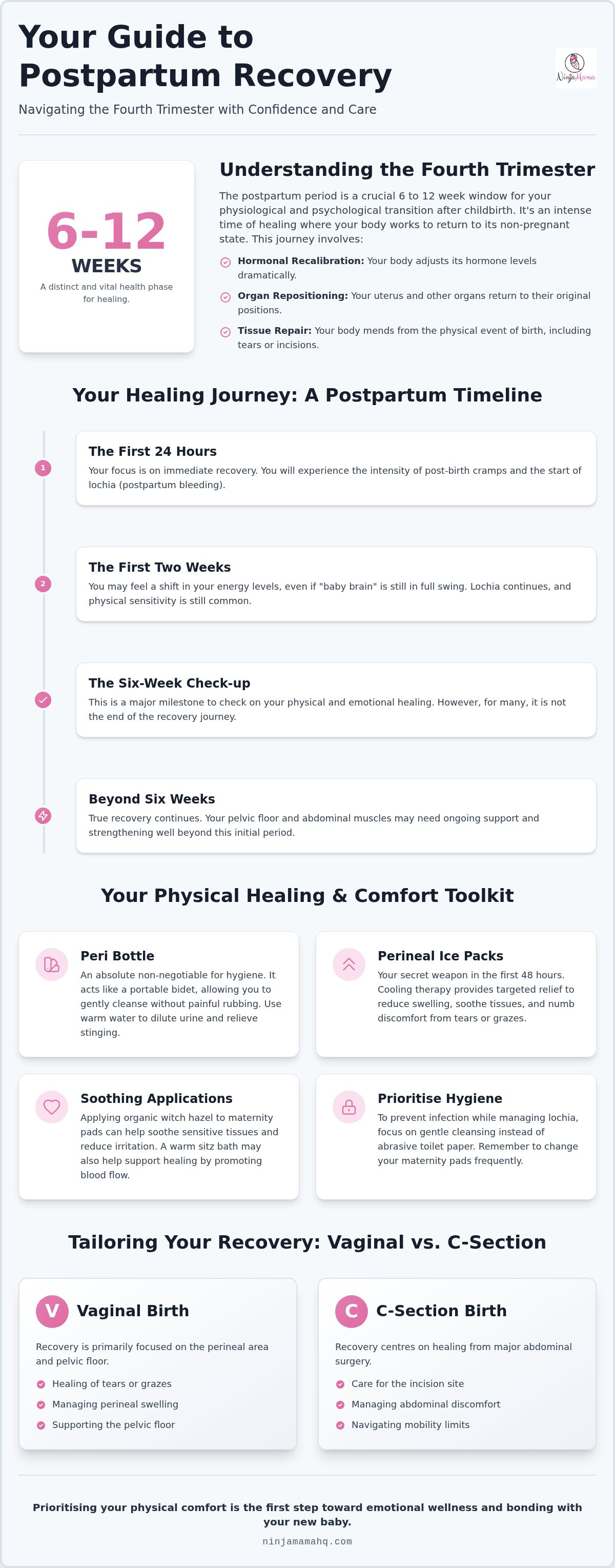
Postpartum recovery is the physiological and psychological transition following childbirth. For many Australian mums, this 6 to 12 week window is often overlooked in the rush to care for a new baby. However, this time, frequently called the "Fourth Trimester", is a vital health phase where your body begins the intense work of returning to its non-pregnant state. It is a journey that encompasses both your physical healing and your emotional wellbeing. You cannot rush it. Your body has performed a miracle; now it needs the grace and space to mend properly.
The postpartum period involves much more than just waiting for stitches to heal or for the bleeding to stop. It is a complex process of hormonal recalibration, organ repositioning, and tissue repair. While the world might expect you to "bounce back" almost immediately, true recovery requires honouring the pause and acknowledging that your needs matter just as much as your baby's. Unlike some clinical definitions that focus purely on mental health, we recognise that birth is a significant physical event that requires active, intentional healing for your body.
The Timeline of Healing
Healing doesn't happen all at once. In the first 24 hours, your focus is often on the immediate intensity of post-birth cramps and the start of lochia. By the time you hit the two-week mark, you might feel a shift in energy, even if the "baby brain" is still in full swing. Every birth journey is unique. A mum who experienced a three-day labour will have different immediate needs than one who had a very rapid delivery. While the six-week check-up is a major milestone, it is rarely the end of the road. Your pelvic floor and abdominal muscles may need support well beyond this initial check.
Why a Recovery Plan Matters
Walking into motherhood without a plan often leads to a "survival mode" mentality. You deserve to do more than just survive. By organising your support network and preparing your home before the baby arrives, you significantly reduce the anxiety that comes with the unknown. This might mean setting up a dedicated station with hygiene essentials or having a list of people who can bring over a hot meal. At Ninja Mama, our heart is in making this transition feel beautiful rather than burdensome. You can learn more about Ninja Mama’s mission to empower mums through every stage of this transformation. When you have a solid recovery plan, you can shift your focus from managing pain to enjoying those precious first snuggles.
Physical Healing: Caring for Your Body "Down There"
The first trip to the bathroom after a vaginal birth is often the most significant mental hurdle of early motherhood. It is completely normal to feel apprehensive. Your body has just undergone a massive physical event, and the area is likely sensitive, swollen, or perhaps sporting a few stitches. This is a delicate time for your body, but with the right tools, you can navigate this part of your recovery with much less anxiety.
Managing lochia is a primary focus during these first few weeks. Lochia is the shedding of the uterine lining and looks like a very heavy period. Because your cervix is still slightly open, maintaining high hygiene standards is essential to prevent infection. Instead of traditional toilet paper, which can be abrasive and leave residue, focus on gentle cleansing and frequent pad changes. To handle the "sting" that often accompanies those first few days, use the dilution method. By pouring warm water over your perineum while you urinate, you dilute the acidity of the urine, providing immediate relief from that sharp burning sensation.
Perineal Care Hacks
An upside down peri bottle is an absolute non-negotiable for postpartum hygiene. It acts like a portable bidet, allowing you to wash away lochia and urine without any painful rubbing. For an extra layer of comfort, applying organic witch hazel to your maternity pads can help soothe sensitive tissues and reduce irritation. Many women also find that a warm sitz bath is a wonderful way to promote blood flow to the pelvic region, which may help support the natural healing process of any tears or grazes.
Managing Swelling and Discomfort
In the first 48 hours, cooling therapy is your secret weapon against inflammation. The "ice, rest, compress" approach is a cornerstone of recovering from delivery. While some mums try DIY "padsicles," using professionally designed perineal ice packs is far more effective and much less messy. These packs provide targeted cooling to reduce swelling and numb the area, making it easier to sit and move comfortably. If you notice any signs of infection, such as an unusual odour or a sudden increase in pain, make sure to check in with your midwife or GP. If you want to take the guesswork out of your preparation, our postpartum recovery bundles offer a curated selection of these essentials.
C-Section vs. Vaginal Birth: Tailoring Your Recovery
Every birth story is different. Whether you had a vaginal delivery or a Caesarean, your body needs a tailored approach to healing. It is helpful to view vaginal birth as a "bottom-up" process, focusing on perineal tissues, while a C-section is very much a "tummy-first" journey. Neither path is the "easy" way out. Both require patience, the right tools, and a deep respect for your body's timeline. Your recovery is not a competition; it is a personal milestone that deserves its own unique roadmap.
A C-section is major abdominal surgery. This means your healing involves managing several layers of internal and external tissue repair. While vaginal birth mums are often focused on the immediate relief of perineal cooling, you will be prioritising abdominal support and incision safety. It is a unique set of challenges, but with a clear plan, you can navigate it beautifully. Remember, your body has been through a significant event, and taking it slow is the fastest way to get back to feeling like yourself.
C-Section Recovery Essentials
Managing the incision site is your number one priority. You must keep the area clean and dry to prevent infection, often patting it gently with a clean towel after showering. Once the wound has closed and your healthcare provider gives the all-clear, many women find silicone scar patches helpful for long-term scar management and comfort. You should also opt for high-waisted, soft disposable underwear. Standard undies often have a waistband that sits right on the incision line, which is the last thing you want when you are feeling tender and swollen.
Pelvic Floor and Core Connection
Do not assume that a surgical birth means your pelvic floor is in the clear. Carrying the weight of a growing baby for nine months places significant pressure on those muscles. This postpartum recovery guide highlights how essential it is to reconnect with your core, regardless of how you birthed. Gentle breathing exercises and very light walking are great starting points for regaining strength. In Australia, we are lucky to have access to excellent women's health physiotherapists. Booking a session after your six-week check-up can provide a personalised plan for your recovery, ensuring you are supporting your body from the inside out.
The Fourth Trimester Essentials: Your Recovery Checklist
Preparing for your recovery begins long before you head to the hospital. Think of your hospital bag as the foundation for a successful transition into motherhood. Once you arrive home, having a dedicated "recovery station" in your bathroom and by your bed will save you from unnecessary trips up and down the stairs. During that first week, your focus should be entirely on rest and bonding. High-quality disposable options are a total sanity saver here. They allow you to maintain hygiene without adding to the laundry pile, which is exactly the kind of practical support every new mum needs.
The Hygiene & Healing Kit
Your bathroom station is where the most active healing happens. In the early days, lochia will be at its heaviest, so you will need high-absorbency maternity pads that you can change frequently. As you move through the subacute phase, you can transition to slimmer options. To keep this area organised, consider grouping these essentials together:
- An upside down peri bottle for gentle cleansing after every bathroom trip.
- Instant perineal cooling pads to provide immediate, absorbent relief from swelling.
- Witch hazel wipes or liners to soothe sensitive tissues and reduce irritation.
- A bag of postpartum sitz soak for your daily bath.
Making a sitz bath part of your daily rhythm is a wonderful way to encourage blood flow to the pelvic region. It is a quiet moment of self-care that serves a vital physical purpose. By keeping these tools within arm's reach, you remove the stress from your hygiene routine, letting you focus on your body's natural recovery process.
Comfort & Breastfeeding Support
Around day three or four, you will likely experience your milk coming in. This can bring its own set of challenges, from engorgement to general tenderness. Managing this phase requires a mix of hot and cold therapy to soothe the breast tissue. It is also the time when leak protection becomes a priority. Using washable breast pads made from soft bamboo is a great way to stay dry while being kind to your skin. These are far more breathable than plastic-backed disposables and feel much more premium against sensitive areas.
Nutrition plays a massive role in how you feel during the fourth trimester. You need functional treats that actually support your body's needs. Lactation chocolate drinks are a fantastic option for tired mums, providing a much-needed energy boost while supporting your breastfeeding journey. When your body is well-nourished and physically comfortable, the emotional transition into motherhood feels much more manageable. To make sure you have everything you need in one place, you can explore our curated postpartum recovery kits which are designed to take the guesswork out of your preparation.
Why a Supportive Recovery Plan Changes Everything
Did you know that your physical comfort directly shapes how you experience those first few weeks with your baby? When you aren't distracted by stinging, swelling, or incision discomfort, you finally have the mental space to soak in those newborn snuggles. A proactive recovery plan isn't just about healing tissues; it is about protecting your emotional peace. By "honouring the pause" and letting your partner or family take over the household tasks, you give yourself the best possible start. It is okay to say yes to help. In fact, it is essential for your wellbeing.
The latest insights from the State of Postpartum 2026 highlight a beautiful trend: Australian mums are finally reclaiming the fourth trimester. We are seeing a significant move away from the "bounce back" pressure toward a more nurturing, evidence-aware approach to maternal care. Ninja Mama is here to be that knowledgeable best friend in your corner, providing the premium tools you need so you can focus on your new arrival without the stress of being unprepared.
Emotional Wellbeing and Mental Health
It is very common to feel a bit teary or overwhelmed in the first week after birth. These "baby blues" usually settle within a few days as your hormones begin to level out. However, maternal mental health conditions affect 1 in 5 mothers, making them the most common complication of childbirth. If you feel a persistent sense of sadness, hopelessness, or anxiety that doesn't lift, please reach out for help. In the Australian healthcare system, your GP or a child health nurse is a great first point of contact. They can guide you toward specialised support services, ensuring you never have to navigate these heavy feelings alone. Remember, seeking support is a sign of strength, not a failure.
Your Next Steps to a Confident Recovery
Prioritising your self-care is the kindest thing you can do for your baby. You cannot pour from an empty cup, and your healing matters just as much as your little one's growth. As you prepare for this life-changing transition, remember that you deserve to feel supported, organised, and physically comfortable. We want you to feel empowered as you step into motherhood, knowing you have exactly what you need to heal well.
To make your preparation as simple as possible, you can explore our Ninja Mama Bundles. These curated kits bring together all the essentials we have discussed, from cooling therapy to hygiene must-haves, taking the guesswork out of your hospital bag. Join our community of "Ninja Mamas" today and step into your recovery journey with the confidence and calm you deserve. You've got this, mama.
Step Into Your Fourth Trimester with Confidence
Your journey through the fourth trimester is a significant transition that deserves both respect and the right resources. By prioritising your physical healing and setting up a dedicated station at home, you are doing more than just managing discomfort; you are actively protecting your emotional wellbeing. Whether you are navigating the specific needs of a vaginal birth or a C-section, having the right tools makes all the difference to your recovery journey. When you feel physically supported, you can truly honour the pause and embrace early motherhood with a sense of prepared calm.
Ninja Mama has already supported over 100,000 Australian mums through this transformative phase. Our essentials are recommended by midwives and pelvic floor physios because we understand exactly what your body needs to feel comfortable and cared for. Ready to prepare your hospital bag? Shop the Ninja Mama Postpartum Recovery Collection today and enjoy free shipping on all orders over $100. You've done the incredible work of bringing a life into the world. Now, let us take care of you. You've got this, mama.
Frequently Asked Questions
How long does physical recovery after birth usually take?
Physical recovery after birth generally takes between six and twelve weeks for your body to return to its non-pregnant state. While the initial six weeks are the most intense for tissue healing and hormonal shifts, many Australian mums find that full strength and pelvic floor function continue to improve over several months. It's important to remember that this timeline is a guide; your body has its own unique pace for healing and deserves patience.
What is a peri bottle and do I really need one?
A peri bottle is a specially designed squirt bottle used to cleanse your perineal area with warm water after using the bathroom. Many women find it an absolute essential because it allows you to stay clean without the need for abrasive toilet paper. By diluting urine as you go, it acts like a "fire extinguisher" for that sharp post-birth stinging, making your first few weeks much more comfortable and hygienic.
Can I use a sitz bath if I had a C-section?
You can use a sitz bath after a C-section as long as you keep your abdominal incision dry and out of the water. While you didn't have a vaginal birth, your pelvic floor still carried significant weight and may feel heavy or sore. A shallow sitz bath allows you to soak the perineal area for comfort while ensuring your surgical wound remains protected and clean to avoid any risk of infection.
Is it normal to still feel sore six weeks after birth?
It is quite common to still feel some level of tenderness or muscle fatigue six weeks after giving birth. While the most acute pain should have subsided, your body is still navigating deep internal healing and postural changes. If the soreness is sharp, increasing, or accompanied by an unusual odour, you should discuss these symptoms with your GP or midwife during your postpartum check-up to ensure everything is healing as expected.
What should I put in my postpartum recovery kit?
Your recovery kit should include an upside down peri bottle, instant perineal ice packs, organic witch hazel, and high-absorbency disposable underwear. These items provide a system for managing lochia and swelling while prioritising your physical comfort. Adding a functional treat like a lactation chocolate drink or a soothing sitz soak can also help turn your necessary hygiene routine into a moment of intentional self-care during those busy first few weeks.
How do I stop the stinging when I pee after giving birth?
The most effective way to stop the stinging when you pee is to use the "dilution method" with warm water. As you begin to urinate, use your peri bottle to pour a gentle stream of water over your perineum. This dilutes the acidity of the urine, which prevents it from irritating any small grazes or stitches. It is a simple hack that provides immediate relief and reduces anxiety during your bathroom trips.
When can I start gentle exercise after a C-section?
You can usually begin very gentle walking within the first few days after a C-section to help with circulation and prevent blood clots. However, you should avoid lifting anything heavier than your baby or engaging in core-heavy exercises until after your six-week medical clearance. Every surgical journey is different, so it's vital to listen to your body and consult a women's health physio for a tailored plan to regain your strength.
Are disposable postpartum undies better than regular maternity pads?
Disposable postpartum undies are often preferred over regular maternity pads during the first week because they provide total 360-degree leak protection. Unlike regular pads that can bunch up or shift, these absorbent garments stay in place and handle heavy lochia with ease. They are particularly helpful for C-section mums as the high waistband avoids irritating the incision site while providing a secure, comfortable fit that feels much more supportive.

Article by
Louise Beever
Louise Beever is the founder of Ninja Mama, an Australian postpartum recovery brand focused on creating premium, practical recovery essentials for new mothers. Since launching Ninja Mama in 2018, Louise has worked closely with thousands of postpartum women and healthcare retailers to better understand the realities of recovery after birth. Her work focuses on postpartum preparation, recovery support, and improving awareness around the fourth trimester.
Remember Mamas
The information provided in this article is intended for general educational and informational purposes only and should not be considered medical advice. Always seek guidance from your doctor, midwife, lactation consultant, or qualified healthcare professional regarding your individual circumstances, pregnancy, birth, or postpartum recovery.