
What if we stopped viewing the first six weeks after birth as a finish line and started seeing them as the beginning of a beautiful, albeit slightly messy, transition? It is easy to focus all your energy on the nursery and the birth plan, but the "fourth trimester" is where the real work of healing begins. Understanding your postpartum recovery timeline australia is essential for feeling prepared rather than panicked when things like stinging during urination or unexpectedly heavy bleeding occur. You are doing an incredible job, mama, and it's completely normal to feel a bit lost in these early days.
We know you want to feel like yourself again, but true healing cannot be rushed. This guide offers a gentle, expert-led path through the physical and emotional stages of your recovery. You will learn how to manage discomfort from stitches or C-section incisions at home and discover the clear milestones that signal you're on the right track. From the first week of "baby blues" to your six-week postnatal check-up, we're breaking down everything you need to know to move through this period with comfort and grace.
Key Takeaways
- Discover how to navigate the intense physical changes of the first 72 hours, including understanding after-pains as your uterus begins its journey back to size.
- Learn why the "Day 3" hormone crash and baby blues are normal physiological responses during your first fortnight of healing at home.
- Track your progress through the three distinct stages of lochia and understand why your activity levels can cause bleeding to stop and start.
- Reframe your expectations by viewing the postpartum recovery timeline australia as a gentle 12-month journey rather than a six-week sprint.
- Explore practical ways to reduce your mental load using curated recovery systems and soothing rituals like sitz bath soaks to support your well-being.
The First 72 Hours: Navigating the 'Golden Hour' and Beyond
The first 72 hours after your bub arrives are a whirlwind of oxytocin, exhaustion, and intense physical change. This immediate window is often the most demanding part of your postpartum recovery timeline australia. Your body has just performed a literal miracle, and these first three days are an intensive period of physical transition. The Postpartum period begins the moment your placenta is delivered, triggering a massive hormonal shift that kickstarts your healing journey. It's a time of active recovery, often called the start of the fourth trimester, where your focus should be entirely on rest and bonding.
During these early hours, you'll likely experience "after-pains." These feel like strong period cramps as your uterus begins to contract back to its pre-pregnancy size. While they can be uncomfortable, especially during breastfeeding when oxytocin is flowing, they are a sign that your body is doing exactly what it needs to do. You might also find your first trip to the loo feels a bit daunting. Many mums describe a stinging sensation during urination, which is why having a plan for perineal care is so important before you even leave the hospital.
To better understand this concept and see what the early days really look like, watch this helpful video:
Managing the Initial Lochia Flow
In the first 3 to 4 days, you'll experience Lochia Rubra. This is heavy, bright red bleeding similar to a very heavy period. Traditional maternity pads can often feel bulky, scratchy, and prone to shifting when you're trying to rest. Many women find that disposable postpartum underwear offers a much more secure and comfortable fit during this peak flow. It's vital to change your protection frequently to maintain high standards of hygiene and support your body's natural defence against infection.
The 'Fire Extinguisher' Hack for Perineal Relief
Wiping with standard toilet paper is often a total "no-go" for mums in the first 48 hours, especially if there are stitches or swelling. The acidity in urine can cause a sharp sting when it touches sensitive tissues. A simple but life-changing hack is to use diluted warm water to neutralise that acidity while you go. Using a peri bottle allows you to gently spray the area, providing immediate relief and keeping everything clean without the need for painful rubbing or wiping. It's like a tiny, portable bidet that makes those first few days much more manageable.
Week 1 to Week 2: The Peak of Physical and Emotional Transition
Once you settle in at home, the initial adrenaline of birth starts to fade. This period is often the most intense part of your postpartum recovery timeline australia. Around day three or four, you might find yourself crying over a dropped piece of toast or feeling a sudden wave of overwhelm. Don't worry, mama. This is the "Day 3" hormone crash. Your oestrogen and progesterone levels are plummeting while prolactin rises to support your milk supply. These baby blues are a normal physiological response to a massive internal shift. Be kind to yourself while your brain and body recalibrate.
Physically, your body is still working overtime to heal. You'll notice your bleeding begin to change from the bright red Lochia Rubra to a brownish-pink discharge called Lochia Serosa. This is a positive sign that your uterus is contracting and the placental site is healing. Whether you had a vaginal birth or a C-section, it's vital to monitor your stitches or incision daily. Look for excessive redness, unusual swelling, or any discharge that has a strong odour. If you notice these symptoms, a quick call to your midwife or GP is always the best course of action.
Perineal Care and Sitting Comfortably
Sitting down shouldn't feel like a chore. Using perineal ice packs can help manage swelling and provide much needed relief during these first two weeks. Use them for about 20 minutes at a time to protect your delicate tissues. A short, 10 minute sitz bath is another beautiful way to encourage blood flow and soothe the area. While you might feel the urge to tackle the laundry, try to prioritise rest. Gentle movement around the house is plenty for now. If it hurts, stop.
Breast Care and Managing the 'Milk Coming In'
Around day three to five, your "mature milk" usually arrives. This can lead to engorgement, where your breasts feel heavy, warm, and quite tender. It's a temporary phase, but it can be physically demanding. Distinguishing between normal fullness and mastitis is key for every new mum. If you feel a hard lump, see red streaks, or develop a flu-like fever, please reach out for professional medical advice immediately. Many women find that using breast therapy packs helps ease the ache of engorgement. Keep your fluids up and focus on nourishing snacks to keep your energy levels steady.
If you are feeling a bit lost on what to prioritise for your comfort, our postpartum recovery kits take the guesswork out of these first two weeks so you can focus on your new bub.
Weeks 3 to 6: The 'Mucky Middle' of Healing
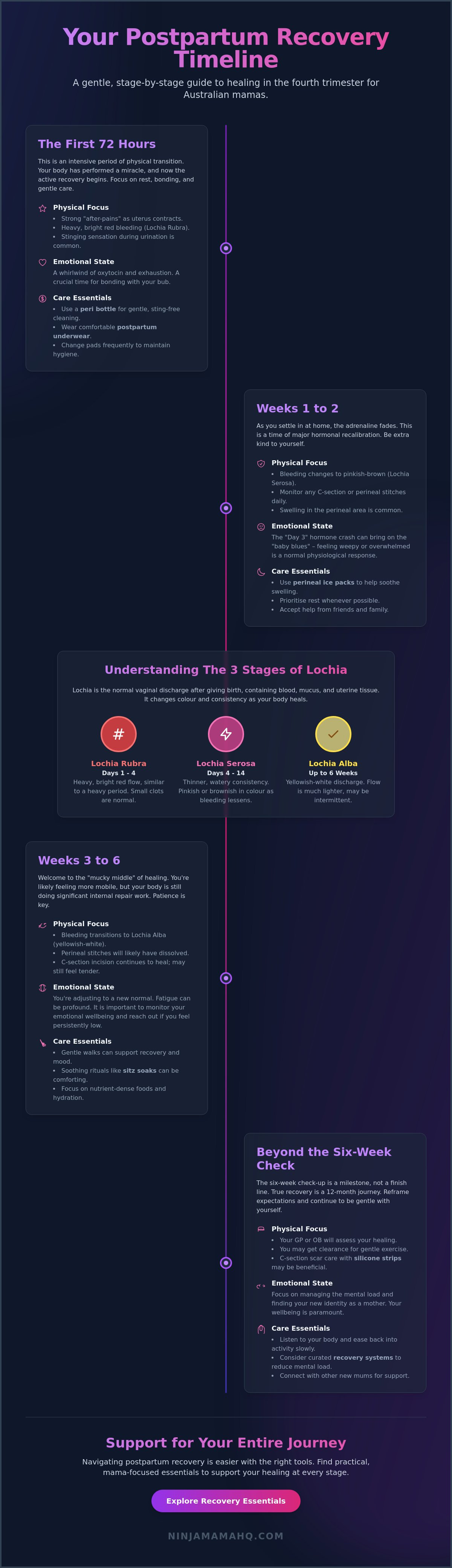
Welcome to the "mucky middle." By now, the initial flurry of visitors has usually slowed down, and you are likely trying to find a new rhythm with your bub. In this phase of your postpartum recovery timeline australia, physical changes become more subtle but no less important. You might feel like you should be "back to normal," but your body is still performing significant internal repairs. It is a period that requires patience, as progress often feels like two steps forward and one step back.
One of the most common frustrations during these weeks is the "stop-start" nature of your bleeding. You might go a day or two with almost nothing, only for the flow to return after a busy morning at the shops or a long walk with the pram. This is usually your body’s way of telling you that you’ve pushed a little too hard. It is completely normal, but it’s a clear signal to put your feet up. This is also the time to pay close attention to your pelvic floor. While leaking when you sneeze or laugh is common, it shouldn't be ignored. Many Australian mums find that booking a visit with a Women’s Health Physiotherapist around this time provides the specialised support needed for long-term pelvic health.
Understanding the Stages of Lochia
As you move through these weeks, your discharge will continue to evolve. Knowing what is normal helps you know when to transition from heavy maternity pads to light liners. Keep an eye out for these three distinct phases:
- Lochia Rubra: Bright red and heavy, typically lasting from day 1 to 4. See your GP if you notice large clots or are soaking a pad every hour.
- Lochia Serosa: Pinkish-brown and moderate to light, occurring from day 4 to 12. Reach out to your midwife if you notice a foul odour or develop a sudden fever.
- Lochia Alba: The final yellowish-white stage, lasting from week 2 up to week 6. If the bleeding turns bright red again and stays heavy, it is time for a medical check-in.
C-Section Scar Care and Desensitisation
For those who had a caesarean birth, these weeks often bring a shift in sensation around the incision site. It is common for the initial numbness to be replaced by a persistent itch as the nerves in your abdominal wall begin to heal. This can be quite distracting, but it is a positive sign of recovery. Using silicone scar patches during this stage may help support flat, soft scar formation by keeping the area protected and hydrated. To avoid unnecessary friction, stick to high-waisted undies that sit well above your scar line. This simple change can make a world of difference to your daily comfort while you move about.
The upcoming six-week check is a significant milestone, but try not to view it as a "finish line." It’s a vital pit stop to discuss your physical healing, mental wellbeing, and any concerns with your GP. Real recovery is a journey that continues well beyond this appointment.
Beyond the Six-Week Check: The Long-Term Recovery Path
Many mums feel a sense of pressure as they approach their six-week postnatal check-up. There is a common myth that once you hit this milestone, you should be "back to normal." In reality, your postpartum recovery timeline australia is a much longer, gentler journey. Think of it as a 12-month process rather than a six-week sprint. Your body has spent nine months growing a human and several more healing from birth. It deserves the grace of a full year to truly recalibrate and find its new rhythm.
During this extended phase, you might notice new changes like postpartum hair loss or shifts in your skin texture. These are often driven by your hormones finally regulating after the intense peaks of pregnancy and early motherhood. While it can be startling to see extra hair in your brush around the three or four-month mark, it is a normal part of the transition. This is also the time when the "new mum" fog begins to lift, allowing you to focus more on long-term wellness and reclaiming your strength in a way that feels sustainable.
Returning to Movement Safely
Getting the "all clear" from your GP at six weeks doesn't mean your body is ready for a high-impact HIIT session or a 5km run. This check-up is standard practice in Australia and can often be bulk-billed through Medicare, though private specialists may charge a fee. While it's a great time to discuss your physical healing, a visit to a Women's Health Physiotherapist is the gold standard for returning to exercise. They can professionally assess you for Diastasis Recti (abdominal separation) and check the functional strength of your pelvic floor. For most Aussie mums, a gradual return through low-impact walking and clinical Pilates is the safest way to rebuild. Listen to your body. If you feel heaviness or discomfort, it is a sign to slow down.
Nurturing Your Mental Wellbeing
The "identity shift" of becoming a mother is profound. It's completely normal to feel a bit lost in your new role. While the "baby blues" usually settle early on, stay vigilant about your mental health throughout the first year. If you find yourself feeling persistently low, anxious, or detached, please reach out for support. Australia has incredible resources like PANDA (Perinatal Anxiety and Depression Australia) and the Gidget Foundation. Connecting with a local mothers' group or community can also be a lifeline. Sharing a coffee and a chat with others who are "in it" with you helps reduce isolation and validates your experience. You don't have to do this alone, mama.
As you navigate this longer path to wellness, remember that self-care is a necessity for your recovery. To support your body's ongoing needs, explore our Postpartum Recovery Kits designed to bring comfort and ease to every stage of your journey.
The Ninja Mama Recovery System: Practical Essentials for Every Stage
Understanding your postpartum recovery timeline australia is a powerful way to reclaim your confidence, but knowledge is only half the battle. The mental load of new parenthood is real and often quite heavy. Trying to figure out what you need while you are in the thick of sleep deprivation is a recipe for stress. This is why a curated recovery system is so vital. It removes the guesswork, ensuring you have exactly what you need when you need it. High-quality tools can transform your healing experience from something you simply endure into a period where you feel nurtured and supported.
Integrating simple rituals like a weekly sitz bath soak can be a game changer for your physical and emotional wellbeing. It is more than just hygiene; it is ten minutes of peace where you can focus entirely on your own recovery. Midwives often recommend the basics, but many forgotten essentials can make those first trips to the loo or those long nights of engorgement much easier to manage. By preparing your toolkit ahead of time, you are giving yourself the gift of a smoother transition into motherhood.
Your Recovery Kit Checklist
Having a dedicated system means you don't have to scramble for supplies when you're exhausted. These items belong in every Australian hospital bag to ensure you're prepared from the very first hour.
- The 'Big Three': Start with an Upside Down Peri Bottle for gentle cleansing, instant perineal cooling pads for immediate relief, and postpartum disposable underwear to keep everything secure and comfortable.
- Soothing Extras: Add witch hazel wipes to calm sensitive tissues, magnesium-rich soaks for muscle relaxation, and organic lactation tea to support your supply and hydration.
The Gift of Recovery
While baby showers are usually filled with tiny onesies and nappies, the best gift you can give is one that supports the mum. Our postpartum recovery kits are designed with a "been there" philosophy. They are premium, practical, and 100% supportive of the woman behind the bub. We believe that when a mother is cared for, the whole family thrives. It is about acknowledging that your healing matters just as much as your new arrival. You are doing a brilliant job, mama. Take it one day at a time, lean on your community, and remember to be as gentle with yourself as you are with your new little one. You've got this!
Embracing Your Personal Path to Wellness
Your body has done something truly extraordinary. As you navigate your postpartum recovery timeline australia, remember that healing is rarely a straight line. It is a series of small, quiet victories. From managing those first 72 hours with confidence to looking back at your twelve month milestone, your wellbeing deserves to be a priority. You now have the knowledge to distinguish between normal physical shifts and the moments when you need to reach out for a little extra support from your GP or midwife.
Having the right essentials on hand doesn't just help with physical comfort; it provides a sense of prepared calm that every new mum deserves. Ninja Mama is Australian owned and operated by a mum who truly gets the highs and lows of this transition. Trusted by thousands of Aussie mums since 2018, our evidence aware products are designed to prioritise your hygiene and ease throughout the fourth trimester.
Ready to feel supported? Build your ultimate recovery kit with Ninja Mama's curated bundles and take the guesswork out of your healing journey. You are doing an incredible job, mama. Be patient with yourself, trust the process, and know that we are cheering you on every step of the way.
Common Questions About Postpartum Healing
How long does lochia (postpartum bleeding) typically last for Aussie mums?
Lochia typically lasts between four to six weeks as your uterus heals and returns to its pre-pregnancy size. It begins as a heavy, bright red flow and gradually transitions to a pinkish-brown shade before becoming a yellowish-white discharge. You might find the flow increases slightly after a busy morning with your bub. This is just your body’s way of reminding you to rest and take things slowly during your recovery.
Is it normal to feel a stinging sensation when I pee after birth?
Yes, a stinging or burning sensation during urination is very common, especially if you have grazes or stitches. This happens because the acidity in your urine touches sensitive or broken skin. Many women find using a peri bottle to spray warm water over the area while they go helps neutralise the sting. It is a simple, effective way to stay comfortable while your delicate tissues are healing.
When should I see my Australian GP or midwife about my recovery?
You should contact your health professional immediately if you experience very heavy bleeding, foul-smelling discharge, or a sudden fever. Other red flags include severe abdominal pain, red streaks on your breasts, or pain and swelling in your calves. While your six-week check is a standard part of the postpartum recovery timeline australia, don't wait for that appointment if you feel something isn't right or if your pain is increasing.
How can I tell the difference between the baby blues and postpartum depression?
The baby blues usually appear a few days after birth and settle within two weeks, whereas postpartum depression is more persistent and intense. While the blues involve tearfulness and mood swings as your hormones shift, PND can make you feel hopeless, constantly anxious, or detached from your bub. If your low mood lasts longer than a fortnight or feels unmanageable, please reach out to PANDA or your GP for supportive care.
When is it safe to start exercising again after a vaginal or C-section birth?
Most women can begin gentle walking almost immediately, but you should wait until after your six-week check for high-impact exercise or heavy lifting. For C-section births, your abdominal wall needs extra time to heal from major surgery. A consultation with a Women's Health Physiotherapist is the gold standard for Aussie mums. They can check your core and pelvic floor strength to ensure you are returning to movement safely and sustainably.
What are the most essential items to pack in an Australian hospital bag for recovery?
Essential recovery items for your hospital bag include a peri bottle, absorbent postpartum underwear, and perineal cooling pads for immediate relief. These tools are vital for managing the first few days of your journey. You should also pack high-waisted undies for C-section comfort, bamboo nursing pads for when your milk arrives, and a soothing sitz bath soak for your first week at home to help support your overall wellbeing.
How do I care for my C-section scar in the first few weeks?
Keep your incision clean and dry by gently patting it with a clean towel after your daily shower. Avoid wearing clothing with tight waistbands that rub against the scar. Once the wound has fully closed and your midwife gives the okay, many women find that using silicone scar strips helps support flat and soft scar formation. These patches also help protect the sensitive area from friction as you move about with your new bub.
Can I use a sitz bath if I have stitches or a tear?
Yes, you can usually enjoy a shallow sitz bath even if you have stitches or a small tear from birth. A warm soak for about ten to fifteen minutes can help encourage blood flow to the area and soothe discomfort. Always check with your midwife first to ensure your specific situation is ready for soaking. Use a clean basin and a gentle, natural soak designed for postpartum recovery to keep the area clean and calm.

Article by
Louise Beever
Louise Beever is the founder of Ninja Mama, an Australian postpartum recovery brand focused on creating premium, practical recovery essentials for new mothers. Since launching Ninja Mama in 2018, Louise has worked closely with thousands of postpartum women and healthcare retailers to better understand the realities of recovery after birth. Her work focuses on postpartum preparation, recovery support, and improving awareness around the fourth trimester.
Remember, Mama
The information provided in this article is intended for general educational and informational purposes only and should not be considered medical advice. Always seek guidance from your doctor, midwife, lactation consultant, or qualified healthcare professional regarding your individual circumstances, pregnancy, birth, or postpartum recovery.