
You’ve finally made it home with your beautiful new arrival, but the simple act of going to the toilet feels like a daunting mission. That sharp sting when you urinate or the nagging ache from stitches can quickly turn your focus away from your baby and onto your own discomfort. We know exactly how it feels to be overwhelmed by clinical hospital advice when all you really want is a bit of relief and a clear plan. You aren't alone in searching for Postpartum Recovery Tips for Treating Your Vagina After Birth that feel practical, gentle, and easy to follow.
We believe that your recovery during the fourth trimester should be as nurtured as your newborn. You deserve to move through your day without constant inflammation or fear of the next bathroom trip. This article promises to provide the sisterly guidance and essential tools you need to reclaim your comfort and confidence. We will walk you through our simple three-step system of cleansing, cooling, and cushioning, ensuring you have everything you need to soothe your perineum and feel like yourself again.
Key Takeaways
- Master the art of post-birth hygiene by using an upside-down peri bottle to manage stinging and maintain cleanliness without the need for harsh wiping.
- Explore the benefits of cold therapy and how dedicated perineal cooling packs can help reduce inflammation and soothe sensitive tissues more effectively than standard hospital supplies.
- Learn why a warm sitz bath is a gentle yet powerful tool for supporting the healing of stitches and providing much-needed relief to your pelvic floor.
- Implement these Postpartum Recovery Tips for Treating Your Vagina After Birth to move away from scratchy hospital mesh and into a more comfortable, supportive self-care routine.
- Understand how to apply the RICE principle to your recovery, ensuring you prioritise rest and elevation to help your body heal during the critical fourth trimester.
Table of Contents
Understanding the Postpartum "Down There" Reality
You’ve just performed a miracle, but looking in the mirror or even sitting down can feel like a feat of endurance. Many mums describe the sensation after a vaginal delivery as feeling a bit "shredded" or intensely bruised. It's completely normal to feel this way. Your body has undergone a massive physical event, and your perineum needs time to knit itself back together. Along with the soreness, you'll experience lochia, which is the postpartum discharge of blood, mucus, and uterine tissue. While it starts out heavy like a very intense period, it gradually lightens in colour and flow as your uterus shrinks back to its pre-pregnancy size. Understanding the Postpartum Period helps set the stage for these changes, showing that your body is doing exactly what it's supposed to do. Finding the right Postpartum Recovery Tips for Treating Your Vagina After Birth is essential for managing this transition with confidence and comfort.
To better understand this concept, watch this helpful video:
The Recovery Timeline: What is Normal?
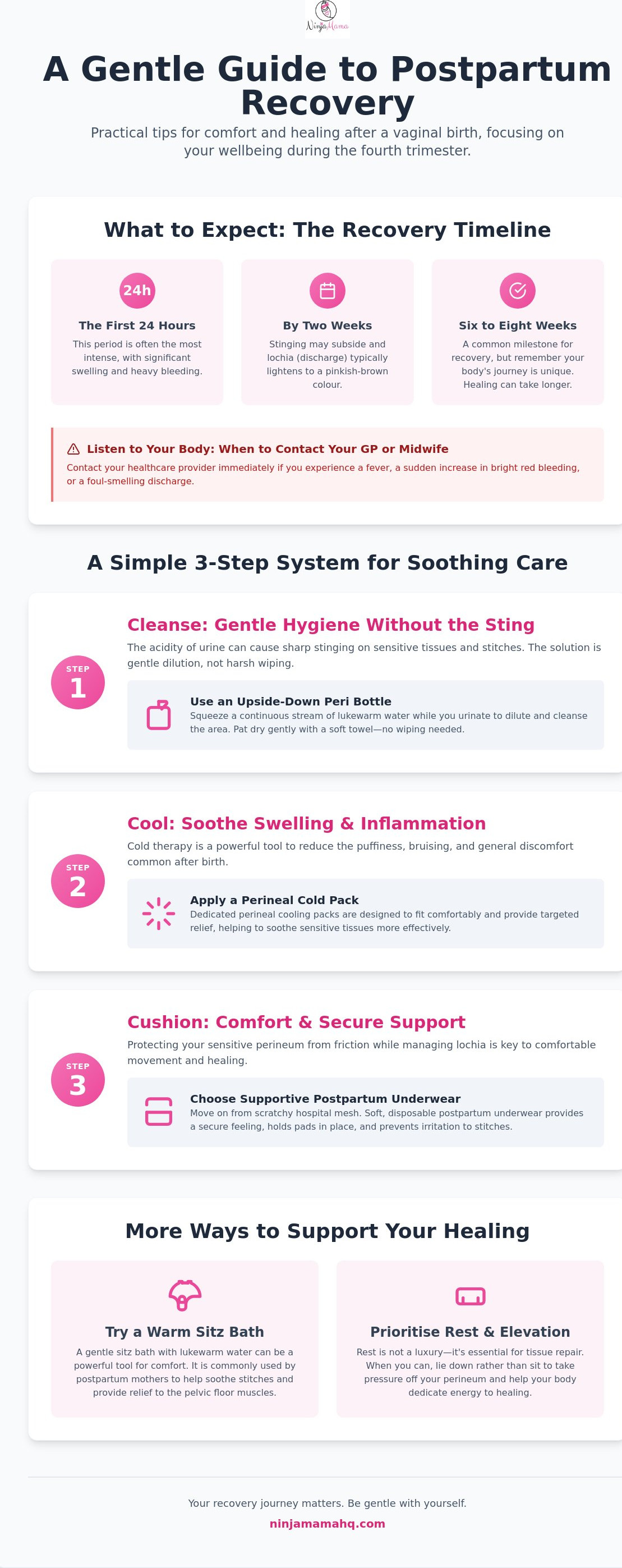
The first 24 hours are often the most intense, marked by significant swelling and heavy bleeding. By the two-week mark, you might notice that the stinging has subsided and your lochia has turned a pinkish-brown hue. Healing isn't a race, and while most providers talk about a six-to-eight-week recovery, your body might need longer to feel truly "normal" again. This is especially true if you are breastfeeding, as hormonal changes can affect tissue sensitivity. Watch for signs that you need extra support, such as a fever, a sudden increase in bright red bleeding, or a foul-smelling discharge. These are signals to call your midwife or GP immediately. Remember, rest isn't a luxury; it's a non-negotiable part of tissue repair that helps your body focus its energy where it's needed most.
Vaginal Soreness and Tears: The Lowdown
Whether you experienced a first-degree graze or a more significant tear requiring stitches, the discomfort is real and valid. Stitches can feel tight or itchy as they begin to dissolve, and the general swelling can make walking or sitting feel quite awkward. Many women also report a "heaviness" in their pelvic floor, almost like a dull pressure or the feeling that things might "fall out." This is very common and usually relates to the stretching of muscles and ligaments during birth. It takes time for that internal support system to regain its strength. Using supportive tools like Ninja Mama Postpartum Disposable Underwear can help you feel more secure while managing lochia and protecting sensitive areas from friction.
Master the Art of Post-Birth Hygiene (Without the Stinging)
That first trip to the bathroom after birth can feel like a genuine hurdle. It's common to experience a sharp stinging sensation when you urinate, which happens because the acidic nature of your urine makes contact with sensitive tissues, grazes, or stitches. This is where mastering your hygiene routine becomes a priority. One of the most effective Postpartum Recovery Tips for Treating Your Vagina After Birth is to focus on dilution and gentle cleansing rather than traditional wiping. For the first fortnight, lukewarm tap water is your absolute best friend, providing a natural way to keep the area clean while significantly reducing that dreaded burn.
Why the Upside Down Peri Bottle is a Game Changer
While many hospitals suggest a basic squirt bottle, the reality of using one can be quite awkward. Standard bottles require you to hold them upright, which often means trying to angle your hand inside the toilet bowl to reach the right spot. The Ninja Mama Peri Bottle solves this with a clever, ergonomic upside-down design. Its long, angled nozzle allows you to aim a continuous stream of water exactly where you need it while sitting normally on the loo. Think of it as a gentle "fire extinguisher" for your nether regions. By squeezing the bottle as you urinate, you dilute the acidity of the urine instantly. This simple system provides soothing relief and ensures you maintain high hygiene standards without any physical contact with your sensitive bits. Ensuring you have a high-quality upside-down peri bottle ready in your hospital bag is one of the kindest things you can do for your future self.
Ditching the Toilet Paper for Gentle Patting
Traditional toilet paper, even the "ultra-soft" varieties, can feel like sandpaper against fresh stitches or swollen labia. Wiping creates friction that can pull at your sutures or irritate inflamed skin, potentially slowing down your natural healing process. The goal is to keep the area dry and clean without any rubbing. After using your peri bottle, transition to a "pat-dry" method using a soft, lint-free cloth or specialised wipes. Many mums find that Ninja Mama Postpartum Perineal Recovery Wipes are a lifesaver during this time. These wipes are designed to be incredibly gentle and can even be used as a cooling liner in your pad for ongoing comfort. They offer a refreshing sensation that calms inflammation while ensuring you stay clean without the trauma of rough toilet paper. This small shift in your bathroom routine can make a massive difference in your daily comfort levels.
Cooling and Soothing: The "Padsicle" and Beyond
After birth, your perineum often feels hot, swollen, and tender. Cold therapy is one of the most effective Postpartum Recovery Tips for Treating Your Vagina After Birth because it helps to reduce local inflammation and provide immediate numbing relief. Applying cold for about 10 to 20 minutes at a time, several times a day, is particularly helpful during the first 48 to 72 hours when swelling is at its peak. This simple physical therapy helps to constrict blood vessels and slow down the inflammatory response, making it much easier to sit, walk, and bond with your baby without constant distraction from discomfort.
Perineal Ice Packs vs. DIY Solutions
Many clinical resources suggest making "padsicles" by soaking a sanitary pad in water and freezing it at home. While this is a common suggestion, the reality is often a "soggy mess" that leaves your skin feeling damp and macerated as the ice melts. It’s also completely impractical for your time in the hospital where you won't have easy access to a freezer. This is why Ninja Mama Instant Perineal Cooling Pads are a true game changer for your hospital bag. These pads don't require refrigeration; you simply snap them to activate an instant cooling effect. They are designed to be highly absorbent, so they manage lochia while simultaneously providing a consistent, dry chill. Safety is vital when using cold therapy, so always ensure there’s a soft fabric layer between the cooling element and your skin to prevent any risk of cold-related tissue damage or "ice burn."
The Magic of Witch Hazel for Swelling
Witch hazel is a natural astringent that has been used for generations to calm skin irritation and reduce swelling. Many Australian mums swear by Ninja Mama Organic Witch Hazel because it provides a gentle, cooling sensation that feels incredibly restorative on sensitive tissues. You can apply a few drops of this high-quality extract directly onto your cooling pad or use it to soak soft liners for targeted relief. For a "double-whammy" of comfort, try combining your instant cooling pad with a layer of witch hazel. This combination addresses both the deep-seated inflammation and the external skin sensitivity, creating a soothing barrier that helps you navigate the first few weeks of recovery with much more ease. It’s a practical, evidence-aware system that transforms a basic recovery task into a moment of genuine self-care.
The Power of the Sitz Bath and Pelvic Floor Rest
A sitz bath is essentially a shallow basin that fits securely over your toilet seat, allowing you to soak your nether regions without the struggle of climbing into a full bathtub. It's widely considered the gold standard for managing stitches and general perineal soreness. By immersing the area in lukewarm water, you encourage blood flow to the tissues, which may help support the natural healing process. It's vital to avoid adding harsh Epsom salts or fragranced soaps to your water. These can disrupt your natural pH balance or cause an uncomfortable sting on open grazes. When looking for Postpartum Recovery Tips for Treating Your Vagina After Birth, focusing on these gentle, non-irritating methods is the best way to ensure a smoother transition.
How to Organise a Proper Sitz Soak at Home
To get started, place your sitz bath bowl on the toilet and fill it with lukewarm water. While a hot bath might sound tempting, excessive heat can actually increase swelling by dilating blood vessels, so aim for a comfortable, temperate feel. For an extra boost of comfort, many women find adding Ninja Mama Sitz Soak to the water incredibly helpful. This organic blend is specifically designed for the fourth trimester, using ingredients that soothe without the risk of irritation. Aim to soak for about 10 to 15 minutes, once or twice a day. Once finished, gently pat the area dry with a clean towel or use the "air dry" method to keep the skin from becoming too soft or macerated.
The RICE Principle for Your Perineum
You might be familiar with the RICE principle for a sprained ankle, but it's just as applicable to your pelvic floor recovery. Gravity is not your friend right now. Standing or sitting upright puts constant pressure on your healing tissues. Prioritise "horizontal time" by lying down as much as possible, which takes the weight off your pelvic floor. This is the best gift you can give your body during these early weeks.
-
Rest: Lie flat on your back or side to allow the muscles to relax and blood to circulate away from the pelvic floor.
-
Ice: Continue with your cooling intervals, using your packs for 10 to 20 minutes at a time to keep inflammation under control.
-
Compression: Wearing supportive, snug-fitting underwear helps to reduce swelling and keeps your cooling pads exactly where they need to be.
Taking the time to rest and elevate your hips with a pillow can significantly reduce that "heavy" feeling in your pelvis. To make your recovery routine even easier, grab our organic Sitz Soak to turn every bathroom trip into a soothing self-care moment.
Creating Your Personal Postpartum Recovery System
Winging it with basic hospital supplies often leads to unnecessary discomfort and added stress during those first few days at home. While midwives do an incredible job, the standard-issue mesh undies and basic maternity pads aren't always designed for premium comfort or high-level support. Creating a structured system helps you transition from the hospital to your own nest with much more ease. By gathering your essentials into a dedicated bathroom station, you ensure that every trip to the loo is efficient and soothing. This proactive approach is one of the best Postpartum Recovery Tips for Treating Your Vagina After Birth because it removes the guesswork when you're at your most exhausted.
Organising your bathroom station is about more than just tidiness. It’s about making sure that when you're tired and sore, you don't have to hunt through cupboards for what you need. Keep your peri bottle filled with lukewarm water right next to the toilet. Stack your disposable undies and cooling pads in a pretty basket where they are easy to reach. This simple system ensures that you can follow through with your self-care routine without any extra effort, allowing you to get back to your baby and your bed much faster.
Why Disposable Postpartum Underwear Beats Hospital Mesh
Standard hospital mesh undies are often flimsy and struggle to hold heavy maternity pads securely in place. This can lead to uncomfortable shifting or leaks, which is the last thing you want to deal with when you're managing stitches or swelling. Ninja Mama Postpartum Disposable Underwear offers a significant upgrade in both comfort and security. These undies are designed to feel like real cotton briefs while providing the "no-leak" protection needed for heavy lochia. They are strong enough to hold perineal ice packs firmly against your skin, ensuring the cooling relief actually reaches the areas that need it most. Best of all, there's no washing required. You simply wear them and toss them, giving you more time to rest and recover.
Building the Ultimate Recovery Kit
A truly effective recovery system combines physical healing tools with holistic support for your overall wellbeing. The "Big Three" essentials, your peri bottle, cooling pads, and disposable undies, form the foundation of your recovery. However, don't forget to nourish your body from the inside out. Including Lactation Tea in your recovery kit can help support your breastfeeding journey while providing a quiet moment of hydration. Many mums find that purchasing a curated Postpartum Recovery Kit is the easiest way to ensure they have every essential tool ready before the baby arrives. It takes the mental load off your plate and ensures your fourth trimester is defined by comfort rather than compromise. By being prepared, you can focus on the joy of your new arrival while knowing your own healing is well in hand.
Embrace a Soother, Faster Healing Journey
Navigating the early weeks of motherhood is a significant transition, and your physical recovery deserves just as much attention as your new baby. By moving from a "wait and see" approach to a structured system of cleansing, cooling, and cushioning, you can significantly improve your daily comfort levels. Remember that prioritising horizontal rest and using targeted tools like an ergonomic peri bottle are not just luxuries; they are essential Postpartum Recovery Tips for Treating Your Vagina After Birth that help you heal with confidence and ease.
You don't have to settle for scratchy hospital mesh or the frustration of DIY solutions. Our range was designed by a mum who has been exactly where you are and knows precisely what it takes to feel like yourself again. Join over 1,000 Aussie mums who have given our products 5-star reviews for their premium quality and practical design. We want to help you move through your fourth trimester with a sense of prepared calm and genuine support.
Shop the Ninja Mama Postpartum Recovery Range and enjoy free shipping on all orders over $100. You are doing an incredible job, and we are here to look after you while you look after your little one.
Common Questions About Postpartum Healing
How do I stop it from stinging when I pee after birth?
Diluting your urine with lukewarm water while you go is the most effective way to stop the stinging sensation. By using an upside-down peri bottle to stream water over your perineum as you urinate, you instantly lower the acidity of the urine before it touches sensitive grazes or stitches. This simple trick provides immediate relief and keeps the area clean without the need for painful wiping during those first few trips to the bathroom.
How long does it take for a vaginal tear to heal?
Most vaginal tears take between six and eight weeks to heal completely, though the most intense discomfort usually subsides within the first fortnight. While the external skin may look healed sooner, the deeper tissues are still busy repairing themselves. It’s important to follow your Postpartum Recovery Tips for Treating Your Vagina After Birth during this entire window to ensure your pelvic floor and perineum have the best environment for a smooth recovery.
Can I use a peri bottle if I have stitches?
Yes, using a peri bottle is highly recommended if you have stitches because it is far gentler than using toilet paper. Wiping can accidentally tug on your sutures or introduce bacteria, whereas a gentle stream of water cleanses the area without any physical friction. It’s a much safer way to maintain hygiene while your stitches are still fresh and sensitive, helping you feel fresh without the fear of causing irritation.
How often should I use a sitz bath postpartum?
Aim to use a sitz bath once or twice daily for about 10 to 15 minutes at a time. This frequency is usually enough to encourage blood flow to the area and soothe any itching from dissolving stitches without over-softening the skin. Many women find that a lukewarm soak in the morning and evening provides a consistent rhythm of relief that helps manage swelling and inflammation throughout the day.
Are DIY padsicles better than store-bought cooling pads?
While DIY padsicles are a popular home remedy, store-bought instant cooling pads are often much more practical and hygienic for the fourth trimester. DIY versions can become quite soggy and messy as they melt, which can be uncomfortable against healing skin. Professional instant cooling pads stay dry, provide a consistent temperature, and don't require a freezer, making them a much more reliable choice for your hospital bag and early days at home.
When can I stop wearing postpartum underwear?
You can typically stop wearing specialised postpartum underwear once your lochia has lightened significantly, which often happens between two and six weeks after birth. Many mums choose to stay in supportive, disposable undies until their stitches have fully dissolved and they no longer need to wear bulky cooling pads. Transition back to your regular cotton briefs whenever you feel secure and your discharge is manageable with a standard liner.
Is it normal for my vagina to feel "heavy" after birth?
Yes, it is very common for your vagina to feel "heavy" or full after birth due to the significant stretching of your pelvic floor muscles and local swelling. This sensation is often more noticeable at the end of the day or after you’ve been standing for long periods. Prioritising "horizontal time" and lying down to take the weight off your pelvic floor is the best way to manage this feeling while your muscles gradually regain their tone.
What should I do if my postpartum stitches feel itchy?
Itching is often a normal sign that your tissues are knitting back together and your stitches are beginning to dissolve. You can soothe this sensation by using a lukewarm sitz bath or use heat therapy with your perineal therapy packs. If the itching is accompanied by a foul smell, unusual discharge, or increasing pain, it’s important to contact your midwife or GP to rule out a potential infection.

Article by
Louise Beever
Louise Beever is the founder of Ninja Mama, an Australian postpartum recovery brand focused on creating premium, practical recovery essentials for new mothers. Since launching Ninja Mama in 2018, Louise has worked closely with thousands of postpartum women and healthcare retailers to better understand the realities of recovery after birth. Her work focuses on postpartum preparation, recovery support, and improving awareness around the fourth trimester.
Remember Mamas
The information provided in this article is intended for general educational and informational purposes only and should not be considered medical advice. Always seek guidance from your doctor, midwife, lactation consultant, or qualified healthcare professional regarding your individual circumstances, pregnancy, birth, or postpartum recovery.