

What if the nagging worry that you're being "too dramatic" is actually your intuition telling you something isn't quite right? After the marathon of birth, it's incredibly common to feel like a bit of a stranger in your own body. You're navigating the tender reality of C-section recovery or perineal healing, and sometimes it's hard to tell if that sharp pang or heavy feeling is just part of the process or one of the more serious signs of postpartum complications.
We know you're doing an amazing job, but we also know that the line between the "baby blues" and something more urgent can feel blurry when you're exhausted. You deserve to feel safe and supported during this transition. You shouldn't have to guess whether your symptoms are normal or a cause for concern. Our goal is to give you the clarity you need to advocate for your own health with confidence.
In this article, we'll help you distinguish standard recovery aches from the red flags that require a call to your midwife or doctor. We've put together an expert-backed checklist to help you manage your recovery at home, from using perineal cooling pads for comfort to knowing exactly when to seek professional advice, so you can focus on bonding with your new arrival with total peace of mind.
Key Takeaways
- Understand why prioritising your own health is just as vital as caring for your new bub during the intense fourth trimester.
- Learn to spot the specific physical signs of postpartum complications so you can distinguish normal recovery discomfort from urgent red flags.
- Identify the differences between the common baby blues and more serious mental health concerns that require professional care.
- Get a clear action plan for the Australian healthcare system, knowing exactly when to call your midwife, GP, or 000.
- Discover how being prepared with a curated recovery kit can reduce stress and help you monitor your healing process with confidence.
Understanding the Fourth Trimester: Why Your Health Matters
The "fourth trimester" is more than just a catchy phrase; it's the vital 12-week transition where your body and mind work overtime to return to a non-pregnant state. During this postpartum period, you're navigating a whirlwind of hormonal shifts, physical healing, and the steep learning curve of caring for a new bub. It's a time of celebration, but it's also a period where your own health needs to be a top priority. You've just performed a physical miracle, and your body requires intentional care to mend properly.
To better understand the common health challenges during this time, watch this helpful video:
Many new mums find themselves so focused on their baby's milestones that they accidentally push their own needs to the back burner. While the standard six-week check-up is an important milestone in the Australian healthcare system, waiting that long to address concerns isn't always the best approach. Monitoring for signs of postpartum complications should start the moment you leave the hospital. Active management of your recovery, including proper hygiene and rest, is essential for a smooth transition. Taking a proactive stance doesn't mean you're being "fussy"; it means you're ensuring you have the energy and health to enjoy your new arrival.
The "Normal" Recovery Baseline
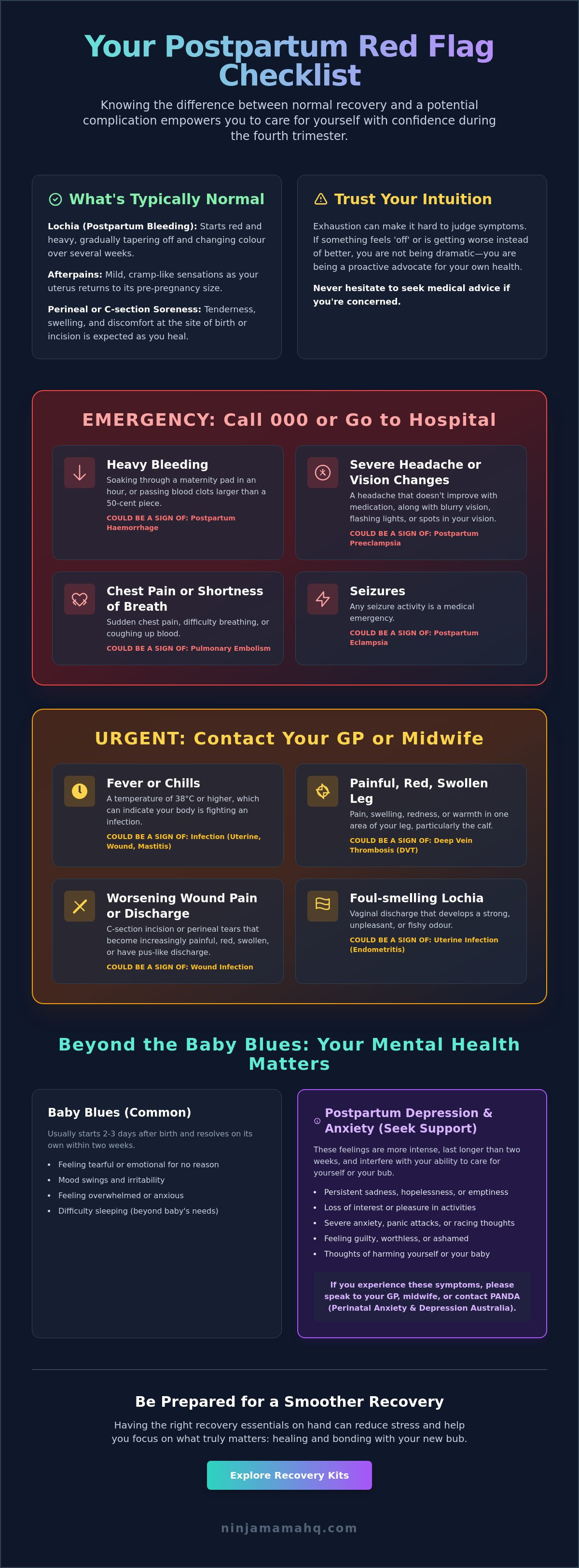
Knowing what's standard helps you spot when something is off. You'll experience lochia, which is vaginal bleeding that begins as a heavy, bright red flow and gradually transitions to a pinkish-brown, then a yellowish-white discharge over several weeks. Perineal soreness or tenderness around a C-section incision is expected as your tissues knit back together. You might also notice "afterpains," which feel like mild contractions as your uterus shrinks back to its pre-pregnancy size. Using perineal ice packs can provide much-needed relief during these early days, helping to manage swelling and discomfort naturally.
Why We Often Miss the Red Flags
It's easy to dismiss a symptom when you're operating on two hours of broken sleep. Exhaustion can cloud your judgment, making it hard to tell if a headache is just from tiredness or something more serious. There's also a lingering pressure to be a "Super Mum" and bounce back instantly, which often leads women to downplay their discomfort or fear they are wasting a doctor's time. It's vital to remember that postpartum complications include any health issue arising up to a year after birth, not just in the first few weeks. If something feels "off," trust your gut. You aren't being dramatic; you're being proactive about your well-being. Keeping essentials like postpartum disposable underwear on hand ensures you can manage hygiene easily while focusing on your rest and recovery.
Your Postpartum Red Flag Checklist: Physical Symptoms to Watch
While your body is busy healing, it's easy to wonder if a new sensation is just part of the "new normal" or something that needs a professional eye. We want you to feel empowered, not anxious. Knowing the Warning signs of postpartum health problems allows you to monitor your recovery with the same care you give your new bub. Think of this checklist as your personal health advocate, helping you decide when to rest and when to reach out for support.
Signs of Postpartum Haemorrhage and Preeclampsia
Your cardiovascular system undergoes massive changes after birth. While some bleeding is expected, a postpartum haemorrhage is a serious concern. In Australia, roughly 3.9% of women who have a vaginal birth experience a major primary haemorrhage. If you find yourself soaking through a maternity pad in just one hour, or passing blood clots larger than a 50-cent piece, it's time to call your midwife or GP immediately. This isn't about being dramatic; it's about staying safe.
Similarly, preeclampsia can catch you off guard. Many mums don't realise this condition can actually develop days or even weeks after you've come home. Watch for these specific signs of postpartum complications:
- A severe headache that doesn't go away with rest or basic pain relief.
- Sudden changes in your vision, such as blurriness, flashes, or spots.
- Significant swelling in your face, hands, or feet that leaves an indentation when pressed.
- Pain in the upper right side of your abdomen.
These symptoms are often linked to high blood pressure. Even if your blood pressure was perfect throughout your pregnancy, your body is still in a state of flux. Early detection makes all the difference in managing these risks effectively.
Identifying Infection: Perineal and C-Section Wounds
Whether you had a vaginal birth or a caesarean, your body has an open wound that needs a clean environment to knit back together. Infections can slow down your recovery and cause unnecessary pain. Keep a close eye on your temperature. A fever of 38°C or higher is often the first sign that your body is fighting off an unwanted guest.
For perineal recovery, pay attention to any foul-smelling discharge or a sudden increase in pain at your stitch site. If you've had a C-section, look for redness, heat, or "gaping" at the incision. One of the best ways to support your healing is to maintain gentle, consistent hygiene. Using a peri bottle with warm water after every bathroom visit helps keep the area clean without the need for harsh rubbing, significantly reducing the risk of irritation. If you're looking for a way to stay organised during those first few weeks, our postpartum recovery kits provide all the essentials in one place, so you can focus entirely on your rest and your new little one.
Beyond the Baby Blues: Monitoring Your Mental Wellbeing
While we often focus on physical healing, your mental health is a vital part of the recovery puzzle. In fact, mental health conditions are a leading cause of maternal morbidity. It's incredibly common to dismiss your feelings by saying, "I'm just a tired new mum, I shouldn't complain." We want to challenge that myth. You're navigating a massive hormonal shift while caring for a tiny human. Your feelings are valid, and monitoring them is a key part of identifying the postpartum warning signs that deserve professional attention.
In Australia, your midwife or GP will often use the Edinburgh Postnatal Depression Scale (EPDS) during your check-ups. This is a simple tool designed to help you and your healthcare provider understand your emotional state. Don't wait for a formal appointment if you feel something is off. Trust your intuition just as much as you would with a physical symptom.
The "Baby Blues" vs. Postpartum Depression
Most new mums experience the "baby blues" in the first week after birth. This usually peaks around day three or four and should naturally resolve within 10 to 14 days. You might feel teary, irritable, or slightly overwhelmed. However, if these feelings persist, intensify, or start to interfere with your daily life, it may be one of the signs of postpartum complications known as Postpartum Depression (PPD). Common signs of PPD include a persistent sense of sadness, an inability to bond with your bub, or a total loss of interest in things you usually enjoy.
Finding small ways to ground yourself during this transition can be incredibly helpful. Many women find that using labour and postpartum support oil rollers provides a gentle sensory anchor during stressful moments. It’s a simple act of self-care that reminds you to breathe and stay present while your body and mind adjust.
Urgent Mental Health Warning Signs
There are some situations that require immediate, urgent support. Postpartum Psychosis is rare, but it is a medical emergency that needs intervention right away. If you feel out of touch with reality, see or hear things that others don't, or experience extreme confusion, please seek help immediately. Other high-priority red flags include thoughts of harming yourself or your baby.
Seeking help is never a sign of failure; it is an act of profound strength for your family. Whether it's a conversation with your GP or calling a support line, getting the right help early can make a world of difference. You don't have to navigate these heavy feelings alone, and there is a whole community of professionals ready to support your journey back to feeling like yourself again.
The Triage Guide: When to Call Your Midwife, GP, or 000
Knowing who to call when you feel "off" can be the most overwhelming part of the fourth trimester. You're tired, you're healing, and the last thing you want to do is navigate a phone tree. Recognising the signs of postpartum complications is the first step, but having a clear action plan is what gives you true peace of mind. In the Australian healthcare system, you have a dedicated team around you, but they can only help if they know what's happening.
When you reach out for help, there is one sentence that should always be your opening statement: "I gave birth [X] weeks ago." This simple phrase is a powerful tool. It immediately alerts medical staff that you are in a high-priority recovery phase, triggering specific clinical pathways designed for postnatal care. Whether you are speaking to a receptionist or a triage nurse, lead with this information to ensure you receive the right level of urgency.
When to Call 000 or Visit A&E
Some situations require immediate, life-saving intervention. If you experience any of the following absolute emergencies, do not wait for a callback from your midwife. Call 000 or have someone drive you to the nearest Emergency Department right away:
- Sudden shortness of breath or chest pain.
- Seizures or loss of consciousness.
- Heavy haemorrhage (soaking through a maternity pad in an hour or passing large clots).
- Severe, persistent headache or sudden vision changes.
- Thoughts of harming yourself or your baby.
When you arrive at the hospital, you'll be assessed under the "Urgent Maternal Warning Signs" protocol used by Australian hospitals to identify and treat postpartum patients quickly. This protocol ensures that even in a busy A&E, your specific needs as a new mother are prioritised.
When to See Your GP or Maternal Health Nurse
For symptoms that feel urgent but not life-threatening, your GP or Maternal Health Nurse is your best point of contact. This includes things like stinging when you pee, a mild fever, or red, painful lumps in your breast that might indicate mastitis. If you are worried about breastfeeding discomfort, using breast therapy packs for hot or cold relief can support your comfort while you wait for your appointment.
Australia also offers fantastic 24-hour maternal and child health hotlines, such as the Pregnancy, Birth and Baby service. These are wonderful for middle-of-the-night worries. When booking with your GP, always ask for a "double appointment." This ensures you have enough time to discuss both your physical healing and your emotional wellbeing without feeling rushed. To make sure you're fully prepared for any stage of the journey, explore our postpartum recovery kits which are designed to support your health and hygiene from day one.
Preparing for a Smoother Recovery: The Ninja Mama Approach
Preparing for your recovery is one of the kindest things you can do for yourself. It isn't just about physical comfort; it's about creating a system that allows you to monitor your health without the added stress of being unprepared. When you have everything ready before you come home, you're much more likely to notice the early signs of postpartum complications rather than dismissing them as just part of the newborn blur. Think of your preparation as a way to clear the path for a more confident, calm transition into motherhood.
Our postpartum recovery kits are designed to provide the essentials before you actually need them. This proactive approach means you aren't scrambling for supplies while trying to rest. By having a curated system in place, you can focus on bonding with your new bub while your body does the hard work of healing. Good hygiene is a cornerstone of this process, as it may help support your body in preventing secondary complications like UTIs or wound infections.
The Essentials for Physical Monitoring
Using disposable postpartum underwear is a total game-changer for monitoring your lochia flow. Because these are designed with clean, white fabric, it's much easier to see the colour and amount of your bleeding compared to dark, traditional undies. This simple detail makes it easier to spot any potential signs of postpartum complications, such as bleeding that stays bright red for too long or becomes unexpectedly heavy.
Similarly, perineal ice packs do more than just soothe tender tissues. They help manage swelling, which makes it easier to recognise if the inflammation is excessive or worsening over time. Maintaining "bottom hygiene" with a peri bottle after every bathroom visit is another vital step. It keeps the area clean and prevents the stinging that can lead you to avoid using the toilet, which is a common cause of postpartum bladder issues.
Creating Your Postpartum Support System
Rest is your best friend during the "first forty days." Organising a support system of family or friends to handle meals and household chores allows you to focus entirely on physical healing. We love the idea of setting up a "recovery station" in your bathroom. Keep your peri bottle, sitz soaks, and cooling pads within easy reach so they are ready when you are. Having a dedicated space for your healing essentials turns a necessary task into a moment of intentional self-care.
You're doing an incredible job navigating this huge life transition. Trust your body, listen to your instincts, and remember that you deserve the same care and attention you're giving to your new arrival. Explore our curated Postpartum Recovery Kits to prepare for your fourth trimester.
Embrace Your Postpartum Journey With Confidence
You've taken a wonderful first step by learning how to listen to your body and distinguish between standard recovery and the more serious signs of postpartum complications. Remember that your health is the foundation of your family's wellbeing. Whether it's knowing when to call your GP for a double appointment or feeling empowered to use 000 in an emergency, you now have the tools to advocate for yourself with clarity and calm. Trust your intuition; it's one of the most powerful tools you have as a new mum.
We're here to walk beside you every step of the way. As an Australian-owned and operated brand, Ninja Mama was created by a mum who has been exactly where you are right now. Our range is designed to bring you comfort, hygiene, and peace of mind during those intense first weeks. Join the thousands of Australian families who have rated our essentials as their hospital bag must-haves. Ready to feel prepared for your fourth trimester? Shop the Ninja Mama Postpartum Recovery Range and give yourself the premium care you deserve. You're doing an incredible job, and we're so proud of the way you're looking after yourself and your new bub.
Frequently Asked Questions
What are the most common signs of postpartum complications?
Heavy vaginal bleeding, severe headaches, vision changes, and a high fever are the most common indicators that your recovery needs professional attention. Other signs of postpartum complications include sudden swelling in your face or hands, chest pain, and persistent feelings of sadness or despair. These symptoms require prompt medical assessment to ensure your healing is on the right track. Trust your gut; if something feels wrong, it is always worth a quick check-in.
How long after birth can postpartum preeclampsia occur?
Postpartum preeclampsia can occur anytime from birth up to six weeks later, though it most commonly appears within the first 48 hours. Many mums are surprised to learn they can develop high blood pressure even if their pregnancy was perfectly healthy. Stay vigilant for sudden facial swelling, a "thunderclap" headache, or pain in your upper right abdomen during this window. Early detection is vital for managing this condition safely and effectively.
Is it normal to have a fever after giving birth?
A fever of 38°C or higher is not considered normal after birth and often indicates an underlying infection that needs treatment. While you might feel slightly warm as your milk comes in, a true fever accompanied by chills, body aches, or foul-smelling discharge is a red flag. It is your body’s way of asking for help. Please contact your GP or midwife immediately if your temperature reaches this threshold during your recovery.
When should I be worried about postpartum bleeding?
You should be concerned if you soak through a maternity pad in a single hour or if your bleeding suddenly increases after initially slowing down. Postpartum haemorrhage is a serious concern, so don't hesitate to seek help if you notice a heavy, bright red flow that does not subside. Passing clots larger than a 50-cent piece is also a reason to call your healthcare team for advice and a physical assessment.
What is the difference between Baby Blues and Postpartum Depression?
The "Baby Blues" typically resolve within two weeks, whereas Postpartum Depression involves persistent, intense feelings of sadness that last much longer and interfere with daily life. If you find it difficult to bond with your bub or lose interest in activities you usually enjoy, it is time to reach out. PPD is a common sign of postpartum complications that requires professional support, compassion, and a structured plan to help you feel like yourself again.
Can I get a postpartum infection if I had a C-section?
Yes, you can develop an infection at your C-section site even if the surgery went perfectly and you are resting well. Watch for redness spreading from the incision, heat, pus, or a "gaping" look to the wound. Keeping the area clean and dry is essential for healing. Many mums find using silicone scar strips once the wound has fully closed helps support the recovery process and provides a premium layer of comfort.
Who should I call if I suspect a complication in Australia?
In Australia, you should call 000 for life-threatening emergencies, your midwife or obstetrician for birth-related concerns, or your GP for general health issues. You can also access the 24-hour "Pregnancy, Birth and Baby" helpline for expert guidance at any time of night. Always lead your conversation with the fact that you have recently given birth. This ensures the medical staff triage your symptoms with the correct level of urgency.
What does a postpartum blood clot look like and when is it a problem?
Postpartum blood clots often look like dark red, jelly-like lumps and are usually normal if they are smaller than a 50-cent piece. However, if you pass a clot larger than a golf ball or if the clots are accompanied by a sudden gush of heavy bleeding, it becomes a medical concern. Monitor the size and frequency of any clots closely during your first few weeks at home to ensure your uterus is contracting properly.

Article by
Louise Beever
Louise Beever is the founder of Ninja Mama, an Australian postpartum recovery brand focused on creating premium, practical recovery essentials for new mothers. Since launching Ninja Mama in 2018, Louise has worked closely with thousands of postpartum women and healthcare retailers to better understand the realities of recovery after birth. Her work focuses on postpartum preparation, recovery support, and improving awareness around the fourth trimester.
Remember, Mama
The information provided in this article is intended for general educational and informational purposes only and should not be considered medical advice. Always seek guidance from your doctor, midwife, lactation consultant, or qualified healthcare professional regarding your individual circumstances, pregnancy, birth, or postpartum recovery.