
Imagine you’re standing in the hospital bathroom a few hours after birth, staring at the toilet with the kind of hesitation usually reserved for a bungee jump. You’ve heard the stories about that first postpartum pee, and the fear of stinging on sensitive stitches or tears is very real. This is exactly where the peri bottle earns its reputation as the "fire extinguisher" of your recovery kit, providing a gentle stream of water that neutralises the sting before it even starts.
It’s completely normal to feel overwhelmed by endless hospital bag checklists, but we agree that your comfort should always be the top priority. We promise that once you understand how to use this simple tool, you’ll feel a sense of prepared calm rather than anxiety every time you need the loo. You deserve a recovery that feels like self-care, not a chore.
We’re going to dive into why this clever little bottle is a total game-changer for hygiene and healing. We’ll also share our favourite tips for achieving a sting-free experience so you can focus on what really matters: bonding with your beautiful new arrival.
Key Takeaways
- Understand why a peri bottle is the ultimate hospital bag essential for maintaining gentle hygiene and comfort during those first bathroom trips.
- Learn how the simple act of diluting urine with a steady stream of water may help neutralise the sting on sensitive tears or grazes.
- Compare the ergonomics of standard bottles versus upside-down designs to ensure you can reach every area easily and hygienically.
- Discover how to elevate your postpartum ritual by using lukewarm water and adding soothing elements like witch hazel to your routine.
- Gain confidence in your recovery plan by preparing a toolkit that prioritises your physical comfort and emotional wellbeing.
What is a Peri Bottle and Why is it the MVP of Your Hospital Bag?
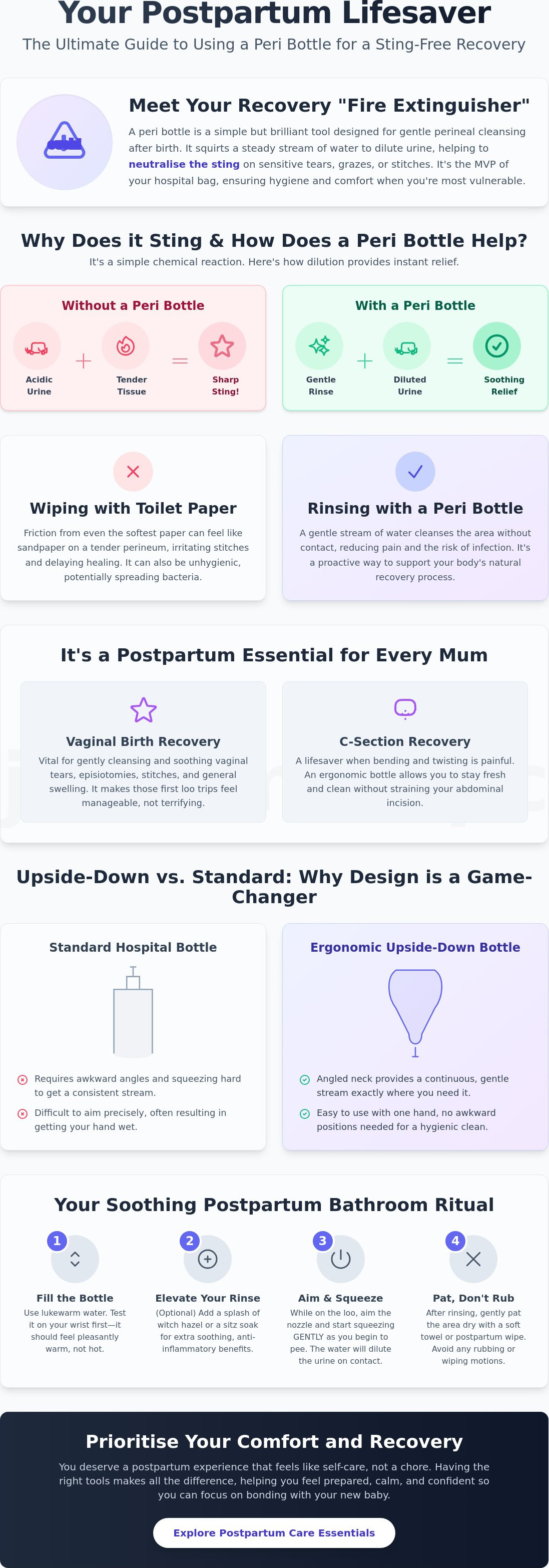
A peri bottle is essentially a squirt bottle specifically designed for perineal irrigation, but that clinical description doesn't do it justice. We like to call it the "fire extinguisher" for your lady bits. Let’s be honest; the first pee after birth is a universal fear for almost every new mum. The thought of acidic urine touching tiny tears or grazes is enough to make anyone wince. Australian midwives increasingly recommend using a steady stream of water rather than traditional wiping, as it’s far gentler on your most sensitive areas. It’s about providing immediate relief when you need it most.
To better understand how this simple tool transforms your recovery, watch this helpful video:
When you’re in the thick of postpartum care, your body is doing some heavy lifting to heal. A peri bottle ensures you stay clean and fresh without the friction of toilet paper, which can feel like sandpaper during those first few days. Pure relief. No sandpaper feeling here. It’s the kind of practical support that makes a massive difference to your confidence.
The "Fourth Trimester" Essential You Didn’t Know You Needed
The first six weeks after baby arrives, often called the fourth trimester, is a time of incredible vulnerability for your perineum. Whether you’ve had a speedy delivery or a long labour, that area is likely swollen and tender. Using a bottle provides a sense of dignity and relief when you can’t reach or move as easily as you used to. Don’t be tempted to just use a standard water bottle or a cup from the kitchen. Those aren't designed for the job; you’ll likely end up soaked or, worse, unable to aim the water where you actually need it.
Vaginal Birth vs. C-Section: Who Needs One?
It’s a common myth that only mums who deliver vaginally need this tool. While it’s certainly vital for soothing vaginal tears and stitches, it’s also a lifesaver for C-section recovery. After abdominal surgery, bending over or twisting to reach around for a thorough clean is often painful and difficult. A well-designed bottle allows you to maintain hygiene without straining your incision. It has become a staple in modern Australian maternity care because it simply makes life easier for every new mum, regardless of how her baby entered the world.
The Science of the 'Sting': Why Wiping is Your Worst Enemy Post-Birth
The "sting" isn't just a rite of passage; it’s a chemical reaction happening on your most sensitive skin. Urine contains uric acid, which is naturally acidic. When this acid comes into contact with the micro-tears, grazes, or stitches common after birth, it triggers a sharp, burning sensation. It's a moment many mums dread, but understanding the chemistry helps you take control. Even the softest 3-ply toilet paper can feel like sandpaper against a tender perineum. Friction is simply the enemy of healing in those first few days.
Using a peri bottle changes the game by applying the principle of dilution. By spraying lukewarm water while you are actually urinating, you lower the concentration of the acid. The water acts as a physical barrier, rinsing the area instantly and preventing the urine from settling into open wounds. This simple habit is one of the most effective hygiene tips for after giving birth, ensuring you stay fresh without the pain.
Beyond immediate comfort, irrigation plays a vital role in preventing common postpartum infections. By regularly flushing the area, you remove lochia and bacteria that could otherwise settle into healing tissue. It’s a proactive way to support your body’s natural recovery process while keeping your stress levels low. When you aren't worried about the pain of going to the bathroom, you can focus more on your new bub and your own rest.
Dilution is the Solution to Pollution (and Pain!)
Think of the water stream as a protective shield. When you pee, the uric acid wants to find a home in those tiny grazes. A steady flow of water ensures it keeps moving instead. This process doesn't just stop the sting; it also sets the stage for better wound care. After you've finished, remember the golden rule: pat, don't wipe. Using gentle pressure with postpartum wipes to dry the area preserves the integrity of your skin and prevents you from accidentally tugging on a stitch. If you're curious about the standards behind quality recovery gear, you can learn more about what is the ARTG and why it matters for your peace of mind.
Managing Stitches and Perineal Tears
For Aussie obstetricians and midwives, keeping stitches clean is the absolute top priority. Debris like lochia or dried blood can easily become trapped in the thread of your stitches, which may lead to inflammation or delayed healing. Regular irrigation clears this away gently. It’s a hands-off approach that maintains hygiene without the risk of introducing bacteria from your fingers. Perineal irrigation is the gold standard for home care because it combines effective cleansing with maximum comfort.
Upside-Down vs Standard: Why Design is a Game-Changer for Your Recovery
Choosing the right tool for your recovery is about more than just ticking a box on a list. It’s about making sure that tool actually works when you’re tired, sore, and perhaps a little bit overwhelmed. While any squirt bottle might seem like it does the job, the difference between a standard straight bottle and an ergonomic design is massive. When you’re navigating postpartum recovery with a peri-bottle, you quickly realise that the way the water reaches you matters just as much as the water itself.
A great design prioritises your comfort and hygiene. You want a gentle, consistent spritz that covers the area thoroughly without needing a harsh blast of pressure. It’s also vital that the bottle holds enough water to last through your entire bathroom session. There is nothing more frustrating than running out of soothing water halfway through. A premium peri bottle should feel like a natural extension of your hand, allowing you to focus on the relief rather than the logistics.
The Problem with Standard Peri Bottles
Most standard bottles given out in hospitals are simple, straight-necked designs. To get the water where you need it, you usually have to tip the bottle upside down, which often leads to it leaking all over your hand before you’ve even started. It also requires you to reach quite far down into the toilet bowl, which is both unhygienic and physically difficult when your core muscles are recovering. Bending and twisting is the last thing you want to do with a sore tummy or a C-section incision. Nobody wants the "wet hand" factor during an already vulnerable moment.
Why the Upside-Down Design Wins Every Time
The upside-down design is a total game-changer for Aussie mums. By using an angled, retractable nozzle, these bottles allow you to keep the bottle upright while the water is directed exactly where it needs to go. You can stay seated comfortably without any awkward maneuvering. Most high-quality versions also feature a built-in air valve, which ensures a smooth, continuous flow of water without you having to squeeze too hard. This level of control is essential for maintaining a gentle touch on sensitive skin. Feedback from our community is clear; once you’ve tried the upside-down style, you’ll never go back to a standard bottle. It’s the smarter, kinder way to care for yourself during the fourth trimester.
Beyond Just Water: Creating Your Ultimate Postpartum Bathroom Ritual
Transforming your postpartum bathroom trips from a moment of dread into a soothing ritual is one of the best gifts you can give yourself during recovery. It’s not just about getting the job done; it’s about creating a space for healing and calm. While plain water is a great start, there are several ways to level up your experience and turn your peri bottle into a bespoke recovery tool. By focusing on a few small details, you can significantly improve your comfort levels during those first few weeks at home.
Temperature is absolutely key. You want the water to be lukewarm, the "Goldilocks" of healing. Too cold, and it might make you jump; too hot, and it could irritate sensitive tissue. Aim for a temperature that feels like a gentle, warm hug. Another pro-tip? Start the water flow just before you begin to pee. This ensures the dilution process starts immediately, neutralising that acidic sting before it even has a chance to land on your skin. For extra disinfection, some women find a mild saline rinse helpful, but plain, clean water is usually the gold standard for daily use.
Step-by-Step: Your First Post-Birth Bathroom Trip
Preparation is your best friend. Always fill your peri bottle before you sit down on the loo. Once you’re settled, try leaning back slightly. This simple shift in positioning helps you achieve the best angle for the water stream to reach the perineum directly. Use the "during and after" technique: keep a steady stream going while you urinate, and then give yourself a final, refreshing rinse once you’re finished. Drying requires a gentle touch. Skip the rough toilet paper and use soft postpartum wipes to gently pat the area dry. If you have the time and privacy, air-drying for a few minutes can also be incredibly beneficial for keeping the area comfortable.
Advanced Healing Add-Ons
If you’re looking for extra relief, consider the "Witch Hazel Hack". Adding a few drops of organic witch hazel to your bottle can provide a cooling, astringent effect that many mums find helpful for managing swelling. You can also mix a small amount of sitz soak into the water for a portable version of a traditional sitz bath. Some women love adding a drop of organic lavender or calendula for their soothing properties. Safety is paramount. Always consult your midwife or obstetrician before adding essential oils to your routine to ensure they are appropriate for your specific healing stage. Understanding the quality of your recovery products is essential, so take a moment to learn about what is the ARTG to ensure you are using trusted, high-standard essentials for your body.
Why Ninja Mama is Australia’s Favourite Choice for Postpartum Care
Choosing Ninja Mama means choosing a brand that truly understands the Australian postpartum experience. Our founder is an Aussie mum who has "been there, done that," navigating the same physical challenges and emotional transitions you might be facing right now. We don't just see ourselves as a business; we’re your knowledgeable best friend. Our mission is to guide you through the fourth trimester with practical wisdom and a sisterly, nurturing atmosphere that validates every part of your journey.
The Ninja Mama Upside-Down peri bottle is the heart of our range because it solves a specific, painful problem with empathy and intentional design. We believe that even the most functional tasks, like going to the bathroom after birth, can be transformed into opportunities for self-care. By providing tools that offer perfect aim and premium quality, we help you replace anxiety with a sense of prepared calm. You deserve to feel supported and empowered as you heal.
The Ninja Mama Difference: Quality You Can Trust
We prioritised safety and durability when creating our signature bottle. Every unit is made from BPA-free, medical-grade materials, ensuring it is safe for your most sensitive areas. We also know that recovery doesn't just happen in the comfort of your own home. That’s why we include a discreet travel bag with every peri bottle, making it easy to maintain your hygiene routine during those first outings with bub or follow-up appointments. Our community of Aussie mums swears by this kit because it provides the reliability and dignity they need during a vulnerable time.
Complete Your Recovery Kit
While the bottle is a total game-changer, it works best as part of a holistic system designed for comfort and recovery. It pairs perfectly with our instant perineal cooling pads and postpartum disposable underwear to ensure you stay fresh and comfortable around the clock. If you’re feeling overwhelmed by what to pack, our postpartum recovery kits take the guesswork out of hospital bag preparation by bundling all your essentials together. We’ve done the research and the "been there" testing so you don't have to. Grab your Ninja Mama Peri Bottle here and take the first step towards a gentler, more confident recovery.
Step Into Your Fourth Trimester with Confidence
You now have the toolkit to transform one of the most daunting parts of postpartum recovery into a manageable, even soothing, ritual. By choosing an upside-down nozzle design and embracing the "fire extinguisher" effect of lukewarm water, you are prioritising your comfort and dignity. We've discussed how keeping your stitches clean and avoiding the friction of toilet paper are the first steps toward a smoother healing journey.
We are incredibly proud to have supported over 100,000 Aussie mums with our midwife-recommended designs. Every Ninja Mama peri bottle is crafted from BPA-free, medical-grade materials because we believe you deserve nothing less than premium care during this sensitive time. You aren't just buying a product; you're joining a community that has walked this path before you and is cheering you on every step of the way.
Ready to pack your hospital bag with the absolute MVP of recovery? Shop Australia’s Favourite Upside-Down Peri Bottle at Ninja Mama and feel the difference that thoughtful design makes. You've got this, mama.
Common Questions About Postpartum Peri Care
How do I clean my peri bottle between uses?
You should wash your bottle with warm, soapy water after every single use to keep it hygienic and fresh. Simply disassemble the nozzle and the bottle, give them a good rinse, and leave them to air dry on a clean surface. Keeping your peri bottle clean ensures you are always introducing fresh water to your healing skin.
Can I use a peri bottle after a C-section?
Yes, a bottle is an absolute lifesaver for C-section recovery because it allows you to maintain hygiene without having to bend or twist your torso. After abdominal surgery, reaching around to wipe can be painful and put unnecessary pressure on your incision. Using a gentle stream of water while seated comfortably keeps you clean while protecting your core muscles as they begin to heal. It’s a simple way to maintain your dignity and comfort.
What temperature should the water be in my peri bottle?
Aim for lukewarm water that feels comfortable against your inner wrist before you start. You want to avoid cold water, which can cause a sharp shock to sensitive tissues, and hot water, which could lead to irritation. Many women find that warm water provides a soothing effect that helps relax the pelvic floor muscles during those first few bathroom trips. It’s all about finding that "Goldilocks" temperature that feels just right for your body.
How long should I continue using a peri bottle after birth?
Most mums find they use their peri bottle for about one to three weeks after birth, or until their lochia slows down and any tears have significantly healed. However, there’s no hard and fast rule for when to stop. You can continue using it as long as it provides comfort and makes your bathroom routine feel easier. It’s a personal journey, so listen to your body’s needs and use it as long as you find it helpful.
Is it okay to add soap or antiseptic to the bottle?
It’s best to stick with plain, clean water unless your midwife or obstetrician specifically advises otherwise. Harsh soaps or undiluted antiseptics can disrupt your natural pH balance and may irritate healing skin or stitches. If you want a little extra soothing power, adding a small amount of organic witch hazel or a dedicated sitz soak is a much gentler way to support your recovery without causing unnecessary irritation to the area.
Can I use a peri bottle if I don’t have stitches?
Absolutely, you should still use one even if you didn't require stitches. Most vaginal births involve tiny micro-tears or grazes that aren't visible but will still sting when they come into contact with urine. Using a bottle provides a gentle way to stay clean and fresh while managing the heavy lochia flow in those first few days. It’s a great tool for general hygiene and comfort, regardless of whether you had a tear or not.
What is the difference between a peri bottle and a bidet?
The main difference is the targeted aim and portability that a dedicated postpartum bottle offers compared to a standard bidet. While a bidet provides a general wash, a bottle with an angled nozzle allows you to direct a gentle stream exactly where you need it most while seated in any position. It’s also much easier to control the water pressure and temperature to suit your specific sensitivity levels, which is vital during early recovery.
Can I pack the peri bottle in my hospital bag before birth?
We highly recommend packing your bottle in your hospital bag by around 36 or 37 weeks so you’re ready for any surprises. It’s one of those essentials you’ll want from the very first trip to the bathroom after delivery. Don’t forget to include the discreet travel bag to keep everything organised and hygienic within your kit. Being prepared early helps reduce any last-minute stress as you get closer to meeting your new arrival.

Article by
Louise Beever
Louise Beever is the founder of Ninja Mama, an Australian postpartum recovery brand focused on creating premium, practical recovery essentials for new mothers. Since launching Ninja Mama in 2018, Louise has worked closely with thousands of postpartum women and healthcare retailers to better understand the realities of recovery after birth. Her work focuses on postpartum preparation, recovery support, and improving awareness around the fourth trimester.
Remember, Mama
The information provided in this article is intended for general educational and informational purposes only and should not be considered medical advice. Always seek guidance from your doctor, midwife, lactation consultant, or qualified healthcare professional regarding your individual circumstances, pregnancy, birth, or postpartum recovery.