
What if the most important item in your luggage isn't the tiny newborn onesie, but the tools that help you feel like a human again? While it's easy to get lost in a sea of adorable baby gear, your own physical recovery deserves just as much space. This comprehensive postpartum hospital bag checklist shifts the focus back to you, ensuring you're prepared for everything from that daunting first trip to the bathroom to the gentle journey home.
It’s completely normal to feel a bit anxious about the logistics of after-birth care. Whether you're worried about C-section wound irritation or wondering how many maternity pads are actually enough for a three-day stay, you aren't alone in those thoughts. We've curated a midwife-approved guide that prioritises your comfort and healing during those first few sensitive days. This guide provides a curated list of recovery-focused essentials and advice on picking a going-home outfit that won't hurt. You'll feel ready to navigate the fourth trimester with a sense of prepared calm and the right tools by your side.
Key Takeaways
- Learn why shifting to a recovery-first mindset ensures you are prepared for the physical realities of the first few days, especially that initial trip to the bathroom.
- Discover why a midwife-approved postpartum hospital bag checklist must include an upside-down peri bottle and absorbent disposable underwear to support your healing.
- Understand the golden rule for your going-home outfit, focusing on soft, breathable fabrics and a fit that accommodates your body as it begins to transition.
- Find out exactly what to pack for your baby and support person, including why zip-up onesies are much more practical than fiddly snaps for those first nappy changes.
- Master the bag-in-a-bag packing system to keep your recovery essentials organised and easily accessible during your hospital stay.
Why Your Postpartum Hospital Bag Checklist Needs a 'Recovery First' Mindset
Many expectant parents spend months perfecting the nursery, choosing the softest cot sheets and the most ergonomic change table. While nursery prep is exciting, hospital bag prep is where you look after your own body. Your postpartum hospital bag checklist shouldn't just be a list of tiny clothes for the baby. It needs to be a recovery focused toolkit designed to support you through the physical intensity of the first 48 hours. Think of it as your mobile recovery station.
Standard lists often leave mums feeling under prepared for the reality of that first trip to the bathroom. They might suggest a pack of pads, but they rarely mention the stinging, the swelling, or the sheer volume of supplies needed for those initial hours. The fourth trimester doesn't wait until you get home; it starts the second your baby arrives. Whether you identify as a minimalist or a self confessed over packer, prioritising your comfort isn't an indulgence. It's a practical necessity for your wellbeing and confidence during a major life transition.
When Should You Actually Start Packing?
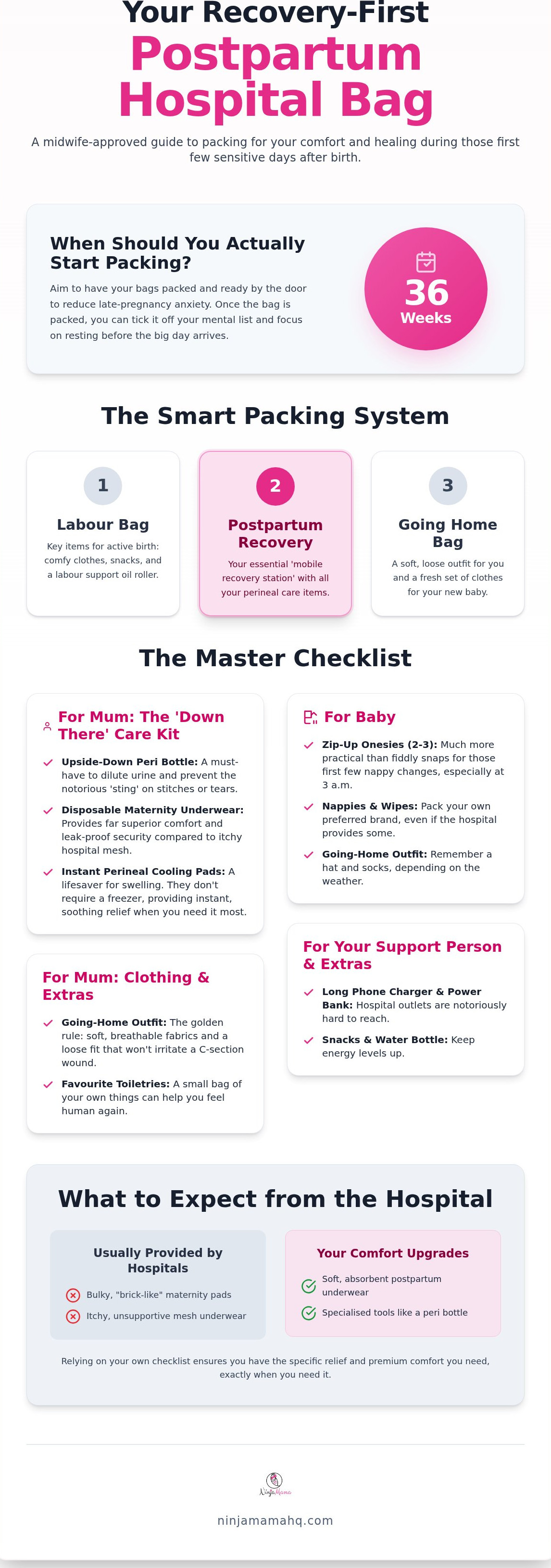
Aim to have your bag ready by the door by the 36 week mark. This 36 week rule isn't just about being prepared for an early arrival. It's a proven way to reduce late pregnancy anxiety. Once the bag is packed, you can tick it off your mental list and focus on resting. To keep things organised, try dividing your gear into three clear sections:
- Labour: Items for active birth, like comfortable clothes, snacks, and a labour support oil roller.
- Postpartum: Your recovery essentials, including disposable maternity underwear and perineal care.
- Going Home: A loose, soft outfit for you and a fresh set of clothes for the baby.
Pro tip: Keep a last minute list on your phone for things you use daily. This ensures you don't forget your long phone charger, glasses, or favourite toiletries when the excitement begins.
What Australian Hospitals Usually Provide (And What They Don't)
The level of support varies between public and private hospitals across Australia. Most wards will provide basic hospital grade maternity pads, but many women find these feel like bulky, uncomfortable bricks against sensitive skin. You'll almost certainly prefer the security and softness of your own absorbent postpartum underwear. It’s also rare for an Australian hospital to provide specialised recovery tools like an upside down peri bottle or instant cooling pads. While the midwives are there to monitor your health, they don't always have the resources to provide premium comfort items. Relying on your own postpartum hospital bag checklist ensures you have the specific relief you need, exactly when you need it.
The 'Down There' Care Essentials: Your Postpartum Recovery Kit
While many standard lists simply mention 'maternity pads,' those who have been through birth know that the physical reality requires a more strategic approach. Your postpartum hospital bag checklist is incomplete without a dedicated recovery kit for your perineum. The star of this kit is undoubtedly the Upside Down Peri Bottle. It's a non-negotiable for that daunting first trip to the bathroom. Instead of using rough toilet paper, which can feel like sandpaper on sensitive skin, you use the bottle to stream warm water over yourself while you pee. This dilutes the urine and helps prevent that notorious 'sting' on any micro-tears or stitches.
Next, consider your choice of underwear. While hospitals often provide mesh undies, they're notorious for being itchy and failing to keep bulky pads in place. Many women find that disposable maternity underwear provides far superior comfort and security. These are designed to be soft, stretchy, and incredibly absorbent, meaning you don't have to worry about leaks or ruining your favourite pyjamas. To manage swelling and provide immediate relief, instant cooling pads are a lifesaver. Since they don't require a freezer, you can crack them like a glow stick and place them directly in your undies for instant, soothing therapy.
Soothing the Soreness: Wipes and Foams
For an extra layer of relief, incorporate witch hazel wipes into your routine. Witch hazel is commonly used by postpartum mothers to help reduce inflammation and soothe discomfort. You can layer these wipes directly on top of your cooling pad to create what's known as a 'padsicle.' This combination provides a cooling, anti-inflammatory barrier that makes sitting and moving around much more bearable in those first few days. It's a simple step that transforms a basic necessity into a moment of self-care.
C-Section Specific Recovery Items
If you're preparing for a C-section, your recovery needs are slightly different but no less important. You'll need high-waisted underwear that sits well above your incision to avoid any painful rubbing or irritation. Once your incision has closed and your doctor gives the go-ahead, silicone scar patches are often considered a game-changer. These medical grade strips help support the healing process and can improve the appearance and texture of the scar over time. To make things easier, you might consider one of our curated recovery bundles which include all these essentials in one place.
What to Wear Home from Hospital After Birth
Choosing your "going home" outfit is a significant moment. It’s the first time you'll step into the world with your new arrival. While it’s tempting to pack something stylish for those first photos, your postpartum hospital bag checklist must prioritise physical ease. The golden rule of postpartum fashion is simple: pack an outfit that fit you when you were roughly six months pregnant. Your body has just performed a marathon, and your uterus needs time to contract. Expecting to fit into pre-pregnancy clothes immediately often leads to unnecessary discomfort and frustration.
Natural fabrics are your best friends during this transition. Look for pieces made from breathable cotton or bamboo. These fibres are incredibly soft against sensitive skin and help manage the "postpartum sweats" caused by shifting hormones. You should also pay close attention to your footwear. Many mothers are surprised to find their feet are more swollen after birth than before, often due to IV fluids or natural fluid redistribution. Pack a pair of adjustable slides or very loose sneakers to ensure you aren't squeezing into shoes that no longer fit.
The Vaginal Birth 'Going Home' Outfit
If you've had a vaginal birth, your primary concern will be managing postpartum bleeding and perineal comfort. Dark colours are essential. They provide peace of mind in case of any leaks while you're navigating the car seat and the front door. Loose joggers are a popular choice because the elasticised ankles prevent them from dragging, and the waistband helps keep your absorbent postpartum underwear securely in place. Alternatively, a maternity maxi dress is a fantastic option if you want zero pressure on your perineum. Just remember to pack a light cardigan or wrap, as your internal thermostat may be quite unpredictable.
The C-Section 'Going Home' Outfit
For C-section recovery, the "incision zone" dictates your wardrobe. Anything with a mid-rise waistband is a definite no-go, as it will sit directly on your stitches or staples. You need either ultra-high-rise leggings that sit well above the navel or very soft, low-rise styles that sit far below the bump. Many women swear by the "nightie as a dress" hack. Wearing a soft, button-down nightshirt with a pair of loose leggings provides absolute abdominal comfort and makes the car ride home much more bearable. Avoid any restrictive clothing that might rub against your wound, and focus on soft, supportive layers that protect your midsection.
The Master Hospital Bag Checklist: Mum, Baby, and Support Person
When your little one finally arrives, your world narrows down to the four walls of your hospital room. A truly comprehensive postpartum hospital bag checklist ensures that everyone in that room stays comfortable, fed, and calm. For you, this starts with the basics that feel like luxuries. Pack your favourite toiletries to make that first post-birth shower feel like a spa visit. Don't forget a long phone charger; hospital power points are notoriously far from the bed. You'll also want several pairs of washable breast pads. These are incredibly soft against sensitive skin and will keep you dry as your milk supply begins to regulate.
For the baby, keep things simple and functional. Pack six singlets, six onesies, and two soft swaddles. Our biggest tip? Choose onesies with zips rather than snaps. Trying to navigate tiny metal buttons during a 2 AM nappy change is a challenge you don't need. Your support person needs a survival kit too. Pack them a change of clothes, basic toiletries, and a pillow from home. That familiar pillow can make a huge difference when they're sleeping on a hospital pull-out chair. Most importantly, set up a 'snack station.' Between the physical demands of birth and the energy required for breastfeeding, you will likely be ravenous at 3 AM. Pack protein bars, dried fruit, and crackers to keep your energy up.
Breastfeeding and Nutrition Essentials
As you prepare for your milk to come in, hydration and nutrition become your top priorities. Many women find that sipping on Booby Booster tea during their stay helps support their early breastfeeding journey. For nipple care, consider packing a soothing cream or silverette cups. Some mothers also find relief using cooling pads if they experience initial engorgement. A straw-top water bottle is another labour essential you'll continue to use postpartum. It allows you to stay hydrated easily while holding or feeding your baby without needing two hands.
The 'Little Extras' for a Better Stay
Hospital environments are practical but often lack comfort. The air is notoriously drying, so a high quality lip balm is a must-have for your bag. An eye mask and earplugs are also vital for catching precious minutes of sleep between ward rounds and baby checks. To help maintain a sense of calm, keep your labour support oil roller nearby. The familiar scent can be incredibly grounding during the intense emotions of the first few days. To ensure you haven't missed a single essential, browse our postpartum recovery bundles for a complete, pre-packed solution.
Packing Your Ninja Mama Hospital Bag with Confidence
You’ve gathered your essentials and understood the physical journey ahead. Now, it’s time to organise everything so it works for you when you need it most. The 'Bag-in-a-Bag' method is the secret to a stress-free stay. Instead of rummaging through a large suitcase while you're sore and tired, try organising your gear into smaller, clear pouches or packing cubes. Dedicate one specifically for your bathroom needs, one for your baby's first outfits, and another for your breastfeeding supplies. This system keeps your postpartum hospital bag checklist items accessible and prevents you from having to explain to a well-meaning support person where the spare nursing pads are hidden.
If the thought of sourcing individual items feels like one task too many during your third trimester, you aren't alone. Many women find that Ninja Mama Recovery Bundles take the guesswork out of the entire process. These sets are meticulously curated to include the items midwives frequently recommend, ensuring you have a complete recovery kit ready to go. Having everything organised in advance allows you to shift your focus from logistics to the incredible experience of meeting your baby.
Streamlining Your Recovery Gear
When you head to the bathroom for that first post-birth trip, you don't want to be searching for supplies. Pack a small 'grab bag' that contains your peri bottle, a fresh pair of disposable underwear, and your soothing wipes. This should be the very first thing you or your support person unpacks once you're settled in your room. Speaking of support, create a simple 'Grab and Go' list for your partner. Include things like 'refill water bottle' or 'get the cooling pads from the bag.' Giving them clear, manageable tasks helps them feel useful and ensures your recovery remains the top priority.
Ready for the Fourth Trimester
Your hospital bag is just the beginning of your fourth trimester preparation. Before you leave for the hospital, set up a 'nursing nest' at home. This is a comfortable spot where you’ll likely spend a lot of time feeding and bonding. Stock it with water, snacks, and a few extra breast pads so you don't have to get up constantly once you arrive home. Finally, do a quick mental and physical check: is the car seat professionally installed? Is your Medicare card in your wallet? Is your ID ready? Once those boxes are ticked, take a deep breath. You've prepared your body and your bag with intention. You've got this, Mama!
Ready to tick the final items off your list? Shop the full Ninja Mama recovery range here to find everything you need for a comfortable transition into motherhood.
Step into Your Fourth Trimester with Confidence
Preparing for the sensitive days following birth is a beautiful gift you give to your future self. By shifting your focus toward physical healing and comfort, you ensure those first moments with your newborn are about bonding rather than managing avoidable discomfort. A truly effective postpartum hospital bag checklist prioritises the tools that support your body, such as a highly rated 'Upside Down' Peri Bottle and soft, absorbent underwear that respects your skin.
As an Australian owned brand designed by mums, for mums, Ninja Mama has supported over 50,000 Australian mothers through this life changing transition. We understand the specific gaps in postpartum care and have created solutions that combine practical functionality with a touch of premium care. You don't have to navigate these first few days alone or under prepared.
Build your ultimate recovery kit with Ninja Mama Bundles and take the guesswork out of your hospital stay. You’ve done the preparation, you’ve gathered your tools, and now it’s time to trust in your own strength. You’ve got this, Mama, and we are so proud to be part of your journey.
Frequently Asked Questions
When should I pack my hospital bag for an Australian birth?
Aim to have your bag packed and ready by the 36 week mark to avoid any late pregnancy stress. While most Australian babies arrive between 37 and 42 weeks, having your gear by the door early ensures you aren't rushing if labour starts unexpectedly. It's one of the most important steps in your postpartum hospital bag checklist to help you feel calm and prepared.
How many maternity pads should I pack in my hospital bag?
You should pack at least two full packs of maternity pads or approximately 10 to 15 pairs of absorbent disposable underwear for a standard two to three day stay. In those first 48 hours, you will likely change your protection every few hours. Many mothers prefer disposable underwear because it offers better security and comfort than bulky pads and hospital issued mesh undies.
Do I really need a peri bottle in my hospital bag?
Most new mums find an upside down peri bottle is an essential recovery tool for their hospital stay. It allows you to gently stream warm water over your perineum while you urinate, which helps dilute the acidity and reduces the 'sting' on sensitive tissues or stitches. It is a far more comfortable and hygienic alternative to using standard hospital toilet paper during those first few days.
What is the best outfit to wear home from the hospital after a C-section?
The best outfit for C-section recovery is one with a very high waistband or no waistband at all, such as a loose maternity maxi dress. You need to ensure nothing rubs against your incision site. Soft, breathable fabrics like bamboo or cotton are best for managing temperature fluctuations. Avoid mid-rise leggings or joggers, as these typically sit right where your stitches or staples are located.
What should my partner pack in their hospital bag?
Your support person should pack a change of clothes, basic toiletries, a swimsuit if you plan on using a birth pool, and plenty of high energy snacks. Hospital cafes often have limited hours, so having their own food is vital for staying alert. A pillow from home and a long phone charger will also make their stay on a ward chair or pull out bed much more bearable.
Can I wear my own clothes during labour in Australian hospitals?
You are absolutely welcome to wear your own clothes during labour in most Australian hospitals. Many women opt for a loose, oversized cotton t-shirt or a button down nightie that allows for easy skin to skin contact immediately after birth. Choose something dark coloured and made from natural fibres, as labour can be a physically intense and messy process. The goal is to feel as relaxed as possible.
How many outfits should I pack for the baby?
Pack around five to six outfits for your baby to cover a typical two night hospital stay. This should include singlets, socks, and zip up onesies rather than those with fiddly snaps. Babies can be surprisingly messy, and you may find yourself changing them more often than expected due to nappy leaks or positing. Having a few extra layers ensures they stay warm and comfortable in the hospital air conditioning.
What are the most forgotten items in a postpartum hospital bag?
Lip balm, a long phone charger, and a straw top water bottle are the items most commonly left behind. Hospital wards are notoriously dry, so keeping your lips hydrated is a small but vital comfort. A straw top bottle is particularly helpful because it allows you to drink easily while breastfeeding or lying down without needing to sit up or use two hands. These small extras make a big difference.

Article by
Louise Beever
Louise Beever is the founder of Ninja Mama, an Australian postpartum recovery brand focused on creating premium, practical recovery essentials for new mothers. Since launching Ninja Mama in 2018, Louise has worked closely with thousands of postpartum women and healthcare retailers to better understand the realities of recovery after birth. Her work focuses on postpartum preparation, recovery support, and improving awareness around the fourth trimester.
Remember Mamas
The information provided in this article is intended for general educational and informational purposes only and should not be considered medical advice. Always seek guidance from your doctor, midwife, lactation consultant, or qualified healthcare professional regarding your individual circumstances, pregnancy, birth, or postpartum recovery.