
Did you know that only 35% of Australian mothers feel truly prepared for their postpartum recovery? It's a staggering statistic that reflects just how overwhelming the fourth trimester can be, especially when you're trying to figure out which products are actually safe for your body. When you see mention the Australian Register of Therapeutic Goods, it's easy to feel lost in a sea of technical jargon. You want to feel confident that the items in your hospital bag are more than just pretty packaging. You need to know they're genuinely fit for purpose.
We've been there, and we completely understand that sense of information overload when you're just trying to find relief. You deserve to know that the gear you use on your most sensitive areas meets Australia's strict safety standards. In this guide, we'll explain exactly what ARTG registration means for your postpartum essentials and how to distinguish between regulated medical devices and generic imports. We're here to help you cut through the confusion so you can focus on what really matters: your healing and your new baby.
Key Takeaways
- Learn how the Australian Register of Therapeutic Goods (ARTG) provides a safety net by ensuring your recovery products are high-quality and fit for purpose.
- Discover the vital safety differences between regulated medical devices and generic imports, particularly regarding materials like medical-grade silicone.
- Find out how to easily verify your own recovery gear by checking numbers on the product packaging.
- Gain the confidence to choose premium, Australian-standard essentials that prioritise your physical wellbeing and peace of mind during the fourth trimester.
What is the ARTG and Why Should Aussie Mums Care?
When you're preparing for baby, the list of 'must-haves' feels endless. But when it comes to your own body's healing, there's one acronym you really need to know: the ARTG. The ARTG is the official register of all therapeutic goods allowed for supply in Australia. Managed by the Therapeutic Goods Administration (TGA), it ensures products are safe, and perform as intended. For Aussie mums, this means the difference between a simple lifestyle item and a genuine medical-grade recovery tool.
To better understand how these safety standards work in practice, watch this helpful video:
Recent research suggests that only 35% of Australian mothers feel prepared for postpartum recovery. This gap often leads mums to buy products without clear guidance. By looking for ARTG listings, you're taking back control of your health. It isn't just about paperwork; it's about your safety during a vulnerable time. When you're recovering from birth, you're dealing with sensitive areas, surgical incisions, or perineal tears. You need tools that aren't just 'good enough' but are specifically designed for medical recovery.
The Difference Between Therapeutic and General Goods
Think about your freezer. A standard ice pack might look similar to a Ninja Mama perineal ice pack but they aren't the same. The TGA classifies items based on their therapeutic claim. While a regular ice pack is for putting in your picnic, a therapeutic device is designed to support healing or hygiene in a clinical sense. Using regulated products gives you peace of mind. You know that what touches your body is made from safe, non-toxic materials.
Why 'Australian Owned' and 'Australian Standards' Go Hand-in-Hand
Choosing Australian-owned brands like Ninja Mama means choosing a team that understands our local regulatory landscape. We live and breathe TGA requirements because we know how much they matter. Buying unregulated, cheap imports from overseas marketplaces can be risky. Those products often bypass the strict safety checks required here. They might use plastics with BPA or silicones that aren't medical-grade. These materials can cause irritation or even infections on healing skin. We prioritise safety in our postpartum recovery kits by ensuring our essentials meet the high standards Aussie mums deserve.
Decoding the ARTG: Medicines, and Medical Devices
If you've ever looked at the back of a bottle of hospital-grade sunscreen or a pack of C-section medication, you might have noticed a string of registration numbers. When you dig into the Australian Register of Therapeutic Goods (ARTG), these identifiers help you track exactly what's inside. While some of these IDs refer to high-protection sunscreens, others apply to essential medicines you might be prescribed in the maternity ward. These listings aren't just for heavy-duty medications; they cover a wide range of therapeutic goods that have been vetted for safety.
Checking these IDs is about more than just curiosity. It's your way of verifying that a product's health claims have been reviewed by experts. If a brand says their product "supports healing" or "reduces swelling," the TGA requires evidence to back that up. You can usually find a genuine TGA-listed product by looking for a ARTG number on the outer packaging or online listing. It's a small detail that offers huge reassurance when you're caring for your body after birth. It ensures that what you're using is a legitimate therapeutic tool rather than just a lifestyle item.
Class I Medical Devices: The Postpartum Heroes
Many of the most effective postpartum tools, such as cooling pads and perineal therapy packs, are classified as Class Medical Devices. While the TGA considers these "low risk," they still require a high level of quality control and strict adherence to manufacturing standards. Instant perineal ice packs require more scrutiny as they contsin chemicals and so are a Class IIa medical device. These devices are the quiet heroes of your recovery. They provide targeted relief without the risks associated with unvetted imports. Ensuring these items are part of your hospital bag checklist means you're prepared with tools that are actually designed for the job. Many mums find that using perineal ice packs specifically designed for birth recovery makes a world of difference in those early days.
Why Specificity Matters for Healing
Unregulated products often use "one size fits all" marketing. This is a red flag in the fourth trimester. Your body is going through a specific, intense healing process that requires precise care. ARTG registration ensures that the instructions you read are accurate and safe for your situation. Whether you're managing a C-section incision or a vaginal tear, you need gear that respects your body's needs.
ARTG vs. Generic: Comparing Your Postpartum Options
When you're scrolling through social media, it's easy to be swayed by pretty packaging and glowing "lifestyle" reviews. Many products marketed to new mums fall into the category of general consumer goods rather than regulated medical devices. While a generic cream or a "beauty" oil might look the part, they haven't faced the same rigorous scrutiny as products listed on the register. For a new mum, the stakes are high. You're not just buying a self-care item; you're choosing a tool for physical recovery. The peace of mind that comes from using a regulated product is worth far more than the few dollars saved on a generic import.
Material safety is non-negotiable when your body is in a state of healing. Standards for BPA-free plastics and medical-grade silicone exist to protect you from toxins that could interfere with your recovery. Generic imports often cut corners to keep costs low. Using unregulated materials on a healing wound or sensitive skin can lead to irritation or allergic reactions, causing setbacks you simply don't need. You can verify if a product is legally approved for supply in Australia by using the search tool provided by the Therapeutic Goods Administration (TGA).
C-Section Recovery: Scar Patches vs. Generic Tapes
If you're managing a surgical incision, the quality of your scar treatment matters. C-section silicone scar patches are designed using medical-grade silicone, which is the clinical gold standard for scar management. Unlike generic tapes or household adhesives, ARTG-registered patches are tested for breathability and skin-safe adhesion. They create the ideal environment for healing without trapping harmful bacteria against your skin. This specialised design helps support the skin's natural recovery process far more effectively than unvetted alternatives.
Perineal Relief: Instant Ice Packs vs. DIY 'Padsicles'
Many women find relief using DIY "padsicles," but there are significant hygiene benefits to choosing instant perineal cooling pads. When a product is applied directly to birth injuries or stitches, sterility and material safety are paramount. ARTG registration ensures that these cooling pads meet strict manufacturing standards.
How to Verify Your Recovery Gear: A Quick Guide for Mums
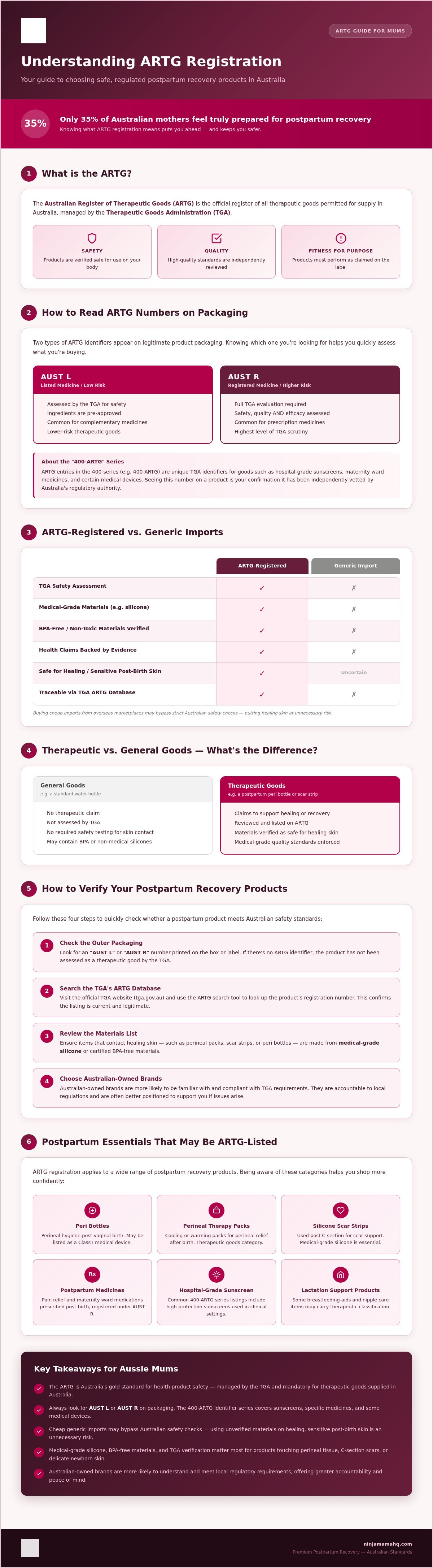
Checking your gear is easier than you think. Start by looking for artg number on the product packaging or online product listing. This is your first clue that the item is regulated. Once you have the name or number, head to the TGA website and use the ARTG search tool. You can search by the brand name, like 'Ninja Mama', or the specific product name.
Verifying these details provides a layer of protection for your physical wellbeing. When a product is listed on the register, it means the sponsor has certified that it meets all necessary safety and quality requirements
What to Look for on the Label
Identify the ARTG ID number clearly printed on packaging or on the online listing. This number is your ticket to seeing the 'indications'. These are the specific health benefits the product is legally allowed to claim. If a product makes big promises but avoids regulatory language or hides its ID, that's a major red flag. Genuine recovery gear doesn't hide behind vague terms. It provides clear, evidence-aware information that helps you heal safely. Reading the label carefully ensures that the cooling pads or scar strips you've chosen are designed for your specific needs.
Asking the Right Questions
Don't be afraid to ask your midwife or obstetrician about product safety. They appreciate when mums take an active role in their healing. Ask them if they recommend specific TGA-listed devices for your recovery. Be wary of any brand that can't provide an ARTG number for items like scar strips or cooling packs. Transparency in the postpartum industry is vital because you deserve to know exactly what you're using on your body. Using regulated tools allows you to focus on your baby, knowing your own recovery is in safe hands. We believe every mum deserves the best care, and you can learn more about our commitment to quality on our about us page.
The Ninja Mama Promise: Safety, Comfort, and Compliance
We believe that your recovery journey should be defined by comfort and confidence, not confusion. Our commitment to providing high-quality, Australian-standard recovery gear is at the heart of everything we do. We've taken the guesswork out of the regulatory side so you can focus on bonding with your little one.
You deserve professional-grade care that extends beyond the hospital ward. We know that the first few weeks at home are often the most challenging. This is why we prioritise evidence-aware solutions that meet strict local requirements. Our kits aren't just collections of products; they're structured systems designed to support your body's natural healing process. By choosing regulated, trusted tools, you're making a proactive choice for your long-term physical wellbeing. It's about giving your body the respect and the safety it needs to heal properly after the incredible feat of childbirth.
Beyond Regulation: Empathy and Support
For us, safety is the baseline, but empathy is the goal. We go far beyond the 'minimum' requirements because we know that true recovery requires premium comfort. A product might be safe on paper, but if it doesn't feel good on your skin or fit into your daily life as a new parent, it isn't doing its job. Our community is built on shared experiences and evidence-based advice. We invite you to learn more about our journey and the founder's story on our About Us page. We're more than just a brand; we're your partners in this transition, reaching back to help the next person with practical wisdom.
Your Next Steps for a Confident Recovery
Preparation is the key to a calm fourth trimester. We encourage you to take a moment to look through your current hospital bag and check for those vital registration numbers. If you're looking for relief that you can trust, explore our range of TGA-compliant perineal ice packs. These are designed to provide targeted cooling while meeting the strict standards required for birth recovery. Join the Ninja Mama community to discover more 'fire extinguisher' tips and connect with other mums who are prioritising their healing. You've got this, and we've got you.
Step Into Your Postpartum Recovery with Confidence
Your recovery journey is deeply personal, and you deserve to navigate it with complete peace of mind. By understanding the role of the ARTG, you've gained the power to distinguish between simple lifestyle products and genuine medical-grade tools. You now know that registration ensures your gear is safe, effective, and made from non-toxic materials that respect your body's healing process. Whether you're cross-referencing a 400-artg entry for maternity ward supplies or checking the labels on your own recovery kit, you're making a choice that prioritises your long-term physical wellbeing.
We are proud to be an Australian owned and operated brand that puts mums first. Our range is designed with empathy and insight, ensuring our key recovery essentials meet the strict standards set for TGA compliant medical devices. You don't have to settle for unvetted imports when you can have professional-grade care delivered straight to your door. It's time to focus on your new baby while we help take care of you. Shop Ninja Mama's safety-first postpartum range and build a recovery kit you can truly trust. You've got this, mama, and we're with you every step of the way.
Frequently Asked Questions
What does an ARTG number actually tell me about a product?
An ARTG number confirms that a therapeutic product is legally allowed to be supplied in Australia. It tells you that the manufacturer has met strict regulatory requirements and that any health claims made are backed by evidence. For mums, this number is a badge of trust, ensuring that your recovery tools are designed for medical use rather than just being general consumer items.
Are all postpartum products required to be on the ARTG?
Not every item in your hospital bag needs a registration number. Only products making therapeutic claims, such as healing a wound or reducing inflammation, must be listed on the register. Items like regular nursing pads or standard maternity clothes are considered general goods.
Can I use a product if it doesn't have an ARTG ID?
You can certainly use products without an ID if they are general consumer goods like clothing or basic hygiene items. However, be cautious of products claiming to be 'medical-grade' or 'therapeutic' if they don't have a valid listing. Using unvetted tools on sensitive areas or incisions carries risks, such as irritation or infection. For your peace of mind, it's always best to choose regulated options for your primary physical recovery needs.
How do I know if my C-section scar strips are medical-grade?
True medical-grade scar strips will have an ARTG listing and specify the use of medical-grade silicone. This material is the gold standard for scar management because it's tested for skin safety and breathability. Generic tapes often use industrial adhesives that can damage fragile skin. By verifying the registration number on the packaging, you can be sure your strips are designed to support surgical healing without causing further irritation or setbacks.
Does the TGA test every single product on the register?
The TGA doesn't physically test every single product before it's listed, but they do require manufacturers to certify that their goods meet all safety and quality standards. They also conduct regular audits and post-market monitoring to ensure ongoing compliance. This system holds brands accountable and ensures that any product on the register remains safe for Aussie mums to use. It's a robust framework that prioritises consumer safety above all else.
What should I do if I suspect a product is making false safety claims?
If you're worried that a brand is making misleading health claims, you can report them directly to the TGA through their website. They take false advertising very seriously, especially when it involves the health of vulnerable groups like new mothers. Reporting these issues helps protect the entire community and ensures that only safe, evidence-aware products remain on the market. Your voice plays a vital role in maintaining high standards for everyone.

Article by
Louise Beever
Louise Beever is the founder of Ninja Mama, an Australian postpartum recovery brand focused on creating premium, practical recovery essentials for new mothers. Since launching Ninja Mama in 2018, Louise has worked closely with thousands of postpartum women and healthcare retailers to better understand the realities of recovery after birth. Her work focuses on postpartum preparation, recovery support, and improving awareness around the fourth trimester.
Remember Mamas
The information provided in this article is intended for general educational and informational purposes only and should not be considered medical advice. Always seek guidance from your doctor, midwife, lactation consultant, or qualified healthcare professional regarding your individual circumstances, pregnancy, birth, or postpartum recovery.