

You’ve finally sat down after a long day of nappy changes and toddler cuddles, only for your little one to climb onto your lap. Instead of feeling a rush of affection, your skin starts to crawl and you feel a desperate urge to be left alone. This visceral reaction is a hallmark of the "touched out" phenomenon, a state of sensory overload that occurs when your physical boundaries have been crossed for too many hours on end.
It’s a heavy, isolating feeling, especially when it’s followed by a wave of guilt. You love your children fiercely, but you feel like a human climbing frame rather than a person with bodily autonomy. Please know that you aren't failing and you certainly aren't alone; this is a real physiological response to constant physical demands. In this guide, you’ll discover why physical overstimulation happens in motherhood and learn practical, guilt-free strategies to reclaim your body and personal space. We will explore how to communicate your boundaries clearly and share simple tools for sensory regulation that help you feel like yourself again.
Key Takeaways
- Understand that the "Touched Out" Phenomenon is a real physiological state of sensory overstimulation, not a reflection of your love for your children.
- Discover how the massive hormonal and identity shifts during matrescence can leave your nervous system feeling hyper-vigilant and easily overwhelmed.
- Learn to release the "Perfect Mum" guilt by recognising that wanting personal space is a healthy way to protect your emotional wellbeing.
- Explore practical boundaries, such as the 20-minute touch-free rule and using sensory deprivation, to lower your internal "noise" levels.
- Find out how physical recovery rituals, like a quiet sitz soak or cooling therapy, can serve as a powerful sensory reset for your body.
What exactly is the 'Touched Out' Phenomenon?
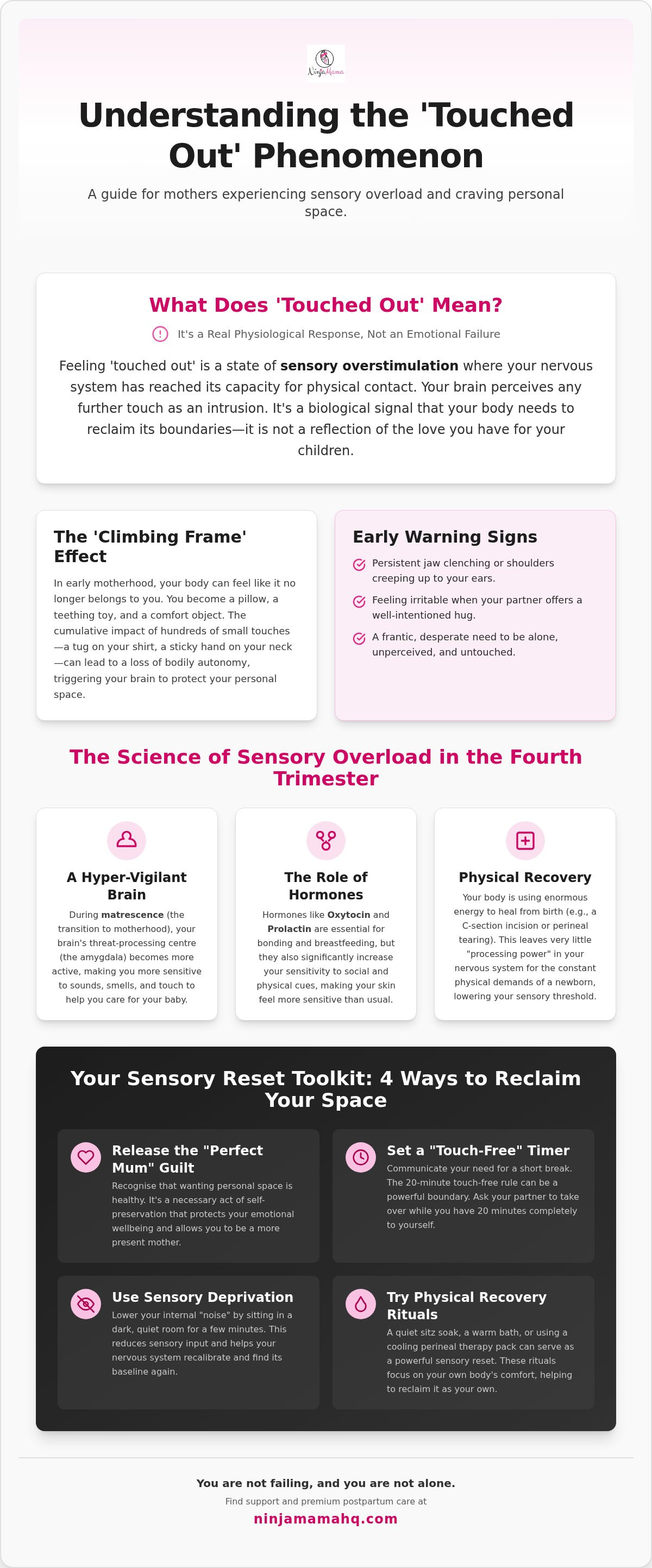
The "Touched Out" Phenomenon is far more than just feeling a bit tired or needing a tea break. It is a specific, visceral state of sensory defensive overstimulation. When you reach this point, your nervous system has reached its absolute capacity for physical contact. It is as if your "input" bucket is overflowing, and your brain begins to perceive any further touch as an intrusion or even a threat. This is deeply rooted in the science of sensory overload, where the brain becomes unable to process the constant stream of information coming through the senses.
Many mums describe a literal skin crawling sensation. It can feel like an internal alarm bell ringing every time someone brushes against you. This often peaks during breastfeeding sessions or the chaotic evening witching hour, when the cumulative demands of the day finally boil over. It is vital to remember that this reaction is biological, not emotional. Feeling this way doesn't mean you don't love your children or that your bond is weak; it simply means your body is craving a return to its own physical boundaries.
To better understand why this happens and how it feels, watch this helpful video:
The 'Climbing Frame' effect
In early motherhood, your body often feels like it no longer belongs to you. You become a mode of transport, a pillow, a teething toy, and a comfort object all at once. This is the "climbing frame" effect. While a single cuddle is lovely, the cumulative impact of hundreds of tiny, "small" touches throughout the day adds up. A tug on your shirt here, a sticky hand on your neck there, and a baby constantly on your hip can eventually lead to a total loss of bodily autonomy. Eventually, your brain starts to signal that it needs to protect your personal space to keep you regulated.
Common signs you are reaching your limit
Recognising the early warning signs of the "Touched Out" Phenomenon can help you step back before a full meltdown occurs. You might notice your shoulders creeping up toward your ears or a persistent clenching in your jaw. Many women find they become uncharacteristically irritable when a partner offers a well-intentioned hug or pat on the back. You might also experience a desperate, almost frantic need to be "unperceived." This often looks like wanting to sit alone in a dark, quiet room where no one is looking at you, talking to you, or, most importantly, touching you. These are your body's signals that it is time for a sensory reset.
The science of sensory overload in the Fourth Trimester
The transition into motherhood is often compared to adolescence, a process known as matrescence. During this time, your brain undergoes significant structural changes to prepare you for caregiving. While these shifts help you bond with your baby, they also prime your brain for hyper-vigilance. Your amygdala, the part of the brain responsible for processing threats, becomes more active. This means you are naturally more sensitive to sounds, smells, and physical touch. When your brain is constantly scanning for the baby's needs, it can easily become overwhelmed by the sheer volume of sensory input.
Hormones play a massive role in how you perceive physical contact. Oxytocin, often called the "love hormone," is essential for bonding and breastfeeding, but it also increases your sensitivity to social and physical cues. Prolactin, which stimulates milk production, can also impact your stress response and mood. This hormonal soup can make your skin feel more sensitive than usual. When you combine these internal shifts with the physical recovery of the Fourth Trimester, your sensory threshold drops significantly. If you are managing the discomfort of a C-section incision or perineal healing, your body is already using a huge amount of "processing power" just to manage pain. This leaves very little room in your nervous system for the constant physical demands of a newborn.
Why breastfeeding mums often feel it most
Breastfeeding is a beautiful way to connect, but it is also an intense, repetitive sensory experience. The physical sensation of a baby latching and feeding for hours every day provides a constant stream of input to your brain. Some women experience what is known as nursing aversion, a sudden, overwhelming feeling of irritability or skin-crawling discomfort during a feed. This is a biological response, not a lack of love. To help reduce the "noise" of constant contact, many women find that choosing exceptionally soft materials can make a difference. Using Bamboo Nursing Pads can provide a gentle, soothing barrier against sensitive skin, helping to lower the overall sensory load on your body.
The impact of sleep deprivation on your 'patience' tank
Sleep deprivation is perhaps the biggest contributor to the "Touched Out" Phenomenon. When you are exhausted, your brain loses its ability to filter out background information. Sensory gating is the brain’s natural ability to filter out redundant or unnecessary stimuli; however, in sleep-deprived mothers, this filter often fails, leaving every touch feeling amplified and intrusive. Without adequate rest, your "patience tank" is permanently on empty, making it almost impossible to process even the gentlest touch from a partner or child without feeling a flash of irritation. Understanding these biological triggers is the first step toward finding practical ways to help caregivers rejuvenate and protect their mental space. Recognising that your brain is simply doing its best to manage a high-stakes environment can help quiet the inner critic that tells you that you should be "enjoying every moment."
Touched out vs. Mum Guilt: Breaking the cycle
Society often paints a picture of the "Perfect Mum" as someone who is infinitely patient, always available for a cuddle, and perpetually "on." This myth suggests that if you aren't relishing every single second of physical closeness, you are somehow failing. The truth is that no one can be a human climbing frame for twenty four hours a day without feeling the strain. When you experience the "Touched Out" Phenomenon, it isn't a sign that your love is lacking. It is actually a healthy, biological signal that your personal boundaries have been reached and your nervous system needs a moment to recalibrate.
Reclaiming your body autonomy is essential for your long term wellbeing and the health of your family unit. If you constantly ignore your body's plea for space, the result is usually a build up of resentment and "Mum Rage." This isn't because you are a "bad" person; it’s because your brain is stuck in a state of high alert. By acknowledging your needs, you are actually being a more present and regulated mother for your children in the long run.
Re-framing the 'Shoulds'
Breaking the cycle starts with changing your internal dialogue. Instead of thinking "I should want to cuddle my baby right now," try re-framing it to "I need to recharge my sensory tank so I can be fully present later." Pushing through the discomfort only leads to burnout. Recent insights in The State of Postpartum 2026 highlight how vital emotional and physical support is for maternal mental health. Recognising that your need for space is valid is the first step toward a more sustainable way of parenting. You aren't a robot; you are a human being with a nervous system that requires downtime to function at its best.
Communicating with your 'Support Crew'
The hardest part of being touched out is often explaining it to the people you love most. Your partner might feel rejected when you pull away from a hug, so clear communication is key. Try using a simple script like: "I love you and I want to be close to you, but right now my skin feels overstimulated. I need thirty minutes of zero touch time to reset my brain." This explains that the issue is physiological, not personal.
When it comes to toddlers, you can start teaching gentle boundaries early. Use soft language such as, "Mummy’s body needs a little bit of quiet space right now so I can be ready for our next game." You can also try organising "touch-free windows" in your family schedule. This might look like:
- The Post-Bedtime Buffer: A strict 20 minute rule where no one touches you after the kids are asleep.
- Sensory Hand-Overs: When your partner gets home, they take over the physical "holding" duties immediately.
- Parallel Play: Sitting near your children without being physically climbed on, using a "cuddle chair" for designated snuggle times only.
Normalising these boundaries helps everyone in the house understand that while affection is wonderful, respecting each other's physical space is just as important for a happy home.
5 Practical ways to reclaim your personal space
When you are in the thick of the "Touched Out" Phenomenon, generic advice like "just go for a walk" can feel like another impossible task on your to-do list. Reclaiming your body often requires small, intentional micro-boundaries that fit into the chaotic reality of life with a newborn or toddler. These strategies are designed to provide an immediate sensory reset without needing a whole afternoon away from home. They help you shift from being a "climbing frame" back to being a person with your own physical limits.
- The 20-minute touch-free rule: Once the kids are finally asleep, implement a strict "no-touch" buffer zone. Tell your partner you need twenty minutes of complete physical autonomy before you engage in any conversation or cuddles. This allows your nervous system to transition from caregiver mode back to being just you.
- Embrace sensory deprivation: If the house feels too "loud," use noise-cancelling headphones or simply dim the lights. Reducing the amount of data your brain has to process helps lower your internal stress levels instantly.
- The temperature reset: A quick splash of cold water on your face or a warm shower can "reset" your skin's surface. Changing the temperature provides a strong enough sensory input to override the lingering feeling of being touched.
- Change your clothes: Sometimes, your skin just needs to feel a different texture. Swapping out the shirt that's been tugged on all day for fresh, clean loungewear can help you feel less overstimulated.
- Protect your bed: Make your bed a designated "no-climbing" zone. By keeping the bed as a sanctuary for rest rather than a secondary playroom, you create a mental and physical space where you know your boundaries will be respected.
The 'Sensory Sanctuary' bath
Water is one of the most effective tools for a total sensory reset. Immersing yourself in a warm bath creates a gentle, uniform pressure that can soothe "crawling" skin and quiet a noisy mind. To truly transform this into a healing ritual, many mums find that a Ninja Mama Sitz Soak offers the perfect "sensory sanctuary." The blend of salts and botanicals is designed for comfort and recovery, signalling to your brain that you are officially off-duty. Even fifteen minutes of quiet in the tub can act as a powerful circuit breaker for overstimulation, helping to reduce the physical "noise" in your body.
Body-reclamation movements
When you've spent the day being a mode of transport for others, it's easy to lose the sense of where your body ends and the world begins. Simple, active stretches or a gentle self-massage can help you reclaim your physical form. This "active" touch is different from the "passive" touch of a baby; it is intentional and controlled entirely by you. Using the Labour and Postpartum Support Oil Roller on your wrists or temples provides a grounding scent that helps pull you back into the present moment. This small act of self-care helps you feel anchored and restored.
If you're looking for more ways to support your physical and emotional wellbeing, explore our range of postpartum recovery kits and bundles designed to help you navigate the fourth trimester with confidence.
Building your 'Sensory Reset' toolkit
When you are navigating the "Touched Out" Phenomenon, your physical comfort isn't just a luxury; it's a vital part of your mental regulation. If your body is dealing with the low-level "noise" of physical discomfort, such as stinging, itching, or general postpartum soreness, your brain is already working overtime. This constant background irritation reduces your capacity to handle the sensory input of a baby's touch. By addressing physical pain, you effectively lower the volume of your internal alarm system, making you feel less "on edge" when your little ones need you.
Curating a "Mum-only" stash of recovery essentials is a proactive way to protect your wellbeing. When you are overstimulated, your ability to make decisions or hunt for supplies often disappears. Having a dedicated system ready to go reduces the mental load and ensures you can reach for a "reset" the moment you feel your skin start to crawl. It's about being your own advocate during the fourth trimester and beyond. Preparation is the key to turning a potential meltdown into a manageable moment of pause.
Cooling and Calming Essentials
Cooling therapies are a secret weapon for calming a frazzled nervous system. Many women find that using Perineal Ice Packs provides more than just physical relief for sore tissues; the intense cold sensation acts as a powerful sensory "grounding" tool. Similarly, Instant Cooling Pads are perfect for a quick sensory shift when you don't have time for a full bath or a nap. These tools help dampen the physical irritation that often exacerbates the "Touched Out" Phenomenon, allowing your body to feel more like your own again. When you reduce the physical stinging or pain you are carrying, you create more space in your "patience tank" for the rest of the day.
Nourishment for the Nervous System
Sometimes, the best reset is a sensory experience that belongs entirely to you. Creating a small ritual around a warm drink can signal to your brain that it is time to downshift from high alert. Taking five minutes to enjoy a "hot" drink that is actually hot, not lukewarm and forgotten on the kitchen bench, is a radical act of self-care. Whisking up a Lactation Chocolate Drink provides a moment of rich, comforting nourishment that focuses on your needs. This simple act of sitting still with a mug can be the circuit breaker your nervous system needs to stop feeling like a human climbing frame.
You are doing a brilliant job, Mama. Motherhood is an Olympic-level feat of endurance, and it is okay to acknowledge when your sensory tank is empty. By building this toolkit and honouring your boundaries, you aren't just surviving; you are learning to thrive in your new role. Remember, a regulated mum is the best gift you can give your family. You've got this.
Reclaiming your body and your peace
Navigating the "Touched Out" Phenomenon is a deeply personal journey, but it's one you don't have to walk alone. By understanding that your need for space is a biological signal rather than a lack of love, you can begin to release the weight of mum guilt. Whether it's through the 20 minute touch-free rule or a quiet soak in the tub, these small acts of body autonomy are vital for your long term wellbeing. You deserve to feel comfortable and regulated in your own skin.
As an Australian owned brand founded by a mum who has been exactly where you are, Ninja Mama is here to support you with premium, evidence-aware postpartum care. Our range is designed by mums for mums to help you manage the physical and sensory demands of the fourth trimester. When you reduce the physical noise of recovery, you create more room for the joy of connection.
Explore the Ninja Mama Recovery Collection for your sensory reset and start building your personalised toolkit today. You’re doing an incredible job, and your needs matter just as much as everyone else's in the family.
Common Questions About the 'Touched Out' Feeling
Is being touched out a sign of postpartum depression?
While the two can overlap, being "touched out" is not a clinical diagnosis like postpartum depression. It is a state of sensory overload specifically related to physical contact. However, if you find that this feeling is accompanied by persistent low mood, hopelessness, or an inability to enjoy things you once loved, it's important to chat with your GP. Many mums find that managing their sensory load helps improve their overall emotional wellbeing during the fourth trimester.
How long does the touched-out feeling usually last?
The duration varies for every mother, but it often peaks during the newborn stage and the high-contact toddler years. For most, the intensity of the "Touched Out" Phenomenon subsides as children gain more physical independence and as you become more practiced at setting boundaries. It isn't a permanent state, but rather a signal from your nervous system that you currently need a period of physical autonomy to recharge.
Can fathers or partners feel touched out too?
Yes, fathers and partners can absolutely experience this sensation, especially if they are the primary caregiver or are heavily involved in physical tasks like settling and nappy changes. Sensory overload doesn't discriminate based on gender. It is a purely physiological response to a high volume of physical input. If a partner is also feeling overstimulated, it’s a great opportunity to work together on a family schedule that allows everyone some "zero-touch" time.
What can I do if I feel touched out while breastfeeding?
Nursing aversion is a real and challenging part of the "Touched Out" Phenomenon for many breastfeeding mums. Try using exceptionally soft bamboo nursing pads to reduce skin irritation between feeds and keep your skin feeling fresh. During the feed itself, you might find it helpful to use a grounding tool, such as a cold drink or a calming scent, to help distract your brain from the repetitive sensory input of the latch.
How do I explain 'touched out' to my partner without hurting them?
The best approach is to explain that your reaction is physiological rather than personal. Try using a script like, "I love you and I want to be close to you, but my nervous system has reached its limit for touch today." Frame it as a "sensory recharge" that will actually help you be more affectionate and present later on. Most partners are happy to help once they understand that your need for space isn't a rejection of them.
Are there specific triggers that make the touched-out phenomenon worse?
Sleep deprivation is a major trigger because a tired brain lose its ability to filter out background stimuli. Physical pain from birth recovery or breastfeeding can also lower your sensory threshold, making every touch feel more intrusive. Environmental factors like a cluttered house, loud background noise, or even being physically too hot can all add to the cumulative sensory load that leads to feeling overwhelmed.
Can sensory processing disorder make the touched-out feeling more intense?
Mums who have sensory processing sensitivities or identify as "highly sensitive people" often feel these sensations much more acutely. If your brain already finds it difficult to tune out textures, smells, or sounds, the constant physical demands of a baby can lead to a state of overstimulation quite quickly. Recognising your own sensory profile is a wonderful way to be more proactive with your self-care rituals and recovery tools.
How can I get my personal space back when I have a 'velcro' baby?
When you have a baby who needs constant closeness, try using baby-wearing as a way to keep your hands free while still meeting their needs. This can sometimes reduce the feeling of being "trapped" by a contact nap. You should also organise "sensory hand-overs" where a partner or friend takes the baby for a short walk immediately after a feed. This guaranteed window of physical autonomy is essential for resetting your nervous system.

Article by
Louise Beever
Louise Beever is the founder of Ninja Mama, an Australian postpartum recovery brand focused on creating premium, practical recovery essentials for new mothers. Since launching Ninja Mama in 2018, Louise has worked closely with thousands of postpartum women and healthcare retailers to better understand the realities of recovery after birth. Her work focuses on postpartum preparation, recovery support, and improving awareness around the fourth trimester.
Remember Mamas
The information provided in this article is intended for general educational and informational purposes only and should not be considered medical advice. Always seek guidance from your doctor, midwife, lactation consultant, or qualified healthcare professional regarding your individual circumstances, pregnancy, birth, or postpartum recovery.