
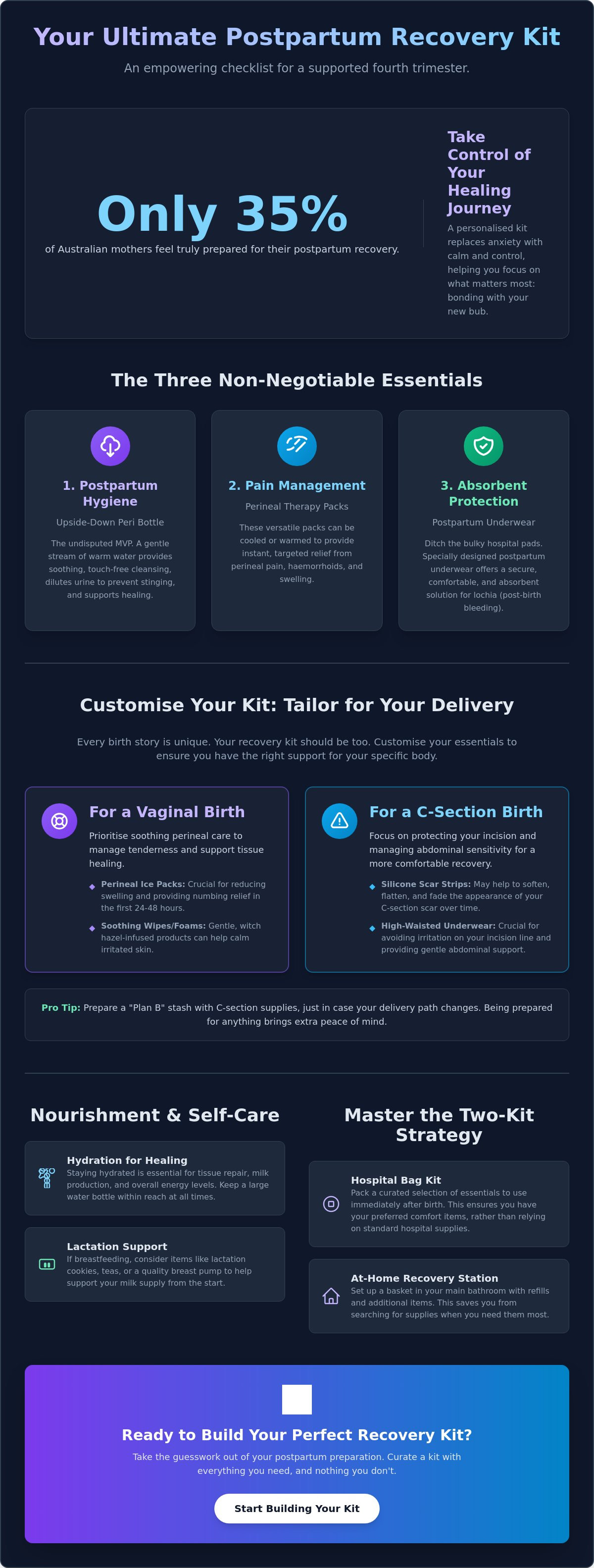
Did you know that only 35% of Australian mothers feel prepared for their postpartum recovery? It's a staggering figure from our recent research, yet it's completely understandable when so much of the focus during pregnancy remains on the nursery and the birth itself. Many of us arrive home from the hospital feeling overwhelmed by the physical reality of healing, whether you're worried about the sting of the first pee or struggling with the discomfort of bulky, standard-issue hospital pads.
We believe that your comfort shouldn't be an afterthought. You deserve to feel supported and prepared during your fourth trimester, which is why a Ninja Mama Build your own recovery kit approach is so empowering. By tailoring your essentials to your specific needs, you can replace anxiety with a sense of calm control. This guide provides a clear, practical checklist of recovery must-haves, from soothing perineal care to C-section support, helping you curate a personalised plan that actually works for Australian conditions.
Key Takeaways
- Understand why standard hospital supplies might not meet your specific needs and how to prioritise your physical healing during the fourth trimester.
- Identify the non-negotiable essentials for your Ninja Mama Build your own recovery kit, focusing on hygiene, pain management, and absorbent protection.
- Learn how to customise your supplies based on your birth plan, whether you need soothing perineal care or specialised support for a C-section incision.
- Discover the importance of nourishment and hydration in tissue repair, including how to incorporate lactation support into your daily routine.
- Master the "two-kit strategy" to ensure your recovery essentials are organised and easily accessible both in your hospital bag and at home.
Table of Contents
Why You Need to Build Your Own Postpartum Recovery Kit
You've likely spent months carefully choosing the perfect cot and washing tiny onesies in gentle detergent. But while the nursery is ready, your own body needs a dedicated plan too. The postpartum period, often referred to as the fourth trimester, is a season of profound physical and emotional transition. It’s a time when your body works overtime to heal, and having the right tools on hand can transform a stressful recovery into a period of supported rest.
Choosing a Ninja Mama Build your own recovery kit strategy allows you to take control of your healing journey before the baby even arrives. There’s a huge psychological benefit to feeling prepared. When you aren't scrambling for supplies in the middle of the night, you can focus entirely on bonding with your new bub. It’s about moving from a state of "making do" to a state of intentional self-care.
To better understand how these pieces fit together, watch this helpful video of a mum assembling her own recovery essentials:
The Gap Between Hospital Care and Home Recovery
Most Australian hospitals provide the bare minimum for your initial recovery. You might receive a few scratchy, oversized pads or a bottle of saline, but the focus is often on clinical safety rather than your personal comfort. The reality is that "one size fits all" hospital supplies rarely fit anyone well. Once you’re discharged, the support can feel like it vanishes overnight. The first 24 hours at home are often the most challenging, as you navigate a new routine while your body is still in the early stages of healing. When you choose a Ninja Mama Build your own recovery kit approach, you are specifically addressing the gap between the ward and your front door, bringing professional-grade relief into the comfort of your own home.
Personalisation: Vaginal Birth vs. C-Section Needs
Every birth story is unique. Your recovery kit should reflect that. If you're preparing for a vaginal delivery, your priorities might include perineal ice packs and soothing wipes. However, if you have a C-section, your focus shifts toward protecting your incision and managing abdominal sensitivity. Customising your own kit means you don't end up with a box full of items you won't use. Many mums find it helpful to have a "Plan B" stash ready, including C-section silicone scar patches, just in case their delivery path changes unexpectedly. This personalised approach ensures you have the right support for your specific body, saving you money and reducing clutter during an already busy time.
The Non-Negotiable Essentials for Every Kit
While your individual needs will vary based on your birth experience, every mother requires a solid foundation for those first few weeks. When you start to Ninja Mama Build your own recovery kit, focus first on the "Big Three": hygiene, pain management, and absorbent protection. These pillars ensure you stay clean, comfortable, and confident as your body begins its natural healing process. Postpartum care involves managing everything from vaginal soreness to unexpected contractions, so having high-quality essentials ready is a game changer.
Managing the physical sensations of the first few days requires a gentle touch. Many women find that water is their best friend during this time. Using a steady stream of warm water can help dilute urine and soothe sensitive tissues. When you combine this with calming, evidence-aware products designed for the fourth trimester, you create a recovery environment that promotes rest rather than discomfort.
Mastering Postpartum Hygiene
The upside-down peri bottle is the undisputed MVP of every recovery kit. If you've heard other mums talk about the "first pee" after birth, you know the anxiety it can cause. Standard toilet paper can feel like sandpaper on sensitive tissue. Instead, a gentle stream of warm water from a peri bottle cleanses the area without any friction. It helps dilute urine to prevent stinging and keeps the area clean to support healing. To use it correctly, simply aim the ergonomic nozzle while you're on the toilet and squeeze a continuous flow of water over your perineum. It's a simple step that provides massive relief.
The Evolution of Postpartum Underwear
Gone are the days of trying to balance a bulky, shifting maternity pad inside your regular undies. Modern disposable postpartum underwear offers a much more secure and comfortable alternative. These are designed to be high-waisted, which is essential whether you're protecting a C-section incision or just want a soft, seamless fit over a tender abdomen. They provide 360-degree protection, so you don't have to worry about leaks while you're resting or nursing. Most women find they need about two to three packs for the first fortnight at home. This shift toward high-performance protection means you can move around your home with ease, knowing you’re fully supported.
Pairing these essentials with soothing products like perineal recovery wipes helps manage "the sting" and promotes a calmer recovery journey. By prioritising quality in these non-negotiable areas, you're giving your body the best possible start. If you're feeling a bit unsure about where to begin, exploring our curated postpartum bundles can help you see how these essentials work together seamlessly.
Customising Your Kit: Tailoring for Your Delivery
A birth plan is a wonderful guide, but birth itself often has its own ideas. This is why the Ninja Mama Build your own recovery kit approach is so practical; it allows you to prepare for the path you expect while having a few "just in case" items tucked away. Whether you experience a vaginal birth or a C-section, your body's healing priorities will be distinct, and your kit should reflect that reality. It’s a common misconception that one delivery type is "easier" to heal from than the other. In reality, both require patience, rest, and specific tools to support your unique journey.
For a vaginal delivery, the immediate focus is often on managing swelling and inflammation. This is where the ice vs. heat debate usually lands. In the first 24 to 48 hours, many women find that cooling is essential for reducing perineal swelling. Using perineal ice packs can provide significant relief from the "heavy" feeling that often follows birth. While heat may be soothing for lower back aches later on, cooling is generally the go-to for immediate tissue recovery in the pelvic region.
The Perineal Healing Protocol
Healing the perineum requires a gentle, multi-layered approach. Many Australian mothers find that organic sitz bath soaks help support the natural recovery of sensitive tissues. These soaks are designed to be used in a shallow basin or bath, allowing the botanicals to provide a soothing environment. Adding a few drops of witch hazel to your pads or using it as a spray acts as a gentle astringent to further reduce swelling. A popular DIY hack is creating "padsicles" by applying witch hazel to a maternity pad or liner and keeping it in the freezer for a crisp, cooling sensation when you need it most.
The C-Section Recovery Checklist
Recovery from a C-section involves managing a surgical incision while also dealing with the standard postpartum transitions. High-waisted underwear is a non-negotiable here; you want a waistband that sits well above your incision to avoid any painful rubbing or pressure. Beyond the first few weeks, long-term care is vital for tissue health. The use of silicone scar patches is a common strategy for managing the appearance and texture of the scar as it matures. During those early days, remember to "splint" your incision with a pillow when you need to cough or laugh, and practice the "log roll" to get out of bed without straining your abdominal muscles.
By acknowledging the specific sensory needs of your birth experience, you can move away from generic wound care and toward a more nurturing, effective recovery. Whether it’s managing perineal tearing or protecting a surgical site, having these targeted supplies ready means you can focus on what matters most: your new baby and your own wellbeing.
Nourishment and Self-Care: The Often Forgotten Extras
Physical healing is only half the story. When you Ninja Mama Build your own recovery kit, it's vital to look beyond the bathroom and consider how you’ll nourish your body and mind. Your cells are working overtime to repair tissue; if you're breastfeeding, your body's energy demands increase significantly. This isn't just about "getting through" the day. It’s about providing the building blocks for a smoother, more supported transition into motherhood.
Hydration is the foundation of this process. It supports everything from skin elasticity to milk production. Alongside water, planning for "breastfeeding hunger" is a lifesaver. New mums often find themselves ravenous at 3 am, so having nutrient-dense, easy-to-grab snacks ready can prevent that depleted feeling. When you link your physical healing with nutritional support, you create a cohesive recovery plan that addresses your needs from the inside out.
Lactation Support from Day One
For many, the breastfeeding journey starts with a mix of wonder and a little bit of worry. Including organic lactation chocolate drinks in your kit provides a delicious, comforting boost that feels like a treat rather than a chore. It’s a simple way to support your supply while satisfying those inevitable chocolate cravings. Similarly, sipping on a cup of lactation tea can become a soothing daily ritual, giving you five minutes of quiet in a busy day. To manage the breast discomfort that often comes with engorgement or let-down, hot and cold therapy packs are essential tools that many women find helpful for providing immediate, targeted relief.
Emotional Wellbeing and Relaxation
The "baby blues" are a common experience as hormones shift dramatically after birth. Creating a calm environment is a form of self-care that shouldn't be overlooked. Using a postpartum support oil roller or a few drops of clary sage can help manage stress and promote a sense of prepared calm. Don't underestimate the power of a 10-minute sitz soak when the bub is finally sleeping. It’s more than just physical relief; it’s a moment of "me time" that validates your own needs. To make life easier, set up a "nursing station" as part of your kit. Include these essentials:
-
Washable bamboo breast pads for soft, absorbent protection.
-
A large, insulated water bottle to keep you hydrated.
-
Bra extenders to ensure your comfort as your body changes.
Ready to nourish your body while you heal? Explore our range of organic lactation supports to add that extra layer of care to your recovery.
Organising and Packing Your DIY Recovery Kit
You’ve hand-picked your essentials and understood the unique needs of your body. Now, it’s time to talk logistics. When you Ninja Mama Build your own recovery kit, think of it as a modular system rather than one giant box. The key to a stress-free fourth trimester is having exactly what you need, exactly where you need it, without having to hunt through a suitcase while you’re holding a newborn. We recommend a "Two-Kit Strategy" that separates your immediate hospital needs from your long-term home recovery station.
This approach isn't just about being tidy. It’s about the "Pink Suitcase" philosophy: the idea that your recovery tools should look as beautiful and intentional as they feel. When your supplies are organised in pretty baskets or dedicated bags, they stop feeling like medical equipment and start feeling like a curated self-care ritual. This mental shift can significantly lower your anxiety during those first few days at home.
The Hospital Bag Essentials
In Australia, the average hospital stay after childbirth has decreased to approximately 2.5 days as of 2023. Because stays are shorter, your hospital kit should be lean and focused on the first 48 hours. Pack enough disposable underwear for frequent changes and don't forget your own bamboo nursing pads. Hospital-provided pads can often feel scratchy, so bringing your own comforts of home makes a world of difference. For a detailed breakdown of what to include in your bag versus what to leave at home, check out The Ultimate Postpartum Recovery Kit Checklist.
Setting Up Your Recovery Station at Home
Your home bathroom is where the real healing happens. We love the "Bathroom Basket" concept: a dedicated caddy that sits within arm’s reach of the toilet. This should house your upside down peri bottle, witch hazel, and fresh undies. By having everything visible and accessible, you won't have to bend or stretch awkwardly to find what you need. This is also the perfect way to involve your partner. Show them where the "refill station" is kept so they can restock your basket each morning. It gives them a practical way to support your recovery while you focus on the bub.
Building your own kit is an act of love for your future self. You’ve done the research, you’ve gathered the tools, and you’ve created a plan that respects your body’s journey. Take a deep breath and trust the process. You’ve got this, mama, and we are right here with you every step of the way.
Step Into Your Fourth Trimester with Confidence
Preparing for your recovery is just as vital as preparing the nursery. By choosing to Ninja Mama Build your own recovery kit, you're prioritising your own healing and ensuring that the transition from hospital to home is as smooth as possible. You now have the knowledge to customise your care, from mastering the "two-kit strategy" to balancing physical hygiene with the nourishment your body craves. True recovery is a holistic process that respects both your physical needs and your emotional wellbeing.
We are here to support you every step of the way with products designed by an Aussie mum who has been exactly where you are. With TGA Registered medical devices and a community of over 50,000 Australian mums supported, we are proud to be part of your village. You deserve to feel comfortable, prepared, and empowered as you meet your new bub. Browse the Ninja Mama collection to start building your perfect kit today!
You've got this, mama. Here is to a beautiful, supported, and gentle recovery journey ahead.
Frequently Asked Questions
When should I start building my postpartum recovery kit?
You should ideally start to Ninja Mama Build your own recovery kit around the 30 to 34-week mark of your pregnancy. This ensures everything is ready well before your due date, just in case your bub decides to make an early appearance. Having your supplies organised early also reduces late-pregnancy anxiety, allowing you to focus on rest. It’s one less thing to worry about when your hospital bag is packed and waiting by the door.
Can I use a normal water bottle instead of a peri bottle?
While you could use a standard bottle, a specialised peri bottle is designed with an ergonomic, upside-down nozzle that reaches the perineal area much more effectively. Standard bottles often require awkward manoeuvring or splashing, which can be messy and uncomfortable when you’re already tender. The targeted, gentle stream from a peri bottle helps dilute urine and cleanse the area without the need for painful wiping with traditional toilet paper.
How many pairs of disposable postpartum underwear do I need?
Most mothers find that having 10 to 15 pairs of disposable postpartum underwear is sufficient for the first two weeks at home. During the initial days, you may change them more frequently due to heavier lochia. As your recovery progresses, you might transition back to regular undies, but many women prefer the seamless comfort and high-waisted support of disposables for a little longer, especially if they are managing stitches or a C-section incision.
Is a sitz bath safe to use if I have stitches?
A sitz bath is generally considered safe and very soothing for mothers with stitches, though you should always follow the specific advice of your midwife or obstetrician. Using a shallow basin with warm water and a natural soak may help support the healing of the perineal area. It’s a gentle way to keep the site clean and reduce discomfort without putting pressure on your stitches, providing a much-needed moment of calm and physical relief.
What should I pack in my kit if I am having a planned C-section?
For a planned C-section, your kit should prioritise high-waisted disposable underwear that won't rub on your incision and silicone scar patches for long-term management. You’ll also benefit from a peri bottle, as reaching to wipe can be difficult after abdominal surgery. Including items like an oil roller for relaxation and lactation support can also help you feel more prepared as you navigate the unique physical and emotional challenges of surgical recovery.
Are lactation cookies and drinks actually effective for milk supply?
Many Australian mothers find that organic lactation drinks and teas are a helpful part of their breastfeeding journey. While they aren't a magic fix, the ingredients are often chosen to support a healthy supply and provide essential hydration. When you Ninja Mama Build your own recovery kit, including these can offer a delicious way to ensure you're getting the fluids and nutrients needed to support your body while it produces milk for your bub.
Can I use witch hazel wipes on a C-section incision?
You should avoid using witch hazel wipes directly on a C-section incision, as surgical wounds generally need to be kept clean and dry to heal properly. Witch hazel is a wonderful astringent for the perineal area or for managing haemorrhoids, but it isn't intended for use on fresh surgical sites. If you’re looking for incision care, focus on silicone scar strips once the wound has fully closed and you've received the all-clear from your doctor.
What is the most important item in a postpartum kit?
Most mothers agree that the upside-down peri bottle is the single most important item in any recovery kit. It provides immediate relief from the stinging sensation of the first few pees and allows for gentle hygiene without the friction of toilet paper. However, the true MVP is whatever makes you feel most supported. For some, it's the cooling relief of ice packs, while others wouldn't be without the security of high-performance absorbent underwear.

Article by
Louise Beever
Louise Beever is the founder of Ninja Mama, an Australian postpartum recovery brand focused on creating premium, practical recovery essentials for new mothers. Since launching Ninja Mama in 2018, Louise has worked closely with thousands of postpartum women and healthcare retailers to better understand the realities of recovery after birth. Her work focuses on postpartum preparation, recovery support, and improving awareness around the fourth trimester.
Remember Mamas
The information provided in this article is intended for general educational and informational purposes only and should not be considered medical advice. Always seek guidance from your doctor, midwife, lactation consultant, or qualified healthcare professional regarding your individual circumstances, pregnancy, birth, or postpartum recovery.