
You're sitting on the edge of the bed at 3 am, trying to support your bub’s head while your back aches and your C-section incision stings. It's a scene many Australian mums know all too well. While breastfeeding is a beautiful way to bond, those early weeks often feel like a physical puzzle that leaves you feeling more sore than supported. This is Your Guide to Breastfeeding Positions, designed to help you find that elusive, pain-free latch while prioritising your own physical recovery.
You shouldn't have to choose between your baby's needs and your own comfort. Whether you're dealing with nipple soreness or trying to avoid hunching over, the right hold makes all the difference. We will walk through the best ways to position your baby to protect your body and boost your confidence. You'll discover how to switch holds based on your energy levels, ensuring every feed feels like a moment of rest rather than a chore. It is time to transform your feeding routine into a comfortable, nurturing experience for both you and your little one.
Key Takeaways
- Learn how to avoid the "nursing hunch" and protect your back by mastering holds that bring your bub to you rather than leaning down to them.
- Use Your Guide to Breastfeeding Positions to discover the best holds for your specific needs, whether you are looking for newborn head support or a more relaxed cradle.
- Discover how to tailor your feeding style to your birth recovery, including positions that keep pressure off C-section incisions or perineal wounds.
- Create a soothing "nursing nest" with essentials like hydration and lactation support to make every feed feel like a moment of self-care.
- Gain the confidence to troubleshoot common issues like shallow latches and nipple soreness so you can enjoy a pain-free feeding journey.
Why Finding the Right Breastfeeding Position is a Postpartum Game Changer
The fourth trimester is a wild, beautiful, and physically demanding stretch of time. You're navigating a massive hormonal shift while your body works overtime to heal from birth. Whether you’ve had a vaginal delivery or a C-section, the way you sit and hold your bub matters more than you might think. Many new mums find themselves subconsciously leaning over their baby, creating what we call the "nursing hunch." This posture leads to chronic back, neck, and shoulder strain that can linger long after the feed is over.
Finding a position that works for you is about more than just avoiding a sore neck. It's about setting the stage for a successful let-down. When you are physically comfortable and relaxed, your body releases oxytocin, the "love hormone" responsible for milk flow. If you're tense or in pain, that flow can be inhibited. This is why Your Guide to Breastfeeding Positions focuses on your comfort as much as your baby’s latch. For a comprehensive overview of breastfeeding and its role in those early weeks, understanding the mechanics of your own body is the first step toward a smoother journey.
The Connection Between Comfort and Latch
When you are relaxed, your bub is more likely to be settled. If you're gripping your baby tightly or tensing your shoulders, your little one can sense that physical stress. This tension often leads to a shallow latch because you aren't able to position the baby deeply enough against the breast. By supporting your own body with pillows and a comfortable chair first, you create a stable, calm environment. Bringing your bub to your breast, rather than your breast to the bub, ensures a better angle for a deep, pain-free latch. It's a simple shift that makes the world of difference for your nipples and your sanity.
Your Body is Healing While You Feed
It's easy to forget that breastfeeding is a physical task that requires significant energy and focus. You're essentially performing a repetitive motion dozens of times a day while your internal organs are shifting and your wounds are healing. Be patient with yourself as you organise your technique. It takes time to find a rhythm that feels natural and supportive. At Ninja Mama, we believe that maternal wellbeing is the foundation of a happy home. You can learn more about Ninja Mama and our mission to support women through the intense transition of the fourth trimester. Every birth journey is unique, and your feeding style should reflect what your body needs to recover safely.
Five Essential Breastfeeding Positions for Aussie Mums
Finding your "forever hold" takes a bit of trial and error. Most mums start with one position in the hospital and find themselves switching as their bub grows or as their own body heals. This is Your Guide to Breastfeeding Positions to help you build a toolkit of options. Whether you are feeding on the couch, in bed, or at a cafe, having a few reliable holds up your sleeve makes the experience much more relaxed.
Every mum and bub duo is different. Some babies prefer the security of being tucked under an arm, while others need the full-body contact of a tummy-to-tummy reclined hold. For those seeking practical advice on breastfeeding positions, it is helpful to remember that your comfort is the foundation. If you are struggling with engorgement or tenderness while practicing these holds, using breast therapy packs can help soothe your body between sessions.
Mastering the Cradle and Cross-Cradle Holds
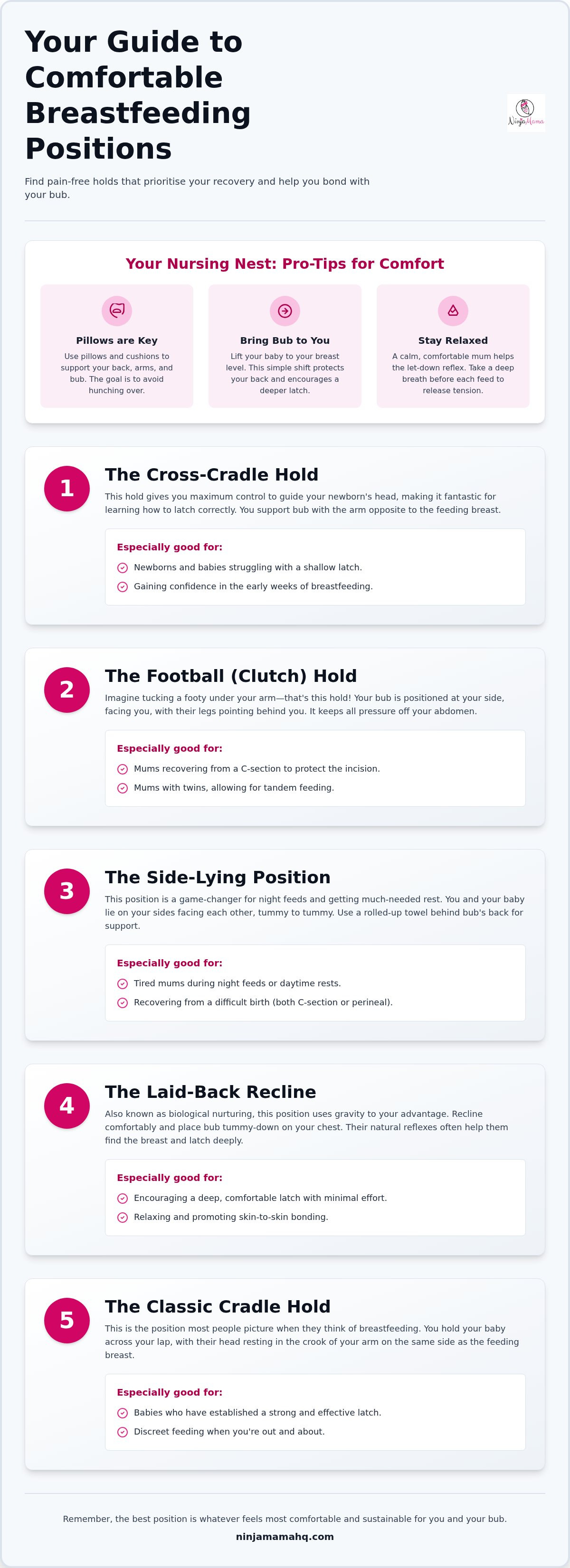
The cradle hold is the classic breastfeeding image. You sit upright, with bub across your lap and their head resting in the crook of your arm. It works beautifully once feeding is well-established. However, for newborns, the cross-cradle hold is often more effective. In this version, you use the arm opposite the breast you are using to support bub's head. This gives you much more control to guide their mouth for a deep latch. A common mistake is pulling your breast down to the baby. Instead, use pillows to bring your bub up to your nipple level. This protects your back and ensures bub doesn't have to strain to stay attached.
The Benefits of the Football Hold and Side-Lying
The football hold, also known as the clutch hold, involves tucking your baby under your arm like a footy. Their feet point toward your back while you support their head with your hand. This is a brilliant option if you have larger breasts or if you are recovering from a C-section, as it keeps all the weight off your incision site. If you are feeling exhausted, the side-lying position is a total lifesaver for night feeds. You and bub lie on your sides, tummy to tummy. It allows you to rest your heavy limbs while bub feeds. Just ensure your sleep environment is safe by keeping loose blankets and pillows away from bub's face. These positions offer a more hands-free feel, letting you focus on the bond rather than the physical strain of holding a growing baby.
Recovery-First Feeding: Choosing Positions Based on Your Birth Experience
While we've explored the mechanics of different holds, the reality of the first fortnight is often dictated by your physical recovery. Your body has just performed an incredible feat, and whether you are healing from a C-section or a perineal tear, some standard positions might feel uncomfortable at first. This part of Your Guide to Breastfeeding Positions focuses on protecting your body while you nourish your bub. It is also vital to remember that switching between holds isn't just about comfort. It helps drain different areas of the breast, which many women find helpful in preventing blocked ducts and mastitis.
Comfort is subjective and depends heavily on your height, build, and the type of birth you experienced. A taller mum might need extra layers of pillows to bring her bub to the correct height, while a mum with a shorter torso might find certain holds feel more crowded. The goal is to find a rhythm that allows your wounds to heal without compromising the quality of the feed. For a visual look at how these adjustments work, the Mayo Clinic offers a helpful look at Breastfeeding positions that support both mum and baby.
Breastfeeding After a C-Section
After abdominal surgery, the football hold is frequently considered the "holy grail" of positions. By tucking your bub under your arm like a footy, you keep their weight and those enthusiastic little kicks completely away from your incision site. Use plenty of pillows to create a soft buffer between your tummy and your baby. If you're feeling particularly tired or sore, the side-lying position is another excellent choice. It allows you to stay in bed and rest your core muscles while bub feeds, which is especially helpful during the first few nights of recovery when getting in and out of a chair feels like a major workout.
Positions for Recovery After Vaginal Birth
If you're recovering from a vaginal birth, sitting upright in a traditional cradle hold can sometimes put unwanted pressure on the perineum. Many mums prefer laid-back feeding during this time. By reclining at a 45-degree angle, you shift your weight onto your back and bottom rather than your sensitive areas. If you do prefer sitting up, try using a "donut" pillow or a very soft surface to ease the pressure. Many women find that using perineal ice packs while they feed helps manage swelling and makes the session much more manageable. It's about being kind to yourself while you learn this new skill.
Setting Up Your Feeding Station: Essentials for a Stress-Free Session
You have finally found the perfect cross-cradle hold. Your bub is latched and settled. Then, it hits you. That sudden, parching thirst that only a breastfeeding mum understands. Or perhaps you realise your phone is across the room, and you are now "locked in" for the next forty minutes. Creating a dedicated "Nursing Nest" is about more than just convenience. It is a vital part of Your Guide to Breastfeeding Positions because even the most ergonomic hold becomes stressful if you are constantly reaching for essentials. A well-organised station allows you to maintain your posture and stay in the moment with your baby.
Think about where you spend most of your time feeding. Whether it is a rocking chair in the nursery or a corner of the sofa, that space should feel like a sanctuary. Keep the lighting soft and the environment calm. When you are relaxed, your milk is more likely to flow easily. Having a small side table or a portable caddy nearby ensures that everything from your burp cloths to your lip balm is within arm’s reach, preventing the need to twist or lean and strain your healing body.
The Hydration and Nutrition Corner
The moment your bub latches, your body releases oxytocin, which can trigger an almost instant sense of thirst. This isn't just in your head. Producing milk requires significant fluids. Keeping a 1-litre water bottle nearby is a non-negotiable for every session. Nutrition is just as important for maintaining your energy levels during the fourth trimester. Many mums find that having a dedicated lactation snack helps them get through those long cluster-feeding marathons. Preparing a Booby Booster Chocolate Drink is a simple way to nourish yourself while you feed, turning a functional task into a small moment of indulgence.
Managing Leaks and Comfort
Breastfeeding can be a messy business, especially in the early weeks when your supply is still regulating. Staying dry is essential for your skin health. Constant moisture against your nipples can lead to irritation or even thrush, which makes finding a comfortable position much harder. Using high-quality, breathable Bamboo Nursing Pads helps wick away let-down from the non-feeding side, keeping you comfortable and confident. If you are dealing with engorgement between feeds, keep your breast therapy packs ready to go. Managing these small physical discomforts ensures that when you do sit down to feed, you can focus entirely on your bub’s latch and your own relaxation.
Make your feeding sessions a moment of true relaxation by stocking your station with a Ninja Mama Booby Booster Chocolate Drink for a delicious, nutrient-dense treat.
Overcoming Challenges and Nurturing Your Breastfeeding Confidence
Even with the perfect chair and a supportive pillow, breastfeeding is a skill that takes time to master. It's a dance between you and your bub. Some days the steps feel effortless, while other days you might feel a little uncoordinated. If you're finding things difficult, remember that you aren't alone. This final section of Your Guide to Breastfeeding Positions is here to help you navigate those "reset" moments and build the confidence you deserve.
Challenges like nipple soreness or a fussy baby can make you question your technique, but these hurdles are a normal part of the learning curve. The goal isn't perfection from day one. It's about finding a sustainable rhythm that works for your unique body and your baby’s needs. By staying patient and prioritising your own comfort, you create a positive environment where both you and your bub can thrive.
When the Latch Doesn’t Feel Right
A good latch is the secret to a comfortable feed. You want to see your bub’s chin tucked deeply into the breast with their nose clear and their lips flared out like a little fish. If you hear clicking sounds or feel a sharp, pinching sensation, the latch is likely too shallow. You can try the "flipple" technique, where you aim your nipple toward bub’s nose to encourage a wider mouth and a deeper mouthful of breast tissue. If it still doesn't feel right, don't just "tough it out." Safely break the suction by sliding a clean pinky finger into the corner of bub’s mouth before repositioning. Starting over is always better than enduring a painful feed.
Self-Care for the Breastfeeding Mum
Your physical comfort and emotional wellbeing are just as important as the mechanics of the feed. Take a moment during each session to check your posture. Think "shoulders down, heart open" to avoid that subconscious hunching we mentioned earlier. If you're dealing with engorgement or the early signs of a blocked duct, using Hot or Cold Breast Therapy Packs can provide much-needed relief. A warm pack before a feed can help with milk flow, while a cold pack afterward can soothe inflammation and tenderness.
Never underestimate the power of a skin-to-skin reset. If you're both feeling frustrated, strip bub down to their nappy and lie together. This simple act releases oxytocin and helps you both calm down. Reach out to your community, whether it's a local mums' group or an International Board Certified Lactation Consultant. Telehealth consultations have become a standard and accessible way to get expert advice from the comfort of your own home. You're doing an incredible job, one feed at a time. Be patient with yourself as you find your rhythm.
Embrace Your Feeding Journey with Confidence
You're doing an incredible job navigating the beautiful and sometimes blurry days of early motherhood. Breastfeeding is a skill that you and your bub are learning together, and it's perfectly normal for it to take a little time to feel natural. By prioritising your own comfort and bringing your baby to your breast rather than hunching over, you protect your healing body and encourage a deeper, pain-free latch. Whether you are using the football hold to keep pressure off a C-section incision or reclining for a relaxed session after a vaginal birth, your recovery is a vital part of the process.
We hope Your Guide to Breastfeeding Positions has given you the confidence to listen to your body and find a rhythm that works for you. As an Australian-owned brand designed by a mum who has been exactly where you are, Ninja Mama is here to support your fourth trimester with empathetic, expert-backed recovery solutions. When you feel supported and prepared, you can focus on the bond with your little one rather than the physical strain of the feed.
Shop the Ninja Mama Postpartum Recovery Range to discover essentials designed for your comfort and ease. You've got this, mama, and we're cheering you on every step of the way.
Frequently Asked Questions
What is the easiest breastfeeding position for a beginner?
The cross-cradle hold is widely considered the easiest position for beginners because it offers the most control over your bub’s head and neck. By using the arm opposite the breast you're feeding from to support your baby, you can easily guide their mouth to the nipple. This extra visibility and support make it much simpler to achieve a deep, comfortable latch during those first few uncoordinated weeks.
How do I know if my baby is latched on correctly in a side-lying position?
A correct latch in the side-lying position is indicated by your bub’s chin being pressed firmly into the breast with their nose clear or just lightly touching. You should feel a strong tugging sensation rather than a sharp pinch. If you hear clicking sounds or if your nipple looks flattened or "lipstick-shaped" after the feed, the latch is likely too shallow and you should try repositioning.
Which breastfeeding position is best after a C-section?
The football hold is generally the best choice after a C-section because it keeps your baby’s weight completely away from your abdominal incision. By tucking your bub under your arm like a footy, you avoid the risk of accidental kicks to your wound. This hold is a central recommendation in Your Guide to Breastfeeding Positions for surgical recovery, as it allows you to feed effectively while your body heals.
Can I breastfeed while lying down if I have a large bust?
Yes, you can breastfeed while lying down with a large bust, though it may require a little extra "organisation" with pillows. Many mums find it helpful to place a small rolled-up washcloth under the breast to lift it slightly and keep the weight off bub’s chin. Using your hand to support the breast in a "C-hold" can also help maintain the latch until your baby is settled and feeding well.
Is it normal for my back to hurt while breastfeeding?
Back pain is common among new mums but it is usually a sign that your positioning needs a slight adjustment. Pain often stems from the "nursing hunch," which happens when you lean down toward your baby instead of bringing them up to your nipple. Using firm pillows to support your arms and lower back will help you sit upright, protecting your spine and reducing shoulder tension during long feeds.
How many different positions should I use in a day?
There isn't a strict rule, but many women find that using two or three different positions throughout the day helps prevent blocked ducts. Changing holds ensures that different quadrants of the breast are drained effectively during each session. For instance, you might use an upright cradle hold during the day for better engagement and switch to a side-lying position at night to maximise your own rest.
What should I do if my baby only prefers one side or one position?
If your bub prefers one side, try using the football hold to "trick" them into the same position they enjoy on their favourite side. Sometimes a preference is due to a minor physical discomfort, like a stiff neck from their position in the womb. If the preference is strong and causing you engorgement on the other side, gently offering the less-preferred breast while they are sleepy can often help them adjust.
When should I see a lactation consultant about my feeding position?
You should consider seeing a lactation consultant if you experience persistent nipple pain, frequent blocked ducts, or if you feel consistently frustrated by the latch. While Your Guide to Breastfeeding Positions provides a solid foundation, a professional can offer personalised adjustments tailored to your specific anatomy. Seeking expert help early can boost your confidence and ensure your breastfeeding journey is as comfortable and sustainable as possible.

Article by
Louise Beever
Louise Beever is the founder of Ninja Mama, an Australian postpartum recovery brand focused on creating premium, practical recovery essentials for new mothers. Since launching Ninja Mama in 2018, Louise has worked closely with thousands of postpartum women and healthcare retailers to better understand the realities of recovery after birth. Her work focuses on postpartum preparation, recovery support, and improving awareness around the fourth trimester.
Remember Mamas
The information provided in this article is intended for general educational and informational purposes only and should not be considered medical advice. Always seek guidance from your doctor, midwife, lactation consultant, or qualified healthcare professional regarding your individual circumstances, pregnancy, birth, or postpartum recovery.