
Choosing postpartum underwear is less about counting days and more about noticing what your body needs. After birth, lochia can shift from heavier, red bleeding to lighter pink or brown discharge, then pale discharge. The pace varies from person to person. If you’re unsure whether mesh or absorbent underwear will feel better, you’re not alone.
This guide to postpartum underwear for lochia stages explains the broad changes in bleeding and how to match your underwear and maternity pads to your current flow and comfort. There’s no rigid calendar to follow. The aim is to help you feel prepared to adjust as your recovery unfolds.
We’ll look at what each stage may be like, how absorbent disposable underwear differs from mesh styles, and what to consider after a vaginal or caesarean birth, including comfort around an incision. You’ll also learn which changes in bleeding need prompt advice from a health professional. A simple, flexible plan can make the early days feel less uncertain.
Key Takeaways
- Lochia changes in appearance and flow, but the pace varies. Use your current needs, not a fixed calendar, to guide your choices.
- Match postpartum underwear for lochia stages to your comfort and flow, and consider when a maternity pad may be useful.
- Compare absorbent disposable underwear with mesh underwear so you can choose the format that feels right for you.
- Keeping clean underwear and pads within easy reach can make changing more straightforward during recovery.
- Know which changes in bleeding, including soaking a pad in an hour or passing a large clot, call for prompt medical advice.
What are the lochia stages, and why can underwear needs change?
After birth, practical questions can come up quickly: how much protection will you need, and what will feel comfortable against a tender body? No single underwear choice suits everyone. Flow can change over time, while comfort, mobility and access to laundry all affect what feels manageable on a given day.
Lochia is the vaginal discharge that occurs after birth as the body recovers. It can contain blood, mucus and tissue. It isn’t a menstrual period. It’s part of postpartum recovery and can happen after both a vaginal and caesarean birth. This information is educational, not a diagnosis of individual bleeding.
What is lochia after birth?
Lochia is commonly described as changing in colour and flow, from a bloodier discharge to a lighter, paler one. These changes are often grouped under the names rubra, serosa and alba. You may see the stages of lochia described in more detail, but the stage names explain broad patterns. They aren’t a test you need to pass.
Why stage names are guides, not deadlines
One person’s discharge may change gradually; another person’s may not follow a neat sequence. The names don’t set a date for switching underwear. Instead, consider your current flow and whether your underwear feels secure and comfortable. If your needs change, adjust your setup without treating the calendar as a rule.
This is where postpartum underwear for lochia stages becomes a personal choice. During heavier, bloodier flow, you may prefer absorbent underwear or underwear with a maternity pad. As flow lightens, mesh underwear with a pad may suit you, or you may prefer to keep using the option that feels comfortable. A stage name provides context, but it can’t tell you exactly what your body needs.
Absorbent disposable underwear is one format to consider. Ninja Mama’s absorbent postpartum underwear gives you an all-in-one option to weigh against your current flow and preferences. One style won’t suit every person or every stage.
Comfort matters alongside absorbency. After a caesarean birth, you might prefer underwear that doesn’t press on or rub your incision. After a vaginal birth, tenderness around the perineum may affect what feels comfortable. Needs can also vary from one change to the next, so keeping more than one format within reach can be useful.
Think of rubra, serosa and alba as shorthand for broad changes, not milestones you must reach on schedule. This guide can help with everyday choices, but it can’t assess whether a particular pattern of bleeding is normal for you. If you’re worried about your discharge or recovery, contact your midwife, GP or maternity care team for individual advice.
How does lochia change through rubra, serosa and alba?
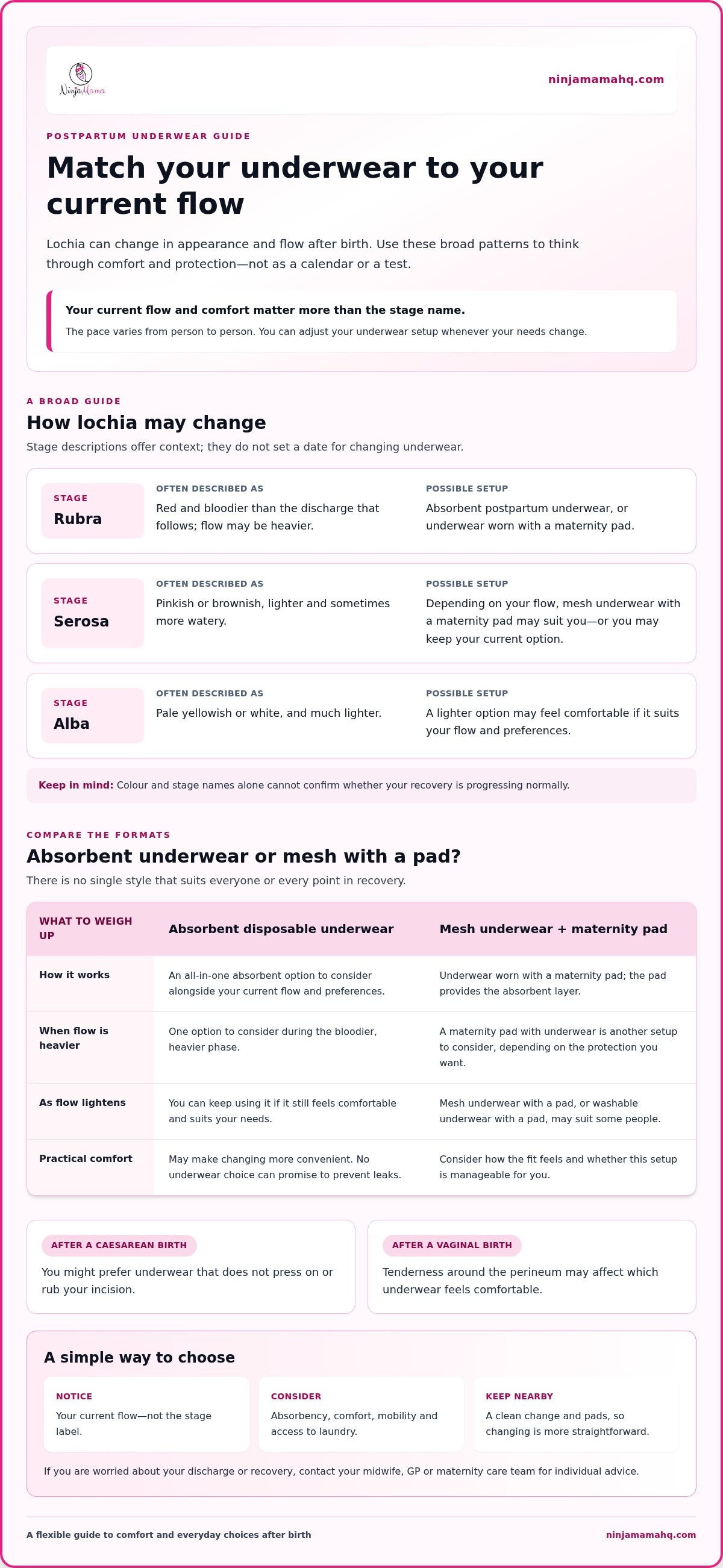
Lochia is often described in three broad stages, based on how its appearance and flow can change after birth. These names can help you anticipate what kind of protection may feel comfortable, but they aren’t a timetable. Your discharge may not follow a neat sequence, and you don’t need to change underwear because you think you’ve reached a particular stage.
- Rubra: commonly described as red and bloodier than later discharge. Consider an absorbent option that’s easy to change.
- Serosa: often described as pinkish or brownish and lighter or more watery. Depending on your flow, you may prefer less absorbency.
- Alba: commonly described as pale yellowish or white and much lighter. A lighter option may feel comfortable if it suits your needs.
Stage descriptions are patterns, not a personal diagnostic test. Colour can offer context, but it can’t confirm on its own whether your recovery is progressing normally.
Lochia rubra: planning for heavier early flow
In the early, bloodier phase, lochia is commonly described as red and heavier than the discharge that follows. You might prefer absorbent postpartum underwear or underwear worn with a maternity pad, depending on the protection you want. Keeping a clean change nearby can make getting dressed easier.
Absorbent underwear may make changing more convenient, but no underwear choice can promise to prevent leaks. Notice whether your current option feels comfortable and suits your flow. If you’re comparing formats, absorbent postpartum underwear is one option to consider during this stage.
Lochia serosa and alba: responding as flow changes
As lochia changes, it may become lighter or look different in colour. Serosa is often described as pinkish-brown and more watery, while alba is commonly described as pale or creamy. These are broad descriptions, not guarantees about what you’ll see or when. Let your own flow and comfort guide your choice.
As bleeding lessens, some people prefer a maternity pad with mesh underwear or washable underwear, while others continue using an absorbent option. There’s no need to switch sooner than feels right. If a lighter setup suits your current flow and feels comfortable, you can try it. If not, keep using what feels more reassuring.
Colour is only part of the picture. Don’t use a stage name or shade alone to decide whether a change is harmless, especially if bleeding concerns you or you feel unwell. Seek individual advice from your midwife, GP or maternity care team if you’re worried. Your underwear plan supports day-to-day comfort, not an assessment of your health.
Which postpartum underwear suits each lochia stage?
No single underwear style works for everyone or every point in recovery. Consider your current flow, how often you want to change, what feels comfortable against your body and how easy it is to manage laundry. The stage names can offer a rough guide, but your comfort is the deciding factor.
Here’s a practical comparison of three common approaches to postpartum underwear for lochia stages:
- Absorbent disposable underwear: Absorbency is built into the underwear, so there’s no separate pad to position. Some people appreciate having fewer pieces to manage, particularly when flow is heavier. Depending on your needs, this may suit early recovery.
- Mesh underwear with a maternity pad: The pad provides the absorbency, while the underwear holds it in place. You can change the pad separately as needed. Depending on the pad and your preference, this setup may suit a range of flow levels.
- Your usual underwear with a maternity pad: Familiar underwear paired with a pad can work if the fit feels comfortable and offers enough coverage for your current flow. It may suit lighter discharge or simply be your preference at another point in recovery.
These are planning options, not guarantees about how much protection you’ll need. Fit matters too. Underwear that feels secure without rubbing or pressing uncomfortably may be easier to wear while you rest, move around or care for your baby. After a caesarean birth, comfort around your incision may influence the rise or fit you choose. After a vaginal birth, tenderness may shape your preference differently.
Absorbent disposable underwear for early recovery
With an all-in-one format, absorbency is part of the underwear, so there’s no separate pad to position. Some people value that simpler setup during early recovery, while others prefer choosing and changing a pad separately. Rubra Stage Absorbent Postpartum Disposable Underwear is Ninja Mama’s absorbent disposable option. If it suits your preferences, absorbent postpartum disposable underwear may be worth considering as part of your recovery preparation.
Mesh underwear and maternity pads as flow changes
Mesh underwear is worn with a separate maternity pad, giving you two items to adjust as your needs change. Serosa Stage Disposable Mesh Underwear is Ninja Mama’s mesh option. You can reassess whether the pad feels absorbent enough and whether the underwear feels comfortable, rather than switching on a set date. Some people prefer this flexibility; others would rather use an all-in-one option.
Your choice can change from one day to the next. Consider whether the underwear stays comfortable, whether the pad needs changing sooner than you’d like, and whether washing reusable items feels manageable. You don’t need to commit to one format for your whole recovery. Choose what feels practical now, then reassess if your flow, fit or comfort changes.
How can you manage lochia comfortably and know when to seek advice?
A little preparation can make underwear changes more manageable, especially when you’re tired or focused on your new baby. Set up a simple change station near where you usually get dressed or rest. Keep clean underwear, maternity pads and a bag or bin for used items together, so you’re not searching for supplies when you need them.
A simple routine for underwear changes
Choose underwear that feels comfortable and doesn’t rub sensitive areas. After a vaginal birth, you may want to avoid pressure on tender perineal tissue. After a caesarean birth, consider how the waistband sits around your incision. There’s no universal change schedule: change your underwear or pad when it feels uncomfortable, damp or soiled, and wash your hands before and after changing.
A peri bottle may be part of your personal toileting routine. Ninja Mama offers an upside-down peri bottle as one option for postpartum preparation. Keep your routine simple and follow any individual care instructions from your maternity team.
Your approach to postpartum underwear for lochia stages can stay flexible. If an option feels uncomfortable or inconvenient, try another setup that better suits your current flow. Absorbency and comfort are practical considerations, not a way to assess your health.
When a change in bleeding needs professional advice
Lochia can vary, but some symptoms need prompt attention. Australian health guidance advises seeking emergency medical help if you’re soaking through a sanitary pad in an hour or passing a blood clot larger than a golf ball or an egg. Don’t wait to see whether the bleeding settles if either of these is happening.
Contact your midwife, GP or maternity care team promptly if you have a fever, foul-smelling discharge or a change in bleeding that concerns you. If you feel seriously unwell or the bleeding is very heavy, seek emergency care. You don’t need to work out the cause yourself before asking for help.
A change in colour by itself can’t tell you whether everything is progressing normally. Pay attention to how you feel as well as what you notice, and describe the bleeding, any clots and other symptoms when you seek advice. If you’re uncertain, it’s reasonable to call your maternity care team and explain what’s happening.
For practical preparation, you can also choose absorbent postpartum underwear as one option to have ready alongside maternity pads. The right setup is the one that suits your comfort and current needs. If something feels worrying, speaking with a health professional matters more than finding the perfect underwear.
How to adjust your postpartum underwear plan as recovery progresses
Your underwear plan doesn’t need to be set in stone before birth. Prepare a couple of options that suit your preferences, then reassess once you know what feels comfortable and how your flow is changing. The aim isn’t to predict every stage, but to make the next change easier.
A flexible checklist for hospital and home
As you pack your hospital bag, think about what you’ll want within easy reach during your stay and once you’re home. Your plans, laundry access and personal preferences all matter. You might prefer an absorbent disposable style for convenience, mesh underwear to wear with a maternity pad, or a mix. Having an option ready for the trip home can make the transition feel more organised.
Rather than packing to a strict formula, consider:
- Which underwear formats you find comfortable and easy to change.
- Whether you’d like maternity pads on hand to adjust absorbency separately.
- How easy it may be to wash and dry your usual underwear at home.
- What feels comfortable around tender areas or a caesarean incision.
You don’t need the same setup as someone else. A planned hospital stay may shape what you pack, but your needs can change, so leave room to adapt.
Choose comfort as your needs change
Check in with yourself rather than following a calendar. Is the fit comfortable? Does your current setup suit your flow? Is changing or washing it manageable today? These questions can help you decide whether to keep using your current option or try another. You may use absorbent disposable underwear for a while, then switch to mesh underwear with a pad, or move between the two as your preferences shift.
Recovery comfort can differ after a vaginal or caesarean birth, and experiences vary within each group too. After a caesarean, you may prefer a fit that doesn’t press on your incision. After a vaginal birth, you may be more aware of tenderness around the perineum. Choose what feels comfortable for your body, and follow any individual instructions from your maternity care team.
Ninja Mama’s Rubra Stage Absorbent Postpartum Disposable Underwear and Serosa Stage Disposable Mesh Underwear offer two formats to consider. Their stage names can be a handy prompt, but they don’t prescribe when you should switch. Your flow, fit, comfort and laundry access are more useful guides when choosing postpartum underwear for lochia stages.
To compare the formats as you prepare, explore postpartum underwear options.
Make your next recovery choice one step at a time
You don’t have to plan every part of recovery before your baby arrives. Start with what feels practical now, then adjust as your comfort and needs change. A flexible plan can be more useful than trying to predict exactly when each stage will begin or end.
Choosing postpartum underwear for lochia stages is one part of preparing for life after birth. Ninja Mama offers absorbent disposable and mesh underwear options to consider as you organise your recovery essentials. Your choice is personal, and comfort is a practical place to begin.
When you’re ready to prepare, explore postpartum recovery essentials. Start with the underwear format that feels right for you, then adjust as your needs change.
Frequently Asked Questions
Can lochia be different after a caesarean birth?
Yes, the pattern can vary after a caesarean birth, just as it can between individuals. If you’re discussing bleeding with your maternity care team, note when you first noticed a change, whether it’s increasing or easing, and any other symptoms. This can help you describe what’s happening. Follow the personalised advice you received after birth, and seek medical guidance if you’re concerned.
Can breastfeeding affect lochia?
Some people notice bleeding changes around feeds, but breastfeeding shouldn’t be used to explain away a worrying symptom. If you notice a change, jot down when it occurs and whether it happens repeatedly or alongside feeling unwell. That information may help your midwife or GP understand the pattern. Experiences differ, so seek individual advice about sudden or persistent changes rather than trying to assess the cause yourself.
Can I use tampons or a menstrual cup while lochia continues?
Ask your midwife or GP when it’s appropriate for you to resume tampons or a menstrual cup. Until you’ve received advice for your situation, use an external option if you need to manage discharge. If you’re preparing for your first period after birth, you can also ask your care team what to expect and when your usual products may be suitable again.
Can lochia pause and then start again?
It can change during recovery, but a pause or return of bleeding can’t be interpreted from a stage chart alone. Make a brief note of when it stopped and restarted, what you observed, and whether anything else changed in how you feel. If the change is sudden or concerning, share those details with your midwife or GP for personalised guidance rather than relying on a general timeline.
Do I need to wear a maternity pad with absorbent postpartum underwear?
Check the instructions for the specific underwear you’re using, as designs can differ. If you’re uncertain how it will feel, try your planned setup at home before relying on it for a longer outing. Keep a spare external option with you while you work out what suits your flow and comfort. If the product instructions don’t answer your question, your maternity care team can offer individual guidance.
How many pairs of postpartum underwear should I pack for hospital?
Plan around your expected stay and what will make changes easiest for you, rather than packing to someone else’s formula. You could place your preferred underwear and pads together in an easy-to-reach section of your hospital bag, and let your support person know where they are. If your stay changes, you can ask someone to bring extra supplies from home.
How can I tell whether lochia has an unusual smell?
If the smell seems strong or unpleasant, note when you first noticed it and whether it has changed. Pay attention to any other symptoms or changes you’d like to mention. A description can help your midwife or GP understand your concern, but a guide can’t determine the cause. Contact a health professional promptly if you’re worried, particularly if you’re also feeling unwell.

Article by
Louise Beever
Louise Beever is the founder of Ninja Mama, an Australian postpartum recovery brand focused on creating premium, practical recovery essentials for new mothers. Since launching Ninja Mama in 2018, Louise has worked closely with thousands of postpartum women and healthcare retailers to better understand the realities of recovery after birth. Her work focuses on postpartum preparation, recovery support, and improving awareness around the fourth trimester.
Remember Mamas
The information provided in this article is intended for general educational and informational purposes only and should not be considered medical advice. Always seek guidance from your doctor, midwife, lactation consultant, or qualified healthcare professional regarding your individual circumstances, pregnancy, birth, or postpartum recovery.