

You’ve finally made it home with your precious little one, but that first trip to the bathroom feels less like a routine and more like a hurdle you aren't quite ready to clear. Whether it's the stinging sensation when you pass urine or the throbbing discomfort of perineal stitches, finding relief is likely at the very top of your priority list. This is where the humble sitz bath becomes your new best friend. It is a simple, time-honoured way to support your body's natural healing process during those first few weeks at home.
We understand that the fourth trimester can feel completely overwhelming. You are navigating sleepless nights while managing painful haemorrhoids and physical soreness that makes even sitting down a challenge. It's a lot to handle, and it's okay to feel fragile. This guide will show you how a regular sitz bath can transform your recovery, reduce swelling, and provide a much-needed moment of calm. We’ll cover the easy, step-by-step instructions you need to set up a soothing soak so you can get back to feeling like yourself and focus on bonding with your baby.
Key Takeaways
- Understand why a sitz bath is a postnatal essential for soothing perineal soreness and managing common discomforts like postpartum haemorrhoids.
- Compare the benefits of using a traditional bathtub versus a portable over-the-toilet kit to find the most practical and comfortable option for your recovery.
- Master the simple step-by-step routine, including vital tips on water temperature to ensure you are calming rather than irritating inflamed tissues.
- Learn how to enhance your soak with organic, chemical-free ingredients that support your body's natural healing process in the fourth trimester.
- Discover how to turn a necessary recovery task into a precious moment of quiet and self-care amidst the beautiful chaos of life with a newborn.
What is a Sitz Bath and Why is it a Postnatal Essential?
If you are currently preparing your hospital bag or are already in the thick of the fourth trimester, you might have asked your midwife, "What is a sitz bath exactly?" It is one of those terms that pops up frequently in birth circles but might feel a bit mysterious until you actually need it. Essentially, it is a shallow, warm soak designed specifically for your 'bits', otherwise known as the perineal area. The term itself has a straightforward history, originating from the German word 'sitzen,' which literally means to sit. A sitz bath serves as a specialised recovery tool designed to soothe and support the perineal area during the intense physical transition of the fourth trimester. It is widely recommended by Aussie midwives as a non-invasive way to manage post-birth soreness without relying solely on medications.
How it Helps Your Body Heal After Birth
When you settle into a warm soak, the heat encourages blood flow to the perineum. This increased circulation is vital because it helps transport the necessary nutrients and oxygen your body needs for repair. It is a gentle way to nudge your body's natural repair process along. Many mums find that this ritual provides immediate relief from that deep, throbbing sensation or the pesky itching that happens as tissues begin to knit back together. Using a sitz bath also offers a variety of practical benefits during the healing phase:
- Gentle Cleansing: It allows you to keep any stitches clean without the need for harsh rubbing or pressure from a towel.
- Reduced Swelling: The warmth helps to relax the pelvic floor muscles, which may help reduce inflammation.
- Soothing Relief: It provides a moment of weightlessness for tissues that have been under significant pressure.
Addressing the #1 Fear: Will it Sting?
The thought of water touching an area that already feels tender can be daunting. You might worry that it will aggravate your stitches or cause more pain. In reality, warm water is one of the most gentle ways to manage post-birth inflammation. It acts as a natural buffer. For many women, the most challenging part of the day is heading to the bathroom. Using a peri bottle alongside your soak can make a massive difference to your comfort levels. During the bath itself, the water helps to dilute urine. This significantly reduces that sharp, stinging sensation many mums experience when they go. While this method is generally very safe and supportive, you should always check with your healthcare provider if you have specific concerns about your stitches or notice any unusual redness.
The Benefits of Soaking During Your Fourth Trimester
While the physical relief provided by a sitz bath is often the primary reason a new mum starts the habit, the benefits reach far beyond just wound care. In the beautiful, blurry chaos of the fourth trimester, finding a moment of genuine quiet is rare. This simple ritual offers a dual purpose. It serves as a vital clinical tool for your recovery while simultaneously providing a sanctuary for your mental wellbeing. By dedicating ten to fifteen minutes to a soak, you are giving your body the space it needs to reduce inflammation and manage the natural swelling that follows both vaginal and assisted births.
Soothing Haemorrhoids and Perineal Tears
Many women find that labour leaves behind a few unexpected "gifts," with postpartum haemorrhoids being one of the most common and uncomfortable. The pressure of pushing can cause significant swelling in the rectal area, making sitting or walking feel incredibly difficult. A warm sitz bath helps by relaxing the anal sphincter muscles and relieving that intense pressure. It is a completely drug-free way to manage discomfort, which is particularly reassuring for mums who are mindful of what they use while breastfeeding.
When it comes to perineal tears or stitches, hygiene is paramount. Traditional wiping can be painful or even risky if it tugs on delicate sutures. Soaking acts as a gentle hygiene tool, cleansing the area thoroughly without any abrasive contact. This practice helps to keep the site clear of irritants, supporting a smoother healing phase and reducing the throb of healing tissues. If you are looking for a gentle way to enhance this process, using a specialised postpartum sitz soak can add an extra layer of comfort to your routine.
A Ritual for Maternal Wellbeing
We often focus so much on the baby’s needs that our own recovery gets pushed to the bottom of the list. However, taking care of yourself is a necessary part of your "work" as a new mother. Framing your soak as a mandatory "time-out" allows you to reconnect with your body and process the transition you’ve just been through. It is a rare window in the day where you aren't holding, feeding, or changing anyone else.
This period of intentional rest is a cornerstone of a healthy post pregnancy recovery journey. By prioritising these few minutes of self-care, you aren't just healing physically; you are creating a rhythmic pause that can help lower stress levels and foster a sense of prepared calm. It is about more than just hygiene. It is about honouring the incredible feat your body has just performed and giving it the kindness it deserves as you transition into motherhood.
Bathtub vs. Over-the-Toilet Kit: Which is Best for You?
Deciding how to actually take your sitz bath often comes down to two main options: using your family bathtub or investing in a portable kit that sits directly on your toilet. Both methods are effective, but your choice will likely depend on your home setup and how you are feeling physically during those first few days back from the hospital. You need to weigh up the convenience of a quick setup against the comfort of a full soak, keeping in mind that your mobility might be limited in the early stages of recovery.
The Traditional Bathtub Method
The bathtub is the most accessible option because you likely already have one in your home. It allows you to soak your entire lower body, which can feel incredibly supportive for your hips and pelvic floor. However, it does come with a few logistical hurdles. Using a full tub requires a significant amount of water and, more importantly, a lot of physical effort. Getting in and out of a low bathtub can be quite a challenge when your core muscles feel weak and your perineum is tender. If you choose this route, you only need about 5 to 10cm of lukewarm water. It is absolutely vital that the tub is scrupulously clean before each use. You should scrub it thoroughly with pregnancy-safe cleaners to ensure no bacteria from the rest of the household comes into contact with your healing tissues.
Portable Over-the-Toilet Sitz Bath Kits
For many new mums, sitting on the toilet is much easier than squatting into a tub. Portable kits are designed to fit right onto your existing loo, allowing you to stay upright and comfortable throughout the process. This method is often the preferred choice because it is incredibly fast to set up and uses very little water. It is a fantastic option if you want to take a quick 10-minute break while the baby is napping without the "production" of a full bath. These kits are particularly helpful during the first week of recovery when your core muscles need all the support they can get. While it does require a separate purchase and a bit of storage space, the ease of use usually outweighs these minor downsides. You can simply fill the basin, sit down, and let the warm water do its work. Whichever vessel you choose, remember that consistency is key to feeling the benefits of a regular sitz bath routine.
Ultimately, your decision should focus on what makes the process easiest for you. If you have a partner who can help scrub the tub and you feel steady on your feet, the bathtub can be a lovely, immersive experience. However, if you are looking for a low-maintenance, efficient way to manage your recovery, a portable kit is often a lifesaver. No matter which option you pick, prioritising hygiene and comfort will help you feel more like yourself again as you navigate the fourth trimester.
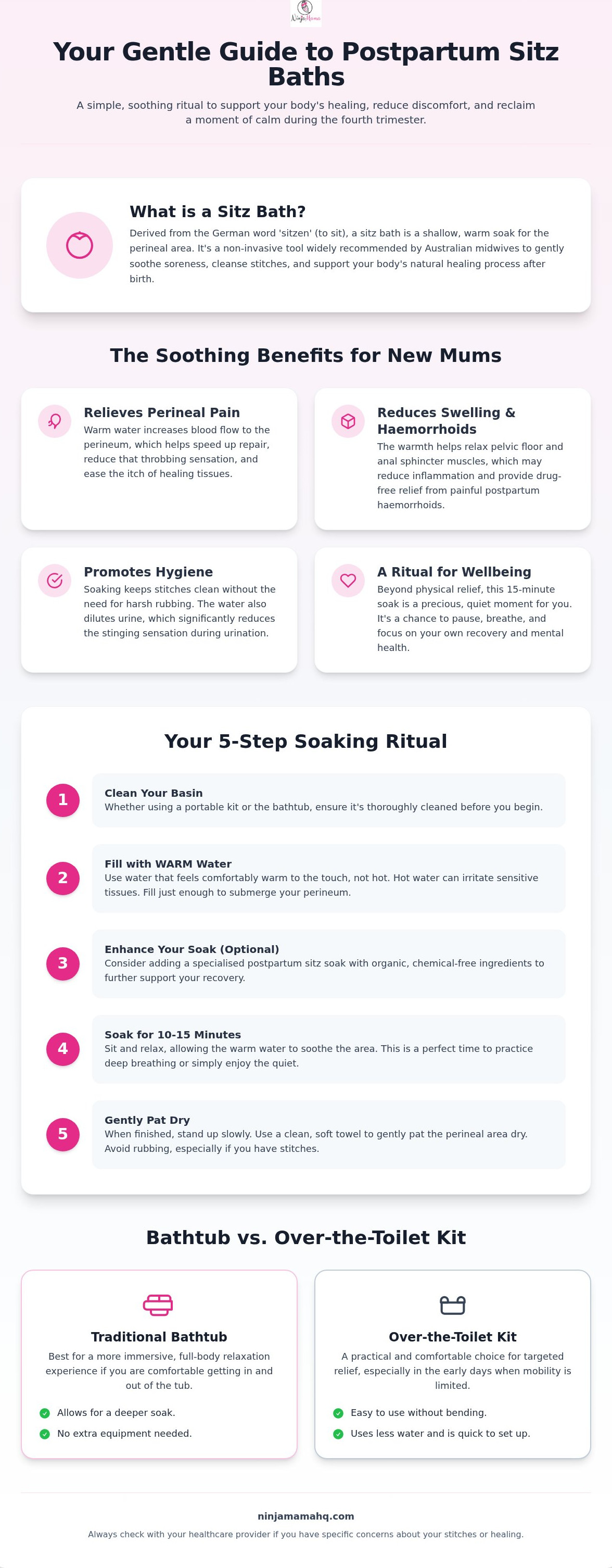
How to Take a Sitz Bath: A Step-by-Step Guide for New Mums
When you are operating on zero sleep, even simple tasks can feel like a mission. That is why having a clear system is so helpful. During that first week at home, aim for a sitz bath two to three times a day. It might sound like a lot to fit in between feeds and nappy changes, but these short bursts of dedicated care make a world of difference to your physical recovery speed and your overall comfort.
Preparing Your Soothing Soak
The secret to a successful soak is preparation. Before you even think about sitting down, make sure you have your towel, fresh underwear, and any maternity pads ready to go. You don’t want to be navigating the bathroom while you are dripping wet and tender. Start by filling your basin or tub with about 8 to 10cm of warm water. Keeping the temperature moderate is vital. A hot bath might sound tempting, but lukewarm water is much better for calming inflamed tissues. Add your Ninja Mama Sitz Soak and swirl the water gently to dissolve the organic salts. Always test the water with the inside of your wrist first. If it feels soothing and gentle there, it is safe for your perineum.
The Soak and Aftercare
Once the water is ready, gently lower yourself in. Take a deep breath and try to let your pelvic floor muscles relax. Stay in the water for about 10 to 15 minutes. This is your window of quiet, so try to lean into the stillness while the water does its work. When you are ready to get out, stand up slowly to avoid any lightheadedness. Use your Ninja Mama Peri Bottle to give yourself a final rinse with fresh water before you stand up. This small step ensures you feel completely clean and refreshed before you dry off.
Aftercare is all about being as gentle as possible. Use a clean, soft towel to pat the area dry. Avoid any rubbing or wiping motions, as these can irritate stitches or cause further discomfort. If you have the time, letting the area air-dry for a minute or two can also be very helpful. Once you are dry, you can move on to the rest of your recovery routine, such as applying cooling pads or witch hazel liners. To ensure you have all the essentials on hand for every trip to the bathroom, you can find everything you need in our curated postpartum recovery kits.
Beyond Water: Perfecting Your Postpartum Recovery Routine
While plain warm water is a fantastic starting point for your sitz bath, what you choose to add to that water can make a world of difference to your comfort levels. Think of your soak as the foundation of a broader, specialised recovery system. By layering different tools and choosing high-quality ingredients, you can address multiple layers of discomfort at once. It is a proactive approach that helps you feel more in control during a time when everything else can feel quite unpredictable. Preparing your "recovery station" before you even head to the hospital is a small act of kindness for your future self.
The Power of Organic Ingredients
The skin in your perineal area is incredibly delicate and absorbent, especially when it is healing from tears or stitches. This is why organic, chemical-free ingredients are the gold standard for your recovery. Many mums find that adding Epsom salts and witch hazel to their water helps significantly with reducing swelling and easing the throb of healing tissues. These ingredients work together to calm the skin and support the body's natural processes. However, it is vital to avoid heavily scented bath bombs, artificial fragrances, or bubble baths. These products often contain harsh chemicals that can irritate healing skin and disrupt your natural pH balance. Choosing a specialised, organic option like the Ninja Mama Sitz Soak ensures you are giving your body the gentlest support possible without any hidden nasties.
Completing Your Postpartum Toolkit
A successful recovery often relies on having your supplies organised and within arm's reach of the loo. This reduces physical strain and helps you maintain a consistent routine. While the sitz bath provides deep, soothing relief a few times a day, you will likely need support in between those moments. For instance, perineal ice packs are commonly used by postpartum mothers to manage sharp throbbing or heat during the first week. Layering these tools creates a comprehensive plan for your comfort.
- Rinse: Keep your peri bottle in the bathroom for every single loo visit during the first fortnight to keep the area clean.
- Soak: Use your specialised basin at least twice daily to encourage blood flow and relaxation.
- Cool: Apply cooling pads or ice packs between soaks to keep inflammation at bay.
Being prepared with a full kit of essentials reduces the mental load and physical stress of the fourth trimester. When you aren't scrambling for supplies or dealing with unnecessary irritation, you can truly focus on the most important part of your journey: bonding with your new bub. Taking the time to set up your recovery space now means you can transition into motherhood with a sense of prepared calm and confidence.
Step Into a Softer Postpartum Recovery
Navigating the early weeks of motherhood is a monumental transition, but your physical healing doesn't have to be a source of constant stress. By making the sitz bath a regular part of your daily rhythm, you are giving your body the focused support it needs to repair and rejuvenate. Remember that prioritising organic, chemical-free ingredients ensures you are protecting your most delicate tissues while providing genuine relief from swelling and soreness.
We understand how much difference the right support makes when you are operating on little sleep. Our specialised soak was designed by an Aussie mum for Aussie mums, featuring 100% organic ingredients and backed by over 1,000 5-star reviews from happy mamas. You deserve a recovery process that feels like a restorative ritual rather than just another task on your list. Being prepared with a dedicated recovery station allows you to stay calm and focus on what matters most.
Shop the Ninja Mama Organic Sitz Soak for Gentle Postpartum Relief
Be kind to yourself as you navigate this new chapter. You are doing an incredible job, and with a little extra care, you will be feeling like yourself again soon.
Frequently Asked Questions
How often should I take a sitz bath after giving birth?
You should aim to take a sitz bath as often as you can during the first week of your recovery. This frequency helps to consistently manage swelling and provide regular relief to tender tissues when they are at their most sensitive. As you start to feel more comfortable and the initial inflammation subsides, you can gradually reduce this to simply use it as needed for a moment of calm.
Can I use a sitz bath if I have stitches or a tear?
Yes, using a soak is actually one of the most gentle ways to keep stitches or tears clean without the need for painful wiping or rubbing. The warm water supports blood flow to the area, which many women find helpful for the body's natural repair process. Just ensure the water is lukewarm rather than hot to avoid irritating the site, and always pat the area dry very gently with a clean, soft towel afterwards. If you have dissolvable stitches check with your midwife before soaking
Is it okay to use a sitz bath after a C-section?
It is generally safe to use a sitz bath after a C-section to manage postpartum haemorrhoids or general perineal soreness. However, you must ensure your abdominal incision stays dry and is not submerged in the water. Using a portable over-the-toilet kit is often the best choice for C-section mums, as it allows you to target the perineum comfortably while keeping your surgical wound well away from the water.
What should I put in my sitz bath for the best healing?
For the most soothing experience, many mothers find that adding organic Epsom salts and witch hazel provides the best support. These ingredients are designed for comfort and recovery without the risk of irritation. You should avoid using scented bath bombs, artificial bubbles, or harsh soaps, as these can sting and disrupt the delicate pH balance of your healing tissues. A specialised, organic soak is always the safest bet for your bits.
How long do I need to soak for it to be effective?
A soak of 10 to 15 minutes is typically all you need for the sitz bath to be effective. This timeframe allows enough time for the warmth to encourage circulation and for any added organic ingredients to soothe the skin. Staying in much longer than 20 minutes isn't usually necessary and can sometimes cause the skin to become too soft, which isn't ideal for tissues that are trying to knit back together.
Can I take a sitz bath if I am still bleeding (lochia)?
Yes, it is perfectly safe and very common to use a soak while you are still experiencing postpartum bleeding. The water helps to gently cleanse away lochia, which can improve your overall hygiene and comfort during the first few weeks at home. If you are using a portable basin, simply empty and rinse it thoroughly after each use to keep your recovery station scrupulously clean and ready for next time.
Do I need a special kit, or is my bathtub fine?
Your standard household bathtub is perfectly fine for a soak, but many new mums find a portable over-the-toilet kit much easier to manage. A kit allows you to sit at a comfortable height without having to squat down into a low tub, which can be quite a challenge if your core muscles feel weak. Whichever you choose, the most important factor is ensuring the vessel is scrubbed clean before every single use.
When should I stop doing sitz baths?
You can stop your regular soaking routine once your perineal area feels healed and you are no longer experiencing significant soreness or throbbing. For most women, this is around the two to three week mark. However, there is no harm in continuing for longer if you find it helpful. Many mums continue to enjoy an occasional soak as a quiet moment of self-care well into the fourth trimester because it feels so restorative.

Article by
Louise Beever
Louise Beever is the founder of Ninja Mama, an Australian postpartum recovery brand focused on creating premium, practical recovery essentials for new mothers. Since launching Ninja Mama in 2018, Louise has worked closely with thousands of postpartum women and healthcare retailers to better understand the realities of recovery after birth. Her work focuses on postpartum preparation, recovery support, and improving awareness around the fourth trimester.
Remember Mamas
The information provided in this article is intended for general educational and informational purposes only and should not be considered medical advice. Always seek guidance from your doctor, midwife, lactation consultant, or qualified healthcare professional regarding your individual circumstances, pregnancy, birth, or postpartum recovery.