

Did you know that while many Australian mums are told to wait six weeks to drive after a caesarean, nearly 35% are back behind the wheel by week three? It's a common source of confusion during those early days of motherhood. You likely feel a bit trapped at home; you're itching to run a simple errand or get to a check-up without relying on a lift. We understand that losing your independence is one of the toughest parts of recovery. If you're wondering exactly when can I drive after c-section australia, you aren't alone in looking for a clear answer.
We've been there. We know you want to ensure your insurance is valid and your body is truly ready for an emergency stop. This guide breaks down the legal requirements and insurance fine print so you can feel confident getting back on the road. We'll explore the physical milestones you need to hit, from seatbelt comfort to wound care, and provide a clear roadmap for your return to the driver's seat. You'll discover how to transition from passenger to driver safely, comfortably, and with total peace of mind.
Key Takeaways
- Discover why the six-week wait is a medical recommendation rather than a legal requirement, allowing for a more personalised approach to your recovery.
- Navigate the complexities of car insurance policies to ensure you are fully covered and know exactly when can I drive after c-section australia based on your specific PDS.
- Master the "Emergency Stop" physical assessment to confirm your core strength and reaction times are ready for the demands of Australian roads.
- Learn practical strategies for your first few outings, such as managing seatbelt pressure on your incision and choosing the best times for low-stress travel.
The 6-Week Rule: Understanding the Australian Medical Consensus
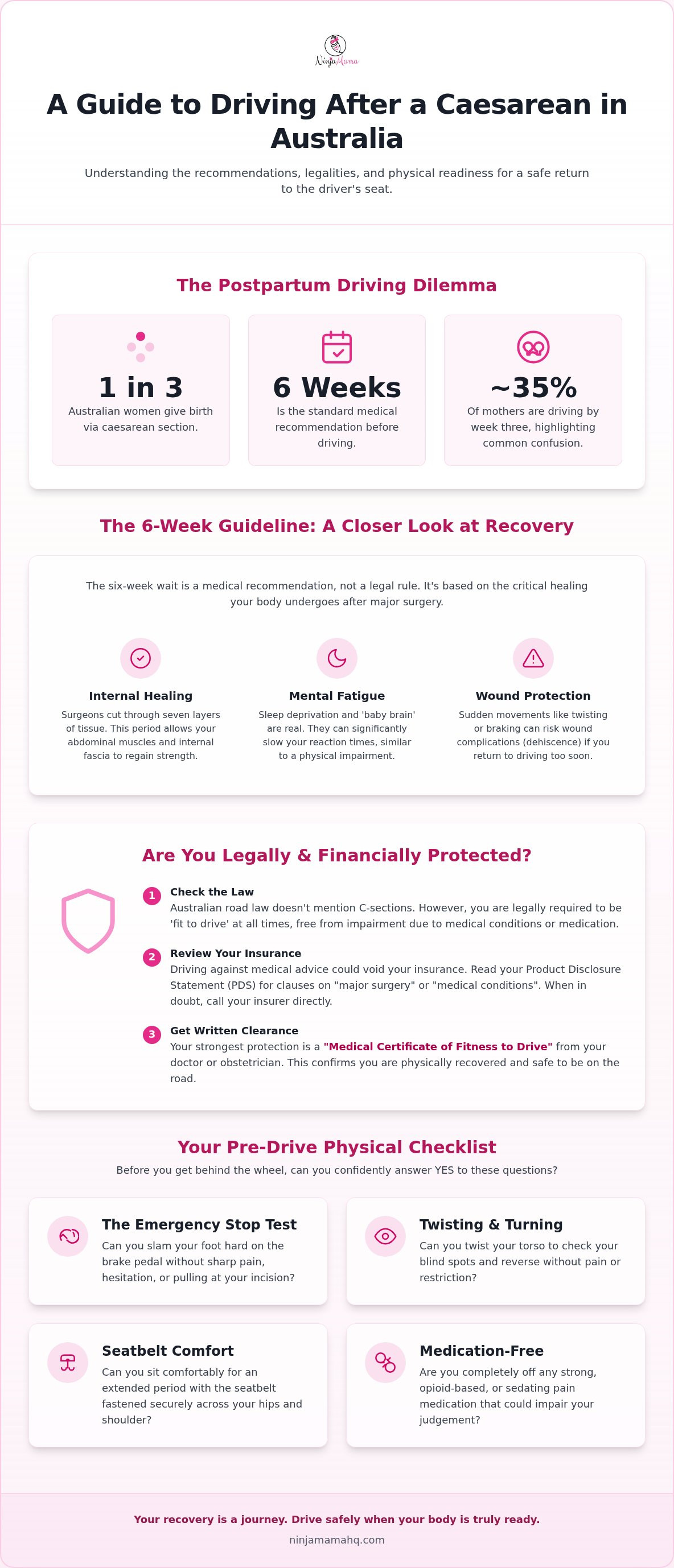
Welcoming a baby via caesarean is a major life event that requires significant physical recovery. With approximately one in three Australian women giving birth this way, it is one of our most common surgical procedures. Most obstetricians and midwives recommend a six-week waiting period before you get back behind the wheel. This isn't just a random suggestion; it's based on the physiological time your body needs to knit back together. To understand what a C-section involves, you have to consider that surgeons must navigate seven different layers of tissue. If you're wondering when can I drive after c-section australia, this six-week window is the gold standard for a safe return to the road.
To better understand this concept, watch this helpful video:
What Happens During the First Six Weeks?
During these first forty-two days, your body is doing the heavy lifting of internal repair. Your abdominal muscles and the fascia are slowly regaining their strength. It's not just the external scar you see in the mirror that needs time. Fatigue and "baby brain" also play a massive role in your safety behind the wheel. Sleep deprivation can slow your reaction times just as much as a physical injury. Your six-week postnatal check-up is the crucial moment where your health professional assesses your core stability. An Australian study found that 65% of women were advised to wait at least six weeks before resuming their driving duties, ensuring their bodies were truly ready for the demands of the road.
Why You Can't Just 'Push Through' the Discomfort
You might feel mobile enough to walk around the house, but driving requires a different level of sudden core engagement. There's a real risk of wound dehiscence, where the surgical site opens, if you have to twist quickly or slam on the brakes. Any sharp abdominal pain can lead to a delayed reaction in a split-second traffic event. The 6-week rule is a standard recovery benchmark in Australian maternity care. While you wait for your body to heal, using postpartum disposable underwear can provide the gentle support your belly needs. Don't rush the process of figuring out when can I drive after c-section australia; your body has done something incredible and deserves the time to heal properly without the added stress of driving too soon.
Insurance and the Law: Are You Actually Covered to Drive?
While the police aren't likely to pull you over just for having a baby, your insurance company is far more interested in your surgical history. In Australia, there isn't a specific law in the road traffic act that mentions caesareans. Instead, the law relies on you being "fit to drive" at all times. If you choose to ignore medical advice and get behind the wheel too early, you're entering a grey area where your insurance coverage could vanish. If an accident occurs, even if it isn't your fault, an insurer might argue that your surgical recovery impaired your ability to avoid the collision, potentially leading to a denied claim and a very expensive mistake.
Navigating Your Product Disclosure Statement (PDS)
Every car insurance policy is unique, so you must hunt through your PDS for specific wording that applies to your situation. Look for sections titled "Exclusions," "Duty of Disclosure," or "Medical Conditions." You’re searching for anything that mentions major surgery or a requirement to follow medical advice. Don't rely on hearsay from friends; call your insurer directly to confirm their stance. Ask them: "Does my policy require a specific timeframe after abdominal surgery before I'm covered?" Some Australian insurers are satisfied with your doctor's verbal okay, while others demand a written "Medical Certificate of Fitness to Drive." Getting this in writing is your best protection against any future insurance disputes.
The Legal Definition of 'Fitness to Drive' in Australia
The legal framework for driving is set by Austroads, which provides the national standards used by all transport authorities. These guidelines state that a driver must be medically fit to operate a vehicle safely. This includes the ability to perform sudden manoeuvres and being free from the influence of sedating medications. If you're still using strong, opioid-based pain relief, you're legally impaired and must stay in the passenger seat. Driving while impaired by medication carries the same legal weight as driving under the influence of alcohol.
You can refer to a comprehensive physical readiness checklist provided by government hospital groups to see exactly what "fitness" looks like in a practical sense. It covers everything from being able to sit comfortably to checking your mirrors without strain. Many mums find that applying C-section silicone scar patches helps reduce the sensitivity of the area, making the physical act of driving much more comfortable once you've cleared the legal and insurance hurdles. Knowing when can I drive after c-section australia is about balancing your need for freedom with the reality of your legal obligations as a road user.
The Physical Readiness Checklist: Can You Perform an Emergency Stop?
You've waited the weeks and checked your insurance, but is your body actually ready for the road? Understanding when can I drive after c-section australia requires looking beyond the calendar and focusing on your physical mechanics. The ultimate gold standard for driving readiness is the emergency stop. This isn't about a gentle slow down at a red light. It's about having the core strength to slam your foot on the brake pedal with full force without hesitation or debilitating pain. Abdominal surgery affects your deep core stability, which is exactly what you rely on to control the pedals during a sudden traffic event.
According to Australian Government-funded advice, you must be able to perform all driving movements, including an emergency stop, comfortably before getting behind the wheel. Beyond the pedals, you need a full range of motion. Can you twist your torso to check your blind spots? Can you turn enough to see the kids in the back seat? If your movement is restricted by a pulling sensation at your incision, you aren't quite ready to navigate a busy intersection safely.
Step-by-Step: Testing Your Readiness at Home
Don't wait until you're in the middle of school pick-up traffic to test your strength. Start in your driveway with the engine off and the handbrake firmly on. Sit in the driver's seat and adjust your position. Many mums find that applying C-section silicone scar patches can help reduce the friction of clothing and seatbelts against the healing site during these movements. Once you're settled, try these three checks:
- The Stomp Test: With the engine off, quickly and forcefully press the brake pedal as hard as you can. Do you feel sharp pain or a lack of power in your leg?
- The Twist Test: Rotate your upper body to look over each shoulder. You should be able to do this without guarding your stomach or feeling a sharp "tugging" at the wound.
- The Seatbelt Check: Fasten your seatbelt and ensure it sits across your hip bones. If the pressure is unbearable even while stationary, you'll find it impossible to concentrate while driving.
Signs You’re Not Quite Ready to Drive
It's okay to need more time. If you experience sharp, stabbing pain at the incision site when moving your right leg quickly, your body is telling you to rest. Dizziness or lightheadedness is another major red flag. New motherhood comes with intense sleep deprivation, and "baby brain" can significantly slow your reaction times. If you can't focus on a conversation for ten minutes, you shouldn't be focusing on the road. Finally, if you're still requiring strong, opioid-based painkillers to manage your day, you must stay in the passenger seat. These medications impair your judgment and make driving illegal in every Australian state.
Practical Tips for Your First Trip Back on the Road
Ready to reclaim your freedom? The first time you get back behind the wheel after a caesarean can feel like a huge milestone, but it's okay to feel a little nervous too. Knowing when can I drive after c-section australia is only half the battle; knowing how to do it comfortably is the other. Start small. Your first trip shouldn't be a massive grocery run or a long highway commute. Choose a quiet, mid-morning slot when the roads are clear and you aren't rushing for a strict appointment time. Short, local trips to the park or a nearby cafe are perfect for testing your stamina.
Having another adult in the car for your first few outings is a game-changer. They can handle the baby if they start crying, allowing you to stay focused on the road. More importantly, they can deal with the heavy lifting. Even if you're cleared to drive, your core might not be ready to hoist a heavy pram or bags of groceries into the boot. Your abdominal muscles are still knitting back together, so let someone else play the role of porter while you focus on steering. Adjust your seat slightly further back than usual to give your belly more room, ensuring you can still reach the pedals with full control.
Protecting Your Incision from the Seatbelt
The standard car seatbelt isn't exactly designed with a fresh surgical scar in mind. Many mums find the pressure of the lap belt across the lower belly feels quite sharp or restrictive. A simple trick is to place a small, soft pillow or a dedicated "tummy cushion" between your scar and the belt. This distributes the pressure and acts as a shock absorber for any bumps in the road. Wearing high-waisted postpartum disposable underwear also provides a soft, seamless barrier that won't dig into your incision like regular elastic might. Always ensure the lap belt sits low across your hip bones, well below the wound site, to minimise direct contact.
Managing Discomfort and Sensitivity
Friction is often the biggest source of discomfort when you start moving more. Applying silicone scar patches before you head out can significantly reduce the rubbing of clothing or seatbelts against your sensitive skin. These patches stay in place and provide a protective layer that many women find helpful for all-day comfort. Don't forget to look after your internal needs too. Staying hydrated and well-nourished is essential for maintaining the mental focus required for safe driving, especially when sleep is scarce.
If you're heading out for a longer stretch, keeping a Ninja Mama Peri Bottle in your nappy bag is a great way to maintain gentle hygiene and stay fresh while you're on the go. Taking care of these small details makes the transition back to independence much smoother and far more pleasant. Ready to build your ultimate recovery kit? Explore our full range of postpartum recovery bundles designed to support you through every stage of the fourth trimester.
Supporting Your Long-Term Recovery and Independence
Regaining your mobility is about more than just ticking off errands; it's a huge emotional win for any new mum. It represents a shift from being the one cared for to being an active participant in your new life with bub. While you're likely eager to know when can I drive after c-section australia, remember that this is a personal milestone, not a competitive race. Your body has undergone significant change, and giving yourself grace is just as important as giving yourself time. Regaining your independence feels incredible, but doing it safely ensures you can enjoy that freedom for the long haul.
Your six-week postnatal check-up serves as your clinical foundation for long-term physical health. It's the perfect opportunity to discuss any lingering discomfort or concerns about your physical readiness with your GP or obstetrician. Use this time to ask about gradually increasing your activity levels beyond just driving, perhaps moving into gentle postnatal walking or core-focused movements. Regaining your mobility is an empowering step, but ensuring your internal healing is on track first guarantees that your return to independence is sustainable and safe for both you and your baby.
Scar Care for the Active Mum
Long-term management of your incision site is vital for your overall abdominal mobility and comfort behind the wheel. Once your wound is fully closed and your doctor gives you the all-clear, gentle massage may help support the flexibility of the tissue. This helps prevent that "tight" or "tugging" feeling when you twist to check your blind spot or reverse into a parking space. Using silicone scar patches during this first year can also help protect the area from friction and keep the scar hydrated. Remember to keep the area out of direct Australian sun, as new scar tissue is particularly sensitive to UV damage and can discolour easily.
Building Your Postpartum Support System
While you transition back to driving, don't be afraid to lean on your "village." If you aren't quite ready to take the wheel for the school run or a trip to the shops, utilising local community services or asking friends for help is a sign of strength. Recovery is a journey that shouldn't be walked alone. At Ninja Mama, we are a team of mums who have been exactly where you are, and we are dedicated to supporting Australian mums through every step of the fourth trimester. Building a solid support system allows you to return to the driver's seat with genuine confidence rather than just pushing through exhaustion. When you finally do hit the road, you'll know you've done the work to get there safely.
Reclaiming Your Independence with Confidence
Returning to the driver's seat is a huge step toward feeling like yourself again. Determining exactly when can I drive after c-section australia is a personal journey that blends medical advice with your own physical readiness and insurance requirements. Remember to prioritise your six-week check-up, test your "emergency stop" strength in the driveway first, and always check the fine print of your PDS to ensure you're fully covered. Your safety and your baby's wellbeing are the only things that truly matter during this transition.
At Ninja Mama, we're an Australian-owned small business dedicated to supporting you through the fourth trimester. We've helped thousands of happy Aussie mums navigate their recovery with expertly curated recovery kits designed for comfort and ease. Whether it's protecting your incision from the seatbelt or managing sensitivity, we're here to help you move with confidence. Shop the Ninja Mama C-Section Recovery Collection today to find your essentials. You're doing an incredible job, and your independence is just around the corner.
Frequently Asked Questions
Is it illegal to drive before 6 weeks after a c-section in Australia?
It isn't specifically illegal to drive before six weeks under Australian road rules. However, you must be "fit to drive" according to national Austroads guidelines. If a police officer deems you physically incapable of controlling the vehicle or reacting safely, you could face penalties. The decision ultimately rests on your medical professional's assessment of your recovery. Most Australian health providers suggest waiting at least two to six weeks for safety.
What happens if I have a car accident before my 6-week check-up?
If you're involved in an accident before your official clearance, your insurer may investigate whether you were driving against medical advice. If they determine you were physically unfit or impaired by surgery, they could deny your claim entirely. This leaves you personally liable for damages. It's vital to have a medical green light before getting back on the road to protect your finances and your family's safety.
How do I know if my car insurance covers me after major surgery?
To confirm your coverage, you should review your Product Disclosure Statement (PDS) or call your insurer directly. Many Australian policies include a clause regarding "fitness to drive" after major surgery. When asking your provider, be specific about your caesarean and ask if they require a formal medical certificate. Getting this confirmation in writing or via a recorded phone call provides essential peace of mind before you start driving again.
Can I drive if I am still taking pain medication like endone or panadeine forte?
No, you cannot drive while taking strong pain relief like Endone or Panadeine Forte. These medications cause drowsiness and slow your reaction times, making it illegal to drive under the influence of drugs in all Australian states. You must be completely off opioid-based medications and feel mentally alert before considering when can I drive after c-section australia. Always wait until you've transitioned to standard, non-drowsy pain relief options.
Does the 6-week driving rule apply to emergency c-sections only?
The six-week guideline applies to all caesarean births, whether elective or emergency. Every C-section involves the same surgical process of cutting through multiple layers of tissue and muscle. While an emergency recovery might feel more intense due to the circumstances of labour, the physical healing timeline for the abdominal wall remains similar. Your body needs adequate time to knit back together regardless of how the surgery was initiated.
How can I make the seatbelt more comfortable over my c-section scar?
Placing a small, soft cushion between your lap belt and your incision site can significantly improve comfort. This helps distribute the pressure and prevents the belt from digging into your sensitive scar. Many women find that wearing high-waisted postpartum disposable underwear or using silicone scar patches also creates a protective barrier. These simple tools help reduce friction and sensitivity, making those first few trips much more manageable and less painful.
What should I do if my doctor clears me to drive at 4 weeks?
If your doctor clears you at four weeks, ensure you get the certificate in writing. You should then contact your car insurance provider to inform them of this medical clearance. While some doctors are happy to give the green light early if you're healing well, your insurance policy might still have a rigid six-week exclusion. Always double-check that your specific insurer accepts your doctor's early clearance before you start driving.
Will my insurance premium go up because I had a caesarean?
No, having a caesarean section will not typically increase your car insurance premium. A C-section is considered a common medical procedure with a temporary recovery period rather than a permanent change to your driving risk. Once you're medically cleared and fit to drive, your status as a driver remains the same as before. You don't usually need to disclose the birth to your insurer unless your policy specifically requires notification of all major surgeries.

Article by
Louise Beever
Louise Beever is the founder of Ninja Mama, an Australian postpartum recovery brand focused on creating premium, practical recovery essentials for new mothers. Since launching Ninja Mama in 2018, Louise has worked closely with thousands of postpartum women and healthcare retailers to better understand the realities of recovery after birth. Her work focuses on postpartum preparation, recovery support, and improving awareness around the fourth trimester.
Remember Mamas
The information provided in this article is intended for general educational and informational purposes only and should not be considered medical advice. Always seek guidance from your doctor, midwife, lactation consultant, or qualified healthcare professional regarding your individual circumstances, pregnancy, birth, or postpartum recovery.