

You’ve prepared the nursery, packed the hospital bag, and finally met your little one, but nobody quite prepares you for the reality of the "fourth trimester" flow. It’s completely normal to feel a bit overwhelmed by the physical recovery ahead. One of the most common questions new mums ask is: when does postpartum bleeding stop? While it might feel like it will last forever, this process, known as lochia, is your body's natural way of healing and shedding the lining that supported your baby for nine months.
We know the discomfort is real. It’s frustrating to navigate heavy bleeding and stinging sensations while you’re learning to care for a newborn. You might be worrying if the colour is right or if that last clot was a bit too large. This guide provides a clear six-week timeline so you know exactly what to expect as your body recovers. We’ll share practical tips on staying clean and comfortable; plus, we’ll outline the specific red flags that mean it’s time to reach out to your midwife for extra support. You've got this, mama.
Key Takeaways
- Learn the three distinct stages of lochia to better understand when does postpartum bleeding stop and what is normal for your recovery.
- Discover how to manage your flow with "hands-off" hygiene techniques that prioritise your comfort while helping to prevent infection.
- Identify the specific "red flag" symptoms and clot sizes that mean you should reach out to your midwife for extra support.
- Understand why postpartum bleeding is a vital part of your body's healing journey, regardless of whether you had a vaginal or C-section birth.
- Get practical tips on how to organise a recovery station before your baby arrives to make your fourth trimester as smooth as possible.
Understanding Lochia: Why Postpartum Bleeding is Different to a Period
Lochia is your body's way of clearing out the space where your baby grew for nine months. It is not just a standard period; it is a unique mix of blood, mucus, and uterine tissue. Understanding Lochia helps you realise that this flow is a sign of your body doing exactly what it should. Whether you had a vaginal birth or a C-section, your body needs to shed the uterine lining that supported your pregnancy. While you might be looking at your heavy pads and wondering when does postpartum bleeding stop, remember that this heavy initial phase is temporary but essential for your internal healing.
To better understand this concept and the general timeline of recovery, watch this helpful video:
The Purpose of Postpartum Bleeding
The main job of lochia is to allow your uterus to return to its pre-pregnancy size, a process called involution. After the placenta detaches, there is a wound on the inside of the uterus that needs to heal. As your uterus contracts, it seals off the blood vessels at this site, which is why you feel those "after pains" in the first few days. If you are breastfeeding, you might notice your flow increases or you feel more cramping during a feed. This happens because nursing releases oxytocin, the hormone that tells your uterus to tighten and shrink. It can feel a bit intense, but it is actually a brilliant way your body speeds up the recovery process. Using high-quality postpartum disposable underwear during these first few days can make managing this heavier flow much easier and more comfortable.
Lochia vs. Your First Period
It is easy to confuse lochia with a period, but they are driven by very different biological triggers. A period is part of an ovulatory cycle, whereas lochia is purely about wound healing and tissue shedding. Lochia starts the moment your baby is born, while your actual period might not return for months, especially if you are exclusively breastfeeding. Another key difference is the way the discharge looks. A typical period usually stays red or brown throughout. Lochia, however, moves through very specific stages of colour and consistency, fading from bright red to a creamy yellow or white over several weeks. Because your hormones are shifting so rapidly, your body isn't yet ready for a cycle; it's focusing all its energy on repairing the "baby house" it built. Understanding these stages gives you peace of mind that your body is on the right track as you wait for when does postpartum bleeding stop.
The Postpartum Bleeding Timeline: What to Expect Over 6 Weeks
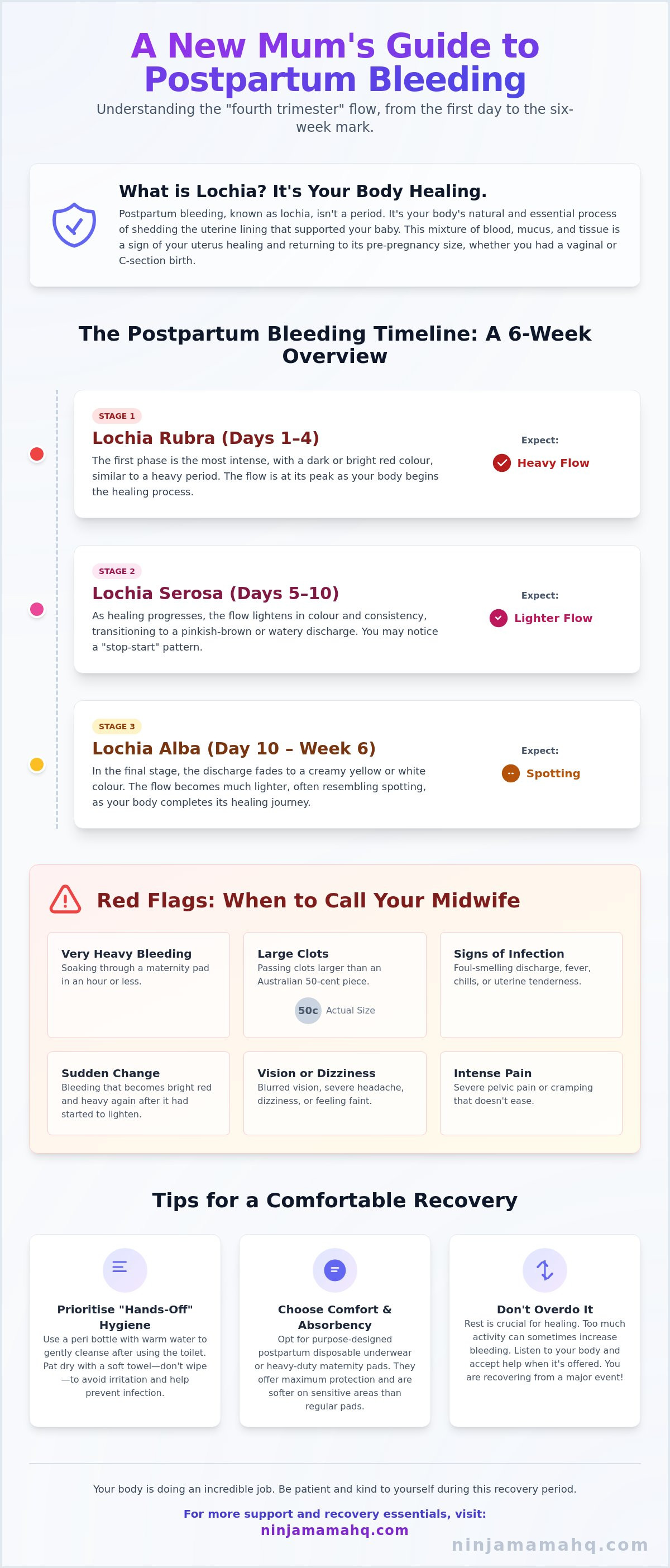
Every new mother watches the calendar and wonders when does postpartum bleeding stop. While your recovery journey is as unique as your baby, the healing of your uterus follows a very specific sequence. It is helpful to think of these six weeks as a transition through three distinct phases. You might notice the flow does not just disappear; it changes colour and consistency as your body repairs itself from the inside out. This timeline is your body's roadmap to recovery, and knowing the stages can replace worry with a sense of prepared calm.
Stage 1: Lochia Rubra (Days 1 to 4)
This first phase is the most intense and begins immediately after birth. Your discharge will be dark or bright red, very similar to a heavy period. During these first few days, it is common to pass small clots, which should generally be no larger than an Australian 50-cent piece. Because the flow is at its peak, you will need maximum absorbency to stay comfortable. Many women find that using specifically designed postpartum disposable underwear during this stage provides the best protection against leaks while you focus on your new arrival.
Stage 2: Lochia Serosa (Days 5 to 10)
As the initial wound at the placenta site begins to heal, the flow lightens and transitions to a pinkish-brown or watery discharge. This is a clear sign that the heavy bleeding is tapering off as your uterus continues its work. However, this phase is often a "stop-start" experience. If you find yourself more active, perhaps by walking a bit further or managing stairs more often, you might see the discharge turn bright red again. This is not necessarily a cause for alarm, but rather your body’s way of asking you to rest. It is vital to stay aware of Red Flags and Safety Signs during this transition, ensuring that any sudden increase in flow remains manageable and temporary.
Stage 3: Lochia Alba (Weeks 2 to 6)
In the final stage, your discharge becomes yellowish-white or creamy in colour. This is Lochia Alba, and it consists mostly of white blood cells and mucus rather than fresh blood. This phase can last until your six-week postpartum check-up, gradually becoming lighter until it stops altogether. If you have been asking when does postpartum bleeding stop, this final shift is the signal that your internal healing is nearly complete. You might find that a lighter liner is all you need as the flow tapers off into a faint spotting. Remember to give yourself grace during these final weeks; your body has achieved something incredible, and this slow finish is just the final chapter of your physical recovery.
Managing the Flow: Hygiene and Comfort for a Happy Recovery
Managing the physical side of recovery is about more than just checking the clock to see when does postpartum bleeding stop. It's about maintaining your dignity and comfort during a time that can feel quite messy and vulnerable. One of the most critical rules for the first six weeks is to stick strictly to external products. Tampons and menstrual cups are a "no-go" until your six-week check-up because your cervix is still slightly open and your uterus is healing. Introducing anything internally significantly increases your risk of infection. Instead, focus on frequent pad changes; every 2 to 4 hours is ideal; to keep the area dry and clean. This simple routine isn't just about hygiene; it provides a psychological lift that helps you feel more like yourself again.
The Magic of the Peri Bottle
The first time you go to the bathroom after birth can be daunting. If you have grazes, tears, or stitches, the acidity in urine can cause a sharp, stinging sensation. This is where "hands-off" hygiene becomes your best friend. Using the Ninja Mama Peri Bottle filled with warm water allows you to dilute your urine as you go, completely bypassing that dreaded sting. It's a much gentler way to cleanse the perineum than using even the softest toilet paper. Many mums find that this small addition to their bathroom routine makes a world of difference in those first few days of recovery when the flow is at its heaviest.
Choosing the Right Postpartum Underwear
Choosing the right support for your flow is essential for your peace of mind. In the early Rubra stage, traditional maternity pads can often shift or feel bulky, which is the last thing you want to worry about while holding a newborn. Many women find that postpartum disposable underwear offers superior leak protection and a smoother fit under clothes. These are particularly helpful overnight when you finally get a chance to rest. As you transition into the Serosa stage and the flow becomes more watery and moderate, you might switch back to high-absorbency pads, but having that "all-in-one" protection early on removes the stress of ruined laundry and uncomfortable bunching.
Soothing the Soreness
Managing the flow is much easier when you also address the underlying discomfort of the "fourth trimester" body. Using perineal ice packs can help support the reduction of swelling and provide much-needed relief to tender tissues while you manage your lochia. Once the heavy bleeding has slowed and you've moved past the first week, a gentle sitz bath soak can be a lovely way to promote healing and provide a rare moment of peace. Taking these small steps to care for yourself ensures that while you wait for when does postpartum bleeding stop, you stay as comfortable and confident as possible.
When to Call Your Midwife: Red Flags and Safety Signs
Knowing when to reach out for professional help is about being prepared, not being afraid. Most women find their recovery follows the steady timeline we've discussed, but being aware of red flags gives you the confidence to rest easy. While you track your progress and wait for when does postpartum bleeding stop, your body provides clues about its internal healing status. Sometimes, those clues are subtle; other times, they are quite clear. If something feels "off" in your chest or your gut, don't hesitate to call your midwife or doctor. Your "mum gut" is a powerful tool, and it's always better to get a quick check-up for peace of mind.
Let's talk about clots. In the earlier sections, we noted that small clots; about the size of an Australian 50-cent piece; are common in the first few days. However, if you are passing clots larger than a golf ball, this is a signal that your body needs a professional assessment. Similarly, while lochia has a distinct scent similar to a regular period, it should never be offensive. If you notice a "fishy" or foul odour, it could indicate an infection that requires medical attention. Staying informed helps you stay in control of your recovery journey.
The Heavy Flow Warning
The most important guideline to remember is the "one pad per hour" rule. If you are soaking through a high-absorbency pad every hour for two hours or more, this is considered heavy bleeding that requires immediate medical advice. This level of loss can sometimes be associated with a serious condition. Postpartum Hemorrhage (PPH) is a serious but treatable condition that occurs when the uterus does not contract sufficiently to control bleeding after delivery. Keep an eye out for other physical signs like feeling dizzy, faint, or having a racing heart. These symptoms suggest your body is struggling to keep up with the blood loss and needs support quickly.
Infection and Other Red Flags
Beyond the volume of flow, your overall wellbeing is a key indicator of your recovery. If you develop a fever, chills, or sudden flu-like symptoms, your body might be fighting an infection. Watch the colour of your lochia closely as the days pass. We expect to see a transition from red to pink and then creamy white. If you experience a sudden return to persistent, bright red bleeding that doesn't slow down after the first week; or if the bleeding stops and then returns very heavily; it's time to see your GP.
Staying prepared with a Ninja Mama Postpartum Recovery Kit ensures you have the right tools to monitor your recovery comfortably and safely. By having your essentials ready, you can focus on the joy of your new baby while staying informed about when does postpartum bleeding stop.
Your Postpartum Recovery Toolkit: Healing with Confidence
The Fourth Trimester is a profound season of transition. While much of the focus naturally shifts to your beautiful new arrival, it's just as important to care for the woman who brought them into the world. Giving yourself grace during these six weeks is the best gift you can provide. By the time you reach the stage when does postpartum bleeding stop, you'll have navigated a significant physical and emotional journey. Organising a dedicated "recovery station" before your baby arrives is a wonderful way to reduce anxiety. Having your essentials within arm's reach means you can focus on bonding rather than hunting for supplies while you're sore. At Ninja Mama, we're dedicated to supporting the "mum behind the baby" with practical, premium solutions that make this period feel manageable and even a little bit luxurious.
Curating Your Essentials
Preparation is the key to a calm recovery. Many mothers find that choosing one of our curated Postpartum Recovery Kits takes the guesswork out of hospital bag prep. These kits provide a complete system for those first intense days, ensuring you aren't caught without the right level of protection. For ongoing comfort, adding witch hazel wipes to your bathroom routine can provide a cooling, soothing layer of healing that many women find helpful for tender tissues. Don't forget that your body is changing in other ways, too. Keeping breast therapy packs in the freezer or warming them up can offer incredible relief when your milk comes in and your breasts feel heavy or engorged.
Rest and Nourishment
It sounds simple, but physical rest is often the most effective medicine. Your body needs energy to repair the uterine lining, and overexerting yourself can actually cause your flow to increase or linger. If you've been wondering when does postpartum bleeding stop, the answer often lies in how much you allow yourself to sit down and heal. Nourishment plays a huge role here, too. Taking a quiet moment for yourself with a comforting lactation chocolate drink can be a delicious way to support your well-being while you rest. This transition from managing lochia to fully embracing life with your newborn is a short window in time. By prioritising your own recovery now, you're building the foundation for a confident and healthy start to motherhood. You've done the hard work; now it's time to let us look after you.
Embrace Your Path to Postpartum Wellness
Your body has accomplished something truly extraordinary. The weeks of lochia are simply the final chapter of that physical transformation. By understanding the stages of recovery and knowing exactly when does postpartum bleeding stop, you can move through the fourth trimester with confidence instead of worry. Remember that healing isn't just about the passage of time; it's about giving yourself the tools and the grace to recover properly. Whether it's setting up your recovery station or knowing which red flags to watch for, being prepared is your greatest strength.
As an Australian owned and operated brand, Ninja Mama is proud to be designed by mums, for mums. We have supported over 100,000 mums worldwide on their journey through early motherhood. We believe that when you feel supported and comfortable, you can focus on what matters most; your new baby. Browse our curated Postpartum Recovery Kits to make your healing journey easier.
You are doing an incredible job, mama. Take it one day at a time, listen to your body, and know that we are right here with you every step of the way.
Frequently Asked Questions
Is it normal to have large clots in postpartum bleeding?
Passing small clots is a very common part of the healing process; especially in the first few days after birth. You should expect clots to be no larger than an Australian 50-cent piece. If you notice clots that are larger than a golf ball; or if you are passing multiple large clots in a short space of time; please reach out to your midwife or GP immediately. This can sometimes be a sign that your uterus is struggling to contract properly.
Can I use tampons for postpartum bleeding if the flow is light?
No; you must avoid using tampons or menstrual cups for at least the first six weeks. Even if your flow is very light; your cervix is still slightly open and your uterus is a healing wound. Introducing anything internally carries a high risk of introducing bacteria and causing a serious infection. Stick to high-absorbency pads or disposable postpartum underwear until you have been given the "all clear" at your six-week postnatal check-up.
Why does my postpartum bleeding start and stop?
It is very common for lochia to taper off and then suddenly return; often because of your activity levels. If you have a particularly busy day or spend more time on your feet; you might notice a fresh gush of red blood. If you are tracking your progress and wondering when does postpartum bleeding stop; remember that these "stop-start" moments are often your body’s way of telling you to slow down and rest more.
How long does lochia last after a C-section?
Most women find that lochia lasts between four to six weeks; regardless of whether they had a vaginal birth or a C-section. While your obstetrician may have cleared away some of the uterine lining during the procedure; the site where the placenta was attached still needs to heal completely. If you are concerned about when does postpartum bleeding stop after surgery; keep in mind that the colour stages from red to white remain the same roadmap for recovery.
What is the difference between lochia and a period?
Lochia is the shedding of the uterine lining and pregnancy tissue; while a period is the result of a hormonal ovulatory cycle. Lochia contains much more than just blood; it includes mucus and white blood cells; which is why it changes to a creamy white colour in the final weeks. A period usually returns only after your hormones have stabilised; which can take months if you are breastfeeding; whereas lochia begins the moment your baby is born.
Can I get pregnant while I still have postpartum bleeding?
Yes; it is entirely possible to fall pregnant even while you are still experiencing lochia. Your body can ovulate before your first period actually arrives; meaning you are fertile before you even realise your cycle has returned. While lochia is a sign of internal healing; it does not act as a form of contraception. It is a good idea to discuss your options with your partner or healthcare provider early in the fourth trimester to stay prepared.
What should I do if my postpartum bleeding smells bad?
If you notice an offensive; "fishy"; or foul odour; you should contact your midwife or doctor as soon as possible. While lochia has a distinct metallic scent similar to a regular period; it should never smell putrid. A bad smell is often one of the first signs of an infection in the uterus or at a tear site. This is especially true if the odour is accompanied by fever; chills; or persistent pain in your lower abdomen.
Does breastfeeding make postpartum bleeding heavier?
Breastfeeding triggers the release of oxytocin; the "love hormone" that also causes your uterus to contract. You might feel "after pains" or notice a sudden gush of blood while your baby is nursing. While this can make the flow feel heavier in the moment; it is actually a positive sign. These contractions help your uterus return to its original size more efficiently and can actually help the overall bleeding process finish a little bit sooner.

Article by
Louise Beever
Louise Beever is the founder of Ninja Mama, an Australian postpartum recovery brand focused on creating premium, practical recovery essentials for new mothers. Since launching Ninja Mama in 2018, Louise has worked closely with thousands of postpartum women and healthcare retailers to better understand the realities of recovery after birth. Her work focuses on postpartum preparation, recovery support, and improving awareness around the fourth trimester.
Remember Mamas
The information provided in this article is intended for general educational and informational purposes only and should not be considered medical advice. Always seek guidance from your doctor, midwife, lactation consultant, or qualified healthcare professional regarding your individual circumstances, pregnancy, birth, or postpartum recovery.