
Did you know that in 2023, 41% of Australian births were by caesarean section? You're in good company, but that doesn't make the prospect of recovery any less daunting. It's major abdominal surgery, and suddenly you're expected to care for a tiny human while your own body is demanding rest. We understand the silent worry about that first trip to the bathroom or the sharp intake of breath when you need to cough or laugh. It's a lot to juggle when you just want to soak in every moment with your new bub.
We're here to help you navigate this transition with confidence and ease. This guide shares essential c-section recovery tips for faster healing, focusing on gentle, effective ways to manage your comfort at home. You'll discover how to protect your incision during daily tasks and keep your hygiene routine simple and pain-free. We'll preview a structured plan for your first six weeks, covering everything from wound care to long-term scar support. By pre-organising your space and your recovery kit, you can transform these early weeks into a period of calm, supported healing.
Key Takeaways
- Discover how an upside-down peri bottle provides a no-bend solution for managing hygiene and lochia without straining your incision.
- Master the log roll and other gentle movement techniques designed to help you get out of bed and care for bub safely.
- Explore evidence-aware c-section recovery tips for faster healing, focusing on the use of silicone scar strips to support flatter, softer results.
- Identify the essential items for your recovery kit, including high-waisted underwear that sits comfortably above your wound.
- Learn to monitor your healing progress with confidence and know exactly when to seek professional advice from your care team.
What to Expect During Your C-Section Recovery
Welcome to your fourth trimester. For surgical mums, this period is a unique blend of newborn snuggles and serious physical repair. While a Caesarean section overview reminds us that this is major abdominal surgery, being proactive may help support your body's natural healing process. These c-section recovery tips for faster healing begin the moment you leave the theatre and continue well into your first few months at home.
Your hospital stay is punctuated by tiny, significant victories. First, there is the catheter removal, followed by the milestone every midwife cheers for: your first walk to the ensuite. It might feel like you've run a marathon, but that gentle movement is vital for circulation and waking up your digestive system. Once you're discharged, the "home hurdles" begin. Stairs, lifting the laundry basket, or even car travel can feel daunting. In Australia, you generally won't be able to drive for six weeks, so ensure your support crew is ready to take the wheel for those early paediatrician appointments.
The First 24 to 72 Hours
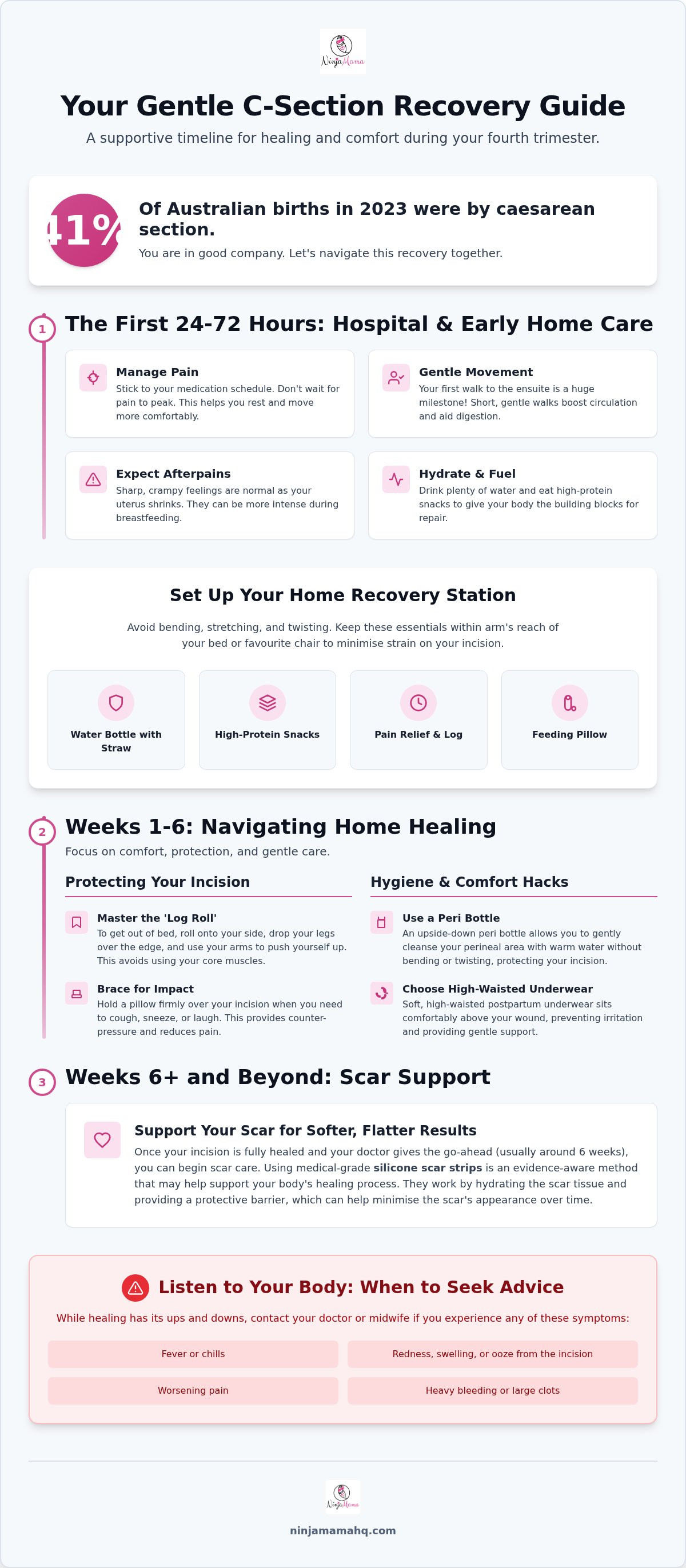
This window is all about the transition from clinical care to home management. In hospital, your pain relief is closely monitored by professionals, but at home, the schedule is in your hands. Stick to your routine. Don't wait for the discomfort to peak before taking your next dose. You might also experience "afterpains". These are sharp, crampy sensations as your uterus shrinks back to its pre-pregnancy size. They often feel more intense during breastfeeding, but they're a positive sign that your body is recovering. Midwives often encourage gentle leg exercises and short laps around the room to help with circulation during these first few days.
Setting Up Your Recovery Station at Home
Success at home is all about the setup. You want to avoid bending, stretching, or twisting while your incision heals. Organise a "recovery station" by your bed or favourite chair. You'll want these essentials within arm's reach:
- A large water bottle with a straw for easy sipping.
- High-protein snacks to fuel your repair.
- Your pain relief log and medications.
- A breastfeeding pillow to create a buffer between bub and your incision.
Make sure your bub's nappy change station is at waist height. Bending over a low change table or cot can pull on your stitches and cause unnecessary pain. Using high-waisted postpartum disposable underwear can also provide a soft layer of support that doesn't rub against your wound. Lean heavily on your support crew for the first fortnight. Let them handle the heavy lifting while you focus on bonding and rest. This proactive approach to your environment is one of the best c-section recovery tips for faster healing you can implement.
Bathroom Hacks and Hygiene for Surgical Mums
One of the most surprising things for many new mums is the discovery that vaginal bleeding, known as lochia, occurs regardless of how you birthed. Your body still needs to shed the uterine lining, which means perineal hygiene remains a top priority. However, when you've had an abdominal incision, the simple act of reaching, twisting, or bending to clean yourself can feel nearly impossible. Implementing smart bathroom strategies is among the most practical c-section recovery tips for faster healing, as it reduces strain on your stitches while keeping you fresh.
Managing the "first poo" is often a source of significant anxiety. The combination of hospital medication, shifted organs, and a fear of "pushing" near your incision can make this a daunting milestone. To make this easier, prioritise hydration and consider using a small footstool to elevate your knees while on the toilet. This positioning helps align the bowel and reduces the need for straining. For more detailed advice on managing these early physical milestones, the NHS c-section recovery guide offers excellent evidence-aware suggestions for the first few weeks at home.
Gentle Cleansing Without the Stinging
Standard toilet paper can be scratchy and requires a level of reaching that often pulls on your abdominal wound. A specialised peri bottle is a total game changer for surgical mums. By using a gentle stream of warm water, you can cleanse the perineal area thoroughly without any physical contact or painful twisting. Many women find that adding a few drops of a gentle solution, like a diluted organic witch hazel, provides extra soothing relief. A peri bottle is an essential tool for c-section recovery because it allows for complete hygiene while keeping your upper body completely still and supported.
Choosing the Right Postpartum Knickers
Standard underwear is usually designed to sit right on the hips, which is exactly where your incision line is located. The elastic waistband of regular undies can rub, chafe, or even catch on your staples or stitches. Switching to high-waisted disposable postpartum underwear is a simple way to protect the surgical site. These are designed to sit well above the navel, ensuring the wound remains undisturbed and has plenty of room for airflow.
Soft, stretchy disposable options are also ideal for holding large maternity pads in place without feeling restrictive. Keeping the area around your dressing dry and clean is vital. If you're looking for a way to simplify your hospital bag prep, a curated postpartum recovery kit ensures you have all these bathroom essentials ready before you even head to the theatre.
Wound Care and Managing Your C-Section Scar
Your incision is more than just a line on your skin; it's the gateway through which you met your baby. Monitoring its progress is a vital part of recovering from a C-section. You might notice a slight "shelf" or overhang above the scar. This is incredibly common and often caused by the way internal tissues heal and fluid settles. While it can feel strange, focusing on gentle c-section recovery tips for faster healing can help you manage the area with confidence.
Itchiness is another frequent guest during the healing process. As the nerves around your incision begin to knit back together, they can send tingling or itchy signals to your brain. Resist the urge to scratch. Instead, try wearing loose, breathable fabrics and keeping the area clean. If the itchiness is accompanied by redness or heat, it's always best to have a quick chat with your care team.
Daily Incision Care and Monitoring
Keeping the wound clean and dry is the first rule of post-surgical care. After your shower, use the "pat dry" technique. Instead of rubbing the area with a towel, gently press a clean, lint-free cloth or gauze over the incision to absorb moisture. This prevents irritation and protects the delicate new skin. Avoid restrictive clothing or high-waisted jeans that might rub against the wound; stick to the soft, stretchy underwear mentioned earlier to maintain a protective barrier.
Be sure to check your wound daily for signs that need a professional's eye. Contact your midwife, GP, or maternal health nurse if you notice:
- Increased redness or warmth around the edges of the incision.
- The wound starts to pull apart or weep any fluid.
- You develop a fever or feel generally unwell.
- Persistent, throbbing pain that doesn't improve with rest.
Silicone Scar Patches: The Gold Standard
Once your incision has fully closed and your midwife has given the green light, you can begin focusing on long-term scar management. Using silicone scar patches is widely considered the gold standard for reducing the look and feel of surgical scars. These patches work through a process of hydration and occlusion. By creating a protective barrier, they lock in moisture and mimic the skin's natural tension, which may help support the production of flatter, softer scar tissue over time.
For the best results, apply the strips to clean, dry skin. They are designed for comfort and can be worn for several hours a day, providing a physical buffer against clothing. When it's time to remove them, do so slowly and gently to avoid pulling at the sensitive skin. Integrating these strips into your daily routine is one of the most effective c-section recovery tips for faster healing, helping you feel more supported as your body continues its incredible work of repair.
Movement and Daily Logistics: The 'Log Roll' and Beyond
After a caesarean, your relationship with movement changes. You're no longer just moving for fitness; you're moving to support your body's reconstruction. In Australia, the standard advice is to avoid driving for six weeks. This isn't just about pain; it's about your ability to perform an emergency stop safely without straining your incision. Similarly, the golden rule for lifting is "nothing heavier than your bub" for at least the first month. These boundaries are essential c-section recovery tips for faster healing because they prevent internal strain while your tissues are at their most vulnerable.
Walking is your primary form of early movement. Start with short, slow laps around your lounge room or garden. Gradually increasing your steps helps circulation and mood, but listen to your body. If you feel a pulling sensation or increased tiredness, it's time to rest. Your core muscles have been through a significant event, so give them the time they need to find their strength again. Consistency is more important than distance in these early weeks.
How to Move Without the Ouch
Sudden movements like coughing, sneezing, or even laughing can cause a sharp pang at your incision site. A simple way to manage this is "splinting." Keep a firm cushion nearby and press it gently but firmly against your scar whenever you feel a sneeze coming on. This provides external support and reduces the jarring effect on your stitches. It's a small habit that makes a world of difference to your comfort levels.
Getting in and out of bed requires a specific technique called the log roll. Follow these steps to protect your abdominal muscles:
- Lie on your back with your knees bent.
- Roll onto your side, keeping your shoulders and hips moving together like a log.
- Drop your feet over the edge of the bed while using your arms to push your upper body into a sitting position.
Don't forget your pelvic floor. Even though you didn't have a vaginal birth, your pelvic floor carried the weight of your pregnancy for nine months. Gentle, breath-led engagements can help support your internal recovery without placing pressure on your wound. Many women find that starting these gentle contractions early helps them feel more connected to their bodies during the healing process.
Nutrition and Hydration for Tissue Repair
What you put into your body is just as important as how you move it. Protein and Vitamin C are the essential building blocks for skin and muscle repair. Focus on nutrient-dense meals that are easy to digest. Managing constipation is also vital; straining on the toilet puts unnecessary pressure on both your pelvic floor and your incision. High-fibre foods and plenty of water are your best friends during this time.
Between meals, staying hydrated is crucial for energy and healing. Many mums find that lactation chocolate drinks may help support energy levels while providing a comforting moment of self-care. If you want to ensure you're fully prepared for these early weeks, consider browsing our postpartum recovery kits to have all your essentials in one place.
Preparing Your C-Section Recovery Kit
Setting yourself up for success before you even head to the hospital is one of the most empowering c-section recovery tips for faster healing. A curated postpartum recovery kit removes the mental load of sourcing individual items while you're also trying to process your new role as a parent. By having your essentials pre-organised, you can shift your focus away from logistical stress and toward the precious moments of bonding with your new bub.
The "Big Three" for any surgical mum includes the upside-down peri bottle, high-waisted disposable underwear, and silicone scar patches. These aren't just luxuries; they're functional tools designed to manage hygiene and comfort when movement is limited. Adding comfort-focused items like organic raspberry leaf tea or breast therapy packs for early engorgement ensures you're prepared for the full spectrum of postpartum changes. Preparation allows you to stay ahead of discomfort rather than reacting to it.
Curating Your Hospital Bag for a Caesarean
In Australian hospitals, a caesarean birth typically involves a stay of three to five days. This is longer than a standard vaginal birth, so your packing list needs to reflect that extra time. You'll likely need more postpartum disposable underwear and pads than you initially anticipate. Changing frequently helps keep the area clean and reduces the risk of irritation around your dressing. Beyond the essentials, consider packing items that make a hospital room feel more like home, such as a long charging cable, your own soft pillow, and a loose, comfortable robe that doesn't press against your abdomen.
The Ninja Mama Difference
Practical wisdom from those who've walked the path is often more helpful than clinical advice alone. Our brand was founded by a mother who recognised the gaps in traditional postpartum care and set out to create premium essentials that truly work for Australian families. You can learn more about our journey and our commitment to maternal wellbeing on our about us page. Our kits are designed to be a supportive companion during your recovery, providing the physical relief you need so you can focus on your new arrival. We've taken the guesswork out of preparation, ensuring you have evidence-aware tools that may help support your transition into the fourth trimester with confidence.
Embrace Your Healing Journey with Confidence
Your fourth trimester is a time for bonding, not just for managing a surgical wound. By mastering the log roll and prioritising no-bend hygiene with a peri bottle, you're giving your body the space it needs to repair. Remember that protecting your incision with high-waisted underwear and using evidence-aware scar management are simple steps that make a significant difference to your comfort levels. Integrating these c-section recovery tips for faster healing into your daily routine allows you to move with more ease and less anxiety.
Preparation is the key to a calmer transition. Our range is designed by an Australian mum who understands exactly what you need during these early weeks. From silicone scar patches to highly-rated postpartum essentials, we've curated everything to support your recovery. You don't have to navigate this alone. Ready to set up your home recovery station? Shop the Ninja Mama C-Section Recovery Collection today and feel supported every step of the way. You're doing an incredible job, and you deserve a recovery that feels as gentle as possible.
Frequently Asked Questions
How long does it take for a c-section incision to heal internally?
Most internal healing occurs within six to eight weeks. However, complete tissue remodelling can take up to a year. It's important to remember that while your external scar might look closed after a few weeks, the deeper layers of muscle and fascia are still mending. Following professional c-section recovery tips for faster healing during this window is vital to ensure you don't overstrain these internal layers while they regain their strength.
When can I start using silicone scar strips after my c-section?
You can generally start using silicone scar strips once your incision has completely closed and any scabs or staples have been removed. This is usually around the four to six-week mark. These specialised patches are designed for comfort and may help support the skin's natural repair process by locking in moisture. Always check with your midwife or GP at your six-week postnatal checkup before starting any topical scar management routine.
Is it normal for my c-section scar to itch or feel numb?
Itching and numbness are very common experiences during the healing process. Numbness occurs because the nerves in your abdominal wall are often disrupted during surgery; they can take several months to reconnect. Itching is usually a sign that the tissues are knitting back together. While these sensations can be distracting, they're typically a normal part of the body's repair. If the area becomes hot, excessively red, or develops a foul odour, seek professional advice.
Can I use a peri bottle if I didn't have a vaginal birth?
Absolutely, a peri bottle is a must-have for surgical recovery. Even without a vaginal birth, you will experience lochia (postpartum bleeding) and need to maintain perineal hygiene. An upside-down peri bottle allows you to cleanse yourself with warm water without having to twist or bend, which can pull on your abdominal incision. Many women find this "no-reach" solution essential for staying fresh and comfortable while their mobility is restricted in the early weeks.
What is the 'log roll' technique for getting out of bed?
The log roll is a specific movement designed to help you get out of bed without using your abdominal muscles. To do this, lie on your back with your knees bent and roll your entire body onto your side as one unit. From there, drop your feet over the edge of the bed while using your arms to push yourself into a sitting position. This technique is one of the best c-section recovery tips for faster healing as it prevents surgical site strain.
When can I safely start exercising after a caesarean?
Most healthcare professionals recommend waiting until after your six-week postnatal checkup before resuming any formal exercise. In the meantime, gentle walking is encouraged to help with circulation and mood. Start with short, five-minute laps around your home and gradually increase as your comfort allows. Avoid heavy lifting or high-impact activities like running until your GP or a women's health physiotherapist has confirmed that your internal tissues and pelvic floor are ready for more intensity.
How do I know if my c-section scar is infected?
Monitoring your wound is a daily priority during the first few weeks. Signs of a potential infection include increased redness, warmth, or swelling around the incision line. You should also watch for any foul-smelling discharge or if the wound begins to pull apart or weep fluid. If these symptoms are accompanied by a fever or general feelings of being unwell, contact your midwife or GP immediately. Early intervention is key to ensuring your recovery stays on track.
Why do I still have vaginal bleeding after a c-section?
Vaginal bleeding, or lochia, is a normal part of recovery regardless of your delivery method. This occurs because the area where the placenta was attached to the uterine wall needs to heal. The bleeding typically lasts for four to six weeks and will change from bright red to a lighter pink or brown colour over time. Using high-waisted postpartum underwear can help support you during this time by holding maternity pads securely without irritating your surgical scar.

Article by
Louise Beever
Louise Beever is the founder of Ninja Mama, an Australian postpartum recovery brand focused on creating premium, practical recovery essentials for new mothers. Since launching Ninja Mama in 2018, Louise has worked closely with thousands of postpartum women and healthcare retailers to better understand the realities of recovery after birth. Her work focuses on postpartum preparation, recovery support, and improving awareness around the fourth trimester.
Remember Mamas
The information provided in this article is intended for general educational and informational purposes only and should not be considered medical advice. Always seek guidance from your doctor, midwife, lactation consultant, or qualified healthcare professional regarding your individual circumstances, pregnancy, birth, or postpartum recovery.