
You have finally settled in at home with your precious new arrival, but every time you try to sit on the lounge, that intense stinging and swelling reminds you just how much your body has been through. With only 18 percent of Australian women walking away from a vaginal birth with an intact perineum, you are certainly not alone in searching for some cooling relief. It is completely normal to feel a bit lost among the endless Pinterest boards and conflicting hospital bag checklists.
You deserve a recovery plan that is safe, effective, and won't leave you feeling like a soggy mess. This guide settles the debate of DIY padsicles vs perineal ice packs once and for all. We'll help you decide which cooling method will best support your healing and reduce inflammation during those tender first weeks. You will discover the pros and cons of both options, get our failsafe Australian recipe for home prep, and learn exactly how to organise your recovery essentials for a calm, confident transition into motherhood.
Key Takeaways
- Understand the unique benefits of both handmade herbal pads and purpose-built cooling tools to find your ideal match for pelvic floor relief.
- Weigh up the pros and cons of DIY padsicles vs perineal ice packs to determine if you prefer a natural, hands-on approach or the convenience of a mess-free, ready-to-use solution.
- Get our failsafe Australian recipe for home prep using alcohol-free witch hazel and pure aloe vera to support your healing with gentle, soothing ingredients.
- Discover why professional, contoured ice packs are often the preferred choice for the hospital bag and how they fit seamlessly into your recovery underwear.
- Learn how to implement a hybrid recovery strategy that combines different cooling methods to manage swelling and discomfort at every stage of your postpartum journey.
Table of Contents
What Are Padsicles and Perineal Ice Packs?
You've likely heard the term "padsicle" mentioned in your birth class or seen it pop up on your hospital bag checklist. A padsicle isn't just a cold pad; it's a carefully crafted home remedy that combines the absorbency of a maternity pad with the skin-soothing properties of botanicals like alcohol-free witch hazel and pure aloe vera. It's often the first project a nesting mum takes on in her final weeks of pregnancy. Conversely, a perineal ice pack is a purpose-built cooling tool, such as a reusable gel pack or a disposable instant-activation pad, designed specifically to fit the contours of your pelvic floor. Both are used to manage the intense physical changes that happen during the postpartum period.
Cooling therapy is considered the gold standard for recovery in Australian hospitals for several reasons. The primary goals are simple: reducing oedema (the medical term for swelling), numbing the area to provide immediate pain relief, and soothing tissues that might be irritated from stretching or stitches. When you're deciding between DIY padsicles vs perineal ice packs, it's helpful to understand how they work to support your body's natural healing process while keeping you comfortable enough to focus on your new baby.
The Science of Postpartum Cooling
Cold therapy works its magic through a process called vasoconstriction. This is just a fancy way of saying it helps your blood vessels tighten, which significantly reduces swelling and bruising after a vaginal birth. During the first 48 hours, the cold also acts as a natural anaesthetic by slowing down the speed at which pain signals travel to your brain. Many Australian midwives recommend starting cooling therapy as soon as possible after delivery to get ahead of the inflammation curve. By managing the swelling early, you're helping your body start the repair process from a much more comfortable baseline.
When to Start Using Them
The first 24 to 48 hours are often called the "Golden Window" for inflammation control. This is when your body is doing the heavy lifting to start the healing process. Using your chosen cooling method alongside an upside down peri bottle ensures you're keeping the area clean and comfortable without the need for harsh wiping. You'll know your body is ready for cooling when the area feels hot, throbby, or visibly swollen. Once the initial swelling goes down after a few days, many women find that switching to a warm sitz bath feels more supportive for long-term recovery. However, in those first few days, the debate of DIY padsicles vs perineal ice packs usually comes down to whether you prefer a handmade herbal approach or a mess-free, professional solution.
The DIY Padsicles Recipe: An Australian Guide
When the nesting instinct kicks in during those final weeks of pregnancy, many Australian mums feel a strong desire to take control of their upcoming recovery. Creating your own cooling pads is a popular ritual. It feels proactive, herbal, and deeply personal. While the debate between DIY padsicles vs perineal ice packs often comes down to convenience, the DIY route allows you to choose exactly what touches your skin. It is a chance to infuse your recovery with natural ingredients you trust, though it does require a bit of kitchen prep before the baby arrives.
Before you start, consider the "mess factor." This isn't a task to leave until you're in early labour. You'll need a clean benchtop, plenty of freezer space, and a bit of patience. Preparing a batch of ten to fifteen pads ensures you have a steady supply ready for those first few days at home. It's a hands-on process that transforms a standard maternity pad into a soothing, frozen compress. If you find the process a bit overwhelming, you might find that having some organic witch hazel already in your cupboard makes the assembly much faster.
Step-by-Step DIY Assembly
-
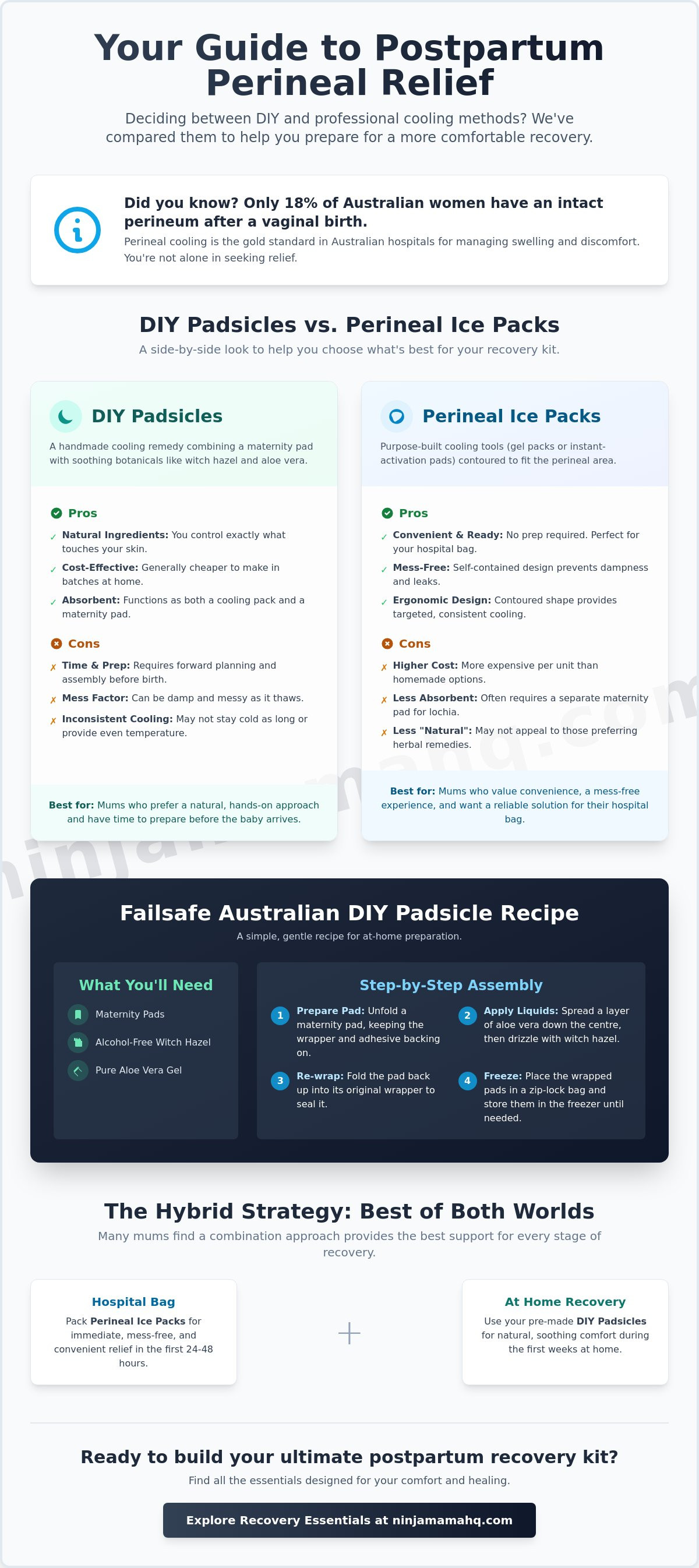
Step 1: Unfold your maternity pads but keep the individual wrappers intact. Do not remove the adhesive backing yet. Apply a generous, even layer of pure aloe vera gel down the centre of the pad.
-
Step 2: Use a dropper or a small spray bottle to saturate the pad with witch hazel. You want it damp, not soaking wet, to ensure it can still absorb postpartum lochia.
-
Step 3: The "parchment paper" trick is essential here. Place a small strip of baking paper over the treated surface before folding the pad back up. This prevents the aloe from sticking to the wrapper when frozen. Place them all in a sealed freezer bag for at least 4 hours.
Ingredient Safety Down Under
Safety is paramount when you're dealing with sensitive tissues and potential stitches. Many Australian health resources, including the guidance on a DIY ice pack from Fiona Stanley Hospital, emphasise the importance of gentle care. You must ensure your witch hazel is strictly "alcohol-free." Standard supermarket varieties often contain ethanol, which will cause a painful stinging sensation on tears or episiotomy sites.
We also suggest avoiding essential oils like lavender or tea tree in your initial batch. While they smell lovely, they can be too harsh for broken skin and may cause irritation or allergic reactions during the early postpartum period. Stick to pure, simple ingredients. Finally, choose a high-quality, thick maternity pad. Some ultra-thin options lose their ability to absorb liquid once they have been frozen and saturated with aloe, which can lead to leaks. When weighing up DIY padsicles vs perineal ice packs, remember that the DIY version is a one-use item designed for both cooling and absorption, so the quality of your base pad matters immensely.
Professional Perineal Ice Packs: Why Mums Choose Them
While the idea of a home-made remedy is lovely, the reality of those first 48 hours often calls for something more streamlined. You've got enough on your plate without worrying about aloe vera dripping on your kitchen tiles. This is where professional solutions shine. When weighing up DIY padsicles vs perineal ice packs, many Australian mums find that a curated product offers a level of precision and ease that a kitchen project simply can't match. It's about reclaiming your time so you can focus on those first precious cuddles.
Medical experts suggest you cool the area with an ice pack to manage the natural swelling that follows a vaginal birth. Professional packs are designed with this specific anatomy in mind. They feature slim, contoured shapes that sit comfortably against your body. They fit perfectly inside postpartum underwear, ensuring the cooling stays exactly where you need it most without shifting or bunching as you move around the maternity ward.
Instant vs. Reusable Cooling Pads
You generally have two main professional options to consider. First, instant perineal cooling pads use "crack and cool" technology. You simply fold the pad to activate a reaction that turns it icy cold in seconds. These are absolute essentials for your hospital bag because they don't require a freezer. The second option is reusable gel packs. These are fantastic for home use, providing consistent therapy. Many women find they even work as heat packs later in their recovery journey to support general pelvic floor comfort.
The "No Sticking" Advantage
One of the biggest hurdles with DIY versions is the risk of "freezer burn" or the pad sticking to sensitive skin. If you've ever had a frozen bag of peas stick to your hand, you know the feeling. Professional packs often come with soft, bespoke covers that provide a protective barrier. This is a game-changer if you have significant tearing or stitches. You get the relief of the cold without the harshness of direct ice contact or the mess of melting aloe.
Professional pads also tackle the challenge of lochia more effectively. While a DIY version starts as a saturated maternity pad, professional instant pads are engineered to be highly absorbent while they cool. This means you aren't sacrificing hygiene for comfort. It's a clean, grab-and-go system that provides a reliable temperature for the recommended 20-minute cooling window. This level of temperature regulation ensures you're soothing the area without over-chilling the tissues, which is vital for healthy blood flow and repair.
DIY Padsicles vs Perineal Ice Packs: The Honest Comparison
Choosing between DIY padsicles vs perineal ice packs often feels like a choice between a traditional home remedy and modern convenience. While both aim to soothe your recovery, the day-to-day reality of using them is quite different. You might start with the best intentions of a freezer full of hand-made pads, but many women find their needs change once they're actually in the thick of those first few days at home. Many assume DIY is the budget-friendly choice, but once you purchase high-quality maternity pads, pure aloe vera, and alcohol-free witch hazel, the cost gap narrows significantly compared to a reusable professional set.
The Mess and Convenience Factor
If you're planning to go the DIY route, you'll need to dedicate time during your 38th week of pregnancy to assemble, wrap, and freeze your batch. As the pads thaw against your body heat, the aloe and witch hazel mixture can become quite thin and soggy. This often leads to leaks on your favourite lounge chair or bedsheets, which is the last thing you want to be cleaning up with a newborn in your arms. The mess factor is the number one reason mums switch from home-made solutions to professional packs.
Which Is Better for Stitches and Tearing?
For those dealing with significant tearing or stitches, the texture and temperature of your cooling pad are vital. A common complaint with DIY versions is that they can be "too cold" or even rock-hard, making them difficult to position comfortably against a sore perineum. When a standard maternity pad is saturated and frozen, it loses its flexibility. Professional gel packs are designed to remain pliable even when icy, allowing them to contour to your body. This flexibility provides even cooling without the sharp, stiff edges of a frozen DIY pad that can sometimes stick to healing tissue.
Explore our perineal cooling range for a reliable, mess-free recovery.
The Hybrid Strategy: Building Your Ultimate Recovery Kit
You don't have to pick a side in the debate of DIY padsicles vs perineal ice packs. Most Australian mums find that a "best of both worlds" approach provides the most comprehensive relief. By mapping out your recovery in stages, you can use the strengths of each method to match your body's changing needs. This hybrid strategy ensures you're never caught without relief, whether you're in the hospital maternity ward or settling back into your own lounge chair at home.
Stage one begins the moment you're moved to your postnatal room. During these first 24 hours, professional perineal ice packs are your essential companions. They are ready to go without any freezer access. As you move into stage two, which is usually your first few days at home, you might introduce DIY padsicles to enjoy the herbal benefits of witch hazel while you're resting. Finally, stage three covers the weeks that follow, where reusable gel packs become versatile tools for late-stage swelling or even soothing heat therapy during your pelvic floor recovery.
The Hospital Bag Must-Haves
Don't leave your comfort to chance by relying on the old-school hospital method of "ice in a glove." These makeshift packs are often lumpy, leak quickly, and can feel aggressively cold against your skin. Packing instant-activation packs ensures you have controlled, therapeutic cooling from the very first hour after birth. Pairing these with disposable mesh underwear creates a stress-free experience. You won't have to worry about staining your own clothes or managing heavy laundry while you're trying to bond with your new arrival. It's about making those first few bathroom trips as gentle as possible.
Customising Your Healing
If the thought of freezing a batch of pads feels like too much work during your final weeks of pregnancy, you can still get the herbal benefits without the kitchen chaos. Many mums now use witch hazel wipes as a mess-free alternative. You can simply layer these over a professional cooling pad to get that soothing astringent effect without the risk of aloe leaking everywhere.
As your recovery progresses, you can combine your cooling therapy with a sitz bath soak for a complete healing ritual. Taking ten minutes for a warm soak can help soothe stitches and support tissue repair once the initial intense swelling has subsided. Before you head to the hospital, organise a dedicated recovery station in your bathroom at home. Stock it with your peri bottle, a fresh pack of maternity underwear, and your choice of DIY padsicles vs perineal ice packs. Having everything in one place gives you a sense of calm and control when you return home with your baby.
Take Control of Your Postpartum Comfort
You've now explored the herbal benefits of home-made remedies and the streamlined precision of professional cooling tools. Deciding on DIY padsicles vs perineal ice packs ultimately comes down to what makes you feel most prepared and supported. Many women find that a hybrid approach, using instant packs for the hospital and herbal versions at home, offers the perfect balance of convenience and care during those tender first weeks.
As an Australian owned and operated brand, Ninja Mama is proud to have supported over 10,000 Aussie mums with midwife recommended recovery essentials. We believe that practical solutions should also feel premium and nurturing. You deserve a recovery plan that lets you focus on your new baby rather than managing a mess in the kitchen or worrying about leaks on the lounge chair.
Ready to tick the most important item off your hospital bag checklist? Shop the Ninja Mama Perineal Recovery Collection to find everything you need for a confident, comfortable transition into motherhood. You're doing an amazing job, and we're here to support you every step of the way.
Common Questions About Postpartum Cooling
Are DIY padsicles safe to use if I have stitches?
Yes, DIY padsicles are generally safe for stitches as long as you use alcohol-free witch hazel and pure aloe vera. Alcohol causes an intense stinging sensation on broken skin, so you must check your labels carefully before assembly. When comparing DIY padsicles vs perineal ice packs, many mums find that professional packs with soft covers are gentler on stitches as they won't stick to healing tissue like a frozen pad might.
How many padsicles should I make before the baby arrives?
We recommend preparing a batch of 10 to 15 pads during your 37th or 38th week of pregnancy. This quantity should cover your needs for the first few days at home when swelling and discomfort are usually at their peak. If you're weighing up DIY padsicles vs perineal ice packs, remember that professional instant packs don't require any prep time and are much easier to pack in your hospital bag for immediate relief after birth.
Can I use normal aloe vera gel from the chemist for padsicles?
You can use chemist-bought aloe vera gel, but it must be 100 percent pure and free from alcohol, fragrances, or "blue" dyes. Many standard after-sun gels contain lidocaine or ethanol which can irritate sensitive postpartum skin. Look for organic, clear gels that list aloe as the primary ingredient to ensure your recovery remains gentle. Using a high-quality gel prevents unnecessary stinging on delicate tissues.
Do perineal ice packs help with haemorrhoids too?
Yes, cooling therapy is a fantastic way to manage the discomfort of postpartum haemorrhoids. The cold helps constrict blood vessels and reduces the throbbing sensation often felt after a long labour or intense pushing. Using a contoured gel pack provides targeted relief that sits comfortably against the area without the bulk of a traditional ice bag. Many women find this targeted cooling essential for sitting comfortably during those first few days.
How long should I leave a cooling pack on for?
The general rule is to apply cooling for about 20 minutes at a time. This is long enough to numb the pain and reduce swelling without over-chilling the delicate tissues or restricting blood flow. You can repeat this process every few hours during the first two days of your recovery. Always listen to your body and take a break if the area starts to feel too numb or if the cold becomes uncomfortable.
Can I use professional ice packs for a C-section recovery?
Professional ice packs are wonderful for C-section recovery to help manage swelling and bruising around the incision site. You can place a reusable gel pack over your dressing to provide a gentle, numbing effect that many women find helpful. Just ensure you have a soft barrier, like a cotton cover or your high-waisted postpartum underwear, between the pack and your skin to keep the incision area dry and protected.
What is the best way to store DIY padsicles in the freezer?
Store your pads in a sealed, airtight freezer bag to keep them hygienic and prevent them from absorbing food odours. Use a strip of baking paper over the aloe-treated surface before folding the pad back up. This simple trick ensures the pad doesn't stick to itself or the wrapper when frozen. It makes the pads much easier to open and use when you're tired and sore in the middle of the night.
Is it better to use witch hazel foam or padsicles?
It depends on whether you prefer physical cooling or a lightweight topical application. While foam is a popular choice for some, it doesn't provide the same inflammatory relief as a frozen pad or gel pack. If you want the herbal benefits without the mess of a DIY project, using witch hazel pad liners or wipes layered over a professional ice pack offers a more streamlined and effective recovery system for most mums.

Article by
Louise Beever
Louise Beever is the founder of Ninja Mama, an Australian postpartum recovery brand focused on creating premium, practical recovery essentials for new mothers. Since launching Ninja Mama in 2018, Louise has worked closely with thousands of postpartum women and healthcare retailers to better understand the realities of recovery after birth. Her work focuses on postpartum preparation, recovery support, and improving awareness around the fourth trimester.
Remember Mamas
The information provided in this article is intended for general educational and informational purposes only and should not be considered medical advice. Always seek guidance from your doctor, midwife, lactation consultant, or qualified healthcare professional regarding your individual circumstances, pregnancy, birth, or postpartum recovery.