
What if your post labour recovery plan didn’t need to be perfect to be useful? In the first days after birth, it’s normal to have questions about what your body needs, which recovery products are worth preparing and how to care for yourself while caring for your newborn. A flexible checklist can make post labour recovery feel more manageable without turning it into another job to get right.
You don’t need to buy everything or follow a rigid timetable. This guide offers practical ways to prepare for the early weeks, with ideas you can adapt to your birth, your home and the support available to you.
We’ll cover comfort and hygiene after vaginal birth or a caesarean, feeding support, rest and ways to organise essentials before you need them. You’ll also find guidance on when to contact your midwife, GP or another care professional if something concerns you. Use this as a reference for the fourth trimester, not a test you have to pass.
Key Takeaways
- Use the checklist as flexible prompts, not a timetable or a substitute for advice tailored to you.
- Organise bathroom essentials in advance so everyday hygiene feels simpler when you need them.
- Adapt your preparations to your birth experience, and follow your care team’s guidance.
- Build a daily check-in around food, fluids, rest, feeding support and asking for help.
- For post labour recovery concerns, know when to seek prompt advice from a qualified care professional.
Post labour recovery checklist: start with comfort, care, and realistic expectations
Recovery can feel different after every birth. Your needs may depend on your birth experience, your home and the support around you, so there’s no single timetable to match. Use this post labour recovery checklist as a set of flexible prompts, not a substitute for individual advice from your midwife, GP or another care professional.
Post labour recovery can involve physical and emotional support needs. The wider postpartum period includes changes that can unfold over time, but general information can’t determine what’s right for your circumstances. Let your care team’s guidance be your reference point.
For an overview of the fourth trimester, watch The Fourth Trimester: Healing After Childbirth from Michigan Medicine:
This checklist focuses on manageable daily foundations: comfort, hygiene, feeding support, rest and knowing when to ask for help. You don’t need to prepare every detail in advance. A few essentials kept within reach can mean less to organise when you’re tired.
What to organise before coming home
If you can, set up a small bathroom and bedside station before your baby arrives. Keep frequently used items within easy reach, alongside water, snacks and your phone. Depending on your needs, bathroom supplies might include a peri bottle, comfortable postpartum underwear and wipes. These are optional conveniences, not must-haves. Follow any care instructions you’re given.
Ask a support person to help with meals, household tasks and errands. Agreeing on a few practical jobs beforehand can make it easier to focus on your needs and your baby’s care.
How to use this recovery checklist without pressure
Choose only the steps that suit your birth, home and care advice. Some days, a quick wash and a snack may be enough. On another day, feeding support or a chance to rest may matter most. Your needs can shift, and asking someone to take a task off your hands is a practical part of planning.
For a broader preparation list, consider perineal ice packs for postpartum comfort as one optional item. Use products according to their instructions and your clinician’s advice. The aim isn’t to gather everything, but to make the essentials you choose easy to find.
If something feels worrying, new or worse, contact your care team for advice rather than relying on a checklist or video to assess it.
Post labour recovery checklist for everyday hygiene and perineal comfort
A bathroom routine doesn’t need to be complicated. Keeping a few clean supplies together can make personal care more straightforward, particularly if you’re tender or tired. Your maternity care team’s instructions come first, as the right advice can depend on your birth and circumstances.
A simple bathroom routine after birth
Before you need them, put clean supplies somewhere easy to reach. A peri bottle, soft postpartum underwear and wipes are optional convenience items, not essentials or treatments. You may find them useful, or your care team may recommend different steps.
- Wash your hands before and after personal care.
- Keep clean supplies within reach so you’re not searching for them when you need them.
- If rinsing with water, use it gently and follow your maternity care team’s advice.
There’s no need to add cleansing products or change how often you clean based on a general online checklist. Follow the guidance you’ve been given, and ask your midwife, GP or another care professional if you’re unsure. For more information about peri bottles, see this peri bottle overview. The US Office on Women’s Health also offers general information about recovering from birth. Use Australian care advice for guidance specific to you.
Comfort options for tenderness and swelling
Some postpartum mothers use a cold pack as a comfort measure. If you’re considering one, follow the product directions and check with your clinician if you’re unsure whether it’s suitable. A product intended for comfort isn’t a substitute for care or a promise of healing.
Perineal cooling packs are one optional item to consider when organising bathroom supplies. Stop using any product that causes discomfort. If you’re concerned about how you feel, or symptoms are new, worsening or worrying, contact your care team for advice.
Simple preparations can reduce the number of decisions you need to make during post labour recovery. Keep your routine manageable, use only what feels appropriate and follow your clinician’s instructions.
Post labour recovery after vaginal birth or caesarean: adapt your checklist
Shape your checklist around the care you’ve been advised to follow, without assuming how quickly you’ll feel ready for particular activities. Vaginal birth and caesarean recovery can involve different care needs, but neither follows one predictable schedule. Your individual recovery depends on your circumstances and your care team’s guidance.
Use the comparison below as planning prompts, not medical instructions or a timeline. Your midwife, doctor or surgical team can help you decide which steps apply to you.
| After vaginal birth | After caesarean birth |
|---|---|
| Keep chosen bathroom and comfort supplies easy to reach. | Keep the wound-care instructions from your surgical team accessible. |
| Ask which personal-care steps are suitable for you. | Follow the movement guidance provided at discharge. |
| Arrange help with meals, errands and household tasks. | Plan practical help with lifting, meals and newborn care in line with discharge guidance. |
| Consider perineal products only as optional comfort items, separate from clinical care. | Ask your care team before adding a scar product to your routine. |
Checklist prompts after vaginal birth
There’s no need to assume you’ll have a particular injury, symptom or personal-care requirement. Ask your midwife or doctor which hygiene and comfort steps are appropriate for you. A peri bottle, postpartum underwear or perineal cooling product may be useful to have nearby, but these are optional supports, not a replacement for clinical advice or treatment.
Checklist prompts after caesarean birth
For caesarean recovery, follow your surgical team’s wound-care and movement instructions rather than relying on general online advice. Before coming home, ask which day-to-day tasks you may need help with, including lifting, meals and newborn care. Keep those plans consistent with your discharge guidance.
Scar products are optional, not a required part of everyone’s routine. If you’re considering silicone C-section scar patches, check with your care team about whether and when a product is suitable. Don’t use a product in place of your team’s wound-care instructions.
After either type of birth, contact your care team if you’re unsure how to adapt your post labour recovery checklist. Asking can help you focus on the care that fits your situation rather than trying to follow someone else’s routine.
Post labour recovery checklist for feeding, rest, and emotional wellbeing
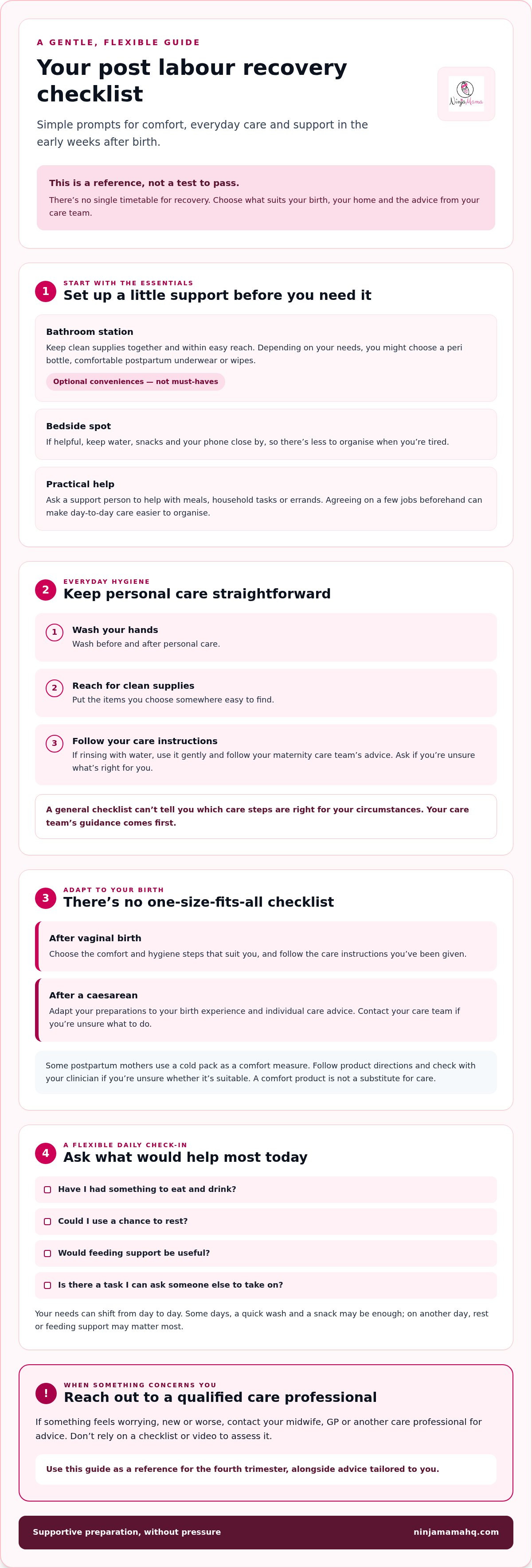
Your daily check-in doesn’t need to be another task to complete perfectly. Treat it as a pause to notice what might help you feel supported. Post labour recovery includes caring for your physical needs and making space to talk about how you’re feeling.
- Nourishment: Have you eaten something that’s easy to manage?
- Hydration: Is a drink within reach?
- Rest: Is there a manageable opportunity to lie down or pause?
- Feeding support: Do you have what you need, or would advice be helpful?
- Practical help: Is there a task you can ask someone else to take on?
Support from others is part of postpartum care, not a bonus you have to earn. A specific request, such as bringing lunch or handling a household task, can be easier to act on than a general offer to help.
Make feeding support practical
If you’re feeding your baby, keep water and a snack nearby if that suits you. You could also ask someone to handle a household job while you feed. Feeding choices and experiences vary. If you have ongoing concerns or feeding feels difficult, contact your midwife, GP or a qualified feeding support professional for advice suited to you.
Lactation support products, such as tea or a drink, are optional items some parents may choose to include in their routine. They aren’t treatments or substitutes for individual feeding advice. If you’d like to explore one option, read about the lactation tea bags and consider whether they suit your preferences.
Build rest and emotional check-ins into the day
Rest may come in short, manageable opportunities. If someone offers help, name a task that would make a difference, such as preparing a meal or keeping you company while you take a break. You don’t have to host or make their visit easier for them.
Emotional changes can be part of the postpartum experience, but difficult feelings shouldn’t be dismissed or endured alone. If a change in how you feel is persistent, worrying or affecting your wellbeing, tell someone you trust and contact your GP, midwife or another health professional. You deserve to be heard and supported.
If you feel unsafe or think you may harm yourself or someone else, seek urgent help now. In Australia, call 000 for immediate danger, or go to an emergency department. If you can, tell a trusted person and ask them to stay with you while you get help.
When to seek help after labour and what to do next
If a symptom is new, severe, getting worse or worrying you, contact a qualified care professional promptly. You don’t need to work out the cause on your own. A checklist can help you prepare questions, but it can’t assess symptoms or replace advice tailored to you.
Keep the next steps simple: contact your maternity care team or the clinician responsible for your follow-up, explain what’s changed and ask what to do. Follow their advice, including whether to attend an urgent care service. If they direct you to seek urgent care, do so without delay.
Questions to raise with your care team
Ask about contact arrangements before you leave hospital or at a follow-up appointment. Write down the answers or save them somewhere you and your support person can find them.
- Which symptoms need same-day advice, and who should I contact after discharge?
- What personal wound-care steps should I follow for my birth and circumstances?
- Who should I speak to about pain management or changes to my activity?
- When is my follow-up, and what should I do if I have concerns before then?
Explain what you’ve noticed as clearly as you can, including when it began and whether it’s changing. Your care professional can ask follow-up questions and advise on the next step. Online guidance can help you organise your thoughts, but it can’t determine what an individual symptom means.
A flexible final recovery checklist
Use this as a quick practical check, not another standard to meet. Adjust it to your home, birth experience and care team’s instructions.
- Are bathroom supplies, comfortable clothing and water easy to access?
- Can you find your care team’s contact details and personalised instructions?
- Do you know how to get feeding support if you need it?
- Have you arranged a realistic opportunity to rest and asked for help with a specific task?
Some items may not apply, and your priorities may change from day to day. Adapting the list to your needs is sensible, not falling behind. For optional comfort and hygiene items, explore Ninja Mama’s postpartum recovery essentials and choose only what feels useful to you.
Make your recovery checklist work for you
Post labour recovery isn’t a race or a routine you need to get exactly right. Let your birth experience and care team’s advice shape the practical steps that suit you. Organising bathroom essentials can simplify daily hygiene, while checking in on food, fluids, rest and feeding support can help you notice what you need. If a symptom or feeling worries you, contact a qualified care professional rather than relying on a checklist alone.
Small adjustments count. Your needs may change from one day to the next, and asking someone to help with a meal, errand or household task is a practical way to care for yourself.
Ninja Mama is an Australian-owned and operated small business founded by a mother, with optional products across perineal care, postpartum hygiene, comfort and feeding support. If you’re preparing supplies, explore Ninja Mama’s postpartum recovery essentials and choose what feels useful for your own routine.
You deserve support that fits your recovery. Take it one practical step at a time.
Frequently Asked Questions
How long does post labour recovery take?
There isn’t one set timeframe for post labour recovery. Your experience can depend on your birth, your health and the support available to you, and different aspects of recovery may change at different rates. Rather than comparing yourself with someone else or following a strict timetable, use the personalised guidance from your midwife, GP or another care professional. Ask what follow-up you need and who to contact if you have concerns.
What should I prepare for post labour recovery at home?
Prepare a few practical essentials where you can reach them easily. You might set up bathroom supplies, comfortable clothing, water, snacks and your phone near your usual resting spot. A peri bottle, postpartum underwear or wipes may be useful optional conveniences, depending on your preferences and care advice. It can also help to arrange support with meals, household tasks and errands, so you’re not trying to manage everything while caring for your newborn.
Is a peri bottle useful after giving birth?
A peri bottle can keep water close for rinsing after using the toilet, if that suits your needs and your maternity care team’s advice. Some people find one convenient, but it isn’t essential for everyone or a medical treatment. Follow your clinician’s personal-care instructions, and ask if you’re unsure whether or how to use one.
Can I use cold packs during post labour recovery?
Some postpartum mothers choose cold packs as an optional comfort measure. Whether one is appropriate for you can depend on your circumstances, so follow the product directions and check with your care professional if you’re uncertain. Stop using it if it causes discomfort. A cold pack isn’t a substitute for clinical advice. Contact your midwife, GP or another care professional if symptoms are worrying or getting worse.
What is different about recovery after a caesarean birth?
After a caesarean birth, your care plan may include specific instructions from your surgical team about wound care and movement. Follow those instructions rather than relying on a general checklist or another person’s experience. Before you go home, ask what practical help you may need with meals, lifting and newborn care, and how to manage daily tasks in line with your discharge advice. Recovery varies, so check uncertainties with your team.
When should I contact a health professional after giving birth?
Contact a qualified health professional promptly if a symptom is new, severe, worsening or worrying you. Ask your maternity care team which contact pathway to use after discharge and which concerns need same-day advice. If you’re directed to urgent care, follow that advice. For immediate danger, call 000. An online checklist can help you prepare questions, but it can’t assess symptoms or replace care tailored to your situation.
How can I make post labour recovery easier when caring for a newborn?
Make everyday tasks easier by keeping essentials within reach and sharing the practical load where possible. Keep water, snacks, your phone and chosen care supplies nearby. Ask someone to bring a meal, handle an errand or take on a household job while you rest or feed your baby. Feeding experiences differ, so reach out to your midwife, GP or a qualified feeding support professional if you have ongoing concerns. Adjust your routine as your needs change.

Article by
Louise Beever
Louise Beever is the founder of Ninja Mama, an Australian postpartum recovery brand focused on creating premium, practical recovery essentials for new mothers. Since launching Ninja Mama in 2018, Louise has worked closely with thousands of postpartum women and healthcare retailers to better understand the realities of recovery after birth. Her work focuses on postpartum preparation, recovery support, and improving awareness around the fourth trimester.
Remember Mamas
The information provided in this article is intended for general educational and informational purposes only and should not be considered medical advice. Always seek guidance from your doctor, midwife, lactation consultant, or qualified healthcare professional regarding your individual circumstances, pregnancy, birth, or postpartum recovery.