

Have you ever stood up to pick up your baby and felt like your hips were made of jelly rather than bone? It is an unsettling sensation that many new mums describe as feeling "wobbly" or completely unstable, especially in the lower back and pelvis. You aren't imagining things; you certainly aren't alone in wondering if your body will ever feel like its sturdy, pre-pregnancy self again.
This common experience is known as Postpartum Joint Laxity. It is a natural result of the hormones that helped your body soften and expand to bring your little one into the world. While feeling like "Bambi on ice" can be stressful, understanding the science behind your ligaments is the first step toward reclaiming your physical confidence. We promise to help you navigate this transition with grace and practical wisdom.
Gaining a clear picture of how the hormone relaxin affects your frame is the key to moving safely through your new daily routine. By identifying where your body needs extra care and choosing the right supportive tools, you can transition through this wobbly phase with confidence and a renewed sense of strength.
Key Takeaways
- Understand how the hormone relaxin lingers after birth and why it is the primary cause of Postpartum Joint Laxity.
- Identify the common signs of ligament instability, from feeling "wobbly" while walking to hearing clicks and pops in your hips and pelvis.
- Learn practical ways to adjust your daily movements to protect your lower back and joints during the fourth trimester.
- Discover the essential role of nutrition, hydration, and supportive recovery tools in helping your body feel grounded and secure again.
Understanding Postpartum Joint Laxity: Why You Feel a Bit Wobbly
Have you ever stood up from the couch and felt a strange shifting sensation in your hips? Or perhaps you've noticed that your ankles feel less stable when you're carrying your little one? This isn't just "new mum exhaustion." It's a physical reality known as Postpartum Joint Laxity. Essentially, your ligaments, the connective tissues that hold your bones together, are still in a softened state following pregnancy. It's a very common experience, and while it feels a bit unnerving, it's a completely normal part of the fourth trimester. You're not losing your strength forever; your body is simply still in "expansion mode." As a team led by a mum who has been there, we know exactly how vulnerable this stage can feel. Relaxin is the hormone responsible for softening these joints and ligaments to allow your pelvis to open for birth.
The Role of Relaxin in Your Recovery
Relaxin does exactly what its name suggests. It tells your body to relax and loosen up to make room for baby. But here's the thing: relaxin doesn't just disappear the moment you hold your newborn. It lingers. While every woman's body is different, this hormone can stay in your system for up to five or six months after birth. If you're breastfeeding, your levels might remain elevated for longer. This means your joints stay "stretchy" for a while. It's why you might still feel a bit uncoordinated or "loose" months into motherhood. Understanding this timeline helps take the pressure off. Your body isn't failing you; it's just following a hormonal schedule that prioritises flexibility over stability for a season.
Why Your Core Strength Matters
Why does this looseness feel so much more obvious after the birth? It's largely down to your core. During those nine months, your abdominal muscles stretched to their absolute limit. When your core muscles are lengthened, they can't provide the "internal scaffolding" your spine and pelvis need. This lack of muscular support puts even more pressure on your already lax ligaments, which is a key factor in Postpartum Joint Laxity. It's a bit like trying to hold up a tent with loose poles and no guy ropes. Without that core engagement, your joints take the brunt of every movement, from lifting the pram to bending over the change table. Gently reconnecting with your pelvic floor and deep abdominals is the best way to support your frame. It's not about "bouncing back." It's about giving your joints the muscular backup they're currently missing.
Take it slow. Your body has just performed a miracle, and it's okay if things feel a bit wobbly for a while. By focusing on gentle movement and understanding your body's needs, you can navigate this phase with confidence.
Common Symptoms: Where You Might Feel the "Give"
Postpartum Joint Laxity doesn't always show up as a general feeling of being "unstable." Often, it reveals itself in very specific, sometimes surprising ways. You might be walking to the kitchen and hear a loud "clunk" in your hip, or feel a sharp twinge in your pelvis when you step out of the car. While these sensations can be startling, they are usually just your ligaments finding their way back to their original tension. It's helpful to remember that your body has undergone a massive structural shift. Those clicks and pops are often just air bubbles moving in the joint space or ligaments sliding over bone because things are a little looser than usual.
Pelvic Girdle and Lower Back Instability
The most common area to feel the effects of relaxin is your pelvic girdle. The sacroiliac (SI) joints, located where your lower spine meets your pelvis, often feel tender or "shifty" during the fourth trimester. You might also experience "lightning" pains, which are those sharp, sudden zaps in the pubic area. These happen because the pubic symphysis, the joint at the front of your pelvis, was designed to widen during labour and is now slowly knitting back together. Additionally, your posture probably shifted during pregnancy to compensate for your growing bump, often leading to a deeper curve in your lower back. This lingering "pregnancy posture" can make your back feel achy and unsupported while your ligaments are still lax. Many women find that using a supportive oil roller as part of a gentle massage ritual can help provide a sense of comfort during these physical transitions.
Hands, Wrists, and Feet: The Surprising Spots
Did you know your feet can actually change size during pregnancy? It isn't just swelling. The ligaments in your feet can spread under the weight of pregnancy and the influence of hormones, sometimes leaving you with a slightly wider foot even after the baby arrives. Your wrists are another hotspot for "weird" sensations. You might have heard of "Mum Thumb" or De Quervain’s tenosynovitis. This is often a combination of repetitive lifting and the fact that your wrist ligaments are more prone to inflammation when they are lax. If you notice a dull ache or a catching sensation in your thumb when you pick up your baby, it's likely a result of this temporary joint vulnerability combined with the physical demands of new motherhood.
While most of these "wobbly" feelings are a normal part of the recovery journey, it's vital to listen to your body's signals. There is a difference between a bit of recovery "weirdness" and pain that requires a professional opinion. If you experience pain that stops you from walking, numbness that radiates down your legs, or a complete inability to engage your pelvic floor, it is time to chat with a women's health physiotherapist. They are experts at helping you navigate Postpartum Joint Laxity and can provide tailored exercises to help you feel strong and grounded again. Trust your instincts; you know your body better than anyone else.
Daily Life with Lax Joints: Avoiding Common Postpartum Strains
Navigating the early weeks of motherhood often feels like a physical marathon. When your ligaments are still soft from Postpartum Joint Laxity, the way you move during "ordinary" tasks matters more than ever. It's about working with your body rather than against it. One of the simplest changes you can make is how you get out of bed. Instead of a traditional sit-up, which can strain your abdominal gap and pelvis, try "log rolling." Roll onto your side with your knees together, then use your arms to push yourself up while swinging your legs over the edge. This small shift keeps your pelvis neutral and prevents unnecessary shearing forces on your joints. You should also try to keep your knees together when getting out of the car to avoid overstretching the pubic symphysis.
Ergonomic Feeding and Carrying
Feeding a newborn often leads to the infamous "mum slouch," where your shoulders roll forward and your neck cranes down. Whether you are breastfeeding or bottle-feeding, the goal is to bring your baby up to your level. Use plenty of pillows to support your arms and the baby’s weight so your shoulders can stay relaxed. If you find your back is aching, try sitting down for tasks you usually do standing, like folding the laundry or prepping a quick snack. When carrying your little one, try to consciously switch sides. It's easy to favour one hip, but this creates an imbalance that your lax ligaments aren't ready to handle yet. If you are breastfeeding, you might find that keeping a warm cup of lactation tea nearby encourages you to sit back and relax into a supportive position.
Posture and Core Awareness
Your core is your body's natural brace. While it's still recovering, you can help it along by gently engaging your pelvic floor before you lift anything, even something as small as the nappy bag. If you need to lift the pram into the boot, keep it close to your body and bend at the knees. Avoid heavy lifting as much as possible in these first few months. Your joints are in a vulnerable state, and pushing too hard too soon can lead to lingering strains. Think of your movement as a form of self-care. By being mindful of your posture and avoiding the "mum slouch," you're giving your body the space it needs to heal properly. Remember, your ligaments are doing their best; they just need a little extra help from your muscles right now.
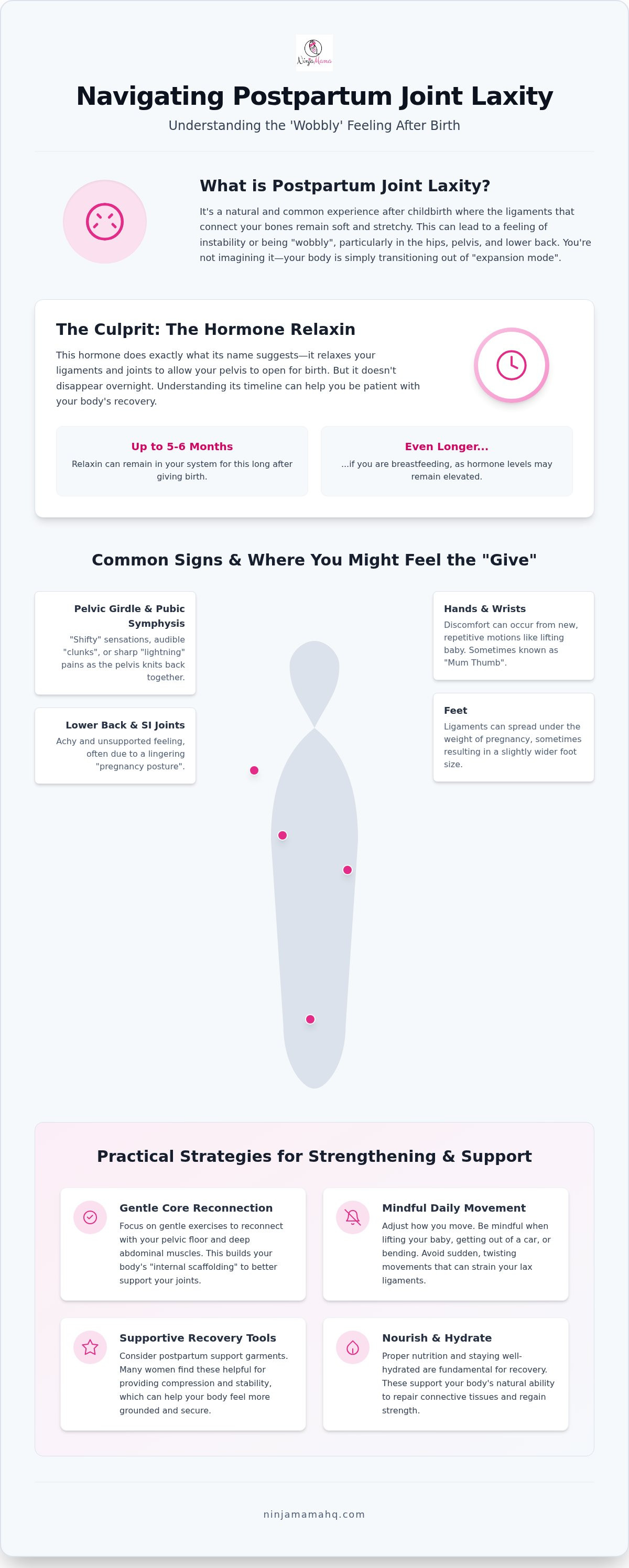
Practical Strategies for Strengthening and Support
While your body is busy knitting itself back together, you can take a proactive role in your healing journey. Recovery from Postpartum Joint Laxity isn't just about waiting for hormones to settle; it's about creating a "support system" for your frame. This starts from the inside out. Prioritising nutrient-dense foods and staying hydrated is essential for tissue repair. Think of water and good fats as the lubrication your joints need to function smoothly while they are in this vulnerable state. Integrating these small acts of self-care into your daily routine makes a world of difference to how you feel physically. It is perfectly okay to ask for help with the heavy lifting so you can focus on resting and letting your ligaments tighten naturally.
Gentle Movement and Pelvic Floor Care
It is tempting to want to "get moving" again, but high-impact exercise like running or jumping should be avoided in these early weeks. Your ligaments simply aren't ready for that level of stress yet. Instead, start with something as simple as breathing into your belly. This deep diaphragmatic breathing helps you gently reconnect with your core and pelvic floor without putting pressure on your joints. We always recommend booking an appointment with a Women’s Health Physiotherapist for a personalised check-up. They are the gold standard for assessing your specific needs; they can help you create a safe plan for strengthening your body from the ground up. Taking it slow now prevents long-term strain later.
Supportive Gear and Comfort Essentials
Sometimes, the best way to manage Postpartum Joint Laxity is to give your body a little external help. Many mums find that wearing supportive postpartum underwear provides a much-needed sense of being "held in" and secure. This gentle compression can act as a temporary substitute for the core stability you are still rebuilding. For those days when your hips or lower back feel particularly achy, heat and cold therapy can be your best friends. Using a postpartum recovery kit designed with these physical needs in mind ensures you have everything on hand to soothe your body. Whether it is a warm soak or a cooling pack, these tools are about making your recovery as comfortable as possible. You deserve to feel grounded while you navigate the beautiful chaos of new motherhood.
Ready to feel more supported during your recovery? Explore our range of postpartum recovery bundles to find your perfect fourth-trimester companion.
How Ninja Mama Supports Your Recovery Journey
At Ninja Mama, we believe that you shouldn't have to navigate the fourth trimester alone. We are an Australian-owned and operated brand, founded by a mum who truly understands the physical and emotional toll of the early weeks. Our mission is to provide you with practical, premium tools that help you feel like yourself again. While you are busy caring for your new arrival, it is vital to prioritise your own healing. Having the right toolkit ready when you get home from the hospital can transform your recovery from overwhelming to manageable. We focus on the intersection of functionality and comfort, ensuring that your physical support feels like a luxurious act of self-care rather than a clinical chore.
Comfort Essentials for the Fourth Trimester
Comfort is at the heart of everything we create. When you are dealing with Postpartum Joint Laxity, even simple tasks like going to the bathroom can feel daunting. That is why we love the upside down peri bottle. It allows you to stay clean and comfortable without having to twist or strain your sore, unstable joints. For those quiet moments of rest, a sitz bath soak is designed to provide a sense of relief to your tired muscles and joints. These aren't just products; they are small acts of kindness you can show your body during a time of great change. Our designs are rooted in the specific needs of our community, offering you a reliable expert to lean on during this unique physical transition.
A Message of Encouragement for New Mums
We want to remind you that this "wobbly" phase is just a season. It won't last forever. Your body is incredibly resilient; with a bit of patience and the right support, you will feel sturdy and strong once more. Small acts of self-care build your confidence and help you feel more in control of your physical well-being. Whether it is using a supportive oil or taking five minutes for a warm soak, these moments matter. We invite you to join the Ninja Mama community, where we share wisdom, support, and plenty of encouragement. You are never navigating this journey alone, and we are right here with you every step of the way. Trust the process, listen to your body, and remember that you are doing an incredible job.
Your Journey to Feeling Strong and Steady
Navigating the "wobbly" weeks after birth is a unique physical challenge, but it is one you don't have to face without a plan. By understanding that Postpartum Joint Laxity is a natural result of your body's incredible ability to give life, you can move forward with patience rather than anxiety. Remember that your ligaments are simply in a season of transition. Prioritising gentle movement, practicing safe lifting, and listening to your body's signals will help you rebuild that essential internal stability. You are doing the hard work of recovery while also caring for a new life; give yourself the grace you deserve.
Ninja Mama is an Australian-owned small business dedicated to supporting you through every step of the fourth trimester. Our products are designed for comfort and practical recovery, trusted by thousands of Australian mums who have been exactly where you are right now. Whether you need the physical security of supportive underwear or the soothing relief of a sitz bath, we've curated the perfect toolkit for your healing. Explore the Ninja Mama Postpartum Recovery Collection today to find the support your body needs. You've got this, mama. We are cheering you on as you grow stronger and more confident every single day.
Frequently Asked Questions
What exactly is postpartum joint laxity?
Postpartum joint laxity is the continued loosening of your ligaments and joints after childbirth due to the lingering effects of pregnancy hormones. During pregnancy, your body produces relaxin to help your pelvis expand; however, this hormone doesn't disappear the moment your baby is born. This leaves your connective tissues feeling "stretchy" or unstable as they slowly return to their usual tension over several months.
How long does joint laxity last after giving birth?
Postpartum Joint Laxity typically lasts for several months as your hormone levels gradually stabilise. Research suggests that relaxin can stay in your system for up to five or six months after birth. For some women, especially those who are breastfeeding, the sensation of loose joints might persist slightly longer. It is a temporary phase, and most mums feel their physical stability returning by the half-year mark.
Is it normal for my hips to click or pop after pregnancy?
Yes, hearing clicks and pops in your hips or pelvis is very common and usually quite harmless. These sounds are often just air bubbles moving within the joint space or ligaments sliding over bone because they are a bit looser than usual. As long as the clicking isn't accompanied by sharp pain or a feeling of the joint "locking," it is simply a part of your body's natural recalibration process.
Can breastfeeding make joint laxity worse or last longer?
Breastfeeding can cause joint laxity to persist for a longer duration because your body continues to produce relaxin while you are lactating. While it doesn't necessarily make the laxity "worse," the hormonal environment keeps your ligaments softer for an extended period. This is why many breastfeeding mums notice they still feel a bit "jelly-like" until they begin to wean their little ones.
When should I see a doctor or physio about my joint pain?
You should seek professional advice if your joint pain is constant, severe, or prevents you from performing daily tasks like walking or lifting your baby. If you experience clicking accompanied by sharp pain, notice significant swelling, or feel a complete lack of control over your pelvic floor, a women's health physiotherapist can help. They are experts at creating tailored recovery plans that address your specific structural needs.
Can I do yoga or Pilates with postpartum joint laxity?
You can certainly do yoga or Pilates, but it is important to modify your practice to avoid overstretching. Because your ligaments are already quite "stretchy," you might find it easy to push too far into a pose without realising it. Focus on stability and gentle strength-building movements rather than deep flexibility. Always let your instructor know you are in the postpartum phase so they can guide you safely.
Does wearing a support belt help with loose joints after birth?
Wearing a support belt can be incredibly helpful for providing external stability while your ligaments are still lax. These belts act as a temporary "brace" for your pelvis and SI joints, reducing that unsettling "wobbly" feeling during walks or daily chores. Many women find that using supportive gear alongside gentle core exercises helps them feel much more grounded and secure as they navigate the fourth trimester.
Will my feet ever go back to their pre-pregnancy size?
For many women, the change in foot size during pregnancy is permanent. This happens because the combination of increased weight and relaxin causes the ligaments in the feet to spread and the arches to flatten slightly. While any fluid retention will go down within a few weeks of birth, you might find that you remain a half-size larger or need wider shoes than you did before.

Article by
Louise Beever
Louise Beever is the founder of Ninja Mama, an Australian postpartum recovery brand focused on creating premium, practical recovery essentials for new mothers. Since launching Ninja Mama in 2018, Louise has worked closely with thousands of postpartum women and healthcare retailers to better understand the realities of recovery after birth. Her work focuses on postpartum preparation, recovery support, and improving awareness around the fourth trimester.
Remember Mamas
The information provided in this article is intended for general educational and informational purposes only and should not be considered medical advice. Always seek guidance from your doctor, midwife, lactation consultant, or qualified healthcare professional regarding your individual circumstances, pregnancy, birth, or postpartum recovery.