

What if your most important role during the fourth trimester isn't just holding the baby, but becoming the lead architect of your partner’s physical and emotional recovery? It's completely natural to feel a little helpless when you see the person you love navigating the intensity of postpartum healing. You want to be the best support possible, yet the technical side of recovery tools and household logistics can feel overwhelming when you're also running on very little sleep.
We understand that you want to get this right. This guide will show you exactly how support partners can help after birth by managing the load and creating a true sanctuary for healing. You'll discover tactical, empathetic ways to handle everything from prepping chilled perineal pads to managing the daily household flow with total confidence. We've designed this to turn that feeling of uncertainty into a clear, actionable plan.
We're going to break down a clear checklist of daily tasks and explain how to use essential recovery tools safely and effectively. By the end of this article, you'll feel prepared to take the lead, allowing your partner the space to rest while you build an even deeper bond with both your partner and your new bub.
Key Takeaways
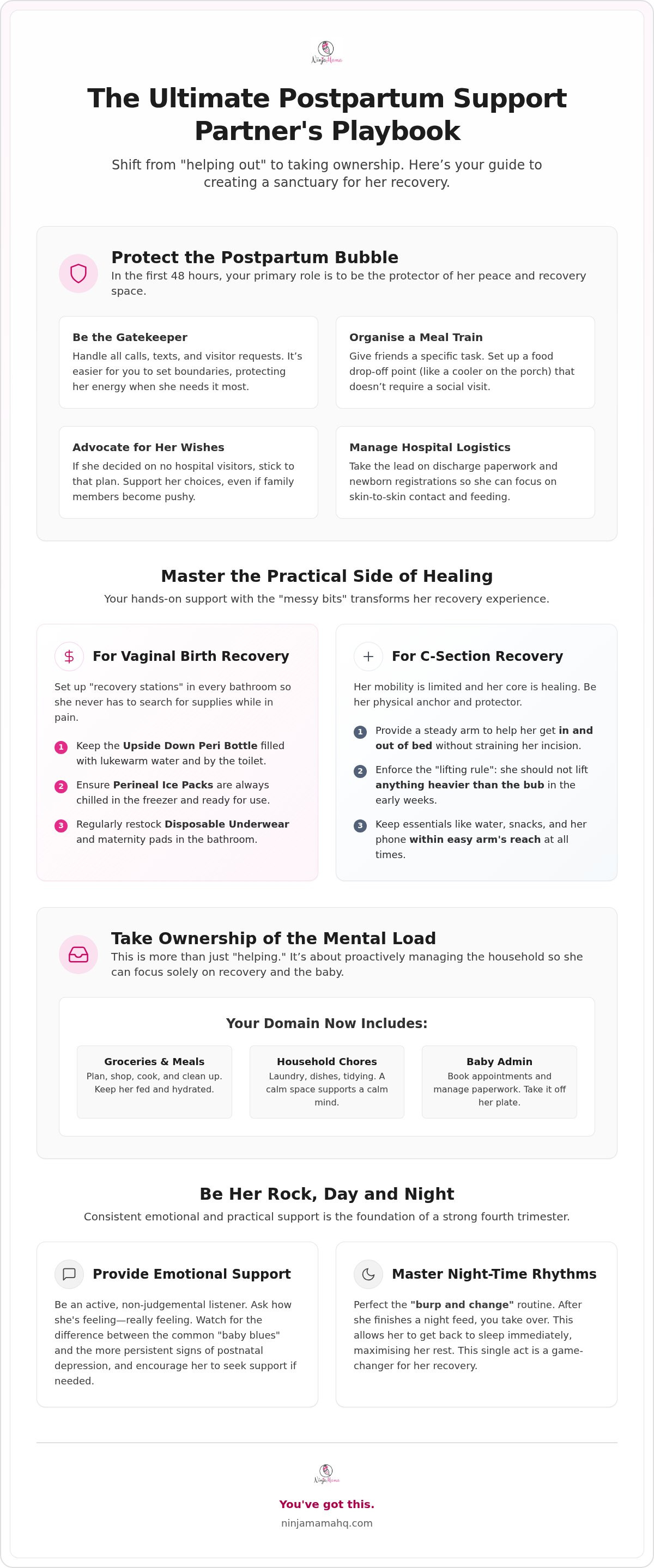
- Learn how to protect the "postpartum bubble" by acting as the chief gatekeeper for visitors, ensuring your partner has the space to bond and recover.
- Discover practical ways for how support partners can help after birth by setting up recovery stations and preparing essential tools like chilled perineal pads.
- Shift from "helping" to "taking ownership" of household logistics and baby admin to significantly reduce your partner's mental load.
- Understand how to recognise the difference between the baby blues and postnatal depression while providing the empathetic, active listening your partner needs.
- Master the "burp and change" routine to support feeding rhythms and ensure the birthing parent gets much-needed rest during the night.
Protecting the Postpartum Bubble in the First 48 Hours
Imagine a world where the only thing that matters is the sweet smell of your new bub and the steady rhythm of your partner’s breathing. This is the "postpartum bubble." It's a sacred, fragile window where oxytocin, the love hormone, needs to flow freely to support bonding and the start of the breastfeeding journey. During this postpartum period, the environment dictates the recovery pace. One of the most powerful ways how support partners can help after birth is by acting as the primary protector of this space. You aren't just a helper; you're the security detail and the sanctuary creator.
The Gatekeeper Role: Handling Family and Friends
Everyone wants a cuddle with the new arrival, but your partner’s physical and emotional healing must come first. Take absolute charge of the guest list. It's your job to set boundaries early and often. You might say, "We're soaking up this quiet time as a new family and will let you know as soon as we're ready for visitors." It’s much easier for you to be the "bad guy" than for a recovering mother to turn away her own parents or friends. This protects her energy when she needs it most.
Consider these tactical moves to keep the bubble intact:
- Manage the phone: Her phone should be for taking photos of the bub, not for replying to fifty "Is the baby here yet?" texts. Put her device on silent and handle all the outgoing updates yourself.
- Organise a meal train: If friends ask how to help, give them a specific task. Set up a food drop-off point, like a cooler bag on the porch, that doesn’t require a social visit.
- Advocate for her wishes: If she decided before the birth that she didn't want hospital visitors, stick to that plan. Support her choice if family members become pushy.
Maximising Rest in the Maternity Ward
The hospital can feel like a whirlwind of beeping monitors, nurse shifts, and endless paperwork. You can reduce the stress by taking the lead on the "admin" of hospital discharge and newborn registrations. While she focuses on skin-to-skin contact, you can ensure she has her postpartum essentials within arm’s reach at all times. This includes keeping her water bottle full and her recovery kit accessible. Dim the harsh overhead lights and keep the room quiet during those first, often intense, breastfeeds. This is exactly how support partners can help after birth; by managing the world so she can focus entirely on her healing and the bub.
Managing the Messy Bits: Supporting Her Physical Recovery
Physical recovery after birth is often intense and deeply personal. Whether it was a vaginal delivery or a C-section, your partner's body has just performed a marathon followed by a major medical event. This is why physical recovery is a two-person job in the first week. One of the most practical ways how support partners can help after birth is by managing the logistics of healing so she doesn't have to think about them. By taking charge of the "messy bits" with empathy and zero fuss, you transform the bathroom from a place of potential stress into a sanctuary of relief.
The Perineal Recovery Kit Setup
If your partner had a vaginal birth, the bathroom will be her most frequented recovery zone. You can take the lead by setting up "recovery stations" in every bathroom of the house. This means she never has to hunt for supplies when she’s in pain. Be proactive. Keep the Upside Down Peri Bottle filled with lukewarm water and placed within easy reach of the toilet. Monitor the freezer to ensure perineal ice packs are always chilled and ready for use. Ensuring there is a fresh supply of disposable postpartum underwear and pads in the cupboard takes a massive mental load off her shoulders.
C-Section Specific Support
Recovery from a C-section brings a different set of challenges, primarily around mobility and core strength. Your role here is to be her physical anchor. Help her get in and out of bed by offering a steady arm, ensuring she doesn't strain her incision site. You must also be the enforcer of the "lifting rule." In the early weeks, she shouldn't lift anything heavier than the bub. Once she has been cleared by her midwife or doctor, you can assist with the application of silicone scar patches to support the healing of the incision. This consistent, quiet support allows her body to knit back together without unnecessary setbacks.
Beyond these specific tasks, stay on top of the basics. Remind her to take her prescribed pain relief on time and keep a large bottle of water nearby at all times. Hydration is essential for healing and milk production. If you want to ensure you have every essential covered before the big day, consider exploring our Postpartum Recovery Kits which are designed to take the guesswork out of these early days. This simple preparation means you can focus entirely on being the recovery coordinator she needs.
Taking Over the Mental Load and Household Admin
Most partners enter the fourth trimester with a genuine desire to help, yet they often wait to be asked before jumping in. While well-intentioned, this actually adds to the birthing parent’s mental load. They have to identify the problem, decide on a solution, and then delegate it to you. One of the most transformative ways how support partners can help after birth is by moving from a "helper" mindset to a "manager" mindset. This means you aren't just doing the dishes; you're owning the entire kitchen ecosystem so your partner doesn't have to spend a single second thinking about logistics.
In the first fortnight, "What should we have for dinner?" is a forbidden question. Decision fatigue is real, especially when combined with sleep deprivation. Instead of asking, provide options or simply make the executive call. Your goal is to anticipate needs before they are even voiced. If you see an empty water bottle, fill it. If the snack bowl is low, restock it. This proactive care creates a sense of safety that allows her to focus entirely on healing and bonding with the bub.
The 2026 Baby Admin Checklist
The paperwork following a birth can be surprisingly intense. Take full ownership of the "baby admin" to protect your partner from the stress of deadlines and digital forms. In 2026, staying on top of these registrations ensures your new family can access essential Australian healthcare and support systems without delay.
- State Birth Registry: Complete the online registration with your state’s Registry of Births, Deaths and Marriages. This is a prerequisite for the birth certificate.
- Medicare Enrolment: Use the "Newborn Child Declaration" form provided by the hospital to add the bub to your Medicare card and register them for the My Health Record.
- GP and Nurse Appointments: Organise the first week check-up with your GP and the initial visit from the maternal child health nurse.
- Centrelink Updates: If you're eligible for Parental Leave Pay or Family Tax Benefit, ensure all details are finalised through your myGov account.
Owning the Logistics
Physical recovery requires a stationary Mum, which means you are the engine room of the house. Manage the laundry cycle daily; between milk spills and nappy leaks, the volume of towels and onesies is relentless. Keep the "Mum Station" stocked with high-energy snacks and her favourite fluids. Many partners find that keeping a stash of lactation chocolate and a full water bottle within her reach at all times is the ultimate "I’ve got you" gesture. Take full responsibility for the grocery list and those inevitable arvo pharmacy runs for extra pads or nursing supplies. This is how support partners can help after birth by building a foundation of practical, unwavering support.
Emotional Support and Mental Health "Checks"
The hormonal shift after birth is often compared to a tidal wave. In those first few days, up to 80 percent of new mothers experience the "baby blues," which usually brings a mix of weepiness and irritability that settles within a fortnight. However, if those feelings don't lift or they start to feel heavier, it might be Postnatal Depression or Anxiety (PNDA). A vital part of how support partners can help after birth is by acting as a gentle observer of her well-being. You are her safe harbour. Your role is to listen without judgement and provide a space where she can share her thoughts without you feeling the need to immediately "fix" the situation.
Active listening is a superpower in the fourth trimester. When she tells you she's overwhelmed, she often isn't looking for a to-do list. She needs to hear, "I hear you, and you are doing an incredible job." Validating her feelings helps normalise the transition and reminds her that it’s okay to feel out of her depth. This emotional support is just as critical as any physical recovery tool you've prepared.
Daily Emotional Check-ins
Try to make a habit of checking in on her heart rather than just the daily logistics. Instead of asking "How was the bub today?", try "How are you feeling in yourself today?". This simple change acknowledges her as an individual. Keep an eye out for "red flags" like excessive worry, withdrawal from friends, or an inability to rest even when the baby is sleeping. Remember that dads and partners can struggle with these transitions too; about 1 in 10 fathers experience their own version of postpartum depression or anxiety, so stay mindful of your own mental health while you care for hers. Encouraging her to take ten minutes for a quiet shower or a short walk alone can help her feel like herself again.
Providing Reassurance and Confidence
Self-doubt is a common companion for new parents. You can help quiet that inner critic by highlighting her wins throughout the day. If she navigated a difficult cluster-feed or settled a crying baby, tell her how well she did. If breastfeeding feels like a struggle, remind her that her value isn't defined by a single outcome. Be the calm energy when the evening "witching hour" arrives. When the house feels loud and stressful, your steady presence can help de-escalate the tension for everyone. To help create a more grounded atmosphere during these intense moments, many partners find that using a labour and postpartum support oil roller provides a small, soothing ritual of self-care for both of you.
Feeding Support and Night-time Rhythms
Feeding can feel like a lonely marathon, especially when the rest of the world is asleep. While you may not be the one providing the milk, your role as the "feeding coordinator" is what makes the journey sustainable. This is a prime example of how support partners can help after birth; by creating a supportive ecosystem that protects the birthing parent’s physical comfort and mental stamina. You aren't just a bystander. You are the essential support crew that keeps the engine running.
The Breastfeeding Wingman
Breastfeeding is physically demanding. Sitting in one position for long stretches can take a significant toll on a recovering body, particularly if there is perineal soreness or a C-section incision to consider. You can alleviate this by ensuring her feeding station is perfectly ergonomic. Position the pillows before she sits down and always have a full water bottle and a healthy snack within reach. If she’s struggling with a latch, offer a second pair of eyes or simply a steady hand to hold. Part of your role includes keeping the essentials stocked. Make sure there is always a fresh supply of nursing pads available and keep a warm cup of lactation tea coming during those long afternoon cluster feeds.
Winning the Night Shift
The secret to surviving the fourth trimester is protecting "sleep mode" for the birthing parent. Every time she has to get out of bed to change a nappy or settle the bub, her heart rate rises and her sleep cycle is broken. You can change the game by handling the "burp and change" routine entirely. Once the feed is finished, take the bub immediately. Handle the nappy, do the burping, and settle them back into the bassinet. This allows her to drift straight back to sleep, maximising her rest cycles.
If you are using expressed milk or formula, take the first "shift" of the night so she can get a solid block of four or five hours of uninterrupted rest. Ownership also extends to the kitchen. Don't wait to be asked to clean the pump parts or sterilise the bottles. Having everything clean, dry, and ready for the next session is a massive practical relief. By managing these rhythms, you aren't just "helping"; you are actively facilitating the recovery process and building a powerful bond with your new addition.
Building Your New Family Foundation
Stepping into the fourth trimester as a prepared partner changes everything. By shifting your mindset from a casual helper to a proactive manager, you create the sanctuary your partner needs to heal. Whether you are protecting the "postpartum bubble" from overeager visitors or managing the technical side of perineal care, your presence is the anchor. You now have a clear roadmap for how support partners can help after birth, from handling the baby admin to mastering the midnight nappy change.
At Ninja Mama, we believe that practical solutions should also be beautiful. As a mother-founded Australian brand, our recovery essentials are highly rated by Aussie midwives and mums for providing tactical relief when it matters most. Being prepared with the right tools reduces stress for both of you, allowing you to focus on the joy of your new arrival.
Explore our Postpartum Recovery Bundles to get sorted before bub arrives
You've got this. This period is intense, but with empathy and a solid plan, you'll emerge with a deeper bond and a thriving new family.
Frequently Asked Questions
How can I help my partner if she had a C-section?
You can help by being her physical anchor and strictly enforcing the "nothing heavier than the baby" lifting rule. Place all her essentials at waist height so she doesn't have to bend or stretch her incision. Help her with gentle mobility, such as getting in and out of bed, by offering a steady arm. This is a key way how support partners can help after birth for those recovering from major abdominal surgery.
What are the signs of postnatal depression I should look out for?
Look for persistent feelings of sadness or anxiety that last longer than the initial two-week "baby blues" period. Signs include her withdrawing from family, expressing feelings of hopelessness, or being unable to sleep even when the bub is resting. If she seems excessively worried about the baby’s safety or loses interest in things she once loved, it’s time to gently suggest a chat with your GP or maternal health nurse.
How do I help with breastfeeding if I am not the one doing it?
You can be an essential part of the journey by managing everything except the actual feed. Bring the baby to her, ensure she has a full water bottle, and position her pillows for comfort. Once the feed is done, take the baby for burping and a nappy change so she can rest. Taking full ownership of cleaning pump parts and sterilising bottles is another practical way to reduce her daily burden.
What is the "mental load" and how do I take it over?
The mental load is the invisible "thinking" work required to run a household, such as knowing when the nappies are low or what's for dinner. To take it over, stop waiting for instructions and start observing what needs to be done. Manage the grocery list, track upcoming health appointments, and handle the baby admin yourself. Moving from "helping" to "owning" these tasks is a vital way how support partners can help after birth.
Is it okay to tell family members they can’t visit yet?
It is absolutely okay, and often necessary, to tell family members that you aren't ready for visitors yet. You are the protector of the postpartum bubble, and your partner’s physical and emotional healing must come first. Use a kind but firm script: "We are soaking up this time as a new family and will let you know when we're up for company." This removes the social pressure from her entirely.
How can I support my partner’s physical recovery at home?
Support her recovery by ensuring she stays stationary as much as possible during the first week. Keep her water bottle topped up and bring her regular, nutrient-dense meals without her having to ask. Monitor her pain relief schedule so she doesn't "miss a dose" and feel the peak of the discomfort. Your goal is to be the coordinator who handles the world while her body does the hard work of knitting back together.
What should I do if the baby won’t stop crying and my partner is exhausted?
If the baby is unsettled and your partner is at breaking point, take the baby into another room or go for a pram walk. This physical distance allows her nervous system to reset even if she isn't sleeping. Remind her that she is doing a great job and that it is okay for you to take over for a while. Being the "calm" in the storm is a primary role for any support partner.
How do I set up a "postpartum recovery station" in our bathroom?
Set up a recovery station by placing a dedicated caddy or basket in the bathroom within easy reach of the toilet. Fill it with her peri bottle, a fresh supply of absorbent postpartum underwear, and perineal cooling pads. Having these items organised means she doesn't have to hunt through cupboards while in pain. It transforms a functional space into a supportive environment that facilitates her healing with dignity and ease.

Article by
Louise Beever
Louise Beever is the founder of Ninja Mama, an Australian postpartum recovery brand focused on creating premium, practical recovery essentials for new mothers. Since launching Ninja Mama in 2018, Louise has worked closely with thousands of postpartum women and healthcare retailers to better understand the realities of recovery after birth. Her work focuses on postpartum preparation, recovery support, and improving awareness around the fourth trimester.
Remember Mamas
The information provided in this article is intended for general educational and informational purposes only and should not be considered medical advice. Always seek guidance from your doctor, midwife, lactation consultant, or qualified healthcare professional regarding your individual circumstances, pregnancy, birth, or postpartum recovery.