
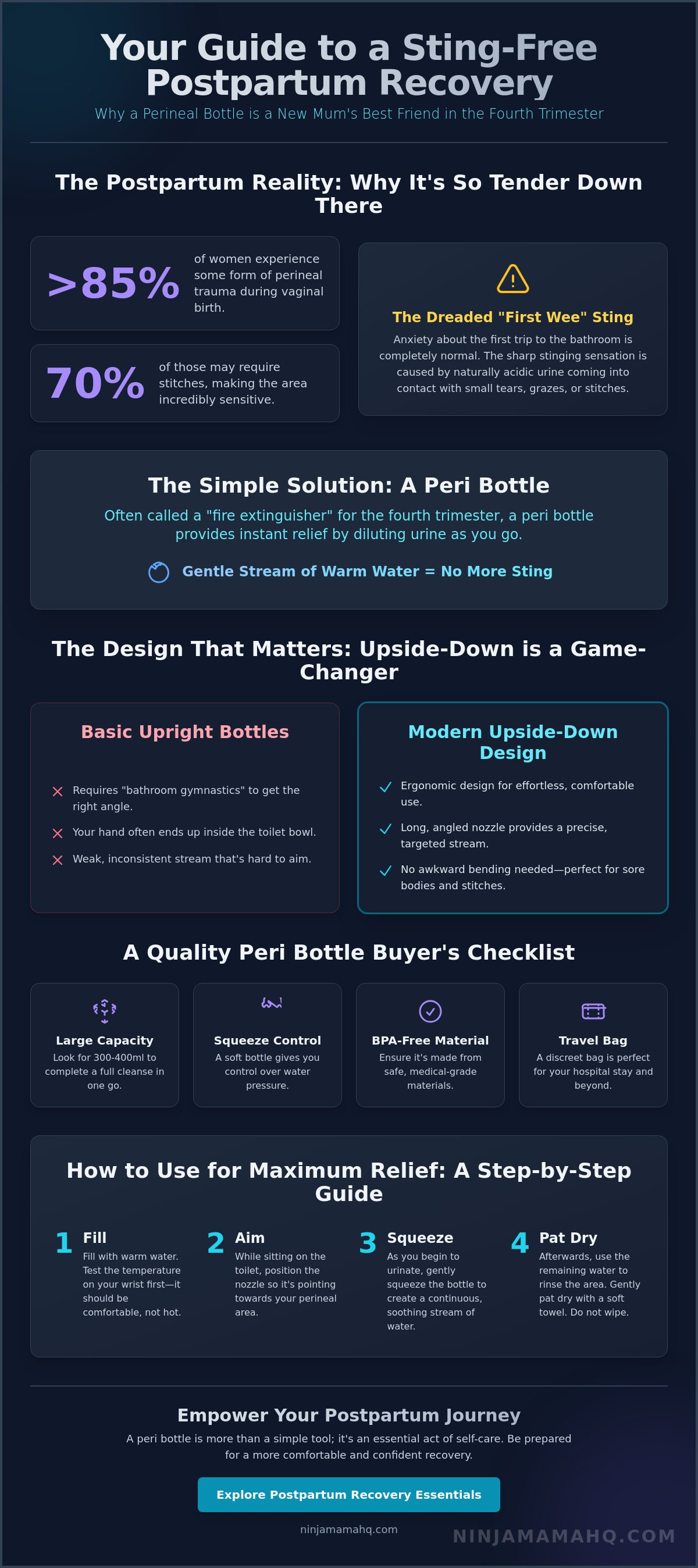
Did you know that more than 85% of women who have a vaginal birth experience some form of perineal trauma, with up to 70% requiring stitches? It's a staggering number that explains why so many new mums feel a wave of anxiety about that first trip to the bathroom after delivery. You might be worried about a sharp stinging sensation when you pass urine or feel nervous about keeping the area clean without causing further irritation. We completely understand those fears, and we want you to know that your recovery doesn't have to be a source of stress.
Choosing a high-quality perineal bottle is the simplest way to transform your postpartum experience from painful to peaceful. In this guide, we'll explain why this essential tool is the most important item in your hospital bag for a sting-free recovery and faster healing. We'll also break down the latest ergonomic designs for 2026, including why the upside-down spout is a total game-changer, to help you feel prepared, empowered, and ready to focus on your new arrival with confidence.
Key Takeaways
- Learn why diluting urine with a gentle stream of warm water is the secret to a sting-free bathroom experience after birth.
- Discover the specific ergonomic features, like nozzle length and angle, that make a perineal bottle much easier to use when your body is sore and tired.
- Understand the practical differences between basic upright bottles and modern upside-down designs for better reach and comfort.
- Find out how to turn a simple rinse into a soothing ritual by using the "Goldilocks" water temperature and natural additives.
- Get a step-by-step guide on the best techniques for cleansing your perineum while protecting your stitches and sensitive areas.
Table of Contents
-
What is a Perineal Bottle and Why is it a Postpartum Essential?
-
Standard Peri Bottle vs. Upside-Down Bottle: The Honest Comparison
What is a Perineal Bottle and Why is it a Postpartum Essential?
A perineal bottle is essentially your own portable bidet, specifically designed to care for your body after birth. During the initial stages of postpartum recovery, the perineal area is often incredibly sensitive, swollen, or recovering from tears and stitches. Traditional toilet paper, no matter how soft it claims to be, can feel abrasive and painful against such delicate tissue. This bottle allows you to maintain high standards of hygiene with a gentle, soothing stream of water, ensuring you stay clean without any physical friction.
The primary reason this tool is so celebrated by new mums is the way it tackles the "sting" factor. Urine is naturally acidic, and when it comes into contact with even the smallest grazes or tears, it can cause a sharp, burning sensation. By using the bottle to spray warm water over the area as you urinate, you effectively dilute the acidity of the urine. This simple action provides immediate relief and prevents that dreaded stinging feeling, making your recovery much more manageable.
The "Fire Extinguisher" for your Fourth Trimester
Many women refer to their peri bottle as a "fire extinguisher" for the fourth trimester, and for good reason. It offers instant cooling and soothing relief when your body feels tender and inflamed. It's a standard recommendation from midwives and obstetricians throughout Australia because it addresses the very real anxiety many women feel about their first few trips to the toilet after delivery. Having this tool tucked into your hospital bag means you're prepared for that first milestone with a practical solution that prioritises your comfort. You don't have to fear the burn when you have the right equipment on hand.
Beyond Hygiene: Supporting the Healing Process
While keeping the area clean is essential for infection prevention, the benefits of using a perineal bottle go beyond simple hygiene. Using warm water can help encourage blood flow to the perineum, which may support the body's natural healing rhythm. It's an effective way to keep stitches free from bacteria without having to touch the area, which is vital for a smooth recovery. Interestingly, even mums who have had a C-section often find these bottles useful for gentle cleansing of the surrounding skin, helping to keep the area fresh while avoiding any pressure on their surgical site.
Buying Guide: Features to Look for in a Quality Peri Bottle
When you're packing your hospital bag, it's easy to think any squirt bottle will do. However, your postpartum body has very specific needs. The right design makes a world of difference to your comfort levels. A high-quality perineal bottle shouldn't just hold water. It should be an extension of your self-care routine, designed to work with your body when you're feeling at your most vulnerable.
Think about the physical reality of the first few days after birth. You're likely sore. You're moving a bit slower than usual. The last thing you want to do is perform "bathroom gymnastics" just to get clean. A well-designed bottle takes the strain away. Look for these essential features:
-
Water Capacity: You want a bottle that holds enough water, usually around 300ml to 400ml, to complete a full cleanse in one go. There's nothing more frustrating than running out of water mid-rinse and having to refill with your pants down.
-
Portability: Your recovery doesn't just happen at home. A bottle that includes a discreet travel bag is a lifesaver for those first few days in the hospital and any subsequent trips out.
-
Nozzle Length: A longer nozzle provides better reach. This keeps your hands away from the "splash zone" while ensuring the water hits exactly where it's needed.
The Magic of the Upside-Down Design
Standard pharmacy bottles are often just upright containers. They require you to tip them at an awkward angle to work. This usually means putting your hand inside the toilet bowl or tilting your body in ways that feel impossible when you have stitches. The Ninja Mama Upside Down Peri Bottle solves this by allowing you to hold the bottle completely upside down while maintaining a steady, aimed stream. The upside-down mechanism is the key differentiator for postpartum comfort.
Material and Squeeze Control
Safety is paramount, so always ensure your bottle is made from BPA-free, medical-grade materials. Beyond the material, pay attention to the "squeeze" factor of your perineal bottle. You need a bottle that's soft enough to compress easily but firm enough to give you "squeeze control" over the water pressure. This allows you to start with a very gentle mist and increase the flow as you feel more comfortable. Many mums also prefer a retractable nozzle, which makes the unit compact and easy to tuck away in a drawer or bag. If you're looking for the perfect start to your healing journey, consider one of our postpartum recovery kits to ensure you have all the essentials ready to go.
The Ultimate Perineal Healing System: More than Just Water
While your perineal bottle is undoubtedly the hero of your bathroom trips, it works most effectively when part of a broader, intentional recovery routine. Think of it as the first step in a layering system designed to soothe, protect, and heal. Rather than seeing your recovery as a series of disconnected tasks, viewing it as a complete system helps you feel more in control of your physical well-being during the fourth trimester. This holistic approach ensures you aren't just managing symptoms, but actively supporting your body's natural healing process.
Many mums find that plain tap water is a great start, but you can easily elevate your experience by adding natural, evidence-aware ingredients to the mix. This turns a simple hygiene task into a moment of genuine self-care. It's about making those first few weeks as gentle as possible for your body.
Adding Soothing Relief to Your Bottle
A few drops of organic witch hazel added to your bottle can provide extra anti-inflammatory benefits, helping to calm swollen tissues with every rinse. Unlike harsh soaps which can disrupt your natural pH and cause further irritation, witch hazel is gentle and supportive. Temperature also plays a huge role in your comfort. While cold water is excellent for reducing swelling, many women find lukewarm water is the "Goldilocks" choice for that first week, providing the most comfortable, sting-free experience. If you want to take the guesswork out of your preparation, our postpartum recovery kits offer a curated system where everything is designed to work together seamlessly.
The Perfect Post-Wash Partners
Once you've finished your rinse, the care shouldn't stop there. The next layer in your healing system involves providing continuous comfort throughout the day. Pairing your wash with instant perineal cooling pads provides much-needed relief from the "heavy" feeling many women experience after birth. These pads nestle perfectly into postpartum disposable underwear, which is essential for keeping the area breathable and secure without the restriction of traditional elastic. To round out your daily routine, an organic sitz soak in the evening can provide deeper, more immersive healing. This multi-step approach ensures that every aspect of your recovery is covered, from the immediate relief of the perineal bottle to the long-term support of cooling and soaking.
Standard Peri Bottle vs. Upside-Down Bottle: The Honest Comparison
When you're preparing for your first few days at home with a newborn, you might wonder if a specialised perineal bottle is truly different from the basic squirt bottles often found in pharmacies or hospital wards. While both aim to provide hygiene, the functional reality of using them is worlds apart. Choosing the right design isn't just about the price tag. It's about how much stress you want to remove from your bathroom experience during that sensitive first week of recovery.
A standard upright bottle often feels like a budget solution that creates more problems than it solves. In contrast, a purpose-built upside-down bottle is designed with the physical limitations of a postpartum body in mind. Investing in a high-quality tool means fewer "bathroom gymnastics" and a much drier bathroom floor, which is a small but significant win when you're already managing so much.
The Problem with Standard Upright Bottles
The biggest issue with upright designs is the "hand-in-toilet" problem. Because the nozzle is straight, you have to tilt the bottle significantly to aim the water correctly. This often requires you to reach deep into the toilet bowl, which is unhygienic and physically difficult if you're sore or have limited mobility. Tilting an upright bottle also leads to inconsistent water pressure. As the water level drops, the air gap prevents a steady stream, leaving you with a frustrating dribble just when you need relief the most. Many mums also find the shorter nozzles on these bottles simply don't reach far enough back to cleanse the perineum effectively without awkward straining.
Why the Specialist Bottle Wins for Australian Mums
At Ninja Mama, we believe that practical, mum-led design is the only way to support a smooth recovery. Our upside-down bottle features a long, angled nozzle that allows you to maintain a continuous, perfectly aimed stream while holding the bottle comfortably. You don't have to worry about the "mess factor" because the water goes exactly where it's supposed to, keeping your hands and the floor clean. It's hospital bag ready and specifically engineered to handle the unique angles of the postpartum body. To understand why this tool is such a vital part of your healing journey, read our detailed guide on the peri bottle and why every new mum needs one. If you want to ensure your recovery is as comfortable as possible, choosing a dedicated perineal bottle is a simple decision that provides immense value and peace of mind.
How to Use Your Perineal Bottle for Maximum Relief
Knowing exactly how to use your perineal bottle before you head into the hospital can save you a lot of stress during those first few bathroom trips. It's best to start using your bottle immediately after birth. Most mums find it helpful for at least the first week or two, or until any stinging has subsided and the healing process is well underway. The goal is to keep the area clean and comfortable without ever having to use abrasive toilet paper on sensitive skin.
Temperature is a vital part of the process. Finding your "Goldilocks" zone usually means using lukewarm water that feels soothing rather than shocking. While some women prefer cooler water to help with swelling, lukewarm water is generally the most comfortable for diluting urine. Always test the water on your wrist first to ensure it's not too hot, as the perineal tissue is incredibly delicate after delivery.
The "Start Early" Pro-Tip
The most effective way to use your perineal bottle involves a little bit of timing. Don't wait until you've finished urinating to start the water flow. Instead, begin squeezing the bottle just as you start to go. Diluting urine as it exits the body is the most effective way to prevent stinging. By creating a continuous stream of warm water, you ensure the acidic urine never has a chance to irritate any grazes or stitches. Once you've finished, remember the golden rule: pat, don't wipe. Use soft perineal recovery wipes to gently dab the area dry. This prevents any pulling on stitches and keeps the area hygienic without the friction of standard paper.
Cleaning and Longevity
Keeping your bottle hygienic is straightforward and only takes a minute. After each use, it's a good idea to wash the bottle and the nozzle with warm, soapy water. Rinse it thoroughly and allow it to air dry completely before retracting the nozzle or putting it back in its travel bag. Storing it in its dedicated bag keeps it clean and ready for your next trip to the loo, whether you're at home or out and about.
Your bottle also has a life beyond the immediate postpartum period. Many parents find they can repurpose it as a gentle way to clean toddlers during toilet training or even use it as a portable bidet for travel. It's a durable, practical tool that continues to provide value long after your initial recovery is complete. By following these simple steps, you'll ensure your perineal bottle remains a reliable companion throughout your fourth trimester and beyond.
Step Into Your Fourth Trimester with Confidence
You've done the incredible work of preparing for your baby's arrival. Now, it's time to prioritise your own comfort. A high-quality perineal bottle is more than just a hospital bag essential; it's your best friend for a sting-free recovery. By choosing an ergonomic, upside-down design and integrating it into a complete healing system, you're giving your body the gentle care it deserves. Remember the simple power of diluting urine and the "pat, don't wipe" method to keep your healing on track.
Our award-winning design was created by an Australian mum who has been exactly where you are. With over 1,000 5-star reviews from Aussie parents and as the winner of the 2024 Postpartum Innovation Award, we're proud to be part of your recovery journey. Grab your Ninja Mama Upside Down Peri Bottle here and get ready for a smoother recovery!
You've got this, mama. We're cheering you on as you navigate this beautiful transition with confidence, comfort, and a sense of prepared calm.
Frequently Asked Questions
Do I really need a perineal bottle if I have a bidet at home?
Yes, you'll still find a bottle incredibly useful because bidets aren't portable for your hospital stay. Even at home, the fixed pressure of a bidet can sometimes feel too intense for fresh stitches or sensitive grazes. A perineal bottle gives you total manual control over the water pressure and temperature. This allows you to create the exact gentle stream you need for a comfortable, sting-free experience every single time.
Can I use a perineal bottle after a C-section birth?
Absolutely, many women find a bottle is a lifesaver after a C-section. Abdominal surgery can make bending, reaching, or twisting to clean yourself quite painful during the first week. Using a bottle allows you to maintain high standards of hygiene without straining your incision. It's also helpful for gently cleansing the skin around your surgical site, helping you feel fresh and comfortable while your body focuses on healing.
How do I clean my perineal bottle to prevent infection?
Keeping your bottle clean is a quick and essential part of your routine. After each use, wash the bottle and the nozzle with warm, soapy water and rinse them thoroughly. It's vital to let all the parts air dry completely before you retract the nozzle or pack it away. This simple step prevents moisture from being trapped, ensuring your bottle stays hygienic and safe for your next trip to the bathroom.
What temperature should the water be in my peri bottle?
Most mums find that lukewarm water is the perfect "Goldilocks" temperature for soothing relief. It's effective at diluting urine without causing a shock to your sensitive tissues. Always test the water on the inside of your wrist first to ensure it's comfortable. While some women prefer cooler water to help reduce swelling, lukewarm water is generally the most popular choice for preventing that sharp stinging sensation during those first few days.
How many weeks postpartum should I keep using the bottle?
You should keep using your perineal bottle for as long as it provides comfort, which is typically one to two weeks. Most women continue until any stinging during urination has completely stopped and the area feels less tender. If you've had stitches or a more significant tear, you might find it helpful to continue for a bit longer to ensure the area stays clean and irritation-free as the tissue fully repairs.
Is it okay to put essential oils in my perineal bottle?
It's generally best to avoid putting concentrated essential oils directly into your bottle. The perineal area is incredibly porous and sensitive after birth, and undiluted oils can cause further irritation or stinging. If you're looking for extra relief, many women find that adding a few drops of organic witch hazel is a much gentler alternative. Always stick to products specifically designed for postpartum use to ensure your recovery remains safe and supportive.
Can I use the perineal bottle for haemorrhoid relief?
Yes, using a bottle is a common and effective way to manage the discomfort of postpartum haemorrhoids. The gentle stream of water cleanses the area much more softly than traditional toilet paper, which can feel quite abrasive on swollen tissue. By avoiding physical friction and using warm water to keep the area clean, you can help soothe inflammation. It's a simple way to make your bathroom visits feel much less stressful.
Does the Ninja Mama peri bottle come with a travel bag?
Yes, our bottle includes a discreet, waterproof travel bag to keep everything organised and hygienic. This makes it easy to pack into your hospital bag or carry with you if you need to leave the house during your recovery. The bag ensures the nozzle stays clean and provides a private way to store your bottle in the bathroom. We want you to feel prepared and empowered, no matter where you are.

Article by
Louise Beever
Louise Beever is the founder of Ninja Mama, an Australian postpartum recovery brand focused on creating premium, practical recovery essentials for new mothers. Since launching Ninja Mama in 2018, Louise has worked closely with thousands of postpartum women and healthcare retailers to better understand the realities of recovery after birth. Her work focuses on postpartum preparation, recovery support, and improving awareness around the fourth trimester.
Remember Mamas
The information provided in this article is intended for general educational and informational purposes only and should not be considered medical advice. Always seek guidance from your doctor, midwife, lactation consultant, or qualified healthcare professional regarding your individual circumstances, pregnancy, birth, or postpartum recovery.