
The most useful recovery kit isn’t necessarily the one with the most items; it’s the one that fits the kind of care you want after birth. A post pregnancy kit can bring practical essentials together for labour and delivery recovery, from gentle cleansing to products designed for comfort.
It’s understandable to want to feel prepared while wondering which items you’ll actually use. Reusable cold packs and sitz soaks offer different ways to build care into your routine, so consider what each involves and what feels manageable for you.
Here, you’ll learn what labour and delivery recovery kits commonly contain and how reusable cold packs compare with sitz soaks. We’ll also explore essentials for vaginal birth or C-section recovery, helping you plan your hospital bag with a clearer sense of what to include.
Key Takeaways
- Learn what to look for in a recovery kit, from cleansing essentials to options for postpartum comfort.
- See how reusable cold pads and sitz baths differ, so you can consider which better fits your recovery routine.
- Understand how hospital-provided supplies can differ from the items you may want ready at home.
- Find out what to consider when planning your budget around postpartum products and possible Medicare or private health insurance coverage.
- Ninja Mama products have been looked at by the TGA and meet Australian quality and safety standards; other brands may not.
How postpartum kits were tested and selected
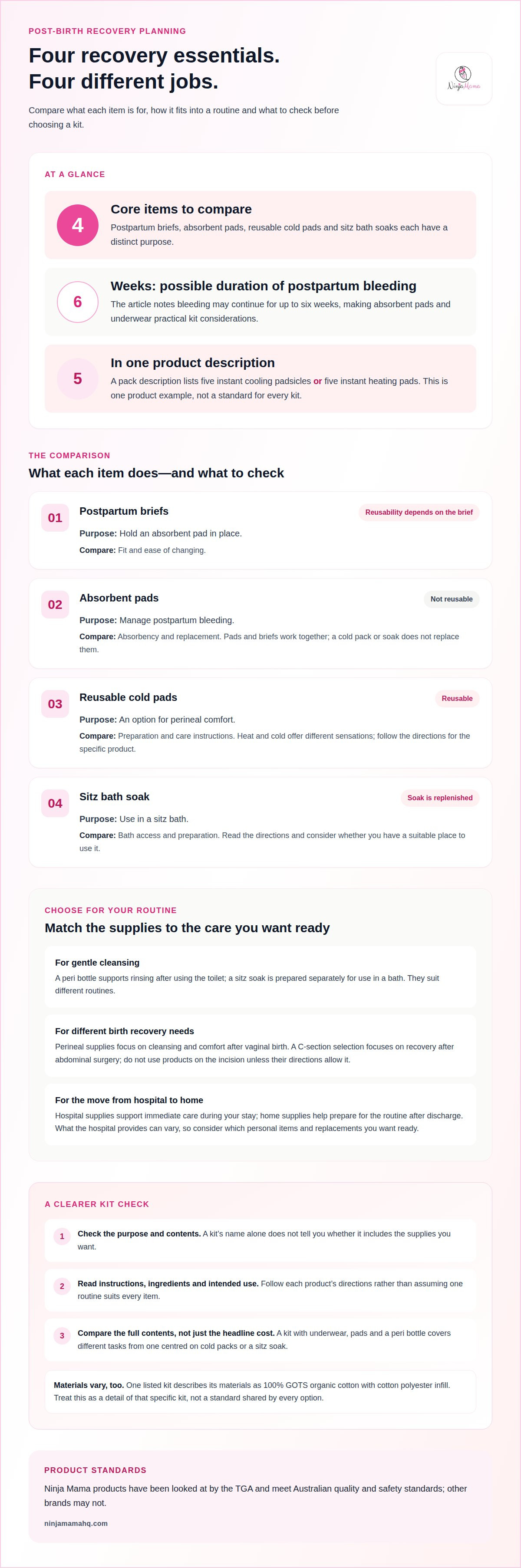
A useful comparison starts with each item’s purpose: managing bleeding, keeping clean or adding comfort. The table compares postpartum underwear, absorbent pads, reusable cold packs and sitz soaks by purpose, reusability and practical use.
Seek urgent medical care for heavy bleeding, fainting, chest pain, difficulty breathing, fever, severe pain or thoughts of harming yourself or your baby. If there’s immediate danger, call emergency services.
Postpartum briefs and heat or cold therapy
Postpartum underwear holds an absorbent pad in place, while reusable cold packs offer a separate option for perineal comfort. Heat and cold packs provide different sensations and fit into your routine in different ways, so follow the product directions. When comparing kits, look for clear instructions and check whether therapy items can be reused.
Perineal comfort and hygiene
A peri bottle supports gentle rinsing after using the toilet, while a sitz soak is used in a bath. These serve different hygiene routines, so consider which suits your preferences and what you can manage at home. Read the directions for preparing and using each item, and consider whether you have a suitable place to use it.
Bleeding and absorbent pads
Postpartum bleeding may continue for up to six weeks after birth, making absorbent pads and underwear practical kit considerations. Pads are replaceable, while postpartum underwear holds them close to the body. Compare the absorbent items and how they work together, rather than assuming a cold pack or sitz soak can replace them.
| Option | Main purpose | Reusable? | Comparison point |
|---|---|---|---|
| Postpartum briefs | Hold an absorbent pad | Depends on the brief | Fit and ease of changing |
| Absorbent pads | Manage postpartum bleeding | No | Absorbency and replacement |
| Reusable cold pads | Perineal comfort | Yes | Preparation and care instructions |
| Sitz bath soak | Use in a sitz bath | Soak is replenished | Bath access and preparation |
Selection should also consider what a kit contains, how clearly each item’s purpose is described, and whether the materials are identified. One listed kit describes its materials as 100% GOTS organic cotton with cotton polyester infill. Treat that as a specific kit detail, not a standard shared by every option.
When comparing prices, assess the full contents rather than the headline cost alone. A kit with underwear, pads and a peri bottle covers different tasks from one centred on reusable cold packs or a sitz soak. Choose a combination that matches the supplies and routines you want ready at home.
Labour and delivery recovery kit contents
Useful kits bring together supplies for cleanliness, bleeding and comfort, rather than relying on one item. For breastfeeding, check the label of any topical product and don’t apply it to your breast or nipple unless it says it’s suitable for breastfeeding.
C-section recovery supplies
A C-section recovery selection focuses on supplies for recovery after abdominal surgery, while perineal items address a different area of care. Disposable underwear, absorbent pads and a comfortable resting position can be practical inclusions. Don’t use products on the incision unless their directions allow it, and follow the care guidance provided for your wound.
Perineal care and recovery
Perineal supplies focus on gentle cleansing and comfort after vaginal birth. A peri bottle can be filled with water for rinsing, while a soak is prepared separately according to its directions. Cold packs offer another option; one pack description includes five instant cooling padsicles or five instant heating pads. These products have different uses, so consider how each fits your routine.
Hospital-provided and home supplies
Hospital supplies support immediate care during your stay, while home supplies help prepare you for the routine after discharge. What’s provided can vary, so pack personal items you prefer, such as familiar underwear or a peri bottle. A home kit can keep replacements together, making clean pads and other essentials easier to find when needed.
Rest positioning can be part of preparation, too. Set up supportive pillows beside your bed or feeding chair before birth. After a C-section, choose a comfortable position that avoids pressure on the incision; after vaginal birth, arrange cushions to support your preferred resting position. Keep water, clean underwear and pads within reach.
Kit contents vary. One example lists a peri bottle, two long cold or heat packs and a wheat pack. Another includes a postpartum soak and perineal spray. Check the contents carefully: a kit’s name alone doesn’t tell you whether it includes the supplies you want.
Heat and cold products may have different directions. One product description recommends switching to heat after the first 3 days of initial postpartum recovery. Follow the instructions for the specific item, rather than applying a general routine to every pack. For rest and recovery, keep products easy to reach and separate clean supplies from used items.
To choose a kit, match each product to your birth and recovery needs, then read its instructions, ingredients and intended use. A peri bottle or absorbent pad serves a different purpose from a heat pack, soak or resting pillow, so prioritise the supplies that fill gaps in your plan.
Where can you buy postpartum recovery kits in Australia?
In Australia, postpartum recovery kits are available through specialist maternity retailers and online stores, while some individual supplies are sold separately. The right option depends on whether you want a ready-made set, particular items such as absorbent underwear, or products you can choose one by one.
Specialist maternity retailers often group products around recovery needs. One kit might combine a peri bottle, postpartum underwear and perineal comfort products, while another offers a smaller selection. Read the item list before buying: the word “kit” doesn’t tell you whether it includes the supplies you need for vaginal birth or C-section recovery.
Online shopping makes it easier to read product descriptions and compare kit contents from home. Look for a clear breakdown of included items, their intended use and care instructions. If you’re preparing a hospital bag, note which essentials you already own, then choose a set that fills practical gaps rather than duplicating everything.
Some Australian pharmacies and general retailers carry individual postpartum supplies, such as maternity pads or disposable underwear. This can suit you if you already have a peri bottle or prefer to choose products separately. Read the product description and packaging to distinguish postpartum-specific items from standard sanitary products or everyday underwear.
Before placing an order, use this simple comparison:
- Contents: Does the set include the items you want, such as absorbent pads, briefs or a cleansing bottle?
- Birth needs: Does it offer supplies relevant to your planned recovery, including incision-conscious choices after a C-section?
- Instructions: Are use, cleaning and storage directions easy to find?
- Delivery timing: Will the order arrive in time for your hospital bag preparation?
- Replacements: Can you buy frequently used items separately if you need more later?
If you’ve already bought postpartum underwear, a smaller set of cleansing and comfort supplies may make more sense than another bundle containing briefs. If you’re starting from scratch, a more complete set can bring several categories together. Either way, compare the actual contents rather than relying on product photographs or a broad label.
Allow time for delivery before your expected due date, especially when ordering online. Keep the product instructions with the items, and place the supplies you’re most likely to use first somewhere easy to reach at home. A separate small pouch for hospital essentials can keep them distinct from supplies intended for longer-term use.
Treat buying as a practical checklist: choose a retailer that clearly describes each item, match the contents to your recovery plans, and organise supplies before packing your hospital bag. This makes it easier to spot missing essentials and avoid paying for duplicates.
What is the difference between hospital-provided and home postpartum recovery supplies?
Hospital-provided supplies support immediate needs during a maternity stay; home supplies help organise care after discharge. In Australia, what a hospital provides can vary, so a peri bottle, maternity pads or disposable underwear are useful examples to discuss during your admission.
During your stay, the maternity team can explain which supplies are available and how to use them. Items at your bedside can help with immediate care, but they may not match your preferences or cover every need once you’re home. Keep any instructions you receive with your discharge paperwork, especially those about wound care or hygiene.
At home, arrange supplies around the rooms and routines you’ll use most. For example, keep clean underwear, absorbent pads and a peri bottle together in the bathroom. A second small set beside your bed can save unnecessary trips while you rest or feed your baby. Store used items separately from clean supplies.
Your birth and recovery needs can shape what you prepare. After a vaginal birth, you might want a peri bottle, pads and a sitz soak for your preferred hygiene routine. After a C-section, you may prioritise loose clothing and supplies that don’t press on your abdomen. Don’t use products on an incision unless their directions allow it.
- Before admission: Pack personal items you prefer, such as underwear or a familiar water bottle.
- During your stay: Ask the maternity team which supplies are available for your immediate needs.
- Before discharge: Read the instructions for any products or care routines discussed with you.
- At home: Replenish the items you expect to use and place them within easy reach.
Hospital supplies and a home kit serve different settings. A hospital may provide basic items for use during your stay, while your own kit can bring together the products you’ve chosen. For instance, group a peri bottle and pads in a bathroom basket, with a sitz soak nearby for use according to its directions.
Keep your hospital bag separate from your home setup. Pack the essentials you want for your admission, then leave additional supplies in a clearly labelled drawer or basket at home. This makes it easier for a support person to find fresh pads or underwear without searching through your luggage.
Before birth, write a short checklist with two columns: “hospital bag” and “home”. Add items such as maternity pads, underwear and cleansing supplies where you’ll need them. Then compare your list with information from your maternity team, so your plan reflects what’s available during your stay and the routines you want to prepare for at home.
Are postpartum recovery products covered by Australian private health insurance or Medicare?
Don’t assume Medicare or private health insurance will reimburse a postpartum recovery product. A retail item, such as absorbent underwear or a sitz soak, is different from a health service or treatment. Whether a claim is covered depends on what it’s for and the terms of your private policy.
Medicare is not a general shopping reimbursement for recovery supplies. Buying maternity pads, a peri bottle or a cold pack is a product purchase. Keep this separate from any eligible health service connected with your care, which follows its own rules. A product’s use after birth doesn’t, by itself, make the purchase reimbursable.
Private health insurance benefits vary by policy. The relevant terms determine whether a particular expense can be claimed. A policy might describe benefits for specific services, hospital treatment or other categories, rather than everyday retail products. Read the benefit description and exclusions, not just the policy’s broad level of cover.
To organise your records, keep the receipt with the product description. If you’re reviewing a claim, note the item purchased, its purpose and the date. For example, record postpartum underwear as a retail product, not as a hospital or practitioner fee. Clear descriptions make it easier to compare the expense with your policy wording.
- Separate product purchases: List items such as pads, disposable briefs and sitz soaks individually.
- Keep service costs distinct: Record appointments or hospital charges separately from products.
- Read the benefit wording: Look for the category and exclusions that apply to the expense.
- Retain documentation: Save receipts and descriptions with your insurance records.
A claim should reflect the item or service actually purchased. Don’t describe a retail recovery product as treatment to fit a benefit category. A cold pack bought for home use, for instance, remains a product purchase; an appointment is a separate service. Keeping these entries distinct helps avoid confusion when you review your records.
For a hospital admission, distinguish the hospital account from supplies bought separately for home. A maternity ward may use or provide certain items during your stay, while a retail kit is a separate purchase. A product’s connection to childbirth doesn’t establish whether Medicare or your policy pays for it.
Use a practical budgeting rule: set aside funds for the recovery products you choose, and treat reimbursement as uncertain unless your policy wording clearly supports it. If you’re comparing a bundle with individual items, assess the contents and retail cost first. This keeps your hospital bag and home recovery plan grounded in identifiable expenses, rather than assumed cover.
Ninja Mama
Ninja Mama brings together postpartum essentials for your hospital bag and home recovery. Its range includes recovery kits, the Postpartum Upside Down Peri Bottle, reusable Perineal Cooling and Heating Pads, and a Postpartum Sitz Bath Soak, so you can consider different needs in one place.
Ninja Mama products have been looked at by the TGA and meet Australian quality and safety standards; other brands may not. As you choose, compare each item’s intended use and instructions with the supplies you already have. A recovery kit can suit you if you want several essentials together, while individual products let you focus on a particular gap.
If you’d like help considering postpartum recovery options, contact Ninja Mama.
Make your recovery plan easy to use
Your next step is to organise recovery essentials around how you’ll use them. Choose a spot at home for clean supplies, and keep your hospital bag separate from items you’ll need after discharge. A simple setup can make familiar routines easier to manage while you focus on yourself and your baby.
As you put together a post pregnancy kit, think about which items suit your preferences and which you already have. Ninja Mama offers Postpartum Recovery Kits, an Upside Down Peri Bottle and Perineal Cooling and Heating Pads, giving you practical options as you prepare.
Keep each product’s instructions with it, and make a note of anything you want to discuss with your care team. Your plan can be practical and personal, with room to adjust as your needs become clearer.
Ask Ninja Mama about your recovery kit, and take the next step towards feeling organised for those first days at home.
Frequently Asked Questions
What should be included in a post-pregnancy recovery kit?
A practical kit can include absorbent maternity pads, comfortable postpartum underwear, a peri bottle and a perineal comfort option. Add a separate pouch for clean supplies, plus a spare set beside your bed for easy access. If you’re breastfeeding, nursing pads may also be useful. Choose items based on your birth plans and existing supplies, rather than assuming every kit contains the same essentials.
What postpartum recovery products are recommended in Australia?
Common options include maternity pads, postpartum underwear, peri bottles, sitz soaks and perineal hot or cold packs. Consider each item’s intended use and directions, then choose what fits your routine. If you’re breastfeeding, keep nursing supplies separate from perineal care products. This small organisational step can make it easier to find the right item during a busy feed or bathroom visit.
How much does a postpartum recovery kit cost in Australia?
There isn’t one standard cost for a postpartum recovery kit in Australia. The total depends on whether you choose a ready-made bundle or individual products, and which items it contains. A kit with several supplies differs from a small set focused on one need. Compare the included items and avoid paying twice for products you already have. Set a budget around your priorities, such as absorbency, cleansing or comfort.
How do you use postpartum pads, ice packs, and perineal care products safely?
Change absorbent pads as needed and follow each product’s directions. For therapy packs, use the supplied soft sleeve; cold sessions should last 15-20 minutes and must not exceed the 20-minute cold window. Heat packs may be microwaved for 10-20 seconds only, never while frozen. A peri bottle can be used for gentle perineal cleansing; follow the product directions and seek advice if you have concerns. Always read the label and follow the directions for use.
What recovery supplies are useful after a vaginal birth versus a caesarean?
After a vaginal birth, maternity pads, comfortable underwear and supplies for gentle perineal rinsing may be useful. After a caesarean, loose clothing can help avoid pressure around your abdomen, alongside pads for postpartum bleeding. A peri bottle can be used after either birth type for gentle cleansing. Keep products away from an incision unless their directions allow use there, and follow your discharge care instructions.

Article by
Louise Beever
Louise Beever is the founder of Ninja Mama, an Australian postpartum recovery brand focused on creating premium, practical recovery essentials for new mothers. Since launching Ninja Mama in 2018, Louise has worked closely with thousands of postpartum women and healthcare retailers to better understand the realities of recovery after birth. Her work focuses on postpartum preparation, recovery support, and improving awareness around the fourth trimester.
Remember Mamas
The information provided in this article is intended for general educational and informational purposes only and should not be considered medical advice. Always seek guidance from your doctor, midwife, lactation consultant, or qualified healthcare professional regarding your individual circumstances, pregnancy, birth, or postpartum recovery.