

After a vaginal birth, bleeding usually changes and gradually lessens over 4 to 6 weeks. Your first period may take longer to return: if you’re breastfeeding without formula, it may not come back for four to twelve months. Post-vaginal-birth recovery can look different for everyone, but knowing what’s common can make the early weeks feel less uncertain.
It’s natural to wonder whether bleeding, soreness or a few drops of urine when you cough are part of healing after a vaginal birth. This guide explains what you might notice, how to care for perineal tears and stitches, and when bleeding or other symptoms need medical advice.
You’ll also learn what to expect from postpartum bleeding, how urine leakage can relate to pelvic floor recovery, and why periods return at different times. Use this practical guide to understand what may happen as your body heals.
Key Takeaways
- Post-birth bleeding usually changes and lessens over 4 to 6 weeks. Notice changes in flow, colour and smell, and seek advice if bleeding becomes heavy or increases.
- If bleeding soaks a pad hourly for two hours in a row, contact a healthcare professional.
- Keep perineal stitches clean and dry, rinse with lukewarm water after using the toilet, and get advice if pain worsens or the wound shows signs of infection.
- Urine leakage can happen after birth. Pelvic floor exercises may support bladder control; the article explains how to practise them.
- Periods may take longer to return while breastfeeding without formula, and their timing varies. Breastfeeding without formula isn’t a reliable way to prevent pregnancy.
What are normal symptoms of postpartum?
After a vaginal birth, perineal soreness, swelling and pelvic floor changes can be part of recovery. Notice whether symptoms ease or worsen over time. That pattern can help you decide when to ask for advice.
Perineal soreness and wound care
The perineum is the area between the vaginal opening and anus. It may feel tender after birth. A first-degree tear affects the skin; a second-degree tear also involves the muscle underneath. Stitches may repair tears or an episiotomy, and discomfort can last a few weeks.
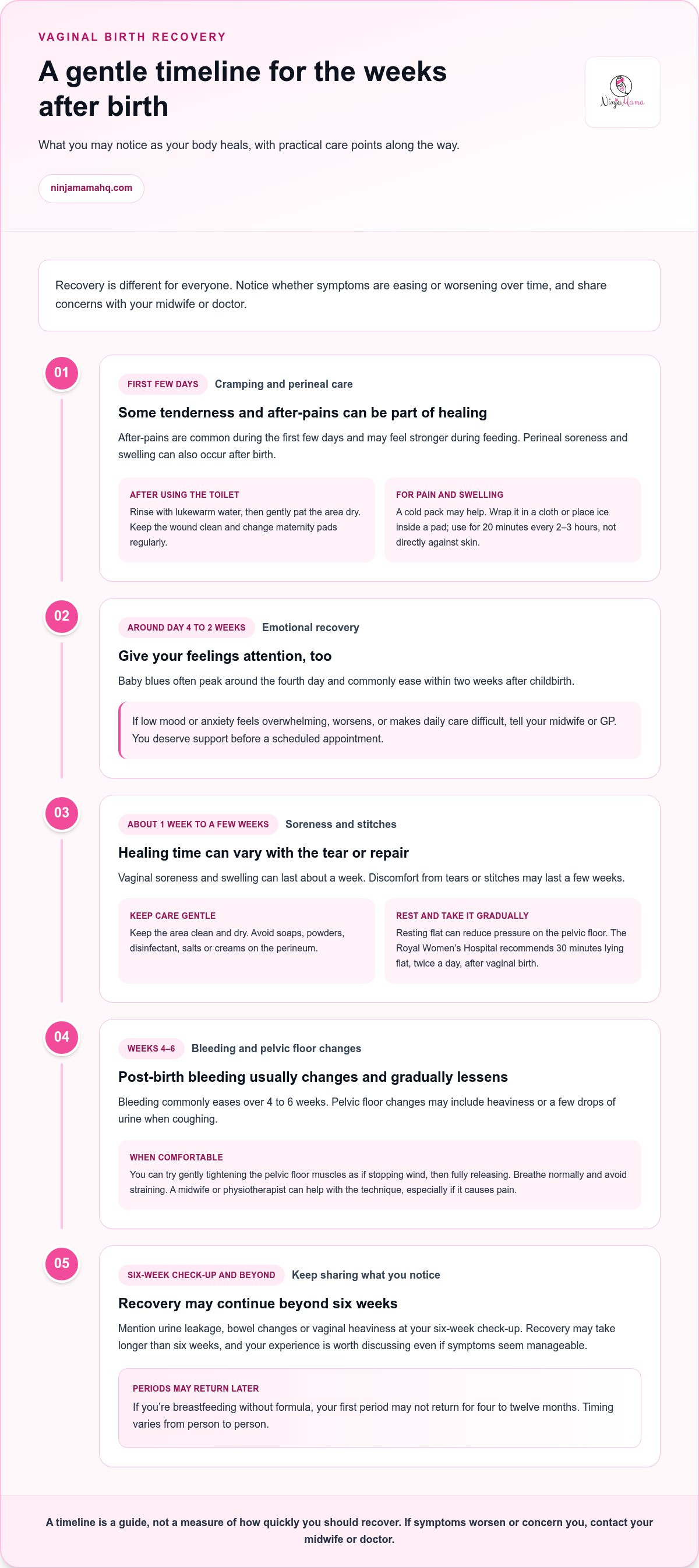
After using the toilet, rinse with lukewarm water and gently pat the area dry. Keep the wound clean, change maternity pads regularly, and avoid soaps, powders, disinfectant, salts or creams on the perineum. Increasing pain, wound changes or offensive-smelling discharge need medical advice.
Ice for pain and swelling
A cold pack may ease perineal pain and swelling after birth. Place ice inside a pad for 20 minutes every 2-3 hours, rather than directly against your skin. Use a cloth barrier to protect delicate tissue from direct cold.
Resting flat can also reduce pressure on the pelvic floor. The Royal Women’s Hospital recommends lying flat for 30 minutes twice a day after vaginal birth. If cold increases discomfort or the area feels numb, remove the pack and seek advice about ongoing pain.
Pelvic floor recovery
The pelvic floor muscles support the bladder, bowel and pelvic organs. Pregnancy and birth can stretch them. You may notice heaviness or urine leakage, such as a few drops when coughing. Tell your midwife or doctor, especially if symptoms persist or affect daily activities.
When comfortable, try gently tightening the muscles as if stopping wind, then fully releasing. Breathe normally and avoid straining. A midwife or physiotherapist can help you understand the technique, particularly if the exercise causes pain.
Some cramping is also common during the first few days after birth. These after-pains may be stronger during feeding, as oxytocin helps the uterus contract. Vaginal soreness and swelling can last about a week, while recovery may take longer than six weeks. Rest and gradual activity can help you monitor how your body responds.
Emotional recovery matters too. Baby blues often peak around the fourth day and commonly ease within two weeks after childbirth. If low mood or anxiety feels overwhelming, worsens, or makes daily care difficult, tell your midwife or GP. You deserve support before a scheduled appointment.
For pain relief while breastfeeding, Mayo Clinic says a healthcare professional might suggest non-prescription acetaminophen or ibuprofen. In Australia, acetaminophen is called paracetamol. Ask about a suitable option and dose for you.
Additional care after third- or fourth-degree tears
A third-degree tear extends into the anal sphincter, while a fourth-degree tear reaches through the perineum and into the anal canal. These injuries need specific wound and bowel-care instructions, so your hospital team will explain your care before you leave.
Healing involves more than looking after stitches. A tear affects tissue around the vagina and anus, so bowel movements, pain and bladder or bowel control may need attention. Follow the instructions for your injury, and keep them handy during early recovery.
Protect the repair and reduce straining
Keeping bowel motions soft can reduce the need to strain against healing tissue. Include high-fibre foods in your meals and drink plenty of water. If these steps aren’t enough, laxatives may be used when necessary to soften bowel motions after birth.
For example, add fruit, vegetables or wholegrain foods to meals, and keep water within reach while feeding or resting. Respond to the urge to open your bowels rather than holding on. If you’re unsure how to follow your hospital team’s bowel-care plan, raise that specific concern with your midwife or doctor.
Keep the repair clean and follow the wound-care advice you received before discharge. After using the toilet, clean the area gently and avoid rubbing or putting pressure on stitches. If a bowel movement feels difficult, pause rather than straining, then follow the advice in your discharge instructions.
Notice changes and ask for help
Pay attention to changes in pain, bowel control and the feeling around your vagina. Discuss urinary or bowel concerns, or a heavy or dragging feeling in the vagina, at your six-week check-up. Give practical examples, such as difficulty controlling wind or feeling pressure while standing.
You don’t need to wait for that appointment if a concern is troubling you. Contact your midwife or doctor if pain increases, you have difficulty opening your bowels, or the wound seems infected. Share when the symptom began and whether it is changing; those details help explain what you’re experiencing.
A serious tear can bring worry about healing, intimacy or everyday tasks. Write down questions as they come up, then take them to your next appointment. You could ask how to manage bowel movements, what activity is suitable, and which changes need prompt attention.
At the six-week check-up, mention any urinary leakage, bowel changes or vaginal heaviness, even if they seem manageable. These details help your clinician understand how recovery is progressing and whether you need further support. Your experience matters, including symptoms that feel awkward to describe.
Signs to report to a midwife or doctor
After a vaginal birth, some soreness and bleeding are expected, but worsening symptoms need attention. Notice changes in pain, bleeding, discharge, urination and bowel movements. If you’re unsure whether a change matters, describe exactly what you’ve noticed to your midwife or doctor.
Bleeding that becomes heavy or changes
Contact a healthcare professional if vaginal bleeding soaks a pad hourly for two hours in a row. Heavy or increasing blood loss, large clots, or bleeding that changes from dark to bright red also need medical advice. The amount, colour and direction of change can help explain what is happening.
Offensive-smelling vaginal loss is another reason to contact a hospital or family doctor. So is bleeding accompanied by fever or chills and abdominal pain. Don’t wait for your six-week check-up if these changes arise earlier; share when the bleeding changed and whether it is getting heavier.
Pain, fever and wound changes
Report pain that is increasing rather than easing, particularly around a tear or episiotomy wound. A fever higher than 101 degrees Fahrenheit (38 degrees Celsius), chills with abdominal pain, or signs of wound infection also warrant advice. Describe the site of discomfort and any visible change, such as worsening redness or discharge.
Smelly discharge, increasing bleeding or a wound that seems infected should be discussed with a midwife or doctor. These symptoms matter even if you’re already caring for the area carefully. Note when they began and whether they changed after rest, using the toilet or changing your pad.
Urinary and bowel concerns
Tell your care team about urinary symptoms, such as pain when passing urine or difficulty urinating. Difficulty opening your bowels also deserves attention, especially after a tear or stitches. These concerns can affect comfort and recovery, so mention them rather than waiting for a routine appointment.
At your six-week check-up, raise ongoing urinary or bowel concerns, or a heavy or dragging feeling in the vagina. Give a practical example, such as pressure while standing or trouble controlling wind. If the symptom is troubling you before then, contact your midwife or doctor sooner.
Before calling, jot down the symptom, when it started and whether it is worsening. For bleeding, note pad changes and clots; for pain, describe its location and intensity. If several symptoms occur together, such as fever, abdominal pain and offensive-smelling loss, tell the hospital or family doctor about each one.
Urine leakage and pelvic floor exercises
A small urine leak can happen after birth, for example when you cough, laugh or lift your baby. Pregnancy and birth can stretch the pelvic floor muscles that support the bladder. Leakage is common enough to discuss openly, but it still deserves attention if it persists, worsens or affects your daily routine.
Notice the pattern
Note when leakage happens, such as during a cough, on the way to the toilet or while lifting. This helps you describe the pattern to your midwife or doctor. Also mention urgency, pain when urinating, or difficulty emptying your bladder. These symptoms differ from normal vaginal discharge, so describe what you notice rather than assuming the source.
Constipation can make bowel movements harder and encourage straining. Keep fluids nearby and include fibre-rich foods, such as vegetables or wholegrain bread, to help avoid straining. If you’re also managing a perineal tear, tell your care team about bowel changes alongside urine leakage.
Practise controlled contractions
Pelvic floor exercises work by gently tightening and releasing the muscles around the vagina and anus. To find the movement, imagine stopping wind, then let the muscles soften completely. Keep your breathing steady, and avoid tightening your buttocks, thighs or stomach. If the movement causes pain, stop and discuss your technique with a health professional.
A practical routine is to contract for three seconds, then release fully. The pamphlet advises at least 25 pelvic floor exercise repetitions at various times of the day. Spread them across your day instead of rushing through them in one sitting. Aim to practise at least three times a day, building the contractions into everyday pauses, such as after a feed.
Use the urine-stream test sparingly
Stopping and starting your urine stream may help you identify the pelvic floor muscles, but it should not be used as a regular exercise. It isn’t a regular exercise routine. Practise contractions at another time, when your bladder isn’t emptying, and focus on a gentle squeeze followed by a complete release.
Keep track of whether leakage changes as you practise. If you still leak, can’t feel the muscles working, or feel heaviness, pain or pressure, raise it with your midwife or doctor. Mention how long it has been happening and which activities trigger it. At your six-week check-up, share ongoing urine or bowel concerns, even if the leakage seems minor.
Post-birth vaginal bleeding
Bleeding after vaginal birth is usually heaviest and bright red at first, then changes and gradually lessens over 4 to 6 weeks. This discharge is part of the body’s recovery after pregnancy and birth. Its flow and colour can shift, so noticing the pattern is more useful than expecting the same amount every day.
After 1-2 days, bleeding may become darker and more mucousy. Breastfeeding can make it brighter or slightly heavier during the early days. This can happen as your uterus contracts during feeds. If the change is brief, note when it occurs and whether the flow settles afterwards.
Maternity pads are recommended at the beginning of post-birth bleeding. Change them two to four hourly to begin with, or as your midwife advises. While bleeding is heavy, change pads every 2-3 hours. A simple note on your phone can help you track pad changes, colour and flow, especially if you need to describe a change to your midwife.
Look at the overall direction across several days. For example, record whether the flow is easing, staying heavy or becoming heavier again. A temporary increase during breastfeeding may differ from bleeding that keeps increasing. If you’re unsure how to interpret a change, describe the timing and amount to your care team.
Heavy or increasing blood loss, large clots, offensive-smelling discharge, or bleeding that becomes bright red again after turning dark needs medical advice. Fever or chills with abdominal pain also warrant contacting a hospital or family doctor. If bleeding soaks a pad hourly for two hours in a row, contact a healthcare professional. Don’t wait for a routine appointment when these signs appear.
Keep pads and clean underwear within easy reach, particularly during feeds or overnight. If you have stitches, changing your pad after each toilet visit can help keep the area clean while it heals. Wash your hands before and after changing a pad, and avoid products that irritate tender skin. These small steps can make self-care more manageable.
Post-birth bleeding is different from your first period, and period timing varies. If you’re breastfeeding without formula, your period may not return for four to twelve months after birth. Breastfeeding without formula isn’t reliable contraception, and pregnancy can occur after birth before periods return. If bleeding becomes heavy, increases, or changes alongside other symptoms, seek advice rather than assuming your period has started.
Ninja Mama: Upside Down Peri Bottle
Ninja Mama’s Upside Down Peri Bottle offers a practical way to rinse your perineum after using the toilet while it feels tender. Gentle rinsing with lukewarm water can make cleaning more comfortable during early recovery, especially when wiping feels uncomfortable.
Use it as part of your personal care routine, alongside the wound-care advice from your midwife or doctor. For extra comfort, Ninja Mama also offers Perineal Cooling and Heating Pads and a Postpartum Sitz Bath Soak. These products are for comfort, not a substitute for medical advice about worsening pain, bleeding or signs of infection.
Explore the Upside Down Peri Bottle and postpartum recovery essentials at ninjamamahq.com.
Make space for your recovery plan
Your next step can be simple: decide what would make daily care easier, and keep those essentials within reach. A prepared bathroom shelf or small recovery basket can reduce the effort of finding what you need while you’re resting or caring for your baby. Choose items that suit your routine, and keep your midwife or doctor’s advice at the centre of your care.
For practical comfort, Ninja Mama offers an Upside Down Peri Bottle, Perineal Cooling and Heating Pads, and Postpartum Recovery Kits. These can be part of your preparation for recovery after a vaginal birth, alongside guidance from your healthcare team.
If you’d like to explore postpartum care essentials, visit Ninja Mama. Take recovery one manageable step at a time, and remember that asking for support is part of caring for yourself.
Frequently Asked Questions
How long until I will get another period?
Your next period may take several months to return, particularly if you’re breastfeeding without formula. It may not return for four to twelve months after birth. Timing varies with feeding patterns and your body’s response after pregnancy. Ovulation can happen before your first period, so pregnancy is possible even while breastfeeding or before menstruation resumes. Breastfeeding without formula isn’t reliable contraception; discuss suitable contraception with your healthcare professional.
What are complications that can occur during the postpartum period?
Postpartum complications can include heavy bleeding, infection, and problems with bladder or bowel control. Watch for worsening pain, offensive-smelling discharge, fever or chills with abdominal pain, and difficulty urinating or opening your bowels. Emotional wellbeing matters too: baby blues often ease within two weeks, but distress that persists, worsens or makes daily care difficult deserves support. Describe your symptoms clearly to your midwife or doctor, including when they began.
What are the three stages of postpartum?
Postpartum recovery is sometimes described in three phases: acute, subacute and ongoing recovery. The acute phase covers the first six to twelve hours after birth. The subacute phase begins around 24 hours and lasts about two to six weeks. The final phase describes continued adjustment and healing beyond those early weeks. These labels help organise changes in recovery; they aren’t a checklist your body must follow precisely.
What are ways to take care of myself after having a baby?
Make basic care easier by keeping water, snacks, maternity pads and clean underwear close to where you feed or rest. Accept practical help with meals, laundry or errands, and take breaks when your baby sleeps or another trusted adult can help. Keep follow-up appointments and write down questions as they arise. If you’re breastfeeding, ask your care team about feeding support when pain, attachment or supply concerns make feeds difficult.
What does postpartum mean?
Postpartum means the period after childbirth, when your body and family adjust to life following birth. It includes physical recovery, emotional changes, feeding and caring for your newborn. The term applies after vaginal and caesarean births, though recovery needs differ. You may also hear “postnatal” used for this time. If a symptom or feeling is worrying you, use the words you’re comfortable with when speaking to your midwife or doctor.
When should I contact my healthcare provider?
Contact a healthcare professional for bleeding that soaks a pad hourly for two hours in a row, increasing pain, offensive-smelling discharge, or signs of wound infection. Fever or chills with abdominal pain, urinary symptoms, or difficulty opening your bowels also need attention. Don’t wait for a scheduled check-up if symptoms are worsening. When you call, explain what changed, when it started and whether several symptoms are happening together.
What to expect in the first 24 hours after a vaginal birth in Australia?
The first hours fall within the acute postpartum phase, which lasts six to twelve hours after birth. You may notice vaginal bleeding and uterine after-pains; feeding can make these cramps more noticeable. Your care team can explain what to expect as you begin feeding, resting and moving around. Before leaving hospital, ask how to manage your specific tear or stitches, and who to contact if symptoms change at home.
How long does recovery take after vaginal birth, and what are the stages?
Recovery generally takes about six weeks after childbirth, but it can take longer. The early acute phase is followed by a subacute period of about two to six weeks, then ongoing recovery as your body continues adjusting. Perineal comfort, energy, pelvic floor function and emotional wellbeing may change at different paces. Use follow-up appointments to discuss symptoms that persist or affect everyday activities, even if they seem minor.

Article by
Louise Beever
Louise Beever is the founder of Ninja Mama, an Australian postpartum recovery brand focused on creating premium, practical recovery essentials for new mothers. Since launching Ninja Mama in 2018, Louise has worked closely with thousands of postpartum women and healthcare retailers to better understand the realities of recovery after birth. Her work focuses on postpartum preparation, recovery support, and improving awareness around the fourth trimester.
Remember Mamas
The information provided in this article is intended for general educational and informational purposes only and should not be considered medical advice. Always seek guidance from your doctor, midwife, lactation consultant, or qualified healthcare professional regarding your individual circumstances, pregnancy, birth, or postpartum recovery.