
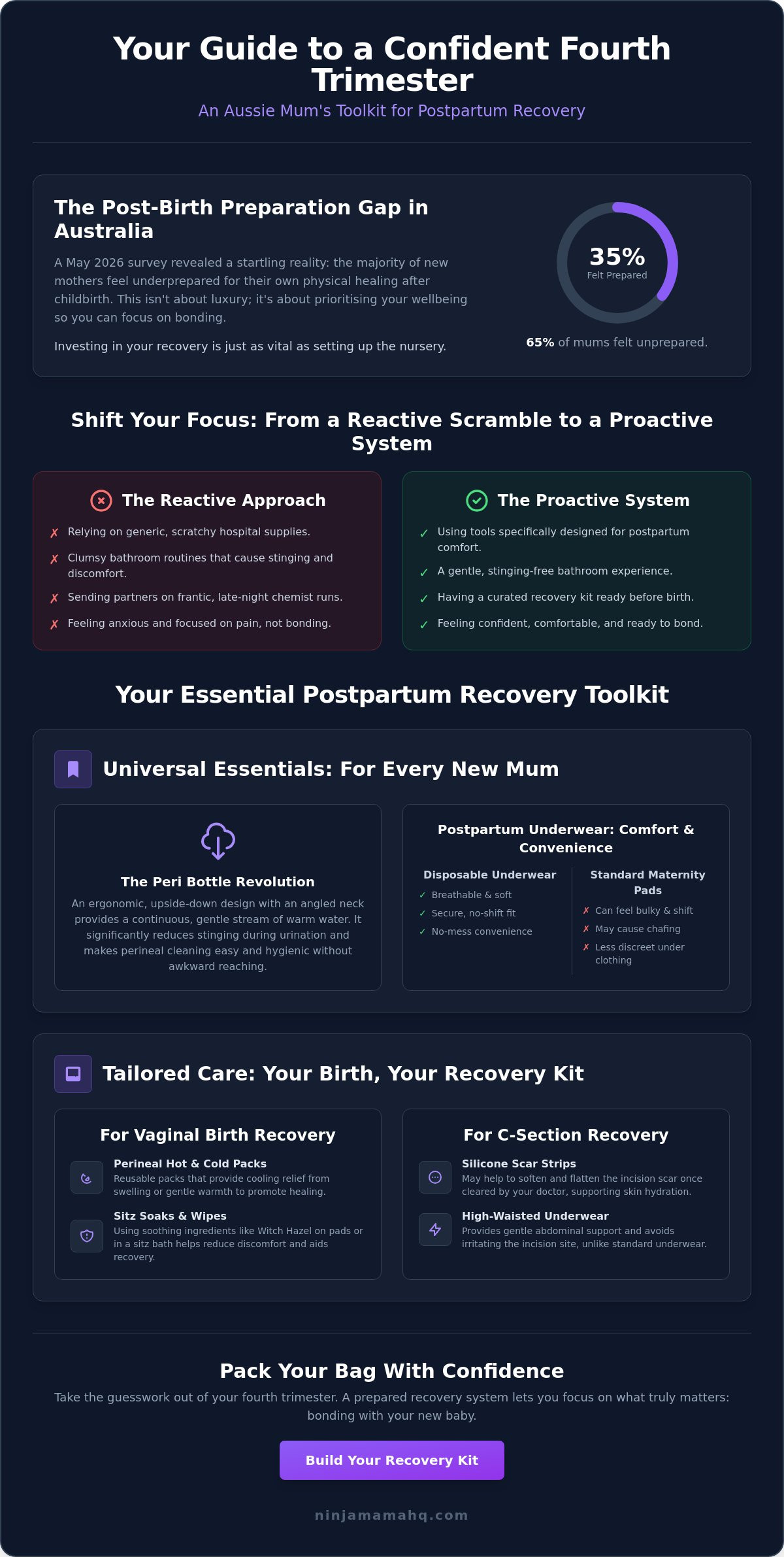
Did you know that our May 2026 survey found only 35% of Australian mothers felt prepared for their physical recovery after birth? It's a startling figure that shows how often we focus on the nursery while our own healing takes a back seat. You've likely spent months researching the best prams and swaddles, yet the thought of that first post-birth bathroom trip still feels daunting. It's completely normal to feel overwhelmed by hospital bag lists or confused about what you actually need for a C-section versus a vaginal birth.
We believe you deserve to feel comfortable and dignified as you transition into motherhood. This guide will show you exactly which postpartum recovery essentials are worth the investment to ensure your fourth trimester is about bonding, not just surviving. We'll walk through the must-have toolkit for every Aussie mum, covering everything from soothing perineal care to C-section support, so you can pack your bag with total confidence.
Key Takeaways
- Learn why prioritising your own physical healing is just as vital as setting up the nursery for a smoother transition into the fourth trimester.
- Discover how a gentle "stinging-free" bathroom routine and an angled peri bottle can significantly improve your daily comfort and hygiene.
- Compare the benefits of disposable underwear versus maternity pads to find the postpartum recovery essentials that provide the best breathability and support for your body.
- Identify the specific items needed to tailor your recovery kit for either a vaginal birth or a C-section, including targeted abdominal protection and scar care.
- Get a practical breakdown of how to organise your recovery stations at home to ensure you feel prepared and dignified the moment you leave the hospital.
Table of Contents
-
What are Postpartum Recovery Essentials and Why Do They Matter?
-
Essential Perineal Care: Soothing the "Down Under" Discomfort
-
Postpartum Underwear: Choosing Between Comfort and Convenience
What are Postpartum Recovery Essentials and Why Do They Matter?
The first few weeks after your little one arrives is often called the fourth trimester. This postpartum period is a critical window where your body undergoes massive physiological shifts. While we spend months picking out the perfect cot or colour-coordinating baby onesies, "mum prep" often gets pushed to the bottom of the list. With 292,318 babies born in Australia in 2024, it is clear that hundreds of thousands of women are going through this transition, yet many feel they are left to figure out their own recovery without much guidance.
To better understand how to manage those first few days and feel more prepared, watch this helpful video from a mum who is also an OBGYN:
Standard hospital supplies are often designed for utility rather than true comfort. Those bulky, surfboard-like pads provided by the ward can feel scratchy and move around, which is the last thing you want when you're already feeling tender. Investing in postpartum recovery essentials isn't just about luxury. It's about reclaiming your dignity and reducing that "first-time mum" anxiety by having tools that actually fit your body and your needs.
The Physical Reality of Post-Birth Healing
After birth, you'll experience lochia, which is the vaginal discharge of blood and tissue. It's much heavier than a regular period and can last for several weeks. Along with this, swelling and tenderness in the perineal area are incredibly common. Relying on basic chemist products often leads to unnecessary chafing or stinging during bathroom trips. Using specialised tools helps manage these physical realities with much more ease, ensuring you don't feel like your recovery is a constant uphill battle.
The Shift Towards Proactive Recovery
We want to move you away from just reacting to pain and towards a proactive comfort system. When you aren't worried about how you'll move or use the toilet, you can focus entirely on bonding with your new arrival. Our goal at Ninja Mama is supporting Aussie mums through the state of postpartum by providing curated postpartum recovery essentials that offer genuine relief. Having a system in place means you aren't sending your partner on a frantic midnight run for things that should have been in your bag all along. It's about being prepared, staying calm, and prioritising your own healing.
Essential Perineal Care: Soothing the "Down Under" Discomfort
Let's talk about the one thing almost every new mum worries about: the first trip to the toilet after birth. It can feel like a daunting task, but it doesn't have to be a painful one. A stinging-free bathroom experience is possible when you have the right postpartum recovery essentials on hand. It's all about preparation and using tools designed specifically for your body's most sensitive areas. By creating a gentle routine, you can turn a moment of anxiety into a manageable part of your healing process.
The Peri Bottle Revolution
Many hospitals suggest using a standard plastic cup to pour water over yourself, but let's be honest, that is clumsy and often ineffective. The Ninja Mama Peri Bottle changes everything with its ergonomic, upside-down design. Unlike a regular bottle or cup, you don't have to reach into the toilet bowl or perform gymnastics to get the water where it needs to go. The narrow, angled neck provides a continuous, gentle stream of water that reaches the perineum perfectly while you sit comfortably. Many women find that filling it with warm water to dilute their urine during the process significantly reduces that dreaded stinging sensation.
Topical Relief for Healing
Once you've cleaned the area, the next step in your postpartum recovery essentials kit should be soothing the inevitable swelling. Applying Ninja Mama Organic Witch Hazel to your pads or using our pre-soaked perineal wipes can provide immediate, cooling relief. Witch hazel is a traditional favourite because it is gentle on sensitive skin and helps manage discomfort without harsh chemicals. For deeper relaxation, a sitz bath soak with organic ingredients may help support tissue repair and give you a few minutes of much-needed quiet. Using wipes instead of standard toilet paper also prevents unnecessary friction on tender tissues.
Choosing between cooling and heating is often a matter of timing. In those first 24 to 48 hours, instant perineal ice packs are usually the best choice for managing inflammation and numbing the area. As the days pass and the initial swelling goes down, you might find that warm perineal therapy packs provide better comfort for aching muscles. When selecting these items, it is helpful to understand what is the ARTG and why certain products are classified as medical devices to ensure you are using the highest quality care for your recovery.
Postpartum Underwear: Choosing Between Comfort and Convenience
Have you thought about what you'll actually wear during those first few days at home? After birth, your pre-pregnancy knickers or even your favourite maternity briefs simply won't cut it. You need something that can handle heavy lochia while keeping you feeling secure and dignified. This is where choosing the right postpartum recovery essentials becomes a matter of daily comfort. The goal is to find a solution that doesn't pinch, roll, or require you to face a mountain of laundry while you're trying to rest.
Many hospitals provide mesh underwear, but most mums find them a literal drag. They are often flimsy, see-through, and struggle to hold a heavy maternity pad in place. When your underwear is constantly shifting, it increases the risk of leaks and adds unnecessary stress to your day. You deserve better than "making do" with itchy, oversized netting that offers zero support.
The Benefits of Disposable Postpartum Underwear
One of the best gifts you can give your future self is a break from the washing machine. Using Ninja Mama Postpartum Disposable Underwear allows you to simply step in, feel supported, and dispose of them when needed. These are designed with a high-waist fit, which is a lifesaver for both vaginal and C-section births. The soft, stretchy fabric sits well above a C-section incision, avoiding any painful rubbing or pressure on your scar. They are also sturdy enough to hold perineal ice packs securely against your body, providing hands-free relief exactly where you need it most.
Managing Absorbency and Leakage
While standard maternity pads are a staple, full-coverage disposable undies provide a 360-degree barrier against leaks. This is especially helpful overnight or when you're moving around the house. When selecting your size, look for a fit that is snug but breathable. You want to avoid anything that restricts circulation or irritates tender skin. Most women find they need about two to three pairs a day for the first 10 days of recovery. Having a dedicated "undie station" in your bathroom ensures you stay clean and comfortable without having to rummage through drawers. It is a small detail that makes a massive difference in how you feel during those early, hazy days of motherhood.
Tailoring Your Kit: C-Section vs. Vaginal Birth Essentials
Birth plans are a wonderful way to prepare, but the physical reality of recovery depends entirely on how your baby makes their entrance. Whether you are planning a C-section or hoping for a vaginal birth, your body deserves a specific set of tools for healing. One size certainly does not fit all for your postpartum recovery essentials. While both paths require rest and patience, the "hot spots" for discomfort are quite different. Being prepared for either scenario means you won't be left scrambling for relief when you should be soaking in those newborn cuddles.
Surgical Recovery Must-Haves
If you've had a C-section, your primary focus is abdominal protection. You've just had major surgery, and that incision site needs to be treated with absolute care. The number one goal is avoiding any friction or pressure on your waistline. As we mentioned earlier, high-waisted disposable underwear is a non-negotiable for this very reason. Once your incision has closed and your healthcare provider gives the okay, many women find that Ninja Mama C-Section Silicone Scar Patches are a game-changer. These medical-grade strips provide a protective barrier that may help support the healing process and manage the appearance of the scar. Remember to move gently; supporting your abdomen with a pillow when you cough or laugh can save you from a lot of sharp discomfort.
Vaginal Birth Recovery Priorities
For those who birth vaginally, the focus shifts to perineal healing and managing swelling. You'll want to maximise the use of Instant Perineal Cooling Pads during those first 48 hours. They provide that immediate "ahhh" moment of relief without the mess of traditional ice packs. Following this up with a warm Sitz Soak can be incredibly restorative. It is a rare moment of peace for both your body and your mind. Using perineal ice packs regularly in the early days is also a common way to manage significant swelling and keep you moving comfortably.
Regardless of how you birth, certain postpartum recovery essentials are universal. You will need breastfeeding support, such as bamboo nursing pads, and plenty of hydration to support your energy levels. It is also important to ensure the products you choose are safe and effective. You can learn more about what is the ARTG to understand why quality standards matter so much for your recovery journey.
The Final Checklist: Curating Your Personal Recovery System
Building your recovery system is about more than just ticking boxes on a list. It's about creating a sanctuary at home where you feel entirely supported and calm. While your hospital bag gets you through the first few days, your "Home Station" is what carries you through the following weeks of the fourth trimester. By separating your postpartum recovery essentials into a tiered system of must-haves and luxury boosters, you can focus on what's truly necessary for your physical and emotional comfort. This organised approach reduces the mental load, allowing you to transition from hospital to home with a sense of prepared calm.
Nourishment and Lactation Support
Recovery is an internal process just as much as an external one. Your body needs fuel and hydration to heal tissues and support a potential milk supply. Staying hydrated doesn't have to be a chore. Many Aussie mums find that sipping on Organic Raspberry Leaf Tea or specialized lactation blends helps them feel more grounded during those long afternoon clusters. For a little bit of daily indulgence that serves a practical purpose, the "Booby Booster" advantage is a total win. Lactation Chocolate Drinks are a delicious way to support your journey while giving yourself a well-deserved treat. You should also keep your breast therapy packs ready in the kitchen; they can be used hot or cold to manage the initial discomfort of your milk coming in.
Putting It All Together
If you're looking to keep your kit streamlined and budget-conscious, focus on a 5-item starter system. This should include your peri bottle, a pack of disposable underwear, instant cooling pads, witch hazel, and a soothing sitz soak. Set these up in your primary bathroom before you head to the hospital. Having everything within arm's reach of the toilet means you won't have to go hunting through cupboards when you're feeling tender.
For those looking to support a friend, a pre-bundled kit is often the most appreciated baby shower gift because it acknowledges the mother's needs during a time when everyone else is focused on the baby. It provides her with a complete system for dignity and ease. Ready to get your own station sorted? You can shop the full range of Ninja Mama Recovery Essentials here to ensure you have every postpartum recovery essentials item you need for a supported fourth trimester.
Step Into Your Fourth Trimester with Confidence
You have spent months preparing for your baby's arrival. Now, it is time to give that same care and attention to your own healing. By choosing the right postpartum recovery essentials, you are transforming those early weeks from a time of survival into a period of supported, dignified recovery. Remember that a stinging-free bathroom routine and a well-organised home station aren't just luxuries; they are the tools you deserve to feel like yourself again.
As an Australian-owned and operated brand, we are proud to be trusted by thousands of Aussie mums. Every product in our range was designed by a mum who has "been there" and knows exactly where that extra bit of comfort is needed most. You can explore our core postpartum recovery essentials and build your custom kit today to ensure your hospital bag is truly sorted. You are doing an incredible job, and we are so honoured to be part of your journey into motherhood.
Frequently Asked Questions
What are the absolute postpartum recovery essentials for an Australian hospital bag?
Your core kit should include an upside-down peri bottle, at least five pairs of high-waist disposable underwear, and instant perineal cooling pads. Many Aussie mums also find that packing witch hazel wipes and bamboo nursing pads makes those first 48 hours much more manageable. These items help you manage lochia and swelling with dignity while you are still on the ward. Having these postpartum recovery essentials ready to go ensures you aren't relying on basic hospital supplies that might not offer the comfort you need.
How many pairs of disposable postpartum underwear do I really need?
You should pack about 6 to 8 pairs in your hospital bag and have another 15 pairs waiting at home for your first week. In those early days, you will likely change your underwear two or three times a day to stay fresh and dry. Because lochia is heaviest in the first ten days, having a generous supply means you won't have to worry about laundry. Many women find that using disposable options for the first fortnight is the easiest way to keep their recovery station organised and stress-free.
Can I use a peri bottle if I had a C-section delivery?
Yes, a peri bottle is incredibly helpful for C-section recovery because it eliminates the need to bend or twist to wipe. After abdominal surgery, reaching around can be quite painful and may pull on your incision. Using a gentle stream of warm water allows you to stay clean and fresh without any physical strain. It is a simple tool that provides a lot of independence during those first few trips to the bathroom when your mobility is limited.
When should I start using a sitz bath soak after giving birth?
Most women find they can begin using a sitz soak about 24 hours after a vaginal birth, once any heavy bleeding has started to settle. It is always best to have a quick chat with your midwife or obstetrician before your first soak, especially if you have significant tearing or stitches. A ten-minute soak in warm water with organic salts may help support the natural healing process and provides a rare moment of quiet relaxation during the hazy newborn days.
Are reusable bamboo breast pads better than disposable ones for early breastfeeding?
Many mothers find that reusable bamboo pads are much softer and more breathable against sensitive, let-down-ready nipples. While disposables are convenient for travel, bamboo is often more absorbent and less likely to stick to your skin if you have any cracked or sore areas. They are a premium, eco-friendly choice that feels much more like actual clothing than a paper liner. Plus, they are a great addition to your postpartum recovery essentials because they are cost-effective and gentle on the planet.
What is the best way to use witch hazel for perineal healing?
The most effective way to use pre-soaked liners that sit against your skin. You can also add a few drops of organic witch hazel to your peri bottle for a soothing rinse. This natural botanical is commonly used by postpartum mothers because it provides a cooling sensation that may help manage swelling and discomfort. It is a gentle, alcohol-free way to prioritising your comfort without using harsh chemicals on sensitive tissue.
Do I need a different recovery kit for a planned C-section?
Your kit should be tailored to prioritising scar care and abdominal comfort if you are having a planned C-section. While you might not need as many perineal cooling packs, you will definitely want silicone scar strips and extra-high-waisted underwear that sits well above your incision. You will still need a peri bottle for easy hygiene and lactation support products like nursing pads or tea. Preparing a specific surgical recovery kit ensures you have the right tools to protect your incision and support your mobility from day one.
Why is an upside-down peri bottle better than a standard one?
The angled neck of an upside-down bottle means you can target the perineal area perfectly without having to put your hand into the toilet bowl. Standard bottles often require you to tilt them at awkward angles, which usually results in a face-full of water or a messy bathroom floor. The ergonomic design provides a continuous, gentle stream that works even when the bottle is nearly empty. It is a small design tweak that makes a massive difference in your daily comfort and hygiene.

Article by
Louise Beever
Louise Beever is the founder of Ninja Mama, an Australian postpartum recovery brand focused on creating premium, practical recovery essentials for new mothers. Since launching Ninja Mama in 2018, Louise has worked closely with thousands of postpartum women and healthcare retailers to better understand the realities of recovery after birth. Her work focuses on postpartum preparation, recovery support, and improving awareness around the fourth trimester.
Remember, Mama
The information provided in this article is intended for general educational and informational purposes only and should not be considered medical advice. Always seek guidance from your doctor, midwife, lactation consultant, or qualified healthcare professional regarding your individual circumstances, pregnancy, birth, or postpartum recovery.