
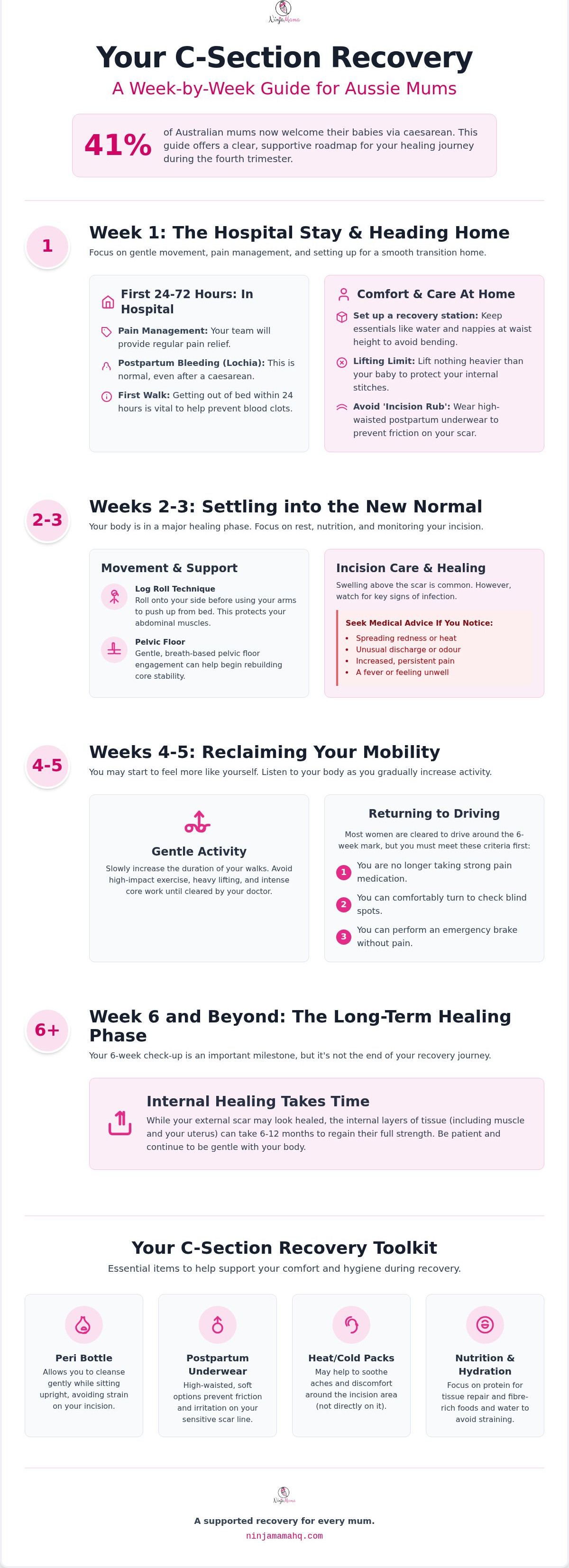
Did you know that 41% of Australian mums now welcome their babies via caesarean? While it is a common way to meet your little one, navigating your c-section recovery week by week requires a gentle, intentional approach to healing. You might feel overwhelmed by the thought of managing an incision while simultaneously caring for a newborn. It is completely normal to worry about your scar or wonder when you will be able to move without that sharp tugging sensation. We understand exactly how you feel and we are here to help.
This guide offers a clear roadmap for your fourth trimester, ensuring you feel supported at every stage. You will discover practical strategies to manage discomfort, improve your mobility, and care for your scar with total confidence. We will explore everything from the best way to handle hygiene without bending to choosing the right high waisted support for those early days. Let us walk through the next six weeks together, turning a period of uncertainty into a time of supported, steady recovery.
Key Takeaways
- Understand what to expect during your initial hospital stay and why gentle movement is the first step toward regaining your strength.
- Follow a detailed timeline for c-section recovery week by week to monitor your incision healing and recognise when to seek medical advice.
- Learn the specific physical milestones required before you can safely return to driving and increasing your daily activity levels.
- Prepare for your six-week check-up with the right questions and understand why internal tissue healing continues long after your external scar has closed.
- Discover the essential recovery toolkit, including why an upside-down peri bottle and specialised underwear are vital for comfort and hygiene.
Week 1: The Hospital Stay and Heading Home
In Australia, your stay following a Caesarean section typically lasts between 24 and 72 hours, though private hospitals often extend this to four or five days. During these first few days, your medical team will focus on pain management and monitoring your surgical site. It's a whirlwind of checks, but the most significant milestone is your first walk. While it feels daunting, those first few steps to the bathroom are vital for your circulation and digestion. Most hospitals encourage you to get out of bed within the first 24 hours to reduce the risk of blood clots.
Even though you didn't have a vaginal birth, you'll still experience postpartum bleeding, or lochia, as your uterus contracts. This is a surprise for many mums, but it's a normal part of the process. When you're ready to head home, your focus shifts to your recovery station. Set this up in a spot where you spend the most time, ensuring everything from nappies to water bottles is at waist height. This setup minimises the need for bending or lifting anything heavier than your baby, which is essential for protecting your internal stitches.
Hygiene Without the Bending
Maintaining hygiene after surgery is tricky when your mobility is limited. You'll find that twisting or leaning to wipe is uncomfortable and puts unnecessary strain on your stitches. Using an upside-down peri bottle is a game-changer for new mums. It allows you to cleanse your perineal area with a gentle stream of water while sitting upright, keeping the area fresh without irritating your abdominal incision. When you take your first shower at home, let soapy water run over the wound rather than scrubbing it. Pat the area dry very gently with a clean, soft towel to keep the site moisture-free.
Managing the 'Incision Rub'
Standard underwear is often the enemy of a fresh C-section scar because the elastic usually sits right on the incision line. To navigate your c-section recovery week by week, you need clothing that protects the sensitive site. Many women find that postpartum disposable underwear provides the soft, non-irritating protection required. These high-waisted options sit well above the scar, preventing friction and allowing the skin to breathe. Organise your hospital bag to include these recovery-specific items so you aren't caught out by uncomfortable waistbands during your first few days at home.
Weeks 2-3: Settling into the New Normal
By week two, the initial adrenaline of the first few days has likely faded. You're now transitioning from the structured environment of the hospital to managing your recovery in the comfort of your own lounge room. Understanding your c-section recovery week by week helps you stay on track during this period of intense internal healing. You'll likely move from hospital-grade pain relief to over-the-counter options like paracetamol or ibuprofen. Consistency is your best friend here. Don't wait for the pain to become sharp before taking your next dose; keeping a steady level of relief in your system makes it much easier to stay mobile and care for your baby.
You might notice a slight "shelf" or swelling just above your surgical site. This is a common part of the inflammatory response, but it's important to monitor the incision itself. Look for signs of infection such as spreading redness, heat, unusual discharge, or a fever. The NHS c-section recovery guide provides a reliable reference for what healthy wound progression looks like. To support tissue repair, prioritise high-quality protein and stay hydrated. Your body is doing the heavy lifting of rebuilding layers of muscle and skin, so give it the fuel it needs.
Movement and Lifting Limits
The "nothing heavier than your bub" rule is the gold standard for these weeks. It might be tempting to lift a laundry basket or a toddler, but your internal stitches are still vulnerable. Use the log roll technique to get out of bed: roll onto your side, drop your legs over the edge, and use your arms to push yourself up. This protects your abdominal wall from unnecessary strain. Even though you didn't have a vaginal birth, your pelvic floor carried the weight of your pregnancy for nine months. Gentle, breath-based pelvic floor engagement is helpful now to begin rebuilding your core stability from the inside out.
Comfort Strategies for Home
Abdominal discomfort and back strain are common as your body adjusts to its new posture. Many women find that applying gentle heat or cold therapy to the area around the incision can soothe those nagging aches. Supporting your digestive system is also a top priority. Straining during bowel movements can be painful and puts pressure on your stitches, so focus on fibre-rich foods and plenty of water. Many mums find that treating themselves to a premium lactation chocolate drink provides a much-needed emotional and nutritional lift during these demanding weeks. It's a small, simple way to incorporate self-care into your daily routine while supporting your body's recovery needs.
Weeks 4-5: Reclaiming Your Mobility
By the time you reach weeks four and five, you'll likely feel a welcome surge of energy. The intense physical limitations of the first fortnight are fading, replaced by a growing sense of your old self. Your stamina is building, allowing you to stay on your feet for longer stretches without that familiar tugging sensation at your incision site. This is a pivotal time in your c-section recovery week by week as you begin to reclaim your independence and start looking toward the future.
Many Aussie mums are eager to get back behind the wheel during this phase. While some insurance providers have specific waiting periods, the general medical rule is that you must be able to perform an emergency stop without pain or hesitation. If you can't slam on the brakes comfortably, you aren't ready to drive. It's also a time to check in with your emotional wellbeing. Balancing the demands of a newborn with your own healing can feel like a heavy mental load. Understanding C-section recovery what to expect emotionally is just as important as the physical side. Start preparing for your six-week postnatal check-up by jotting down any questions about your mood, physical activity, or scar progression for your GP or obstetrician.
Scar Desensitisation and Care
You might notice the skin around your scar feels tingly, itchy, or even completely numb. This happens because the nerves were interrupted during surgery. Gentle desensitisation is key to helping those nerves recover. Start by lightly stroking the skin near the scar with different textures, like a soft cloth or postpartum wipes. This helps your brain and nerves reconnect in a non-threatening way. Keeping the area clean with these gentle wipes ensures you aren't introducing irritation while the tissue continues its deep healing process.
Light Activity and Social Reconnection
Short, gentle walks around the block are perfect for boosting your circulation and lifting your mood. Fresh air does wonders for the soul during the fourth trimester. However, don't feel pressured to entertain visitors if you're feeling drained. Setting boundaries is an essential part of your recovery. It's perfectly okay to ask friends to drop off a meal and come back for a cuddle another day. To understand more about the current landscape of motherhood, you can learn more about the state of postpartum in 2026 and how other Australian mums are navigating this transition with confidence.
Week 6 and Beyond: The Long-Term Healing Phase
Reaching the six-week milestone is a significant achievement in your postnatal journey. For many Australian mums, this date is circled on the calendar as the day they get the "all clear" from their doctor. During this check-up, your obstetrician or GP will examine your incision site and discuss your emotional wellbeing. It is the perfect time to ask specific questions about your physical limits. You might ask about the integrity of your abdominal wall, any lingering numbness, or for a referral to a women's health physiotherapist. This professional guidance ensures your c-section recovery week by week remains safe and effective as you move out of the acute healing phase.
While the six-week mark is often treated as the finish line, internal tissue healing is a much longer process. Research into surgical recovery suggests that it can take up to two years for the internal layers of tissue and muscle to regain their full strength. This is why a "low and slow" approach to exercise is vital. Avoid jumping straight back into high-impact running or heavy weightlifting. Instead, focus on rebuilding your core stability and pelvic floor strength through specialised postnatal Pilates or yoga. Listen to your body; if you feel any pulling or discomfort at the scar site, it is a clear signal to scale back your intensity.
The Gold Standard for Scar Management
As your scar matures, it will change in colour and texture. Initially, it may appear pink or slightly raised, but over the coming months, it should gradually flatten and fade. To optimise this process, many women start using medical-grade silicone technology once the incision is fully closed and the scab has naturally fallen away. Using Ninja Mama C-section silicone scar patches is a simple, effective way to support long-term healing. These patches create a protective barrier that hydrates the tissue, which may help to reduce redness and prevent the formation of keloid or hypertrophic scars. Consistency is key, so aim to wear them as directed to see the best results for your skin.
Returning to 'Real' Undies
Transitioning back to your regular wardrobe is an exciting step, but your choice of underwear still matters. Standard bikini-cut undies often have waistbands that sit directly on your scar, which can cause irritation even months after surgery. Look for high-waisted, breathable cotton options that provide gentle support without digging in. Some mums find that continuing with disposable options during particularly busy weeks or during their first few postnatal periods offers a level of convenience and comfort that regular laundry cannot match. If you feel you need extra abdominal support as you increase your activity, consult a physiotherapist about specialised compression garments designed for the fourth trimester. You can support your long-term comfort by choosing premium silicone scar patches to keep your incision site protected under any clothing choice.
The C-Section Recovery Toolkit: Essentials for Aussie Mums
Preparing for your homecoming is just as important as the hospital stay itself. When you are managing your c-section recovery week by week, having a curated selection of essentials within reach transforms your daily experience from one of struggle to one of supported ease. It is easy to get overwhelmed by the sheer volume of baby gear available, but for a surgical recovery, focusing on quality over quantity is the smartest approach. A well-organised recovery station helps you avoid unnecessary bending and keeps you calm during those first few hazy weeks.
A curated recovery kit also makes a thoughtful gift for yourself or a friend. It acknowledges that while the baby needs many things, the mother's healing is the foundation of a happy home. By selecting premium, Australian-designed tools, you are investing in your own comfort and hygiene, which are often the first things to be overlooked in the rush of new parenthood. Let's look at the specific items that make the biggest difference in those early stages of healing.
Hygiene and Wound Care Must-Haves
Hygiene is your top priority for preventing infection and ensuring comfort. The Ninja Mama Peri Bottle is an absolute must-have for C-section mums. Because it features an angled nozzle, you can cleanse yourself thoroughly without having to twist or lean, protecting your fresh incision from strain. Pair this with high-waisted disposable underwear. These are designed to sit well above your scar line, providing a soft, breathable barrier that prevents your clothes from rubbing against the sensitive site. As you move into the later stages of your c-section recovery week by week, silicone scar patches become the gold standard for long-term care, helping to flatten and fade the scar while providing a protective layer under your regular clothing.
Nourishment and Self-Care
Your body requires extra fuel to repair the multiple layers of tissue affected by surgery. Supportive teas and organic lactation drinks are helpful for maintaining hydration and providing a gentle energy boost when sleep is scarce. Additionally, milk supply can sometimes take a little longer to establish after a surgical birth. Having breast therapy packs on hand allows you to use heat or cold therapy to manage engorgement or encourage let-down comfortably. To make preparation even simpler, you can explore our full range of recovery bundles which bring these essentials together in one convenient package. Choosing a pre-made system ensures you have everything you need from day one, allowing you to focus entirely on bonding with your new arrival.
Reclaim Your Comfort and Confidence
Navigating your c-section recovery week by week is a journey that requires patience and the right support. You've learned that healing isn't just about the first six weeks; it's a long-term process of looking after your physical and emotional wellbeing. By prioritising gentle movement and using tools specifically designed for surgical recovery, you can transform a challenging transition into a period of steady progress. Your body has done something incredible. It deserves the highest quality care as it rebuilds.
Ninja Mama is an Australian-owned brand designed by mums, for mums. We understand the specific gaps in postpartum care. Trusted by thousands of Aussie mothers, our range focuses on the comfort and hygiene you need to feel like yourself again. From our signature upside-down peri bottles to medical-grade silicone patches, we have curated everything for a smoother path to wellness. You can even enjoy free shipping on qualifying orders to get your essentials delivered straight to your door.
Shop our curated C-section recovery essentials and take the first step toward a more comfortable fourth trimester. You've got this, mama.
Frequently Asked Questions
When can I drive after a C-section in Australia?
Most Australian medical providers and insurers advise against driving for at least two weeks, with many suggesting a six-week wait. The critical factor is your ability to perform an emergency stop without pain or hesitation. You should also check with your car insurance provider, as some have specific policies regarding post-surgical driving. Always consult your doctor at your postnatal check-up before getting back behind the wheel to ensure your abdominal muscles have healed sufficiently.
Is it normal for my C-section scar to feel numb or itchy?
Yes, it's very common for the area around your incision to feel numb, tingly, or itchy as you progress through your c-section recovery week by week. This happens because the nerves in your abdominal wall are cut or compressed during the surgery. While the itching often signals that the skin is healing, the numbness can last for several months or even longer. Gentle desensitisation through light touch can often help the nerves recover over time.
How do I keep my C-section incision clean and dry?
Keeping your incision clean and dry is vital for preventing complications. You should wash the area daily with plain water or a very mild, unscented soap, allowing the water to run over the site rather than scrubbing it. After showering, gently pat the area dry with a clean towel or use a hair dryer on a cool setting to ensure no moisture remains. Wearing high-waisted, breathable cotton or disposable underwear helps prevent sweat from gathering near the scar.
Can I use a peri bottle if I had a C-section instead of a vaginal birth?
Absolutely, an upside-down peri bottle is a lifesaver for C-section mums. Even without a vaginal birth, you'll experience postpartum bleeding and need to maintain perineal hygiene. Because your abdominal incision makes twisting and reaching difficult, the angled nozzle allows you to stay fresh while sitting upright. It removes the need for awkward movements that might strain your stitches, making it a staple in any practical c-section recovery week by week toolkit.
When is it safe to start using silicone scar strips?
You can typically start using silicone scar strips once your incision is fully closed and any scabbing has naturally fallen away, which is usually around the six-week mark. These medical-grade strips work by hydrating the scar tissue and providing gentle pressure. Many women find they help to flatten and fade the scar over several months of consistent use. Always ensure the skin is clean and free from lotions or oils before applying the patches for the best results.
What are the red flags for C-section infection I should watch for?
You should contact your doctor or midwife immediately if you notice signs of a potential infection. These red flags include a fever over 38°C, worsening redness or heat around the incision, or any unusual swelling. Watch for pus or foul-smelling discharge from the wound, as well as pain that suddenly increases rather than gradually improving. Catching these signs early is essential for a safe recovery and prevents further complications during your fourth trimester.
How long do I need to wear postpartum underwear after a C-section?
Most mums find it helpful to wear specialised postpartum underwear for at least the first six weeks. During the early days, high-waisted disposable options are ideal because they don't rub against the fresh incision. As your scar matures, you might transition to supportive cotton undies that sit above the waistline. Some women continue using them for longer if they experience ongoing sensitivity or find the extra abdominal support comfortable during their daily activities.
When can I start exercising properly again after my surgery?
You can usually begin gentle walking within the first week, but you should wait until your six-week check-up before starting more structured exercise. Even then, a "low and slow" approach is best. Focus on pelvic floor exercises and gentle core rebuilding rather than high-impact activities. Because internal tissue healing can take many months, it's often wise to consult a women's health physiotherapist for a tailored plan before returning to running or heavy lifting.

Article by
Louise Beever
Louise Beever is the founder of Ninja Mama, an Australian postpartum recovery brand focused on creating premium, practical recovery essentials for new mothers. Since launching Ninja Mama in 2018, Louise has worked closely with thousands of postpartum women and healthcare retailers to better understand the realities of recovery after birth. Her work focuses on postpartum preparation, recovery support, and improving awareness around the fourth trimester.
Remember Mamas
The information provided in this article is intended for general educational and informational purposes only and should not be considered medical advice. Always seek guidance from your doctor, midwife, lactation consultant, or qualified healthcare professional regarding your individual circumstances, pregnancy, birth, or postpartum recovery.