

Did you know that nearly half of all Australian women will experience some degree of pelvic organ prolapse at some point in their lives? It's a staggering number, yet so many of us feel isolated when we first notice that strange heaviness or the sensation that something is "falling out" after a long day on our feet. If you've been feeling anxious about your body lately, please know you aren't alone. Understanding Prolapse Identification: How to recognize the early signs of uterine or bladder prolapse at home is the first step toward feeling like yourself again. It's natural to feel a mix of confusion and worry as you navigate your postpartum recovery and try to distinguish between normal healing and something more.
We're here to help you regain that sense of calm and prepared control. This guide will help you understand exactly what your body is telling you without the guesswork. We'll explore the subtle signals of pelvic organ prolapse and provide you with a structured plan to seek professional support. You'll discover how to check yourself safely and learn practical steps to nurture your pelvic floor as you heal. By the end, you'll have the practical wisdom needed to advocate for your wellbeing with total confidence. You've got this, mama.
Key Takeaways
- Understand the vital role of your pelvic floor and how pregnancy can stretch this supportive "hammock," leading to changes in organ positioning.
- Master the essentials of Prolapse Identification: How to recognize the early signs of uterine or bladder prolapse at home by identifying specific sensations like internal pressure or a "tampon falling out" feeling.
- Learn the most effective timing and techniques for a gentle home check to build body awareness and track your progress during the fourth trimester.
- Discover the key differences between standard postpartum healing and prolapse symptoms, helping you navigate the first six weeks with confidence rather than worry.
- Gain a clear roadmap for seeking professional help, including why seeing an Australian pelvic floor physiotherapist is a crucial step in your recovery plan.
Understanding Pelvic Organ Prolapse (POP) in the Postpartum Period
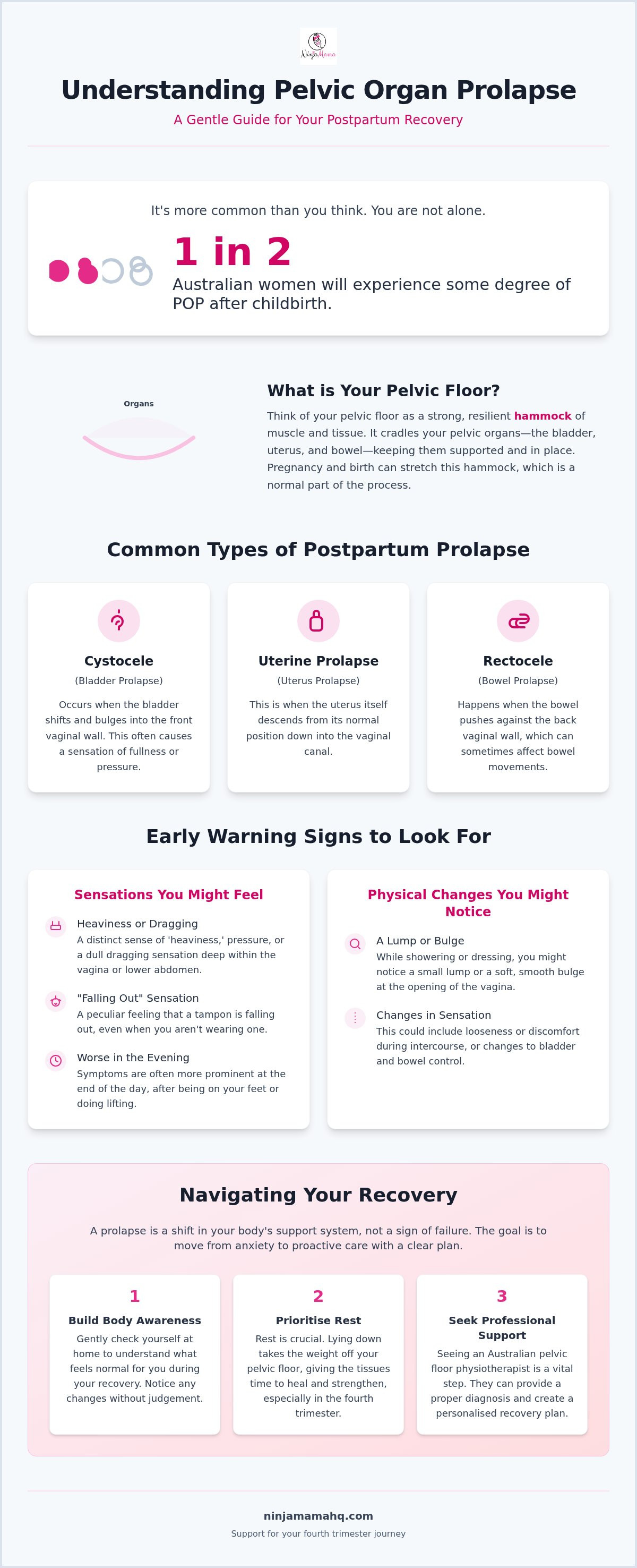
Think of your pelvic floor as a beautiful, resilient hammock. In its usual state, this layer of muscle and tissue cradles your bladder, uterus, and bowel, keeping everything perfectly in place. However, pregnancy and labour are significant physical events that naturally stretch this hammock to its limits. Pelvic Organ Prolapse, or POP, occurs when these organs shift from their original positions and press against the vaginal walls because the supportive tissues have been strained. It's a common experience for many Australian mums; in fact, statistics often cite that up to 1 in 2 women will have some degree of POP after childbirth.
If you're noticing new sensations deep in your pelvis, it's easy to feel overwhelmed. It's vital to reframe how you view this change. A prolapse is simply a shift in your body's internal support system, not a sign that your body is "broken" or has failed you. Gaining clarity through Prolapse Identification: How to recognize the early signs of uterine or bladder prolapse at home allows you to move from a place of anxiety to a place of proactive care. Your body has done something incredible, and now it just needs a little extra support to find its new rhythm.
The Different Types of Prolapse
Because your pelvic floor supports several organs, POP can show up in a few different ways depending on what has shifted. A cystocele happens when the bladder bulges into the front vaginal wall, which is often what causes that specific feeling of "fullness." Uterine prolapse is when the womb itself descends into the vaginal canal. Finally, a rectocele occurs when the bowel pushes against the back vaginal wall. You might experience just one of these or a combination, and each one is a valid reason to slow down and listen to what your body is telling you.
Why the Fourth Trimester is a Critical Time
The first few months after birth are a unique window for your recovery. Your body is still under the influence of relaxin, the hormone that softened your ligaments for birth, meaning your internal supports are still quite pliable. During this stage, everyday pressures like postpartum constipation or heavy lifting can put unnecessary strain on your healing tissues. Many women find that wearing Ninja Mama Postpartum Disposable Underwear offers a gentle sense of security and physical support when dealing with that initial pelvic heaviness.
Rest is a functional requirement for pelvic floor recovery, not a luxury you should feel guilty about. Lying down frequently helps take the literal weight off your pelvic floor, giving those "hammock" tissues the best chance to strengthen. Incorporating a sitz soak into your routine can also help relax the pelvic area and provide a soothing moment of self-care while your body does the hard work of healing.
Early Warning Signs: How to Spot a Prolapse Before it Progresses
Identifying the subtle shifts in your body after birth can feel like learning a new language. While the pelvic floor is healing, it's common to feel a bit different, but certain sensations warrant a closer look. The most frequently reported sign is a distinct sense of "heaviness" or pressure deep within the vagina or lower abdomen. It isn't always painful; it often feels like a dull dragging sensation that wasn't there before. For many mums, noticing this change is the first step in Prolapse Identification: How to recognize the early signs of uterine or bladder prolapse at home.
Another hallmark sign is the peculiar feeling that a tampon is falling out, even when you aren't wearing one. This sensation usually isn't constant. You might notice it's much more prominent at the end of a long day after you've been on your feet or lifting the pram into the car. Gravity plays a significant role here. When your pelvic floor muscles are fatigued, they provide less support, making the symptoms of a prolapse more noticeable in the late afternoon or evening.
Physical Changes You Might Notice
Your body awareness is your greatest tool during this recovery phase. While you're showering or dressing, you might notice a small lump or a soft bulge at the vaginal opening that wasn't there previously. It might feel like a smooth, rounded surface. Some women also notice that the overall appearance of their vulva or vaginal entrance has changed, appearing more open or "gappy." You might also experience a dragging sensation or slight discomfort during intimate moments, which is a common signal that your pelvic organs may need a little more support.
Bladder and Bowel Clues
Sometimes, the signs of a prolapse aren't felt as pressure, but as changes in how your bladder and bowels function. Stress incontinence, which is that little leak when you sneeze, cough, or laugh, is often linked to changes in pelvic support. You might also find yourself sitting on the loo and feeling like you haven't fully emptied your bladder, even though you've just finished. This can lead to frequent trips to the bathroom and a general sense of pelvic frustration.
Maintaining hygiene during this time is essential for your comfort and confidence. Using a Ninja Mama Peri Bottle allows you to stay fresh and clean with a gentle stream of water, avoiding any unnecessary straining or wiping that might irritate sensitive tissues. If you're feeling that pelvic pressure, consider pairing your recovery routine with supportive postpartum underwear to help you feel more secure and held as you move through your day.
A Gentle Guide: How to Safely Check for Prolapse at Home
Checking yourself isn't about being your own doctor; it's about being your own best advocate. Gaining a personal understanding of Prolapse Identification: How to recognize the early signs of uterine or bladder prolapse at home can help you feel more in control of your journey. This check is purely for your own awareness and peace of mind, rather than a clinical diagnosis. It's a supportive way to gather information about your body before you chat with a healthcare professional.
Timing is everything when it comes to getting an accurate sense of what's happening. You'll likely find that symptoms are more obvious in the late afternoon or evening, as gravity and the day's activities put more pressure on your pelvic floor. Choose a quiet moment when you won't be interrupted by a waking baby. You deserve a few calm minutes to focus entirely on yourself. To get a clear view of your anatomy, you must use a hand mirror to see exactly what's happening at the vaginal entrance.
Step-by-Step Self-Examination
- Start by washing your hands thoroughly and finding a position that feels natural. Many mums prefer squatting, while others find lying back on the bed with knees bent and feet flat works best.
- Hold your mirror so you can clearly see the vaginal opening while your muscles are relaxed.
- Gently bear down, similar to the pressure you'd use for a bowel movement. Watch to see if any tissue moves lower or if a bulge becomes visible at the entrance.
- With a clean finger, gently feel inside the vagina. You are looking for a firm, rounded surface, which could be the cervix or a bulging vaginal wall.
What to Look and Feel For
Distinguishing between normal postpartum changes and a prolapse can be tricky. In those first few weeks, some swelling and puffiness are standard as your tissues heal from labour. A prolapse bulge usually feels more distinct and firm, like a small, smooth ball. Take note of where you feel or see this shift. A bulge on the front wall often indicates a bladder shift, while the back wall suggests the bowel. If you feel something central, it might be the uterus. Every woman's "normal" looks different after birth, so focus on what feels different for you rather than comparing yourself to a textbook image.
Prolapse vs. Normal Postpartum Healing: Knowing the Difference
In those first six weeks after your little one arrives, your body is in a state of incredible transition. It's perfectly standard to feel a certain degree of "gapiness" or a general sense of heaviness in your pelvic region as your muscles and ligaments begin to retract. Distinguishing between these expected changes and the need for Prolapse Identification: How to recognize the early signs of uterine or bladder prolapse at home is often the biggest source of anxiety for new mums. You might be wondering if that dragging feeling is just your body knitting back together or something that requires more attention.
One common point of confusion is the difference between a healing perineal tear and a prolapse. A tear or episiotomy usually presents as surface-level stinging, tenderness, or sharp pain, particularly when you're moving or using the bathroom. In contrast, a prolapse feels much more like internal pressure or a deep, dull weight. If you're managing external stitches, focusing on gentle hygiene is a great way to support your recovery. For more on this, you can read about why every new mum needs a peri bottle to manage those early days with ease.
While we're often told to "do our Kegels," don't feel pressured to rush into intense pelvic floor exercises if you're experiencing significant pain or discomfort. Your body needs time to settle first. Pushing through sharp pain can sometimes cause more tension in an already stressed pelvic floor. Listen to your intuition; if an exercise feels "off" or increases that heavy sensation, it's okay to pause and wait until you've had your professional check-up.
The Role of Inflammation and Swelling
It's fascinating how much early postpartum swelling can mimic the specific sensations of a prolapse. When your pelvic tissues are engorged and inflamed from the hard work of labour, they naturally feel heavier and lower. Many women find that using perineal ice packs helps significantly to reduce this "false" heaviness by soothing the inflammation. Typically, this acute swelling begins to subside within the first two weeks, though your internal structures will continue to shift and strengthen throughout the fourth trimester.
When "Wait and See" Isn't Enough
While most sensations in the early weeks are part of the healing process, there are a few red flags that mean you should seek help sooner rather than later. If you experience severe pelvic pain, find it impossible to pass urine, or notice a bulge that stays permanently outside the body, please reach out to your midwife or GP immediately. Early identification is wonderful because it leads to much better recovery outcomes through targeted physiotherapy. Regardless of your symptoms, always prioritise your 6-week postnatal check as a dedicated time to discuss your pelvic health. To feel more secure while you wait for your appointment, try our supportive postpartum underwear for gentle, everyday comfort.
Navigating Your Recovery: From GP Visits to Pelvic Floor Support
Once you've taken those first steps toward Prolapse Identification: How to recognize the early signs of uterine or bladder prolapse at home, the path forward becomes much clearer. The "gold standard" for recovery in Australia is booking an appointment with a Pelvic Floor Physiotherapist. These specialists do so much more than a standard check; they provide a tailored plan to help your muscles regain their strength and function. While your GP is a great first point of contact, a physio has the specific tools to assess exactly what your pelvic floor needs to thrive. It's about moving from a place of uncertainty to a proactive plan for your long-term wellbeing.
Daily management is where the real healing happens. It's about making small, intentional choices that protect your pelvic floor while it's still vulnerable. Avoiding heavy lifting, including that heavy pram, is essential during the early months. If you have to lift your toddler, try to exhale as you do it to reduce internal pressure. Managing constipation is equally vital; straining on the loo is one of the biggest stressors for a healing pelvic floor. Many women find that wearing Ninja Mama Postpartum Underwear provides a wonderful sense of physical security and gentle support, helping you feel "held" as you move through your day.
Conservative Treatment Options
Recovery doesn't always mean surgery. In fact, many Aussie mums find incredible success with conservative treatments. Your physio might suggest tailored pelvic floor muscle training, often known as Kegels, which are specific to your type of prolapse. Another option is a vaginal pessary, a small, flexible device inserted to provide internal support for your organs. You'll also learn lifestyle adjustments like "the knack," which is a quick, strong contraction of your pelvic floor just before you sneeze, cough, or lift. These techniques become second nature over time, protecting your tissues from sudden pressure and allowing them to regain their natural tension.
Supporting Your Body Holistically
True recovery is a whole-body experience. Incorporating a Sitz Soak into your evening routine can help soothe the perineal area and encourage healthy blood flow to the tissues. It's a beautiful way to combine physical healing with a moment of much-needed rest. To keep things moving easily, prioritise hydration and nutrition to ensure your stools stay soft and easy to pass. For a complete guide on nurturing yourself during this time, check out our guide on The Ultimate Postpartum Self Care Kit: Essentials for Your Fourth Trimester Recovery. Remember, mama, your body is capable of amazing things, and with the right support, you can navigate this journey with confidence.
Empowering Your Pelvic Health Journey
You've taken a brave and vital step by prioritising your pelvic health today. Understanding the difference between normal healing and the signals of a shift in your internal support system is incredibly empowering. By mastering Prolapse Identification: How to recognize the early signs of uterine or bladder prolapse at home, you've moved from a place of worry to one of wisdom. Remember that your body is remarkably resilient; those feelings of heaviness are simply signals that you need a little extra care and professional guidance.
Whether you're booking that first physio appointment or simply allowing yourself more time to rest, every small action counts toward a stronger recovery. Our evidence-aware recovery solutions are designed specifically for comfort during the fourth trimester, ensuring you feel supported every step of the way. Trusted by thousands of Aussie mums, our range helps you navigate this transition with total confidence and ease.
Ready to build your ultimate recovery toolkit? Explore the Ninja Mama Postpartum Recovery Range and find the support you deserve. You're doing a wonderful job, mama, and we're here to walk this path with you.
Frequently Asked Questions
Can I fix a prolapse myself at home with just Kegels?
No, you shouldn't try to manage a prolapse entirely on your own. While pelvic floor exercises are a vital part of recovery, doing them incorrectly can sometimes cause more tension. A pelvic floor physiotherapist can provide a tailored program to ensure you are contracting and relaxing the right muscles. This professional support is essential for effective Prolapse Identification: How to recognize the early signs of uterine or bladder prolapse at home and creating a safe, long-term healing plan.
Is it safe to have sex if I think I have a bladder prolapse?
Yes, it's generally safe to have sex if you suspect a bladder prolapse, provided it doesn't cause you pain or significant discomfort. It's important to listen to your body and communicate openly with your partner. Some women find that certain positions, such as lying on their side, feel more comfortable by reducing direct pressure on the vaginal walls. If you feel any sharp pain or unusual dragging sensations, it's best to pause and chat with a professional.
How long after birth should I wait to check for a prolapse?
It's best to wait until your six-week postnatal check before performing a self-examination. In the early weeks, your tissues are naturally swollen and inflamed from birth, which can make Prolapse Identification: How to recognize the early signs of uterine or bladder prolapse at home quite confusing. This initial "false heaviness" usually subsides as your body heals. Waiting ensures you are getting a more accurate picture of your pelvic floor's state once the acute stage of recovery has passed.
What does a uterine prolapse feel like compared to a bladder one?
A uterine prolapse often feels like a heavy, central pressure or the sensation of a firm, rounded object sitting low in the vaginal canal. In contrast, a bladder prolapse typically creates pressure against the front vaginal wall. You might also notice specific bladder clues, such as feeling like you can't fully empty your bladder or needing to wee more frequently. Both sensations benefit from a gentle check with a mirror to see where the shift is occurring.
Will my prolapse get worse if I have another baby?
Having another baby is a risk factor for further stretching, but it doesn't guarantee your symptoms will worsen. Many women successfully manage their pelvic health through subsequent pregnancies by working closely with a pelvic floor physiotherapist. Prioritising your recovery now and learning how to protect your pelvic floor during daily activities will put you in the best position for the future. It's all about building a strong foundation of support and awareness before your next journey begins.
Can wearing tight underwear help with the feeling of heaviness?
Support is wonderful, but avoid anything that feels restrictive or "tight" enough to increase abdominal pressure. Instead, look for gentle, supportive options like our disposable postpartum underwear. This type of clothing provides a comforting sense of security and helps manage the feeling of pelvic heaviness without squeezing your midsection. It's about feeling held and protected as you move, allowing your tissues to rest and recover without the constant strain of gravity throughout your busy day.
Do I need surgery if I can see a bulge at the vaginal opening?
Seeing a bulge doesn't automatically mean you'll need surgery. Many Aussie mums manage their symptoms successfully through conservative options like pelvic floor physiotherapy and vaginal pessaries. These tools provide the internal support your organs need while you work on strengthening your natural "hammock." Surgery is typically considered a later option if conservative treatments haven't provided the relief you need. Your healthcare team will help you decide on the most effective path for your specific body.
Is a prolapse a common reason for leaking pee when I cough?
Yes, leaking pee when you cough, sneeze, or laugh is a very common secondary sign of a prolapse. This happens because the shifting organs can change the angle of the urethra or put extra pressure on the bladder, making it harder for your pelvic floor to stay "watertight." While it's a common experience for many new mums, it is something that can be significantly improved with the right support and targeted pelvic floor exercises.

Article by
Louise Beever
Louise Beever is the founder of Ninja Mama, an Australian postpartum recovery brand focused on creating premium, practical recovery essentials for new mothers. Since launching Ninja Mama in 2018, Louise has worked closely with thousands of postpartum women and healthcare retailers to better understand the realities of recovery after birth. Her work focuses on postpartum preparation, recovery support, and improving awareness around the fourth trimester.
Remember Mamas
The information provided in this article is intended for general educational and informational purposes only and should not be considered medical advice. Always seek guidance from your doctor, midwife, lactation consultant, or qualified healthcare professional regarding your individual circumstances, pregnancy, birth, or postpartum recovery.