

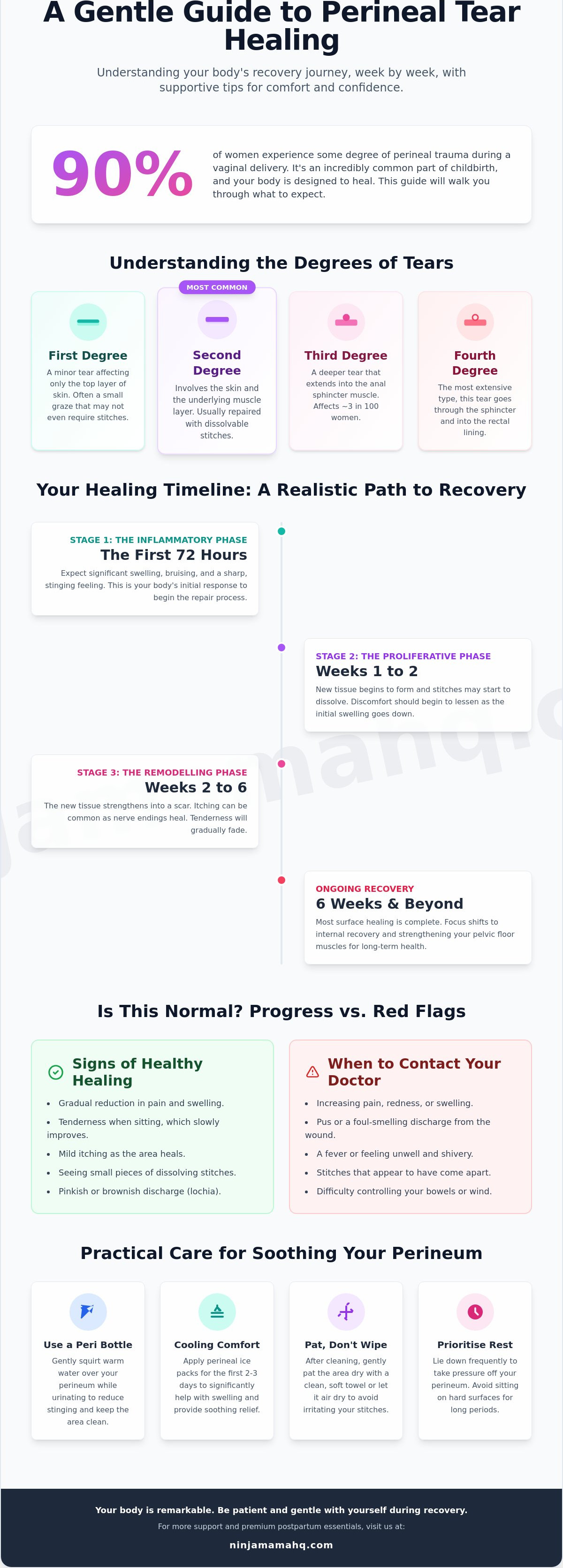
Did you know that approximately 90% of women experience some degree of perineal trauma following a vaginal delivery? While it’s an incredibly common part of childbirth, it often feels like a lonely hurdle when you’re navigating the stinging during urination or the daunting fear of that first bowel movement. Understanding the perineal tear healing stages is the first step toward reclaiming your comfort and peace of mind during this transformative time.
It’s completely normal to feel anxious about your stitches or wonder if every twinge is a standard part of the process. We’re here to provide a gentle, expert led roadmap through the physical and emotional stages of your recovery, ensuring you feel supported at every turn. This guide offers a clear week by week timeline of what to expect, practical tips to reduce discomfort, and the clarity you need to recognise exactly when to seek professional medical advice.
In this guide, we’ll cover:
- Understanding the different degrees of tearing and why this common part of birth is simply the start of your body's natural repair journey.
- A clear, expert led timeline of the perineal tear healing stages. You'll know exactly what's happening with your body from day one through to week six.
- How to spot the difference between healthy progress and red flags. It's important to know when it's time to reach out to your midwife or doctor.
- Practical, soothing self care habits that prioritise keeping the area clean and dry without any unnecessary discomfort.
- The importance of pelvic floor health and how gentle movements can support your internal recovery and long term confidence.
Understanding the Degrees of Perineal Tears
Let's talk about the perineum. It is that small, delicate stretch of skin and muscle between your vagina and anus. During birth, this area does some incredible heavy lifting to allow your baby to enter the world. Because of this, tearing is a very common, natural part of the journey. In fact, data from September 2024 shows that around 90% of women experience some level of perineal trauma during vaginal delivery. While the idea of a Perineal tear might feel overwhelming, understanding the different degrees helps you navigate the perineal tear healing stages with much more confidence.
Think of this as your body's way of making room for your little one. Most of the time, these tears are minor and your body is exceptionally good at repairing itself. The Australian Commission on Safety and Quality in Health Care updated the Clinical Care Standard in March 2026 to ensure every woman receives the best possible management for these injuries. Whether your tear was a tiny graze or something that required a few more stitches, knowing what's happening "down there" is the best way to feel in control of your recovery.
To better understand how your body recovers from these different types of tears, watch this helpful video from Mama Doctor Jones:
First and Second Degree Tears
Most mamas will find themselves in this category. A first degree tear is often just a tiny graze or a skin-deep nick. Sometimes they don't even need stitches; they simply need a bit of time and gentle care. A second degree tear is the most frequent type we see. This involves the skin and the underlying muscle layer. If you've had a second degree tear, you'll likely have some dissolvable stitches to help the muscle knit back together. During the early perineal tear healing stages, you might notice:
- A sharp stinging sensation, especially when you pass urine.
- Noticeable swelling or bruising around the vaginal opening.
- A heavy sense of "fullness" or pressure when you've been standing for too long.
- Tenderness when sitting down on a firm surface.
Rest assured that these tears generally heal beautifully within a few weeks. Your body is already hard at work sending blood flow to the area to start the repair process.
Third and Fourth Degree Tears
These are less common, affecting about 3 in 100 women who give birth vaginally. For first time mothers, the rate is slightly higher at about 5 in 100. These tears reach a bit deeper and involve the anal sphincter muscle. Because they are more complex, they require a specialised surgical repair and much closer follow-up with your GP or obstetrician. You might feel a bit more anxious if you've experienced a more severe tear, but it's helpful to remember that the biological healing stages remain fundamentally similar. Your body still knows how to heal; it just needs a more structured support system. This often includes a multidisciplinary team like a pelvic floor physiotherapist to help you regain strength and confidence in the months following birth.
The Perineal Tear Healing Stages: A Realistic Timeline
Healing isn't a race; it's a biological rhythm. While every mama's experience is unique, your body follows a structured path as it repairs itself. Understanding the perineal tear healing stages helps you set realistic expectations and feel more in control of your recovery. Even if you're still understanding the degrees of perineal tears, knowing the timeline ahead can significantly reduce that early postpartum anxiety.
The First 72 Hours: Survival Mode
This is Stage 1: The Inflammatory Phase. During these first few days, your body sends a rush of blood and white blood cells to the area to start the repair work. Expect significant swelling and bruising. It’s the "ice-ice-baby" phase where cooling is your best friend. Many women find that using perineal ice packs during these early hours is essential for managing acute soreness. This is also when the first loo visit happens. It feels like a huge mental hurdle; however, your body is designed to handle this. Keeping the area supported and using a gentle stream of water can make this milestone feel much more manageable.
Weeks 1 to 2: The Turning Point
Welcome to Stage 2: The Proliferative Phase. This is when new tissue begins to form and those dissolvable stitches start their disappearing act. You might notice a strange "tugging" or tightening sensation as the swelling goes down and the wound edges knit together. Then comes the itch. While it can be annoying, itching is actually a fantastic sign that your nerves and skin are healing beautifully. To stay comfortable during this transition, many mums swap heavy, bulky pads for breathable disposable underwear. This allows for better airflow, which is the golden rule for keeping your stitches happy and healthy.
Weeks 3 to 6: Returning to Routine
By now, you've reached Stage 3: The Remodelling Phase. The sharp stinging sensation during urination has usually vanished, and you might feel ready for gentle walks around the block. Your tissue is becoming stronger and less sensitive every day. This stage is all about preparation for your 6-week postnatal check-up. It's a great time to discuss your progress with your GP or midwife and celebrate how far you've come. You’re moving from the "survival" mindset back into your regular flow.
It is helpful to remember that while the surface wound often closes within these first six weeks, the perineal tear healing stages continue deep beneath the skin for several months. Your internal muscles and connective tissues are still strengthening. Be patient with yourself. True recovery is a marathon, not a sprint, and your body deserves all the time it needs to feel like home again.
Is This Normal? Distinguishing Progress from Red Flags
Recovery isn't always a straight line. It’s a series of "is this meant to happen?" moments that can leave you feeling a bit on edge. As you move through the perineal tear healing stages, your body will give you plenty of signals. Most of them are just your tissues doing their job, but a few warrant a quick call to your healthcare team.
First, let's talk about what's standard. You’ll likely see lochia, your postpartum discharge, which should transition from bright red to a pinkish or brownish colour over the first few weeks. If you notice tiny bits of thread on your maternity pad, don't panic. Those are just your dissolvable stitches making their exit. You might even notice a tiny gap in the skin, known as dehiscence. While it looks a bit startling, these small separations often heal perfectly well on their own with good hygiene. Following a reliable postpartum recovery timeline helps you stay grounded when these little surprises pop up.
When to Contact Your Midwife or GP
You are the expert on your own body. If something feels off, it probably is. Never feel "silly" for asking for a physical check-up; your midwife or GP would much rather reassure you than have you worry at home. Keep an eye out for these red flags:
- A foul or "fishy" odour that doesn't smell like normal lochia.
- Throbbing pain that gets worse rather than better over time.
- Pus or unusual yellow or green discharge from the tear site.
- A fever or feeling generally unwell with flu-like symptoms.
- Any new inability to control gas or your bowels.
This last point is especially important for your long-term health. The 6-week GP check is a vital part of the Australian postnatal care system, so make sure you use that time to be open about any concerns you have regarding your physical recovery.
The Mirror Test: To Look or Not to Look?
The idea of taking a peek "down there" can feel absolutely terrifying. We get it. However, many mamas find that actually looking can reduce anxiety by replacing a scary mental image with reality. If you decide to look, try to wait until the initial swelling has subsided, usually around Day 5 to 7. Use a small hand mirror in a well-lit room. You might find it helpful to gently clean the area first with perineal recovery wipes so you can see the tissue clearly. Seeing the progress for yourself can be incredibly empowering as you navigate the final perineal tear healing stages.
Practical Care Rituals for Soothing Your Perineum
Navigating the perineal tear healing stages requires more than just patience; it needs a proactive care ritual that treats your recovery as a form of self-care. The golden rule for your recovery is simple: keep it clean, keep it dry, and keep it supported. While your body is a powerhouse of healing, these small, intentional habits can make the difference between a recovery that feels like a struggle and one that feels manageable.
Hygiene is your top priority, but it doesn't have to be painful. Plain, lukewarm water is your absolute best friend during these first few weeks. Avoid harsh soaps or scented wipes that can irritate delicate stitches. Another vital tip? Gravity is not always your friend in the early days. Whenever possible, choose lying down over sitting upright. Lying on your side reduces the direct pressure on your perineum, allowing blood to flow more freely to the site and speeding up the repair process.
The Ultimate Bathroom Strategy
Let's be honest; the first few trips to the loo can feel daunting. To manage the 'sting' of urination, the trick is to dilute your urine as it passes over the tear. Using the Ninja Mama Peri Bottle allows you to aim a gentle stream of water exactly where you need it while you go. It’s a total game changer for comfort. Once you’re finished, remember the second rule: pat dry, never wipe. Use soft, lint-free wipes or even a hairdryer on a cool setting to ensure no moisture is trapped against your stitches.
When it comes to bowel movements, don't rush. Use a small footstool to elevate your knees above your hips. This creates a better anatomical angle and reduces straining. Many mamas also find 'bracing' helpful. Simply hold a clean maternity pad firmly against your perineum while you go to provide a sense of security and support for your stitches.
Soothing Soaks and Cooling Relief
Once the initial 24 hours have passed, a postpartum sitz bath soak can be incredibly restorative. These shallow baths help to increase circulation and reduce inflammation. For acute soreness in the first few days, perineal ice packs are essential. Use them in 20-minute intervals to keep swelling down. You might also find that products containing witch hazel may help support the natural cooling process, providing a much-needed sense of ease as you move through the different perineal tear healing stages.
Ready to build your own recovery ritual? Explore our Postpartum Recovery Bundles to find all the essentials you need for a smoother journey.
Restoring Your Confidence: Pelvic Floor and Beyond
While the visible stitches may have dissolved and the surface skin looks healed, the final perineal tear healing stages happen deep beneath the surface. Your pelvic floor muscles and connective tissues have been through an incredible journey, and they deserve a little extra grace as they regain their strength. Healing the skin is a vital first step, but restoring your internal confidence is what allows you to truly feel like yourself again.
When you feel ready, usually after the first week or two when acute soreness has settled, you can begin gentle pelvic floor exercises. These subtle movements, often called Kegels, are a wonderful way to encourage healthy blood flow to the pelvic region. This increased circulation may help support the natural repair of the deeper muscle layers. It isn’t about "snapping back" to a certain shape; it’s about functional strength and ensuring your body feels supported from the inside out.
Your internal recovery is also heavily influenced by your nutrition. To prevent any unnecessary straining on your healing tissues, prioritise a diet high in fibre and stay meticulously hydrated. Keeping your stools soft is one of the kindest things you can do for your perineum right now. Many mamas find that sipping on postpartum tea or keeping a dedicated water bottle by their side helps maintain this essential rhythm.
Pelvic Floor Physiotherapy: Your Secret Weapon
In Australia, we have a fantastic network of Women’s Health Physiotherapists who specialise in postpartum recovery. If you’ve experienced a tear, especially a third or fourth degree, seeing a specialist is an absolute game changer. They can provide personalised guidance on scar tissue management and help you navigate any concerns about long term comfort. A physio can also offer the reassurance you need as you move through the perineal tear healing stages and eventually consider a return to sexual intimacy. Knowing that your body is strong and functional provides a level of peace that clinical checks alone often can't match.
Nurturing the New You
It is completely normal to feel a bit disconnected from your body during this time. You’ve navigated a massive physical and emotional transition. Be patient with yourself if things feel "different" for a while. Remember that the six week postnatal check is a significant milestone, but it isn’t a finish line. Some mamas feel ready for light activity and intimacy shortly after, while others need several more months to feel comfortable. Both paths are perfectly okay.
Take a slow and steady approach to everything. Whether it’s your first walk around the block or your first time feeling ready for exercise, listen to your body’s cues. You are doing an amazing job. Your body was designed to bring life into the world, and it is equally well equipped to heal. With the right tools and a gentle mindset, you’ll find your way back to a place of comfort and confidence.
Embracing Your Body's Incredible Recovery Journey
You are doing an incredible job navigating these early days of motherhood. Recovery is a unique journey that requires both time and the right support. By understanding the perineal tear healing stages, you've already taken the most important step toward a more confident and comfortable postpartum experience. Remember to prioritise gentle hygiene, lean on cooling relief when things feel tender, and always listen to your body as it knits itself back together.
At Ninja Mama, we’re proud to be an Australian owned brand designed by a mum who has been exactly where you are. Our range is recommended by midwives for hospital bag preparation and has earned over 1,000 5-star reviews from Aussie mums who value premium, practical care. We are here to ensure you feel supported every step of the way.
Shop the Ninja Mama Postpartum Recovery range for gentle, effective healing.
Your body is remarkably strong and capable. Be patient with yourself as you heal; you deserve every moment of comfort and peace as you bond with your new little one.
Common Questions About Perineal Recovery
How long does it take for perineal stitches to dissolve completely?
Most perineal stitches will dissolve completely within one to two weeks, although for some women, it may take up to four weeks. You might notice tiny bits of thread on your pad as they start to come away. This is a standard part of the perineal tear healing stages and is no cause for alarm. The material is designed to be absorbed by your body, so there is usually no need for a doctor to remove them manually.
Is it normal for my perineal tear to itch while healing?
Itching is a very common and actually positive sign that your tissues and nerves are knitting back together. This usually happens during the proliferative phase, around one to two weeks postpartum. While it can be quite annoying, it indicates that blood flow is active and the repair process is well underway. To help soothe the area without scratching, many mamas find a gentle cool compress or a tepid sitz bath incredibly helpful for relief.
Why does it sting when I pee after a perineal tear?
The stinging sensation occurs because urine is naturally acidic and can irritate the raw skin or the tear site as it passes over. This is particularly noticeable in the first few days after birth when the wound is fresh. To manage this, try using a peri bottle to stream warm water over the area while you are urinating. This dilutes the urine and provides a soothing barrier, making your trips to the bathroom much more comfortable.
Can I use a mirror to check my perineal stitches?
You can certainly use a hand mirror to check your stitches, and many women find this helps reduce anxiety about what is happening "down there." It is often best to wait until the initial swelling has subsided, typically around day five to seven. Seeing the area clearly can help you monitor your progress and recognise the different perineal tear healing stages for yourself. Just ensure you are in a well lit room and feel emotionally ready.
When can I safely have sex again after a perineal tear?
Most healthcare professionals recommend waiting until after your six week postnatal check and once your lochia has completely stopped. This allows enough time for the initial healing to be completed and reduces the risk of infection. However, there is no set deadline for when you must feel ready. It is important to wait until you feel physically comfortable and emotionally prepared, using plenty of water based lubricant when you decide the time is right for you.
What should I do if I think my perineal tear is infected?
If you suspect an infection, you should contact your midwife or GP as soon as possible for a physical examination. Look out for signs like a foul odour, increased throbbing pain, pus, or if you start to feel feverish and unwell. Early intervention is key to ensuring your recovery stays on track. Your healthcare provider can check the stitches and the wound to ensure everything is healing as it should and provide treatment if necessary.
Will my perineum ever look or feel the same again?
While the area may look and feel slightly different initially, the perineum is incredibly resilient and most women find it feels "normal" again over time. In the months following birth, scar tissue will soften and the muscles will regain their strength. Using a pelvic floor physiotherapist can be a wonderful way to restore your confidence and physical function. Remember that your body has done something extraordinary, and it is capable of a beautiful, functional recovery.
Is it safe to use a sitz bath with stitches?
It is generally safe and often recommended to use a sitz bath once the first 24 hours have passed. A shallow soak in lukewarm water can help keep the area clean and may support the healing process by increasing circulation to the tissue. Many mamas find that adding a natural sitz soak helps to reduce inflammation and provides a lovely moment of self care. Just ensure you gently pat the area completely dry afterwards to keep your stitches happy.

Article by
Louise Beever
Louise Beever is the founder of Ninja Mama, an Australian postpartum recovery brand focused on creating premium, practical recovery essentials for new mothers. Since launching Ninja Mama in 2018, Louise has worked closely with thousands of postpartum women and healthcare retailers to better understand the realities of recovery after birth. Her work focuses on postpartum preparation, recovery support, and improving awareness around the fourth trimester.
Remember Mamas
The information provided in this article is intended for general educational and informational purposes only and should not be considered medical advice. Always seek guidance from your doctor, midwife, lactation consultant, or qualified healthcare professional regarding your individual circumstances, pregnancy, birth, or postpartum recovery.