

Did you know that roughly one in twenty women will experience symptoms of PTSD following childbirth? That is thousands of Australian mothers every year who are quietly carrying the weight of a delivery that didn't go to plan. If you are struggling with intrusive thoughts or a heavy sense of failure, you aren't alone. Engaging in intentional birth trauma processing is a courageous first step toward feeling like yourself again.
It's heartbreaking when the birth you prepared for is replaced by a reality that feels overwhelming and confusing. You might find that lingering physical discomfort acts as a constant reminder of the event, making it even harder to move forward. It is completely normal to feel unheard by your medical team or disconnected from your own body during this time. Your experience was real; your feelings deserve to be witnessed and validated without judgment.
We've created this guide to show you how to navigate these emotional complexities with grace and self-compassion. You'll discover practical, holistic ways to reduce anxiety and find grounding through physical comfort. We will explore steps to help you reclaim your postpartum journey, find a sense of peace, and reconnect deeply with both your body and your beautiful baby.
Key Takeaways
- Understand that birth trauma is entirely subjective; if your experience felt distressing, your feelings are valid and deserve to be heard.
- Explore the vital link between physical comfort and emotional wellbeing, and how soothing your body can support the Birth Trauma Processing journey.
- Identify the signs that it's time to seek professional guidance and learn how to connect with specialist Australian support networks.
- Learn practical grounding exercises and narrative tools that allow you to gently rewrite your birth story on your own terms.
- Discover how to protect your energy by setting clear boundaries with others while navigating the non-linear path of postpartum healing.
Understanding Birth Trauma: Validating Your Unique Experience
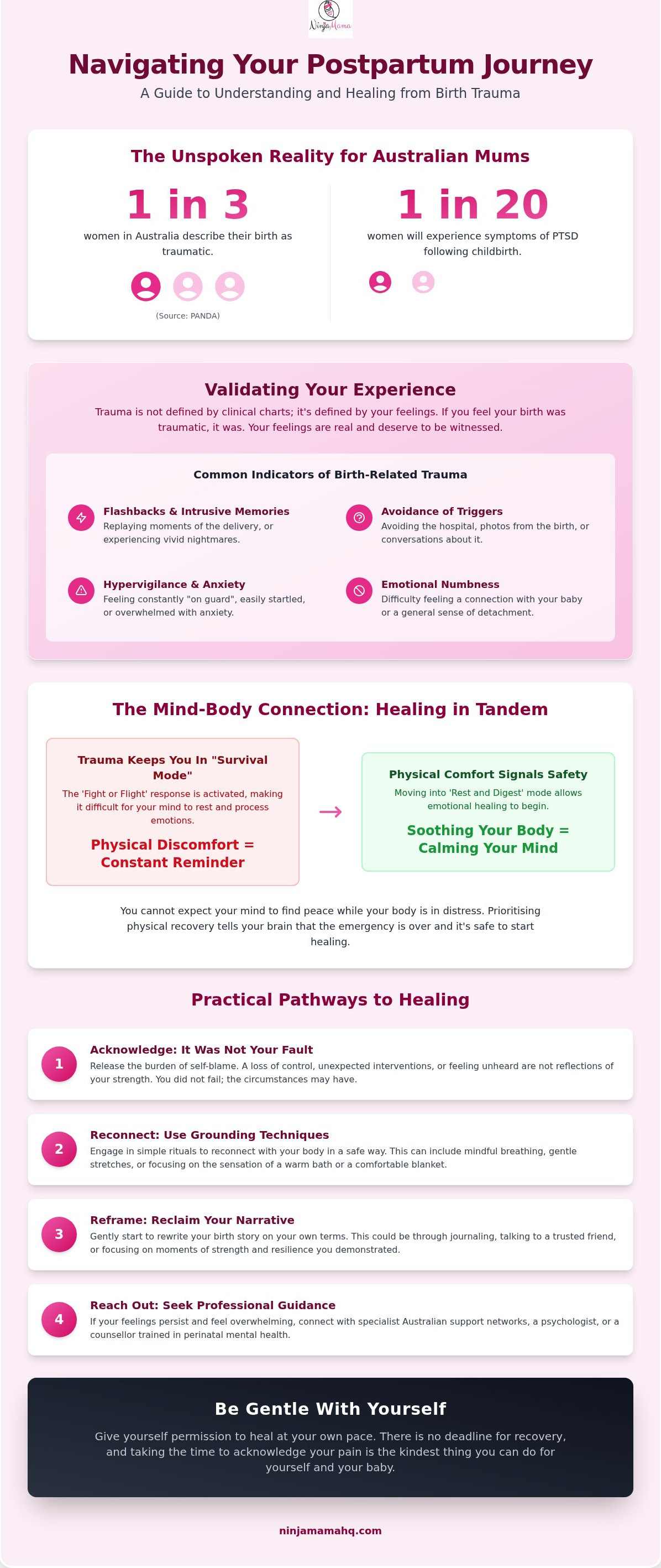
If you feel like your birth was traumatic, it was. There is no universal standard for what qualifies as a difficult delivery because trauma is entirely subjective. It isn't about what happened on a clinical chart; it's about how you felt in that room. In Australia, statistics from PANDA suggest that 1 in 3 women describe their birth as traumatic. Yet, many of us stay silent. We worry that speaking up makes us look ungrateful for our babies or that we are overreacting. This silence only makes the path to healing feel lonelier than it needs to be.
You might find yourself replaying certain moments over and over. These flashbacks or intrusive thoughts are common signs of Childbirth-related post-traumatic stress disorder. While the "baby blues" usually fade within the first two weeks, birth-related trauma persists and can feel much more intense. Recognising these signs is a vital part of Birth Trauma Processing, helping you move from a place of confusion to one of clarity. Common indicators include:
- Flashbacks, vivid nightmares, or intrusive memories of the delivery.
- Avoiding the hospital where you gave birth or even avoiding looking at photos from that day.
- Feeling "on guard," easily startled, or constantly anxious.
- A sense of emotional numbness or difficulty feeling a connection with your baby.
Understanding these patterns helps you realise that your mind is simply trying to make sense of a distressing event. You can find more about how common these experiences are in our State of Postpartum 2026 report, which highlights the lived realities of Australian mums today.
Why Birth Trauma is Not Your Fault
How many times have you heard the phrase, "As long as the baby is healthy, that's all that matters"? This well-meaning but harmful myth silences mothers. It suggests your physical and emotional wellbeing is secondary. Your feelings matter. Many women experience trauma due to a loss of control, unexpected medical interventions, or feeling unheard by medical staff. This sense of "obstetric violence" is a real, documented experience. It isn't a reflection of your strength or your ability to mother. You didn't fail; the system or the circumstances did. Accepting this is a huge step in your Birth Trauma Processing journey.
The Impact on Your Fourth Trimester
When you've had a difficult birth, your brain can get stuck in "survival mode." This fight-or-flight response makes it incredibly hard to settle into the fourth trimester. You might struggle to bond or feel a sense of dread when it's time to care for your newborn. It's important to be gentle with yourself. Your body and mind are working overtime to process what happened. Give yourself permission to heal at your own pace. There is no deadline for recovery, and taking the time to acknowledge your pain is the kindest thing you can do for yourself and your baby.
The Mind-Body Connection: Why Physical Comfort Aids Emotional Healing
Healing from a difficult birth isn't just about what happens in your head. It's deeply rooted in what happens in your body. When you're dealing with physical pain from a C-section incision or perineal stitches, that discomfort acts as a loud, insistent signal to your brain. It's a sensory reminder of the event that can keep you trapped in "survival mode." Effective Birth Trauma Processing recognises that you cannot expect your mind to find peace while your body is still shouting in distress.
The science of our nervous system tells us that we have two primary modes: "fight or flight" and "rest and digest." Trauma pushes us into that first mode and often keeps us there. To move into a state where emotional healing can actually begin, we have to signal safety to our nervous system. Understanding that birth trauma involves both the mind and the body is a core principle shared by organisations like the Utah Department of Health and Human Services, which emphasises the need for comprehensive support during this transition. By prioritising physical comfort, you are essentially telling your brain that the emergency is over and it's safe to start processing what happened.
Reducing Physical Triggers in Daily Life
Daily tasks like going to the bathroom can become major sources of anxiety if they are accompanied by stinging or pain. Every time you feel that sharp reminder, your cortisol levels can spike, keeping your stress response active. Using simple tools to manage this "sting" can make a world of difference. Many Australian mums find that an upside down peri bottle allows for gentle cleansing without the need for painful wiping. When you remove these small, frequent physical triggers, you clear the mental space needed to focus on your emotional recovery.
Sensory Grounding Through Perineal Care
Temperature therapy is a powerful way to ground yourself in the present moment. When you feel a flashback or an intrusive thought starting to bubble up, the intense, soothing sensation of cold can help snap your focus back to the "now." Applying perineal ice packs does more than just reduce swelling; it provides a direct sensory experience that can calm a heightened nervous system. Creating a "safety ritual" around your recovery routine, perhaps by using a postpartum sitz bath soak, transforms a medical necessity into an act of self-care. This shift helps you reclaim your body from the clinical experience of birth, making it a place of comfort once again. Taking these small steps to care for your physical self is a beautiful foundation for your Birth Trauma Processing journey.
Professional Pathways for Birth Trauma Processing
While physical grounding and self-care provide a vital foundation, there often comes a point where professional guidance is the key to unlocking deeper healing. Identifying this "tipping point" is a personal process. If you find that flashbacks are becoming more frequent, or if the weight of your experience is making it difficult to function in your daily life, reaching out is a sign of immense strength. Engaging in professional Birth Trauma Processing can help you move from simply surviving your postpartum days to truly reclaiming them.
In Australia, we are fortunate to have dedicated organisations like PANDA (Perinatal Anxiety & Depression Australia), COPE (Centre of Perinatal Excellence), and the Gidget Foundation. These groups specialise in the unique emotional landscape of new parenthood. Your first step is often a visit to your GP to discuss a Mental Health Care Plan. This plan provides Medicare subsidies for sessions with a psychologist. When choosing a practitioner, specifically ask if they are trauma-informed and if they have experience with birth-related distress. You deserve a therapist who understands that birth trauma isn't just "a bad day at the office" but a profound life event that requires specialised care.
Common Therapeutic Approaches Explained
Different therapies offer different tools for recovery. EMDR (Eye Movement Desensitisation and Reprocessing) is highly effective for birth trauma; it helps your brain "file away" traumatic memories so they no longer feel like they are happening in the present moment. Trauma-informed CBT (Cognitive Behavioural Therapy) focuses on identifying and shifting the negative narratives, such as "I failed," that often take root after a difficult delivery. You might also consider a formal birth debriefing with a specialist midwife or obstetrician. This involves reviewing your medical notes to understand the "why" behind certain interventions, though many women find this is most helpful several months later once the initial raw emotions have settled.
Building Your Village of Support
Healing doesn't happen in a vacuum, and it's important to remember that your partner may be navigating their own version of the event. They witnessed your pain and may feel a sense of helplessness or secondary trauma. Involving them in the Birth Trauma Processing journey can strengthen your relationship and ensure you are both moving forward together. Beyond clinical help, consider the role of postnatal doulas or specialist midwives who offer emotional "mothering the mother" support. Finding safe, Australian-based online communities can also provide the peer validation that reminds you that you are never walking this path alone.
Practical Grounding Techniques and At-Home Rituals
When the weight of a difficult birth feels like it's pulling you under, grounding is the tether that keeps you in the present. It's about moving out of your head and back into your body. While we've discussed the importance of professional support, these "in the moment" tools are the building blocks of daily Birth Trauma Processing. They help signal to your primitive brain that the danger has passed and you are safe in your own home.
The "5-4-3-2-1" method is a classic grounding technique that you can easily adapt while holding your bub. Stop what you're doing and name:
- 5 things you see: The soft pattern on a muslin wrap, the way the light hits the floor, your baby's tiny fingernails.
- 4 things you feel: The weight of your baby in your arms, the texture of your sofa, the warmth of your tea, the soft elastic of your postpartum underwear.
- 3 things you hear: The hum of the fridge, your baby's rhythmic breathing, the wind in the trees outside.
- 2 things you smell: The scent of freshly washed laundry, the earthy aroma of your morning coffee.
- 1 thing you taste: A small piece of chocolate or a sip of water.
Another powerful ritual is journaling your "honest" birth story. This isn't the version you tell people at the supermarket; it's the raw, unfiltered truth of how you felt. Writing it down acts as a narrative release, helping you move the memories from a chaotic loop in your mind onto the physical page. Pair this with a dedicated "recovery sanctuary" in your home, filled with soft textures and dim lighting, to create a space where your nervous system can finally exhale.
The Healing Power of the Sitz Bath
A sitz bath is often recommended for physical stitches, but it's also a sanctuary for the soul. Taking ten minutes for a sitz bath soak allows you to combine physical relief with mindful breathing. As the organic herbs and salts soothe your body, focus on the sensation of the warm water. This quiet time is a rare moment in early motherhood to check in with yourself. It's an act of reclamation, turning a recovery task into a beautiful ritual of self-care. To make this a regular part of your healing, you can explore our postpartum recovery bundles which include everything you need for a restorative soak.
Managing Flashbacks During Baby Care
It's common for simple tasks like nappy changes or the smell of antiseptic to trigger a sudden flashback. When this happens, your brain thinks you're back in that hospital room. Using a "portable sensory anchor" can help. Many mums find that keeping a labour and postpartum support oil roller nearby provides an immediate scent-based distraction. As you apply it, say an anchor sentence out loud: "I am at home, I am safe, my baby is safe." This combination of scent and voice is a powerful way to disrupt the trauma loop and bring you back to the here and now, making Birth Trauma Processing a manageable part of your everyday life.
Reclaiming Your Narrative: Moving Forward with Confidence
Healing from birth trauma is rarely a straight road. It is more like a winding coastal track; some days the sun is out, and other days the mist rolls in without warning. You might have a week where you feel completely on top of things, followed by a day where a simple comment from a friend feels like a tidal wave. This is a normal part of Birth Trauma Processing. It doesn't mean you're back at square one; it just means your heart is still doing the heavy lifting of integration. Be patient with your progress.
Setting boundaries is a vital part of protecting your peace. People often ask about your birth out of curiosity or a desire to connect, but you don't owe them the details of your hardest moments. It is okay to say, "The birth was quite difficult, and I am focusing on my recovery right now." This isn't being rude; it's being a proactive advocate for your own wellbeing. If you are considering a future pregnancy, know that your next experience doesn't have to mirror your last. A 2026 survey by the Birth Trauma Association revealed that 44% of women affected by a traumatic birth decide not to have any more children as a result, which highlights just how deeply these experiences impact our future. Working with a trauma-informed team early on can help you feel a sense of control you might have lacked previously.
Self-Care is an Act of Resilience
Prioritising your own comfort isn't a luxury; it is a necessity for your healing. When you take the time to soothe your body, you are creating the internal safety needed for emotional growth. For a structured approach to your physical recovery, exploring our postpartum recovery kits can help you organise your fourth trimester needs. Even small acts, like enjoying a warm mug of lactation chocolate, can be a moment of sensory delight that brings you back to yourself. Nourishing your body is a way of saying "I matter," which is a powerful counter-narrative to the trauma you have experienced.
A Message from Ninja Mama
At Ninja Mama, we believe you are an absolute ninja for navigating this path. You have shown incredible strength just by being here and seeking out ways to heal. Our postpartum recovery kits are designed to hold you and provide physical ease while you do the deep work of emotional recovery. Remember to celebrate your small wins, whether that is a day without a flashback or finally feeling a spark of joy during a cuddle. When you are ready, sharing your journey can be a beautiful way to foster community, but there is no rush. You are doing a great job, mama.
Embrace Your Path to Postpartum Peace
Your journey through motherhood hasn't been the one you imagined, but your story is far from over. By validating your unique experience and prioritising physical comfort, you've already begun the vital work of recovery. Whether you are practicing sensory grounding or speaking with a trauma-informed professional, remember that every small step counts toward reclaiming your confidence. Birth Trauma Processing is not a race; it is a gentle unfolding of your own resilience as you learn to feel safe in your body again.
You don't have to navigate this transition alone. As an Australian-owned brand designed by a mother who understands the complexities of the fourth trimester, we are here to provide the expert-backed, premium recovery essentials you deserve. Our empathetic approach ensures you have the tools to soothe your physical self while your heart heals.
Find comfort in your recovery with our curated Postpartum Bundles
You are stronger than you know, and we are so proud of the progress you are making every single day. Be gentle with yourself, mama.
Common Questions About Birth Trauma Recovery
How do I know if my birth was "traumatic enough" to seek help?
If your birth experience causes you ongoing distress or affects your daily life, it is "traumatic enough" to seek help. There is no clinical threshold or list of medical complications required to justify your feelings. If you find yourself replaying the event or feeling a sense of dread when thinking about it, engaging in Birth Trauma Processing is a valid and courageous step toward healing.
Can birth trauma affect my relationship with my baby?
Yes, birth trauma can sometimes make bonding feel more difficult or lead to a sense of hyper-vigilance regarding your baby's wellbeing. This is a common physiological response and does not mean you are a bad mother or that you don't love your child. Most women find that as they soothe their nervous system and process the event, they are able to gently reconnect and build a secure, joyful attachment.
What is the difference between birth trauma and postnatal depression?
Birth trauma is specifically tied to the delivery event and often presents as PTSD symptoms like flashbacks and avoidance, whereas postnatal depression is characterised by a persistent low mood and a loss of interest in life. While they are distinct experiences, they often overlap. A GP or a specialist organisation like PANDA can help you untangle these feelings to ensure you get the specific support you need.
How long does birth trauma processing usually take?
Healing is entirely non-linear, so there is no set timeline for how long Birth Trauma Processing will take. Some mothers find that their symptoms begin to ease after a few sessions of trauma-informed therapy, while others may navigate their journey over many months. The focus should be on your own pace and celebrating small wins rather than meeting a specific deadline for recovery.
Is it possible to have a positive birth experience after a traumatic one?
It is absolutely possible to have a positive, empowering birth experience following a traumatic delivery. Many women find that working with a trauma-informed care team and creating a detailed plan that prioritises their sense of control leads to what is often called a "healing birth." This second experience can be a powerful part of your long-term emotional recovery.
What should I do if I have a flashback while home alone with the baby?
If a flashback occurs while you are alone, use immediate grounding techniques to tether yourself to the present moment. Try naming five things you can see in the room or use a sensory "anchor" like a cold perineal therapy pack to snap your focus back to the now. Remind yourself out loud that you are at home, you are safe, and the event you are remembering is in the past.
How can I explain my birth trauma to my partner?
Try explaining your experience by focusing on how you felt rather than just the clinical details of the delivery. You might say, "I know the baby is safe, but I felt very powerless during the birth and I'm still processing that fear." Helping your partner understand that your distress is a physical and emotional response to trauma can make it easier for them to support you.
Does the hospital offer any support for birth debriefing in Australia?
Most public hospitals in Australia offer a birth debriefing service, often called a "notes review," where you can meet with a midwife or obstetrician to discuss your delivery. This allows you to ask questions about why certain medical interventions occurred and can help clarify the clinical timeline. You can usually access this service by contacting the maternity unit where you gave birth.

Article by
Louise Beever
Louise Beever is the founder of Ninja Mama, an Australian postpartum recovery brand focused on creating premium, practical recovery essentials for new mothers. Since launching Ninja Mama in 2018, Louise has worked closely with thousands of postpartum women and healthcare retailers to better understand the realities of recovery after birth. Her work focuses on postpartum preparation, recovery support, and improving awareness around the fourth trimester.
Remember Mamas
The information provided in this article is intended for general educational and informational purposes only and should not be considered medical advice. Always seek guidance from your doctor, midwife, lactation consultant, or qualified healthcare professional regarding your individual circumstances, pregnancy, birth, or postpartum recovery.