
Did you know that the first seven days at home can often feel like a second labour of sorts? While you likely spent months preparing for the birth itself, the reality of the days that follow can catch even the most organised mum off guard. You might be dealing with stinging during urination, unexpected night sweats, or a genuine sense of anxiety about your first bowel movement. It's a lot to handle when you're also navigating life with a newborn for the first time.
What no one tells you about the first week after birth is that your recovery requires just as much intention and care as the delivery did. We understand that feeling sore, leaky, and exhausted isn't exactly what the brochures promised, but we're here to tell you that what you're experiencing is completely normal. This guide provides the raw, real truth about your body's transition during the fourth trimester. We'll share practical ways to reduce pain "down there" and provide a clear plan for your first week at home, ensuring you move through these early days with a sense of prepared calm and genuine confidence.
Key Takeaways
- Understand why the "Day Three" emotional shift is a normal part of your hormonal transition and why feeling overwhelmed during those first few days is a shared experience.
- Discover what no one tells you about the first week after birth, including the reality of lochia and how to manage physical healing with a "Freeze, Soothe, Heal" protocol.
- Learn to navigate the "leaky" truth of the milk transition and find practical ways to manage comfort when your breasts feel heavy or engorged.
- Organise your home for success by setting up dedicated recovery stations with essentials like absorbent postpartum underwear and soothing perineal treatments within easy reach.
- Establish clear boundaries with well-meaning visitors to protect your rest and create a supportive sanctuary during your critical first seven days at home.
The Physical Reality: What is Actually Happening "Down There" and Beyond
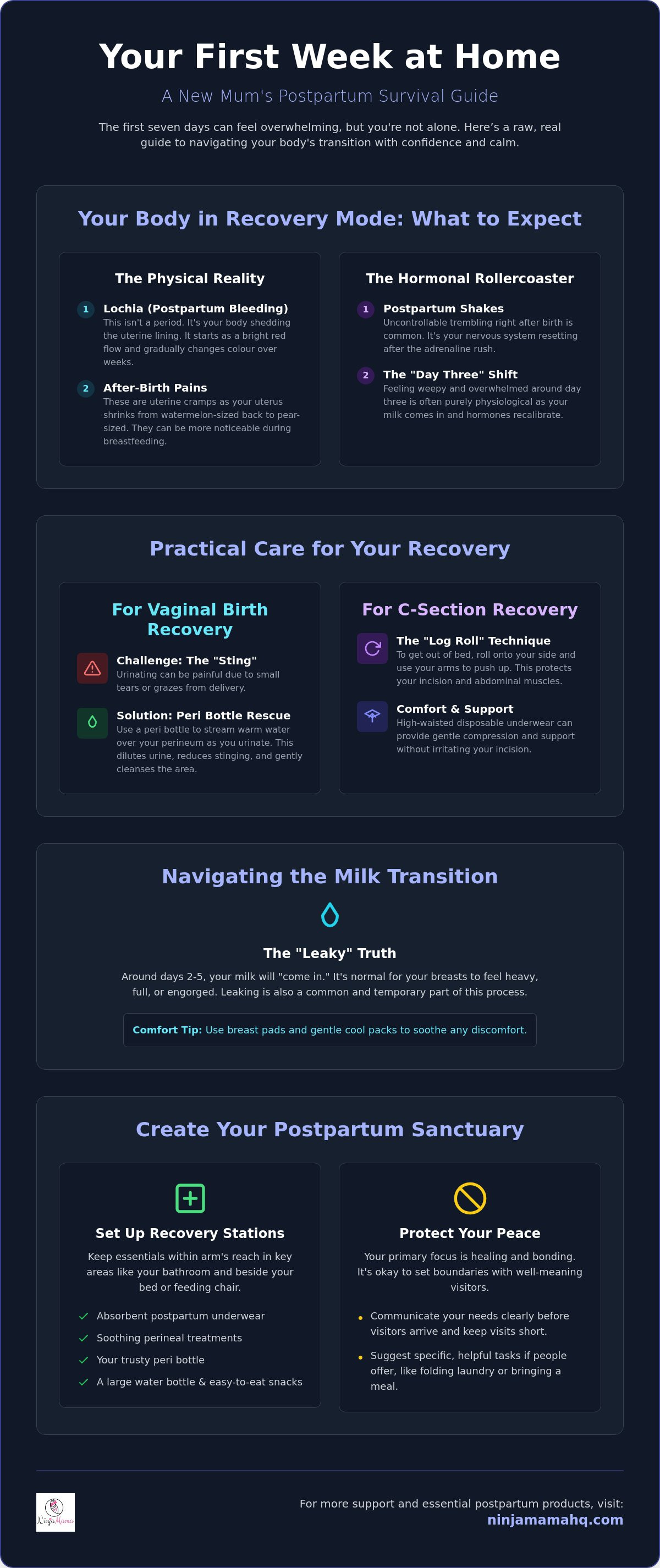
The first seven days after delivery are often described as the acute phase of the postpartum period, a time when your body undergoes a massive physiological shift. This is the heart of the "Fourth Trimester," where your organs begin to settle back into their original homes and your skin starts to find its way back. What no one tells you about the first week after birth is that your body is effectively running a marathon in reverse. You will experience lochia, which is much more than just a heavy period. It is your body's way of shedding the uterine lining and the site where the placenta was attached, often starting as a bright red flow that gradually changes colour over the coming weeks.
Alongside this, you'll likely feel after-birth pains. These are uterine cramps that feel like intense period pain, occurring as your uterus shrinks from the size of a watermelon back down to the size of a pear. While they can be uncomfortable, especially during breastfeeding when oxytocin is released, they are a vital sign that your body is healing exactly as it should. It can feel like a lot to process while you're also learning to care for your new baby.
To better understand this intense time, watch this helpful video:
Managing Perineal Soreness and the "First Trip" to the Loo
If you had a vaginal birth, the "stinging" sensation during urination can be quite a shock. This happens when urine comes into contact with micro-tears or grazes that occurred during delivery. Many mums find the prospect of their first bowel movement absolutely terrifying, but staying hydrated and prioritising fibre can make a world of difference. Using a peri bottle to stream warm water over your perineum while you go helps dilute the urine and significantly reduces that sharp sting. It is a simple tool that provides instant relief and helps keep the area clean without the need for painful wiping.
C-Section Recovery: The First Week After Major Surgery
For C-section mums, the first week is about managing recovery from major abdominal surgery while caring for a new human. Getting out of bed can be a challenge, so midwives often recommend the "log roll" technique. You roll onto your side first and use your arms to push yourself up, which protects your abdominal muscles and your stitches from unnecessary strain. What no one tells you about the first week after birth when recovering from a C-section is that even the smallest movements require a strategy. Gentle movement around the house is encouraged to support circulation and help prevent blood clots. Many women find that wearing high-waisted disposable underwear provides the necessary compression and support for the tummy without irritating the incision site.
The Hormonal Rollercoaster: Night Sweats, Shakes, and the "Day Three" Shift
Within 48 hours of your baby arriving, your body experiences a dramatic plummet in estrogen and progesterone. This isn't a gradual decline; it's a hormonal cliff. One of the strangest physical responses is the "Postpartum Shakes," where you might find yourself trembling uncontrollably immediately after delivery. It can be startling, but it's simply your nervous system processing the massive adrenaline rush and the sudden shift in body temperature and fluids. It's your body's way of resetting after the marathon of birth.
By the time you reach day three, the emotional landscape often shifts again. You might find yourself weeping because you can't find a clean pair of socks or because your partner made your tea slightly too milky. This is the infamous "Day Three" shift. What no one tells you about the first week after birth is that these tears are often purely physiological. Your body is navigating a massive transition as your milk begins to come in and your hormones recalibrate. It's a period of intense vulnerability that deserves radical self-compassion.
Dealing with the Postpartum Drench
During pregnancy, your blood volume increases by approximately 50% to support your growing baby. Once you've given birth, your body needs to shed that extra fluid. This happens through two main channels: frequent trips to the loo and intense night sweats. You might wake up in the middle of the night feeling like you've gone for a swim in your sleep. It's uncomfortable, but it's a sign your system is working efficiently to return to its pre-pregnancy state.
To stay comfortable, opt for breathable bamboo sheets and 100% cotton pyjamas that wick moisture away from your skin. Keep a fresh set of clothes and a towel right next to the bed for quick middle-of-the-night changes. Because you're losing so much fluid, staying on top of your hydration is essential. Replacing electrolytes can help you feel more balanced during this rapid fluid shift. Many mums find that incorporating a grounding ritual, such as using a labour and postpartum support oil roller, helps provide a moment of calm amidst the physical chaos.
The "Baby Blues" vs. Postpartum Anxiety
The "Baby Blues" typically peak between days three and ten, manifesting as mood swings, irritability, and tearfulness. This is a normal part of recovering from birth as your brain chemistry adjusts. However, it's important to distinguish this from postpartum anxiety or depression. If your feelings of sadness or worry feel all-consuming, or if you're unable to sleep even when your baby is settled, please reach out to your midwife or GP for extra support. The "Day Three" shift is a biological milestone of your body’s incredible transformation, not a personal failing.
The Milk Transition: Engorgement and the "Leaky" Truth
Around day three or four, you will likely notice a significant shift in your breasts. While you've been producing nutrient-dense colostrum since late pregnancy, your "mature" milk is now ready to make its debut. This transition can be quite intense. What no one tells you about the first week after birth is that your breasts might suddenly feel heavy, warm, and remarkably firm, almost like literal rocks. This is engorgement, and while it's a sign your body is doing its job, it can be quite uncomfortable if you aren't prepared for the sensation.
Effective Postpartum care involves understanding that your body is learning a new skill alongside your baby. You might experience the "let-down" reflex, which often feels like a sharp tingle or a pins-and-needles sensation when your milk begins to flow. It's often triggered by your baby's cry or even just the thought of them. The "leaky" truth is that when one side lets down, the other often follows suit. This leads to damp shirts and a bit of a mess, which is a completely normal part of the process, even if it feels a little chaotic at 3:00 am.
Soothing Engorged Breasts
When your breasts feel tight and overfull, the "warm before, cold after" rule is a total game-changer for comfort. Applying gentle warmth before a feed helps encourage milk flow and can make it easier for your baby to latch if the tissue is very firm. After feeding, using a cold compress is essential for reducing swelling and providing much-needed relief. While the old wives' tale of chilled cabbage leaves is still popular, many modern mums find that breast therapy packs are far more convenient. These packs can be heated or chilled to provide targeted relief exactly where you need it most without the mess of garden vegetables.
Staying Dry and Comfortable
Managing the constant leaks requires a simple, reliable system. A supportive, non-wired nursing bra is your best friend during this first week; underwires can be far too restrictive and may increase the risk of blocked ducts. To keep your skin dry and prevent irritation, washable breast pads made from soft bamboo are a lifesaver. They are gentle on sensitive nipples and highly absorbent for those unexpected let-downs. If you're looking for a nourishing way to support your body during this transition, sipping on an organic lactation chocolate drink can be a lovely, comforting ritual that fits perfectly into your new routine.
Practical Survival: The Postpartum Hygiene Protocol
What no one tells you about the first week after birth is that your bathroom effectively becomes your private recovery suite. It is the place where you will spend a significant amount of time managing your "Freeze, Soothe, Heal" system. This protocol is all about layered relief. While you might have been told to stock up on traditional maternity pads, many new mums find they can feel incredibly bulky and irritating, especially if you are navigating the sensitivity of stitches. Instead, focus on products that offer a slim profile and cooling properties to reduce that intense "heavy" feeling in your pelvic floor.
Witch hazel is a key player in this protocol. It is an ingredient commonly used by postpartum mothers to help reduce swelling and provide an instant, refreshing chill to tender tissues. When it comes to maintaining hygiene, forget everything you know about scrubbing. The golden rule for the first seven days is the "pat dry" method. Use a soft towel or specialized wipes to gently dab the area after cleaning. This prevents any pulling on stitches or grazes while ensuring you stay fresh and comfortable during the most sensitive part of your recovery.
The Peri Bottle: Your Post-Birth "Fire Extinguisher"
If there is one item that deserves a permanent spot in your hospital bag, it is an upside down peri bottle. Why do we call it a fire extinguisher? Because it is your primary tool for managing that sharp stinging sensation during urination. By streaming warm water over your perineum while you go, you create a gentle barrier that dilutes the urine. It is a simple, effective way to find immediate relief. You can experiment with water temperatures too; many women find warm water soothing for muscle tension, while cool water is designed for comfort and reducing localized swelling.
Sitz Baths and Cooling Packs
A postpartum sitz bath soak is a beautiful way to promote blood flow to the perineal area, which may help support the natural healing process. It is a quiet, intentional ritual that feels more like self-care than a chore. To manage that persistent "heavy" sensation, perineal ice packs are your best friend. They provide targeted cooling that helps take the edge off the throbbing often felt in the first few days. Here is your simple, 10-minute healing soak system:
- Fill your sitz basin or a shallow bath with a few inches of lukewarm water.
- Add your specialized soak and stir until dissolved.
- Sit comfortably for 10 to 15 minutes, allowing the botanicals to work their magic.
- Stand up slowly and follow the "pat dry" rule with a clean, soft cloth.
Ready to build your own recovery station? You can find everything you need to feel human again in our curated postpartum recovery kits.
Creating Your Postpartum Sanctuary: Preparing for Success
The transition from hospital to home is a major milestone, but it can also feel a little daunting. What no one tells you about the first week after birth is that your home environment is just as critical to your recovery as the medical care you received. Transforming your house into a sanctuary involves more than just a tidy nursery. It requires setting up "recovery stations" in the places you'll spend the most time: the bathroom and the bedroom. In the bathroom, keep your peri bottle and soothing soaks within arm's reach. In the bedroom, create a nest with plenty of water, nutritious snacks, and your nursing essentials.
Preparing your postpartum self care kit before your baby arrives ensures you aren't scrambling for supplies while you're sore and exhausted. During these first seven days, your only three jobs are to rest, rehydrate, and recover. Everything else can wait. By organising your space intentionally, you allow yourself the mental and physical room to focus entirely on your new arrival and your own healing process.
The "Visitor Policy" for New Mums
Protecting your "oxytocin bubble" is vital for bonding and breastfeeding success. While friends and family are undoubtedly excited, the first week is for your immediate family to find their rhythm, not for you to play hostess. It's perfectly okay to politely decline visitors or set specific "visiting hours" that suit your energy levels. What no one tells you about the first week after birth is that saying "no" to guests is actually a powerful form of self-care. A great rule of thumb to share with loved ones is the "bring a meal or a load of laundry" policy. True support looks like someone dropping off a lasagne or hanging out a basket of washing, rather than expecting a cup of tea and a chat while you're trying to heal.
The Ninja Mama Approach to Healing
We know that the sheer volume of advice can feel overwhelming when you're already tired. That's why our bundles are designed to take the guesswork out of your recovery. As an Australian-owned brand, we create products that are mum-designed and evidence-aware, giving you the peace of mind that you're using the very best for your body. We've been in your shoes and we've built these systems to make your "fourth trimester" as comfortable as possible. You are doing an incredible job, Mama. Trust your instincts, lean on your tools, and remember that this period of intense healing is just the beginning of a beautiful journey.
Taking Control of Your Postpartum Journey
Your first week at home is a time of incredible transformation, both for your baby and your own body. By understanding the reality of physical healing and the natural hormonal shifts of the fourth trimester, you can move from feeling overwhelmed to feeling empowered. Remember to prioritise your hygiene protocol, manage your milk transition with care, and fiercely protect your sanctuary. What no one tells you about the first week after birth is that having the right tools on hand can completely change your recovery experience, turning a period of discomfort into one of prepared calm.
At Ninja Mama, we are here to support you every step of the way. Our products are designed by an Aussie Mum for Aussie Mums, and we are proud to be trusted by midwives across Australia. We've already helped over 10,000 happy mums navigate their recovery with comfort and ease. Ready to feel prepared for the fourth trimester? Shop our curated Postpartum Recovery Bundles here and give yourself the support you deserve. You are doing a brilliant job, and you've got this, Mama.
Frequently Asked Questions
Is it normal to still look pregnant in the first week after birth?
It is completely normal to still look several months pregnant during your first week at home. Your uterus, which expanded significantly to accommodate your baby, takes time to contract back to its pre-pregnancy size. This process, combined with stretched abdominal muscles and fluid retention, means your bump won't disappear immediately. Be gentle with yourself; your body has performed a miracle and needs time to recalibrate and heal.
How often should I use my peri bottle during the first week?
You should use your peri bottle every single time you use the toilet during the first seven days. What no one tells you about the first week after birth is that even a small amount of urine can cause a sharp stinging sensation on micro-tears or stitches. By streaming warm water over the area while you go, you dilute the urine and keep the area clean without the need for painful wiping.
Can I use a sitz bath if I had a C-section?
Most women can safely use a sitz bath after a C-section, provided the water level remains below your abdominal incision. While a sitz bath is designed for perineal healing, many C-section mums find the warm soak helps relieve pelvic pressure or haemorrhoids. It is essential to keep your surgical site dry. Always check with your midwife or obstetrician before your first soak to ensure your specific incision is healing well.
What should I do if my postpartum bleeding suddenly gets heavier?
If your bleeding suddenly increases, it is often a sign that you have been overexerting yourself and need to prioritise rest. Try to lie down for a few hours and see if the flow settles as you remain still. however, if you are soaking through a large maternity pad in less than an hour, or if you notice large clots the size of a golf ball, contact your midwife or hospital immediately for a medical review.
How do I manage the 'first poo' anxiety after a vaginal birth?
Managing anxiety about your first bowel movement involves a combination of hydration, fibre, and physical support. Drink plenty of water and consider a gentle stool softener if recommended by your healthcare provider. When you feel the urge to go, hold a clean pad or folded toilet paper firmly against your perineum. This "splinting" technique provides a sense of security and reduces the sensation that your stitches might pull or stretch.
Is it normal to sweat through my sheets every night?
Waking up drenched in sweat is a very common experience during the first week postpartum as your body sheds excess fluid. Your system is working hard to eliminate the extra blood volume gained during pregnancy while also reacting to a rapid drop in oestrogen. This is often what no one tells you about the first week after birth, but it is a temporary phase. Using breathable cotton bedding and keeping a spare set of pyjamas nearby can help you manage the discomfort.
When should I start using silicone scar patches for my C-section?
You can typically start using silicone scar patches once your C-section incision is fully closed, dry, and free from any scabs or drainage. For most women, this milestone occurs between two and six weeks after birth. These patches are designed for comfort and recovery, helping to protect the delicate new skin. Always ensure the area is clean and follow the specific instructions from your healthcare provider before beginning any scar management routine.
Why do I feel 'after-birth pains' while I am breastfeeding?
Feeling intense uterine cramping while breastfeeding is caused by the release of oxytocin, which triggers both your milk let-down and uterine contractions. These contractions are a vital part of your recovery, as they help the uterus return to its original size and prevent excessive bleeding. While these pains can be quite sharp, especially if this is not your first baby, they are a positive sign that your body is healing efficiently and according to plan.

Article by
Louise Beever
Louise Beever is the founder of Ninja Mama, an Australian postpartum recovery brand focused on creating premium, practical recovery essentials for new mothers. Since launching Ninja Mama in 2018, Louise has worked closely with thousands of postpartum women and healthcare retailers to better understand the realities of recovery after birth. Her work focuses on postpartum preparation, recovery support, and improving awareness around the fourth trimester.
Remember Mamas
The information provided in this article is intended for general educational and informational purposes only and should not be considered medical advice. Always seek guidance from your doctor, midwife, lactation consultant, or qualified healthcare professional regarding your individual circumstances, pregnancy, birth, or postpartum recovery.