
What if those weeks of postpartum bleeding weren't just a messy inconvenience, but a brilliant, three-stage map of your body’s incredible ability to heal? It's natural to feel a flutter of anxiety when you see bright red blood or feel a stinging sensation during your bathroom routine. You might even find yourself wondering if your period has returned early or if what you're seeing is normal. Understanding the stages of lochia healing is one of the best ways to replace that worry with a sense of prepared calm.
We know you've got enough on your plate with a newborn, so we've created this gentle guide to help you navigate your recovery with confidence. You'll discover exactly what colours and textures to expect as your body moves from the initial heavy flow to the final healing phase. We'll also share practical ways to stay comfortable and highlight the specific red flags that warrant a quick chat with your healthcare provider. It's time to take the guesswork out of your postpartum journey so you can focus on bonding with your new arrival.
Key Takeaways
- Understand why your body sheds the uterine lining after birth and why this process occurs whether you had a vaginal or C-section delivery.
- Master the three distinct stages of lochia healing to better understand what the changes in colour and consistency mean for your recovery timeline.
- Gain confidence in distinguishing between normal healing symptoms and the specific red flags that require a call to your midwife or doctor.
- Discover essential hygiene hacks to manage stinging and discomfort while learning why internal products like tampons are a no-go for the first six weeks.
- Identify which curated essentials, from absorbent postpartum underwear to soothing wipes, belong in your hospital bag to support every phase of your journey.
What is lochia? The "not-so-scary" truth about postpartum bleeding
You've just met your little one, and while your heart is full, your body is embarking on a massive renovation project. Part of that project involves clearing out what is no longer needed after nine months of growing a human. So, what is lochia? Simply put, it's the discharge your body releases as it sheds the uterine lining after birth. Whether you welcomed your baby via a vaginal delivery or a C-section, lochia is an inevitable and healthy part of your recovery. Every mother experiences it because every mother's uterus needs to heal the site where the placenta was attached.
It is helpful to remember that lochia is more than just blood. It's a unique mix of blood, mucus, uterine tissue, and even leftover amniotic fluid. While the volume might feel a bit startling during the first few days, it's actually a sign that your body is functioning exactly as it should. Gaining a clear understanding of the stages of lochia healing helps turn that initial anxiety into a sense of prepared calm as you navigate the early weeks of motherhood.
To better understand what to expect during this time, watch this helpful video:
Why lochia is different from your regular period
Many mums assume this is just a very long period, but the biological process is quite different. A standard period is the monthly shedding of an unfertilised egg's cushion. Lochia, however, is your body healing the specific area where the placenta was connected to your uterine wall. Because that area is roughly the size of a dinner plate, the healing process takes much longer than a standard five-day cycle. You'll likely find yourself needing reliable postpartum disposable underwear for up to six weeks as the flow transitions through different colours and consistencies. Unlike a period, which usually stays one shade of red, lochia acts as a progress bar for your internal recovery.
The role of the "fourth trimester" in healing
We often talk about the fourth trimester as a time for your baby to adjust to the world, but it's just as much about your own physical transition. Your uterus is working hard to return to its pre-pregnancy size through a process called involution. Lochia mirrors this internal work perfectly. When you see the flow slowing down or changing from red to pink or cream, it's a visual cue that your internal wound is closing. It's an opportunity to practice grace and patience with yourself. Your body has performed a miracle, and this discharge is simply its way of tidying up and restoring balance after the big event. Viewing the stages of lochia healing as a sign of your body's wisdom can make the messier parts of recovery feel far more manageable.
The three stages of lochia healing: A week-by-week timeline
While your body follows a brilliant biological blueprint, it's helpful to remember that every woman’s journey is unique. Some mums find their flow wraps up by week four, while others might spot for the full six weeks. Your midwife will likely use three specific terms to describe the stages of lochia healing: Rubra, Serosa, and Alba. Think of these as the three distinct chapters of your internal recovery story. Knowing what to expect in each phase can turn a source of anxiety into a simple checklist for your fourth-trimester self-care.
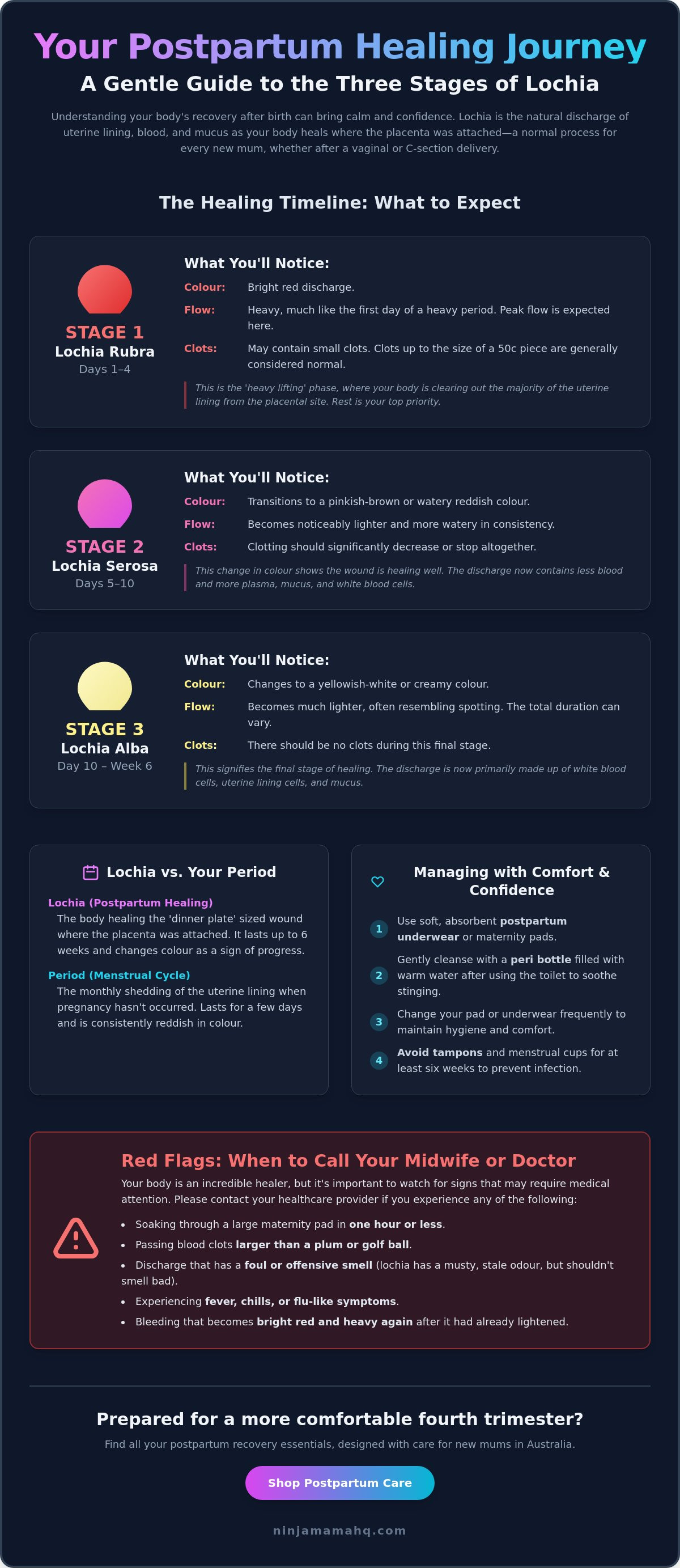
Stage 1: Lochia Rubra (Days 1–4)
This is the "heavy lifting" phase of your recovery. During these first few days, your discharge will be bright red and quite substantial, much like the first day of a very heavy period. You'll likely notice small clots, and in Australia, midwives generally consider clots up to the size of a 50c piece to be a normal part of this initial clearing. Because the flow is at its peak, you'll want maximum absorbency and a focus on rest. Many women find that Ninja Mama Rubra Stage Disposable Underwear provides the security and high-waisted comfort needed to focus on baby snuggles rather than worrying about leaks.
Stage 2: Lochia Serosa (Days 5–10)
As the placental site begins to knit back together and your uterus continues to shrink, the colour of the discharge shifts. You'll notice the bright red fades into a pinkish-brown or even a more "watery" orange hue. The flow lightens significantly during this stage as the amount of blood decreases and the amount of serum increases. It's a great time to transition to something a bit lighter and more breathable, such as Serosa Stage Disposable Mesh Underwear. This phase is a clear visual sign that the most intense part of your physical healing is well underway.
Stage 3: Lochia Alba (Weeks 2–6)
We've reached the final stage of the journey. Your discharge will now be a yellowish-white or creamy colour. It's mostly made up of mucus and white blood cells as your body finishes its internal "spring clean." While it's much lighter, staying aware of Normal healing vs. red flags ensures you can spot any unexpected changes. Understanding these stages of lochia healing helps you feel in control of your body again. By now, light liners are usually all you'll need as you reach the end of this recovery phase.
If you're still preparing for your big day, consider grabbing one of our Postpartum Recovery Kits to ensure you have exactly what you need for every step of the way.
Normal healing vs. red flags: When to call your midwife
It's completely normal to feel a little hyper-aware of every change your body goes through right now. You’re navigating a massive transition! While we’ve already explored the typical the three stages of lochia, it’s just as important to know where the boundaries of healthy recovery lie. Most of the time, your body is simply doing its job. You might feel mild cramping, often called 'afterpains,' particularly when you’re breastfeeding. This is just your uterus contracting back to size. But what happens when something feels a bit different? Understanding the stages of lochia healing means knowing when to rest and when to reach out for a professional opinion.
Remember, your midwife and doctor are your support team. They expect these questions and are there to help you feel confident, not to judge your concerns. Trusting your intuition is a vital part of motherhood. If something feels 'off' or doesn't match the typical progression you expected, a quick phone call can provide the peace of mind you deserve.
The "clot" conversation: What size matters?
Passing clots can be one of the most confronting parts of the first few days. How do you know what’s too big? In Australia, the general rule of thumb is the size of a 50c piece or a golf ball. If you’re passing clots larger than this, or if you’re soaking through a pad every hour, it’s time to pick up the phone. Have you noticed more clots after you’ve been particularly active? Sometimes your body uses this as a signal that you need to slow down and rest. If you’re ever unsure, don’t be shy about saving your pad or taking a photo to show your midwife. They’ve seen it all before and are there to offer professional reassurance.
Odour and fever: Signs of potential infection
Let’s talk about something we usually don’t mention over coffee: the smell. Normal lochia has a distinct, fleshy, or musty odour, similar to a regular period. However, an offensive, 'fishy,' or foul smell is a clear signal that your body might be fighting an infection. Maintaining gentle hygiene with a peri bottle can help you stay fresh and makes it easier to monitor your recovery. Keep an eye out for other signs like a fever over 38°C, chills, or severe pain in your lower abdomen that doesn't feel like standard cramping. Catching these signs early makes a world of difference. Your intuition is a powerful tool. If something feels wrong, trust that feeling and seek help early.
Managing lochia with comfort and confidence (Hygiene hacks)
Let’s talk about the part of recovery that isn't always in the glossy brochures: the mess and the "sting." While you’re moving through the various stages of lochia healing, your perineal area is often incredibly tender. During the Rubra phase, the flow is heavy and your skin is sensitive. This is exactly why tampons and menstrual cups are a total no-go for the first six weeks. Your body needs a clear path to shed that lining, and we want to keep the risk of infection as low as possible. Stick to breathable, high-absorbency pads or disposable underwear. Changing them every few hours isn't just about hygiene; it’s about keeping the area dry to prevent skin irritation and that itchy, uncomfortable feeling that can creep in. Freshness is your best friend.
The Peri Bottle: Your "fire extinguisher" for recovery
If there is one tool that feels like a hug for your lady bits, it’s the peri bottle. Many mums find that urine can cause a sharp, stinging sensation on small grazes or stitches. An upside-down peri bottle acts like a tiny, gentle fire extinguisher. By aiming a stream of lukewarm water at the area while you're actually going, you dilute the urine and wash away lochia without needing to wipe. Wiping can be painful and can even tug on delicate stitches. Instead, use the bottle to cleanse and then gently pat the area dry with a soft cloth or a clean wipe. For more tips on mastering this essential tool, take a look at our guide on The Peri Bottle: Why Every New Mum Needs This "Fire Extinguisher" for Recovery.
Soothing the soreness with sitz soaks and wipes
Beyond the basic cleaning, you deserve some genuine relief. Using Ninja Mama Sitz Soaks for ten or fifteen minutes a day can be a game-changer. These soaks are designed for comfort and recovery, helping to soothe swollen tissues while giving you a rare moment of peace. When you're on the move or doing a quick nappy change, Witch Hazel Wipes are your best friend. They provide an instant cooling sensation that makes the later stages of lochia healing much more bearable. These hacks aren't just about staying clean; they’re about reclaiming your comfort so you can focus on your new baby. You’ve got this, mama.
Ready to feel like yourself again? Pick up our Postpartum Recovery Kit and have everything you need ready to go.
Preparing your postpartum toolkit for every stage
Preparation is the secret ingredient to a calm and confident postpartum experience. When you have your toolkit ready, you aren't just reacting to your body's changes; you're proactively supporting its recovery. Packing your hospital bag around the 36-week mark ensures you're prepared for the stages of lochia healing well before the whirlwind of labour begins. Having these essentials on hand means you won't have to send a tired partner on a late-night pharmacy run for products that might not be quite right for your needs.
The "Must-Haves" for the first 48 hours
The first 48 hours are undeniably the most intense. You're navigating the Rubra stage, where the flow is heaviest and your body is at its most tender. High-priority items for this window include your peri bottle and maximum-absorbency disposable underwear. One of the most helpful additions to your bag is a pack of Instant Perineal Cooling Pads. These are brilliant because they manage your flow and provide soothing cold therapy for swelling all at once. There's no need to faff about with bulky ice packs and separate pads when one product does both. It’s about finding small ways to increase your comfort during those first few vulnerable days when everything feels new and overwhelming.
Transitioning to long-term healing
As you move from survival mode into a more settled routine at home, your needs will naturally shift. By week two or three, you've likely transitioned into the Serosa or Alba stages. While the flow is lighter, your skin and perineal tissues are still in the process of knitting back together. Many women find that applying Organic Witch Hazel to their liners or using it as a gentle spray provides the cooling relief needed for long-term skin recovery. Remember that taking ten minutes for a sitz soak or a dedicated hygiene routine isn't a luxury. It’s a necessary part of your healing journey. Viewing these moments as self-care rather than just "tasks" helps you stay connected to your own wellbeing as you care for your new arrival.
If the thought of gathering all these individual pieces feels like one thing too many on your to-do list, a curated recovery bundle is a wonderful way to save time and mental energy. It ensures you have exactly what you need for every phase of the stages of lochia healing without the stress of last-minute shopping. Welcome to this incredible new chapter, mama. Your body has done something extraordinary, and now it’s time to give it the gentle, premium care it deserves as you step into motherhood with confidence and grace.
Step into your fourth trimester with confidence
Your postpartum journey is a time of incredible transformation, and understanding the stages of lochia healing is the first step toward a calmer, more empowered recovery. By knowing exactly what to expect as you move from the heavy Rubra phase through to the lighter Alba stage, you can focus on what truly matters: bonding with your new baby. Remember to trust your intuition, keep your hygiene routine gentle, and don't hesitate to reach out to your support team if something feels off.
As an Australian owned and operated brand, we're proud to offer premium, evidence-aware recovery essentials designed by mums, for mums. We believe that practical care should also feel like a treat, helping you navigate these early weeks with comfort and grace. Ready to tick one more thing off your hospital bag checklist? Shop the Ninja Mama Postpartum Recovery Collection and find everything you need to support your body's amazing ability to heal. You've got this, and we're here to help you every step of the way.
Frequently Asked Questions
How long does lochia usually last after birth?
Lochia commonly lasts between four and six weeks after childbirth, though every woman's timeline is unique. While the heaviest bleeding occurs in the first few days, you may notice light spotting or creamy discharge for several weeks as your body completes its internal healing. It is helpful to track your progress through the three stages of lochia healing to ensure your recovery is on the right path and your body is resting as it should.
Can I use tampons for postpartum bleeding?
You should avoid using tampons or menstrual cups for at least six weeks after giving birth to reduce the risk of infection. Because your uterus is still healing the site where the placenta was attached, it is essential to allow the lochia to flow freely from your body. Using external products like absorbent postpartum underwear or maternity pads is much safer and commonly used by postpartum mothers during this initial recovery window.
What should I do if my lochia smells bad?
If you notice a foul, offensive, or fishy odour, you should contact your midwife or GP immediately. While a fleshy or musty scent similar to a regular period is normal, a strong or unpleasant smell can be a sign of a postpartum infection. Early intervention is key for your health, so don't be shy about seeking professional advice if something doesn't seem right with your recovery.
Is it normal for lochia to stop and then start again?
It is quite common for lochia to lighten or almost stop and then suddenly return, especially if you have been more physically active than usual. Your body often uses a sudden return of red bleeding as a signal that you need to slow down and rest more. If the bleeding becomes consistently heavy again after it had lightened, it is a good idea to check in with your healthcare provider for reassurance.
Can I go swimming while I still have lochia?
Most healthcare professionals recommend waiting until your six-week postpartum checkup before you go swimming in a pool, the ocean, or a spa. Because your cervix is still slightly open and the placental site is healing, there is an increased risk of bacteria entering the uterus and causing an infection. It is best to wait until your lochia has completely finished and your midwife gives you the all-clear to submerge in water.
How many pads will I need for the first week of lochia?
You can expect to use between six and ten heavy-duty maternity pads per day during the first week when the flow is at its peak. Because frequent changes help prevent skin irritation and keep the area fresh, you might find yourself going through a full pack of twenty pads every two to three days. Many women find that using absorbent disposable underwear for the first few days simplifies this routine and provides maximum leak protection.
Is lochia different after a C-section compared to a vaginal birth?
You will still experience the three stages of lochia healing after a C-section, although the initial volume of blood may be slightly less than a vaginal birth. This is because some of the uterine lining is often cleared away manually during the surgical procedure. However, the biological process of the placental site healing remains the same, so you will still see the transition from red to pink and eventually creamy white discharge.
When can I expect my first real period after lochia ends?
Your first real period usually returns between six and twelve weeks after birth if you are not breastfeeding, but it can take much longer if you are. For mothers who are exclusively breastfeeding, the hormonal shift often delays ovulation for several months or even over a year. It is common for your first few periods to be heavier or more irregular than they were before pregnancy as your cycle settles back into a natural rhythm.

Article by
Louise Beever
Louise Beever is the founder of Ninja Mama, an Australian postpartum recovery brand focused on creating premium, practical recovery essentials for new mothers. Since launching Ninja Mama in 2018, Louise has worked closely with thousands of postpartum women and healthcare retailers to better understand the realities of recovery after birth. Her work focuses on postpartum preparation, recovery support, and improving awareness around the fourth trimester.
Remember Mamas
The information provided in this article is intended for general educational and informational purposes only and should not be considered medical advice. Always seek guidance from your doctor, midwife, lactation consultant, or qualified healthcare professional regarding your individual circumstances, pregnancy, birth, or postpartum recovery.