
Did you think that once your Caesarean scar turned from pink to silver, any physical discomfort would simply vanish for good? It's a common assumption, yet many mothers find themselves dealing with a persistent dull ache and deep tissue pain around a mature cesarean scar years after their little one has started school. You might feel a sharp 'zinger' when you reach for a high shelf or a strange, tight sensation that your skin is 'stuck' to the muscle beneath it.
It can be incredibly unsettling to feel pain in a spot that looks perfectly healed on the surface, and it's completely normal to worry if something is medically wrong. We want you to know that your experience is real, valid, and actually quite common due to how internal scar tissue behaves like an 'iceberg' beneath the skin. In this guide, you'll discover why your C-section scar might still ache long after the birth and learn practical, evidence-based ways to manage deep tissue discomfort at home. We'll explore gentle self-massage techniques, the role of silicone scar strips, and the specific signs that indicate it's time to seek a specialist's help.
Key Takeaways
- Realise that a mature scar is still active tissue and that feeling discomfort years after birth is a valid and common experience for many mothers.
- Understand how the 'iceberg effect' of internal adhesions can create tension across multiple layers of muscle and fascia, even when the skin looks healed.
- Learn to distinguish between different sensations, such as sharp nerve 'zingers' and deep tissue pain around a mature cesarean scar.
- Explore practical ways to manage tension at home using gentle desensitisation techniques and the protective benefits of silicone scar strips.
- Recognise the 'red flag' symptoms that require medical advice and how a Women’s Health Physiotherapist can provide professional support for scar release.
Why Does My Caesarean Scar Still Hurt Years Later?
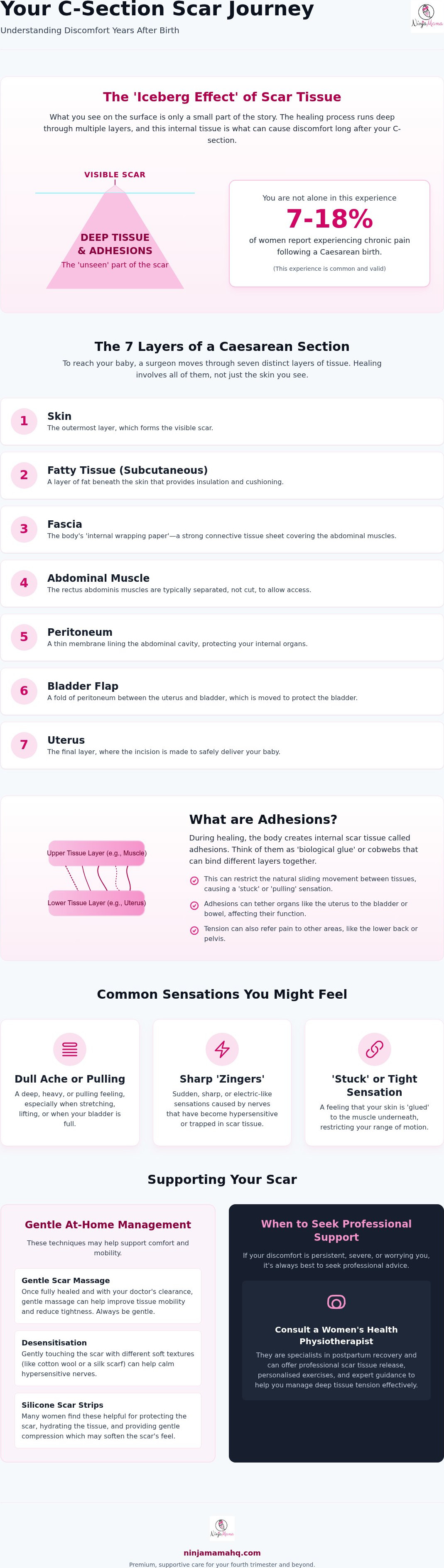
You've done the hard work of growing and birthing a human. Your baby might be a toddler now, or perhaps they've already started school. You likely expected the physical reminders of your birth to be nothing more than fond memories by now. However, that silver line on your belly sometimes has other ideas. It's incredibly common to feel a sense of confusion when a wound that looks perfectly healed starts acting up again. You aren't alone in this. Research suggests that approximately 7% to 18% of women experience chronic pain following a Caesarean birth. It's a common experience that often goes unspoken in mothers' groups, leaving many women wondering if what they're feeling is normal.
A scar is generally considered 'mature' once it's at least 12 months old. Reaching this milestone is a big step, but it doesn't mean the tissue has stopped changing or reacting to your body's movements. Healing isn't a straight line; it's a slow, complex journey that happens deep beneath the surface. Even years later, your body is still managing the internal changes from your surgery, which can lead to unexpected discomfort and deep tissue pain around a mature cesarean scar.
The Difference Between Acute and Chronic Scar Pain
Right after surgery, pain is loud and sharp. It's the body's immediate response to a major procedure and focused on the inflammatory phase of healing. Chronic pain, the kind you feel years later, is a different beast altogether. It often feels like a dull, heavy pulling or a strange tightness when you twist your body or lift something heavy. This happens because nerves can remain hypersensitive or trapped in dense tissue long after the incision has closed. You might even notice that weather changes or your monthly cycle trigger a flare-up. These shifts in barometric pressure or hormonal fluctuations can affect how your body perceives signals from the area, making an old scar feel new again.
Why 'Mature' Doesn't Mean 'Finished'
Scar maturation is a biological process where the body continues to remodel and strengthen the tissue for up to two years after the initial surgery. Unlike the neat, parallel rows of collagen found in healthy skin, the collagen fibres in a scar are often a bit of a chaotic jumble. These unorganised fibres are naturally less flexible and can become quite stiff if the area isn't moved frequently. When there's a lack of mobility in the lower abdomen, these layers of tissue can begin to feel like they're glued together. Over time, this stiffness can increase, leading to that 'stuck' sensation that makes certain movements feel restricted or uncomfortable.
The Iceberg Effect: Understanding Adhesions and Deep Tissue Tension
Think of your scar like an iceberg. What you see on the surface is only a tiny fraction of the story. During a Caesarean birth, a surgeon carefully moves through seven distinct layers of tissue to reach your baby. This includes the skin, fatty tissue, fascia, muscle, the peritoneum, the bladder flap, and finally, the uterus. While the silver line on your skin may look small and settled, the healing process occurring in those deeper layers is far more extensive. It is this internal tethering that contributes to the ongoing discomfort and deep tissue pain around a mature cesarean scar.
As your body heals, it creates adhesions. You can imagine these as internal 'cobwebs' or a type of biological glue that binds these seven layers together. While scar tissue is a natural part of healing, it isn't always as flexible as the original tissue. These adhesions can sometimes bridge the gap between organs, tethering the uterus to the bladder or the abdominal wall to the bowel. This internal 'tug-of-war' is often why you might feel a strange pulling sensation when your bladder is full or notice that your digestion has felt slightly different since your surgery.
Fascia: The Body's Internal Wrapping Paper
Fascia is a thin, tough layer of connective tissue that wraps around every muscle and organ in your body. In a healthy, mobile abdomen, these layers of fascia should glide and slide past each other with total ease. When surgery occurs, this 'wrapping paper' can become sticky and lose its ability to slide. Because your fascia is part of a continuous web throughout your body, tension in your abdomen doesn't stay contained. It can create a ripple effect that pulls on your pelvis or lower back. Many women are surprised to find that their nagging back ache is actually linked to the restricted tissue around their old Caesarean site.
How Adhesions Affect Your Daily Movement
Living with a mature scar can make certain everyday movements feel unexpectedly restricted. You might notice a sharp tug when you reach for a high shelf, twist to check your blind spot while driving, or try to fully lengthen your body during a stretch. This 'too tight' sensation often feels as though your skin is a size too small for your body. This internal pulling is also a primary cause of the 'C-section shelf' or pooch. It isn't always about extra skin or fat; often, it is the result of internal adhesions pulling the scar line inward while the tissue above it sits naturally. Many women find that keeping the surface tissue supple with silicone scar patches helps to support the area and reduce that restrictive, tight feeling during movement.
Identifying Symptoms: From Dull Aches to Nerve Sensitivity
Do you ever find yourself absentmindedly rubbing your lower belly, trying to soothe a sensation you can't quite name? While every mother's journey is unique, identifying the specific sensations you are feeling can help you understand the link between your birth experience and deep tissue pain around a mature cesarean scar. It's not uncommon to feel a strange sense of disconnection from this part of your body. Many women describe a 'phantom' sensation where the area feels heavy or 'present' even when they aren't moving. This persistent physical reminder can have a real impact on your body image, making it feel as though your midsection is no longer your own. Validating these feelings is a vital part of your long-term recovery.
One of the most startling symptoms of a mature scar is what many mums call 'zingers'. These are sudden, sharp, electric-shock-like sensations that seem to come out of nowhere. While they can be alarming, they are often a sign of nerve regeneration. As the nerves that were cut during surgery attempt to repair and reconnect, they can fire off these little bursts of energy. You might also experience patches of numbness right next to areas that are hypersensitive to even the lightest touch. This mix of 'nothing and everything' is a classic sign that the deep tissue is still find its balance.
If you are trying to put words to your experience, see if any of these common symptoms resonate with you:
- A feeling of 'tugging' or 'pulling' when you stand up straight or stretch.
- Sharp, stinging pains that occur with sudden movements like sneezing or laughing.
- A dense, hard feeling under the skin that doesn't match the rest of your abdomen.
- Numbness that makes it feel like you are touching someone else's skin.
- A dull ache that intensifies when you are tired or have been lifting your children.
Common Sensations of a Mature Scar
Beyond the sharp pains, mature scars often produce a variety of 'low-level' discomforts that can wear you down over time. You might notice a heavy, dragging ache in your pelvis after a long day on your feet. Some fabrics, like lace or rough denim, might suddenly feel unbearable against your skin, even years later. It's also quite common to experience bouts of intense itching or a warm, burning sensation that seems to sit deep inside the tissue rather than on the surface.
When Scar Pain Isn't Just 'Scar Pain'
The tension from a Caesarean scar doesn't always stay at the incision site. Because of the way our internal layers are connected, scar tissue can influence your pelvic floor health. If your scar is tight, it can pull on the surrounding fascia, which may lead to symptoms that feel like bladder urgency or a frequent need to go. This deep tissue pain is rarely 'just in your head'. It's a physical response to the internal environment of your abdomen. Recognising that your bladder discomfort or pelvic heaviness might be linked to your scar is often a huge 'aha' moment for many women.
Practical Steps for Managing Mature Scar Discomfort at Home
It is never too late to start a care routine for your scar. Even if your 'baby' is now a teenager, the tissue remains responsive to gentle, consistent attention. Managing the tension and deep tissue pain around a mature cesarean scar doesn't require intense pressure or painful procedures. Instead, the focus should be on encouraging the internal layers to glide more freely. If the area feels hypersensitive to touch, start with scar desensitisation. Gently stroke the area with different textures, such as a soft cotton ball or a silk scarf, to help your nervous system realise that touch is safe.
The Role of Silicone Scar Patches
Medical-grade silicone is commonly used by postpartum mothers for long-term scar management. By applying silicone scar patches, you create a protective 'micro-climate' designed for comfort and recovery. This environment is intended to support the hydration of the tissue, which many women find helpful for softening the appearance and feel of collagen fibres. This may help the scar feel more pliable and less likely to create that restrictive 'pulling' sensation. For the best results, these patches are designed to be worn for at least 12 to 24 hours a day and sit discreetly under your favourite high-waisted leggings.
Self-Massage: Reconnecting with Your Body
Massage is a practical way to address the 'internal cobwebs' mentioned earlier. Using a support oil roller can help make this process smoother and turn a necessary task into a moment of self-care. Try this gentle 3-step approach:
- Step 1: Apply a small amount of oil to the scar and surrounding skin to reduce friction.
- Step 2: Use your fingertips to make small, light circles directly over the scar, moving slowly from one end to the other.
- Step 3: Try 'skin rolling' by gently lifting the skin between your thumb and forefinger and 'walking' it across the abdomen to encourage mobility between the layers.
Consistency is far more important than intensity. A light five-minute massage every other day is often more beneficial than a vigorous session that might trigger inflammation.
Movement and Stretching for Abdominal Health
Incorporating specific, gentle stretches can be a wonderful way to manage tight fascia and improve how you feel in your body. Poses like 'Cobra' or 'Cat-Cow' are designed to help lengthen the abdominal wall without placing undue stress on the mature incision. As you move, focus on 'breathing into your belly'. This deep diaphragmatic breathing creates a natural internal movement, gently shifting your organs and stretching adhesions from the inside out. Staying well-hydrated is also essential, as fascia needs water to maintain its slippery, gliding quality. You can order our C-section silicone scar patches to support your home care routine and help you feel more comfortable in your daily movements.
When to See a Professional and How to Support Your Healing Journey
While at-home care is a wonderful way to reconnect with your body, there are times when professional guidance is the most supportive choice you can make. Seeking help for persistent discomfort and deep tissue pain around a mature cesarean scar is a proactive step toward long-term wellness. It isn't something you just have to 'live with' because you're a mother. If you notice any 'red flag' symptoms, such as new or unusual lumps, redness, heat, or any kind of discharge from the scar line, please book an appointment with your GP. These signs can sometimes indicate an underlying issue that needs a medical set of eyes to ensure everything is safe and healthy.
Advocating for yourself in a medical setting can sometimes feel daunting. If you feel your concerns are being dismissed as 'normal post-op sensations' years after the fact, remember that you know your body best. Be specific about how the pain affects your daily life. Does it stop you from picking up your toddler? Does it make exercise uncomfortable? Clear, descriptive examples help your healthcare provider understand the impact of the tissue tension and why you're seeking a referral to a specialist.
What to Expect from a Women's Health Physio
A Women's Health Physiotherapist is an absolute gem in the world of postpartum recovery. Unlike a general physio, they specialise in the unique way a woman's body moves and heals after birth. During your first session, they'll likely perform both internal and external assessments to check for the adhesions and 'iceberg' effects we've discussed. They use professional myofascial release techniques that are designed to help address deep tissue tension that you can't reach on your own. You'll walk away with a customised exercise programme designed to support your core and pelvic floor without aggravating your scar, helping you move with more confidence.
Building Your Postpartum Support System
Recovery is rarely a solo mission. It takes a village, not just for the baby, but for the mother too. At Ninja Mama, our mission is to provide you with the tools and the community you need to feel nurtured through every stage of your journey. You can learn more about our commitment to maternal wellbeing on our Ninja Mama About Us page. We believe that by sharing our stories and evidence-based care, we can change the way mothers experience the years following birth. For a broader look at the challenges and triumphs of modern motherhood, we encourage you to read The State of Postpartum 2026.
Your body has done something truly amazing. It grew a life, navigated surgery, and has continued to show up for your family every single day. Honouring that journey means giving yourself the same grace, rest, and expert care you so freely give to everyone else. You deserve to feel comfortable in your own skin.
Moving Forward with Comfort and Confidence
Your recovery journey doesn't end when the stitches come out. It's a continuous process of listening to your body and responding with kindness. Understanding the 'iceberg' nature of internal adhesions helps explain that nagging tug and deep tissue pain around a mature cesarean scar. Whether it's through gentle self-massage or seeking the expertise of a Women’s Health Physiotherapist, you have the power to soften those internal connections and reclaim your comfort.
At Ninja Mama, we are an Australian-owned team dedicated to your wellbeing. Our recovery tools are designed by mums for mums and are proudly recommended by Australian midwives. We focus on gentle, effective recovery because we know that your body deserves the very best care long after your baby arrives. Ready to support your scar's journey? Shop our Silicone Scar Patches here to start hydrating and softening your tissue today.
You've done something truly incredible. Now, it's time to feel just as amazing in the skin you're in.
Frequently Asked Questions
Is it normal for my C-section scar to still hurt 5 years later?
It is quite common for mothers to feel discomfort years after their surgery. While the surface skin has healed, the internal layers of fascia and muscle may have developed adhesions that pull and tug during movement. This can lead to persistent dull aches or sharp sensations. Realising that your scar is active, living tissue helps explain why it might still react to physical activity or hormonal changes long after the birth.
Can silicone scar patches help an old, mature scar?
Absolutely, medical-grade silicone remains effective even on scars that are several years old. These patches work by creating a protective seal that increases hydration in the tissue. This moisture helps to soften the collagen fibres, making the area more flexible and less prone to irritation. Many women find that consistent use reduces the 'tight' feeling and deep tissue pain around a mature cesarean scar, providing a non-invasive way to support ongoing scar health.
What do 'zingers' or sharp pains around my scar mean?
Those sudden, electric-shock sensations, often called 'zingers', are typically a sign of nerve regeneration. During a Caesarean, nerves are inevitably cut, and as they attempt to repair themselves years later, they can fire off sharp, spontaneous signals. While these can be startling, they usually indicate that your nervous system is still trying to find its balance. If they become frequent or debilitating, a Women's Health Physiotherapist can offer specific techniques to help settle these overactive nerves.
How can I tell if I have internal adhesions from my Caesarean?
You might notice internal adhesions if you feel a distinct 'tugging' sensation when you stretch, twist, or stand up quickly. Other signs include a feeling that your skin is 'stuck' to the muscle underneath or experiencing unexplained bladder urgency. If the scar looks 'puckered' or pulled inward, it often suggests that the deeper layers of tissue have bonded together. A professional assessment is the best way to confirm the presence and extent of these internal cobwebs.
Can massage actually break down old scar tissue at home?
While you won't physically 'break' the tissue like a piece of glass, gentle self-massage can significantly improve the mobility and pliability of old scar tissue. By regularly using techniques like skin rolling, you encourage the layers of fascia to glide more freely against each other. This reduces the overall tension in the abdomen. Consistency is key; a few minutes of gentle work several times a week is much more effective than a single, forceful session.
Will my C-section scar ever stop feeling numb?
Numbness is a very common long-term side effect, but for many women, sensation does gradually return over several years. The degree of recovery depends on how the nerves were affected during surgery and how they've healed since. Using desensitisation techniques, such as gently rubbing the area with different textures, can sometimes help 'wake up' the nerves and encourage better sensory processing. Even if some numbness remains, the surrounding tissue can still become more comfortable and mobile.
Does scar pain affect future pregnancies or births?
Most women with previous scar discomfort go on to have healthy subsequent pregnancies, but you may feel more 'pulling' as your belly expands. This is often due to the existing adhesions being stretched. It's helpful to discuss your history with your midwife or obstetrician early on. They can monitor the area, and a Women's Health Physio can provide specific stretches to help your abdominal wall accommodate your growing baby with minimal discomfort or restriction.
What is the best way to desensitise a painful scar?
The most effective way to desensitise a hypersensitive scar is through a process of 'graded exposure'. Start by very gently stroking the area with a soft material, like a silk scarf or cotton wool, for a few minutes each day. Once that feels comfortable, move on to slightly firmer textures like a linen cloth or a soft-bristled brush. This gradual approach teaches your brain that touch in that area isn't a threat, slowly reducing the pain response.

Article by
Louise Beever
Louise Beever is the founder of Ninja Mama, an Australian postpartum recovery brand focused on creating premium, practical recovery essentials for new mothers. Since launching Ninja Mama in 2018, Louise has worked closely with thousands of postpartum women and healthcare retailers to better understand the realities of recovery after birth. Her work focuses on postpartum preparation, recovery support, and improving awareness around the fourth trimester.
Remember Mamas
The information provided in this article is intended for general educational and informational purposes only and should not be considered medical advice. Always seek guidance from your doctor, midwife, lactation consultant, or qualified healthcare professional regarding your individual circumstances, pregnancy, birth, or postpartum recovery.