
You wake up at 2:00 am, not because the baby is crying, but because your pyjamas are completely soaked through. You are shivering from the sudden chill as the moisture cools, wondering how you can feel like you are in a sauna one minute and an ice box the next. This experience is incredibly common for new mums, and it is almost always tied to the intense internal recalibration of your hormones. Understanding the biological link between night sweats and estrogen drops is the first step toward finding relief and getting the rest you deserve.
It is a frustrating cycle that leaves you feeling drained before the morning even begins, but you are certainly not alone in this. We want to help you make sense of these hormonal shifts and provide practical, evidence-aware ways to manage the heat. You will learn exactly why your body’s thermostat is temporarily out of sync and discover a curated system of cooling strategies. These steps are designed to help you stay dry, feel comfortable, and reclaim those precious hours of sleep during your postpartum recovery.
Key Takeaways
- Discover how your internal thermostat recalibrates after birth and why the link between Night Sweats and Estrogen Drops is a normal part of your body's recovery process.
- Learn why the hypothalamus becomes hypersensitive to temperature changes, leading to those sudden feelings of overheating followed by the "post-sweat chill".
- Identify the difference between the "estrogen cliff" experienced in the fourth trimester and the more gradual hormonal shifts seen during perimenopause.
- Explore practical, sensory-focused strategies for your sleep environment, including the use of breathable natural fibres and effective layering techniques.
- Gain confidence in managing your postpartum journey with evidence-aware insights that validate your experience and help you prioritise your wellbeing.
Table of Contents
-
Understanding the Link Between Night Sweats and Estrogen Drops
-
Postpartum vs. Menopause: Identifying Your Hormonal Life Stage
-
Practical Strategies to Manage Night Sweats and Improve Sleep
Understanding the Link Between Night Sweats and Estrogen Drops
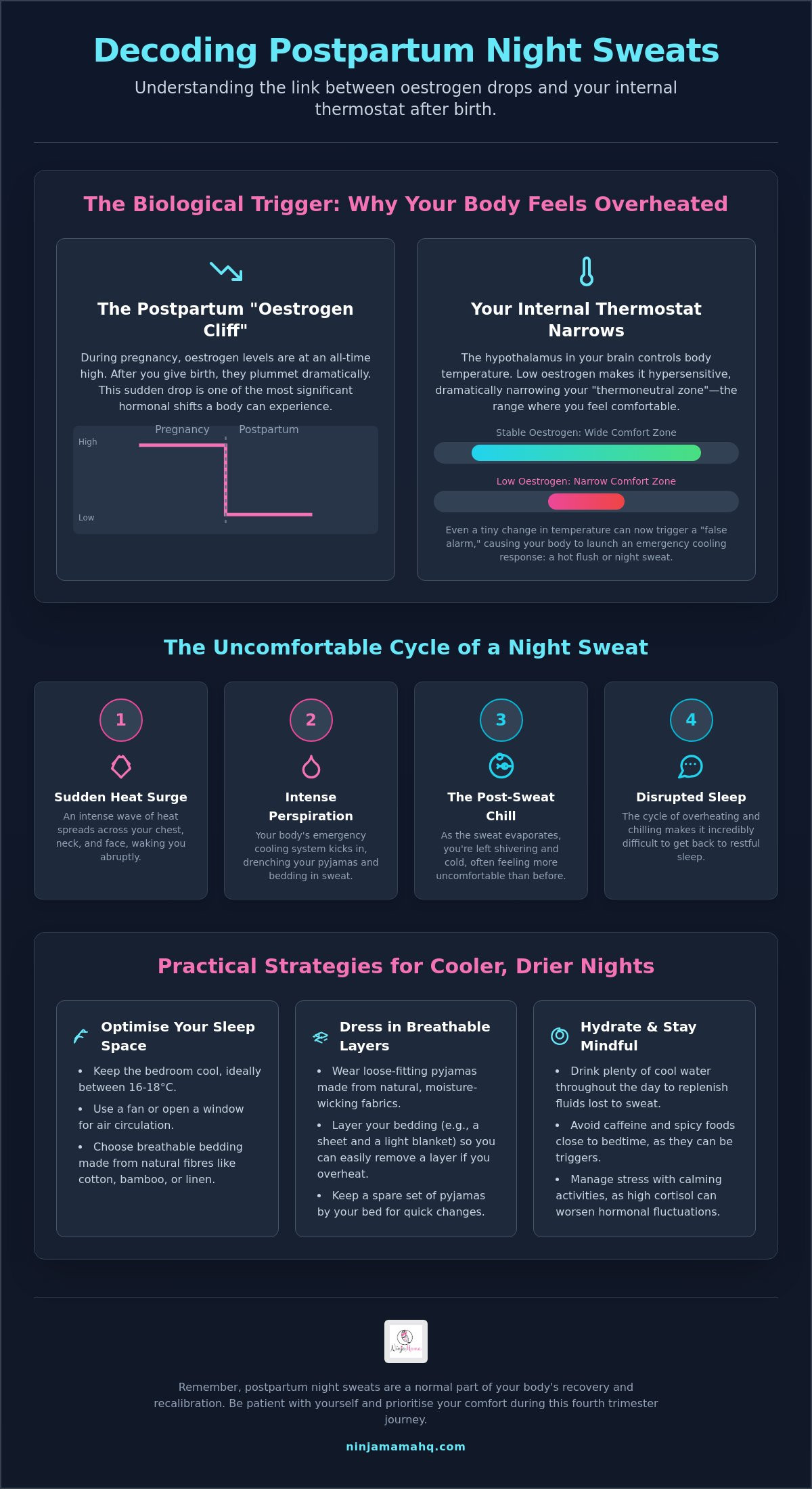
Estrogen is often discussed in relation to fertility, but it plays a massive role in how you feel every day. It acts as a primary regulator for your internal temperature control. When you experience a sudden decline in this hormone, your brain essentially receives a "false" signal that you are overheating. This is why Night Sweats and Estrogen Drops are so closely linked. During the postpartum period, your body undergoes one of the most dramatic hormonal shifts possible, which often triggers these nocturnal episodes. While these sweats are a normal part of your body's recalibration, they can feel quite overwhelming when you're already navigating life with a newborn.
To better understand why your body is suddenly cranking up the heat, watch this helpful video:
What Exactly Are Night Sweats?
We've all had those nights where we've kicked off the duvet because the room felt a bit stuffy. However, true night sweats are a different experience altogether. They are essentially hot flushes that occur during sleep. It usually starts with an intense surge of heat that spreads across your chest and face. Before you know it, you are drenched in perspiration, often to the point where your pyjamas or bedding need changing. The most frustrating part is the subsequent "chill" that follows once the sweat begins to evaporate. This cycle makes it incredibly hard to drift back to sleep. Because these events happen while you are trying to rest, they often feel far more disruptive than daytime hot flushes.
The Role of Estrogen in Female Physiology
Your hormones influence almost every system in your body, including your blood vessels and sweat glands. Estrogen helps keep your "thermoneutral zone" wide. This is the temperature range where you feel neither too hot nor too cold. When levels are steady, your body manages heat beautifully. It's the sudden "surges and dips" that cause the most trouble rather than a consistently low level. Estrogen's role in thermoregulation is best described as the body's thermostat stabiliser. Without enough of it, your brain's temperature control centre becomes hypersensitive. It reacts to tiny changes in your core temperature as if you were standing in the middle of a desert. This phenomenon isn't just limited to new mums. It's a common thread during puberty, perimenopause, and menopause too.
Why Low Estrogen Messes with Your Internal Thermostat
The hypothalamus is essentially the mission control for your body's temperature regulation. It works tirelessly to keep your core at a steady 37 degrees Celsius. Think of it as a very precise, high-tech thermostat. When your hormone levels are stable, this thermostat operates within a wide "thermoneutral zone." This is the comfortable range where you feel neither too hot nor too cold. However, the link between Night Sweats and Estrogen Drops becomes clear when you realise that falling estrogen makes this region of your brain incredibly sensitive. Even a tiny rise in your core temperature, such as the warmth from a heavy blanket or a slight change in room air, can trigger an emergency cooling response.
The Hypothalamus: Your Body's Control Centre
This heightened sensitivity occurs because of the intricate connection between your endocrine system and your autonomic nervous system. When estrogen levels are unstable, your thermoneutral zone narrows significantly. This means the "safe" window for your body temperature becomes much smaller. To make matters more complex, high levels of stress and cortisol can make this internal thermostat even more glitchy. If you are feeling overwhelmed, anxious, or severely sleep-deprived, your brain is even more likely to misinterpret these temperature signals. It is a biological chain reaction where your emotional state and your physical recovery are deeply intertwined.
The 'False Alarm' Mechanism
You might wonder why your brain thinks you are in the middle of a desert heatwave when the bedroom is actually quite cool. It is all down to a physiological "false alarm." When the hypothalamus wrongly perceives that you are too hot, it immediately triggers vasodilation. This is the rapid widening of your blood vessels to move heat to the surface of your skin, which causes that familiar "flush" sensation. This is almost instantly followed by a massive cooling response, which is the sweat. A drop in estrogen can narrow the body's temperature comfort zone by up to 50%. This staggering statistic explains why you might go from feeling perfectly fine to completely drenched in a matter of seconds.
It is vital to remember that your body isn't broken. It is simply processing confusing data during a major life transition. Understanding that Night Sweats and Estrogen Drops are part of a temporary "glitch" can help reduce the anxiety that often accompanies these symptoms. While your internal systems recalibrate, you can manage the physical intensity by using external soothing tools.
Postpartum vs. Menopause: Identifying Your Hormonal Life Stage
It is a common misconception that hot flushes and drenched sheets are reserved solely for women in their fifties. In reality, the biological link between Night Sweats and Estrogen Drops can occur at several different milestones. Whether you have just welcomed a new baby or you are noticing changes in your late thirties or forties, identifying your current hormonal life stage is the key to finding the right support. Both postpartum and perimenopause are significant physiological transitions that deserve gentle care and a proactive approach to comfort. You are not "imagining it," and you certainly aren't alone in feeling like your body’s thermostat has gone rogue.
The Postpartum Estrogen Crash
During pregnancy, your oestrogen levels are at an all-time high. Much of this is thanks to the placenta, which acts as a temporary hormone factory. Once the placenta is delivered, your oestrogen and progesterone levels plummet almost instantly. This is often referred to as the "estrogen cliff," occurring within the first 24 to 48 hours after birth. This sudden crash is what triggers your brain to send those false signals of overheating that lead to nocturnal perspiration.
Many new mums find themselves waking up completely drenched during the first few weeks at home. This isn't just about hormones; your body is also working hard to eliminate the extra fluid volume you retained while pregnant. Night sweats are one of the primary ways your system sheds this excess weight and returns to its pre-pregnancy state.
Perimenopause and the Slow Decline
If you are not in the fourth trimester but are still experiencing disrupted sleep, you may be entering perimenopause. This stage typically involves a slower, more erratic decline in hormone production that can span several years, usually starting in your forties. Unlike the postpartum "cliff," perimenopause is often characterised by irregular cycles and fluctuating symptoms that come and go. Data from June 2026 indicates that up to 80% of women experience these vasomotor symptoms during the menopausal transition.
Tracking your cycle alongside your sleep quality is a brilliant way to gather data for your healthcare provider. If you notice that your Night Sweats and Estrogen Drops are becoming a regular occurrence that impacts your daytime energy and mood, it might be time to discuss options with your GP. Whether it is lifestyle shifts or exploring Hormone Replacement Therapy (HRT), knowing your stage helps you choose the right recovery tools. Every woman’s journey is unique, but the need for a cool, restorative night's sleep remains a top priority for your overall wellbeing.
Practical Strategies to Manage Night Sweats and Improve Sleep
Managing the intersection of Night Sweats and Estrogen Drops requires a two-pronged approach: external environment control and internal lifestyle shifts. While your hormones are doing the heavy lifting of recalibrating, you can take charge of your immediate surroundings to minimise the intensity of each episode. Start with your sleep sanctuary. Opt for breathable, natural fibres like cotton or bamboo for both your bedding and pyjamas. These materials allow air to circulate and wick moisture away from your skin far more effectively than synthetic polyesters. Implementing a layering technique is also a game-changer. Instead of one heavy duvet, use several lighter blankets. This allows you to peel back layers during a heat surge and quickly pull them back on when the post-sweat chill hits.
Be mindful of what you consume in the evening. Caffeine, alcohol, and spicy curries are notorious for dilating blood vessels. These can act as triggers for your already sensitive internal thermostat. Avoiding these in the hours before bed helps keep your core temperature stable and reduces the likelihood of a midnight wake-up call. Small, intentional shifts in your nightly habits can make a significant difference in how your body handles these internal fluctuations.
Cooling Therapy and Physical Relief
Sometimes you need immediate, physical relief to reset your system. Applying a cold compress to the back of your neck or your wrists provides a soothing signal to your brain. Interestingly, many mums find that their perineal ice packs are the perfect size to be repurposed as general cooling inserts. Tucking a chilled pack into your pillowcase or against your chest offers that instant drop in temperature needed to drift back to sleep. A cool shower before bed is another simple hack that helps lower your core temperature naturally and prepares your body for rest.
Lifestyle Tweaks for Hormonal Balance
Hydration is your best friend during this stage. Drinking plenty of water throughout the day helps your body manage its cooling processes more efficiently. Incorporating gentle movement, such as a short walk or light stretching, can also support overall hormonal regulation. Finally, prioritise a wind-down routine. Lowering your cortisol levels through reading or deep breathing before sleep helps prevent your nervous system from being on high alert. This makes those false alarms less frequent, helping you manage the cycle of Night Sweats and Estrogen Drops with more ease and confidence.
Navigating the Fourth Trimester and Beyond with Ninja Mama
At Ninja Mama, our mission is to stand by Australian women through every stage of motherhood, including the "sweaty" ones. We know that the fourth trimester is a period of immense change. Choosing products specifically designed for sensitive, recovering bodies isn't just about comfort; it's about giving yourself the grace to heal. When you are navigating the cycle of Night Sweats and Estrogen Drops, having the right tools on hand makes a world of difference to your daily confidence.
Self-care is often framed as a luxury, but it is actually a necessity for your hormonal health. Taking small, intentional steps to regulate your temperature and comfort levels can significantly impact your emotional wellbeing. If your symptoms ever feel overwhelming or begin to interfere with your ability to care for yourself and your baby, please reach out to a healthcare professional. Whether it is your GP or a maternal health nurse, seeking evidence-aware advice is always a brave and positive step.
Essentials for Your Recovery Journey
Preparation is the first step toward a smoother transition. Our Hospital Bag Checklist helps you prepare for the hormonal shifts ahead before you even head to the birth centre. Once you are home, many women find the comfort of bamboo nursing pads invaluable. They are incredibly soft against sensitive skin and help manage both leaks and sudden temperature changes. We focus on premium, organic materials because we know Australian mums value quality and safety during their recovery journey.
You're Not Alone, Mama
You are part of a vibrant community of women who understand the raw reality of the fourth trimester. Every midnight pyjama change and every sudden flush is a shared experience within our sisterhood. This stage is temporary. It is manageable. Most importantly, it is a sign of your body doing the incredible work of returning to itself after birth. We are here to provide the practical wisdom and premium essentials you need to feel like yourself again. Explore our full range of postpartum recovery essentials here and find the perfect support for your unique journey.
Embracing a Cooler, More Comfortable Recovery
Understanding the biological dance between Night Sweats and Estrogen Drops helps transform a frustrating midnight wake-up into a manageable part of your recovery. You now know that your internal thermostat is simply recalibrating after the intense hormonal shifts of birth. By prioritising breathable natural fibres and utilising targeted cooling therapy, you can significantly reduce the disruption to your rest. Remember, this stage is a temporary sign of your body’s incredible resilience and strength as it returns to its pre-pregnancy state.
Frequently Asked Questions
Is it normal to have night sweats after having a baby?
Yes, experiencing night sweats after birth is a completely normal physiological response for many new mums. This occurs as your body works to eliminate excess pregnancy fluid and adjusts to the sudden drop in hormones after the placenta is delivered. It is simply your system finding its new baseline as you navigate the early weeks of motherhood.
How long do postpartum night sweats usually last?
Postpartum night sweats typically last between two to six weeks after delivery. While every woman's journey is unique, most find that the intensity peaks in the first fortnight and gradually tapers off as hormone levels begin to stabilise. If they persist much longer or become increasingly severe, it is always worth a chat with your maternal health nurse.
Can low estrogen cause night sweats if I'm not in menopause?
Yes, low levels of oestrogen can trigger these symptoms even if you are nowhere near menopause. This phenomenon is frequently seen during puberty or the postpartum period. The biological link between Night Sweats and Estrogen Drops is all about how your brain's temperature regulation centre reacts to any significant hormonal fluctuation, regardless of your age.
What is the best way to stop night sweats immediately?
The most effective way to find immediate relief is to apply a cold compress or a chilled therapy pack to the back of your neck or wrists. This helps signal your brain to lower your core temperature quickly. Sipping a glass of cold water and switching to lighter bedding layers can also help you feel more comfortable and ready to drift back to sleep.
Should I see a doctor for night sweats and estrogen drops?
You should consider seeing a GP if your Night Sweats and Estrogen Drops are accompanied by a high fever, unusual pain, or if they are severely impacting your mental wellbeing. While hormonal shifts are normal, a healthcare professional can rule out other issues like postpartum thyroiditis or infection to ensure you are safe and supported during your recovery.
Does caffeine make night sweats worse?
Yes, caffeine is a known trigger that can worsen the frequency and intensity of night sweats. It acts as a stimulant that dilates your blood vessels and can trick your internal thermostat into overreacting. Try switching to caffeine-free alternatives in the afternoon and evening to help keep your system calm and your core temperature more stable.
Can breastfeeding cause night sweats due to hormone changes?
Breastfeeding can indeed contribute to night sweats because it naturally keeps your oestrogen levels lower for a longer period. This hormonal state is designed to support milk production, but it can also mean your body remains extra sensitive to temperature changes. It is just another way your body is working hard to support your baby's growth and development.
Are there natural supplements that help with estrogen-related night sweats?
Many women find that staying well-hydrated and consuming magnesium-rich foods may help support the body during hormonal transitions. While some natural supplements are marketed for hormone balance, it is vital to speak with a professional before starting anything new, especially while breastfeeding. Focus on gentle, evidence-aware lifestyle shifts and proper nutrition to support your overall wellbeing.

Article by
Louise Beever
Louise Beever is the founder of Ninja Mama, an Australian postpartum recovery brand focused on creating premium, practical recovery essentials for new mothers. Since launching Ninja Mama in 2018, Louise has worked closely with thousands of postpartum women and healthcare retailers to better understand the realities of recovery after birth. Her work focuses on postpartum preparation, recovery support, and improving awareness around the fourth trimester.
Remember, Mums
The information provided in this article is intended for general educational and informational purposes only and should not be considered medical advice. Always seek guidance from your doctor, midwife, lactation consultant, or qualified healthcare professional regarding your individual circumstances, pregnancy, birth, or postpartum recovery.