
Did you know that choosing disposable nursing pads could cost you up to A$360 over a single year of breastfeeding? That's a lot of money that could be better spent on a few extra coffees or a well-deserved treat for yourself. We know the feeling of standing in the chemist aisle, exhausted and just wanting something that works. It's incredibly frustrating to spend your hard-earned cash on itchy pads that feel like sandpaper against sore nipples or, even worse, fail you right when you're out in public with your bub.
Finding affordable breast pads that actually do their job shouldn't be this stressful. You're about to discover how to choose the right pads that perfectly balance your budget, your comfort, and the planet without compromising on leak protection. We'll explore the best soft materials for sensitive skin, compare the long-term value of reusables, and give you a simple plan to stay dry and confident throughout your entire nursing journey.
Key Takeaways
- Calculate the true cost of nursing and see how switching to reusables can save you hundreds of dollars over your breastfeeding journey.
- Identify the essential features of affordable breast pads that don't sacrifice quality, including the importance of a waterproof outer layer.
- Discover why breathable bamboo is the ideal choice for the Australian climate, keeping you cool and dry even on the most humid days.
- Learn why a 12cm diameter is the perfect size for a discreet fit, ensuring your pads stay hidden while providing maximum coverage.
- Get a clear breakdown of the different materials available so you can choose a fabric that feels like a gentle hug for your sore nipples.
Table of Contents
-
Understanding Breast Pads: Why Every New Mum Needs a Reliable Set
-
Reusable vs. Disposable: Calculating the Real Long-Term Costs
-
Choosing the Right Material: Why Bamboo Wins for Aussie Mums
-
Ninja Mama Bamboo Pads: The Ultimate Blend of Quality and Affordability
Understanding Breast Pads: Why Every New Mum Needs a Reliable Set
Breastfeeding is a journey filled with steep learning curves, and one of the first things you'll notice is that your body has a mind of its own. Breast pads act as a soft, absorbent barrier between your nipples and your clothing. Their primary job is to soak up leaked milk, preventing those dreaded wet patches on your favourite shirt. Understanding what breast pads are for is about more than just aesthetics; it's about staying comfortable and dry while your supply settles. Whether you are at home or heading out for a walk, they provide a sense of security that lets you focus on your bub rather than your bra.
You might wonder why you're leaking at all, especially if you've just finished a feed. This usually happens because of the let-down reflex. It's a natural hormonal response that pushes milk through the ducts, and it can be triggered by almost anything. Even seasoned mums get caught out when they hear a baby cry, feel a rush of oxytocin, or simply realise it's getting close to feed time. It's a sign your body is doing exactly what it should, but it does mean you need a reliable way to manage the overflow.
Beyond preventing stains, moisture management is vital for your physical recovery. Constant dampness against your skin can lead to skin maceration, where the tissue becomes soggy and irritated. This makes your nipples much more prone to soreness or even infections. Using affordable breast pads that wick moisture away helps keep your skin healthy and intact during the intense fourth trimester. Hygiene is just as important; changing your pads regularly ensures you stay fresh and reduces the risk of bacteria buildup in a warm, moist environment.
The Different Types: Disposables, Reusables, and Silicone
Choosing the right pad depends on your lifestyle and how your body responds to nursing. Disposable pads offer convenience for the early days, but they can become a significant ongoing expense and create a lot of landfill. Reusable pads, particularly those made from bamboo, are the eco-friendly powerhouse for modern mums. They're washable, exceptionally soft, and provide much better long-term value. This philosophy of sustainable quality is shared by brands like Reset Razor, which offer durable alternatives for your daily self-care routine. Some women also use silicone shells, which are designed to collect leaking milk from one side while you feed from the other, acting as a collector rather than just an absorbent layer.
When to Start Using Them
It's a smart move to have a set ready before your milk fully comes in, which usually happens around day three or four postpartum. While you'll only produce small amounts of colostrum initially, your mature milk can arrive with quite a surge. We recommend tucking a few pairs into your bag as part of your hospital bag checklist to ensure you aren't caught off guard. Starting with a mix of disposables for the hospital and transitioning to reusables once you're home is a popular strategy for many Aussie families.
Reusable vs. Disposable: Calculating the Real Long-Term Costs
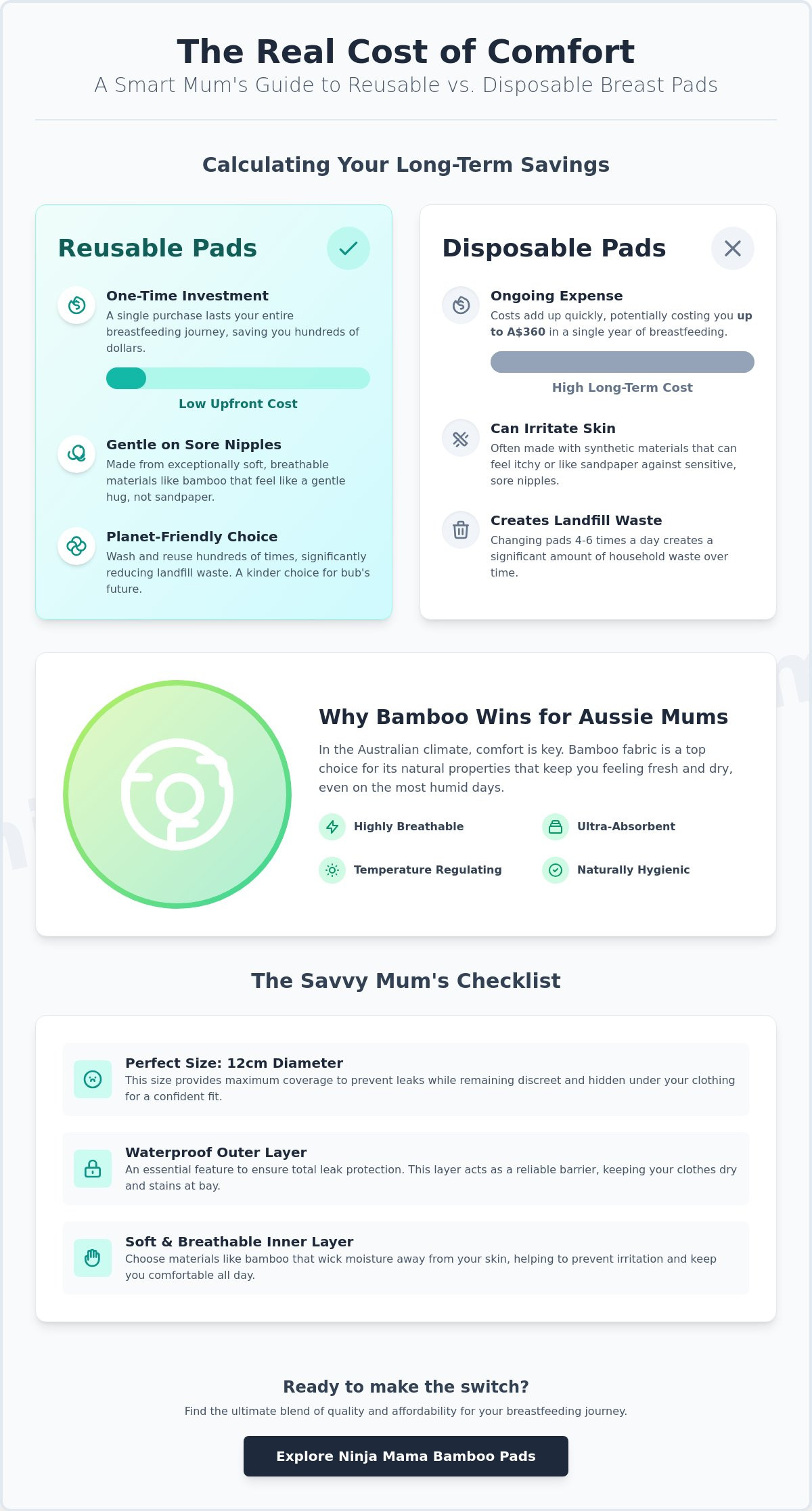
When you're in the thick of the newborn haze, a A$15 box of disposables feels like a small price to pay for convenience. But have you ever stopped to do the "mum-maths" on how those boxes add up? Over a six-month period, a typical breastfeeding journey involves changing pads four to six times a day. If you're using disposables, you're looking at a total cost between A$120 and A$180. That's quite a chunk of change for something that literally ends up in the bin. In contrast, a one-time investment in a high-quality set of affordable breast pads costs significantly less upfront and lasts for your entire nursing journey.
Don't let the thought of extra laundry put you off. Many mums worry that washing reusables will add to the mental load of housework. In reality, these tiny circles of fabric take up almost no space in your machine. You simply pop them into a mesh wash bag and toss them in with your bub’s onesies or your own towels. Since you're likely doing a load of baby laundry every day or two anyway, the actual cost of washing them is virtually zero. It's a simple, sustainable habit that leads to big savings without any extra effort.
The Environmental Price Tag
Beyond the dollars and cents, there's a significant environmental cost to consider. A single mother can easily go through over 1,000 disposable pads in just one year. Most of these contain plastics and synthetic liners that take centuries to break down in Australian landfills. Choosing reusables is a powerful way to reduce your household waste while managing leaking breasts effectively. This shift towards conscious consumption is a major trend we've explored in The State of Postpartum 2026, as more Aussie families prioritise the planet their little ones will inherit.
Cost-Per-Use: The Savvy Mum’s Metric
Smart shopping isn't just about finding the lowest price on the shelf; it's about understanding value over time. By dividing the initial purchase price by hundreds of washes, reusable pads cost less than a cent per wear. However, durability is the key to making this metric work. Cheaply made reusables that fray or lose their shape after three washes are a false economy. Investing in a premium, well-constructed set ensures you always have a fresh pair ready, even when the laundry basket is overflowing. If you're ready to make the switch, our Ninja Mama Washable Breast Pads offer the perfect blend of luxury and long-term savings.
Choosing the Right Material: Why Bamboo Wins for Aussie Mums
Your comfort depends heavily on the fabric sitting against your skin all day. While cotton is a traditional choice, it often feels heavy and cold once it becomes saturated. Synthetic liners found in many affordable breast pads can trap heat, making them feel sweaty and irritating against tender skin. Bamboo stands out as the superior choice for modern parents because it manages moisture efficiently without the bulk or the "plastic" feel often associated with disposable options.
Our unique climate presents a real challenge for breastfeeding comfort. High humidity and summer heat create an environment where damp fabric can quickly lead to skin maceration or even thrush. Understanding why breasts leak makes it clear that breathability is essential for your recovery. You need a material that allows air to circulate, keeping the nipple area dry and significantly reducing the risk of painful infections that can disrupt your feeding routine.
The "Softness Factor" matters most after a long cluster-feeding marathon. Your nipples are likely tender, and the silky texture of bamboo feels like a soothing balm compared to rougher cotton. It is a small but vital way to prioritise your own wellbeing while you are busy caring for your bub. Choosing a fabric that feels beautiful against your skin can turn a functional necessity into a moment of much-needed self-care.
The Science of Bamboo Absorbency
Bamboo is a natural powerhouse for managing heavy let-downs. The fibres are incredibly porous, holding up to three times their weight in liquid. This means you can go longer between changes while the moisture-wicking properties pull milk away from your skin and into the absorbent core. A bamboo-terry layer is widely considered the gold standard for staying dry and confident, even during the early weeks when your supply is still regulating.
Hypoallergenic and Antibacterial Properties
If you struggle with eczema or reactive skin, bamboo is a lifesaver. It contains a natural bio-agent that resists the growth of bacteria, which helps manage that sour milk smell that often lingers on other fabrics. Because it is so gentle, it won't cause the itchiness or redness often associated with synthetic pads. For a reliable, skin-friendly option, our Ninja Mama Super Soft Washable Breast Pads provide the perfect balance of luxury and value.
The Savvy Buyer’s Checklist: Features That Save You Money
Identifying the right features in affordable breast pads ensures you aren't constantly replacing leaked clothes or buying new pads prematurely. True value begins with multi-layer construction, specifically a waterproof outer layer. This PUL (polyurethane laminate) backing acts as a breathable barrier, stopping milk from soaking through to your shirt while still allowing air to reach your skin. It saves you from the frustration of mid-day outfit changes and protects your favourite nursing tops from permanent milk stains.
Size and shape are just as important for your comfort and your budget. A 12cm diameter is the ideal "sweet spot" for most Aussie bra sizes. It provides generous coverage to catch leaks even if the pad shifts slightly as you move. This specific size ensures the pads stay discreet under your clothing, avoiding the bulky "dinner plate" look that often happens with poorly designed alternatives. When your pads are invisible, you feel more confident heading out for a walk or meeting friends for coffee.
A mesh wash bag is a small inclusion that solves a massive practical problem. These tiny pads love to disappear into the depths of your washing machine or hide inside a duvet cover. Keeping them contained ensures your set stays complete and saves you from the expense of buying replacements for lost items. Our Ninja Mama 14-pack of Bamboo Nursing Pads includes this handy bag to keep your laundry routine organised and efficient.
How Many Breast Pads Do I Actually Need?
Many mums get caught out by buying small three-pair packs, which often leads to a laundry crisis by day two. We recommend following the "Rule of Three": one set on your body, one set in the wash, and one set ready in the drawer. A 14-pack (seven pairs) is the perfect starter kit for a standard two-day laundry cycle. This gives you plenty of backups for heavy days without forcing you to run the machine every single night, which is a lifesaver during those exhausted early weeks.
Caring for Your Pads to Ensure Longevity
Proper care keeps your reusables absorbent for your entire breastfeeding journey. Wash them in cold or warm water with a gentle detergent. Avoid fabric softeners at all costs; they leave a waxy residue that stops the fabric from soaking up milk. Drying your pads in the Aussie sun is the best natural sanitiser and keeps them looking fresh. You'll know they finally need replacing if the waterproof backing cracks or they lose their softness, but a quality set should last for months of daily use.
Ninja Mama Bamboo Pads: The Ultimate Blend of Quality and Affordability
When we set out to create the Ninja Mama 14-pack, we did it with the specific needs of Australian mothers in mind. These aren't just any affordable breast pads; they're a carefully considered essential designed to make your daily life as a new parent just that little bit easier. By providing seven pairs in one go, we've removed the stress of constant washing, giving you more time to bond with your bub. It’s a practical solution that doesn't compromise on the premium feel you deserve during such a transformative time.
Our super-soft bamboo terry is what really sets these pads apart. Many mums describe the feeling as a "hug for your boobs," providing immediate relief after a long or particularly intense feed. The fabric is thick enough to handle a heavy let-down while remaining incredibly gentle against sensitive skin. We've also included a small mesh laundry bag in every pack. This tiny detail makes a massive practical difference because it keeps your pads together in the wash, ensuring you never have to deal with a missing set when you're in a rush to get out the door.
These pads are designed to fit seamlessly into the wider Ninja Mama postpartum system. We believe that recovery and breastfeeding support should be holistic, covering everything from physical comfort to emotional wellbeing. Whether you're at home or heading out for your first coffee date with friends, these pads provide the discreet protection you need to feel confident and dry all day long.
Pairing Pads with Breast Therapy
In the early days of breastfeeding, you might experience engorgement or blocked ducts as your milk supply regulates. You can use your breast pads alongside Ninja Mama Breast Therapy Packs to manage these common challenges. Simply use the therapy packs (warmed or cooled) to soothe your breasts, then slip your bamboo pads back into your bra to stay dry. For those looking for maximum value, our Ninja Mama Bundles offer a great way to get all your essentials in one go while saving money.
Supporting Your Breastfeeding Journey
Beyond physical comfort, we know that nutrition and hydration play a huge role in your nursing experience. You might like to support your body with our Ninja Mama Lactation Chocolate Drink, which is designed to be a delicious and nourishing treat for busy mums. The Ninja Mama philosophy is all about providing practical, beautiful solutions that honour the realities of the fourth trimester. You're doing an amazing job, and you deserve to feel supported, comfortable, and prepared every step of the way.
Ready to Embrace Your Postpartum Journey with Confidence?
You've done the maths and seen how simple it is to ditch the itchy, expensive disposables. By choosing high-quality reusables, you're not just being kind to your bank balance; you're also looking after your skin and the planet. The best affordable breast pads are those that keep you dry, feel like a dream, and don't require a daily trip to the laundry. With a full rotation of 14 pads, you'll always have a fresh pair ready for whatever the day or night throws your way.
As an Australian owned and operated business, we're proud to have helped thousands of women transition into motherhood with comfort. Our community has shared over 1,000 5-star reviews, proving that practical essentials can still feel premium. Making the switch reduces household waste and saves you over $200 a year, giving you one less thing to worry about. You deserve to feel supported and dry during this special time.
Shop Ninja Mama Super Soft Washable Breast Pads - 14 Pack for Only $34.99
You're doing an incredible job, Mama. We're right here in your corner, cheering you on every step of the way.
Frequently Asked Questions
How many breast pads should I buy before the baby arrives?
We recommend having at least 14 pads (7 pairs) ready before bub arrives. While your milk doesn't fully come in for a few days, having a set in your hospital bag ensures you're prepared for that initial surge. This quantity allows for a comfortable two-day laundry cycle without the stress of constant washing. If you find your supply is particularly heavy in the early weeks, you might eventually decide to add a few more pairs to your collection.
Will reusable breast pads show through my bra or clothing?
High-quality pads with a 12cm diameter and a slim, contoured shape are designed to be almost invisible. If you choose pads with a smooth, waterproof outer layer, they should sit flat against your skin and stay discreet under most maternity bras or nursing tops. It's best to avoid very thick, flat pads that can bunch up or shift. A well-fitted pad provides a seamless look while giving you total peace of mind.
How often should I change my breast pads to avoid leaks and infection?
You should change your pads as soon as they feel damp or immediately after every feed. Leaving a wet pad against your nipple for too long can lead to skin irritation or even infections. Most mums find they change their pads four to six times a day during the early postpartum weeks. Fresh, dry pads keep your skin healthy, prevent "sour milk" odours, and ensure you remain comfortable throughout the day.
Can I use reusable breast pads if I have thrush?
You can continue using reusables, but you must be extremely careful with your laundry routine to prevent reinfection. To help manage the situation, it's common to wash pads on a hot cycle of at least 60°C to ensure yeast spores are destroyed. Some mums find using affordable breast pads in a disposable format is easier during the active treatment phase. Always check in with your midwife or GP if you suspect you have an infection.
Are bamboo breast pads better than cotton ones for sensitive skin?
Bamboo is generally considered the best choice for sensitive skin because the fibres are naturally silkier and more absorbent than cotton. Cotton can feel heavy and abrasive once it becomes saturated, which can irritate sore nipples. Bamboo wicks moisture away from the skin more effectively, keeping the area dry and cool. This is particularly helpful in the Australian climate where heat and sweat can make skin sensitivity much worse.
What is the best way to wash and dry reusable breast pads in Australia?
Place your pads in a mesh wash bag and use a gentle, cold or warm machine wash with your regular baby laundry. You should strictly avoid fabric softeners as they coat the fibres and significantly reduce absorbency over time. Drying them in the direct Australian sun is the best natural way to sanitise the fabric and keep them looking bright. Ensure they are completely dry before storing them to maintain hygiene.
Do I need different breast pads for night-time and daytime?
Many mums use the same pads for both, but you might want to double up or use your thickest pairs for overnight. Your body often produces a surge of milk while you sleep, and you'll likely be wearing the pads for a much longer stretch. Investing in affordable breast pads that feature multiple absorbent layers is a great way to protect your bedding and stay dry until the morning sun comes up.
Can I use breast pads with nipple cream or silver cups?
You can certainly use pads with nipple cream, though very thick ointments might leave a slight residue on the fabric over time. If you're using silver cups, you'll still need to wear a breast pad over the top of the cup. The silver cup protects the nipple from friction and helps with healing, but the pad is essential for catching any milk that leaks around the edges of the cup during a let-down.

Article by
Louise Beever
Louise Beever is the founder of Ninja Mama, an Australian postpartum recovery brand focused on creating premium, practical recovery essentials for new mothers. Since launching Ninja Mama in 2018, Louise has worked closely with thousands of postpartum women and healthcare retailers to better understand the realities of recovery after birth. Her work focuses on postpartum preparation, recovery support, and improving awareness around the fourth trimester.
Remember Mamas
The information provided in this article is intended for general educational and informational purposes only and should not be considered medical advice. Always seek guidance from your doctor, midwife, lactation consultant, or qualified healthcare professional regarding your individual circumstances, pregnancy, birth, or postpartum recovery.