
What if the most important part of your birth plan isn't actually the birth itself, but the weeks that follow? While everyone focuses on the arrival of your little one, your own post pregnancy recovery is the quiet, essential journey that deserves just as much care and attention. It is the period where you deserve to be nurtured just as much as your new baby.
We know that those first days at home can feel a bit daunting. You might be worried about the sting of your first bathroom trip, the ache of a surgical incision, or simply how you will manage the wild hormonal shifts and exhaustion. It is completely normal to feel like you are learning to live in a brand new body overnight. We have been there, and we understand exactly how you feel.
This guide is to help you navigate the physical and emotional shifts of the Fourth Trimester with practical tips and gentle self-care strategies. We will walk you through a realistic recovery timeline and share effective tools to manage pain. You will finish reading feeling prepared, supported, and truly empowered for the weeks ahead.
Key Takeaways
- Understand why the Fourth Trimester is a vital transitional phase and why your healing journey is rarely a straight line.
- Learn how to manage the physical realities of healing, from lochia to the uterine cramps often called afterpains.
- Discover gentle bathroom hacks to reduce stinging and support your post pregnancy recovery during those first sensitive trips to the toilet.
- Explore how to nourish your body and manage breast engorgement as you adjust to the high energy demands of early motherhood.
- Identify the hospital bag essentials, including absorbent disposable underwear, that help make your initial recovery much more comfortable.
What is Post Pregnancy Recovery? Understanding the Fourth Trimester
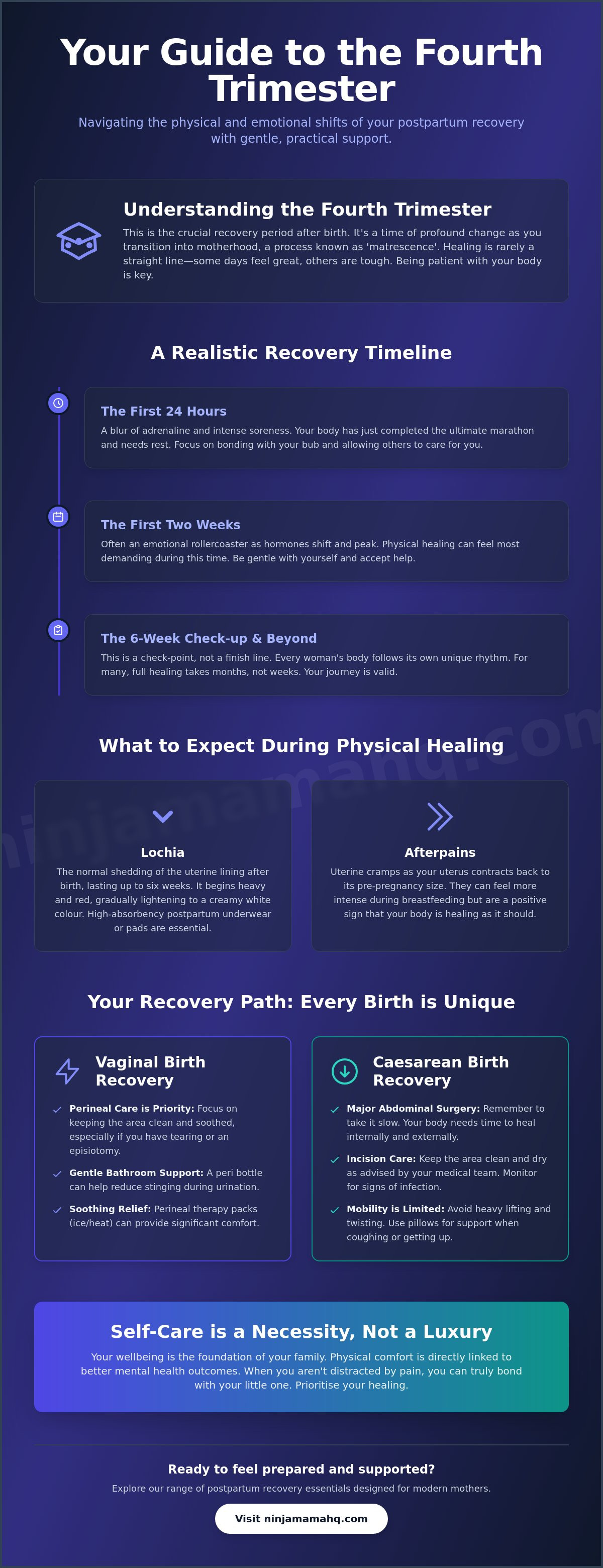
Welcome to the Fourth Trimester, lovely. This is the period of post pregnancy recovery that often gets overshadowed by the arrival of your new bub. It is a time of profound change known as matrescence, the physical, emotional, and psychological transition into motherhood. Think of it as a second puberty, but with much less sleep and a lot more love. You are not just growing a baby; you are growing a mother, and that process deserves its own space and respect.
To learn more about the nuances of matrescence and find additional support, Pregnancy Magazine provides an excellent digital resource for first-time mums navigating this transition.
While the world might expect you to bounce back, the reality of Understanding the Fourth Trimester is that healing is rarely a straight line. Some days you will feel like a superhero; other days, the simple act of making a cup of tea feels like climbing Everest. It is a vital transitional phase where your body works tirelessly to return to its non-pregnant state while you learn to nourish a new life. Validating the intensity of these first few days at home is the first step toward a smoother journey.
To better understand this concept, watch this helpful video:
The Recovery Timeline: What to Expect
The first 24 hours are often a blur of adrenaline and intense soreness. You have just run the ultimate marathon, and your body knows it. Moving into the first two weeks, you might find yourself on an emotional rollercoaster as hormonal shifts peak. This is often when physical healing feels most demanding. By the time the 6-week checkup arrives, many feel pressured to be finished with their post pregnancy recovery. However, this milestone is merely a check-point, not a finish line. Every woman's body follows its own unique rhythm, and for many, full healing takes months rather than weeks.
Why Self-Care is a Necessity, Not a Luxury
It is so easy to fall into the trap of mum guilt when you take ten minutes for yourself. You might feel like every second should be dedicated to your baby, but your well-being is the foundation of your family. Physical comfort is directly linked to better mental health outcomes. Statistics show that globally, about 1 in 5 women may experience postpartum depression, making it a common part of the landscape that requires proactive care. When you aren't distracted by pain or discomfort, you can truly bond with your little one. You can learn more about the state of postpartum in 2026 to see why modern mothers are finally prioritising their own healing journey as a non-negotiable part of early parenthood.
Physical Healing After Vaginal and Caesarean Birth
Your body has just performed an incredible feat, but it’s completely normal if you feel a bit like you’ve been through a literal battle. Whether you welcomed your bub via a vaginal birth or a caesarean, the physical side of post pregnancy recovery involves specific processes that require patience and the right tools. One of the first things you’ll notice is lochia. Lochia is the shedding of the uterine lining that can last up to six weeks. It starts off heavy and bright red, eventually fading to a creamy white colour. Standard menstrual pads usually aren't up to the task in those first few days, so being prepared with high-absorbency options is a must.
You might also experience what midwives call "afterpains." These are uterine cramps that occur as the uterus shrinks back to its pre-pregnancy size. While they can be uncomfortable, especially during breastfeeding when oxytocin levels rise, they are a sign that your body is doing exactly what it needs to do. Managing these physical shifts is easier when you understand that your recovery needs will differ depending on how your baby entered the world. Every birth story is different, and your healing journey will be too.
Vaginal Birth: Perineal Care and Comfort
If you’ve had a vaginal delivery, your perineum likely needs some serious TLC. Tearing or having an episiotomy is very common, yet it can still feel quite daunting to manage. The key is to keep the area clean and provide as much soothing relief as possible. Many mums find that using organic witch hazel is a lifesaver. It’s a natural astringent that helps to reduce swelling and calm sensitive, inflamed skin. Applying it to your pads or using it in a sitz bath can provide that cooling comfort you’re craving during those first tender weeks.
Caesarean Recovery: Caring for Your Incision
Recovering from a caesarean means you’re healing from major abdominal surgery while also caring for a newborn. It’s a huge ask! Your primary goal is to keep the incision site clean and dry to support the natural healing process. Once your healthcare provider gives the all-clear and the wound is closed, protecting the scar becomes the priority. We recommend using C-section silicone scar patches to help. These patches create a protective barrier against clothing friction, which can be incredibly irritating to a fresh scar, while also helping to flatten and soften the tissue over time. For the best start to your healing, consider keeping a few essentials in your postpartum recovery kit so you're never caught without support.
Postpartum Bathroom Hacks: Making the Stinging Stop
It’s the question every new mum whispers to her midwife. How much is that first pee going to hurt? We understand the fear. It’s real. However, with a few clever hacks, you can take the sting out of the situation and focus on your healing. The science is simple. Urine is acidic, and when it hits fresh stitches or micro-tears, it causes that infamous burning sensation. By diluting the urine as you go, you neutralise the acidity and protect your sensitive skin. This is a core part of Physical Healing After Birth that often gets overlooked in standard hospital briefings.
As you move through the first few days of your post pregnancy recovery, you will also want to transition away from the flimsy, one-size-fits-all mesh undies provided by the hospital. While they serve a purpose in those first hours, moving to premium disposable postpartum underwear offers much better support and hygiene. These options are designed to hold heavy maternity pads and cooling inserts securely in place, giving you back a sense of dignity and comfort during a very vulnerable time.
The Magic of the Upside Down Peri Bottle
Most hospitals will give you a standard squirt bottle, but using it often requires some awkward gymnastics. An upside down peri bottle is specifically designed with a curved, ergonomic neck. This allows you to reach exactly where you need to without having to put your hand near the toilet bowl. It’s a simple tool that quickly becomes your best friend. To use it effectively, follow these steps:
- Fill the bottle with warm tap water before you sit down.
- Start squeezing a gentle stream of water over your perineum as you begin to urinate.
- Continue the flow until you’ve finished.
- Gently pat the area dry with soft toilet tissue or a clean cloth; never rub.
Cooling Therapy for Instant Relief
There is nothing quite like the relief of cold therapy on a swollen perineum. While traditional ice packs can be bulky and uncomfortable to sit on, absorbent instant cooling pads are a true modern marvel. They combine the high-absorbency you need for lochia with a built-in cooling mechanism that activates with a simple snap. This reduces inflammation and numbs the area naturally without the mess of melting ice. For a professional "padsicle" experience at home, try layering a few witch hazel wipes over your cooling pad. The combination of the cold and the soothing witch hazel provides a level of comfort that makes those first few days of post pregnancy recovery feel much more manageable.
Nourishing the New Mum: Nutrition and Breast Care
Your body has just performed a literal miracle, and now it’s time for the great rebuild. While your focus is naturally on your new bub, your post pregnancy recovery relies heavily on how you fuel yourself. You are essentially recovering from a major physical event while simultaneously running a small milk factory. This requires an incredible amount of energy. In fact, breastfeeding can demand up to 500 extra calories a day, making nutrient-dense snacks and constant hydration your new best friends. Drinking plenty of water isn't just about milk supply; it helps your tissues heal and keeps your energy levels from bottoming out.
Many women find that gentle herbal support can make a world of difference during these early weeks. Sipping on organic raspberry leaf tea is a traditional way to support the uterus as it continues to tone and return to its pre-pregnancy size. It’s a small, soothing ritual that honours the hard work your body is still doing behind the scenes. Remember, you can't pour from an empty cup, so prioritising your own nourishment is one of the kindest things you can do for both you and your baby.
Breastfeeding Support and Comfort
The first time you experience the "let-down" reflex, it can feel like a strange, tingly rush. Shortly after, you might face the reality of breast engorgement as your milk fully comes in. This can leave your breasts feeling heavy, warm, and quite tender. Using hot or cold therapy packs can help manage this discomfort and support your let-down. To keep yourself feeling fresh and dry between feeds, washable bamboo nursing pads are a game-changer. They are incredibly soft against sensitive skin and much more breathable than disposable plastic versions. If you find your ribcage is still settling back to its usual size, a few bra extenders can provide that extra breathing room in your favourite maternity bras.
Lactation-Friendly Nourishment
Finding time to eat a full meal can be tricky when you're navigating the Fourth Trimester. This is where lactation-supporting snacks and drinks become essential. A warm organic lactation chocolate drink can be a comforting afternoon pick-me-up that also helps support your supply. It feels like a treat, but it’s working hard for you. For those moments when you only have one hand free, keeping a thermos of tea made with lactation tea bags nearby ensures you’re staying hydrated and supported throughout the day. For a complete support system during these busy weeks, explore our full range of postpartum recovery kits to ensure you have every essential on hand.
Building Your Recovery Kit: The Hospital Bag Essentials
Most hospital bag lists are overflowing with tiny onesies and adorable swaddles. But what about you, Mama? Your post pregnancy recovery starts the moment you move to the postnatal ward, and having a dedicated system for your own care is a total game-changer. Think of your recovery kit as a curated survival pack designed to bring you comfort when you need it most. It’s about being proactive rather than reactive. By having everything ready to go, you can focus entirely on those first precious cuddles with your new bub.
One of the biggest secrets to a stress-free stay is packing disposable postpartum underwear. Forget trying to fit bulky pads into your favourite knickers or dealing with flimsy hospital mesh. These are designed for maximum hygiene and comfort; they hold everything securely in place without any digging or rubbing. Once you’re back home, you can transition into a soothing routine with a sitz soak. It’s a beautiful way to encourage healing and take five minutes of peace for yourself. If the thought of gathering all these individual items feels overwhelming, many mothers find that curated bundles are the perfect solution to save time and reduce late-pregnancy stress.
The Hygiene Essentials Checklist
Having your hygiene kit organised by the 36-week mark ensures you’re prepared for any surprises. Your kit should include your peri bottle, heavy-duty absorbent undies, and a generous supply of perineal recovery wipes. Why wipes? Because even the softest toilet paper can feel like sandpaper on sensitive, healing skin. These wipes are designed to be cooling and gentle, providing a much-needed layer of relief after every bathroom trip. Having these items within arm's reach in your hospital bag means you won't have to rely on whatever basic supplies the hospital might have on hand.
Emotional Wellbeing and Support
While we focus a lot on physical healing, your emotional post pregnancy recovery is just as vital. It is very common to experience the "baby blues" around day three or four as your hormones shift. However, since research indicates that up to 1 in 5 new parents may experience postpartum depression, it is important to stay connected with your midwife or GP if you feel consistently low. For those moments when you need a little grounding, using a labour and postpartum support oil roller can provide a sense of calm through familiar, soothing scents. You’re doing an incredible job navigating this massive life change. Be patient with yourself. You’ve got this, Mama.
Step into Motherhood with Care and Comfort
Your journey through the Fourth Trimester is just as significant as the day you gave birth. Remember that healing is a non-linear process. Some days will feel easier than others, and that is perfectly okay. By prioritising your physical comfort with the right tools and nourishing your body with intention, you are building the best possible foundation for your new life with bub.
Navigating post pregnancy recovery doesn't have to feel overwhelming when you have a supportive system in place. Ninja Mama is a proudly Australian owned and operated brand. We offer premium, high-quality recovery essentials that were designed by a mum for mums. We have been exactly where you are, and we are here to help you feel your best during this transformative time.
Explore the full Ninja Mama Postpartum Recovery range here to find the perfect support for your needs. You are doing an incredible job, and you deserve to feel nurtured every step of the way. You've got this, Mama!
Frequently Asked Questions
How long does physical post pregnancy recovery usually take?
While the six-week checkup is a common milestone, full physical recovery often takes six to twelve months. Your body has undergone significant changes over nine months, so it is natural for the return to your pre-pregnancy state to be a gradual, non-linear journey. Factors like your birth experience and overall health will influence your unique timeline. Patience is essential during this period of post pregnancy recovery.
Can I use a peri bottle after a C-section delivery?
Yes, many women find an upside-down peri bottle incredibly helpful after a caesarean birth. It allows you to maintain excellent hygiene in the perineal area without the need to bend or twist, which can be uncomfortable while your abdominal incision is healing. It is a gentle way to stay fresh and clean during those first few days when movement is limited and tender.
What is the best way to manage stinging while urinating after birth?
The most effective way to manage stinging is to dilute your urine with warm water as you pee. Using an upside-down peri bottle to aim a gentle stream of water over your perineum neutralises the acidity of the urine before it hits sensitive tears or stitches. This simple technique provides immediate relief and prevents the sharp burning sensation that many new mums fear during their first few bathroom trips.
When is it safe to start using sitz bath soaks after stitches?
Most healthcare professionals suggest waiting 24 to 48 hours after birth before you begin using sitz bath soaks. It is important to ensure your stitches have had a little time to settle first. Once your midwife or doctor gives you the all-clear, a gentle soak with natural salts can help support the healing process and provide much-needed comfort to bruised or swollen tissues.
What are the signs of postpartum complications I should watch out for?
You should contact your doctor or midwife immediately if you experience heavy bleeding that soaks through a maternity pad in an hour or less. Other red flags include a high fever, severe headaches, blurred vision, or intense abdominal pain. Watching for signs of infection, such as foul-smelling discharge or redness around an incision, is a vital part of a safe post pregnancy recovery.
How many pairs of disposable postpartum underwear will I need in the first week?
Most mothers find that using two to three pairs of absorbent disposable underwear per day is ideal during the first week. This allows you to stay fresh and dry while managing the heaviest stage of lochia. Having a pack of ten to fifteen pairs ready in your hospital bag ensures you are well-prepared for those initial days when convenience and hygiene are your top priorities.
Is witch hazel safe to use on perineal tears and stitches?
Yes, organic witch hazel is a popular choice for soothing perineal tears and stitches due to its natural astringent properties. Many women find it helpful for reducing swelling and calming inflamed skin in the days following a vaginal birth. You can apply it easily by layering pre-soaked wipes over your maternity pads or using a gentle spray to provide a cooling, comfortable sensation.
Why is the Fourth Trimester often called the hardest part of pregnancy?
The Fourth Trimester is often considered the most challenging phase because it combines intense physical healing with significant sleep deprivation and hormonal shifts. You are navigating the process of matrescence, which is the psychological transition into motherhood, while your body is working hard to recover. This period requires a high level of self-compassion and support as you adjust to your new role and your changing body.

Article by
Louise Beever
Louise Beever is the founder of Ninja Mama, an Australian postpartum recovery brand focused on creating premium, practical recovery essentials for new mothers. Since launching Ninja Mama in 2018, Louise has worked closely with thousands of postpartum women and healthcare retailers to better understand the realities of recovery after birth. Her work focuses on postpartum preparation, recovery support, and improving awareness around the fourth trimester.
Remember Mums
The information provided in this article is intended for general educational and informational purposes only and should not be considered medical advice. Always seek guidance from your doctor, midwife, lactation consultant, or qualified healthcare professional regarding your individual circumstances, pregnancy, birth, or postpartum recovery.